
The Smart Tour Starts at Home




Making a Scene Presents – The Smart Tour Starts at Home: Building a Local Music Scene and a Regional Touring Business That Actually Makes Money
Listen to the Podcast Discussion
Why independent artists should stop measuring success by miles traveled and start building a music economy in their own backyard.
The Great American Touring Myth
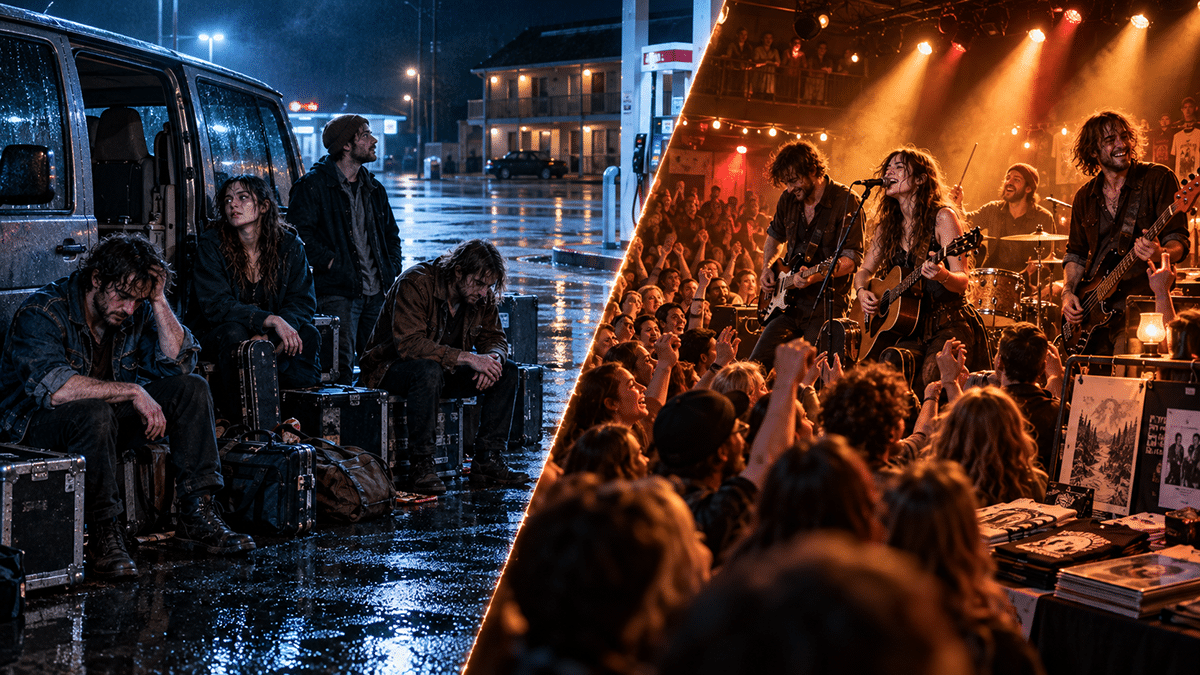
Somewhere along the way, the music industry convinced independent musicians that success was measured by how far they could drive a van before somebody needed a shower. The mythology is practically woven into the fabric of popular music. You record an album, scrape together enough money for a vehicle that may or may not survive another inspection, load it with instruments and musicians, and head out across America in search of fame, fortune, and a truck stop with reasonably clean bathrooms. If you are particularly ambitious, you might even print a tour poster displaying fifteen cities in eighteen days, giving everyone the impression that your career is exploding. Never mind that the drummer is sleeping on somebody’s couch in Cleveland, the bass player has developed an intimate relationship with gas station burritos, and the band’s entire profit from last night’s show disappeared into the fuel tank somewhere outside Columbus.
For generations, musicians have accepted this as the natural cost of building a career. The road was supposed to be difficult, and struggling was somehow treated as proof that you were serious about your art. If you weren’t driving twelve hours to play for twenty-three people in a room that smelled like stale beer and broken dreams, were you really paying your dues? The industry romanticized the hardship so thoroughly that questioning the financial logic almost seemed like questioning the music itself. Somewhere, an aging road warrior would inevitably tell you that suffering builds character, although he might neglect to mention that character development does very little to cover your mortgage.
The trouble is that touring has become an increasingly expensive proposition for independent musicians, and the traditional approach often makes very little economic sense. Fuel, vehicle maintenance, hotels, meals, parking, tolls, insurance, equipment repairs, hired musicians, and lost income from regular employment can eat through a performance guarantee before anybody plays the first note. Even when a tour generates respectable gross revenue, the amount left after expenses can be painfully small. Add the physical demands of driving overnight, loading equipment into unfamiliar rooms, and trying to deliver a compelling performance after five hours of sleep, and it becomes reasonable to ask whether the romantic touring lifestyle is actually helping independent musicians build sustainable careers.
Perhaps it is time to challenge one of the music industry’s oldest assumptions. What if the best way to become a successful touring artist is to spend less time traveling? What if an independent musician could build a profitable live performance business by first becoming an important part of a local music community, then carefully expanding into surrounding cities that can be reached without the expense of overnight accommodations? Rather than chasing audiences across the country, the artist could develop a network of communities that already know the music, support the performances, and return each time the band comes through town. This approach may not produce the kind of impressive tour poster that makes your friends think you have finally become a rock star, but it offers something considerably more useful: the possibility of making an actual living.
The Difference Between Being on Tour and Building a Touring Business
One of the biggest mistakes independent artists make is confusing activity with progress. A packed calendar looks impressive, especially when the dates stretch across several states, but the number of performances tells us very little about whether the artist is building a business. A musician can spend months traveling, perform dozens of shows, meet hundreds of people, and return home with almost nothing to show for it except a worn-out vehicle and a collection of photographs. Meanwhile, another artist might perform fewer shows within a relatively small geographic area and develop a dependable audience that purchases tickets, buys merchandise, supports new recordings, and introduces the music to friends.
The difference is not simply that one artist is better at managing expenses. The second artist is developing something much more valuable than a collection of bookings. Each performance strengthens a relationship with a particular community, creating a reason for people to attend the next performance and giving the artist information that can improve future marketing decisions. The audience in each city becomes an ongoing part of the artist’s business rather than a temporary gathering of strangers who happen to be standing in the same room on a Tuesday night.
Consider how most emerging bands approach touring. They search for venues, send booking emails, negotiate whatever guarantee they can get, and arrange the dates into a route that looks reasonably sensible on a map. Promotion often amounts to posting a flyer on social media and hoping the venue has an audience willing to attend. When the show ends, the musicians load their equipment, settle with the club, and head for the next destination. They may have made a few new fans, but unless those fans have a direct way to maintain contact, the relationship often ends before the van leaves the parking lot.
A genuine touring business operates differently because its goal is to make each market more valuable over time. The first appearance introduces the music, but the artist also establishes connections with the venue, the local musicians, the people who attended, and other businesses that helped make the event possible. When the artist returns, there should already be an audience waiting, along with a better understanding of ticket demand, merchandise sales, promotional opportunities, and the expenses involved in reaching that city. Instead of treating each performance as an isolated transaction, the artist begins developing a continuing commercial relationship with an entire community.
That is the fundamental shift independent musicians need to understand. Touring should not be measured by the number of miles traveled or the number of pins on a map. Its success should be measured by how much sustainable income and audience growth those performances produce. Once we begin looking at live music through that lens, the hometown stops looking like a place to escape and starts looking like the most logical location for building the foundation of a music career.
Your Hometown Is Not a Waiting Room for Success
There is a strange habit among musicians of treating their hometown as a place they need to outgrow. Perhaps it comes from decades of music industry mythology in which an artist plays local clubs until somebody important appears in the audience and offers a recording contract. The hometown is presented as the starting line, while success supposedly happens somewhere else, usually in a city with expensive parking and a frightening number of entertainment lawyers. In that traditional story, remaining local is almost an admission of failure.
That thinking makes very little sense when the goal is to build an independent music business. Your hometown is the market where you have the lowest cost of reaching potential customers, the greatest opportunity to develop personal relationships, and the easiest access to the organizations that support live entertainment. You already understand the geography, know many of the venues, and may have relationships with musicians, business owners, community organizations, journalists, and music fans. Those connections represent an enormous advantage that disappears when you drive into a city where nobody knows your name.
A local performance also carries far fewer financial risks than a distant booking. Musicians can generally sleep in their own beds, eat at home, and avoid many of the travel expenses that slowly drain touring income. Rehearsals and equipment preparation become easier, and a performance does not necessarily require everyone in the band to take several days away from work or family responsibilities. Even relatively modest local guarantees can become financially meaningful when the artist is not spending half the income just getting to the venue.
Of course, establishing a local business does not mean playing the same bar every Friday until the bartender can predict your entire set list. That approach can quickly exhaust an audience and turn a promising artist into background entertainment. The goal is to become an important part of the local cultural environment while maintaining enough variety and excitement that each performance feels worthwhile. This requires looking beyond traditional nightclub bookings and understanding how music can connect with the larger community.
A hometown can support ticketed concerts, songwriter showcases, house concerts, cultural festivals, private events, listening-room performances, community celebrations, and special collaborations with other artists. Some of those opportunities may offer stronger guarantees, while others may be better suited to building an audience or creating direct merchandise sales. The point is to develop a balanced local performance business where each event serves a purpose and contributes to the artist’s long-term growth.
Stop Looking for a Music Scene and Start Building One
Musicians love complaining about their local music scene, particularly when the venues are booking the same handful of cover bands and audiences seem more interested in watching sports on television than listening to original music. There is often some truth behind the complaints, especially in communities where independent venues operate on extremely thin margins and audiences have become accustomed to hearing live music without paying much for it. Unfortunately, complaining about the scene rarely produces another paying customer, and the bartender has probably heard enough about the injustice of modern music economics to last several lifetimes.
A much more productive approach is to recognize that a music scene is not something that magically appears because a town has a few stages and a music store. Scenes are created when musicians, audiences, venues, media outlets, and local businesses begin supporting one another in ways that make participating worthwhile. The artists who help create those relationships are often the same artists who eventually become central figures within the community, not because they have better connections to the traditional music industry, but because they have helped build something people genuinely value.
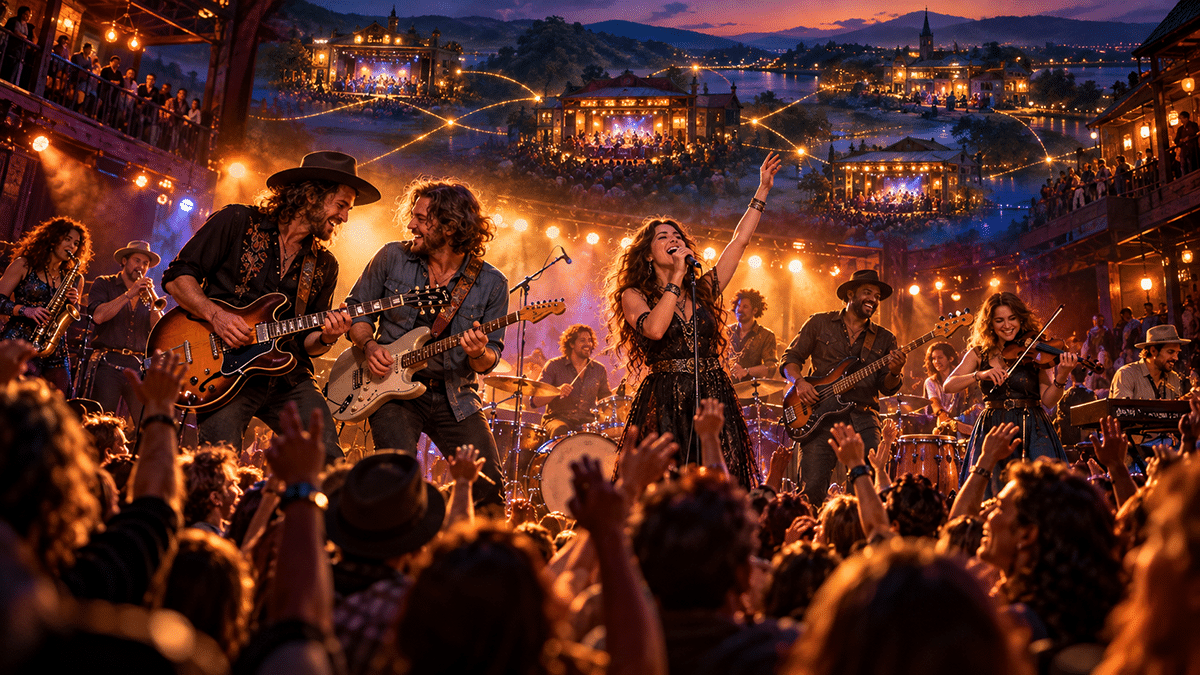
Imagine several original bands in the same town that each have a small but enthusiastic following. Rather than competing for the same handful of club dates, those artists could work together to create a recurring concert series featuring compatible music and shared promotion. Each band introduces its audience to the others, allowing everyone to reach listeners who are already interested in attending live performances. The venue benefits from a more organized event with a stronger promotional effort, while the audience begins to associate the series with discovering good local music.
Over time, this cooperation can expand beyond the bands themselves. A local restaurant may offer a dinner promotion connected to the concerts, while an independent record store might help sell advance tickets or host acoustic performances. A photographer could document the events, a local publication could cover the participating artists, and a radio program or podcast might provide interviews that help introduce the music to a wider audience. Instead of relying on a single musician to persuade every potential customer to attend, the event becomes part of a larger network of people and businesses with a reason to see it succeed.
There is a rebellious idea buried inside this approach that the traditional music industry has never particularly encouraged. Musicians do not have to treat one another as competitors fighting over a limited supply of fans. Artists working in compatible styles can strengthen each other’s businesses by helping create a larger audience for the music itself. A healthy local scene makes it easier for everyone to sell tickets, merchandise, recordings, and other experiences because the audience begins identifying with the community rather than viewing every concert as an unrelated evening of entertainment.
That kind of cooperation also makes the scene more resilient. A venue may close, a promoter may move away, or a particular band may take a break, but the relationships among the remaining musicians and fans can survive those changes. When the community itself becomes the attraction, artists gain the freedom to move events between locations without losing the audience they have worked so hard to develop.
The Economics of Staying Close to Home
The financial argument for local and regional touring becomes much clearer when we compare the actual cost of performing close to home with the cost of traveling long distances. Musicians often look at a guarantee and assume they know what they are earning, but a performance fee is only the beginning of the calculation. The important number is the money left after paying the expenses required to perform the show, including a realistic accounting of the musicians’ time and the operating costs of the business.
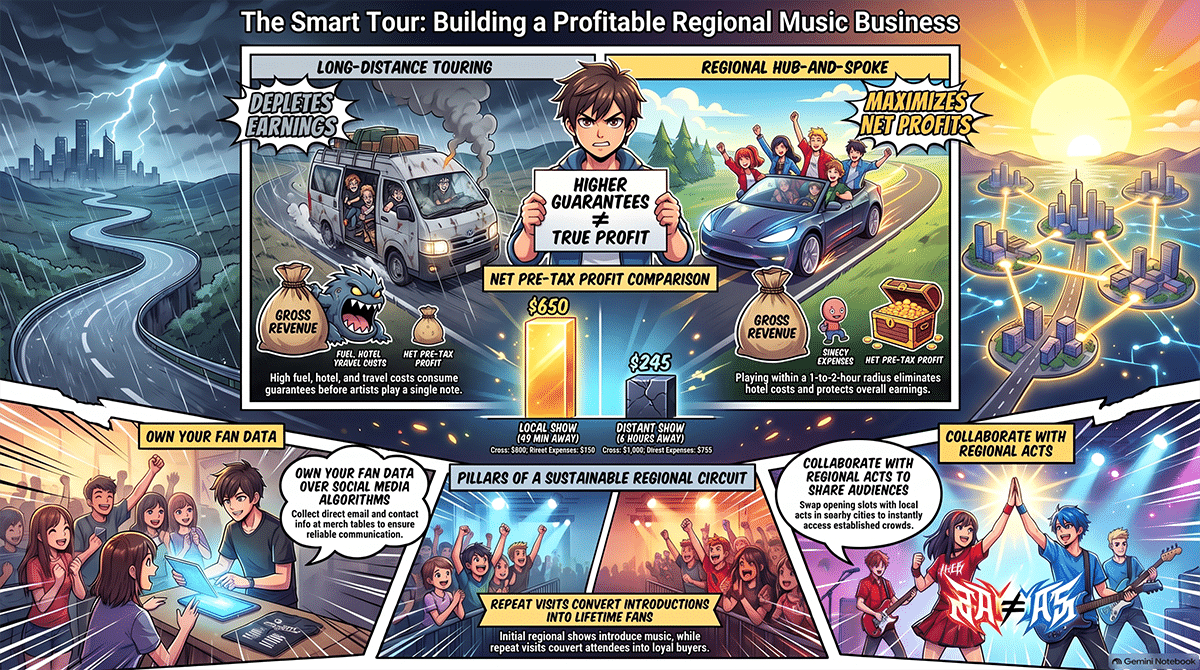
Consider a hypothetical four-piece band offered $600 to perform at a venue located forty-five minutes from home. Suppose the group spends $35 on transportation, another $25 on miscellaneous show expenses, and sells $200 worth of merchandise that costs $90 to produce and process. The evening generates $800 in total sales and performance income, with $150 in direct cash expenses. That leaves $650 before accounting for musician compensation, taxes, equipment depreciation, insurance, rehearsals, and the other costs of operating a band. If the members share that remaining amount equally as working musicians, they each receive $162.50 before their individual obligations. That may not be a spectacular payday, but it can be a reasonable building block for an independent business, especially if the performance also creates future customers.
Now imagine the same band accepts a $900 guarantee for a show six hours away. The group needs fuel, meals, and overnight accommodations, and it may have to pay for parking or tolls along the way. For illustration, suppose transportation costs $180, hotel rooms cost $320, meals cost $160, and miscellaneous expenses add another $50. The band has spent $710 before accounting for merchandise costs or compensation for the musicians. If it sells only $100 in merchandise with $45 in associated costs, the entire trip produces $1,000 in revenue and $755 in direct expenses, leaving $245 before paying the band for the performance and a considerable amount of travel time.
These are hypothetical figures rather than industry averages, and actual costs will vary enormously with location, band size, vehicle, routing, and venue arrangements. They nevertheless demonstrate why a larger guarantee does not automatically mean a more profitable show. The distant performance might be worth accepting if it provides access to a valuable festival, a meaningful support opportunity, or an audience that can realistically be developed into future business. But if the artist has no plan to return and no way to maintain contact with the people who attend, the extra travel expense may accomplish little more than converting a perfectly good weekend into a very inefficient road trip.
There is also an important distinction between cash profit and true economic profit. An artist who owns the van may not receive a fuel bill for every mile, but tires, maintenance, insurance, and eventual vehicle replacement still cost money. A musician who takes Friday off from a paying job has incurred a cost even if that lost income never appears on the band’s expense report. A disciplined touring business needs to understand both the cash left in the account and the real resources consumed by a performance.
This is why regional touring can be so powerful. By removing or reducing many of the expenses associated with overnight travel, artists can preserve more income while creating opportunities to return to the same markets. The savings are valuable on their own, but the ability to develop those markets repeatedly is what turns a collection of gigs into a sustainable business.
Building Your First Regional Touring Circle
Once an artist has established a meaningful hometown audience, the natural next step is to look outward toward nearby communities. The temptation is often to think in terms of state boundaries or prestigious cities, but geographic distance matters less than the practical realities of reaching a market. A city ninety miles away with terrible traffic and expensive parking may be less attractive than another city 140 miles away that can be reached easily by highway. Geography should serve the economics of the tour rather than becoming another excuse to produce an impressive-looking poster.
A useful regional strategy begins with the maximum distance the artist and musicians can comfortably travel, perform, and return home on the same day. For some bands, that may be an hour or ninety minutes. Others may be comfortable traveling two or three hours, particularly when the performance schedule allows an earlier return. A longer journey can sometimes make sense, but fatigue needs to be treated as a genuine business and safety concern. Saving money on a hotel is not a victory if the drummer falls asleep while driving down the interstate at three in the morning.
The artist should then begin researching communities within that practical radius, paying particular attention to places that already support original music. Not every town with a nightclub represents a useful market, and not every venue that advertises live entertainment is interested in developing an audience for unfamiliar artists. The goal is to find communities where compatible music is already being performed, where local musicians have developed followings, and where venues understand the relationship between quality programming and repeat attendance.
An Atlanta-area musician, for example, might eventually investigate communities in North Georgia, neighboring parts of Alabama, Tennessee, and the Carolinas. The most practical destinations would depend on the exact home base, traffic, show times, audience demand, and the economics of each booking. The artist should resist the temptation to treat every town within a certain mileage radius as an equally valuable opportunity. Some nearby cities may have little demand for the music, while a slightly more distant community with an established blues club, songwriter venue, or original music festival might offer considerably better prospects.
Researching a market should involve much more than finding a venue email address. Artists need to understand the character of the local music community, identify compatible performers, examine the venue’s normal programming, and learn how shows are promoted. A club that consistently attracts audiences for original music may be a better partner than a larger establishment where the band will spend the evening competing with televisions and conversations about the football game.
When these markets are approached carefully, the artist can develop a regional network in which each city has a reason to welcome the band back. That is the beginning of a touring territory, and it provides a much stronger foundation than randomly accepting distant bookings simply because somebody offered an open date.
The Other Band in Town May Be Your Best Booking Agent
One of the least expensive ways to enter a new regional market is to develop relationships with musicians who already have an audience there. This is hardly a revolutionary concept, but independent artists often approach other bands as competitors rather than potential business partners. That attitude becomes especially ridiculous when both groups are struggling to attract enough people to make their shows profitable. A room with sixty enthusiastic fans is not a national treasure that must be protected from invading musicians.
Suppose a blues-rock band has developed a strong following in one community, while a compatible band in a neighboring city has established an audience of its own. The first group could invite the second to participate in a hometown concert, giving the visiting band an introduction to people who already enjoy that style of music. Later, the arrangement could be reversed, with the original band traveling to the neighboring city and appearing alongside its new partner. Both groups benefit from local credibility that would have been difficult to establish independently.
Of course, these relationships work only when everyone brings something meaningful to the arrangement. A band that promises to promote a show but contributes nothing beyond a last-minute social-media post is not building a partnership. The artists need to discuss promotion, performance responsibilities, ticket arrangements, merchandise policies, and compensation before the event. When the arrangement is handled professionally, everyone has an incentive to help the show succeed.
As the network grows, relationships between bands can begin connecting several cities. A group that has reliable audiences in one town may introduce an artist to another act or promoter farther along the regional circuit. Over time, musicians can exchange useful information about venues, audiences, ticket pricing, promotional opportunities, and the practical challenges of performing in different communities.
This is how independent artists begin building infrastructure without waiting for a booking agency or record label to create it for them. Instead of paying a middleman to introduce the band to a market, musicians develop relationships that provide access to audiences while keeping more of the revenue inside the regional music community.
The important thing is to view these partnerships as long-term investments rather than one-night favors. A successful collaboration should make both artists more valuable to their audiences, the venues, and the surrounding music scene. When that happens repeatedly, the regional circuit begins functioning less like a collection of competing performers and more like a cooperative business network.
The First Show Is an Introduction, Not a Finished Job
Getting booked in a new city is often treated as a major accomplishment, but the booking itself creates very little lasting value unless the artist develops a relationship with the people who attend. This is where regional touring has a significant advantage over the traditional approach. Because the artist can return without absorbing enormous travel expenses, the first show can be viewed as an introduction to a market rather than a one-time attempt to extract as much money as possible.
An unfamiliar artist may attract only a modest audience during that first appearance. Some of those people will have come to see the local opening act, while others may simply be regular customers of the venue. The artist’s job is to turn that accidental exposure into genuine interest. A strong performance is essential, but so is creating opportunities for people to learn more about the music, purchase something meaningful, and remain connected after the evening ends.
This is where personal interaction becomes more important than many musicians realize. An artist who spends a little time talking with audience members after the show can learn where people traveled from, how they discovered the performance, what songs connected with them, and what might encourage them to attend again. These conversations provide information that no streaming dashboard can fully explain. They also make the fan feel like a participant in the artist’s journey rather than another anonymous customer.
The second appearance should build on what happened during the first. The artist can contact fans who opted into future announcements, reconnect with local musicians, and work with the venue to improve promotion. If the first event drew forty people and the second attracts sixty-five, the artist can begin evaluating whether the market is developing. The numbers alone do not tell the entire story, but they provide a much stronger basis for future decisions than simply assuming the audience will grow because the music is good.
Over time, repeat visits can create familiarity and trust. Fans begin recognizing the band’s name, bringing friends to performances, and developing expectations around the artist’s return. The venue may also become more willing to offer better dates or improved financial terms when it sees evidence of consistent demand.
That is why regional touring should be designed around the ability to return. The first show introduces the business to the market, but the second and third appearances provide opportunities to turn that introduction into a continuing source of revenue.
The Real Money Is in the Fans Who Come Back
The traditional music business has trained artists to focus heavily on audience size, but the number of people who attend a performance is only one part of its economic value. A concert attended by 200 strangers who never interact with the artist again may produce less long-term value than a smaller show where a substantial portion of the audience becomes part of an ongoing fan community. That does not mean artists should ignore ticket sales or accept poor guarantees in exchange for vague promises of exposure. Exposure has been used as an excuse for not paying musicians for so long that it should probably come with its own warning label.
The real opportunity lies in understanding how a live performance can produce both immediate revenue and future customers. A person who enjoys a concert may purchase a shirt, download an album, buy vinyl, or provide direct financial support. That same person may return six months later with friends, purchase tickets to a special event, join a membership, or support a new recording project. The initial performance creates the possibility of future revenue, but only if the artist maintains the relationship and offers experiences worth purchasing.
This changes the way musicians should evaluate their audience. A casual listener who follows a band on social media might never attend another show, while someone who lives nearby and has already purchased tickets twice may be an ideal customer for the next event. Geographic location, past purchases, attendance history, and direct engagement all help the artist understand where meaningful demand exists. Those insights are particularly valuable in regional touring because the same fans can realistically attend several performances over the course of a year.
Consider a hypothetical artist who develops 250 engaged fans in a nearby city. If eighty of those fans eventually purchase a $20 ticket to a return performance, the artist has generated $1,600 in gross ticket sales before considering merchandise or other income. That money is not automatically the artist’s take-home revenue, since venues, ticketing providers, promoters, taxes, and production costs may claim portions of it. Nevertheless, the example illustrates how a relatively modest regional fan community can create substantial economic opportunity when the artist has a reliable way to reach those supporters.
The strongest business model is not based on persuading the same people to spend money constantly. Fans have budgets, responsibilities, and plenty of entertainment choices. Instead, the artist should create a relationship where people genuinely want to participate because the music, performances, and community add something meaningful to their lives. That kind of loyalty is difficult to manufacture through advertising, but it can develop naturally through repeated, positive experiences.
Your Fan Database Is More Valuable Than Your Tour Poster
One of the most frustrating things about traditional touring is how much effort artists spend attracting an audience without creating any reliable way to communicate with those people afterward. Musicians will drive hundreds of miles, spend money promoting an event, deliver a terrific performance, and then allow the entire audience to disappear into the night. The band may gain a few social-media followers, but those connections remain controlled by platforms whose primary business is selling access to people’s attention.
This is where the Making a Scene philosophy of artist ownership becomes especially important. The artist should have a direct, permission-based relationship with fans that does not depend entirely on a social-media company deciding whether another concert announcement deserves to appear in someone’s feed. An email address, a properly consented mobile contact, or a connection through an artist-controlled fan system can create that relationship, provided the artist respects privacy, honors communication preferences, and gives people a clear reason to remain involved.
The most effective place to create that connection is often the show itself. Someone who has just enjoyed a performance is much more likely to be interested in hearing from the artist than a stranger scrolling past an advertisement. A visible QR code near the merchandise table could invite fans to access an exclusive live recording, receive updates about future performances, or join a digital fan community. A physical product could unlock additional content through an NFC tap, while a ticketing system could offer customers an opportunity to opt into future announcements.
The important detail is that fans should knowingly choose to participate. Collecting an email address for a ticket purchase does not automatically give an artist unlimited permission to use that information for unrelated marketing. Artists need to respect applicable privacy and marketing rules, including unsubscribe requirements and the stricter consent expectations surrounding promotional text messages. A sustainable fan relationship begins with trust, and sneaking people onto mailing lists is a remarkably efficient way to destroy that trust.
Once properly collected, fan information becomes useful because it allows the artist to communicate with people according to their interests and locations. A fan living two hours away does not need constant reminders about every hometown performance, but that person may be delighted to learn that the band is returning to a nearby club. Geographic targeting can make promotional communication more relevant and give artists a clearer picture of which regional markets are developing genuine demand.
The result is a business asset that becomes more useful with each performance. Instead of repeatedly paying to find a new audience, the artist develops the ability to reconnect with an existing one. That relationship is not a guarantee of future purchases, but it provides the foundation for marketing that is more personal, less expensive, and less dependent on the whims of digital platforms.
Give Fans a Reason to Follow the Regional Journey
Regional touring can become more exciting when fans begin viewing the performances as part of a larger experience rather than unrelated concerts. A band that regularly visits several nearby cities has an opportunity to create a recognizable identity around its circuit, especially when the music appeals to audiences who enjoy participating in a community. The artist can begin connecting performances through special recordings, limited merchandise, themed events, collaborations, and rewards that acknowledge fans who support multiple shows.
Imagine a fan who first discovers a band at a small local festival. The following month, that fan attends a ticketed performance in a nearby city and purchases a limited-edition recording. Later, the band announces a special hometown concert featuring another artist from its regional network. The fan attends again, brings friends, and gradually becomes part of the audience that helps sustain the entire circuit.
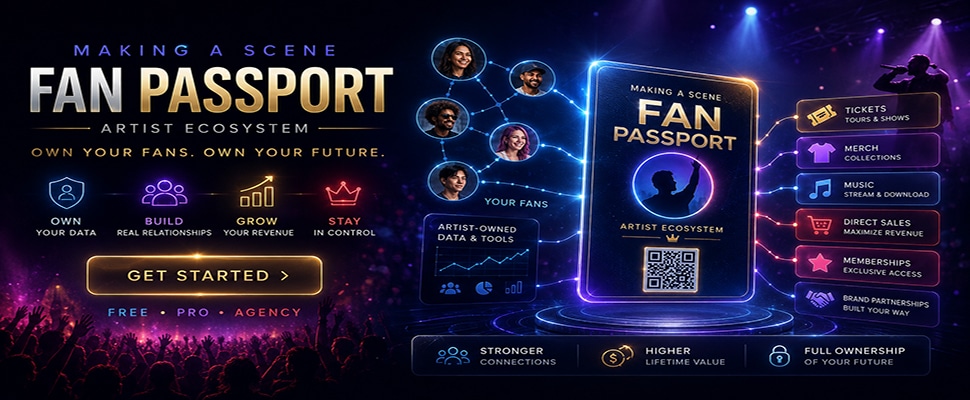
The relationship can be strengthened through a digital fan passport or loyalty system that recognizes participation without requiring people to become technology experts. A fan might receive a digital stamp after attending a show, unlock an exclusive performance recording, or gain access to a special event after supporting several concerts. These features should be designed to add value to the experience rather than turning music into a complicated collection of points, badges, and marketing gimmicks.
This is also where Smart Media products can become useful for independent artists. A physical album or collectible containing NFC technology could connect fans to an evolving digital experience with music, videos, photographs, and special offers. The artist could maintain the connection long after the purchase, making the product more meaningful than a souvenir that spends the next ten years collecting dust beside somebody’s old concert tickets.
The commercial value of these experiences comes from their ability to deepen an existing relationship. Fans who enjoy participating may be more willing to attend future shows, purchase exclusive merchandise, or support new projects. The technology itself does not create loyalty, however, and artists should avoid paying for elaborate systems before they have a real audience interested in using them. A modest but enthusiastic fan community with a simple email signup can be more valuable than an expensive digital platform populated by people who never return.
The smart approach is to let the technology grow alongside the audience. As regional fans begin attending repeatedly, the artist can introduce experiences that reward their support and make the community more enjoyable. In that way, the touring business and the artist’s digital ecosystem develop together, each making the other stronger.
Make Your Merchandise Table Part of the Touring Business
For many independent musicians, merchandise represents one of the most important opportunities to earn money beyond the performance fee. Yet it is remarkable how often the merch table is treated as an afterthought, usually involving a folding table, a cardboard box of tangled shirts, and whichever band member has drawn the short straw for sitting beside it. The table may be technically open for business, but the experience rarely encourages anyone to do much shopping.
A regional touring strategy creates opportunities to treat merchandise as a continuing business rather than an occasional collection of leftovers from a printing order. Because the artist returns home frequently, inventory can be managed more easily, products can be restocked between performances, and sales can be studied from one market to another. The band can discover which sizes are popular, which products sell best, and whether particular audiences respond to recordings, apparel, posters, or more unusual items.
The artist can also experiment with products tied to the regional experience. A special shirt might commemorate a collaborative concert series, while a limited recording could be available only at certain performances. A regional poster featuring the venues or participating artists could provide an inexpensive collectible that fans associate with the community. These products may also encourage people to attend multiple events, particularly when the merchandise reflects experiences that cannot simply be purchased from a general online store.
However, merchandise revenue should always be evaluated against the real costs of producing and selling the products. A $30 shirt is not $30 in profit, especially when printing, design, packaging, payment processing, sales taxes, transportation, and any venue merchandise commission are considered. Artists should calculate their actual margins before committing to large inventory orders, because unsold merchandise can quietly tie up money that would have been better used to promote another successful show.
A well-designed merchandise operation also creates natural opportunities for direct fan connection. Someone purchasing a record may want to know when the next album is coming, while a fan buying a shirt may appreciate access to future concert announcements. The interaction should feel like a conversation with an artist rather than a sales funnel operated by a particularly enthusiastic insurance company. People came to enjoy the music, and the commercial relationship should grow from that experience.
When merchandise is integrated thoughtfully into the regional touring business, each performance can generate more than a guarantee. It can produce product revenue, valuable customer information, and opportunities for future sales without requiring the artist to travel hundreds of additional miles.
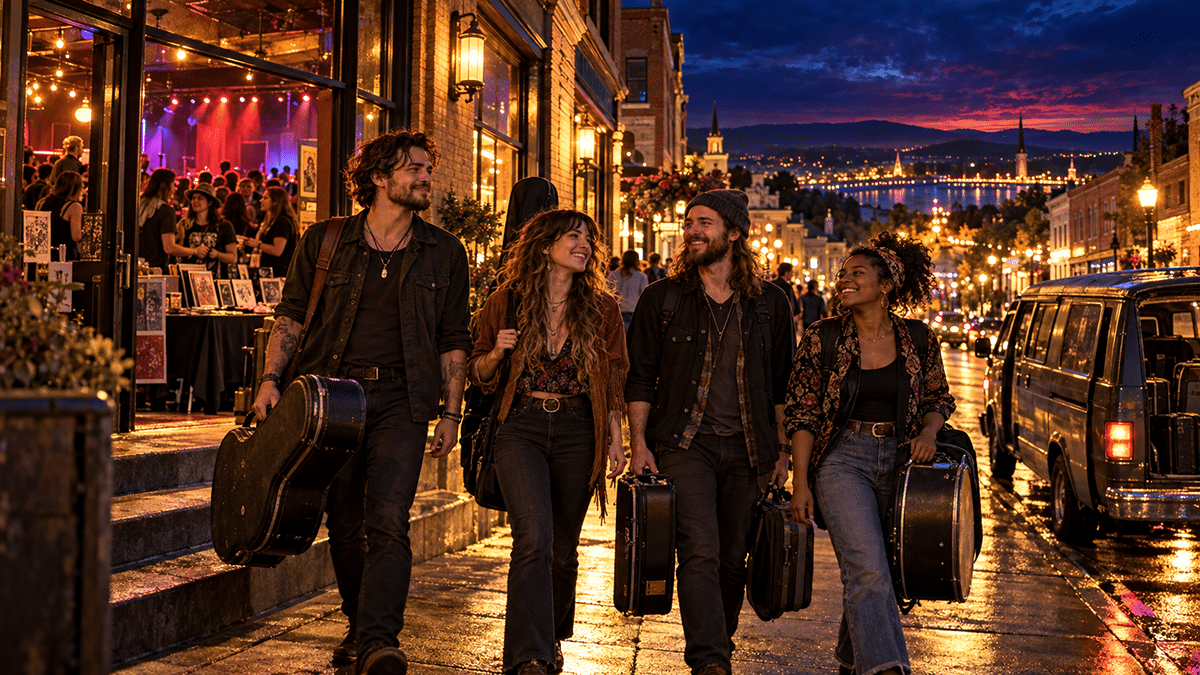
Turn Local Venues Into Long-Term Partners
Independent venues are often discussed as if they exist primarily to provide musicians with places to perform, but they are businesses facing their own difficult economics. Rent, staffing, insurance, utilities, licensing, equipment maintenance, promotion, and unpredictable attendance all affect whether a venue can remain open. An artist who understands those pressures is in a much stronger position to create a lasting relationship than one who simply sends a booking request and hopes for a generous guarantee.
The most valuable artist to a venue is not necessarily the musician with the largest social-media following. It may be the artist who reliably attracts paying customers, communicates professionally, promotes effectively, delivers a quality performance, and understands how the event fits into the venue’s business. When a musician consistently helps produce successful evenings, booking becomes less of a gamble for everyone involved.
This creates an opportunity to negotiate arrangements that reflect the value each party contributes. A venue might offer a reasonable guarantee with additional compensation tied to ticket sales, while another might provide a door split under clearly defined terms. Some locations may be suitable for artist-produced ticketed events where the musician assumes more responsibility in exchange for greater control. The correct arrangement depends on the circumstances, but artists should understand ticketing fees, settlement terms, cancellation policies, production expenses, and merchandise arrangements before agreeing to the performance.
Long-term venue relationships can also create opportunities for recurring events or carefully managed residencies. An artist might develop a quarterly concert series that becomes a recognizable part of the venue’s programming. The performances could feature different guest musicians or themes, creating variety while allowing the audience to develop a habit of attending. Rather than booking another random Saturday night, the venue and artist begin building a shared event that can become more valuable over time.
There is an important balance here, because playing too often in the same market can weaken demand. Fans who believe they can see the band any weekend may stop treating performances as occasions worth planning around. The artist and venue should therefore consider the audience’s appetite, the style of music, and the calendar of competing events when deciding how frequently to perform.
A successful local partnership can eventually become a model for regional expansion. Once an artist understands how to build a dependable audience at one venue, that experience can help establish similar relationships in neighboring cities. The format may change to reflect local conditions, but the business principle remains consistent: create events that provide real value to the venue, the artist, and the audience.
The Regional Tour Should Follow the Fans, Not the Highway
Traditional touring often begins with a map and a calendar. The artist identifies a series of possible destinations, searches for available venues, and attempts to connect the dates into a reasonable route. This makes logistical sense for a trip that has already been justified, but it is a poor substitute for determining where the band should be performing in the first place.
A more sustainable regional strategy begins with evidence of potential demand. The artist may already have fans in nearby communities through local performances, streaming activity, merchandise sales, mailing-list signups, or collaborations with other musicians. Those signals can help identify cities where a first show is likely to attract meaningful interest. They should not be mistaken for guaranteed ticket sales, but they provide a much better starting point than choosing a destination simply because it happens to be along the interstate.
The strongest evidence often comes from direct fan behavior. If people repeatedly travel from a neighboring city to attend hometown performances, that suggests there may be an audience worth developing closer to where they live. Similarly, a cluster of fans who actively respond to announcements and purchase music may provide a useful foundation for testing a new market. The artist can reach out to those supporters, investigate suitable venues, and explore whether a local partner might help organize the first event.
Streaming statistics can contribute to this research, but musicians should be cautious about treating every listener as a potential concert customer. A city with thousands of monthly streams may contain relatively few people willing to purchase a ticket, especially when listening activity comes from passive playlists or casual discovery. Direct purchases, repeat attendance, and meaningful engagement usually provide stronger evidence of willingness to support the artist financially.
Once a city has been identified, the first booking should match the realistic size of the audience. An intimate listening room with eighty enthusiastic people can be a better business opportunity than a large club that looks empty with the same attendance. The smaller environment may provide a stronger experience, better merchandise interaction, and a clearer demonstration of demand for future bookings.
As the audience grows, the artist can reconsider venue size, ticket pricing, show frequency, and promotional investment. Each return visit should be informed by the previous performance, allowing the market to develop at a pace supported by actual fans rather than wishful thinking. This approach may not produce immediate geographic expansion, but it reduces the risk of building an impressive touring schedule that the audience is not ready to support.
Artificial Intelligence Can Become Your Regional Booking Assistant
One of the less glamorous realities of operating a regional touring business is the enormous amount of administrative work involved. Someone has to research venues, maintain contact information, compare offers, track ticket sales, organize promotional assets, communicate with musicians, manage merchandise inventory, and figure out whether the next show is financially worthwhile. For independent artists who are also writing songs, recording music, maintaining websites, and trying to have something resembling a normal life, those responsibilities can quickly become overwhelming.
This is where artificial intelligence has the potential to become genuinely useful. Rather than treating AI as a substitute for artistic creativity, musicians can use it to reduce the repetitive business work that consumes time and energy. An AI-assisted system could organize information about regional venues, compare past performance results, help estimate travel costs, and identify markets where fan engagement appears to be growing. It could also help prepare booking emails, develop localized marketing campaigns, and summarize the practical requirements for upcoming performances.
Imagine an artist who has spent a year building audiences in several neighboring cities. The artist wants to know which markets deserve additional bookings during the next three months, but the relevant information is scattered across ticketing records, merchandise transactions, spreadsheets, and mailing-list data. A properly configured AI assistant could help bring those records together and compare the financial results of past performances, making it easier to identify opportunities that might otherwise be overlooked.
The analysis could become considerably more sophisticated as the business develops. An artist might discover that one venue consistently produces strong ticket sales but weak merchandise revenue, while another attracts smaller audiences that purchase more recordings and return more frequently. A city that initially seemed unprofitable might reveal valuable long-term fan growth, while a prestigious booking could turn out to be a financial disappointment. By examining actual results rather than assumptions, the artist can make more informed decisions about where to invest time and money.
Of course, AI is not magic, and musicians should be especially skeptical of software that promises to predict ticket sales with mystical accuracy. These tools are only as reliable as the information they receive, and their recommendations should be checked against real-world conditions. Venue availability, local competition, weather, changing audience behavior, and the personal relationships that drive live entertainment cannot always be captured in a database.
The greatest value comes when AI handles the tedious organization and analysis while the musician remains responsible for the creative and human decisions. Technology can help identify an opportunity, but it cannot replace the experience of walking into a room, connecting with an audience, and making people genuinely care about the music. That remains the artist’s job, and it is one responsibility we should probably avoid outsourcing to a chatbot.
Building the Artist-Owned Regional Ecosystem
The ideas behind local and regional touring connect directly to the larger goal of building an artist-owned music business. For decades, independent musicians have been encouraged to depend on outside organizations for access to audiences, whether those gatekeepers were record labels, radio stations, promoters, booking agencies, or more recently digital platforms. Some of these organizations provide valuable services, and professional partnerships can certainly help an artist grow. The problem begins when the artist becomes so dependent on those services that losing access means losing the ability to reach fans.
An artist-controlled business ecosystem offers a different approach by connecting the various activities that make up a music career. Live performances, ticket sales, merchandise transactions, music releases, memberships, fan communications, and audience engagement should contribute to a coherent understanding of the business. The artist should be able to see how these activities influence one another and use that information to develop opportunities without surrendering control of the underlying relationships.
This is the philosophy behind the Making a Scene Artist Ecosystem and Fan Passport concept. A performance is not simply a date on a calendar, and a fan is not merely a number added to a mailing list. The show can become a continuing part of the fan relationship, connecting real-world attendance with future experiences, purchases, rewards, and communications. With appropriate consent and privacy protections, the information created through those interactions can help artists understand which communities are supporting their music and how those relationships are developing.
For a regional touring artist, that kind of integration has practical value. A musician planning a return to a nearby city could examine previous attendance, identify fans who have opted into local announcements, review merchandise activity, and prepare communications based on actual interest. The system could also help organize information needed to advance a show, such as technical requirements, stage plots, venue contacts, schedules, and merchandise arrangements. The artist would still have to negotiate and perform the date, but the administrative burden could be reduced substantially.
Fan Passport-style technology could also help connect individual shows into a larger regional experience. Fans attending performances in multiple cities might receive recognition for their participation or gain access to special content associated with the concerts. Artists could use those interactions to understand how audiences move between markets, discover which events attract repeat customers, and identify communities that may support new opportunities.
None of this requires the fan to understand databases, artificial intelligence, or decentralized technology. The audience should simply experience an easier way to stay connected with an artist it enjoys. Behind that simple interaction, the business can become more organized, more informed, and more resilient.
The ultimate goal is not to build an elaborate technology system for its own sake. It is to help independent musicians operate the kind of business infrastructure that large entertainment companies have enjoyed for decades, without requiring them to surrender ownership of their music, fan relationships, or future revenue.
What About the Venues That Expect You to Bring the Entire Crowd?
Anyone who has spent time booking independent music knows that some venues have developed a particularly convenient business model. They provide the room, the lights, and perhaps a sound engineer, while expecting the artist to deliver enough paying customers to make the evening profitable. The venue may offer little promotion beyond a social-media post, and in some cases the musician is left carrying nearly all the financial risk. If the show succeeds, the venue enjoys the food and beverage sales. If it fails, the artist receives a heartfelt explanation about how difficult the music business has become.
Regional touring does not eliminate these situations, but building a dependable audience gives musicians greater negotiating power. An artist who can demonstrate actual ticket demand is in a stronger position to discuss guarantees, door arrangements, marketing commitments, and repeat bookings. Venues still need to earn money, and a fair arrangement should recognize the costs and contributions of everyone involved. The important difference is that the artist begins approaching the negotiation with evidence rather than enthusiasm alone.
There is also an opportunity to develop alternatives to traditional club bookings. A regional fan community may be large enough to support a ticketed concert in a rented listening room, community space, small theater, or other suitable location. An artist-produced event can provide more control over ticket pricing, audience communication, merchandise, and the overall experience, although it also requires careful management of insurance, staffing, production, permits, accessibility, and financial risk.
House concerts and private events can offer another path, particularly for solo artists, acoustic performers, and smaller ensembles. These performances often depend heavily on personal relationships and host involvement, but they can provide intimate environments where audiences are especially engaged. The artist should still establish appropriate compensation and clear expectations rather than assuming that the privilege of playing in someone’s living room will somehow pay the electric bill.
The broader lesson is that artists should not confuse venue access with business opportunity. A booking is valuable when it provides reasonable compensation, meaningful audience development, or some other credible benefit that justifies the investment. The more independent relationships an artist develops within a regional market, the less dependent the business becomes on any single promoter or venue.
The Hidden Value of Becoming Part of the Regional Economy
When artists build a local music scene, they create economic value that extends beyond the money collected at the door. Concertgoers often spend money at restaurants, bars, parking facilities, shops, and other businesses before or after performances. Local events can encourage people to visit downtown districts and participate in activities that support the surrounding community. This creates an opportunity for independent musicians to develop relationships with organizations that may not initially think of themselves as part of the music business.
A restaurant near a venue might see the value in promoting a concert that encourages customers to arrive early for dinner. A local business might sponsor a recurring music series because the audience overlaps with its customers. A downtown association could recognize that a well-organized concert program helps attract visitors, while a community organization might welcome an event that creates opportunities for local artists and businesses to collaborate.
These partnerships should be approached as business relationships rather than requests for charity. A musician seeking sponsorship needs to explain what the partner receives, whether that involves appropriate recognition, access to a relevant audience, participation in a community event, or another clearly defined benefit. It is also important to preserve the artist’s independence and avoid arrangements that compromise the music or turn a concert into an extended advertisement for somebody else’s business.
This approach can become especially useful when several artists work together. A regional concert series that regularly attracts audiences may offer a stronger partnership opportunity than an individual performer asking a business to support an isolated show. The participating artists can share promotional resources, create recognizable events, and help demonstrate that local original music contributes to the cultural and economic life of the community.
There is an important distinction between becoming commercially valuable to the community and expecting local organizations to fund every musical ambition. Businesses and public organizations have their own financial responsibilities, and not every promising artistic project deserves an automatic subsidy. The strongest partnerships emerge when artists can demonstrate that their events attract people, create positive experiences, and generate meaningful activity for everyone involved.
This is another reason the local-first strategy can be more sustainable than traditional touring. The artist is not simply passing through a community in search of a paycheck. They are becoming part of a network of relationships that can create opportunities for years.
The Regional Touring Model Needs Patience, Not Poverty
One of the challenges with any sustainable music business strategy is that it rarely produces the kind of overnight success story that attracts attention. Building a hometown audience takes time, and developing relationships across several nearby cities may require years of consistent work. Musicians accustomed to measuring progress through social-media metrics or prestigious bookings can become frustrated when growth happens gradually.
That frustration is understandable, but slow development is not necessarily a weakness. A regional audience built through repeated positive experiences may become more dependable than a much larger audience assembled through temporary online attention. Fans who have attended several performances, purchased recordings, and developed relationships with the artist often have a stronger reason to remain connected than people who happened to enjoy a fifteen-second video.
Patience should not become an excuse for accepting endless financial losses, however. A struggling regional market deserves honest evaluation, especially when repeated performances fail to attract new fans or generate meaningful revenue. The artist may need to change venues, collaborate with different local musicians, improve promotion, reconsider the show format, or simply recognize that the community is not currently a strong fit for the music.
A healthy regional business requires both persistence and the willingness to make decisions based on results. Artists should allow enough time for audiences to develop, but they should also establish reasonable expectations for what each market needs to contribute. A city that consistently loses money may still justify an occasional strategic appearance, but it should not consume the resources needed to support more successful parts of the business.
There is nothing romantic about running out of money while waiting for a market to discover how brilliant you are. The purpose of building a sustainable local and regional touring operation is to create a career that allows musicians to continue making music without constantly sacrificing their financial stability.
When Is It Time to Expand Beyond the Region?
The local-first approach should not be mistaken for an argument against national or international touring. Traveling to new markets can provide extraordinary artistic and commercial opportunities, especially when the artist has already developed a compelling live performance and a clear understanding of the audience. The difference is that expansion should be supported by a working business rather than by the belief that driving farther automatically represents career advancement.
A profitable regional circuit can generate income that helps finance the next stage of growth. It can also provide reliable ticket history, merchandise sales information, audience engagement data, and professional relationships that make an artist more attractive to venues, festivals, promoters, and potential touring partners. Instead of approaching distant markets with little more than a press kit and a hopeful email, the artist can demonstrate that the business has already developed genuine demand.
The next expansion might involve a short run into a neighboring region where the band has evidence of an audience. It could involve supporting a compatible artist with an established following, accepting a festival appearance that offers meaningful exposure and appropriate compensation, or coordinating several dates that make the travel costs manageable. The artist should still evaluate each opportunity carefully, particularly when the potential financial return depends on assumptions about future career benefits.
Some distant performances will justify higher costs because they provide opportunities that cannot be created locally. A well-compensated festival appearance, an important professional showcase, or a chance to support a major touring act may be worth the investment even when the immediate economics are less attractive. What matters is understanding the reason for accepting the date and having a realistic plan for turning that opportunity into lasting value.
The strongest national touring strategy may eventually resemble a network of established regional audiences connected by carefully planned trips. The artist develops strong relationships in several territories and returns to those markets at intervals supported by genuine demand. Rather than wandering across the country hoping to stumble upon a career, the musician gradually expands a business that already knows how to make money.
That approach may take longer than printing a coast-to-coast tour poster, but it also offers a much better chance of building something that survives after the tour is over.
Building a Music Industry Middle Class One Community at a Time
The music industry loves talking about global opportunity. Every artist can supposedly reach billions of people through streaming services, social platforms, and digital distribution, and that access is genuinely remarkable. A song recorded in a bedroom can now reach listeners around the world without requiring a record label to manufacture and distribute physical copies. Yet global availability is not the same thing as a sustainable business, and millions of potential listeners do not necessarily translate into enough paying customers to support a working musician.
For many independent artists, the more immediate economic opportunity lies much closer to home. A relatively modest group of engaged fans living within driving distance can support recurring concerts, purchase merchandise, attend special events, and contribute to recordings or other creative projects. Those same people can introduce the artist to friends and help build the cultural environment that makes live music an important part of their community.
This is not an argument for abandoning digital platforms. Streaming services, social media, online video, and other discovery tools can help introduce music to audiences who might never encounter it otherwise. The artist should use those channels to bring people into a relationship that can continue beyond the platform. Once a listener becomes interested, the business should provide opportunities to attend a concert, purchase music or merchandise, join a fan community, and support the artist directly.
There is also a larger economic opportunity when independent artists begin cooperating regionally. Musicians can share audiences and resources while working with local venues, recording studios, photographers, designers, promoters, and other creative professionals. As the music community grows, more of the money generated by performances and related activities can circulate among independent businesses rather than disappearing entirely into the hands of distant corporations.
That does not mean every dollar can or should remain local, and artists will continue to rely on national companies for many useful services. The important point is that a strong regional ecosystem gives musicians more choices. They can work with partners who provide genuine value while maintaining control over the assets that matter most: their creative work, their audience relationships, and the information that helps them operate their businesses.
The music industry middle class envisioned by Making a Scene will not be created simply by producing more songs or accumulating more streams. It requires independent artists to build businesses capable of generating dependable income from several connected sources. A healthy local and regional touring circuit can become one of the strongest foundations for that business because live performances create the human relationships that make nearly every other revenue opportunity possible.
The Future of Touring May Look a Lot More Like Coming Home
There is something wonderfully rebellious about the idea that musicians might build successful touring careers by refusing to follow the industry’s traditional road-warrior mythology. Instead of accepting endless travel as the price of credibility, an independent artist can decide that a profitable performance forty miles away is worth more than an impressive booking 400 miles away. Instead of treating every city as another dot on a poster, the artist can develop communities where people know the music, appreciate the performances, and genuinely look forward to the band’s return.
That shift requires musicians to think differently about what they are building. A hometown concert is no longer merely an opportunity to play for familiar faces, because it can strengthen the audience that supports the entire business. A regional performance becomes more than an evening’s guarantee when it helps establish a relationship with another community. Merchandise sales, direct fan connections, audience information, and collaborations with local artists all contribute to a business that becomes more valuable through repeated participation.
There will still be difficult nights, disappointing shows, unreliable venues, and occasional adventures involving broken vehicles and questionable roadside food. Those experiences are part of live music, and no business strategy can eliminate every uncertainty. The difference is that an artist with a strong local foundation has somewhere to return when things go wrong, along with an audience that can help support the next opportunity.
Perhaps the most important change is psychological. Musicians can stop viewing their hometown as the place they need to escape before becoming successful. They can recognize it as the natural starting point for an independent career built around real customers, dependable relationships, and a growing network of communities. As the business develops, the regional circuit becomes a source of income and a testing ground for the next stage of expansion, allowing the artist to travel farther when the opportunity makes economic sense.
For decades, the industry has sold musicians the idea that greatness is waiting somewhere down the highway, provided they are willing to sacrifice enough money, sleep, and personal stability to find it. Some artists have certainly built remarkable careers that way, but countless others have paid dearly for the privilege of discovering that an audience does not automatically appear just because a band drives into town.
The alternative is not to surrender ambition or settle for being a hometown act. It is to recognize that a lasting career grows from relationships with people who care enough about the music to support it repeatedly. By developing those relationships locally, extending them into surrounding communities, and using the resulting income and knowledge to guide future expansion, independent musicians can create a touring business that supports their lives rather than consuming them.
And when a band can spend Saturday night playing to an enthusiastic regional audience, earn a respectable profit, sell merchandise, welcome new fans into its community, and wake up Sunday morning in its own bed, there is a certain satisfaction in knowing that the evening accomplished something more meaningful than adding another city to a tour poster. The artist has strengthened a business, deepened relationships, and created a foundation for the next performance. That may lack some of the romance of the endless highway, but it also leaves enough money for breakfast, which is a surprisingly pleasant development in the independent music business.
 |  Spotify |  Deezer |  Breaker |
 Pocket Cast |  Radio Public |  Stitcher |  TuneIn |
 IHeart Radio |  Mixcloud |  PlayerFM |  Amazon |
 Jiosaavn |  Gaana |  Vurbl |  Audius |
 Reason.Fm | |||
Find our Podcasts on these outlets
Subscribe to Our Newsletter
Discover more from Making A Scene!
Subscribe to get the latest posts sent to your email.


