
The Next Music Industry Middle Class Will Be Built Around Relationships That Survive the Platform




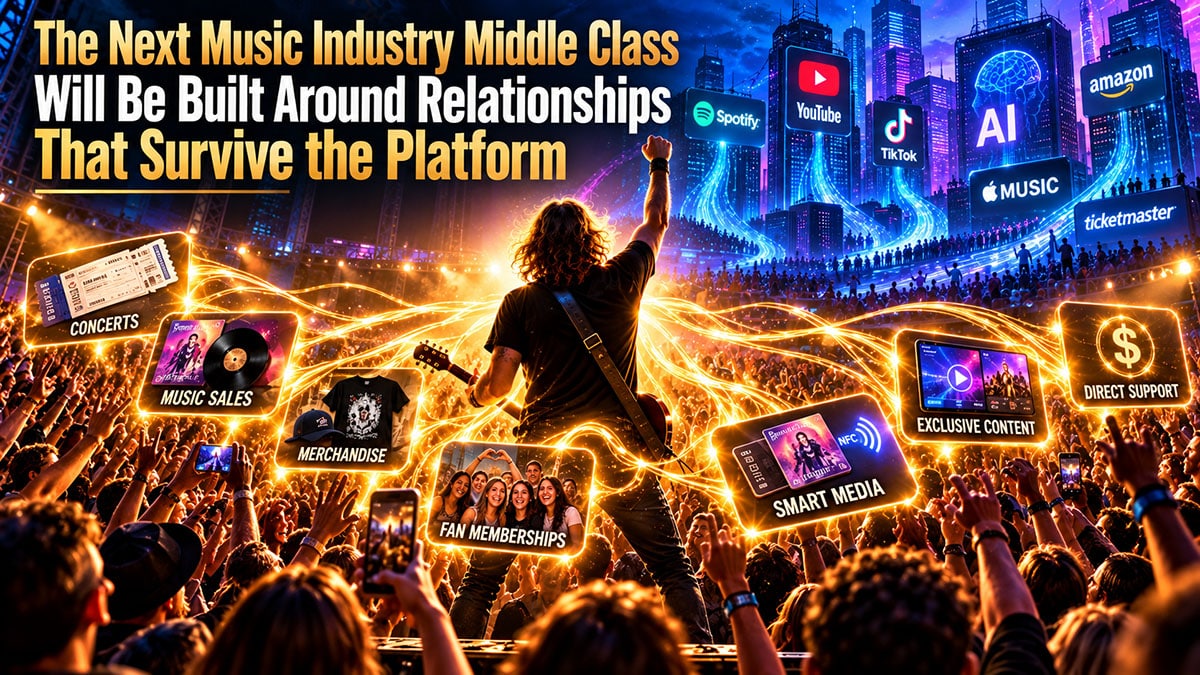
Making a Scene Presents – The Next Music Industry Middle Class Will Be Built Around Relationships That Survive the Platform
Listen to the Podcast Discussion
The music industry has become remarkably good at collecting information about fans, tracking transactions, and creating new ways to sell music. Unfortunately, the people making the music are often the last ones allowed to benefit from all that information. As AI, Smart Media, blockchain payments, and fan loyalty systems reshape the business, independent artists have an opportunity to change who controls the relationships that make music valuable.
The Music Business Has a Relationship Problem
There is something wonderfully absurd about the modern music industry. We now have artificial intelligence that can create remarkably convincing recordings, algorithms that can predict which song somebody might enjoy next, and technology that allows a piece of cardboard with a tiny electronic chip to unlock an entire interactive album experience. Streaming services can measure listening activity across enormous global audiences, while sophisticated ticketing systems can identify fans who qualify for special concert access based on their listening habits. We have managed to develop some extraordinary tools, yet an independent musician can still perform in front of several hundred enthusiastic people on Saturday night and return home Sunday knowing almost nothing about the audience that just spent two hours cheering for them. Apparently, teaching a computer to imitate a symphony orchestra was easier than giving the guitar player a reliable way to stay in touch with the people who bought tickets.
The problem becomes even more ridiculous when we consider how much money is being spent trying to understand those very same fans. Streaming services study listening habits because the information helps them retain subscribers, recommend music, and create new advertising opportunities. Ticketing companies want to understand purchasing behavior because knowing which customers attend particular events helps them sell more tickets. Social media companies have built enormously profitable businesses by collecting information about what people watch, share, discuss, and purchase. Even wireless phone companies have discovered that access to concerts and special music experiences can encourage customers to remain loyal to their services. Meanwhile, the musician whose work helped create all that interest is frequently left with streaming statistics, social media followers they cannot reliably contact, and a mailing list that was probably last updated when somebody promised to bring a clipboard to the merchandise table.
This contradiction is becoming one of the most important business opportunities facing independent musicians. The next meaningful advance in the music economy may have less to do with creating another distribution service, discovering another social media platform, or persuading people to consume even more music. It may come from helping artists build lasting relationships with the people who already appreciate their work. Those relationships can support concert attendance, merchandise sales, memberships, direct music purchases, licensing opportunities, crowdfunding, and other forms of income that provide a much stronger foundation than depending entirely on the payment decisions of a streaming platform. Technology becomes useful when it helps those relationships develop, but the real economic value comes from the people involved and the trust that grows between them.
For independent musicians, this represents a fundamental change in how they should think about building a career. Instead of measuring success primarily by the number of people who encounter their music, artists can begin measuring how many meaningful relationships they are developing and whether those relationships are helping sustain their creative work. That does not mean abandoning streaming services or refusing to participate in social media, because both remain important ways to introduce music to new listeners. It means recognizing that discovery is only the beginning of a much larger business process. The challenge is creating a path that allows somebody who discovers a song to become a listener, a concertgoer, a customer, and eventually a committed supporter without losing that connection every time a technology company changes its business model.
Everybody Wants the Fan, but Who Gets to Keep the Relationship?
One of the clearest examples of this shift appeared when Spotify and Live Nation announced Reserved by Spotify in May 2026. The program uses listening behavior on Spotify to help identify engaged fans who may qualify for reserved concert ticket access at participating events. This is a clever way to reward people who demonstrate enthusiasm for an artist, and it creates another connection between streaming activity and the live music business. Instead of treating a listener’s activity as information that exists entirely inside a streaming application, the program uses that information to influence access to a physical event. Details about the companies and their services can be found at Spotify and Live Nation.
The idea makes excellent business sense because an enthusiastic music fan is often interested in much more than listening to recordings. Somebody who plays an artist’s music regularly might also be willing to purchase tickets, buy merchandise, attend a special event, or support a future release. Connecting those activities can improve the experience for the fan while creating valuable opportunities for everyone involved. However, it also raises an interesting question about who gets to understand and maintain the relationship being developed. When streaming activity determines access to a concert benefit, the streaming platform and ticketing company may possess information that could be extremely useful to the artist. Whether the artist receives meaningful access to that information depends on the arrangements between the companies, the available tools, and the permissions granted by the fan.
The telecommunications industry has recognized the same opportunity. T-Mobile offers concert-related benefits through its customer rewards programs, including ticket discounts and special access at participating events. AT&T has developed music sponsorship arrangements that provide qualifying customers with opportunities such as special concert experiences and other promotional benefits. These programs are not particularly mysterious from a business standpoint because companies have always looked for valuable experiences that encourage customers to remain loyal. What makes them interesting is how clearly they demonstrate the economic power of the emotional connection people have with music. A wireless provider does not need to own a song to recognize that being associated with an exciting concert experience can help retain customers who might otherwise consider switching services. More information about these programs is available through T-Mobile Music Deals and AT&T Music Sponsorships.
There is nothing inherently wrong with these arrangements, and musicians should welcome legitimate partnerships that expose their work to new audiences or generate additional income. The issue is whether the artist can benefit from the relationship beyond the immediate performance or promotional transaction. A company offering premium concert access may learn something valuable about customer loyalty, while the musician may receive little more than a report showing how many people attended. The situation becomes especially frustrating when artists realize that companies providing phones, tickets, advertisements, and streaming subscriptions are developing sophisticated customer relationship systems around music, while the people who actually create that music often struggle to assemble a useful list of supporters. It is rather like owning a restaurant where the reservation company knows the names and favorite meals of every regular customer, but the chef is required to introduce himself every time somebody walks through the door.
Independent musicians do not need to resent those companies or attempt to duplicate their enormous technological investments. They do, however, need to understand why those businesses are investing so heavily in customer relationships and begin applying the same principles at a scale that makes sense for their own careers. A working band may not need an elaborate international loyalty program, but knowing which fans regularly attend performances, purchase recordings, or support special projects can make a substantial difference in how that band plans its future. Once those relationships are recorded with permission and maintained through systems the artist can control, they can remain valuable regardless of which companies happen to provide streaming, ticketing, or marketing services.
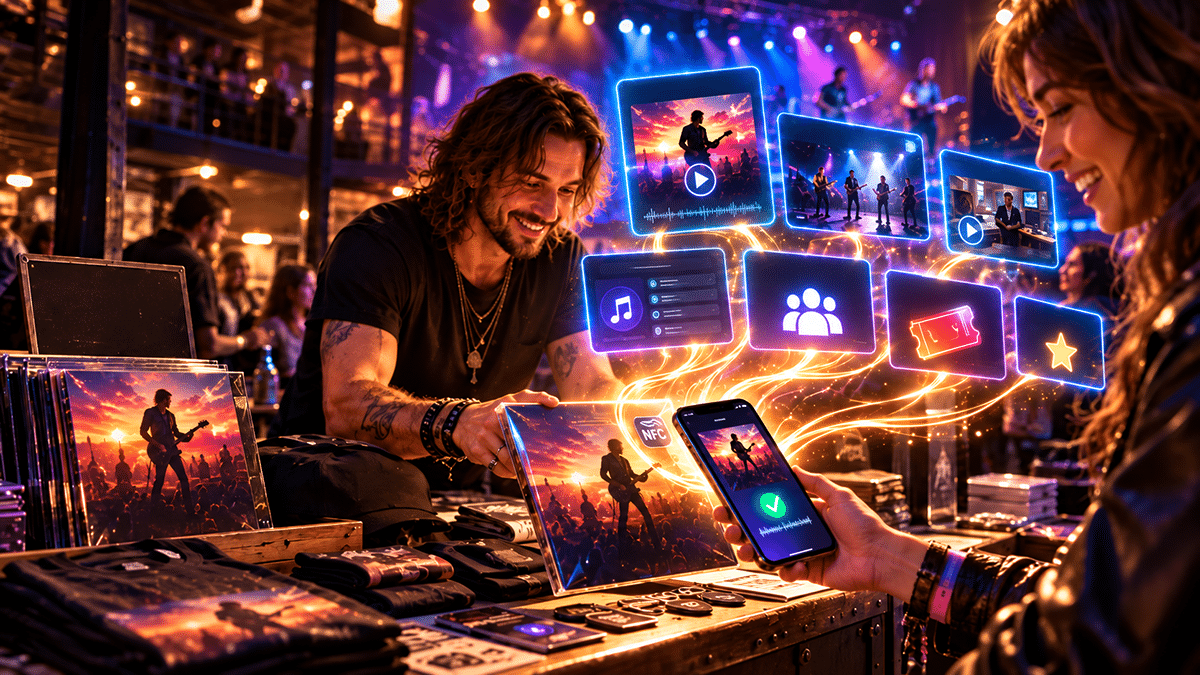
Smart Media Brings the Physical Album Into a Connected World
The arrival of Smart Media as a recognized music sales category provides another revealing example of how physical products and digital relationships are beginning to merge. On September 8, 2026, Luminate announced that it would begin tracking qualifying Smart Media Album sales in the United States and Canada beginning October 2. Because Luminate supplies important music consumption data used in Billboard’s chart calculations, this development opened a potentially significant opportunity for artists and manufacturers working with physical products that unlock digital music experiences. The announcement is available directly from Luminate, which identified Smart Media as a new physical music category and explained its plans to incorporate eligible transactions into its reporting systems.
For musicians who grew up selling vinyl records, cassettes, or compact discs, Smart Media introduces an interesting combination of familiar behavior and new technology. The fan still purchases a physical object, which might take the form of a collectible card, miniature record, keychain, or another specially designed product. Instead of containing the recording in the traditional sense, that object provides access to a digital experience through technology such as NFC or a QR code. Depending on the provider and product design, tapping the item against a smartphone may open a website or application containing the album, artwork, videos, lyrics, exclusive recordings, interviews, or other material. The physical product becomes a gateway into an experience that can be much richer than a simple download, while still giving fans something tangible to purchase, collect, display, or have signed after a performance.
This matters because the shift toward streaming brought extraordinary convenience while removing much of the experience associated with buying a recording. Anyone who remembers spending an afternoon examining album artwork, reading liner notes, and trying to decipher the mysterious photograph on the inside sleeve understands that recorded music once had a physical and emotional presence beyond the songs themselves. Those experiences were not always elegant, particularly when a cassette wrapped itself around the machinery of a car stereo or a jewel case shattered because somebody looked at it too aggressively. Nevertheless, the album was something a fan could own, revisit, and develop a personal connection with over time. Smart Media creates an opportunity to bring some of that emotional value back without requiring younger audiences to develop an appreciation for plastic packaging technology that should probably have been outlawed somewhere around 1997.
The more significant business opportunity emerges when that physical product becomes connected to an ongoing relationship with the artist. A fan who purchases a Smart Media Album after a show might use it to hear the recording, watch a documentary about the sessions, or access a special live performance. If the experience includes a clearly explained opportunity to join the artist’s community, that same fan can choose to receive future concert announcements, information about new releases, or access to additional material. The important distinction is that the product can remain meaningful long after the original sale, while the artist gains an opportunity to establish a direct connection with somebody who has already demonstrated a willingness to spend money supporting the music.
That opportunity should not be confused with automatic chart eligibility. Luminate’s recognition of Smart Media does not mean that any object containing an NFC chip qualifies as a reportable album sale. The provider’s reporting arrangements, the product’s configuration, applicable registration requirements, and the rules governing eligible music transactions must all be considered before an artist begins manufacturing products with chart performance in mind. A musician who assumes that attaching a digital link to a guitar pick automatically creates a Billboard-reportable album may discover that the only thing being counted is the number of guitar picks left in the merchandise box. Artists pursuing chart recognition need to work with knowledgeable providers and verify the applicable requirements before committing money to manufacturing or promotion.
For many independent musicians, however, the greatest economic benefit of Smart Media may have nothing to do with appearing on a chart. A product that generates a meaningful profit at the merchandise table and encourages future purchases can be extremely valuable even when it is not eligible for chart reporting. The artist can design an experience around their particular audience, choose the material they want to offer, and create opportunities for fans to deepen their connection with the music. A limited product sold during a tour might provide immediate income while also helping the artist remain in contact with supporters in each city. That combination of direct revenue and an ongoing customer relationship represents a much more durable business opportunity than treating the product as another collectible novelty.
The Streaming Fraud Case Reveals the Weakness of Digital Numbers
While Smart Media demonstrates how technology can connect a real purchase to a continuing fan experience, a recent federal criminal case illustrates what happens when digital activity becomes disconnected from genuine human participation. On October 6, 2026, the United States Department of Justice announced that North Carolina musician Michael Smith had been sentenced to 18 months in federal prison for his role in a scheme involving fraudulent music streaming activity. Prosecutors described a system that used automated accounts and large numbers of AI-generated recordings to produce billions of fraudulent streams and generate more than $8 million in royalties. The case is documented in the Department of Justice’s sentencing announcement.
The case attracted attention partly because artificial intelligence was involved, but focusing entirely on AI misses the larger issue. The fraud depended on manipulating systems that measure listening activity and distribute money based on those measurements. Automated accounts were able to create enormous amounts of apparent engagement without representing a corresponding audience of genuine human listeners. The technology used to generate recordings was part of the scheme, but the underlying vulnerability concerned whether recorded activity reflected legitimate music consumption. This is an important distinction because artists who use AI responsibly for composition, production, administration, or creative experimentation should not be confused with people who use automated systems to manufacture fraudulent economic activity.
The case also reveals why the music business must be careful about treating large numbers as proof of success. Streaming counts, social media views, follower totals, and engagement statistics can provide useful information, but their meaning depends on the quality of the activity they measure. An artist who receives substantial attention from genuine listeners may discover a valuable new audience, while another account can display impressive numbers that produce little meaningful engagement. The difference becomes obvious when the artist attempts to sell concert tickets or merchandise. A legitimate supporter who has developed a connection with the music may be willing to travel to a performance, purchase a recording, or contribute to a project, while artificial engagement does not turn into customers no matter how impressive the dashboard looks.
Independent musicians have spent years being encouraged to chase numerical milestones because those numbers appear to signal credibility. Marketing companies promise increased exposure, playlist placement, social media growth, and audience expansion, sometimes without providing a clear explanation of where the supposed engagement originates. Even legitimate promotional campaigns can become economically questionable when they produce attention that never develops into a meaningful audience. A musician might celebrate thousands of new listeners and still struggle to sell twenty tickets in a city where the statistics suggest they have become a local sensation. This is the digital equivalent of being told a restaurant is packed every night, only to discover that most of the customers are cardboard cutouts and the waiter has been counting them as repeat business.
The lesson is not that streaming statistics should be ignored or that every fan needs to purchase something before being considered real. Music discovery often begins with casual listening, and people may support an artist in different ways at different stages of their lives. The more useful lesson is that independent artists should develop business systems capable of connecting digital discovery to voluntary human relationships and actual economic activity. When somebody purchases a ticket, registers for a mailing list, redeems a reward, or joins a membership, the artist gains a different kind of information from a streaming count alone. Used responsibly, that information can help musicians understand which activities are creating sustainable opportunities and which ones are merely producing impressive-looking reports.
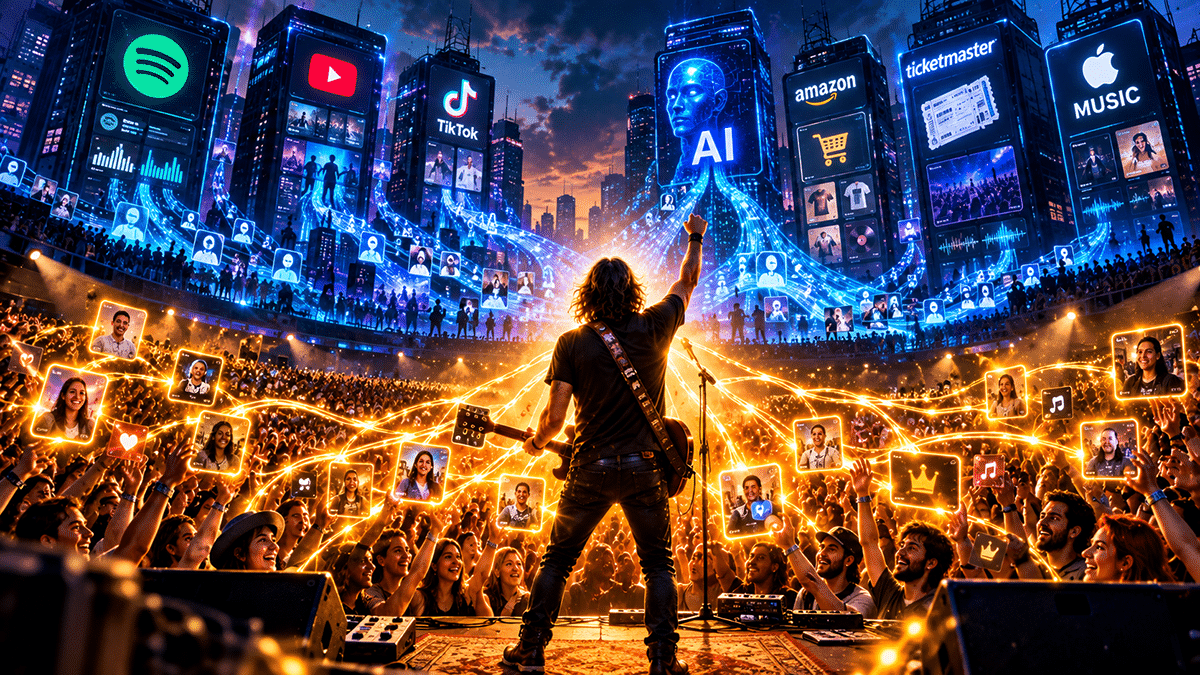
Artificial Intelligence Makes Ownership Records More Important
The rapid development of generative AI adds another layer to this problem because creating and distributing digital content is becoming easier and less expensive. Independent musicians can already use AI to assist with research, marketing, administrative work, metadata management, production planning, and other responsibilities that consume an enormous amount of time. A small artist operation may be able to accomplish tasks that previously required outside specialists or several employees, which is particularly valuable when the available workforce consists of a singer, a drummer, and whoever remembers the password to the band’s website. These productivity gains can help artists spend more time creating music while maintaining a more professional business operation.
However, the same technological advances are increasing the importance of being able to identify creative works and verify the rights associated with them. As music, images, voices, and other material become easier to generate or manipulate, businesses using creative content need reliable information about its origin and permitted uses. A film producer interested in licensing a song may need to confirm ownership of both the master recording and underlying composition. A distributor may require accurate information about performers, writers, recordings, and release identifiers. A potential AI licensing agreement may raise questions about permission to use recordings, compositions, voices, or other protected material. These questions have always existed in the music industry, but faster content creation and more complicated rights arrangements make reliable documentation increasingly important.
Unfortunately, independent musicians often maintain their business records in ways that would make a professional archivist consider changing careers. Songwriting splits may be recorded in old emails, session details may be stored on a laptop that no longer works, and master recordings may exist in several folders with filenames such as FINAL MIX, FINAL MIX NEW, and FINAL MIX REALLY FINAL. Artwork licenses may be remembered by somebody who left the band three years ago, while the instrumental mix needed for a licensing opportunity is probably on a hard drive that has not been connected since the previous presidential administration. None of these problems seems particularly urgent while the artist is concentrating on finishing the recording, but they can become expensive when somebody offers money for a use that requires documentation or a specific deliverable.
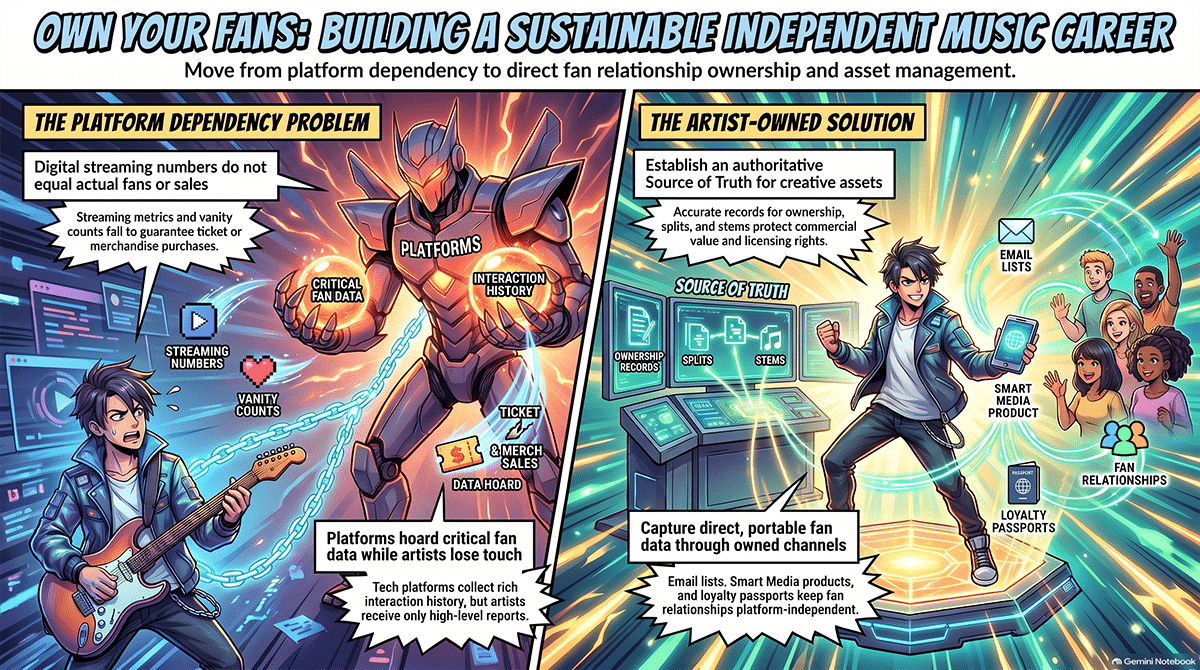
This is why a reliable Source of Truth should become part of the basic business infrastructure of independent music. The concept is straightforward: every important creative asset should have an authoritative record that connects the work with the information needed to use it commercially. For a recording, that means maintaining accurate ownership information, identifying the composition and master, documenting contributors and splits, preserving approved versions, and retaining relevant registrations and permissions. The details may live in different technical systems, but the artist needs a dependable way to know which information is correct and where the supporting material can be found. The record becomes especially valuable when a song moves between distributors, licensing partners, publishing administrators, or other businesses throughout its commercial life.
The same principle applies to recording sessions and production archives, where the disappearance of software can threaten the practical usability of creative work. A session built around a particular virtual instrument or plug-in may become difficult to reopen when the software is discontinued, licensing systems change, or an operating system no longer supports the original version. Preserving audio stems, rendered virtual instruments, instrumental mixes, approved masters, and useful production notes can protect the value of the work without requiring the musician to keep every obsolete computer they have ever owned. This is not merely a technical housekeeping exercise, because a recording that cannot be reconstructed or delivered in the format required by a potential customer may represent lost income. Musicians should treat their creative archives with the same seriousness a small manufacturer gives to inventory or a professional photographer gives to original image files.
Memberships Are Valuable Only When the Relationship Can Continue
Subscription and membership programs have become attractive to independent artists because they offer the possibility of recurring income rather than relying entirely on occasional purchases. Patreon, available at https://www.patreon.com/, helped establish a widely recognized model in which supporters provide ongoing financial contributions in exchange for access, benefits, or simply the satisfaction of helping creators continue their work. For musicians, recurring support can provide money for recording sessions, equipment maintenance, promotion, rehearsal costs, and the many expenses that arrive whether the artist has a successful release that month or not. A modest group of committed supporters can create a level of financial stability that is difficult to achieve through streaming income alone.
The dependence on membership platforms becomes more complicated when the company providing the service changes its policies or technical requirements. Patreon has announced a transition affecting creators who remain on certain legacy billing arrangements, with a November 1, 2026 deadline for moving to subscription billing. Such changes may be necessary for legitimate business and technical reasons, and Patreon continues to provide valuable tools for many creators. Nevertheless, changes to billing systems demonstrate how closely a creator’s recurring revenue can become tied to the decisions and operations of a third-party platform. Artists who have spent years developing supporter relationships should understand what happens to those relationships if they eventually decide to use another membership provider or operate a membership system through their own website.
The underlying problem is that the membership represents more than a payment. A supporter may have contributed to an artist for several years, participated in special events, purchased exclusive releases, or earned access to particular experiences. Those activities create a history that can help the artist provide a more personal and rewarding relationship. If that history exists entirely within a service the musician cannot meaningfully export or reproduce, changing providers may cause important information or access rights to disappear. The artist may still know that somebody was a supporter, but they could struggle to determine which benefits were promised or whether the person should continue receiving access to material they previously purchased.
A better approach separates the relationship itself from the software used to administer it. The artist should maintain appropriate records of consenting supporters, their purchases, their membership status, and the benefits they have earned, while respecting privacy requirements and the contractual limitations of any service involved. Payments may continue through an outside processor, while content could be delivered through different websites or applications. This is not always technically simple, and no artist should assume every platform permits unrestricted export of customer information. Still, designing the business around portability from the beginning can reduce the risk that an artist will need to rebuild years of audience development because a company changes its product or pricing model.
Spotify’s Open Access architecture offers an interesting example of how subscription relationships can exist separately from the place where content is consumed. Through qualifying integrations, Spotify allows certain partners to make paid podcast content accessible inside Spotify while the subscriber’s entitlement is managed by an external membership or subscription service. The program is described in Spotify’s documentation at https://developer.spotify.com/documentation/open-access. Although this is not a universal solution for music subscriptions, the underlying design offers a useful lesson. The artist does not always need to operate the service through which somebody enjoys content to maintain control over the relationship that gives them permission to access it.
A Fan Relationship Should Have a Memory
Once an artist begins connecting purchases, memberships, live performances, and other interactions, a much larger opportunity becomes visible. The musician can begin developing a meaningful history of the relationship with each consenting supporter instead of treating every activity as an unrelated event. That history might begin when somebody signs up for a free recording through the artist’s website, continue when they attend a show, and develop further when they purchase merchandise or participate in a fan experience. The purpose is not to collect information simply because technology makes collection possible. It is to understand how people choose to support the artist over time so that future communication and opportunities become more relevant.
This kind of business memory has existed for decades in other industries, although musicians have rarely had access to it in an affordable and practical form. A neighborhood restaurant may recognize returning customers and remember their preferences, while a successful local business often knows which customers have supported it for years. Larger companies automate similar processes through customer relationship management systems that track legitimate transactions, support requests, and ongoing commercial relationships. Independent artists can apply the same principles without turning every concert into an uncomfortable interrogation about somebody’s purchasing history. When information is collected transparently and used respectfully, it can help create the sense that the artist remembers the people who support the music rather than constantly asking them to introduce themselves.
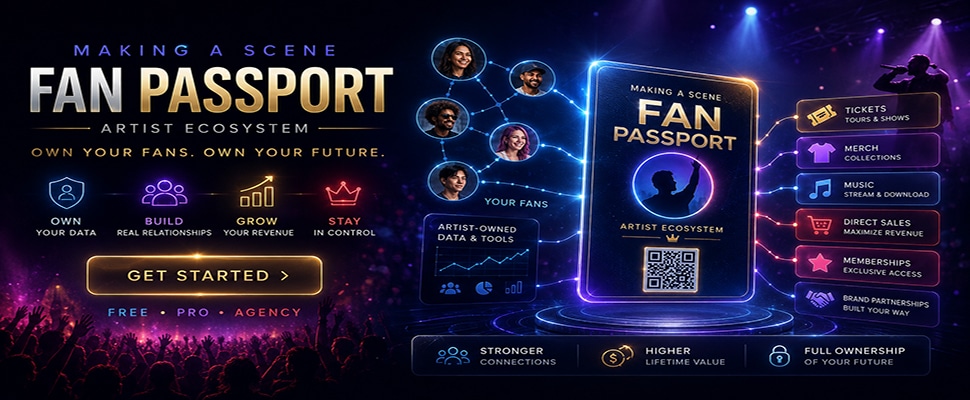
The Making a Scene Artist Ecosystem and Fan Passport approach fits naturally into this model because it treats fan participation as something that can continue across different experiences. An artist could use Fan Passport to recognize participation at a live show, record a merchandise interaction, provide access to a Smart Media product, or support a loyalty program. Another supporter might prefer to interact through a website without installing an application, which is why a separate Fan Funnel remains important. By allowing people to receive a free gift through an email signup with appropriate consent, the artist can begin a relationship through a familiar process that requires very little technical knowledge from the fan. Both approaches can serve the same larger purpose without forcing everyone to participate in exactly the same way.
Email remains especially valuable because it offers a relatively portable way to communicate directly with people who have agreed to hear from an artist. Social media services decide how widely posts are distributed, while email gives musicians a more predictable opportunity to reach their subscribers, even though delivery still depends on inbox providers and good sending practices. The musician can change email marketing services and generally retain permission-based subscriber records, provided the transfer respects applicable laws, consent, and service terms. This may not sound as exciting as a holographic digital collectible floating above a blockchain wallet, but a reliable email list has helped artists sell tickets, recordings, and merchandise for years. There is a certain comfort in discovering that one of the most practical tools in the future of independent music is technology that has been around long enough to qualify for discounted coffee at some restaurants.
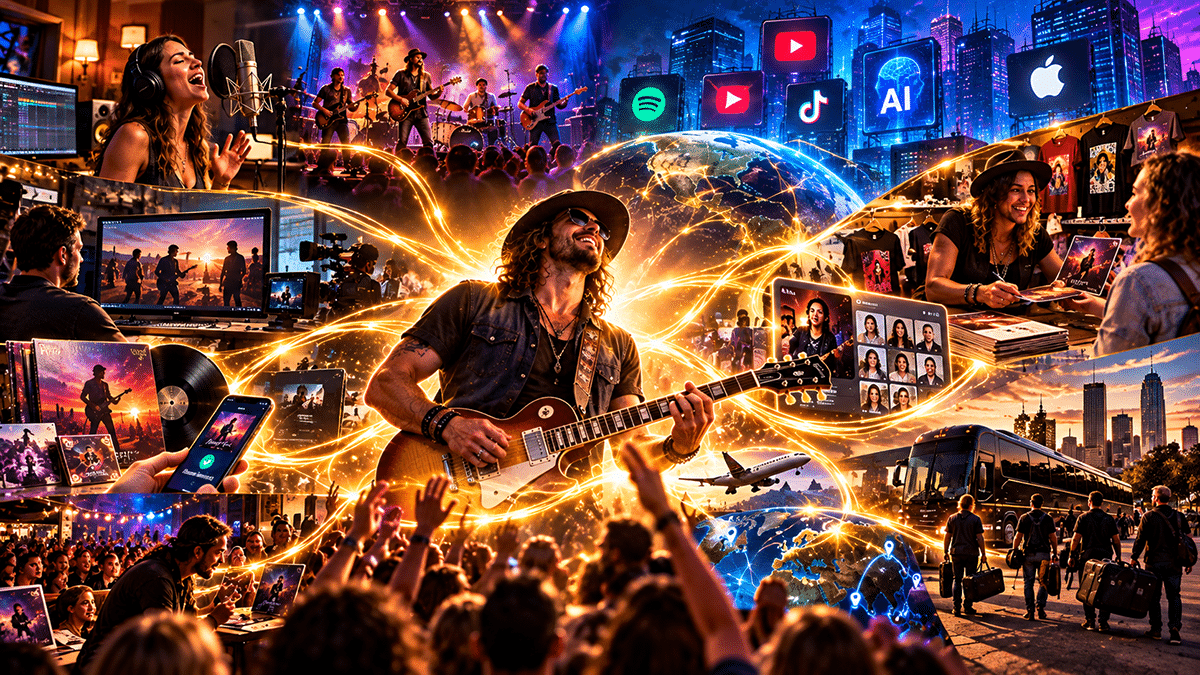
Fan Loyalty Should Belong to the Artist
Once the artist has a dependable way to recognize ongoing participation, loyalty programs become a practical extension of the relationship rather than another marketing gimmick. Businesses outside music have demonstrated that customers appreciate meaningful recognition, particularly when continued participation provides benefits they actually want. Airlines, hotels, retailers, and other companies use loyalty systems because those programs can encourage repeat business and help customers feel that their history with the company matters. Musicians can adapt the same concept on a smaller and more personal scale, where the rewards reflect the culture surrounding the artist rather than imitating a corporate rewards catalog.
A fan who attends several concerts might gradually earn recognition within the artist’s community, while another supporter who buys recordings, merchandise, or memberships could receive benefits reflecting that continued support. Artists should be able to determine how much value different activities receive and create tier names that fit their audience. A blues band might recognize a particularly active supporter as part of its Road Family, while another artist might offer Front Row Fan or VIP Fan status with benefits such as early ticket access, limited recordings, special merchandise opportunities, or invitations to exclusive experiences. Some rewards will involve financial costs, while others may simply provide access to material the artist has already created. The business decision is finding a balance where the fan feels appreciated and the artist is not promising benefits that cost more to provide than the relationship can sustainably support.
Care is needed when designing these programs because artistic communities are not identical to airline customers. A person who buys expensive merchandise should not automatically be treated as a more meaningful fan than somebody who has attended every local performance for ten years. Some supporters have limited money but contribute by spreading the word, introducing friends, helping at shows, or participating in the community. A flexible loyalty system can recognize different forms of participation without reducing every relationship to a contest over spending. The objective is encouraging genuine engagement and making loyal supporters feel welcome, not creating a caste system where somebody must purchase a limited-edition laminated backstage pass before the drummer will acknowledge their existence.
For this kind of program to create lasting value, the points, tiers, and benefits should remain connected to the artist’s own records rather than disappearing whenever a particular application or payment provider changes. That requires a consistent identity system and an entitlement structure capable of remembering what a fan has earned or purchased. It also requires clear rules that explain how rewards work and what happens when benefits expire or change. These details may appear administrative, but they become essential when an artist develops a real community around recurring participation. A fan who has spent years building a relationship with a musician should not lose that history because the artist changes website providers or decides to use a different merchandise platform.
International Payments Could Become Less Complicated
The financial systems supporting independent music are also beginning to change, and developments involving blockchain-based payments may eventually make international business easier for artists. Samsung’s October 7, 2026 announcement concerning USDC transfers through Samsung Wallet is an example of how digital assets are moving closer to ordinary consumer financial services. The company described plans for eligible U.S. Galaxy users to access transfers through supported wallets and banking arrangements, including opportunities to send value internationally. Samsung’s announcement can be found through Samsung Newsroom, while information about the wallet platform is available at Samsung Wallet.
For working musicians, the potential value has little to do with the speculative culture that has surrounded cryptocurrency for much of its existence. Independent music is already an international business, even when the artist performs mainly in local venues. A songwriter in Georgia might collaborate with a producer in England, hire a musician in Mexico, sell merchandise to a fan in Germany, or license a recording to an independent filmmaker in Canada. Those relationships can involve payments small enough that traditional international fees become a meaningful expense. A $50 or $100 transaction may be perfectly reasonable compensation for a particular service, yet transfer charges, currency conversion costs, and banking complications can make the payment process disproportionately expensive.
Stablecoins and blockchain settlement systems offer possible alternatives, especially when financial institutions integrate them into familiar payment applications. However, the actual savings depend on fees, available banking connections, currency conversion rates, local regulations, and the financial services responsible for completing the transaction. A transfer that appears inexpensive on a blockchain may still involve substantial costs when money enters or leaves conventional banking systems. Independent artists also need to consider consumer protections, tax reporting, fraud risks, and the consequences of using services that may not be available in every country. There is a great deal of potential here, but responsible musicians should evaluate these systems as financial tools rather than assuming that every new payment method represents the arrival of a decentralized paradise.
The most promising aspect of Samsung’s approach is that the underlying technology may become less visible to the consumer. Most people do not want to study blockchain networks, wallet security, private keys, and transaction fees before sending money to a friend or paying a collaborator. They want the experience to be understandable, affordable, and dependable. When a technology becomes simple enough that ordinary customers can use it without attending a weekend seminar hosted by somebody who calls himself the Crypto Prophet, it begins to have genuine commercial potential. For artists, the long-term goal should be access to reliable payment options that reduce friction while preserving accurate records of where money came from, what it paid for, and who is entitled to receive it.
The Artist Does Not Need to Own the Entire Internet
The growth of these technologies can make artist independence sound much more complicated than it needs to be. Discussions about owning data, controlling rights, developing fan communities, and using decentralized infrastructure sometimes leave musicians believing they must become experts in software engineering, payment processing, international finance, and data protection before releasing another song. That is an unreasonable burden to place on people who already need to write music, rehearse, record, promote releases, book performances, maintain equipment, and occasionally remember to eat something that did not come from a convenience store.
Real independence does not require musicians to build their own versions of every service they use. Streaming platforms provide valuable distribution and discovery, while professional ticketing systems can handle complicated transactions and venue requirements. Payment processors offer infrastructure that would be difficult and expensive for individual artists to reproduce. Manufacturers can produce physical media, and marketing companies can provide useful services when their work generates measurable results. The advantage comes from maintaining ownership and practical control over the artist’s underlying creative and business assets while allowing specialized companies to perform the functions they are equipped to provide.
This is an important distinction because artists sometimes mistake dependence on a service for a loss of independence, even when the service is solving a genuine problem. A musician using a reputable payment processor is not automatically surrendering control of their business, just as a band renting a rehearsal room does not lose ownership of the songs it plays there. The issue arises when the provider controls essential information, access, or entitlements so completely that the artist cannot continue the relationship without that particular company. A useful system should make it possible to replace providers where feasible without destroying customer records, creative assets, or the history needed to operate the business.
The same reasoning applies to the Making a Scene Artist Ecosystem. Its greatest potential is not becoming another all-consuming technology platform that requires musicians to abandon the services they already know. The stronger model is providing a connected business environment where the artist maintains authoritative records and coordinates activity across outside providers. The interface should help musicians understand their business without requiring them to manage the complexity of every integration, database, or security process behind it. If a band has to hire a software consultant every time it wants to add a tour date or deliver a free recording to a new fan, somebody has misunderstood the entire purpose of artist empowerment.
From Individual Sales to a Continuing Music Business
The practical economic difference between isolated transactions and ongoing relationships becomes especially clear when we consider the experience of a working independent band. Imagine an artist performs at a small venue and sells several recordings and T-shirts after the show. Under a traditional arrangement, the artist receives the money, accounts for the merchandise, packs the remaining inventory, and moves on to the next performance. That may be a perfectly successful evening, especially if the band earns enough to cover travel expenses and pay the musicians. However, much of the business potential created by the performance disappears when the artist leaves town because there is no reliable way to maintain contact with the people who enjoyed the show.
Now imagine that the same performance takes place within a connected artist-owned business system. Fans have an opportunity to follow the artist through Fan Passport, join a permission-based mailing list, or access a free recording through the Fan Funnel. Someone purchasing a Smart Media Album can activate the product and explore additional material, while returning supporters may receive recognition through an optional loyalty program. The artist can later announce another performance in the area or offer a new release directly to people who have expressed interest. None of these activities guarantees another sale, but together they make it possible for the relationship to continue beyond the few minutes spent at the merchandise table.
Over time, the economics can become significantly more interesting because revenue opportunities no longer depend entirely on finding a fresh audience for every product or performance. A fan who originally discovered the artist through a streaming playlist might eventually attend a show, purchase merchandise, join a membership, or support a recording project. The musician can offer different experiences that match the fan’s interests while continuing to use outside platforms for discovery and transactions. A connected system also makes it easier to understand which activities are generating income and which promotions are attracting attention without producing meaningful engagement.
This does not mean every supporter will become a paying customer, nor should musicians approach human relationships as though they are extracting value from a mineral deposit. Most people enjoy music casually, and even committed fans have changing financial circumstances and interests. A healthy artist business respects those realities while making it easy for people who want to provide support to do so. The goal is to create enough meaningful connections that income can develop naturally through concerts, recordings, merchandise, memberships, licensing, and other opportunities over the course of a career. Sustainable businesses are built around repeated value and trust, not constant pressure to purchase something.
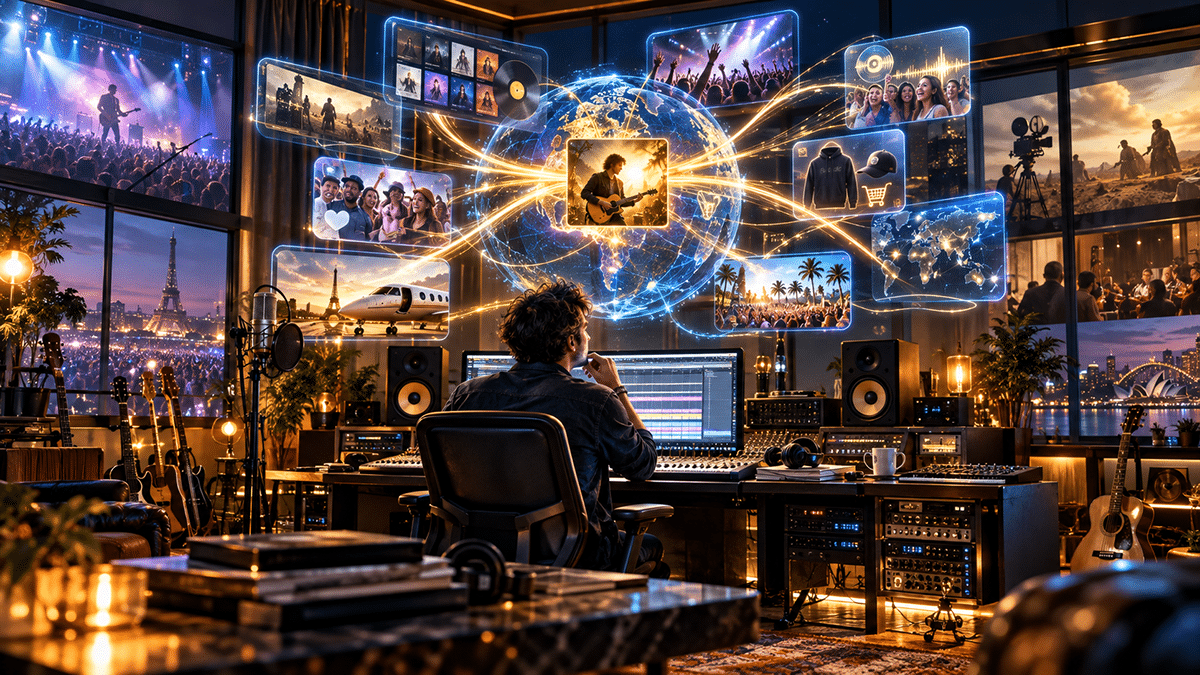
AI Can Help Musicians Understand Their Own Business
Once an artist’s creative records, transactions, and permission-based fan relationships are connected, artificial intelligence becomes far more useful than another automated social media caption generator. AI tools can help musicians analyze information that would otherwise require hours of sorting through reports and spreadsheets. A touring artist could identify markets where previous performances generated strong merchandise sales or where an unusually active group of supporters has developed. A recording artist could compare the results of different direct-to-fan campaigns, while a manager could review upcoming obligations or discover that important rights information is missing from a release. These applications focus on improving business decisions rather than replacing the creative work that gives the business its reason to exist.
This approach can also help smaller artists compete with organizations that have access to dedicated marketing and administrative departments. Major music companies have traditionally employed specialists to handle promotion, licensing, audience research, royalty accounting, tour planning, and business development. Independent musicians have often been expected to perform most of those functions themselves while simultaneously maintaining a creative career. AI cannot eliminate the need for expertise or replace professional legal and accounting advice, but it can reduce repetitive administrative work and help artists recognize opportunities they might otherwise overlook. The musician still makes the decisions, while the software helps organize information and explain what the available evidence suggests.
The quality of those suggestions depends heavily on the reliability of the underlying records. An AI system working from incomplete transaction data or inconsistent customer identities can produce confident explanations that are fundamentally wrong. This makes the Source of Truth and fan relationship architecture essential rather than optional features. When accurate ownership information, approved creative assets, permission records, and legitimate transactions are maintained consistently, AI has a better foundation for useful analysis. The technology becomes a practical assistant for understanding the business instead of an enthusiastic intern who invents half the numbers and then congratulates everyone on a record-breaking quarter.
For the Artist Ecosystem, this suggests a long-term direction in which musicians can ask ordinary questions about their business without needing to understand how multiple databases and services communicate. The artist might want to know whether a particular city is worth adding to a tour, how much direct revenue came from a recent release, or which fan activities are producing repeat purchases. The answers should distinguish verified financial activity from estimates and should preserve the privacy rights of the people involved. When software makes reliable information easier to understand, artists can spend less time struggling with administration and more time developing the music and relationships that actually sustain their careers.
Building a Music Industry Middle Class Requires Different Economics
For much of its history, the commercial music business has operated around an uncomfortable concentration of wealth and opportunity. A small number of highly successful artists can generate enormous revenues, while a much larger population of working musicians struggles to earn dependable income from creative work. The traditional industry encouraged artists to pursue major label attention, radio exposure, national promotion, and other opportunities that depended heavily on access to established gatekeepers. Digital distribution removed some barriers by allowing musicians to release recordings without obtaining permission from those companies, but it did not automatically create a healthy middle class of independent professionals. The ability to place a song on a global streaming service is valuable, although it does not guarantee enough income to pay the rent or maintain a touring business.
The next stage of independent music development should concentrate on making each genuine supporter relationship more economically useful over time. This does not mean manipulating fans or continually increasing prices. It means creating different opportunities for people to participate in the artist’s work while ensuring that the artist retains a meaningful share of the resulting income. A fan who enjoys listening on a streaming platform may eventually buy a concert ticket, while another may prefer physical recordings or special merchandise. Some supporters are interested in memberships, exclusive experiences, or direct contributions, while others simply want to attend shows when the artist comes to town. A connected artist-owned system can support these different relationships without requiring every fan to behave like the same idealized customer.
The income generated by these activities can be more valuable when artists understand their real costs and control the terms of their business. A direct merchandise sale may produce useful revenue, but manufacturing, payment processing, shipping, taxes, and unsold inventory still matter. A membership can create recurring income, but the artist must consider the time and expense of providing the promised benefits. A Smart Media product may offer attractive margins and an engaging customer experience, although manufacturing and hosting arrangements determine the actual profitability. Sync licensing can provide substantial opportunities in some cases, but the artist needs properly documented rights and suitable recordings. Building a sustainable middle class requires understanding these economics rather than assuming that moving revenue away from a major platform automatically turns every transaction into profit.
What makes an artist-controlled relationship system powerful is the ability to evaluate those activities together. The musician can learn whether a particular type of merchandise sells well at live shows, whether email campaigns generate meaningful direct purchases, or whether committed supporters respond to special releases. These insights can guide decisions about inventory, touring, promotion, and future recording investments. Instead of constantly chasing visibility and hoping that somebody eventually turns attention into money, the artist develops a clearer understanding of how the business actually works. That knowledge becomes especially important as musicians try to build careers that support ordinary adult responsibilities rather than requiring perpetual financial improvisation.
Why Portability Will Determine Who Controls the Future
The technologies now entering the music business will continue evolving, and there is little reason to believe the companies providing them will remain unchanged. Streaming services will modify recommendation systems and subscription offerings, while social networks will adjust how content reaches audiences. Membership platforms will revise payment arrangements, and software companies will introduce products that eventually become obsolete. Smart Media providers may develop new experiences and technical standards, while financial technology companies experiment with ways to move money across borders. These changes are not necessarily signs of bad behavior, because innovation and competition naturally produce new systems and business models. The problem emerges when an artist’s ability to maintain existing relationships depends entirely on decisions made by companies that may have very different priorities.
Portability therefore needs to become a central principle of independent music business design. The artist should preserve reliable copies of creative assets and maintain accurate rights information so recordings can continue generating income when distribution arrangements change. Permission-based customer records should be transferable wherever law and contractual terms allow, while membership benefits and Smart Media entitlements should be managed in ways that reduce unnecessary dependence on individual providers. Transaction histories should remain accessible for accounting, analysis, and legitimate business administration. None of these protections eliminates every risk, but together they create a more resilient operation that can adapt as technology and commercial relationships evolve.
This approach also changes how musicians evaluate new products and services. An application that offers remarkable features may be less attractive if it prevents users from exporting essential information or makes continued access dependent on an expensive subscription. A provider that supports clear data access, interoperable systems, and transparent terms may offer greater long-term value even when its interface is less spectacular. Independent artists should consider what happens when they eventually leave a service, because the ability to depart without losing their business history is an important form of control. The most useful technology partners will be those that help musicians build stronger businesses without making it unnecessarily difficult to move elsewhere.
For the Making a Scene Artist Ecosystem, this philosophy provides an important architectural direction. The objective should be a durable artist-controlled business environment that can connect to different websites, payment services, manufacturers, distribution platforms, and audience tools while preserving the records that matter. Fan Passport can help connect real-world participation with digital experiences, while the Fan Funnel provides another route for people who prefer ordinary email interactions. Smart Media can connect physical products with ongoing content and benefits, and the Source of Truth can keep the music’s identity and rights information organized. When these functions work together, musicians have an opportunity to develop a coherent business around their music rather than maintaining a collection of disconnected accounts.
The Next Music Industry Middle Class Will Be Built on Trust
The central challenge facing independent musicians is no longer simply gaining access to the marketplace. Digital distribution, social media, and affordable recording technology have made it possible for an extraordinary number of people to create and release music without traditional industry permission. That accessibility is worth celebrating, but it has also produced an environment where attention is difficult to maintain and individual transactions can be economically insignificant. The artist needs a way to turn occasional discoveries into meaningful connections, and those connections need to support a range of opportunities throughout a career. The business systems surrounding the music should make that process easier rather than placing another gatekeeper between the musician and the audience.
What makes the current moment particularly interesting is that several seemingly unrelated developments are pointing toward the same underlying need. Smart Media demonstrates how a physical product can become the beginning of an ongoing digital experience, while streaming fraud illustrates the weakness of confusing automated activity with genuine audience participation. Membership platforms reveal the financial value of recurring relationships and the risks associated with depending entirely on outside systems. AI increases the importance of trustworthy information while offering practical tools for making that information useful. International payment developments suggest that moving money may become easier, even though sound financial practices and regulatory compliance will remain essential. Together, these changes favor artists who can maintain reliable records of their creative work, their commercial activity, and their voluntary relationships with supporters.
The opportunity is especially important for musicians who have little interest in becoming international celebrities. A working blues band, independent jazz ensemble, regional touring act, folk songwriter, or self-produced rock artist may be able to develop a sustainable business through consistent relationships with a relatively modest audience. Those musicians still need to produce excellent work and deliver experiences people value, because technology cannot create lasting enthusiasm where none exists. However, when they can maintain contact with supporters, understand legitimate transactions, offer meaningful benefits, and protect their creative rights, their economic prospects become less dependent on attracting massive amounts of attention from strangers. That is a more practical foundation for a music industry middle class than waiting for the next algorithm to decide who deserves a career.
There is also something refreshingly human about this direction, despite the considerable amount of technology involved. Music has always created relationships between people who may never otherwise have met. A song becomes associated with a particular moment in somebody’s life, a concert becomes a memory shared with friends, and a favorite artist can become part of a person’s identity for decades. The industry has built astonishing systems for distributing and monetizing those experiences, but it has not always treated the underlying connection as something the artist should be able to maintain. Giving musicians more control over that relationship does not diminish the contribution of technology companies or other business partners. It simply recognizes that the musician should have a meaningful place in the economic value created by their own work.
For years, independent artists were encouraged to pursue whatever institution controlled access to listeners. Record labels, radio programmers, retailers, playlist editors, and social media algorithms each became the focus of enormous effort because they could influence whether music reached an audience. Some of those relationships remain useful, but musicians have also learned how quickly their circumstances can change when access depends entirely on outside decisions. Building a direct connection with supporters offers a different form of security, although it requires patient work and a willingness to treat the business side of music with the same care musicians devote to recording and performance. The rewards may develop gradually, but the relationships can accumulate value throughout a career instead of disappearing when a promotional campaign ends.
The next music industry middle class will not emerge because a particular application, payment network, or artificial-intelligence product finally solves every problem facing musicians. It will develop as more independent artists gain the tools and knowledge needed to own their creative assets, understand their rights, maintain trusted fan relationships, and participate directly in the revenue those relationships generate. Platforms will remain essential partners for discovery, distribution, commerce, and communication, but the artist’s business should be able to continue when those partners change. That is the future worth building through systems such as the Making a Scene Artist Ecosystem, because its greatest contribution will not be persuading musicians to spend more time managing technology. It will be helping them spend more of their lives making music while maintaining the relationships that allow that music to support a sustainable career.
A musician who has earned the trust of an audience has already created something valuable that cannot be manufactured by a streaming counter or replaced by the next fashionable platform. Protecting that connection, understanding its economic potential, and giving fans meaningful ways to participate in the artist’s work can turn years of creative effort into a lasting independent business. The music industry has spent an extraordinary amount of money learning how to collect value from the people who love music, and it is about time the people making that music had the tools to participate on more equal terms. For independent artists, building a sustainable career has never required owning the entire industry, but it increasingly requires owning enough of their own business that the next corporate merger, algorithm change, or technological revolution does not force them to start over.
 |  Spotify |  Deezer |  Breaker |
 Pocket Cast |  Radio Public |  Stitcher |  TuneIn |
 IHeart Radio |  Mixcloud |  PlayerFM |  Amazon |
 Jiosaavn |  Gaana |  Vurbl |  Audius |
 Reason.Fm | |||
Find our Podcasts on these outlets
Subscribe to Our Newsletter
Discover more from Making A Scene!
Subscribe to get the latest posts sent to your email.


