
One Song, Many Products: How Indie Artists Can Turn a Recording Into a Revenue Catalog




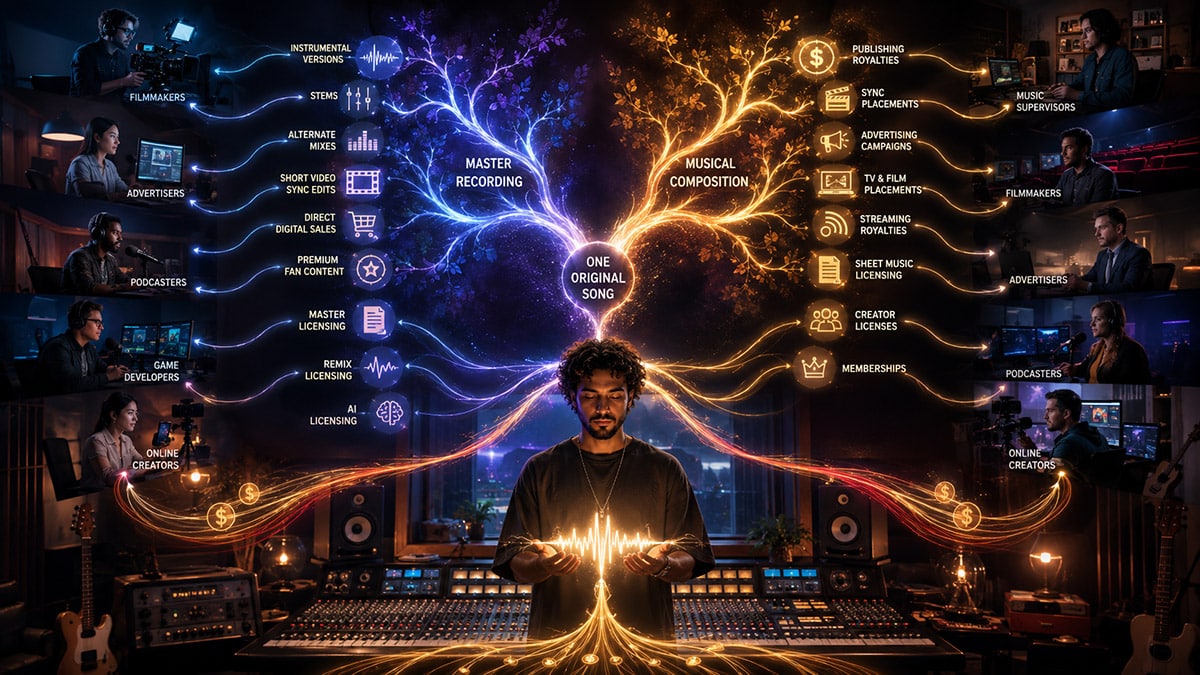
Making a Scene Presents – One Song, Many Products: How Indie Artists Can Turn a Recording Into a Revenue Catalog
Listen to the Podcast Discussion
We Have Been Selling the Song Far Too Cheaply
An independent artist can spend weeks writing a song, another week arranging it, several days recording it, more time editing and mixing it, then hand it to a mastering engineer before finally releasing it into the world. After all that work, the finished product often becomes one WAV file that gets sent to a distributor, which turns it into a streaming product that might earn tiny pieces of money one play at a time. Then everybody packs up, congratulates themselves on release day, and starts worrying about writing the next song. There is nothing wrong with streaming the song. The mistake is thinking the streaming master is the only product you created.
A professionally produced song can become the foundation of an entire family of products. The original master can live beside an instrumental master, clean version, alternate mix, stems, short advertising edits, video stings, premium fan content, remix material, educational material, direct-download products, sync assets, licensing packages and, increasingly, carefully controlled assets that may someday be licensed for artificial-intelligence uses. The artist did the expensive creative work once, but the business can keep finding new ways to package that work.
This does not mean that every song should be chopped into 47 files and offered for sale to anybody with a credit card and a pulse. Some versions have a clear commercial purpose, while others only make sense for particular songs. The larger point is that a song should be treated as intellectual property and business inventory rather than a disposable piece of content whose career begins and ends when it hits Spotify.
That change in thinking is important because independent artists usually do not have the luxury of throwing away useful assets. A major label can spread its risk across thousands of recordings. An independent artist may have ten, twenty or fifty strong songs that took years to create. Getting more legitimate economic life from those songs is not greed. It is good business.
Before We Multiply the Song, We Need to Know What We Own
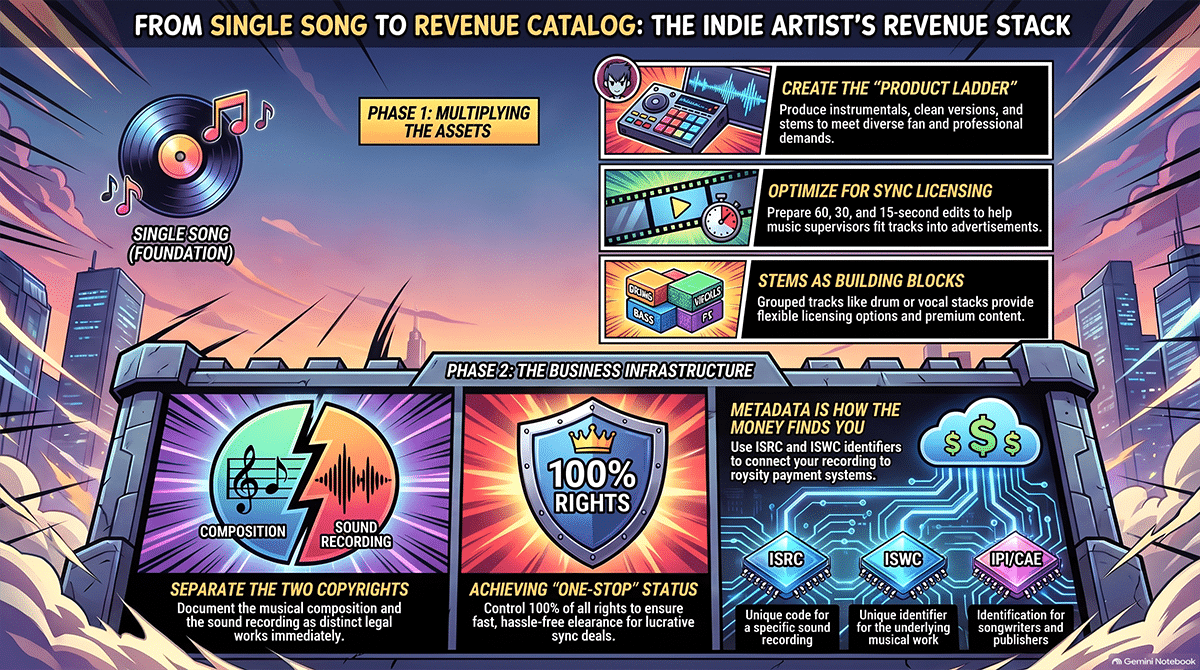
Before opening the DAW and exporting alternate versions, there is one music-business idea every artist needs to understand. The song and the recording of the song are not the same copyright.
The U.S. Copyright Office, whose official site is https://www.copyright.gov/, describes the musical work and the sound recording as separate works. The musical work is the underlying composition, meaning the melody, harmony, rhythm and any lyrics created by the songwriter or songwriters. The sound recording is a particular recorded performance of that composition.
An easy example is Dolly Parton’s “I Will Always Love You.” Dolly Parton wrote the composition. Whitney Houston later made a famous recording of that composition. The song did not suddenly become a different composition because Whitney Houston sang it, but Whitney Houston’s recording was a different sound recording from Dolly Parton’s recording. The Copyright Office actually uses this song as an example of how the two copyrights can exist separately.
For an indie artist who writes and records an original song, the same person may control both copyrights. You might own the composition because you wrote the song, and you might own the master because you paid for and own the recording. That can be a wonderful position to be in, but it should never be assumed. A co-writer may own part of the composition, a publisher may administer or own publishing rights, a label may own the master, a producer may have contractual rights, or a sample may bring another copyright owner into the picture.
This distinction becomes especially important in synchronization licensing. When music is placed against moving pictures, the composition side generally requires a synchronization license while use of a particular recording generally requires a master-use license. The Copyright Office specifically explains that these are separate permissions and that there is no compulsory synchronization or master-use license comparable to some mechanical licensing systems. Those rights are generally negotiated in the marketplace.
That is why a music supervisor may ask whether a track is “one-stop.” They are not asking whether you can drive there without changing buses. They want to know whether one party can legitimately clear all the necessary rights quickly.
If you control 100 percent of the composition and 100 percent of the master, you may be able to offer true one-stop clearance. If you control the master but your composition has three writers and two publishers, you cannot simply announce that the song is one-stop because you happen to know where everybody lives. Clearance authority depends on the actual ownership and agreements.
The First Product Is Still the Finished Master
Everything begins with a strong final recording. You need a properly mixed and mastered version that represents the song as you intended listeners to hear it.
That master is still valuable. It can be streamed, downloaded, sold directly, licensed, included on a CD or vinyl record, packaged in a digital collection, delivered to radio where appropriate, offered to fans and used as the foundation for other versions. We are not replacing the master. We are building around it.
This distinction matters because artists sometimes hear a conversation about alternate versions and start manufacturing files before the original song is finished. That is putting the gift shop up before somebody finishes building the museum. The original recording has to work first.
Once the final mix has been approved, however, it is smart to preserve more than the mastered stereo file. Keep a high-quality uncompressed master, the final mix before mastering if appropriate, the instrumental mix, approved alternate versions, organized stems and the original session materials needed to recreate them. Drives fail, plugins disappear, subscription software changes and operating systems occasionally decide your ten-year-old session is an archaeological artifact.
Your catalog becomes much more useful when yesterday’s project can still be opened tomorrow.
The Instrumental May Be the Second Most Important Version You Make
One of the easiest products to create from a vocal song is a proper instrumental version, yet plenty of artists never print one. That can become a surprisingly expensive little oversight.
A sync editor may love your recording while discovering that the lyrics fight with dialogue in the scene. An instrumental gives the editor another way to use the same music. A podcast producer may want your melody but not your vocal. A filmmaker might want to place the instrumental underneath dialogue and bring the vocal version in later. A fan may simply love the production and want to hear the arrangement on its own.
Professional sync organizations and workflow systems repeatedly encourage artists to have instrumental versions available. DISCO, a music-management platform widely used in sync, specifically supports nesting alternate mixes, instrumentals and stems within catalogs, while its sync guidance stresses clear rights and contact metadata. Its official site is https://www.disco.ac/.
The instrumental should not be treated as the vocal master with the singer crudely muted after the fact. Ideally it should come from the final mix session, with the vocal removed while preserving the musical balance. Sometimes an instrument that sat quietly behind the singer needs to move forward. Sometimes an effect tied to the vocal needs to disappear. Sometimes a guitar or keyboard part suddenly seems lonely once the lead vocal leaves the room.
That makes the instrumental a real production asset rather than a leftover.
It can also become its own direct-to-fan product. Some fans enjoy karaoke-style versions. Singers may like performance tracks. Guitar players may want to study the arrangement. Producers may want to hear how the instrumental mix was built. None of these uses needs to replace the normal recording. They simply give the same song another job.
Now Start Cutting the Song for Picture
The next family of products comes from editing the song for time.
A full song might run three minutes and forty seconds, but an advertiser may have thirty seconds. A social campaign may need fifteen. A promo may have ten seconds before the voice-over arrives. A video logo or transition may only need five seconds of music before everybody moves on.
For advertising and promo work, 60-second, 30-second and 15-second music edits have long been common deliverables. Sync professionals also make use of stings, button endings, loops, instrumental beds and other short forms. SyncSummit, for example, specifically discusses instrumentals, stems, TV edits and 15-, 30- and 60-second versions as useful alternate assets for sync. Its guidance stresses that these should be properly prepared versions rather than an unexplained pile of files.
The 10-second and 5-second versions are more situational. They are not some universal legal standard carved into a stone tablet outside Hollywood, but short musical stings and bumpers can be extremely useful in digital video, station imaging, branded content, transitions and short promotional moments.
A five-second version should not simply be the first five seconds of the master unless the first five seconds happen to work perfectly. A good five-second stab might capture the signature guitar hook and land on a strong final chord. A ten-second version might establish the song’s mood, deliver the hook and end cleanly. The editor should not have to fade the track halfway through a snare fill because we ran out of imagination.
The same principle applies to the 15-, 30- and 60-second versions. These edits should have a beginning, development and ending that make musical sense within the available time. A 30-second commercial edit might begin closer to the chorus, remove a verse, move through the strongest hook and finish with a button ending. It should feel like a short piece of music, not like somebody attacked the original song with garden shears.
Now do the same thing with the instrumental.
That one song may now have a full vocal master, full instrumental, 60-second vocal version, 60-second instrumental, 30-second vocal version, 30-second instrumental, 15-second vocal version, 15-second instrumental and optional 10- and 5-second versions or stings where the music supports them. We have not written another song, but we have dramatically increased the number of situations in which the existing song can be useful.
Notice that useful is the key word. Making an asset nobody needs is not a revenue strategy. Making the song easier for a paying customer to use can be.
Do These Short Versions Need Their Own ISRC?
This is where documentation catches up with creativity.
The International Standard Recording Code, or ISRC, identifies a specific sound recording. The International ISRC Registration Authority is operated by IFPI, with official information at https://isrc.ifpi.org/. Its current handbook makes an important distinction: different recordings, mixes, edits, takes and remixes may require separate ISRCs when they become distinct recordings being exploited.
The handbook specifically says that different studio takes require different ISRCs, edited versions may require new ISRCs, remixes require new ISRCs, and versions created by adding new recorded material require new ISRCs. U.S. ISRC guidance similarly explains that remixed or edited sound recordings can need new identifiers.
That does not mean every stem sitting on your hard drive needs an ISRC. An isolated drum stem used internally as part of a production package is not automatically a separately released commercial recording. The important idea is to distinguish a production component from a distinct version you actually release, distribute, license or otherwise treat as its own recording.
This is one reason an artist needs an organized catalog rather than a folder containing files named FINAL.wav, FINAL2.wav, FINAL-NEW.wav and FINAL-USE-THIS-ONE-REALLY.wav. Eventually somebody has to know which recording is which.
Stems Turn the Recording Into Building Blocks
Stems open another door.
A stem is usually a grouped part of the final production rather than an individual raw multitrack channel. A drum stem might contain the kick, snare, toms and overheads together. A guitar stem might include several guitar tracks. Another stem may contain bass, keyboards, backing vocals or effects.
The exact grouping depends on the production. The important thing is that the stems can be combined to reconstruct the approved mix closely enough that an editor can remove or adjust major musical elements without opening your original DAW session.
That can be enormously useful in sync. Imagine a television scene where two actors are talking during your chorus. The editor loves your song but the lead guitar is fighting with the dialogue. If there is a guitar stem, they may be able to lower that part while preserving the drums, bass and keyboards. If there are no stems, the choice may be to accept the conflict or choose another song.
Stems can also become premium fan products. A serious fan may enjoy hearing the vocal stack by itself. A drummer might want the rest of the band without the drums so they can play along. A producer might want to study the arrangement. A songwriting student could compare the instrumental layers to the finished master. A remix contest could give selected participants access to stems under clear terms. That starts to turn the recording session itself into content.
The important word, however, is controlled. Stems expose more of the raw creative ingredients than a finished stereo recording does. They should not simply be dumped onto a public server because somebody on social media said “fans love stems.” There is also a legal issue hiding in the session.
Suppose your drum stem contains a licensed loop or your keyboard stem contains an isolated sample from a commercial sample library. Your license may allow you to include that sound in a finished song while prohibiting you from redistributing the sound in isolation.
Splice is a useful real-world example. Its official terms at https://splice.com/terms allow licensed sounds to be incorporated into new recordings and creative works, but prohibit sublicensing or redistributing those sounds in isolation or turning them back into sample products. Its licensing FAQ makes the same distinction. That does not mean you cannot use stems. It means you need to know what is inside them.
The same caution applies to outside producers, session musicians, featured artists and collaborators. Do your agreements allow the proposed use? Do you own the recording? Does a producer control part of the master? Was a third-party beat licensed only for normal music distribution? These questions are much easier to answer before somebody offers money.
One Song Can Become a Direct-to-Fan Product Ladder
Once the assets exist, the song can serve different people in different ways.
The casual listener may simply stream the original track. That is fine. Discovery still matters.
A more interested fan may buy a high-quality download directly from the artist. A deeper fan may want an acoustic version, demo, live recording, instrumental or behind-the-song video. A member of the artist’s paid community might receive access to alternate mixes or recording-session content. A musician might buy educational material built around the song. A producer might pay for authorized stems or remix access under terms that actually permit that use.
The customer gets deeper access as the relationship becomes deeper.
That is very different from treating every fan as an anonymous stream. When someone buys a product directly from the artist and gives permission for an ongoing relationship, the artist can learn what that person values. If hundreds of fans buy instrumentals and nobody buys drumless practice mixes, the market has just taught you something useful. No crystal ball was required.
The same song can serve a professional market at the same time. A filmmaker might need the master and instrumental. An advertiser may need the 30-second version. A podcast producer may want a short instrumental bumper. A game developer might need a loopable version or stems, subject to the agreement. A music supervisor might need a clean edit, instrumental and the ability to clear both copyrights immediately.
One creative work is now meeting several different kinds of demand.
That is what a revenue stack should look like. The goal is not to find one magical source of income that rescues the artist forever. The goal is to let several useful forms of the same intellectual property earn in different ways.
Publishing Begins With the Conversation Nobody Wants to Have
All this flexibility disappears quickly if nobody knows who owns the song.
When two or more people write together, the composition shares should be agreed upon and documented while everybody still remembers what happened. That is what a songwriter split sheet is designed to do.
A useful split agreement identifies the song, the writers, their agreed ownership percentages and enough identifying information to register the work correctly. Depending on the circumstances, it may also document publishers, performing-rights affiliations, IPI or CAE numbers and signatures or other evidence showing that the writers accepted the agreement.
There is no universal rule saying that every song must be divided equally among everyone who happened to be in the room. Collaborators can agree to different shares, and the agreement should reflect the actual deal. What matters is that everybody understands the deal and that the same ownership information is later sent to the organizations administering the composition.
This sounds painfully obvious until a song begins making money.
Three years after the writing session is a terrible time to discover that one writer believes the split was 50/50 while another remembers it being 75/25 and a third person claims they wrote the hook because they once said, “Maybe try it in G.” Music history has survived enough of these family reunions.
The percentages also need to be entered carefully because different systems may display writer and publisher shares differently. BMI, for example, uses a registration scale in which writer and publisher interests can total 200 percent, while other systems may present the underlying ownership on a 100 percent scale. The percentages should therefore be understood in the context of the system being used rather than copied blindly from one database into another.
The broader rule is simple. There should be one agreed truth about who owns the composition, even if different organizations display that information differently.
Publishing Is Not the Master
Once the composition splits are settled, the artist also needs to understand where composition royalties can come from.
A performing-rights organization, or PRO, licenses and administers certain public-performance rights in compositions for affiliated songwriters, composers and publishers. Different U.S. organizations have different membership models and repertoires, so artists should understand the organization they join rather than assuming every PRO works exactly the same way.
Mechanical royalties are another composition-side income stream. In the United States, The Mechanical Licensing Collective, commonly called The MLC, administers the blanket compulsory license for eligible digital audio mechanical uses by participating streaming and download services. Its official site is https://www.themlc.com/. The MLC pays eligible publishers, administrators and self-administered songwriters after matching usage reports to musical works.
The MLC does not magically collect every type of music royalty. Its blanket license concerns particular U.S. digital audio mechanical uses. It does not replace sync licensing, does not collect the sound-recording side of a normal sync deal and does not replace a PRO for composition performance royalties. Even The MLC’s own background material makes clear that its blanket license covers digital, audio-only mechanical uses rather than audiovisual sync.
The master has its own income streams.
SoundExchange, whose official site is https://www.soundexchange.com/, collects and distributes U.S. statutory digital performance royalties for certain noninteractive uses of sound recordings. It pays featured artists and sound-recording rights owners under the statutory system. It does not collect songwriter or publisher royalties.
Suddenly the reason for separating composition data from master data becomes very clear. The same three-minute recording may be touching several rights systems, and those systems do not all pay the same people for the same thing.
Metadata Is How the Money Finds the Music
There is a romantic idea that great songs rise naturally to the surface because quality always wins. That is a lovely thought. Accounting databases are less romantic.
Royalty systems and licensing businesses need data that connects a recording to the underlying composition and then connects both to the people who are supposed to be paid.
The ISRC identifies the recording. The ISWC identifies the musical work. CISAC, the international confederation that administers the ISWC system, explains that the ISWC is a unique identifier for musical works while the ISRC identifies sound recordings. Its official site is https://www.cisac.org/.
The IPI number helps identify writers and publishers within rights-administration systems. Those identifiers matter because “John Smith” is not a particularly advanced global metadata strategy.
The U.S. Copyright Office’s own educational materials encourage the use of identifiers connecting musical works, sound recordings and interested parties. Federal reporting rules for digital mechanical licensing similarly show how detailed modern music data can become, including titles, featured artists, playing time, sound-recording owners, producers, ISRCs, UPCs, versions, release dates and musical-work ownership information.
For sync, the useful information goes even further. A supervisor may want to know the writers, publishers, master owner, clearance contact, one-stop status, whether samples exist, whether a clean version is available, whether the lyrics contain sensitive material, the BPM, key, genre, mood, instrumentation, lyrical themes and which alternate versions are ready.
That data is not exciting until somebody is trying to license your song by four o’clock.
Then it becomes extremely exciting.
One-Stop Is Really About Speed
A supervisor often has more good music available than time. If two songs both work creatively, but the first requires three days of detective work while the second has clear ownership, an instrumental, clean mix, stems, accurate metadata and one person who can approve the deal, the second song has a business advantage.
This does not mean one-stop songs automatically get placements. Music still has to fit the scene. Preparation cannot make the wrong song right. Preparation can keep the right song from becoming impossible.
YouTube’s rights-management documentation provides a useful technical example of why composition and master ownership remain distinct even inside a giant digital platform. YouTube maintains separate sound-recording assets and composition-share assets, and those assets can carry different ownership and policy information. Its documentation says a sound recording can embed one or more composition shares, but those rights remain separate. Official YouTube help is available at https://support.google.com/youtube/.
YouTube also requires accurate human-readable metadata for rights-managed music assets and warns partners not to claim rights they do not own. That may sound obvious, but it reinforces the larger point: ownership data is part of the asset. The music industry once treated metadata like the boring paperwork that arrived after the creative work. In a digital licensing economy, metadata is part of how the creative work gets discovered, cleared and paid.
Now AI Has Entered the Licensing Conversation
Artificial intelligence makes this documentation even more important. There is no universal “AI license” that automatically covers every possible use of a song. AI training, model development, retrieval, voice replication, output generation, attribution and other uses can raise different rights and contract questions. The legal landscape is still developing, and anybody who claims the entire subject has been neatly settled probably also has a bridge to sell you.
The U.S. Copyright Office has been studying copyright and AI since 2023. Its current AI initiative is available at https://www.copyright.gov/ai/. The Office released Part 3 of its AI report in pre-publication form in May 2025 dealing specifically with generative-AI training, and it states that licensing markets are developing for some kinds of copyrighted content while the legal and economic circumstances vary significantly.
That nuance matters. Artists should not be told that every AI training use is automatically licensed today, and they should not be told that every use is automatically lawful without permission. Fair use in the United States is a case-by-case legal analysis, and the Copyright Office itself emphasizes that there is no automatic formula that decides every situation. Meanwhile, actual licensing markets are beginning to appear.
In November 2025, KLAY announced AI licensing agreements involving Universal Music Group, Universal Music Publishing Group, Sony Music Entertainment, Sony Music Publishing, Warner Music Group and Warner Chappell Music. Those deals are significant because they illustrate that AI licensing can involve both recording and publishing interests rather than treating “the song” as one undivided blob.
In June 2026, the National Music Publishers’ Association announced industry-wide licensing deals for participating publisher members with Udio and KLAY. The NMPA’s official site is https://www.nmpa.org/. Again, the important lesson for an indie artist is not that these particular deals automatically apply to independent catalogs. They do not. The lesson is that a real licensing market is beginning to form around clearly controlled rights.
The American Association of Independent Music, or A2IM, has also argued through the Human Artistry Campaign that copyrighted works and performers’ voices and likenesses should be used for AI with authorization, licensing and appropriate compensation. A2IM’s official site is https://a2im.org/. In 2026 it also highlighted technologies aimed at making independent-catalog rights information more machine-readable for AI and short-form uses.
For independent artists, that suggests something very practical. The first step toward an AI licensing market is not yelling “AI royalties!” into the internet. The first step is knowing exactly what you own.
AI Permission Should Never Be Hidden Inside a Sync License
A traditional video-sync license should not casually become permission to train an AI model just because somebody added “and all technologies now known or later invented” somewhere in the boilerplate.
If an AI company wants the right to use a master recording for model training, that use should be clearly identified and negotiated. If the training also uses the composition, the composition rights need to be addressed. If stems are supplied, those materials may carry additional contractual restrictions. If the artist’s voice or likeness is involved, those rights need their own attention.
The artist should be able to say yes, no or “yes, but only under these conditions.” That is what ownership actually means.
A licensing system should therefore be able to distinguish ordinary sync rights from AI rights. It should be able to record whether AI training is permitted, whether derivative outputs are allowed, whether attribution is required, whether the artist’s voice can be modeled, what territory and term apply, whether the license is exclusive, what materials can be accessed and what happens when the license ends.
We should not build a new AI music economy using contracts designed for television commercials in 1998 and hope everything works out.
This Is Where the Fan Passport Truth Function Becomes Important
This entire article eventually runs into the same problem: where does the truth live?
The composition split is in one spreadsheet. The ISRC is in the distributor dashboard. The publisher information is inside a PRO account. The sample receipt is buried in an email. The instrumental is on an external drive. The stems are in the studio computer. The producer agreement is somewhere in Dropbox. The sync notes are on a legal pad, and the bass player’s current email address may only be known to his cousin. That is not a catalog. That is a scavenger hunt.
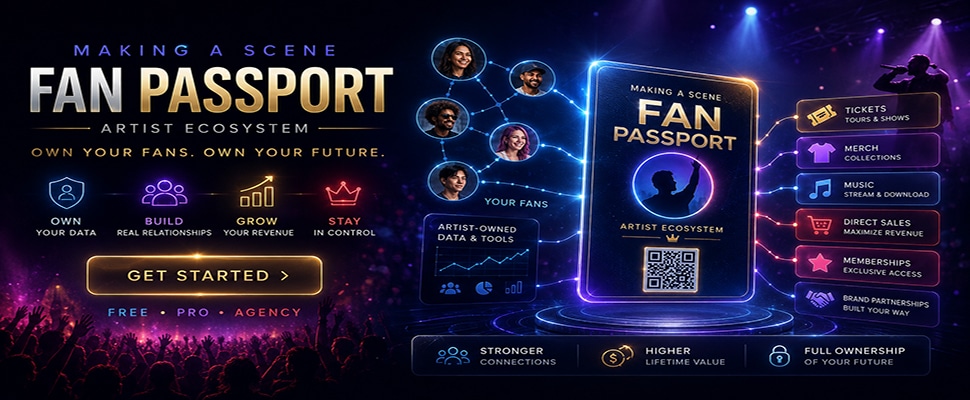
The Making a Scene Fan Passport Artist Ecosystem is being built around a different idea: the artist should maintain an authoritative source of truth for the business. The public system describes the Artist Profile as a master source for artist information and, at the Pro level, describes the Rights Catalog as the authoritative source for what the artist owns, controls and can approve.
That is what I mean by the Truth Function.
The artist should be able to look at a song record and understand the composition, writers, publishers, administrators, ownership splits, master owner, performers, producers, engineers, identifiers, sample issues, agreements, approval requirements and licensing authority without rebuilding the story every time somebody asks.
The current Fan Passport Pro feature set includes songwriter, composer, lyricist, publisher, administrator, master-owner and contributor records. It includes composition and master ownership worksheets, tracking for PRO information, IPI or CAE identifiers, ISRC, UPC, ISWC, copyright-registration readiness, sample and interpolation information, one-stop status, agreements and licensing authority.
That does not magically establish legal ownership simply because somebody typed information into a database. The underlying agreements and rights still matter. What the system can do is organize the evidence and keep the artist from treating rights management as a yearly game of “where did I put that file?”
That distinction is important because technology should document truth, not manufacture it.
The Song Record Can Become a Licensing Control Center
Once that rights information is connected to the audio assets, the song begins to look less like a release and more like a business object. The current Fan Passport Pro system publicly describes licensing policies that can be set around media, territory, term, exclusivity, composition rights, master rights, performance, voice and likeness, lyrics, derivatives, stems, remix rights, AI and other uses. It also describes a Price Book, Rights Map, licensing-readiness reporting, quote and deal workflows and a license history.
That is powerful because it lets an artist start defining the rules before an opportunity appears.
Maybe the artist is comfortable licensing the song to independent films but wants approval for political advertising. Maybe instrumental stems can be licensed for editing but cannot be redistributed. Maybe AI training is prohibited. Maybe AI analysis for search is acceptable but generative training is not. Maybe an acoustic master is available worldwide while a remix has territorial restrictions because another producer controls part of it.
The answer should not live inside the artist’s memory. The system should help preserve the answer.
The MAS Sync Marketplace Can Use Those Products
The current Fan Passport Pro system also connects this rights structure to the MAS Sync Marketplace. According to its current public feature description, eligible artist-approved songs can be published from the Rights Catalog into the supervisor marketplace. The system supports supervisor-facing information including BPM, key, duration, vocal type, clean or explicit status, one-stop information, rights readiness, asset availability and licensing path.
More importantly for the idea behind this article, the current system specifically describes support for full masters, instrumentals, clean and explicit mixes, TV mixes, a cappella versions, alternate mixes, 60-, 30- and 15-second edits, stems and intentionally supplied multitracks.
Now our alternate-version strategy has somewhere to go. The master is not sitting alone waiting to be discovered. A supervisor can know that the instrumental exists. They can see whether the clean version is available. The artist can prepare short edits. Rights readiness can sit beside creative metadata rather than living in another system entirely.
The current marketplace also separates creative AI-assisted matching from hard rights and availability filters. That is an important design choice. AI can help answer a creative question such as, “Find me a tense blues-rock track with gritty guitar that feels like somebody knows trouble is coming,” while the rights system separately answers, “Can this recording actually be licensed for the requested use?”
Those are different questions, and mixing them together would be asking a robot to become both a music supervisor and a lawyer. The lawyers may object.
AI Can Help Organize the Catalog Without Becoming the Owner
Artificial intelligence is extremely useful when it is given the right job.
AI can analyze audio for tempo, instrumentation, mood, energy and structure. It can help suggest descriptive metadata. It can help search large catalogs using natural language. It can help identify songs that may fit a supervisor’s creative brief. It can flag missing information and suggest that an artist prepare an instrumental or clean version.
The current Fan Passport system describes AI-assisted sync metadata suggestions for characteristics such as genre, mood, instrumentation, lyrical themes, scene suitability, tempo and energy. Importantly, its public description says artist approval is required before AI-generated metadata becomes marketplace-searchable. That is exactly where AI belongs.
AI can suggest that the song feels “dark, restless and cinematic.” The artist can decide whether that description makes sense. AI should not decide that Alice owns 37 percent of the composition because Alice played the tambourine really passionately. Ownership data should come from verified records. The artist’s source of truth feeds the intelligence layer, not the other way around.
The Direct Fan Relationship Completes the Circle
The Fan Passport idea becomes more interesting when the licensing catalog connects back to the fan business. A song does not have to choose between being a fan product and a professional licensing asset. It can be both.
The original recording may bring a listener into the artist’s world. The listener can become a permission-based fan relationship. That fan may later buy the high-resolution master, join a membership, purchase an instrumental, attend a show, buy merchandise or gain access to behind-the-song content.
A musician in that fanbase may be especially interested in stems. A songwriter may want a breakdown of how the song was written. A producer may want a production walkthrough. A superfan may love an unreleased acoustic demo that would mean absolutely nothing to a television supervisor.
Different people see different value in the same song. That is why fan data matters.
The current Fan Passport system is built around artist-owned, permission-based fan relationships and consent-aware communication. Its Free Core currently includes up to 250 fan relationships, basic fan capture, permission records, data exports and basic song and rights records, while the current Pro tier expands that into unlimited fan relationships, commerce, protected digital content, memberships, advanced rights management and sync licensing. The artist can therefore begin building the owned relationship before needing every advanced tool.
That is a far healthier business model than uploading everything to another giant platform, collecting followers the artist cannot reach directly, and discovering three years later that somebody changed the algorithm while we were sleeping.
Imagine One Song Called “Last Train Home”
Suppose our fictional independent artist writes a song called “Last Train Home.”
The artist writes it with one collaborator. Before leaving the writing session, they agree that each owns half of the composition and document that agreement. Their professional names, legal information, PRO affiliations and identifiers are connected to the song record.
They record the song a month later.
The artist owns the master, but an outside producer is involved. Instead of assuming everybody knows the deal, the artist keeps the producer agreement connected to the project records. Any session-player arrangements and sample information are documented as well.
The final vocal master is approved.
Before closing the session, the engineer prints a matching instrumental. A clean version is created if needed. The session is organized so stems can be reconstructed later. The artist decides that the drums, bass, guitars, keyboards, lead vocal and background vocals make useful stem groups.
Then the sync edits are created.
The 60-second version reaches the chorus quickly and resolves with a strong button. The 30-second version goes straight to the main hook. The 15-second version uses the most recognizable lyric and ending. The instrumental versions receive matching edits. A short guitar-and-drum hit becomes a useful five-second sting. The artist does not automatically upload every one of those files to streaming services. They are products in the catalog, not necessarily consumer releases.
The original master receives its recording identifier and distribution metadata. Any commercially exploited alternate recording is evaluated under current ISRC rules to determine whether it should receive its own identifier. The composition retains its musical-work identity even though multiple recordings and edits may embody it.
The artist then registers and administers the composition through the appropriate systems. The sound recording is handled through the appropriate master-side systems. The rights record connects those registrations rather than confusing them.
Now imagine a documentary producer searches for a reflective Americana song about leaving home.
“Last Train Home” appears. The supervisor sees the full master, instrumental availability, duration, BPM, key, mood and rights status. The artist has documented who owns the composition and master. Instead of emailing the artist and waiting three days for somebody to find the instrumental, the licensing path is already clear.
A few months later, a fan who discovered the same song at a show joins the artist’s community. That fan eventually purchases a premium package containing the instrumental, acoustic demo and behind-the-song video. Same song. Different customer. Different product. Different revenue.
Later, an AI company approaches the artist seeking permission to include selected recordings in a licensed training dataset. The artist does not have to begin by asking, “Wait, who actually owns this?” The rights information is already organized. The artist can examine exactly what the company wants, decide whether the composition and master rights can be licensed, review whether collaborators need to approve, determine whether the voice or stems are involved and negotiate the terms. The most important revenue tool in that entire story was not AI. It was knowing what you owned.
Your Recording Session Is Part of Your Inventory
This way of thinking changes how a recording session should end. Traditionally, the engineer prints the master and everybody goes home. From a business standpoint, that is incomplete.
The end of the session should also be the beginning of catalog preservation. The artist should retain the final masters, instrumental, approved alternate versions, stems, session documentation, lyrics, credits, agreements, identifiers, artwork, licensing notes and other records needed to understand and exploit the work later.
The artist should also maintain backups that are not dependent on one computer or one service. This is part of business continuity.
Distributors can disappear. Licensing companies can merge. Social networks can change their rules. Cloud-storage companies can change pricing. Software can stop opening old project files. None of those events should erase the artist’s ability to control the catalog.
The platform is temporary. The song is yours.
One Song Is Not One Product Anymore
For most of the streaming era, artists have been trained to think in releases. Write song. Record song. Upload song. Promote song. Repeat until exhausted. That system is wonderfully convenient for platforms because it creates an endless river of fresh content. It is not always the smartest way to build an artist-owned business.
A song can be a recording, but it can also be an instrumental, sync edit, stem package, fan experience, educational product, licensing asset, alternate performance, direct sale, membership reward, remix opportunity and carefully controlled AI licensing asset. The composition can earn through publishing while the master produces separate income. Sync can create upfront licensing revenue while eligible public performances can create additional royalties through the appropriate rights systems.
Not every song will earn from every source. That is fine. A revenue stack is not built by forcing every piece of music into every business model. It is built by preparing valuable intellectual property so that when the right opportunity appears, the artist is ready to use it.
The hardest part may already be finished. You wrote the song. You found the musicians. You recorded it. You argued over the guitar tone. You recorded the vocal again because somebody heard a noise nobody else could hear. You mixed it. You mastered it. Somewhere along the way there was probably pizza.
Now give that work the business life it deserves.
Document the composition. Document the master. Know the writers. Know the publishing. Know the ownership. Preserve the files. Create the useful alternate versions. Prepare the instrumental. Make the sync edits. Protect the stems. Keep the identifiers straight. Build the fan relationship. Set your licensing rules.
Then use an artist-controlled source of truth such as the Making a Scene Fan Passport Artist Ecosystem to keep the pieces connected instead of scattering them across a dozen companies.
That is the larger Making a Scene philosophy.
The future of the independent music business should not depend on convincing one giant platform to pay artists more for the exact same three-minute file. We should absolutely fight for fair compensation, but we should also build businesses that recognize everything the artist actually owns.
A song is not merely content. It is intellectual property with possibilities.
The master is an asset. The composition is an asset. The alternate recordings can become assets. The stems can become controlled products. The documentation makes those assets usable. Accurate metadata makes them discoverable. Clear rights make them licensable. Direct fan relationships create markets the artist can reach again. AI can help organize and search those assets without becoming their owner. Once you begin seeing your catalog this way, something changes.
You stop asking how many streams a song received this month and start asking a much more interesting question: How many useful jobs can this song do for my business while I still own the music, the data and the relationship?
That is how one song starts becoming a revenue catalog.
 |  Spotify |  Deezer |  Breaker |
 Pocket Cast |  Radio Public |  Stitcher |  TuneIn |
 IHeart Radio |  Mixcloud |  PlayerFM |  Amazon |
 Jiosaavn |  Gaana |  Vurbl |  Audius |
 Reason.Fm | |||
Find our Podcasts on these outlets
Subscribe to Our Newsletter
Discover more from Making A Scene!
Subscribe to get the latest posts sent to your email.


