
AI Licensing Is Becoming a Contract Business: What Indie Artists Must Demand Before They Opt In




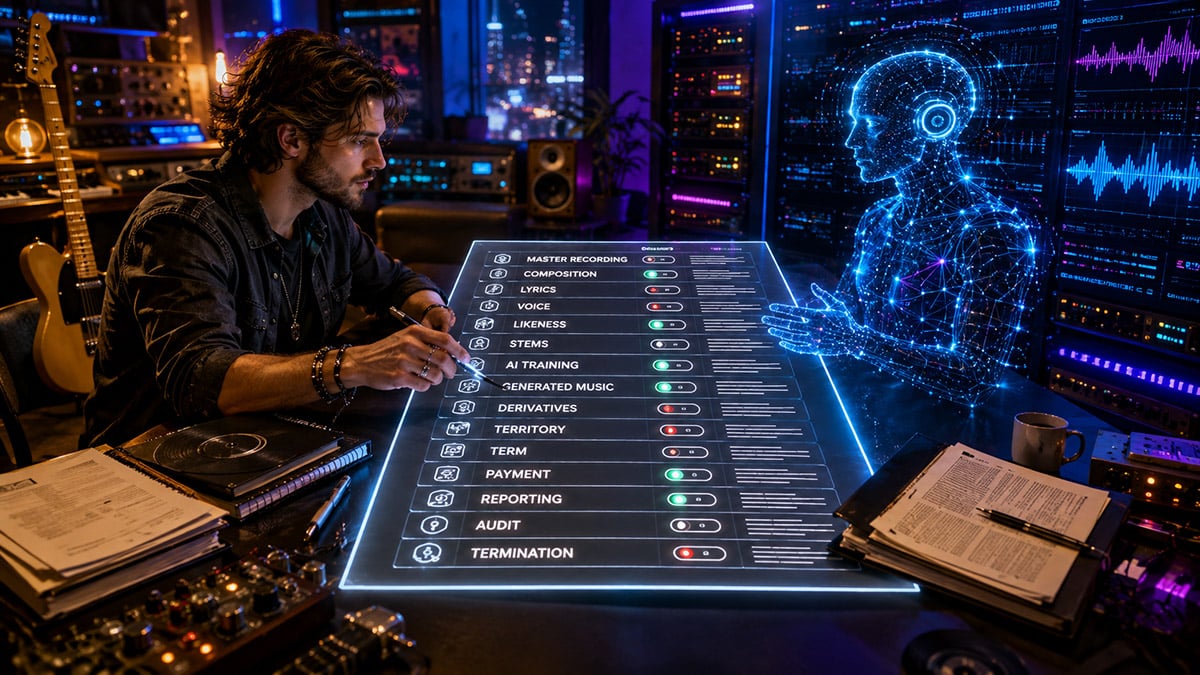
Making a Scene Presents – AI Licensing Is Becoming a Contract Business: What Indie Artists Must Demand Before They Opt In
Listen to the Podcast Discussion
The AI Fight Is Learning to Speak Contract
For the last few years, the music industry’s argument over artificial intelligence has mostly sounded like a fight about permission. AI companies have wanted enormous amounts of material to develop increasingly capable systems, while songwriters, artists, publishers, labels, and other rights holders have been asking a fairly basic question: who gave you permission to use our work in the first place? That fight is far from finished, but something more interesting is beginning to happen alongside it. The conversation is slowly shifting from whether AI companies should license music toward what an actual AI music license should contain, how much it should be worth, and how much control the creator should keep after signing it.
That shift became especially visible in August 2026. On August 12, BMG, at https://www.bmg.com/, announced a global strategic alliance with AI music company Suno, at https://suno.com/. BMG said the arrangement creates a framework involving its recorded music and publishing repertoire, while emphasizing artist and songwriter choice, rights protection, and compensation for those who participate. The agreement also addresses prior use of BMG recordings and publishing works, which makes the announcement especially interesting because it looks both backward at disputed or unsettled uses and forward toward a licensed commercial relationship.
Then, only a few days later, Round Hill Music, at https://www.roundhillmusic.com/, showed us the other path. Round Hill filed federal lawsuits involving Suno and Anthropic, at https://www.anthropic.com/, alleging that copyrighted works it controls were used without authorization in AI training. Reuters reported that the initial claims involve at least 500 works and that Round Hill has said the cases could eventually expand to include far more compositions. Those are allegations, not court findings, and the companies being sued have the right to defend themselves. Still, it is hard to miss the contrast between one rights holder sitting down to create a licensing framework and another rights holder walking into court arguing that permission should have been obtained before the technology was built.
For independent musicians, that contrast may be more useful than another round of arguing about whether AI is good or evil. The practical future of this business is probably going to include both technology and licensing, which means artists need to start thinking like rights owners instead of people waiting to see what the platforms decide. An indie artist who owns masters, controls publishing, has accurate rights records, and understands exactly what can be licensed is entering this new market with something valuable. The artist who does not know who owns the songs, where the stems are, or what was agreed to with a co-writer five years ago is going to have a much harder time taking advantage of the same opportunity.
That is why the real story here is not Suno by itself, BMG by itself, or even Round Hill by itself. The larger story is that AI licensing is becoming a contract business, and contracts are where all those comfortable words like “choice,” “permission,” and “opt in” finally have to mean something specific. The industry may talk about empowering creators, but the contract is where we find out whether that empowerment comes with money, reporting, limits, and an exit door, or whether it simply means the artist was allowed to click YES before giving away almost everything.
Permission Sounds Simple Until You Ask What It Means
The phrase “permission to use your music for AI” sounds wonderfully simple when it appears in an email or on a website. It sounds like somebody is asking to borrow the music and promising to put it back when they are finished. Music rights have never worked that way, though, because the thing we casually call “a song” is really a collection of different assets that can be owned by different people and used in different ways.
The U.S. Copyright Office, at https://www.copyright.gov/, treats the musical composition and the sound recording as separate copyrighted works. That means the underlying song and the particular recording of that song are not legally identical assets. An artist may own the master recording while sharing the composition with a co-writer. Another artist may control the publishing but have licensed the master to somebody else. A third artist may control both but have a producer agreement, a sample clearance, or another contract that places limits on what can be done.
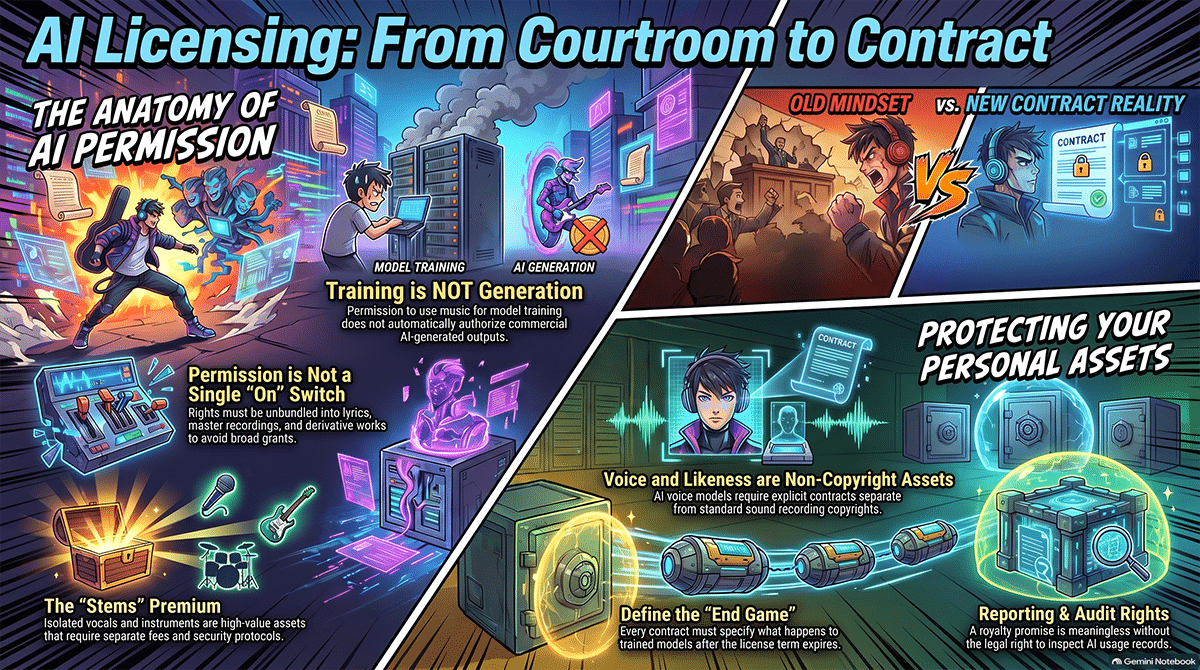
Artificial intelligence adds another layer because the technology can interact with those assets at several different stages. A company might want the finished recording because it needs audio for training. It might want the composition because it wants access to the musical structure or lyrics. It might want isolated vocals because clean vocal information is useful for developing certain tools. It might want stems, alternate mixes, MIDI information, or other material that never reached the public. Later, it may want to let users generate new music using patterns learned from that material, or it may want to build a commercial experience around the artist’s voice, name, or identity.
Those are not variations of one simple permission. They are different business activities, and the artist should think about them the same way a property owner would think about different uses of the same building. Renting somebody the front office for six months is not the same as giving them the entire building forever, and neither arrangement automatically gives them permission to knock down the walls and build a bowling alley. AI licensing needs that same kind of common sense.
This is where the phrase “opt in” can become misleading. An artist may hear “opt in” and assume that agreeing to participate means agreeing to one narrowly defined use. The actual contract may tell a much broader story. The grant could include training, generation, modification, derivative uses, sublicensing, worldwide use, future models, and technology that does not exist yet. None of those permissions is automatically wrong, but the artist should understand what is being purchased and should be paid accordingly.
The better way to think about AI licensing is not as one giant permission but as a negotiation over several different pieces of value. An artist may be comfortable allowing selected recordings to help train a general music model while refusing anything that imitates the artist’s voice. Another artist may see a licensed voice product as an exciting fan experience but refuse to provide unreleased stems. Somebody else may allow remixes inside one platform while preventing those remixes from being distributed commercially elsewhere. Once the rights are separated, the conversation becomes much more practical because the artist can finally decide what is for sale and what stays off the table.
Training Is Not the Same Thing as Building a Product Around You
Training is the first place where the artist needs clarity because it is one of the main reasons AI companies want access to creative material. Generative AI systems develop by processing large collections of data and learning patterns from that information. Different systems use different technical methods, and the legal questions surrounding training are still developing, which is why artists should be suspicious of contracts that simply say the company can use the music for “artificial intelligence purposes” and leave the rest to imagination.
The U.S. Copyright Office has studied generative AI training and has said that different parts of the process can implicate copyright rights, while also making clear that the legal outcome depends on the facts of the particular use. The Office has not declared that every training use is automatically infringement, and it has not declared that every training use is automatically fair use. Instead, the legal picture depends on what was used, how it was obtained, what was done with it, and what kind of market impact may result. At the same time, the Copyright Office has recognized that licensing markets are developing, which is exactly what agreements like BMG and Suno begin to demonstrate.
For an indie artist, the important business lesson is that training itself may have value. If a company wants your recordings because they improve a commercial technology product, then those recordings are contributing something useful to that product. You do not have to be Taylor Swift for your catalog to matter. A developer building a music system may need strong examples of blues guitar, traditional folk, electronic production, jazz arrangements, Americana songwriting, metal drumming, gospel harmony, or any number of other musical traditions. An independent catalog with clear ownership may be valuable precisely because the rights are easier to understand and the company can negotiate directly with the person who actually controls them.
That creates an opportunity, but only if the contract is narrow enough that the artist knows what was sold. If the company wants ten named recordings for one model, the agreement should not quietly turn those ten recordings into permission to use everything the artist has ever recorded. If the company wants music that exists today, the artist should be very careful about language that automatically covers every future song written during the term of the agreement. If the company says it needs the recordings for one model, the artist should understand whether those same files can later be used to create another model or provided to another company.
This is where an indie artist’s ownership can become real leverage instead of a slogan printed on a T-shirt. If you own the master, control the composition, and can quickly prove who has authority to license the work, you can negotiate from a position of clarity. A company does not have to spend six months figuring out who can say yes. That speed has value, and the artist should not confuse being easy to license with being cheap to license.
The larger point is that AI training should be treated as a business use rather than a vague technology experiment. If somebody wants to use your music to help build something that will eventually generate subscription revenue, investment value, user growth, or another form of commercial gain, the artist has every right to ask how the music participates in that value. That does not mean every training license has to be worth a fortune. It means the artist should stop assuming that participation itself is the compensation.
What Happens After Training May Be Worth Even More
The next question is what the company plans to do once the model has been trained, because permission to learn from music is not automatically the same thing as permission to sell new experiences built around a particular artist. That distinction matters enormously as AI music products become more sophisticated.
Imagine a company licenses part of your catalog as one small piece of a broad training library. You may decide that the arrangement is reasonable because your music is contributing to a general system alongside thousands of other recordings. Now imagine that the same company later creates a feature where users can type your name and generate something presented as a new song in your style. The business value has changed because the company is no longer simply learning from your music. It is potentially using your identity to attract customers.
That does not mean every artist-specific AI experience should be rejected. In fact, some of these products could become fascinating direct revenue opportunities if they are structured properly. A singer might decide to license a controlled digital voice experience that allows fans to create personalized greetings or authorized alternate versions of songs. Another artist might allow a songwriting platform to create demos using a licensed version of their voice while preventing the results from being commercially distributed. A band could offer fans limited remix tools tied to a membership program, creating something interactive without surrendering the ability to approve official releases.
Those possibilities are much more interesting than simply yelling that AI will destroy music, but they depend on the artist having the ability to say yes to one thing and no to another. If the contract treats training and generation as one inseparable permission, the artist loses that flexibility before the market has even had time to develop.
That flexibility is where future income may live. Training could have one price, while artist-specific generation could have another. A voice-enabled fan experience could carry a different royalty from a general music model. Commercial distribution of generated material could require another level of permission. Once these uses are separated, the artist can begin building a real revenue stack instead of receiving one mystery payment for “AI rights.”
The important thing is not that every artist needs to become an expert in machine learning. The important thing is that every artist understands the difference between somebody learning from the music and somebody selling a product that depends on the artist’s identity. One is about access to creative material. The other may be about the commercial value of the artist themselves. Those are not the same deal, and they should not be priced as though they are.
Your Master and Your Song Are Two Different Pieces of the Business
Independent artists have an advantage in this new market that many of them still underestimate because a growing number of indie musicians actually own the master recordings they create. That ownership is not just a philosophical victory over the old record-label model. It is a practical business asset that can generate several kinds of income over time.
The finished master might earn money through streaming, direct downloads, physical products, sync licensing, compilation use, or other recording licenses. AI can become another possible use, but it should not swallow the others. The artist should always remember that the master existed before the AI deal and will hopefully continue creating value long after the AI deal ends.
That is why a contract involving the master needs to explain what the company is actually allowed to do with the recording. A training license may allow the company to ingest the file for a specific technical purpose without giving it permission to distribute the recording itself. Another agreement might allow certain modifications or generated uses. A broader deal might permit sublicensing to technology partners. Those arrangements have different values, and the artist should understand which one is being offered.
Underneath the master sits the musical composition, which creates a second layer of ownership and income. If you wrote the song by yourself and still control the publishing, the paperwork may be fairly simple. If you wrote it with two other people, have an administrator, assigned part of the publishing, or signed another agreement that affects licensing authority, things become more complicated. None of that changes because the AI company wants an answer quickly.
This is where the old habit of ignoring publishing paperwork can suddenly become expensive. An artist may own the recording and still be unable to give the company everything it wants because the composition has other owners. An accurate split sheet that looked like boring office work when the song was recorded can suddenly become the document that allows a deal to close. Clean metadata and clear publishing records are not glamorous, but neither is spending three weeks trying to find a songwriter who vanished after the second EP.
The same principle applies to lyrics because lyrics live with the composition rather than magically becoming part of the master just because somebody sang them. AI systems may want lyric data for training, analysis, generation, translation, or other uses that are different from working with the audio recording. If an agreement wants both the master and the lyrics, the artist should see those as separate pieces of value and should make sure they actually have authority over both.
Once an artist starts thinking this way, the catalog begins to look less like a folder of songs and more like a collection of business assets. The master has value. The composition has value. The lyrics have value. Clean ownership information has value because it makes the assets easier to license. That shift in thinking is central to building the kind of sustainable music business Making a Scene has been talking about for years.
Your Voice May Become More Valuable Than Anyone Expected
One of the strangest things AI is doing to the music business is turning the human voice into something that can be licensed separately from the recordings in which it appears. Singers have always known that their voice is part of their identity, but technology now makes it possible for a company to create new performances that sound convincingly like a person who never actually sang them.
That possibility should make artists curious, but it should also make them very careful. Permission to train on a finished recording should not automatically become permission to build a digital version of the singer capable of performing new material. The fact that your voice appears in the master does not mean every imaginable use of that voice has been sold along with the recording.
There may be perfectly legitimate business opportunities here. A singer could license a digital voice for translation so fans in another country can experience songs in their own language. An artist might authorize personalized fan messages. A songwriter could use a licensed voice model to create internal demos. A game developer might pay for a controlled interactive experience involving the artist. These products could create income that did not exist before, which is exactly why the artist should resist giving all those future possibilities away inside one broad clause.
The artist also needs control over context because identity has value beyond money. A musician may be comfortable with a fan using a licensed voice to create a harmless personalized song while having no interest in hearing that same digital voice promoting a political candidate, endorsing a questionable product, or singing material the artist would never perform. A contract should be capable of understanding that difference.
Name and likeness belong in the same conversation. If a company builds a feature called “Create a Song With Jane Smith” and people subscribe because Jane Smith is attached to it, then Jane’s identity is helping sell the product. That value should be part of the negotiation rather than treated as free decoration around the technology.
This is where independent artists should resist the old habit of underpricing themselves simply because the opportunity feels exciting. Musicians have spent years being told to build brands, grow audiences, create recognizable identities, and deepen fan relationships. If those things eventually help somebody else sell an AI product, then they have economic value. The artist should not spend ten years building something and then give it away because the contract used the phrase “promotional purposes.”
Stems, Sessions, and the Things Nobody Used to Think About
AI may also increase the value of material that used to be treated as studio leftovers. A finished master contains the completed mix, but stems can separate vocals, guitars, drums, keyboards, or other groups of instruments. Multitrack sessions can go deeper still, exposing individual performances and production elements that never existed as separate public products.
For a technology company, that isolated material can be extremely useful because it gives the system cleaner examples of how particular musical elements behave. An isolated vocal tells a different technical story from a vocal buried under drums, guitars, and reverb. A clean drum track may be more useful for certain forms of analysis than the same drums inside the final mix.
That added usefulness should make the artist think about added value. If a company licenses the finished master, the stems should not simply be assumed to come along for the ride. The artist may decide to provide them, but that decision should be intentional. The same goes for session files, MIDI, alternate mixes, raw vocal takes, instrumentals, clean versions, and unreleased recordings.
These files can create revenue in other places too, which is why organizing them is part of building a modern artist business. Stems can help close sync deals because supervisors often want the flexibility to lower vocals or rearrange parts around dialogue. Instrumentals can open additional licensing opportunities. Alternate mixes can support film, television, advertising, gaming, and direct fan products. AI may simply add another buyer for material that already has several possible uses.
This is where the recording studio connects directly to the business office. A well-organized session does more than make the producer happy. It creates assets the artist can reuse, license, and sell in different contexts. The creative process produces the music, but good business organization allows that music to keep working after release day.
That is why independent musicians should stop thinking of files as clutter. Every clean stem, instrumental, metadata record, split sheet, and alternate mix can increase the usefulness of a song. Some of those assets may never generate a dollar, while another one may suddenly become exactly what a licensing buyer needs. The artist who knows where everything is can say yes quickly without giving away more than necessary.
The Fine Print Decides Whether Tomorrow Still Belongs to You
Once the agreement explains what is being licensed, the next big question is how long the company gets to use it. This is where a harmless-looking deal can quietly become a very large commitment because the difference between a three-year license and a perpetual license is enormous.
A short-term agreement gives the artist another opportunity to evaluate the market later. If AI licensing becomes far more valuable five years from now, the artist can negotiate again. A perpetual agreement may lock in today’s price long after the economics of the market have changed.
AI complicates that question because the company may have already used the music to train a model before the contract expires. If the source license ends, what happens to the model? Can it continue operating? Can the company use that model as the foundation for another model? Can new commercial products still be created from what was learned during the original term?
There may not always be a simple technical way to make a model completely forget one recording. That makes it even more important for the contract to describe practical obligations instead of relying on magical language. The company may be required to stop using the original files for future training, delete source materials, stop artist-specific generation, or prevent the music from being used in later model development. The exact solution may vary, but the artist should understand what ending the deal actually means.
Territory matters for similar reasons. The internet feels global, but music rights can still be controlled differently in different countries. An artist may own certain rights in one region while another company administers them somewhere else. If the AI company wants worldwide use, the artist should understand that the agreement really is worldwide rather than discovering later that a broad phrase carried the music into markets where somebody else had authority.
Term and territory are not just legal housekeeping because both affect price. A limited three-year experiment in one market should not necessarily cost the same as worldwide rights lasting forever. The bigger the commercial permission becomes, the more value the artist is giving. The contract should reflect that basic business reality.
The Money Only Matters If You Can Understand Where It Came From
Eventually every musician gets to the part of the agreement they actually wanted to read: compensation. This is where the new AI market is still very young because there is no one standard payment model that every company uses.
That uncertainty can be frustrating, but it also creates room for artists to think creatively about how these deals should work. A company might pay an upfront license fee for access to a catalog. Another arrangement might use minimum guarantees followed by royalties. A product tied directly to an artist’s voice or identity could involve revenue sharing. Some agreements may combine several approaches.
The important issue is whether the payment reflects what the company is actually receiving. A general training license is one type of commercial use. An artist-branded generation tool is another. A voice model creates a different kind of value. Access to stems may justify another payment because the company is receiving material that has never been publicly distributed.
This is where the revenue-stack philosophy becomes useful. The artist does not need AI to replace streaming, sync, live shows, merchandise, direct sales, memberships, or publishing. AI can become another layer sitting beside those existing sources. If training produces one payment while a licensed fan-generation feature produces another, the same underlying music business begins generating income from several different directions.
The artist should also be cautious when the agreement talks in percentages. A company can offer what looks like a wonderful royalty percentage while defining the revenue base so narrowly that very little money ever reaches the artist. The important question is not just what percentage you receive but what number that percentage is calculated against and what gets deducted before your share is determined.
That is why clear reporting matters. If the company says the artist will participate in revenue, the artist should be able to understand how the payment was calculated. The statement does not need to reveal every piece of confidential company information, but it should show enough that the artist can follow the basic path from commercial activity to royalty.
When those reports are stored alongside the artist’s other revenue information, they become more than paperwork. They become business intelligence. An artist may discover that one song performs poorly in streaming but works beautifully in licensing. Another recording may generate more value from stems than from the finished master. A voice-related product may unexpectedly become a strong source of income. That information helps the artist decide where to invest time and money next.
Reporting Only Works When Somebody Can Check It
This is where audit rights enter the picture. Musicians often hear the word “audit” and imagine an army of accountants marching into a corporate office carrying calculators the size of amplifiers. In reality, the idea is simpler: if a contract says you are being paid according to certain records, there should be some reasonable way to verify that those records are accurate.
A small indie artist may never conduct an audit, and that is perfectly possible. The important thing is that the right exists if the money becomes significant enough to justify it. Careers change. Songs suddenly become valuable. A sync placement, viral moment, major tour, or unexpected cultural revival can transform an obscure recording into a meaningful asset.
Without an audit provision, the artist may have to simply trust whatever numbers arrive. Trust is useful, but contracts work better when trust has a little paperwork standing behind it. A reasonable audit clause does not accuse the company of dishonesty. It gives both sides a process for resolving questions.
The same idea applies to termination. A professional business relationship should explain how it ends, especially if one side stops paying or seriously violates the agreement. An artist should not assume that the word “termination” automatically means every technological use stops at the same moment. The contract should describe what happens to source files, future training, artist-specific generation, sublicenses, and other ongoing activities.
These provisions may seem less exciting than the headline fee, but this is where the artist discovers whether control is real. A contract that promises choice at the beginning but gives the artist no practical way to leave later is offering a very strange version of choice.
The Best AI Contract Starts Before Anyone Sends You One
All this contract language eventually leads back to something much less glamorous but much more important: organization. An artist cannot negotiate intelligently if they do not know what they actually own.
This is why rights records are becoming part of the basic infrastructure of an independent music business. The artist needs to know who owns each master, who wrote each composition, how the publishing is divided, whether samples were cleared, and whether another agreement places restrictions on licensing. The goal is not to become obsessed with paperwork. The goal is to be able to answer a serious business inquiry without launching an archaeological expedition through twelve years of email.
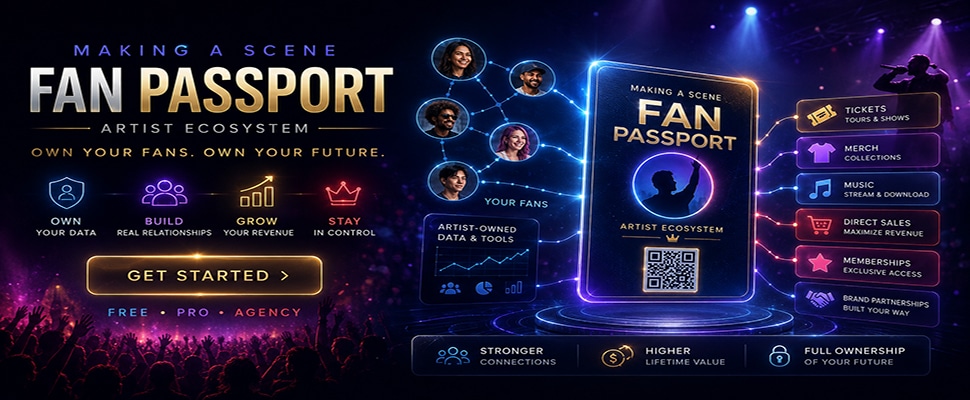
This is where the Making a Scene Fan Passport Artist Ecosystem fits directly into the conversation. The system is being built around the idea that the artist should maintain an organized source of truth for the music business rather than letting important information live separately inside distributors, ticketing platforms, social networks, mailing services, and forgotten spreadsheets.
For AI licensing, that source of truth can become extremely powerful. If a company asks about a song, the artist should be able to look at the rights record and understand whether the master is fully controlled, whether the composition has co-writers, whether there are samples, and whether special restrictions apply. The same information supports sync licensing, publishing administration, catalog management, and other parts of the business, so the artist is not building a separate rights database just because AI arrived.
The current Free Core of the Fan Passport Artist Ecosystem is designed to help artists begin organizing essential business and rights information while also building direct fan relationships. Pro expands that foundation with more advanced rights, catalog, licensing, and business-management capabilities. The larger idea is that rights information should live where the artist can control and export it rather than being trapped inside somebody else’s platform.
That structure becomes particularly useful when the artist begins creating licensing policies instead of making every decision from scratch. If the artist already knows that voice modeling requires separate approval, stems cost more, and certain songs are unavailable because of publishing restrictions, the next AI offer becomes easier to evaluate. The artist is no longer staring at a contract wondering what everything means. The artist has already decided what the business is willing to sell.
A Licensing Policy Is Stronger Than a Panic Response
This may be one of the most important changes independent artists can make as AI licensing develops. Instead of waiting until a company sends an agreement and then trying to invent a position overnight, artists can begin thinking about their own policies now.
That does not mean setting rigid rules that can never change. It means understanding the difference between the rights and deciding how comfortable you are with different uses. An artist might be open to general training but skeptical about voice replication. Another artist may be excited about fan-facing AI experiences but want strict control over commercial releases. Someone else may be willing to provide stems but only under a separate fee because those assets have value in sync and remix markets too.
When those preferences become part of the artist’s business records, negotiation gets much easier. The company presents an offer, and the artist compares the offer against existing policy. Areas that match can move forward quickly, while areas that do not match become negotiation points.
That is a far healthier way to participate in a new market because the technology no longer determines the artist’s boundaries. The artist does.
The same process already happens in other parts of the music business. A venue asks what the band costs. A producer has a rate. A photographer has usage terms. A sync library has licensing rules. AI rights can become another part of that professional structure instead of an emergency decision made because somebody says the opportunity expires Friday.
AI Should Become Another Door Into the Artist’s Own Business
The most exciting possibility here is not simply that AI companies might send artists checks. The larger opportunity is that AI can become another part of an interconnected artist business.
Imagine somebody discovers an independent musician through an AI-powered music experience. That listener becomes curious about the real artist behind the music. If the relationship ends inside the AI company, the artist received some exposure but gained very little lasting control. If that listener can move from the AI experience to the artist’s website, Fan Passport, mailing relationship, membership, merchandise store, live show, or direct music catalog, the discovery becomes much more valuable.
This is the same problem artists already face with streaming and social media. Platforms are good at creating introductions, but they are not the same thing as owning the relationship. A million views on somebody else’s platform can disappear when the algorithm changes. A fan who has given the artist permission to stay in touch is different because that relationship can continue across platforms.
The Making a Scene Fan Passport system is built around that distinction. It is designed to help the artist turn discovery into a permission-based relationship that can support tickets, merchandise, memberships, direct offers, fan engagement, and other revenue activity. AI can fit into that ecosystem just like streaming, social media, sync, or live performance.
That is what makes the revenue-stack approach more powerful than chasing one new technology at a time. AI does not have to save the artist. Streaming does not have to save the artist. Touring does not have to carry the entire business. Each part can contribute something while the artist keeps control over the important assets underneath them.
“Opt In” Should Mean You Actually Chose
This is where we come back to the friendly little phrase that started the whole discussion. “Opt in” sounds reassuring because it suggests that the artist has control. That is certainly better than discovering that your work was used without anybody asking.
But meaningful choice requires more than a yes-or-no box. It requires enough information for the artist to understand what yes actually means.
If the company wants permission for general model training, that should be clear. If it also wants generation rights, the artist should know that. If it needs the master, composition, lyrics, stems, voice, or identity, each piece should be understandable inside the agreement. If the license lasts worldwide for ten years, that should not be hiding inside a paragraph that sounds temporary. If the artist is supposed to participate in revenue, the payment calculation should make sense.
That kind of transparency benefits responsible technology companies too. A market where artists understand the deal is more stable than one built on confusion. Clear rights reduce disputes. Clear compensation creates trust. Clear termination rules give both sides a predictable relationship.
The worst possible outcome would be for the industry to replace unauthorized scraping with contracts so broad that creators technically gave permission without understanding what they surrendered. That would solve the legal problem without solving the artist problem.
The better outcome is a licensing market where indie artists can decide which assets they want to make available, under what conditions, and for what price. That is much closer to a real business relationship.
This Is What Ownership Is Supposed to Look Like
Independent artists have been told for years that ownership matters, but ownership by itself is only the beginning. Owning a master is useful because you can license it. Controlling publishing is useful because you can negotiate with it. Maintaining clean metadata is useful because buyers can understand what they are purchasing. Keeping direct fan data is useful because you can continue the relationship after a platform sends the listener your way.
AI simply gives artists another reason to put all of those pieces together.
The artist who enters this new market with clean rights records, organized assets, clear licensing policies, and direct fan infrastructure is not begging an AI company for attention. That artist is sitting across the table as another business owner with something valuable to sell.
That difference matters because the music industry has spent decades teaching musicians to think primarily about access. Get discovered, get signed, get playlisted, get followed, and hope the gatekeeper sends something back. The Making a Scene philosophy turns that around by asking what the artist owns after the attention arrives.
If the answer includes masters, compositions, rights records, fan relationships, transaction history, and several different ways to create direct revenue, the artist is building something durable. AI licensing can become one more piece of that structure rather than another platform that temporarily controls the artist’s future.
The BMG/Suno agreement and the new Round Hill litigation show us two versions of the same developing market. One version says creative assets can be licensed through negotiated agreements. The other says rights holders may go to court when they believe those assets were used without permission. Independent artists should learn from both because the real opportunity is not simply being included in AI.
The real opportunity is being included on terms you understand.
That means knowing what you own before the offer arrives, knowing what parts of that ownership you are willing to license, and knowing what those permissions are worth to your business. It also means remembering that AI is only one part of a much bigger artist economy that can include live shows, merchandise, publishing, sync, memberships, direct sales, fan support, and whatever new revenue opportunities technology creates next.
If independent artists approach AI that way, the question stops being whether technology is coming for the music business. Technology has been coming for the music business since somebody figured out how to put music on a cylinder.
The better question is who owns the valuable assets when the next technology arrives, who controls the customer relationship, and who gets paid when those assets help somebody else build a profitable product.
That is the contract conversation independent artists need to be having now.
 |  Spotify |  Deezer |  Breaker |
 Pocket Cast |  Radio Public |  Stitcher |  TuneIn |
 IHeart Radio |  Mixcloud |  PlayerFM |  Amazon |
 Jiosaavn |  Gaana |  Vurbl |  Audius |
 Reason.Fm | |||
Find our Podcasts on these outlets
Subscribe to Our Newsletter
Discover more from Making A Scene!
Subscribe to get the latest posts sent to your email.


