Stop Sending Fans Back Into the Machine




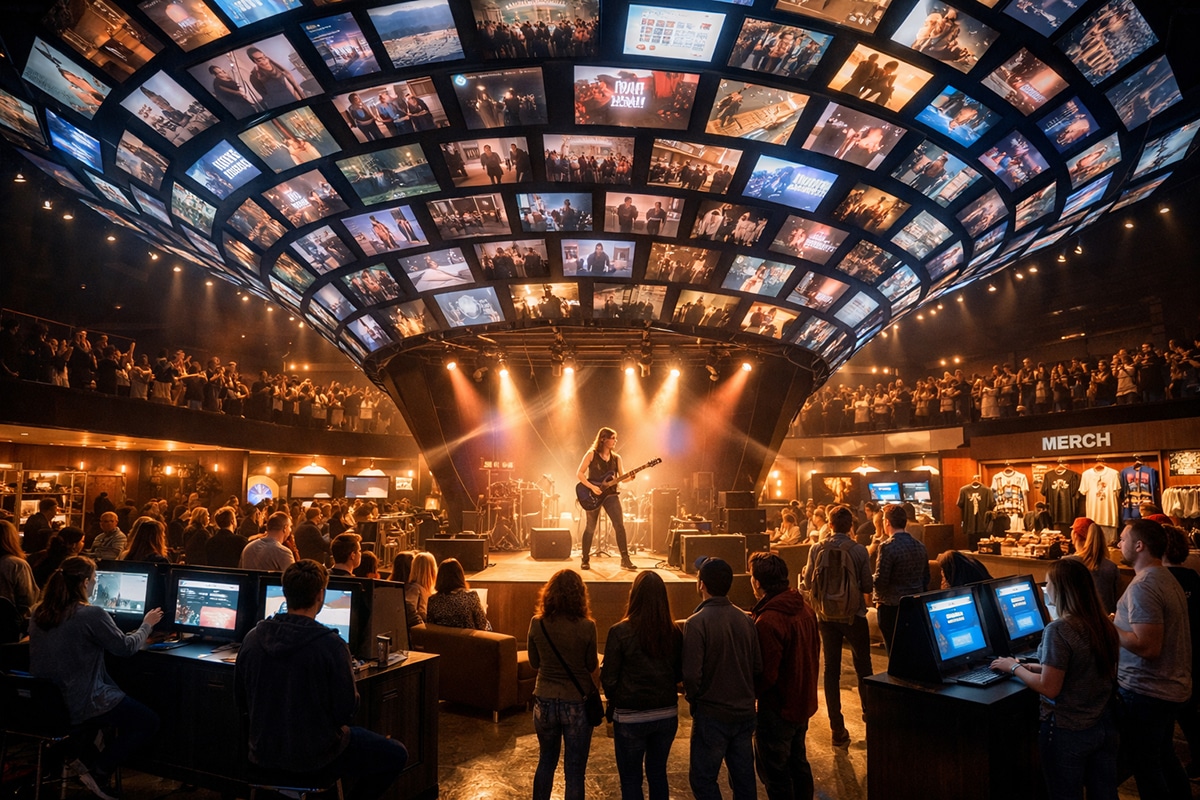
Making a Scene Presents – Stop Sending Fans Back Into the Machine
Listen to the Podcast Discussion
There is a bad habit all over independent music right now. An artist works hard to get attention on Instagram, TikTok, YouTube, Facebook, Threads, or X. A new fan finally bites. They click. And what do they find? Another stack of links, another rented profile, another platform asking them to wander off and forget why they came in the first place. That is not a funnel. That is a leak. Pew’s latest U.S. social media data still shows huge reach on YouTube and Facebook, with Instagram and TikTok especially strong with younger adults, which is exactly why these platforms matter for discovery. But reach is not ownership, and attention is not the same thing as a relationship.
The smartest indie artists are starting to treat social media for what it really is: the top of the funnel. It is the street corner, not the store. It is the trailer, not the theater. It is the loud room where strangers notice you, not the quiet room where they become customers, members, ticket buyers, and true fans. Your real job is not to get fans to spend more time inside the apps. Your job is to move them out of rented space and into your own ecosystem, where you control the story, the design, the data, the offer, and the next step. You do not build a career by feeding somebody else’s machine. You build it by owning the road out of that machine.
What “Top of Funnel” Really Means for an Indie Artist
A funnel sounds like marketing jargon, and most musicians hate marketing jargon for good reason. Usually it means somebody is about to sell you a course, a growth hack, or a fake dream. But the idea itself is simple. At the top are strangers. In the middle are interested people. At the bottom are the people who buy, show up, subscribe, tip, share, and stay. Social media is built for the top. It is built for interruption, discovery, sampling, swiping, and passing traffic. Your website should be built for the middle and bottom. It should turn passing attention into owned connection.
That means your Reel, Short, TikTok, post, clip, photo set, live snippet, or story should not exist as the end product. It should exist as the invitation. The job of that content is to make the right person feel one thing very clearly: I want more of this, and I want it now. When that moment hits, you do not send them to a menu of exits. You send them to one controlled place on your own domain. Not your Instagram bio, then a Linktree, then a streaming service, then maybe your merch page if they still care. Linktree literally markets itself as a link-in-bio hub for sharing everything you create, and Beacons does the same. That may be fine for a creator with scattered offers, but for a working artist it often adds one more layer between attention and ownership. Every extra click is another chance for the fan to drift away from your control and ultimately your ability to monetize.
The First Rule: Social Media Points In. Your Website Does Not Point Out.
This is where a lot of artists get it backwards. They think social media is the home base and the website is the formal brochure off to the side. No. Flip it. Your website is home. Social is the fishing line. Your website is the venue, the merch table, the listening room, the newsletter desk, the membership counter, and the box office. Social is just the flyer taped to the wall outside.
So do not build your website like a digital business card. Build it like a controlled experience. When a fan lands there, they should be able to listen, watch, read, join, buy, and respond without being pushed right back into the app economy. This is the part artists can learn from the platforms themselves. YouTube keeps people inside by stacking video after video, playlists, posts, live streams, chat, and memberships. TikTok keeps people inside with speed, sequence, and almost no friction. Instagram keeps the experience tight, visual, and immediate. Those platforms are teaching you something, even if they are not teaching it for your benefit. Friction kills momentum. Convenience grows attention. The fan should not have to leave to get the full experience.
Why the Link in Bio Model Is Not Enough
Yes, Instagram lets you add external links to your profile, and TikTok lets some users add a website link to their profile. But notice where those outbound links live. They live in controlled corners. Instagram routes external links through profile editing. TikTok says website links are available through the profile link flow, and notes that website links depend on account status in some cases. These are not open roads. They are tiny exits off a highway that the platform wants you to stay on. That is the whole game. The platform wants the session. You want the relationship. Those are not the same goal.
That is why “link in bio” is not a strategy by itself. It is just a doorway. If the doorway opens into a bland page full of random options, you have wasted the click. A fan who came because of a funny clip should not land on the same generic page as a fan who came because of a live performance, a new song, or a merch drop. Strong funnels feel specific. The landing page should match the promise that got the click. If the TikTok was about your live show, the next page should feel like the live world of the artist. If the Reel was about songwriting, the next page should lead to a song notebook, demo club, lyric breakdown, or private writing update. Specificity is not fancy. It is respect.
Build One Door, Not Ten
Most independent artists do not need a dozen doors. They need one good one. That door can be a home page, a splash page, or a campaign page on your own domain. What matters is that it collects something you own and gives the fan something real in return. At minimum, that usually means first name, email, and city or state. Phone number can be optional if you are ready to use SMS with care instead of spamming people like a desperate furniture store. The point is not to collect data because “marketing people” say you should. The point is to know who your fans are, where they are, and how to reach them directly when you have something worth saying.
The best version of this page does not feel like paperwork. It feels like access. Maybe the reward is an unreleased track. Maybe it is a live video that never hits social. Maybe it is first access to tickets. Maybe it is a discount on a signed vinyl run. Maybe it is membership in a fan club that actually matters. The exchange has to feel human. Give me your email so I can “stay updated” is weak. Join the private side of this world and I’ll give you something worth having is strong. That is the difference between a fan capture page and a real invitation.
Your Site Should Behave Like a Platform
This is where the article stops being theory and starts being money.
If you want your website to outperform social media, it has to stop acting like a dead brochure. It has to act like an environment. On WordPress , you can publish media-rich pages, use built-in audio and video blocks, and control comments through discussion settings. WordPress also supports YouTube embeds, including playlists and live streams. That means you can create a page that feels less like a blog post and more like a channel page. A fan can arrive and immediately play music, watch a series, read context, and respond without leaving.
If you want a more publication-driven setup, Ghost is built around publishing, newsletters, paid subscriptions, and tiers. Ghost’s own product pages show memberships, paid tiers, tips, native analytics, and subscriber flows as core parts of the platform. That makes it attractive for artists who think like media companies and want the site, email, and membership layer tied together from the start.
If you want something easier to launch and prettier out of the gate, Squarespace supports commerce and member areas, while Shopify is strong when merch and repeat buying are the center of the business. Shopify’s customer accounts let buyers sign in, manage orders, reorder, and take self-serve actions. That matters because fan experience is not just about looking good. It is about reducing friction so buying becomes normal instead of rare.
The goal is not to copy Silicon Valley for the sake of it. The goal is to borrow the parts that work. Give fans one place to watch a video series. One place to hear a playlist. One place to read tour notes. One place to buy a shirt. One place to join the email list. One place to unlock the member room. One place to see the next show in their city. One place to comment or reply. When all of that sits under your domain, the fan starts to experience your site the way they experience a platform. They stop visiting. They start returning, engaging and participating!
How to Duplicate the Best Parts of YouTube on Your Own Site
YouTube is powerful because it is not just video. It is sequence. It is momentum. It is episodes, playlists, community posts, live streams, memberships, and comment loops all stitched together. You can build your own version of that on your site in layers. YouTube officially supports playlists, embedded videos, live streaming, channel posts, and monthly memberships. WordPress supports media blocks and YouTube embeds. Bunny Stream offers hosted video delivery, storage, transcoding, analytics, and a player if you want more control over the viewing experience on your own site.
That means you can stop thinking in single posts and start thinking in series. Do a weekly road journal. A monthly song lab. A rehearsal room diary. A studio build log. A live archive. A members-only acoustic room. A songwriting breakdown series. Put them on your site as bingeable sections with simple next-step logic. Watch episode one, then episode two. Finish the live clip, then buy the ticket. Hear the demo, then unlock the full session. Read the story behind the song, then grab the lyric notebook PDF. That is how you turn attention into depth. And depth is what sells the thing that a one-off social post almost never sells: commitment.
How to Duplicate the Best Parts of Social Media on Your Own Site
Most artists think social media means followers. What social media really means is repeated interaction. Comments. Replies. Identity. Inside jokes. Shared memory. Small rituals. If your site has none of that, it will always feel colder than an app.
The good news is that you do not need to build the next Facebook to fix this. WordPress can manage comments already, and if you want deeper community features there are tools like BuddyPress for community features, bbPress for forums, and Discourse for a more robust standalone community setup. These are not gimmicks if you use them with purpose. A forum for street team members, a members-only touring club, a songwriting challenge room, or a local scene discussion board can create repeat visits and durable conversation under your brand instead of under someone else’s algorithm.
This is also where many indie artists leave money on the table. They treat the site like a checkout page instead of a gathering place. But people buy more when they feel like they belong somewhere. A fan who comments on a tour diary, checks in on a members page, or returns for a recurring series is not just more engaged. They are closer to buying a ticket, grabbing merch, supporting a subscription, or showing up for a crowdfund. Community is not fluff. Community is economic gravity.
Merch, Membership, and Media Need to Live Together
One of the biggest mistakes artists make is separating the story from the sale. The merch store is on one platform. The videos are on another. The mailing list lives somewhere else. The blog is forgotten. The fan club is vague. Then everybody wonders why conversion is low.
Put the revenue pieces in the same house as the media. On WordPress, WooCommerce gives you direct ecommerce, while WooCommerce Memberships and WooCommerce Subscriptions let you tie products, content access, and recurring revenue together. MemberPress does something similar with memberships, gated content, digital downloads, and wallet-enabled payments. The more you can connect the content people love with the action that supports it, the stronger your funnel becomes.
Think about it like this. A fan watches a behind-the-scenes studio clip. Below that clip is the preorder for the vinyl. Next to that is the email signup for first press alerts. Under that is the members-only rough mix room. On the same page is the story behind the record. Now the site is doing what platforms do: stacking reasons to stay and reasons to act. That is not being manipulative. That is being organized.
Email and SMS Are Not Old. They Are Owned.
Artists love to call email old right before complaining that their posts do not reach anybody. That is some modern nonsense. Email is not dead. It is direct. SMS is not outdated. It is intimate. What matters is not whether the channel feels trendy. What matters is whether you can reach the fan without asking an algorithm for permission.
On a WordPress stack, The Newsletter Plugin is built to manage newsletters from inside WordPress, and Twilio SendGrid provides email delivery and marketing tools. For SMS and messaging workflows, Twilio focuses on communications APIs tied to customer engagement and first-party data. Used together, that means your site can collect a fan, trigger a welcome sequence, send a city-based ticket alert later, and follow up with a merch offer after the show. The real power is not the software. The power is that the contact now belongs to your system, on your rules, under your voice.
And here is the part too many artists skip. Once a fan joins your list, the website should still be the center. Your emails and texts should drive people back into pages that are useful, rich, and designed to keep them there. Not just “buy now.” Think “watch this unreleased live set,” “read the story behind the single,” “members can hear tomorrow’s mix tonight,” or “Atlanta fans, your presale page is live.” The website is the room. Email and SMS are the knock on the door.
Use Native Platform Tools for Reach, Then Pull the Relationship Home
There is no need to be precious about discovery. Use the platform tools. Meta Business Suite lets you schedule and manage content across Facebook and Instagram. TikTok Business Center and TikTok’s creator tools help with publishing and promotion. YouTube Studio remains the control room for video publishing and channel management.
The point is not to reject the platforms. The point is to stop confusing platform success with business success.
So yes, publish the Reel. Cut the Short. Drop the TikTok. Post the carousel. Go live. Use the discovery engine. But every piece of content needs a next move that brings the fan inward. Not someday. Right there. Right then. Every strong post should answer the same question: where does this fan go if they want more? If the answer is “my bio has a bunch of links,” you are still leaking.
Let AI Run the Traffic Desk, Not the Soul
This is where AI gets useful for indie artists. Not as a fake artist. Not as a shortcut to personality. As a systems assistant. OpenAI and ChatGPT, Anthropic, and Google Gemini all position their tools around writing, planning, brainstorming, and getting work done faster. Descript is built for recording, transcribing, editing, and publishing audio and video with AI-assisted workflows. That makes AI a strong layer for the funnel, because the funnel needs a lot of repetitive work done well and done often.
Use AI to turn one interview into a blog post, three emails, five captions, two press pitches, and a members-only note. Use it to rewrite a tour story for different platforms without losing the core voice. Use it to summarize fan comments and surface common questions. Use it to draft segmented emails by city, merchandise interest, or show attendance. Use it to analyze which landing pages are converting and which are dead on arrival. Use it to repurpose long-form video into short-form discovery clips. That is how AI serves the artist-owned funnel. It does more with the same raw material so you can bring more people into your world without burning out.
The warning matters, though. Do not let AI flatten your voice into the same beige sludge everyone else is posting. The point is not to sound more robotic. The point is to free up time so you can sound more like yourself, more often, in more places, with better follow-through.
Where Web3 Actually Helps Instead of Just Sounding Fancy
Web3 gets dismissed because too many people pitched it like magic beans. But stripped of the hype, the useful part is simple. It gives you new ways to prove access, reward attendance, create membership, and store digital assets in ways that are not fully locked to one platform. That matters when you are trying to build an artist-owned ecosystem instead of another fragile stack of platform accounts.
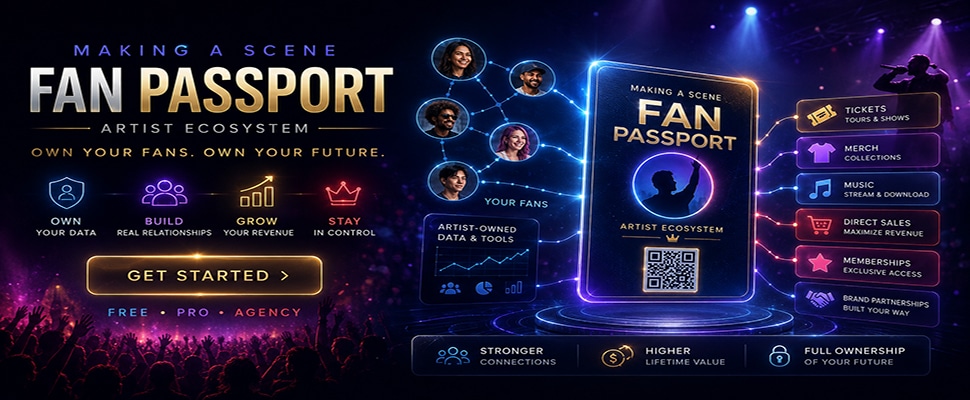
Unlock Protocol is built for creator memberships and monetized access, and its WordPress guidance explains how it can gate content with crypto or even credit card payments through Stripe. Guild focuses on token-gated community roles and rewards. POAP is built around proof of attendance digital mementos. NFT.Storage and Pinata both position themselves around decentralized storage tied to NFTs and IPFS-style content persistence. Used the right way, these tools can support fan passports, collectible show check-ins, token-gated perks, member verification, and portable digital access that is not trapped inside a single social platform.
The important thing is to use Web3 where it helps the fan experience, not where it makes your site feel like a tech demo. A POAP for attending a hometown release show can be cool because it becomes a badge, a memory, and maybe a key to early ticket access later. A token-gated members page can be useful if it unlocks real things like demos, discounts, meet-and-greets, or local presales. A fan passport can be powerful if it ties attendance, purchases, and participation together into one identity you can actually use. But if the fan has to take a computer science class to get through the door, you built the wrong door.
The Offer Has to Match the Moment
Here is the secret most funnel talk misses. The offer matters more than the funnel shape. A cold stranger from a funny TikTok is not ready for the same ask as someone who watched three live videos, read your tour diary, and joined your list a month ago. The funnel has to respect that.
At the top, give people something fast and low friction. A killer performance clip. A strong hook. A bold opinion. A useful lesson. A backstage moment. A story. In the middle, offer something that deepens the relationship. A free live track. A city-based show alert signup. A members preview. A private video page. At the bottom, make the paid ask feel natural. Tickets. Vinyl. Limited merch. A subscription. A digital bundle. A fan club. A VIP pass. A songwriting workshop. A token-gated experience. Revenue grows when each step feels like the obvious next yes, not a hard left turn.
This is why social-first artists often struggle to convert. They are trying to sell bottom-of-funnel products to top-of-funnel attention. A stranger does not owe you a vinyl purchase because they liked one Reel. But they may give you an email for a live session, and that email may become a ticket buyer later. The website is where that progression is supposed to happen.
A Better Home Page for an Indie Artist
Picture the home page that actually works.
The top section immediately shows who you are and what kind of world the fan just entered. There is a clear piece of media at the center. Not a generic hero image. A playable thing. Beneath it is one strong invitation, not six. Join the list for the unreleased live session. Get local show alerts. Enter the private listening room. Pick one. Then the rest of the page unfolds like a platform. Latest video series. Featured music player. Tour dates. Merch drop. Story or journal section. Members area. Comments or community prompt. Everything moves the fan deeper.
That home page can live on WordPress, Ghost, Squarespace, Shopify, or another stack. The platform matters less than the principle. Your site should answer the fan’s next question before they have to ask it. Want to hear more? It is here. Want to know the story? It is here. Want to support? It is here. Want to come to the next show? It is here. Want to belong? It is here. That is the difference between a site that gets visited and a site that gets used.
Measure the Right Things
The rented-platform brain makes artists watch views, likes, follower count, and random spikes. The owned-ecosystem brain watches movement. How many people moved from social to site? How many joined the list? How many came from a song clip into a product page? Which city pages convert best? Which content series leads to ticket sales? Which fans came back three times in a month? Which email flow drove merch revenue? Which membership perk kept people renewing?
That is the shift. You stop asking, “Did this post do well?” and start asking, “Did this post move anybody into my world?” Those are very different questions. One feeds your ego. The other feeds your business.
The New Job Description of Social Media
For years, artists were trained to think social media was the career. Post more. Optimize more. Chase more. Trend harder. Dance faster. Beg louder. But the platforms were never designed to make you free. They were designed to make you productive for them.
So use them. Absolutely use them. Use Instagram for visual hooks and narrative snippets. Use TikTok for fast discovery and cultural reach. Use YouTube for searchable video depth and audience building. Use Facebook where your crowd still organizes events and local community. Use Threads and X when conversation helps the story travel. But never forget the assignment. Their job is to introduce. Your job is to receive. Their job is to circulate attention. Your job is to capture relationship. Their job is to rent you a stage. Your job is to own the venue.
That is the whole field guide right there. Social media is the top of the funnel. Your website is the ecosystem. Stop sending fans in circles. Stop treating a link hub like a strategy. Stop building traffic for places you do not control. Build a site that behaves like a platform, feels like a world, and makes it easy for a new fan to become a real one. Then let every post, clip, and campaign do what it was always supposed to do: bring people home.
Get your FREE Making a Scene Fan Funnel WordPress Plugin!
 |  Spotify |  Deezer |  Breaker |
 Pocket Cast |  Radio Public |  Stitcher |  TuneIn |
 IHeart Radio |  Mixcloud |  PlayerFM |  Amazon |
 Jiosaavn |  Gaana |  Vurbl |  Audius |
 Reason.Fm | |||
Find our Podcasts on these outlets
Subscribe to Our Newsletter
Discover more from Making A Scene!
Subscribe to get the latest posts sent to your email.


