YouTube Took Away Paid Creator Music Licensing. Making a Scene Is Building the Artist-Owned Replacement.




YouTube Took Away Paid Creator Music Licensing. Making a Scene Is Building the Artist-Owned Replacement.
Listen to the Podcast Discussion
YouTube Changed the Rules. Indie Artists Should Change the Game.
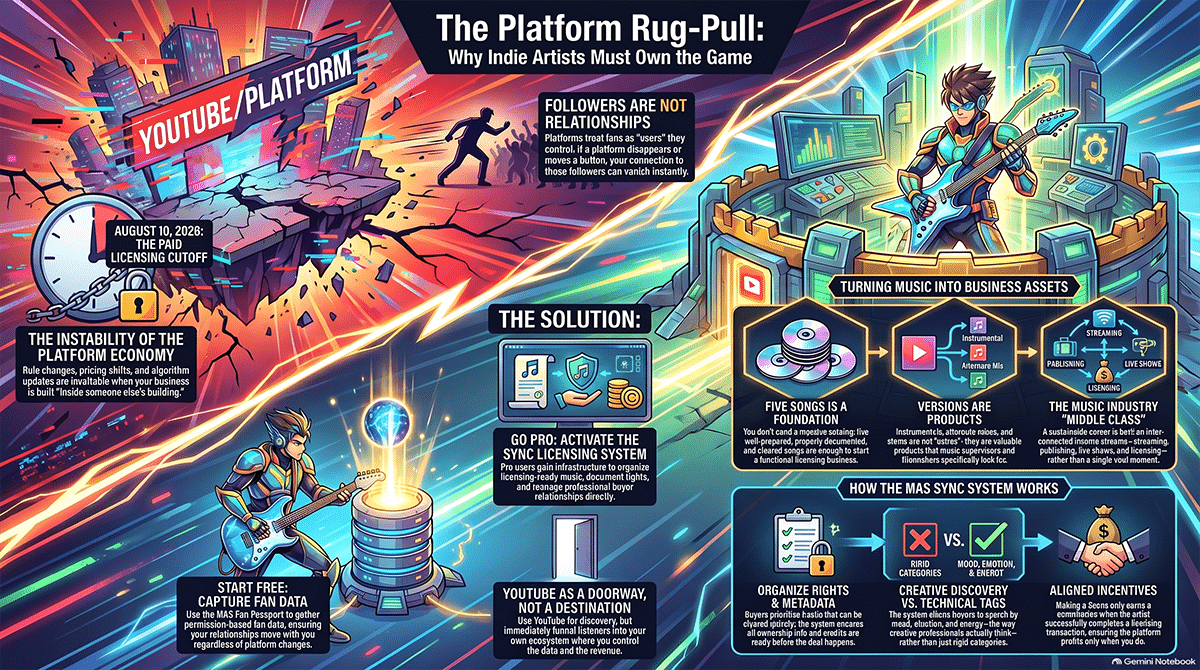
On August 10, 2026, something important changed inside YouTube at https://www.youtube.com/. The company began phasing out the paid-license side of Creator Music, the system that had allowed eligible creators to pay an upfront fee for certain songs and legally use those tracks in YouTube videos. YouTube’s current Help documentation says paid licenses are being phased out as Creator Music moves toward free, or “gratis,” licensing. Existing paid licenses already attached to videos can remain valid until their terms expire, while unused paid licenses purchased before the cutoff are subject to YouTube’s stated transition rules. The official details are available at https://support.google.com/youtube/answer/11273150?hl=en and https://support.google.com/youtube/answer/11610212?hl=en.
This is not the death of Creator Music. YouTube is changing the product, not setting fire to the building. What disappeared is the part that should matter most to independent artists: a built-in path where creators could find certain songs, pay for a license, and use the music under stated terms. YouTube itself says those paid licenses were generally single-use licenses for one YouTube video and were not transferable to other platforms or channels. The details can be found at https://support.google.com/youtube/answer/11611019?hl=en.
That makes this more than another platform update. It is a reminder of what happens when artists build important parts of their businesses inside somebody else’s building. YouTube had a paid licensing marketplace, and now it is changing direction. Tomorrow another platform will change its rules, the day after that a distributor will change pricing, a social network will move a button, and an algorithm will decide that musicians should now make videos while hanging upside down from a ceiling fan. That is the platform economy.
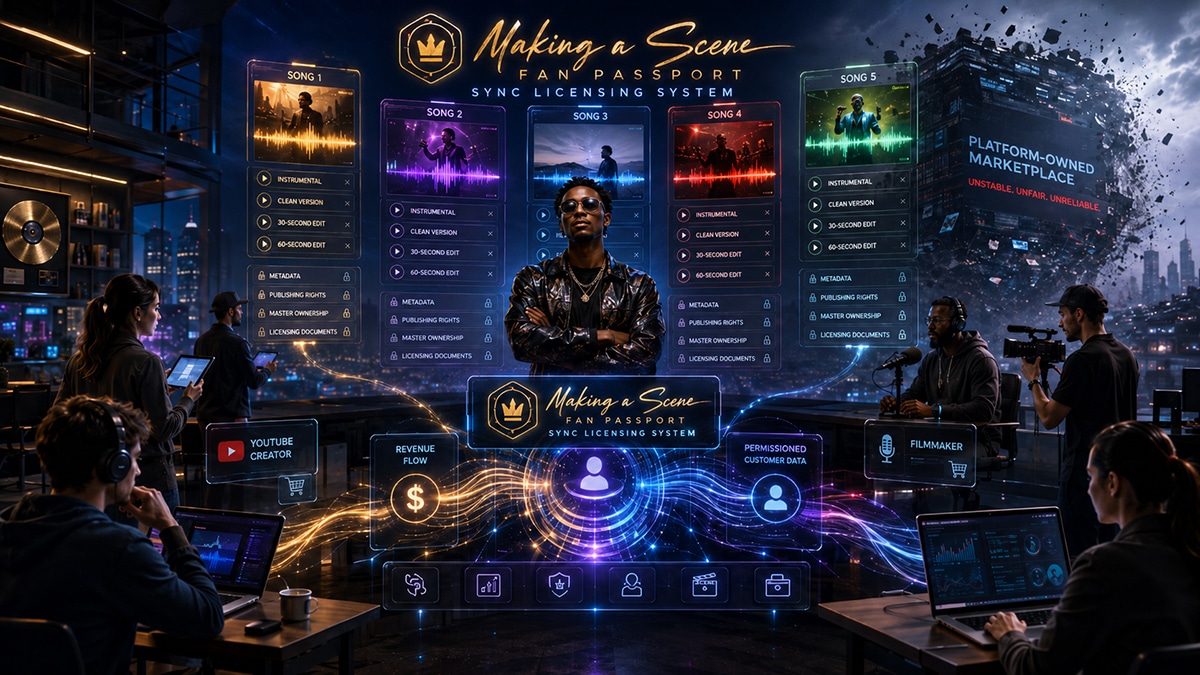
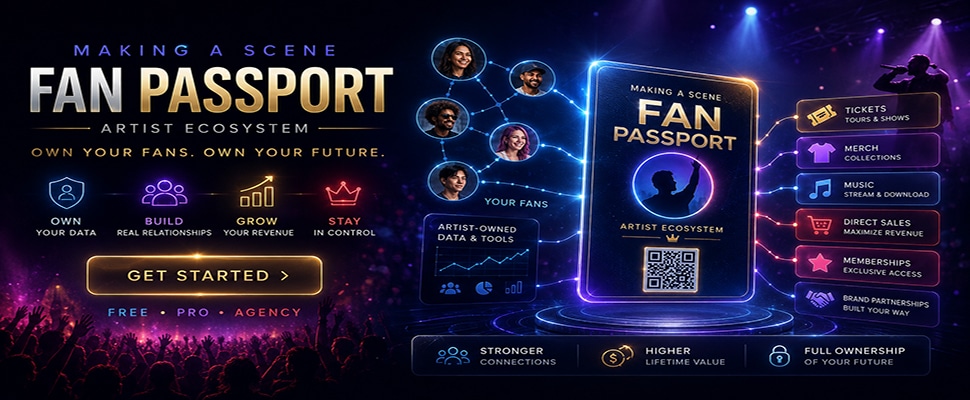
The Making a Scene philosophy is built around a different idea. Use the platforms, but own the business underneath them. That is why the Making a Scene Fan Passport Artist Ecosystem at www.masfanpassport.com is developing an artist-owned answer to the exact problem YouTube’s change exposes. The Making a Scene Fan Passport Sync Licensing System is available to Pro users, giving independent artists a way to organize licensing-ready music, document rights, prepare alternate versions, present music to buyers, manage licensing opportunities, receive payment, and preserve the business relationship created by the license. Artists who are not ready for Pro can still enter the ecosystem for free at www.masfanpassport.com and begin doing something just as important: capturing and managing permission-based fan data instead of leaving every relationship trapped inside streaming and social platforms. You do not have to wait until your business is big to start owning it.
What YouTube Took Away
Creator Music solved a real problem. Video creators need music, and musicians need people willing to pay to use music, but historically getting those two groups together has been unnecessarily complicated. A creator could discover a song and still have no clear path to who controlled it, because the master might belong to one party, the publishing to another, and the rights chain could involve multiple writers, publishers, distributors, and sometimes people who are simply impossible to reach.
Creator Music tried to simplify that by allowing creators to search inside YouTube Studio, review usage terms, pay for a license, and use the music under defined conditions. It was limited, but the idea was sound because it turned music into searchable inventory and rights into something clear enough to complete a transaction. A creator could pay, and a rights holder could earn.
Now that system is changing, but the demand has not gone anywhere. Video creators still need music, podcasters still need music, filmmakers still need music, advertisers still need soundtracks, documentary producers still need songs, game developers still need music, wedding filmmakers still need music, and social media creators still need music. What has changed is only one method of connecting buyers and rights holders. The market is still there, which means opportunity is still there.
Making a Scene Is Building the Alternative Inside Fan Passport
The Making a Scene response is not to build another massive upload-and-hope library. The Fan Passport Sync Licensing System is part of a larger artist-owned ecosystem where licensing becomes one integrated part of an artist’s actual business. The artist owns the music they own, controls the rights they control, and directly enters into licensing agreements with purchasers. Making a Scene provides the infrastructure that helps those parties find each other and complete the deal without taking ownership of the catalog or acting as a gatekeeper.
The system is designed to make independent music easier to discover, understand, license, deliver, and track. Artists can enter the ecosystem at www.masfanpassport.com, start for free, and begin building permission-based fan relationships, while Pro users gain access to the full Sync Licensing System as part of a broader business infrastructure. This allows artists to begin building their business before a licensing opportunity ever appears.
Start Free by Owning the Relationship
The free Fan Passport ecosystem matters because licensing is only one part of independence. Every day, people discover music through YouTube, streaming platforms, social media, live shows, QR codes, and word of mouth, but most artists are taught to think of those people as an audience rather than as relationships. Platforms treat them as users, not connections the artist can actually control.
A follower is useful, but it is not a direct relationship. If a platform disappears or changes its algorithm, that connection can vanish instantly. Permission-based fan data changes that dynamic because it allows the relationship to move with the artist instead of being locked inside a platform. That is the foundation everything else is built on, and licensing simply extends that same principle into professional relationships.
Pro Turns the Catalog Into a Licensing Business
When an artist moves into Pro, the catalog stops being just a collection of streaming tracks and becomes inventory. A single song can generate income through streaming, publishing, live performance, merchandise, memberships, licensing, and custom work. Instead of relying on one fragile revenue stream, the artist builds a system where multiple uses of the same music generate value over time.
This shifts the entire mindset of what a music career is supposed to be. A sustainable artist business is not built on one source of income but on several interconnected ones that support each other. Music naturally fits that model when it is treated as an asset rather than just a release.
Your Sync Catalog Becomes a Real Business Asset
Inside the Sync Licensing System, each track is organized with the information buyers actually need to make decisions. That includes ownership details, credits, identifiers, metadata, and available versions. Most fans never think about this information, but buyers depend on it. A filmmaker or music supervisor is not just asking whether a song sounds right, but whether it can be cleared quickly and legally.
If that information is missing, opportunities are lost even if the music is perfect. The system is designed to prevent that by making rights and metadata part of the catalog itself rather than something reconstructed at the last minute.
Know What You Own Before You Sell It
Licensing forces artists to confront the difference between composition rights and master rights, which are often controlled by different people. A song may involve multiple writers, publishers, and recording owners, all of whom may need to approve usage. Without clear documentation, even a great opportunity can fall apart.
The Fan Passport Sync Licensing System is designed to make ownership information part of the catalog so artists can quickly identify whether a track is one-stop or requires additional clearance. That clarity is often the difference between a deal happening or disappearing.
Instrumentals and Alternate Mixes Become Products
A finished album version of a song is not always what a buyer needs. Filmmakers may need instrumentals, advertisers may need clean versions, editors may need shorter cuts, and trailers may require stems or alternate mixes. These versions are not extras; they are products with real economic value.
The system encourages artists to treat these versions as part of the catalog rather than afterthoughts. A song becomes more useful when it can adapt to different media needs, and that usefulness directly increases licensing potential.
Five Songs Are Enough to Start
Artists do not need a massive catalog to begin. Starting with five well-prepared songs is often enough to build a functional licensing foundation. Those songs should be properly documented, cleared, and supported with the versions buyers need. A small, well-prepared catalog is far more valuable than a large, disorganized one.
Buyers Can Search Like Creative People Actually Think
Buyers rarely search for music by technical tags alone. They think in terms of mood, emotion, energy, and scene. A documentary producer may want something hopeful but grounded, while a brand may want something confident and gritty. The system is designed to reflect that way of thinking by allowing more natural discovery based on creative intent rather than rigid categories.
AI Becomes a Sales Assistant Instead of a Replacement Artist
AI in this system is not meant to replace artists or make creative decisions. It is meant to help organize metadata, suggest missing information, and improve discoverability. It can help surface tracks that fit certain moods or uses, but it cannot invent ownership or approve licenses. The artist and buyer still make the actual deal, and AI simply reduces friction in the process.
Creators Get a Place to Find Indie Music
The system is not only for major industry buyers. Independent creators, podcasters, filmmakers, advertisers, and small businesses all need music that fits their projects. The challenge has always been connection, not demand. Artists have music, and buyers have needs, but they often cannot find each other in a structured way.
Simple Uses Should Have Simple Licensing
Not every use requires a complex negotiation. A single YouTube video, a podcast episode, or a small business ad often needs straightforward licensing terms. Larger commercial uses require more detailed agreements. The system is designed to support both without forcing every transaction into the same level of complexity.
The Artist and Buyer Make the License
Making a Scene provides the infrastructure, but the actual license exists between the artist and the buyer. The platform does not need to own the music to facilitate the transaction. It simply provides the structure that allows both parties to connect, agree, and complete the deal.
The Platform Makes Money When the Artist Makes Money
The system is designed so that Making a Scene earns a commission only when a successful licensing transaction occurs. The platform does not profit from inactivity or speculation. It succeeds when artists succeed, which aligns incentives rather than separating them.
What Fan Passport Adds That a Normal Sync Library Does Not
Traditional licensing libraries often treat a transaction as the end of the relationship. Fan Passport treats it as the beginning. A buyer who licenses one track may return for future projects, and the system preserves that history so relationships can grow over time instead of resetting after each deal.
Permission Still Matters
Licensing a song does not automatically grant permission for ongoing marketing. Fan Passport is built around explicit permission, meaning artists can maintain professional relationships without spamming or overstepping. Communication remains relevant, not intrusive.
The Free Ecosystem Starts Building Ownership Before Sync
Artists can begin using the free ecosystem at www.masfanpassport.com to start building direct relationships and capturing permission-based data even before they engage in licensing. This ensures that ownership and connection are established early, rather than being left entirely to external platforms.
Pro Adds Sync to the Artist Ecosystem
In Pro, sync licensing becomes one integrated part of a larger system that connects catalog, metadata, assets, payments, discovery, and customer history. Instead of scattered tools and disconnected databases, everything works together as part of a unified artist business structure.
The Artist Business OS Makes Sync Part of the Whole Career
The goal is not to become a sync company but to build infrastructure for independent artists. Sync is one revenue stream among many, alongside live performance, merchandise, publishing, memberships, and direct sales. The system is designed to connect all of these into a coherent business model rather than treating them as separate worlds.
YouTube Can Still Be Part of the Strategy
YouTube remains a powerful discovery platform and should still be used. The difference is that it should function as a doorway, not a dependency. If a listener discovers music on YouTube, the goal is to bring them into an artist-owned ecosystem where the relationship is not controlled by platform algorithms.
What YouTube Removed Can Become Something Bigger
Even though Creator Music is changing, the underlying demand for music licensing is expanding. An artist-owned system can serve creators, filmmakers, advertisers, and businesses across many platforms and use cases, not just YouTube. That broader reach is where the real opportunity lies.
A Sync License Can Become the Beginning of a Customer Relationship
A single licensing deal can lead to long-term professional relationships if the artist has visibility into who the buyer is and what they need. Without that structure, opportunities disappear after the first transaction. With it, each deal becomes a potential entry point into an ongoing business relationship.
This Is How You Build a Music Industry Middle Class
A sustainable music career is not built on a single viral moment or massive streaming numbers. It is built on multiple income streams working together, including live shows, merchandise, publishing, licensing, and direct fan support. The Making a Scene ecosystem is designed to support that kind of diversified, stable career model.
The First Move Is Still Five Songs
The best place to start is still a small, focused catalog of five well-prepared songs. Those tracks should be properly documented, cleared, and ready for real-world use. This creates a foundation that can grow into a full licensing business over time.
If You Are Not Ready for Pro, Start Free Anyway
Artists do not need to wait to begin building ownership. The free ecosystem at www.masfanpassport.com allows them to start capturing permission-based fan relationships immediately. That foundation becomes valuable long before licensing enters the picture.
Stop Waiting for the Next Platform to Rescue You
The lesson from YouTube’s change is not that platforms are bad, but that they are unstable foundations for long-term careers. Artists can use platforms for discovery and reach, but they should build ownership, data, and relationships outside of them. The Making a Scene Fan Passport Artist Ecosystem is designed to provide that foundation so artists can stop depending on external systems for survival and start building something they actually control.
YouTube took away one licensing path, but it did not take away the music, the demand, or the opportunity. Independent artists still have everything they need to build something stronger, more stable, and more directly connected to the people who use their work.
 |  Spotify |  Deezer |  Breaker |
 Pocket Cast |  Radio Public |  Stitcher |  TuneIn |
 IHeart Radio |  Mixcloud |  PlayerFM |  Amazon |
 Jiosaavn |  Gaana |  Vurbl |  Audius |
 Reason.Fm | |||
Find our Podcasts on these outlets
Subscribe to Our Newsletter
Discover more from Making A Scene!
Subscribe to get the latest posts sent to your email.


