The Collapse of Gatekeepers: What Happens When Artists Own Everything




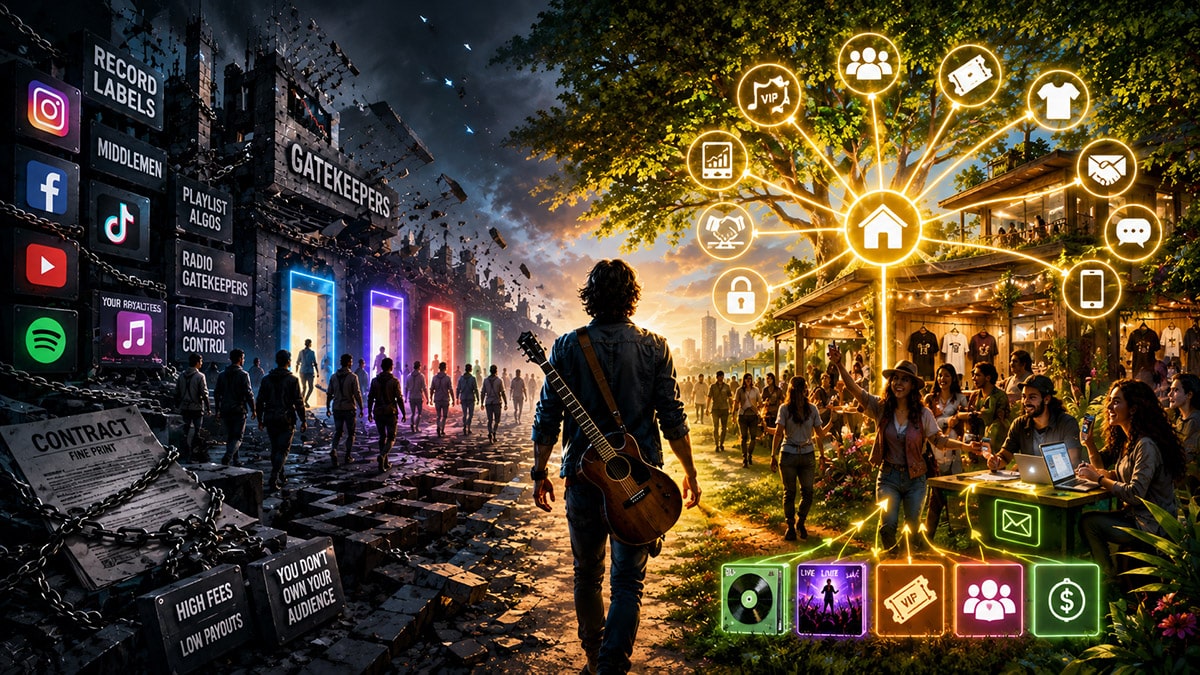
Making a Scene Presents – The Collapse of Gatekeepers: What Happens When Artists Own Everything
Listen to the Podcast Discussion
The Old Doors Are Still Standing, But the Locks Are Breaking
For most of the modern music business, artists were trained to stand in line.
Stand in line for the label. Stand in line for the radio programmer. Stand in line for the booking agent. Stand in line for the publicist. Stand in line for the playlist editor. Stand in line for the platform algorithm. Stand in line, wait your turn, be grateful, and maybe somebody with a desk, a budget, and a parking spot near the front of the building would decide your music was worth putting in front of people.
That was the deal. The artist made the music. The gatekeeper owned the road.
The label owned the recording budget. The distributor owned access to stores. The radio station owned discovery. The magazine owned attention. The promoter owned the room. The retailer owned the shelf. Later, the digital service provider owned the stream. Then social media owned the audience. The names changed, but the structure stayed the same. Artists still had to hand somebody else the keys before they were allowed to reach the people who cared. Now that structure is cracking.
Not because artists suddenly stopped needing help. That is not the point. Good teams still matter. Good labels can still matter. Good publicists, managers, publishers, booking agents, distributors, producers, marketers, and lawyers can still create real value. This is not some fantasy where every artist becomes a one-person global corporation while also writing better songs, booking tours, making videos, shipping vinyl, answering emails, fixing the van, and remembering to eat lunch.
The real shift is deeper than that. The collapse of gatekeepers does not mean artists need nobody. It means artists no longer have to surrender everything just to get somebody.
That is the cultural and economic break happening right now. It is not hype. It is not a slogan. It is not the old “DIY” dream with a fresh coat of tech paint. It is a change in power. When artists own their distribution, their fan data, their website, their email list, their SMS list, their commerce, their content archive, their direct fan relationship, and their monetization system, the old gatekeepers lose their most powerful weapon. They lose control of access.
For decades, access was the product. Labels sold access to studios, radio, retail, press, and promotion. Platforms now sell access to attention. Streaming services sell access to listeners. Social media sells access to reach. Middlemen sell access to systems artists were told they could not build on their own. But what happens when the artist owns the system?
What happens when Spotify, Apple Music, YouTube, TikTok, Instagram, and Facebook are no longer treated as the artist’s home, but as discovery doors that lead back to the artist’s own ecosystem?
What happens when the fan does not just stream a song and disappear into the data fog, but joins the artist’s own list, buys from the artist’s own store, collects a show stamp, unlocks exclusive content, gets a direct message before the next tour, and becomes part of a living relationship? What happens is simple. The middle gets nervous.
The Gatekeeper Business Was Built on Artist Dependence
The old music business did not just sell music. It sold permission.
Permission to record. Permission to distribute. Permission to be reviewed. Permission to be played. Permission to be seen as legitimate. Permission to reach the public.
That is why the old label deal was never only about money. It was about leverage. The label could say, “We have what you do not have.” That included studios, manufacturing, radio promotion, press relationships, retail placement, tour support, marketing staff, and legal muscle. For many artists, especially before the internet, that was not an empty claim. It was true.
If your record was not in the stores, fans could not buy it. If radio did not play it, most people would never hear it. If the press did not cover it, you looked invisible. If the label did not push it, the market did not know it existed.
The price for that access was ownership. Sometimes it was ownership of masters. Sometimes publishing. Sometimes creative control. Sometimes the right to decide which songs were released, what the artwork looked like, how the artist dressed, what markets mattered, and when the artist should disappear to make room for the next priority act. The great trick was that the gatekeeper could make the artist feel lucky to be controlled.
Digital music was supposed to break that. In some ways, it did. An artist can now record in a bedroom, upload through DistroKid, TuneCore, CD Baby, Ditto Music, UnitedMasters, Symphonic Distribution, ONErpm, or Amuse, and appear on the same streaming platforms as the biggest stars in the world. That would have sounded like science fiction in the old retail era. But digital distribution did not fully destroy gatekeeping. It moved it.
The new gatekeeper is not always a person behind a desk. Sometimes it is an algorithm. Sometimes it is a playlist system. Sometimes it is a platform policy. Sometimes it is a social feed that shows your post to a tiny slice of your own followers unless you feed the advertising machine. Sometimes it is a royalty model so complex that artists cannot easily see where the money goes. Sometimes it is a dashboard full of numbers that tell you everything except who your real fans are. The new gatekeeper says, “You can be on the platform, but we own the relationship.” That is the trap.
An artist can have thousands of followers and still not be able to reach them. An artist can have streams and still not know who listened. An artist can have viral attention and still not have a direct fan relationship. An artist can feed years of content into platforms and still own none of the audience data created by that work. That is not independence. That is rented visibility.
Streaming Made Music Available, But It Did Not Make Most Artists Free
Let’s be clear. Streaming is not evil. Streaming solved real problems for listeners. It made music easy to find, easy to share, and easy to carry everywhere. It also gave independent artists global distribution at a scale that was once impossible. The problem is not that streaming exists. The problem is that artists were sold the idea that access to streaming was the same thing as a career. It is not.
Streaming is a discovery layer. It is a listening habit. It is a public library of recorded music with a payment system attached to it. For some artists, especially those with large catalogs, strong teams, big playlists, major label backing, or global demand, streaming can create serious money. But for most working indie artists, streaming alone is not a business model. It is one part of a larger system. That difference matters.
The recorded music business is growing. The global market is up. Paid streaming is still driving much of that growth. In the United States, streaming is still the center of recorded music revenue. Spotify says it pays huge sums into the music industry. The headlines sound healthy. But artists do not live inside headlines. They live inside bank accounts.
The hard question is not, “Is the industry making money?” The hard question is, “Who controls the path between the fan’s money and the artist’s pocket?” That is where the old power structure still shows its teeth.
When a fan pays for a streaming subscription, that money enters a pool. It moves through platform rules, licensing deals, rightsholders, labels, distributors, publishers, societies, splits, recoupment, and reporting systems before it reaches the artist. Sometimes the artist owns enough to benefit. Sometimes the artist is at the end of a very long table, waiting for crumbs after everyone else has eaten. This is why ownership changes everything.
An artist who owns the master has more leverage. An artist who controls publishing has more leverage. An artist who understands SoundExchange, ASCAP, BMI, SESAC, The MLC, and Songtrust has more leverage. An artist who knows where money is supposed to come from has more leverage. An artist who can sell directly has even more leverage. The goal is not to leave streaming. The goal is to stop confusing streaming with ownership.
Put the music on Spotify. Put it on Apple Music. Put it on Amazon Music. Put it on YouTube Music. Put it on Deezer. Let people find it where they already listen. But do not let that be the end of the road. Every stream should point somewhere. Every profile should link somewhere. Every video should invite the fan somewhere. Every social post should open a door. And that door should lead to the artist’s own world. That is where the collapse starts.
Social Media Is a Door, Not a Destination
Social media is one of the greatest discovery tools artists have ever had and one of the worst places to build your entire career. Both things can be true.
TikTok, Instagram, Facebook, YouTube Shorts, Threads, X, and other platforms can introduce an artist to new fans faster than old media ever could. A video from a rehearsal room, a tour van, a kitchen table, a street corner, or a home studio can travel across the world before a traditional publicist has finished writing the first sentence of a press release. That is powerful.
But the platform does not exist to build the artist’s independent economy. The platform exists to build the platform’s economy.
Social media companies collect attention, behavior, engagement, preferences, and advertising value. They learn what fans watch, skip, like, share, save, and buy. They turn that data into money. Artists provide much of the culture that keeps users engaged, but the platform owns the deepest layer of the relationship.
This is why follower counts can be misleading. A follower is not the same as a reachable fan. A like is not the same as permission. A viral post is not the same as a customer. A million views can feel like a stadium and pay like an empty tip jar. The artist gets applause. The platform gets the data. That is the part too many artists miss.
If a fan discovers you on TikTok but never leaves TikTok, TikTok owns that relationship. If a fan follows you on Instagram but never joins your email list, Meta owns that pathway. If a fan watches your videos on YouTube but never enters your ecosystem, YouTube controls the next step. You may be the reason the fan showed up, but the platform decides what they see next. This is not a reason to quit social media. That would be bad strategy for most artists. The better move is to change the purpose of social media. Social media should be the front porch, not the house.
Use it to tell stories. Use it to show process. Use it to share songs, tour moments, merch drops, behind-the-scenes clips, studio work, live energy, and the human reason the music exists. Use it to reach strangers. Use it to create discovery. Then move the fan.
Bring them to your website. Bring them to your email list. Bring them to your SMS list. Bring them to your show calendar. Bring them to your store. Bring them to your membership. Bring them to your Fan Passport. Bring them to the place where you can remember who they are. That is how artists stop working for the feed and start using the feed.
Fan Data Is the New Master Recording
For years, artists were told that master ownership was the whole fight. And yes, master ownership matters. It matters a lot. Owning your recordings means you control licensing, distribution choices, catalog value, and long-term revenue. But in the modern music economy, fan data may be just as important. A master recording is the asset. Fan data is the map.
If you know who your fans are, where they live, what they buy, what shows they attend, what songs they care about, what merch they like, and how they prefer to be reached, you can build a real business. You can route tours smarter. You can press vinyl in realistic quantities. You can create merch that fits actual demand. You can offer house concerts, VIP events, lessons, livestreams, limited releases, fan clubs, and private content. You can stop guessing. Without fan data, every move is fog.
This is why the old gatekeepers and new platforms love controlling the data layer. Data is power. Data tells them who is valuable. Data tells them where demand lives. Data tells them what to promote, what to suppress, what to sell, and what to copy. If the platform owns the fan data, the platform owns the future value of the relationship. Artists cannot build a middle-class career on mystery.
This is where tools like Mailchimp, ConvertKit, Beehiiv, Substack, Bandsintown for Artists, Laylo, Shopify, Bandcamp, Patreon, Ko-fi, Fourthwall, Single, and artist-owned WordPress ecosystems become more than “marketing tools.” They become independence tools.
An email address is not just a contact. It is permission.
A phone number with proper consent is not just a number. It is a direct line.
A merch purchase is not just a sale. It is a signal.
A ticket scan is not just attendance. It is proof of real-world demand.
A fan account is not just a login. It is the start of a relationship.
That is why the artist-owned ecosystem matters. The website cannot just be a digital flyer with a bio, a few links, and an old press photo. The artist website has to become the command center. It should hold music, video, tour dates, store items, membership offers, fan rewards, exclusive content, licensing information, press materials, and direct communication tools. In the old model, the artist’s website was an afterthought. In the new model, the artist’s website is the headquarters.
The Fan Passport Is a Memory System for the Artist
One of the biggest missing pieces in the independent music business has always been memory.
Artists meet fans all the time. They meet them at shows, merch tables, festivals, livestreams, workshops, house concerts, release parties, and online events. A fan buys a shirt. Another fan brings three friends. Another fan drives two hours to a show. Another fan comments on every video. Another fan buys vinyl, joins the email list, and supports every release. Then most of that information disappears. The artist remembers faces, but the business does not remember behavior. That is a huge problem.
A platform can remember everything. It remembers what fans clicked, watched, skipped, saved, bought, and shared. But the artist often gets only a tiny piece of that picture. That means the artist is creating the culture while somebody else is building the memory. A Fan Passport changes that idea.
The Making a Scene Fan Passport concept is not just another fan club badge. It is a way to turn fan engagement into an artist-owned relationship. When a fan scans a QR code at a show, taps an NFC sign at a merch table, follows an artist, collects a stamp, unlocks a reward, joins a list, or chooses to share contact information, the artist begins to build a permission-based memory system. That matters because a career is not built from random attention. It is built from repeat connection.
A fan who attended one show may come again. A fan who bought vinyl may want the next limited pressing. A fan who joined at a festival may live near a future tour stop. A fan who supported a livestream may want a private online event. A fan who bought a shirt may want a bundle. A fan who cares enough to scan a QR code is raising their hand. The old system treated fans as a crowd. The new system treats fans as relationships.
That is the real difference. It is also why gatekeepers lose control when artists own the data. A label can still offer money. A platform can still offer reach. A promoter can still offer a stage. But if the artist owns the fan relationship, the artist is no longer walking into every negotiation empty-handed.
The artist can say, “I know where my fans are. I know how to reach them. I know what they buy. I know what rooms I can fill. I know what cities are growing. I know what content converts. I know what my community values.” That is leverage. And leverage is what gatekeepers never wanted artists to have.
Direct-to-Fan Is Not a Side Hustle Anymore
For too long, direct-to-fan income was treated like a cute extra. Streaming was the “real” music business. Labels were the “real” industry. Playlists were the “real” breakthrough. Merch, email, fan clubs, downloads, and memberships were treated like bonus money. That thinking is outdated. Direct-to-fan is not a side hustle. It is the foundation of a working artist economy.
Look at what happens when a fan buys on Bandcamp. The fan is not just pressing play. The fan is making a decision to support. The artist gets a better signal than a stream. The artist sees demand in a clearer way. A direct purchase says, “I value this enough to pay for it on purpose.” That is different from passive listening.
The same is true when a fan joins a Patreon, pays for a Substack, buys merch through Shopify, grabs a limited drop through Laylo, follows tour updates through Bandsintown, buys tickets directly, supports a livestream, purchases stems, pays for a workshop, licenses a song, or joins a private community. These are not random sales. They are proof of fan intent.
The future of the indie artist middle class will not be built on one magic platform. It will be built on revenue stacks. Streaming is one layer. Shows are another. Merch is another. Direct music sales are another. Publishing is another. Sync licensing is another. Membership is another. Fan support is another. Teaching, workshops, session work, production, custom songs, VIP experiences, and digital collectibles can all become layers when they fit the artist’s real audience. This is how artists become less fragile.
If all your income depends on one platform, you are not independent. You are exposed. If one algorithm change can wreck your month, you do not have a business. You have a dependency. If one playlist removal can collapse your income, you do not have a fanbase. You have rented traffic. A real artist business has more than one road to revenue.
That does not mean every artist needs every tool. A touring artist may focus on tickets, merch, fan passports, and city-based email segments. A studio artist may focus on licensing, memberships, sample packs, direct sales, and video content. A songwriter may focus on publishing, sync, custom work, and behind-the-scenes subscriptions. A producer may focus on services, education, templates, and collaborations. The point is not to chase every trend. The point is to own the path between attention and income.
AI Gives Artists the Power of a Small Label Team
This is where AI enters the conversation, and we need to keep it honest.
AI is not a magic wand. It will not make bad songs good. It will not replace the need for taste, work, story, practice, live performance, emotional truth, or human connection. The hype merchants are already trying to sell artists a push-button fantasy, and that fantasy is mostly garbage. But AI as a business tool is a different story.
Used correctly, AI gives independent artists access to work that used to require a label department, a marketing assistant, a research team, a copywriter, a data analyst, a content planner, and a very patient intern.
Tools like ChatGPT, Claude, Perplexity, Google Gemini, Canva, Adobe Express, CapCut, Descript, OpusClip, Metricool, Buffer, Hootsuite, Notion, and Airtable can help artists plan campaigns, write email drafts, repurpose video clips, organize release calendars, build content maps, analyze fan behavior, brainstorm merch ideas, create tour market plans, prepare licensing pitches, and turn one piece of content into many doors. That is a big deal.
The old label advantage was not only money. It was coordination. Labels had people whose job was to think about timing, messaging, markets, press angles, visuals, release windows, retail, radio, and fan engagement. Indie artists were expected to compete with that machine while also being the creative engine. AI narrows that gap.
An artist can now take a live show video and create short-form clips, newsletter copy, social captions, a blog post, a tour recap, a merch offer, a fan thank-you email, and a follow-up campaign. An artist can ask AI to compare cities based on past ticket sales, email signups, merch orders, and streaming locations. An artist can build a release plan that connects the song to the website, the fan list, the merch store, the show calendar, and the press pitch. That does not remove the work. It removes some of the overwhelm.
The artist still needs judgment. AI can draft, but the artist must decide. AI can suggest, but the artist must filter. AI can organize, but the artist must lead. AI can speed up the business side, but it cannot replace the reason fans care. The danger is not AI helping artists. The danger is AI being controlled by the same old gatekeepers.
The current fights around AI licensing show exactly why ownership matters. If labels, platforms, and tech companies make deals over recordings, voices, styles, training data, and compensation without clear artist control, then AI becomes another extraction machine. The same pattern repeats: artists create the value, institutions monetize the value, and the people who made the work fight later for a fair share. That cannot be the future.
The artist-friendly AI future must be based on consent, control, transparency, and compensation. Artists should use AI to build their own businesses, not become raw material for somebody else’s model.
Web3 Only Matters When It Solves a Real Artist Problem
Web3 has been buried under so much hype that many artists hear the word and immediately want to leave the room. That reaction is fair. The NFT gold rush did real damage. Too many people sold confusion as revolution. Too many projects focused on speculation instead of songs, fans, rights, and income. But the bad version of Web3 does not erase the useful version. For artists, Web3 only matters when it solves a real problem.
Can it prove a fan attended a show? Can it unlock access to a private recording? Can it support a membership without a platform owning the whole relationship? Can it create portable fan identity? Can it track ownership of limited digital goods? Can it help manage rights and splits? Can it give fans a collectible that means something beyond resale value? Can it connect online support to real-world experiences? If yes, then it may be useful. If no, it is probably noise.
The future is not artists yelling “buy my NFT” into a cold market. The future is quieter and more practical. It is proof-of-attendance stamps. It is digital fan passes. It is access keys. It is token-gated listening rooms. It is limited supporter editions. It is smart contracts for specific rights use cases. It is transparent revenue splits where they make sense. It is digital collectibles that connect to real songs, real shows, real community, and real artist income. In other words, Web3 becomes useful when fans do not have to care that it is Web3.
They should care that they got the reward, the access, the memory, the proof, the connection, or the ownership experience. The tech should serve the relationship, not become the relationship.
This is where Web3 can connect with the Fan Passport idea. A fan stamp from a show does not have to be a speculative asset. It can simply be a memory with utility. It can unlock a live recording from that night. It can give early access to the next local show. It can prove the fan was there. It can help the artist identify real supporters in real markets. That is not hype. That is infrastructure.
The Middlemen Do Not Disappear, They Get Repriced
Here is where we need to be honest. Gatekeepers do not vanish overnight.
Labels will still exist. Distributors will still exist. Streaming platforms will still exist. Social platforms will still exist. Managers, agents, publishers, sync companies, ticketing companies, merch companies, publicists, promoters, and marketing firms will still exist. The difference is that artists who own their ecosystem can judge these partners by value instead of fear. That changes the negotiation.
In the old model, an artist needed a label because the label had the road. In the new model, the artist may choose a label because the label adds fuel to a road the artist already owns. That is a very different deal.
A distributor should not be treated like a savior. It should be treated like a service provider. A social platform should not be treated like a home. It should be treated like a discovery channel. A streaming service should not be treated like the whole business. It should be treated like one listening layer. A publicist should not be expected to create a fanbase from nothing. A publicist should amplify a story that already has roots. A manager should not own the artist’s direction. A manager should help the artist execute it. When artists own everything important, middlemen have to prove their worth. That is healthy.
The best partners will survive because they actually help artists grow. The weak middlemen will struggle because they were never selling value. They were selling confusion, access, and fear. This is the quiet revolution. Artists are not just rejecting gatekeepers. They are forcing every partner to answer a better question. “What do you add to what I already own?” That one question can change the entire business.
The Cultural Shift Is Bigger Than the Technology
This is not only an economic shift. It is cultural.
For decades, artists were trained to see validation as something handed down from above. A label signing meant you were real. A playlist placement meant you were real. A blue check meant you were real. A press quote meant you were real. A booking agent meant you were real. A manager meant you were real. But fans do not experience music that way.
Fans care if the song moves them. Fans care if the show feels alive. Fans care if the artist speaks to something real. Fans care if they feel seen, included, remembered, and connected. Fans do not need a corporate stamp before they decide a song belongs in their life. The gatekeeper era trained artists to chase permission. The owned ecosystem era trains artists to build connection.
That is a massive change in mindset. It means the artist stops asking, “How do I get picked?” and starts asking, “How do I build a system around the people who already care?” That question is more powerful because it is within reach.
An artist may not be able to control a playlist editor. But they can control whether every show has a QR code that leads to a fan signup. They can control whether their website is updated. They can control whether their merch table collects permission-based fan data. They can control whether every release has a direct purchase option. They can control whether fans get a reason to join the email list. They can control whether they follow up after shows. They can control whether they use AI to save time and stay consistent. They can control whether streaming and social links point back to their own hub. That is where independence becomes practical.
Not romantic. Practical.
The Roadmap From Platform Dependence to Artist Ownership
The first step is to stop treating platforms as the destination. Every artist should look at their digital presence and ask one hard question: “Where does the fan go next?” If the answer is “back into the feed,” the system is broken.
The artist needs a home base. That can be a strong website built on WordPress, Squarespace, Wix, Bandzoogle, Shopify, or another platform that lets the artist control the fan path. The key is not the brand name. The key is ownership, function, and portability. The artist needs a place where music, story, shows, merch, fan signup, content, press, licensing, and community connect.
The second step is to capture fan permission everywhere. That means email signups on the website, QR codes at shows, SMS opt-ins where appropriate, NFC taps at the merch table, fan forms connected to real offers, and clear consent language. Do not trick fans. Do not spam fans. Do not collect data like a creep. Build trust. Tell fans what they get and why it matters.
The third step is to connect every discovery door to that owned system. Streaming profiles should point to the website. Social bios should point to the website. YouTube descriptions should point to the website. Show posters should point to the website. Merch tags should point to the website. Email signatures should point to the website. Interviews should point to the website. The artist’s own ecosystem should be the center of gravity.
The fourth step is to build direct revenue around real fan behavior. If fans buy shirts at shows, build better merch bundles. If fans love live recordings, offer exclusive live tracks. If fans ask about lyrics and process, create a paid behind-the-scenes tier. If fans attend house concerts, build a private booking offer. If fans are in certain cities, route shows around that demand. If fans support vinyl, press carefully and sell directly. If fans want education, offer workshops. The artist does not need to copy someone else’s model. The artist needs to listen to the data their own community is already giving them.
The fifth step is to use AI as the back office. Let AI help with planning, drafting, organizing, repurposing, research, segmentation, and campaign structure. Let it reduce the time cost of running a serious artist business. But keep the artist’s voice human. The goal is not to sound like a robot with a content calendar. The goal is to give the artist enough support to show up consistently without burning out.
The sixth step is to treat Web3 as utility, not hype. Use digital ownership tools only when they make the fan relationship better. Proof of attendance, access passes, supporter rewards, private content, and rights transparency can matter. Speculative noise does not.
The seventh step is to measure what leads to money. Not vanity. Not empty reach. Money. Did the post drive email signups? Did the email sell tickets? Did the QR code create new fan profiles? Did the merch drop work? Did the live video sell the livestream replay? Did the fan passport reward bring people back? Did the city data help book a better room? Did the licensing page create an inquiry? Did the direct store outperform passive streaming for a release?
That is how artists move from hope to strategy.
What Happens When Artists Own Everything
When artists own their distribution, they decide where the music goes and how it reaches listeners. When they own their masters, they control the recording asset and the long-term value attached to it. Ownership of publishing gives them authority over the songs themselves, while ownership of their website provides a true home base that cannot be taken away by shifting platform policies or algorithms.
The same principle applies to fan relationships and revenue. Artists who own their fan data control the connection with their audience instead of relying on third parties. When they operate their own store, they control commerce. When they manage their own email and SMS lists, they control communication. Ownership of their content archive allows them to shape and preserve their story, while a Fan Passport system gives them the ability to build and maintain a memory of fan engagement over time.
Most importantly, when artists own the path from fan attention to monetization, they control the business itself. They are no longer dependent on others to determine how value is created, distributed, or measured. That level of ownership and independence is what gatekeepers fear because it shifts power away from institutions and back to the creators who generate the value in the first place.
Not because every artist will become rich. Most will not. This is still hard. Music is still crowded. Attention is still brutal. Touring is expensive. Marketing takes work. Fans have limited money. Algorithms still shape discovery. The world is noisy. But ownership gives artists a fighting chance.
It turns random attention into a system. It turns fans into relationships. It turns shows into data. It turns merch into signals. It turns content into doors. It turns AI into staff support. It turns Web3 into access infrastructure. It turns the artist website into the center of the business. Most importantly, it turns the artist from a renter into an owner. That is the collapse of gatekeepers.
It is not a single dramatic explosion, one platform dying, every label vanishing, or artists storming the castle in one grand scene while violins swell in the background. The change is much quieter than that, unfolding through thousands of small decisions made every day by working musicians who are steadily taking control of their careers.
It looks like an artist placing a QR code on the merch table and a fan joining the mailing list after a show. It appears in a direct vinyl sale, a licensing inquiry that comes through the artist’s own website, or a tour routed using real fan data instead of guesswork. It shows up when an email campaign sells more tickets than a boosted social media post, when a livestream becomes paid replay content, or when an AI-assisted campaign saves ten hours of administrative work that can be redirected toward creativity and fan engagement.
The shift is also visible in a Fan Passport stamp that remembers who attended a show and in an artist confidently walking away from a bad deal because they are no longer desperate for access. That is how the wall comes down—not through one dramatic event, but through a steady accumulation of ownership, leverage, and direct connection. It happens brick by brick, fan by fan, sale by sale, and relationship by relationship.
The New Middle Class Will Be Built by Artists Who Own the Relationship
The future of independent music will not belong to the artists who simply upload the most songs. It will not belong to the artists who chase every trend. It will not belong to the artists who spend their lives begging algorithms for mercy. It will belong to the artists who build systems around real fans.
That is the Making a Scene philosophy. A music industry middle class will not be created by waiting for labels, streaming platforms, social media companies, or tech giants to become generous. It will be created by artists owning music, data, and fan relationships. It will be created by turning attention into direct revenue. It will be created by using every tool available, but refusing to confuse tools with ownership.
Labels can still help. Social platforms can still help. Digital service providers like Spotify, Apple Music, YouTube Music, Amazon Music, Deezer, and Tidal can still help. AI can help. Web3 can help. But none of them should be allowed to become the artist’s landlord.
The artist’s home must belong to the artist.
The fan relationship must belong to the artist.
The data must belong to the artist.
The revenue path must lead back to the artist.
The old gatekeepers are not losing control because they suddenly became weak. They are losing control because artists finally have the tools to stop building on rented land. Once artists understand that reality, the traditional pitch begins to lose much of its power. For decades, gatekeepers could position themselves as the only path to opportunity, offering access, exposure, and infrastructure that artists could not easily create on their own. Today, however, artists can build direct relationships with fans, control their own distribution, collect their own data, and develop sustainable businesses without surrendering ownership at every step.
As a result, the conversation between artists and industry partners has fundamentally changed. When a gatekeeper says, “We can give you access,” many artists can honestly respond, “I already have access.” When the promise becomes, “We can bring you fans,” the artist can point to an existing community and say, “I know who my fans are.” And when the offer shifts to, “We can build your business,” the artist is increasingly likely to ask a different question: “What value do you add to the business I already own?” That is the new conversation taking place throughout the music industry, and once that conversation begins, the collapse of the old gatekeeping model is already underway.
 |  Spotify |  Deezer |  Breaker |
 Pocket Cast |  Radio Public |  Stitcher |  TuneIn |
 IHeart Radio |  Mixcloud |  PlayerFM |  Amazon |
 Jiosaavn |  Gaana |  Vurbl |  Audius |
 Reason.Fm | |||
Find our Podcasts on these outlets
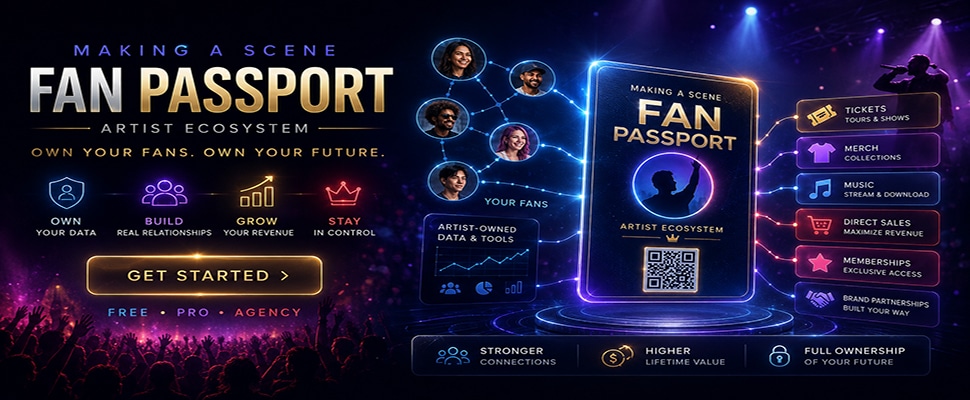
Subscribe to Our Newsletter
Discover more from Making A Scene!
Subscribe to get the latest posts sent to your email.


