
Grand Theft Auto VI Just Opened Another Door for Music Licensing




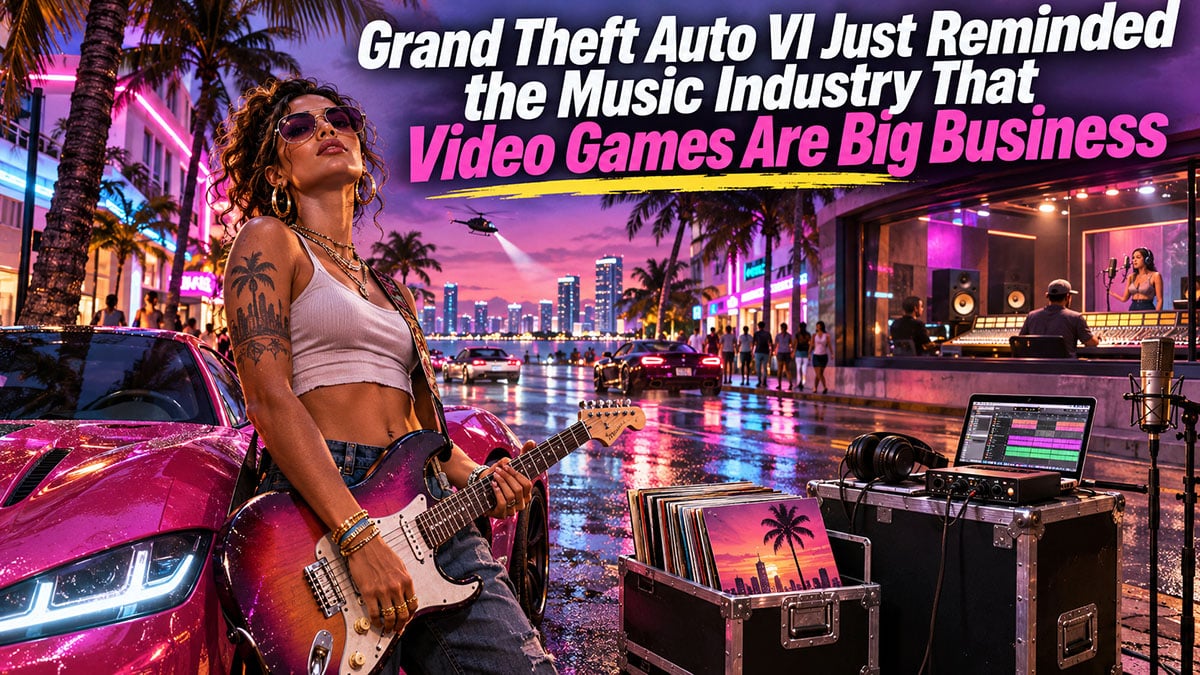
Making a Scene Presents – Grand Theft Auto VI Just Opened Another Door for Music Licensing. Independent Artists Should Be Paying Attention.
Listen to the Podcast Discussion
Rockstar Games has turned music into one of the most important parts of its blockbuster entertainment franchise, and the release of Grand Theft Auto VI reveals a much larger business hiding behind those fictional radio stations. From licensing and original soundtracks to interactive music, recording studio services, and direct fan relationships, video games are creating opportunities that independent musicians can pursue without surrendering control of their careers.
When Stealing a Virtual Car Becomes a Music Industry Event
Somewhere in the brightly colored, delightfully questionable world of Vice City, a player is climbing into an expensive sports car that probably doesn’t belong to them, switching on the radio, and preparing to demonstrate a complete disregard for traffic laws. The scenery looks spectacular, the police are probably going to have a very busy afternoon, and the music coming through those imaginary speakers is doing something far more important than providing background entertainment. It is helping to create an experience that millions of people will remember, and somewhere behind that music are songwriters, recording artists, producers, publishers, and copyright owners who have a financial interest in making that experience possible.
The November 19, 2026, release of Grand Theft Auto VI offers a remarkable example of how music has become woven into the modern entertainment business. Rockstar Games partnered with Atlantic Records to create Grand Theft Auto VI: The Album, a collection of 34 original songs released alongside the game, with physical editions available on vinyl and CD. At the same time, Universal Music Publishing Group announced that more than 250 songs from its publishing catalog appear throughout the game, including dozens of original compositions written specifically for the project. Those numbers illustrate the enormous amount of creative work and rights management involved in building the musical identity of a major interactive entertainment release.
The partnership also extends beyond the traditional idea of a soundtrack. Rockstar and Atlantic developed collectible physical releases, including special vinyl editions, while selected soundtrack artists were announced for a November 21 music festival in Miami. Universal Music Publishing Group reported that its songwriters were involved in all four major promotional trailers and contributed to 13 tracks on the official album. The game itself features music spanning nine decades, ranging from early blues and gospel recordings to contemporary hip-hop, electronic music, pop, rock, and Latin music. What appears to the player as a collection of entertaining radio stations actually represents an elaborate network of licensing agreements, creative partnerships, promotional campaigns, and commercial music products.
For independent musicians, the significance of this release goes well beyond the possibility of landing a song in the next enormous video game. Rockstar is demonstrating how music can become part of an entertainment experience that generates value through several connected activities, some of which have little to do with conventional record sales or streaming. A recording can help define the personality of a fictional world, introduce an artist to a new audience, generate licensing income, support a separate soundtrack release, and create opportunities for merchandise or live performances. The same creative work can have several commercial lives, provided the musician understands which rights are being licensed and retains enough control to benefit from future opportunities.
That last point deserves particular attention because the music industry has a long and occasionally impressive history of discovering new ways to make money from recordings while leaving the people who created them wondering whether their royalty statements were accidentally mailed to another planet. Video game licensing can be a valuable addition to an independent musician’s business, but it is not a guaranteed financial windfall, and it certainly is not a reason to sign whatever contract arrives with a recognizable entertainment company logo. The real opportunity lies in understanding how the business works, preparing music that developers can actually use, and treating recordings as valuable intellectual property rather than disposable promotional material.
Rockstar Understands the Emotional Power of Music Better Than Most Streaming Algorithms
One of the reasons music has become so important to the Grand Theft Auto series is that players experience it while actively participating in the game. A person listening to a song on a streaming service may be checking email, cleaning the kitchen, or wondering why the algorithm has decided they need to hear the same artist for the seventeenth time. A person hearing that recording while racing through a fictional city or completing an important mission experiences the music as part of an event. The recording becomes connected to a place, a character, a memory, and sometimes an emotional reaction that lasts long after the game has been switched off.
This relationship between music and memory is hardly new. Filmmakers have understood it for generations, and some of the most recognizable songs in popular culture became closely associated with particular movies or television programs. Video games take the idea further because players are not simply watching events unfold. They are making decisions, exploring environments, and creating their own experiences inside a world designed by the developer. When the right song accompanies an important moment, the player can develop a strong association with music they might otherwise never have discovered.
The commercial effects can be dramatic, although they vary enormously from one recording to another. Universal Music Publishing Group highlighted the performance of the Pointer Sisters’ 1986 recording “Hot Together,” which appeared in the second Grand Theft Auto VI trailer. According to Luminate figures cited by the publisher, the recording generated nearly 9.6 million global on-demand audio streams during the eight weeks following the trailer’s release, compared with nearly 300,000 streams throughout all of 2024. The comparison involves different time periods and does not prove precisely how much additional money reached every rights holder, but it provides a striking illustration of how an older recording can attract renewed attention when placed in a major entertainment production.
For independent musicians, there is an encouraging lesson hiding inside those numbers. The commercial usefulness of a recording is not necessarily determined by its age, its original chart position, or the number of followers the artist currently has on social media. A song released fifteen years ago might fit the atmosphere of a new game better than something recorded last week, particularly when developers are trying to establish a specific location, period, or cultural identity. A dusty blues recording, a raw garage-rock performance, or an atmospheric instrumental may possess exactly the character a creative director needs, even if the artist never managed to convince a major label that the recording deserved national promotion.
Grand Theft Auto VI itself demonstrates that older recordings remain culturally useful. Universal’s announcement identifies music reaching back to the 1940s, including performances associated with Sister Rosetta Tharpe and John Lee Hooker. These recordings were created long before anyone imagined today’s interactive entertainment systems, yet their musical character can still contribute to a modern digital world. Their inclusion also demonstrates that game music is not limited to the latest popular genres, which should be encouraging to independent artists who have spent years developing distinctive musical identities rather than chasing whatever streaming trend happens to be fashionable this month.
The important business consideration is that developers are often searching for music that serves a particular creative purpose. Sometimes that means licensing a famous recording whose cultural identity is already established, but other situations may call for something unfamiliar that feels authentic to the game’s environment. Independent musicians who understand this distinction can begin thinking about their catalogs in terms of musical character, storytelling, and commercial usefulness rather than measuring every recording exclusively by streaming performance.
The Real Opportunity May Be Hiding Far Below the AAA Gaming World
Grand Theft Auto VI is a massive production supported by one of the most recognizable entertainment franchises in the world. Its music operation involves major publishers, established recording artists, experienced licensing professionals, and business relationships developed over years. While its success provides an excellent demonstration of music’s commercial importance, an independent musician should not mistake that extraordinary production for a typical entry point into the gaming industry. Trying to build a music licensing business by concentrating exclusively on Rockstar would be rather like opening a neighborhood recording studio and making the entire business plan depend on receiving a telephone call from Beyoncé.
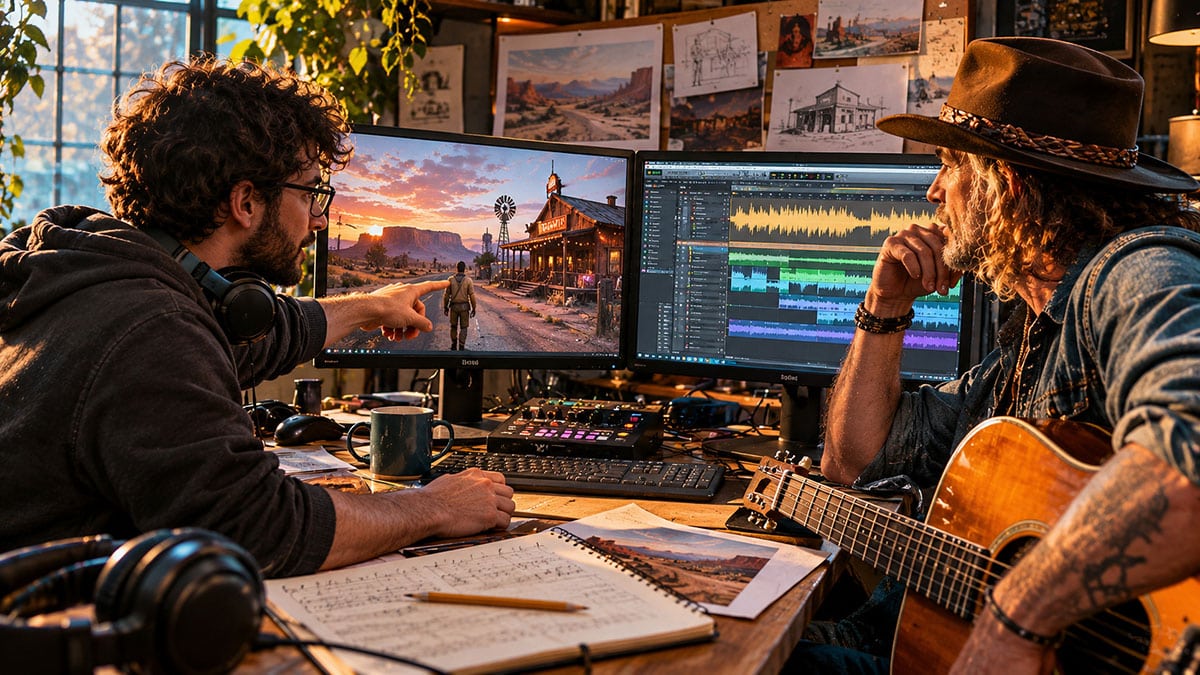
A more realistic opportunity exists among independent game developers, smaller production companies, and specialized studios creating games for audiences with very different interests. These projects may include racing games, mysteries, historical adventures, role-playing games, science-fiction experiences, sports simulations, or games built around exploration and storytelling. Their budgets may be considerably smaller than those of major publishers, but they still need music capable of creating atmosphere, supporting gameplay, and helping their projects stand apart in a crowded marketplace.
Consider a small independent studio developing a game set in a fictional Southern town. The story involves abandoned highways, old roadside bars, and characters struggling with the consequences of choices made years earlier. A collection of gritty blues recordings, atmospheric slide guitar, and understated Americana music could help establish that environment more effectively than an expensive contemporary pop song. The developer may not need a globally recognized recording artist, particularly if the creative direction calls for something intimate, regional, and believable.
An independent musician who owns a suitable catalog could potentially become a valuable partner to that developer. Instead of approaching the company as someone hoping for exposure, the artist can offer recordings that satisfy specific production needs, along with the rights documentation and technical materials required to use them. The relationship becomes a professional transaction between two independent businesses, each contributing something valuable to the finished product.
There is evidence that smaller games can also offer different ownership arrangements. The 2025 GameSoundCon Game Audio Industry Survey gathered responses from 654 participants, including 631 game audio professionals, and examined the differences between independent, mid-sized, and large-scale productions. Among freelance composers working on independent games, 36% reported that they had licensed their music to the developer for their most recent project, allowing them to retain ownership under that arrangement. The comparable figure fell to 11% among mid-sized productions, while none of the responding freelance composers working on their most recent AAA project reported that particular ownership-retaining arrangement. These survey results are not universal industry rules, but they suggest that smaller projects can offer opportunities for musicians to negotiate different relationships with developers.
That difference becomes particularly meaningful when discussing long-term income. A musician working under a contract that preserves ownership may have the ability to release the soundtrack independently, license the music for other projects, or create additional commercial products from the recordings. A musician who creates music under a valid work-for-hire arrangement may receive payment for the project while the developer or publisher controls the resulting copyright. Neither arrangement is automatically right or wrong, but they produce very different possibilities for the artist’s future business.
Independent developers are not necessarily wealthy, and some may expect a considerable amount of work for relatively modest compensation. Musicians should approach these opportunities with the same financial discipline they would apply to recording sessions or live performances. A project that cannot pay enough to cover production costs may still make sense under certain circumstances, especially if ownership is retained and other opportunities are clearly documented, but vague promises about future success should not become a substitute for an actual business agreement.
Music Licensing Is Really a Business Built Around Copyright Ownership
The first thing independent musicians need to understand about video game licensing is that a recording and the song contained in that recording are generally treated as separate copyrighted works. This distinction forms the foundation of synchronization licensing, and it explains why a developer may need permission from several parties before placing one recording into a game.
The musical composition covers the underlying song, including its melody, lyrics, and other protectable musical elements. Those rights generally belong to the songwriters or parties who have acquired them, with publishing administrators sometimes handling licensing and collection on behalf of the owners. The sound recording, commonly called the master, covers a particular recorded performance of that composition. Its owner might be an independent artist, a band partnership, a producer, a recording company, or another business that acquired the relevant rights.
When a developer wants to use an existing recording, the project generally requires authorization covering both the musical composition and the master recording. The composition side is commonly handled through a synchronization license, while the recording side involves a master-use license. These permissions must cover the actual uses contemplated by the project, and their scope can become complicated when music appears in promotional trailers, downloadable content, livestreams, or separately released soundtrack albums.
For independent artists who write their own songs and own their recordings, this structure can provide a real commercial advantage. If the artist controls both rights and has no outstanding third-party approvals, the developer may be able to clear the recording through a single contact. Music supervisors often refer to this as one-stop licensing, and the ability to obtain reliable authorization without negotiating with several unrelated companies can make a recording easier to use.
However, musicians should be careful about assuming that paying for a recording session automatically establishes complete ownership. A band may have multiple songwriters, a producer might have negotiated contractual rights, and a recording could contain samples or third-party material requiring additional permission. Even when everyone involved remains friendly, unclear documentation can create problems if a developer needs final approval before an approaching production deadline.
Imagine an independent rock band that recorded an album seven years ago. The lead guitarist wrote most of the songs, the bass player contributed melodies to several tracks, and a former producer supplied additional musical ideas during the sessions. The band released the album independently and has been collecting streaming revenue ever since, but nobody ever created a complete written record of the ownership percentages. When a developer offers to license one of those songs, the band suddenly discovers that its biggest obstacle is not negotiating the fee but determining who has the legal authority to approve the deal.
These situations are precisely why accurate metadata and ownership documentation should be considered part of an artist’s business infrastructure. Songwriter names, publishing shares, master ownership, ISRCs, recording versions, contact information, and relevant agreements need to be maintained consistently. The information should also be preserved in artist-controlled records rather than depending entirely on a distributor or another company whose services or policies may change.
Good documentation does not guarantee a licensing placement, but it helps prevent administrative problems from destroying one. It also makes it easier for musicians to negotiate confidently because they understand exactly which rights they control and which uses may require further approval.
The Video Game Soundtrack Is Becoming Something Much More Complicated Than an Album
One of the most important changes in game music is the growing use of audio that responds directly to the player’s actions. Traditional recorded music is usually designed to be heard in a fixed order, with the song progressing from its introduction through verses, choruses, instrumental sections, and a conclusion. A video game cannot always follow that same structure because nobody knows how long the player will remain in a particular environment or when an important event will occur.
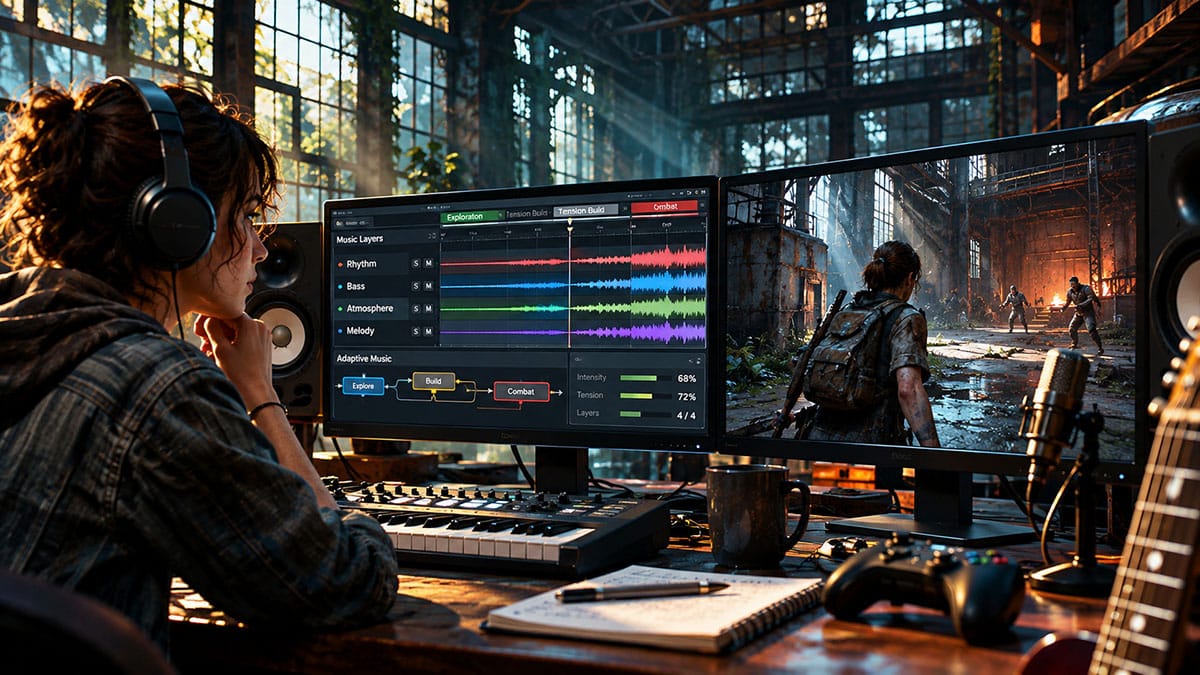
Imagine an adventure game in which the player enters an abandoned factory. The music begins with an atmospheric keyboard texture and a quiet rhythmic pulse, creating a sense that something unusual may be waiting deeper inside the building. As the player approaches a dangerous location, additional instrumental layers gradually enter, increasing the tension without interrupting the existing musical phrase. When the player is finally discovered by an enemy, the arrangement expands into aggressive percussion, distorted guitars, and additional effects, creating an intense action sequence that continues until the danger passes.
A game audio designer may create this experience through adaptive music, using software to control how different musical sections and layers respond to gameplay. Rather than playing a single stereo recording from beginning to end, the game can introduce, remove, or transition between musical elements according to changes in the fictional environment. This requires a different approach to composition and production because the music must remain coherent even when the player behaves in unexpected ways.
Software systems such as Audiokinetic Wwise and FMOD Studio are used to help implement interactive audio in games. These tools can connect musical playback with information supplied by the game engine, allowing developers to create transitions, layered arrangements, and other responsive musical behaviors. Musicians do not necessarily need to become programmers to participate in these projects, but understanding the basic production requirements can make them more useful collaborators.
For example, a composer might deliver separate rhythm, melody, harmony, and atmospheric elements that can be combined in different ways. The audio files need to share compatible timing and musical structure so that changes do not produce awkward transitions or sudden rhythmic interruptions. Some projects may also require specially composed transition passages that move smoothly between sections when the player triggers an event.
These requirements create opportunities for independent recording engineers and producers who understand multitrack recording. A studio capable of building clean arrangements, managing timing relationships, and delivering properly organized audio assets can offer services beyond conventional album production. The same equipment used to record a band may be suitable for creating adaptive music materials, provided the engineer learns the technical requirements of interactive production.
GameSoundCon’s 2025 survey found that both FMOD and Wwise remained common tools in parts of the independent and mid-sized game markets. That does not mean every musician needs to purchase specialized software immediately, but it indicates that understanding interactive audio workflows may be a useful professional skill for producers seeking additional clients.
Your Recording Studio May Already Have Most of the Tools Needed to Enter This Market
The good news for working musicians is that preparing music for game licensing does not necessarily require building an entirely new recording facility. Many independent artists already own digital audio workstations, audio interfaces, microphones, instruments, and software capable of creating professional recordings. The larger challenge is often learning to organize those recordings into the versions and formats that game developers can use.
A conventional album release usually emphasizes a final stereo master, carefully balanced and processed to represent the artist’s intended sound. That remains important for licensing because developers need to evaluate the finished recording, but they may also require an instrumental version that leaves room for character dialogue or environmental sound effects. An alternate mix without lead guitar might be more useful during an action sequence, while a quieter version featuring acoustic instruments could work underneath a scene requiring subtle emotional support.
Preparing these versions is generally much easier when the original multitrack session remains available. An engineer can return to the recording, remove vocals, rebalance instruments, adjust effects, or create different arrangements without trying to reconstruct individual elements from a completed stereo mix. Stems can also be exported, allowing developers to control groups of instruments independently when creating interactive musical systems.
The distinction between stems and individual tracks is worth understanding because developers may request either. A stem generally contains a group of related musical elements, such as all drums or all guitars, while individual multitrack files provide more detailed control over separate instruments. Different projects may need different levels of flexibility, and exporting every possible track is not necessarily helpful when a developer only needs a few carefully organized musical layers.
Looping introduces another production requirement that musicians may not encounter regularly when mastering conventional albums. A musical passage used during gameplay might repeat for several minutes because the player remains in the same location longer than expected. If the end of the passage does not connect smoothly with its beginning, the resulting interruption may become distracting, especially after the player hears it repeatedly.
An engineer preparing loopable music needs to consider musical phrasing, tempo, reverb tails, stereo ambience, and the timing of transitions. A loop that appears correct when viewed as a waveform may still sound unnatural when repeated, particularly if a sustained instrument or ambient effect is abruptly interrupted. Careful listening and testing are therefore just as important as accurate editing.
There is also a practical business opportunity in preparing older recordings for licensing. Many independent artists have substantial catalogs recorded over years or decades, but those recordings may exist only as completed stereo masters or archived sessions stored on aging computers. A studio could help recover, organize, and prepare those recordings, producing instrumental versions, alternative mixes, and other assets for future licensing opportunities.
AI-assisted source separation may help when original multitracks are unavailable, although the results should be treated with caution. The technology can sometimes extract useful instrumental elements from existing recordings, but artifacts, phase problems, and unwanted audio leakage may make the files unsuitable for professional use. Artists also need to confirm that they possess the rights required to create and license those additional versions.
For an independent recording studio, this work can become a specialized service with its own fees, delivery requirements, and client relationships. Instead of depending exclusively on new recording sessions, the engineer can help artists turn existing catalogs into more commercially useful collections of music assets. The financial opportunity comes from providing professional preparation and solving practical production problems, not from pretending that every alternate mix automatically creates another royalty stream.
Getting Paid for Game Music Is Not as Simple as Collecting Streaming Royalties
Video game licensing introduces compensation arrangements that can be quite different from those familiar to recording artists who distribute music through streaming services. When a developer obtains permission to use an existing recording, the agreement may provide an upfront fee covering the authorized use of the composition and master. The amount depends on negotiations involving the project’s budget, the importance of the recording, the rights being granted, and the commercial expectations of both parties.
An artist who owns and controls both copyrights may be able to negotiate the complete licensing arrangement, while recordings involving publishers or separate master owners may require coordinated approvals and payments. In either situation, the musician should understand whether the fee is a one-time payment or whether additional compensation is available through the agreement.
A common misunderstanding is that every sale of a video game containing a licensed recording will automatically generate another royalty payment for the artist. That is not how every game music agreement works, and musicians should be particularly careful about assuming that the traditional royalty systems used in broadcasting apply identically to interactive entertainment. Public performance rights, soundtrack sales, platform arrangements, and contractual revenue participation can all affect compensation, but the existence of one type of payment does not automatically establish entitlement to another.
The 2025 GameSoundCon survey provides a useful picture of how compensation arrangements vary. Among freelancers working on independent games, 42% reported receiving only their agreed payment for the content they supplied, while 36% reported eligibility for soundtrack revenue and 21% reported eligibility for per-unit royalties. These arrangements were not necessarily mutually exclusive, and eligibility does not establish that a particular musician received significant additional money. Nevertheless, the figures demonstrate that some independent game agreements contain opportunities for continuing compensation beyond the original production fee.
For a working musician, the distinction can affect the entire financial outcome of a project. Consider a hypothetical arrangement in which an artist receives $1,000 for a nonexclusive license to use a recording in an independent game. If the contract provides no additional compensation, the artist generally receives that negotiated amount regardless of how many copies the game sells. Another musician might accept a smaller upfront fee in exchange for a clearly defined share of qualifying sales or soundtrack income, potentially earning more if the game becomes successful.
These examples are not suggested licensing rates, and there is no universally appropriate fee for every independent game. The purpose is to illustrate why artists must understand the agreement’s financial structure rather than judging a deal exclusively by the amount offered at signing. A larger immediate payment may be preferable when the project’s commercial prospects are uncertain, while a carefully written participation arrangement may be valuable when the artist believes the project has realistic sales potential.
Revenue participation becomes particularly complicated when compensation is calculated after deductions. A percentage of gross revenue can produce a very different result from a percentage of net profits, especially if the contract allows platform fees, marketing expenses, production costs, or other charges to be deducted before the musician’s share is calculated. Artists should also understand how sales are reported, when payments become due, and whether the agreement provides meaningful access to accounting information.
There is nothing wrong with accepting a straightforward one-time licensing fee when it represents fair compensation for the rights granted. Problems arise when musicians confuse promotional exposure with guaranteed financial returns or agree to broad restrictions without understanding their value. A sustainable independent music business requires realistic income projections, reliable contracts, and a willingness to recognize that an impressive entertainment partnership may still be a poor deal if the artist receives inadequate compensation.
Why Contract Terms Can Matter More Than the Initial Check
A developer distributing a game internationally may reasonably ask for worldwide licensing rights because the finished product is intended to reach customers across many countries. The company may also want the music to remain available for the game’s commercial life, including future updates and versions released on additional platforms. These requests can make practical sense, especially when removing a licensed song years later could create technical and commercial problems.
The difficulty appears when broad language extends beyond what is necessary for the project. A license allowing a recording to appear in one identified game may be very different from an agreement granting exclusive rights for the recording’s use throughout an entire entertainment franchise. The second arrangement could restrict the artist’s ability to license the same recording elsewhere, depending on the precise wording, and those restrictions may remain important long after the original fee has been spent.
Artists should pay close attention to whether an agreement covers promotional trailers, advertising campaigns, downloadable expansions, future editions, sequels, and separate soundtrack products. A recording used quietly in a background scene does not necessarily provide the same commercial benefit to a developer as a song featured prominently in an international marketing campaign. Those uses may justify different fees or additional permissions, particularly when they extend beyond the original purpose of the license.
Exclusivity also deserves careful consideration because it can limit future opportunities. A developer may have a legitimate reason to request an exclusive recording for a character, scene, or soundtrack identity, but the musician should understand the restrictions being imposed. An exclusive agreement limited to a particular type of game for a defined period is considerably different from a permanent restriction covering all possible entertainment uses.
When artists create original compositions specifically for a game, ownership becomes even more important. A project may offer a commissioned composition agreement that allows the musician to retain copyright while granting the developer necessary rights, or it may require a valid work-for-hire arrangement or assignment under which the developer obtains ownership. The financial and creative implications can be substantial because ownership determines whether the composer can independently release, license, or otherwise exploit the music in the future.
The legal treatment of work made for hire is more specific than casual industry language sometimes suggests, and musicians should not assume that a contract’s heading alone determines copyright ownership. The actual relationship between the parties, the statutory requirements, and any written assignment provisions can affect the result. Professional legal advice is especially valuable when a contract involves permanent rights transfers, exclusivity, or compensation tied to future sales.
Artists should also pay attention to how agreements address gameplay videos and livestreaming. A developer may have permission to place music inside a game without automatically possessing every right required for third parties to distribute videos containing that music. These issues can create disputes involving online platforms, automated copyright claims, and monetization, particularly when recordings are managed through systems such as YouTube Content ID.
An artist may decide that allowing certain gameplay-related uses helps the recording reach a wider audience, but those permissions should be clearly documented. The objective is to make the music commercially useful without accidentally granting unrelated rights or creating conflicts that undermine the developer’s promotional activities.
AI Creates New Production Opportunities, but It Also Creates New Rights Questions
Artificial intelligence is beginning to influence several areas of game audio production, although the practical uses deserve more attention than the familiar marketing promises about software replacing entire creative departments. Engineers can use AI-assisted tools to organize catalogs, examine recordings, generate preliminary metadata suggestions, clean up audio, and help prepare alternate versions when conventional production methods would be difficult or time-consuming. Developers may also experiment with synthetic dialogue, sound effects, and music prototypes while building their games.
According to the 2025 GameSoundCon survey, 8% of professional respondents reported using generative AI in some aspect of their game audio work, while an additional 15% were exploring its use. Placeholder dialogue and assistance with simple scripts were among the reported applications, indicating that the technology was being examined for production tasks rather than exclusively for generating finished musical compositions. The survey reflects respondents at that point in time and should not be treated as a complete measurement of AI adoption throughout the gaming industry.
For independent musicians, the most useful applications may involve reducing the amount of administrative and technical work required to prepare recordings for licensing. An artist with a large catalog could use properly configured tools to help identify missing information, create initial descriptions of musical moods, or organize potential licensing candidates. A producer might use AI-assisted separation to investigate whether an older recording can support a new instrumental arrangement, while still relying on professional listening and judgment to determine whether the result is acceptable.
The danger is assuming that automated output is automatically correct. An AI system can misidentify musical instruments, invent songwriting credits, or produce inaccurate descriptions of ownership, and those errors can become serious problems when the information is included in a commercial licensing proposal. Artists must verify the rights and metadata associated with every recording before presenting it to a developer.
AI also complicates licensing agreements when developers seek permission to modify or analyze recordings. Technical adaptations required for gameplay should not automatically be interpreted as authorization to train unrelated generative models, reproduce an artist’s voice, or create new commercial recordings using the artist’s identity. Musicians should seek appropriate contract boundaries around these uses, particularly when the agreement involves access to separate stems or other production materials that could support further manipulation.
The opportunity for independent artists is to combine original creative work with modern production tools while maintaining accurate records and meaningful control over their intellectual property. A developer looking for reliable music may value the confidence that comes from working with a musician who can document the recording’s history, explain its ownership, and deliver professionally prepared assets. That level of professionalism may be far more commercially useful than producing a large collection of questionable AI-generated tracks and hoping somebody decides to license one.
The Overlooked Business of Turning an Existing Catalog Into Game-Ready Assets
Most independent musicians already possess more potentially useful intellectual property than they realize. An artist who has recorded several albums may own dozens of songs, alternate takes, instrumental passages, and unfinished compositions that could serve different commercial purposes. The problem is often that these materials were created for ordinary album releases and never organized for professional licensing.
A useful starting point is to examine the entire catalog and determine which recordings have the clearest ownership documentation and the greatest potential flexibility. Music that the artist controls completely is generally easier to offer than recordings involving uncertain songwriting shares or third-party material. The artist can then consider how individual recordings might fit different creative situations, taking into account the arrangement, emotional character, instrumentation, and overall production quality.
A driving rock instrumental might work in a racing game, while a restrained acoustic recording could support a story-driven adventure. Atmospheric electronic music may suit exploration or science-fiction environments, and a traditional blues performance could help establish a particular regional or historical character. These are creative possibilities rather than predictions of demand, but they encourage musicians to evaluate their catalogs through the needs of potential licensing clients.
This approach also changes how artists think about older recordings. A song that attracted little attention when originally released may become commercially useful when a developer needs a particular mood or musical style. Instead of allowing archived sessions to disappear into forgotten hard drives, artists can preserve the masters, recover important production files, and create organized collections of material available for future licensing discussions.
There is a related opportunity for independent recording studios to offer catalog preparation services. A studio could help musicians recover older sessions, produce new instrumental versions, create properly synchronized stems, and organize the completed files with accurate technical and ownership information. The work may be especially valuable to artists who have spent years recording music but lack the time or experience to prepare it for film, television, advertising, and game licensing.
The business becomes more interesting when the studio can provide these services repeatedly without requiring every artist to begin from scratch. Standardized recording archives, consistent file naming, documented export procedures, and clear licensing records can reduce unnecessary administrative work. Those efficiencies can benefit both the studio and the musician, allowing more time to be spent developing relationships with potential buyers.
Artists should resist the temptation to turn this preparation into another excuse for expensive software purchases. If the current recording system can produce accurate, professional-quality files that meet a developer’s requirements, there may be little reason to replace it. New tools become worthwhile when they solve identifiable production problems, improve reliability, or create additional services that customers are prepared to pay for.
That is a more practical approach to music technology than assuming every new plugin or AI service will somehow transform an independent recording operation into a profitable business. Technology only becomes financially useful when it helps the artist create something valuable, deliver it efficiently, or maintain control over assets that can generate future income.
Finding the Developers Who Actually Need Your Music
Once musicians begin thinking about their catalogs as licensable assets, the next challenge is discovering suitable projects. Major game publishers generally work with established professional networks, but smaller developers may be more approachable, particularly when an artist has music that closely matches the creative direction of a project.
Independent game communities offer useful places to begin researching developers and understanding the kinds of projects being created. Platforms such as itch.io provide access to independent games and development communities, while Steam allows musicians to research commercial releases and identify developers whose work might benefit from particular musical styles. These services are not automatic music-placement marketplaces, but they can help artists learn what kinds of games exist and which companies are creating them.
A musician interested in game licensing should approach this research much like a booking agent approaches venues. Sending the same message to hundreds of unrelated developers is unlikely to produce meaningful results, just as an acoustic folk performer probably gains little from sending booking requests to every heavy-metal club in the country. The more effective approach is to understand the audience, identify suitable projects, and explain how the music could support the developer’s creative goals.
For example, a producer specializing in ambient electronic compositions might investigate independent science-fiction games or exploration experiences where atmosphere plays a major role. A blues guitarist could research historical adventures, driving games, or projects using American regional settings, while a composer with orchestral skills might look for fantasy and role-playing productions. The objective is to find a genuine musical connection rather than persuade developers to use recordings that do not fit their games.
Industry gatherings can also help musicians develop relationships with professionals working in game audio. The Game Developers Conference and GameSoundCon provide opportunities to learn about game production, music implementation, and professional practices. Even when attending a conference is financially impractical, publicly available educational resources and industry discussions can help musicians understand the vocabulary and expectations of potential clients.
Relationships with independent composers, audio designers, and production companies may be just as important as direct contact with developers. Some game projects rely on outside specialists to create and implement sound, and those professionals may need additional musicians, instrumentalists, recording engineers, or licensed recordings. A studio that becomes known for reliable delivery and clear documentation may develop recurring work through these relationships.
The important consideration is that licensing should be approached as a long-term business rather than a lottery. A developer may not need music when first contacted, and a promising project may experience delays or changes in direction. Musicians who develop professional relationships, maintain useful catalogs, and respond reliably to opportunities are building something more sustainable than a strategy based on sending unsolicited recordings and waiting for a famous game studio to discover them.
What Happens When a Video Game Introduces an Artist to a Million New Listeners?
The financial value of game licensing does not necessarily end when the developer pays for the recording. A song featured in a popular game may attract listeners who search for the artist, discover other recordings, and become interested in the person behind the music. As the Pointer Sisters streaming example demonstrates, a significant entertainment placement can revive interest in music that audiences may have overlooked for years.
For independent musicians, however, increased attention is only part of the commercial equation. Streaming services can provide information about listening activity, but they generally do not give artists unrestricted access to the identities and contact information of every person who encounters their music. The same problem exists in gaming, where the developer and platform usually maintain the direct customer relationship with players.
An artist may therefore experience an increase in plays or social media attention without gaining a practical way to maintain contact with most of the people who discovered the recording. This creates an uncomfortable situation in which musicians can help make another company’s entertainment product more valuable while remaining dependent on outside platforms to reach the audience their music helped attract.
The solution is not to demand access to a game’s customer database, which would raise obvious privacy and contractual problems. Instead, artists can build their own destinations for interested listeners who voluntarily seek out their music. A well-organized website containing recordings, artist stories, merchandise, upcoming performances, and a permission-based fan registration system gives newly interested listeners a way to establish a direct relationship.
The MAS Fan Passport Artist Ecosystem is designed around this broader principle of artist-controlled relationships. Its tools for organizing fans, maintaining artist information, and connecting music activity with direct communication can support an independent musician who experiences new interest through licensing or other forms of exposure. The value does not come from claiming ownership of a game company’s audience, but from allowing interested fans to become part of the musician’s own community.
Imagine an independent Americana artist whose instrumental recording appears in a successful exploration game. Players who enjoy the music begin searching for the song and find the artist’s website, where they can hear the original recording, learn about its creation, and discover additional material. Some may purchase a digital album, order a physical release, or register to receive information about new music and performances. The licensing placement created the introduction, while the artist’s own business provides opportunities for that relationship to continue.
This distinction becomes important when calculating the long-term value of a placement. A licensing fee may represent the immediate income, but the resulting exposure could produce additional sales, show attendance, merchandise purchases, or fan support over time. None of these outcomes is guaranteed, and artists should avoid inventing projected customer values simply to make a licensing opportunity appear more profitable. Nevertheless, establishing direct relationships gives musicians a way to benefit from attention that might otherwise disappear as soon as the game fades from the public conversation.
The larger principle applies across the music business. Whether fans discover a recording through a game, film, streaming playlist, radio broadcast, or social media video, independent musicians need a reliable way to turn some of that interest into meaningful relationships. Without that connection, artists can remain dependent on the companies controlling distribution and discovery, even when their creative work is generating the attention.
Building a Music Business That Earns From More Than One Use of a Recording
The strongest opportunity emerging from game licensing is the possibility of generating income from multiple uses of music that an artist continues to own. This is not an argument that musicians should refuse every exclusive agreement or avoid working with major companies. It is an argument for understanding how different rights arrangements affect the future earning potential of a recording.
Consider an independent songwriter who records an instrumental blues composition for an album. The original recording is released through a distributor, while the artist also sells downloads and physical copies directly to fans. Because the songwriter controls the composition and master, the music can be offered for licensing, assuming there are no conflicting contracts or other restrictions.
A small game developer might obtain a nonexclusive license for the recording, providing the artist with an immediate payment while allowing the original release to remain available. Later, another producer might seek permission to use the same music in a documentary, creating a separate licensing opportunity. The artist may also continue performing the composition, selling the album, and promoting the recording to fans who discovered it through either project.
These arrangements require careful negotiation because rights must remain available for each proposed use. Nevertheless, they illustrate how ownership can allow a single creative work to support several commercial activities. Rather than treating a recording as something that has completed its economic purpose once an album is released, the musician can preserve it as an asset capable of generating new opportunities over time.
The same principle applies to recording studios. An engineer who helps create and organize music assets may earn production fees from artists, preparation fees for licensing materials, or compensation for specialized game audio work. Those income sources depend on actual services provided and agreed payments, rather than vague hopes that technology will somehow generate passive income.
For many working musicians, a sustainable career is likely to depend on several modest revenue sources operating together. Live performances may provide regular income, direct sales can generate higher-value transactions with dedicated fans, publishing royalties compensate certain uses of compositions, and licensing opportunities create additional possibilities. Education, session work, production services, merchandise, memberships, and fan support can contribute as well.
This is the foundation of a music industry middle class built around musicians who operate professional businesses without needing to become global superstars. The objective is not to abandon conventional music distribution but to reduce dependence on any one company or revenue source. A musician who maintains ownership and keeps accurate business records has greater freedom to pursue opportunities as technology and consumer habits change.
Video games deserve a place in that discussion because they represent another way recorded music can become part of a valuable entertainment product. For artists with suitable catalogs and professional preparation, the opportunity is worth exploring alongside film, television, advertising, and other licensing markets.
A New Generation of Music Technology Should Give Artists More Control, Not Less
The relationship between interactive entertainment, recording technology, and artificial intelligence will continue to develop as game production systems become more sophisticated. Developers are exploring new approaches to responsive music, automated production assistance, and richer entertainment experiences, while musicians are gaining access to tools that once required substantial studio resources.
These developments can create useful opportunities, particularly when technology makes it easier for independent artists to prepare, document, and deliver music professionally. Cloud-based systems may help organize rights and business records, while locally controlled archives can preserve recordings, session files, and licensing documents independently of any particular online service. AI-assisted production can reduce repetitive work, and improved digital audio tools can make complex arrangements and alternate mixes more accessible.
However, the convenience of these systems should not lead artists to surrender unnecessary control over their intellectual property. A musician should be able to move recordings and metadata between services, preserve complete archives, and continue operating when a particular distributor or software provider changes its business model. The value of a music catalog should remain with its owner rather than becoming dependent on an outside platform’s continuing permission to access essential files.
That philosophy becomes particularly relevant when considering the future of Web3 and decentralized rights management. Technologies capable of supporting verifiable records, portable credentials, and transparent licensing histories may eventually improve certain aspects of music administration. But a blockchain entry does not automatically establish copyright ownership, create a valid license, or guarantee royalty payments. Any useful application must connect to enforceable agreements, accurate information, and business processes that musicians and developers can actually use.
For now, most independent artists will gain more immediate value from reliable contracts, accurate metadata, organized production files, secure backups, and direct customer relationships. These fundamentals are not particularly fashionable compared with the latest AI announcement or decentralized platform launch, but they make the difference between owning a useful music business and merely maintaining accounts with an assortment of technology companies.
Game licensing provides an excellent reason to establish those foundations because professional buyers need confidence that the music they use is properly controlled and can remain available under the agreed terms. An independent musician who can provide that confidence is offering something genuinely valuable to the entertainment business.
Grand Theft Auto VI Is the Big Headline, but the Independent Opportunity Is Much Larger
Rockstar Games has built an entertainment experience in which music plays a central role in establishing identity, atmosphere, and emotional connection. The company’s partnership with Atlantic Records, the extensive licensing activity involving Universal Music Publishing Group, and the use of recordings spanning generations demonstrate how valuable music can become when it is integrated into a larger creative product.
Yet the most important lesson for independent musicians is not that they should all attempt to place songs in the next Grand Theft Auto release. The more useful lesson is that video games represent a diverse commercial market with different budgets, creative needs, licensing arrangements, and production requirements. Some projects require familiar recordings, others need original compositions, and many depend on specialized audio materials that working musicians and independent studios are capable of producing.
The challenge is learning how to enter that market professionally. Artists need to understand ownership, maintain accurate catalog information, prepare recordings in useful formats, develop relationships with suitable developers, and negotiate agreements that reflect the actual commercial rights being granted. Recording studios can support this process by helping musicians transform existing material into technically reliable licensing assets, while modern production tools can reduce some of the work involved.
There will be disappointments along the way because licensing is a competitive business, and even a well-prepared recording may not fit the needs of a particular project. Some developers will have limited budgets, some projects will never be completed, and some proposed agreements will involve restrictions that make them unattractive. These realities should encourage careful planning rather than discourage musicians from exploring the market.
The encouraging part is that independent artists do not need to wait for a record label to declare them commercially important before they begin developing their music catalogs for licensing. A musician who owns original recordings, understands their rights, and can provide professional materials already possesses many of the essential ingredients. What remains is the business development required to connect those assets with people who need them.
For musicians who have spent years building catalogs while trying to survive the increasingly difficult economics of streaming, this offers another way to think about the value of recorded music. A song is not necessarily finished earning money when its original release campaign ends, and an old master does not automatically become worthless because it is no longer generating attention on social media. The right recording can find a new purpose when a filmmaker, advertiser, or game developer needs music that communicates something their own production cannot accomplish alone.
Grand Theft Auto VI happens to provide an especially spectacular illustration of that principle, complete with expensive virtual cars, elaborate fictional neighborhoods, and a soundtrack large enough to keep a music supervisor occupied for quite some time. Most independent musicians will never participate in a project on that scale, but they do not need to in order to build a legitimate licensing business. A handful of suitable placements, professional production assignments, and continuing relationships with developers can contribute to a larger revenue strategy built around music the artist controls.
Ultimately, the commercial lesson is that recordings become more valuable when musicians understand how they can be used beyond conventional listening. Video games are another part of an expanding entertainment economy in which music contributes directly to the quality and appeal of a finished product. Independent artists who recognize that value, prepare their catalogs, and protect their ownership have an opportunity to participate as professional suppliers rather than simply hoping that somebody discovers their music.
And considering that Grand Theft Auto has built an entertainment empire around people taking things that do not belong to them, there is something wonderfully appropriate about independent musicians using its latest release as a reminder to make absolutely certain they keep ownership of what belongs to them.
 |  Spotify |  Deezer |  Breaker |
 Pocket Cast |  Radio Public |  Stitcher |  TuneIn |
 IHeart Radio |  Mixcloud |  PlayerFM |  Amazon |
 Jiosaavn |  Gaana |  Vurbl |  Audius |
 Reason.Fm | |||
Find our Podcasts on these outlets