
Finding Your Audience with AI: How to Use Listening Data, Fan Clusters, and Mood Insights to Supercharge Your Music Campaigns




Making a Scene Presents – Finding Your Audience with AI: How to Use Listening Data, Fan Clusters, and Mood Insights to Supercharge Your Music Campaigns
In the old music business, finding your audience meant playing as many shows as possible, handing out flyers, and hoping someone passed your CD to the right person. Today, it’s about data—and not just any data, but the kind of deep behavioral insights that artificial intelligence (AI) can dig up for you. From identifying your superfans to understanding the moods and moments your songs live in, AI can help you pinpoint exactly who your audience is and where they’re most likely to connect with your music.
At its core, AI excels at pattern recognition. When applied to streaming platforms and social media, it can detect clusters of listeners who engage with music in similar ways. These “fan clusters” might not be defined by genre in the traditional sense. Instead, they’re united by behavioral signals: when they listen, what playlists they’re drawn to, what moods they seek, and how they interact with artists online.
Let’s say your latest single is a moody, downtempo ballad perfect for late-night headphone sessions. Instead of just tagging it as “indie” or “alternative,” AI tools can recognize that it resonates with listeners who frequent “chill at night,” “sad bangers,” or “deep focus” playlists on Spotify. It might even discover correlations between your song and fans of certain artists, podcasts, or even non-musical interests like meditation apps or late-night YouTube rabbit holes. That’s a marketing goldmine—and it’s all within reach, even for indie musicians.
One of the most powerful platforms that offers this level of insight is Chartmetric. Their artist dashboard can show you audience demographics, top playlists, artist affinities, and listener engagement across platforms like Spotify, TikTok, Instagram, and YouTube. Chartmetric’s “neighboring artists” feature uses AI to cluster artists based on listener behavior, not just genre labels. So you can discover, for example, that fans who listen to your music also vibe with a lo-fi hip-hop producer in Berlin or a singer-songwriter in Austin you’ve never heard of—but should probably collaborate with.
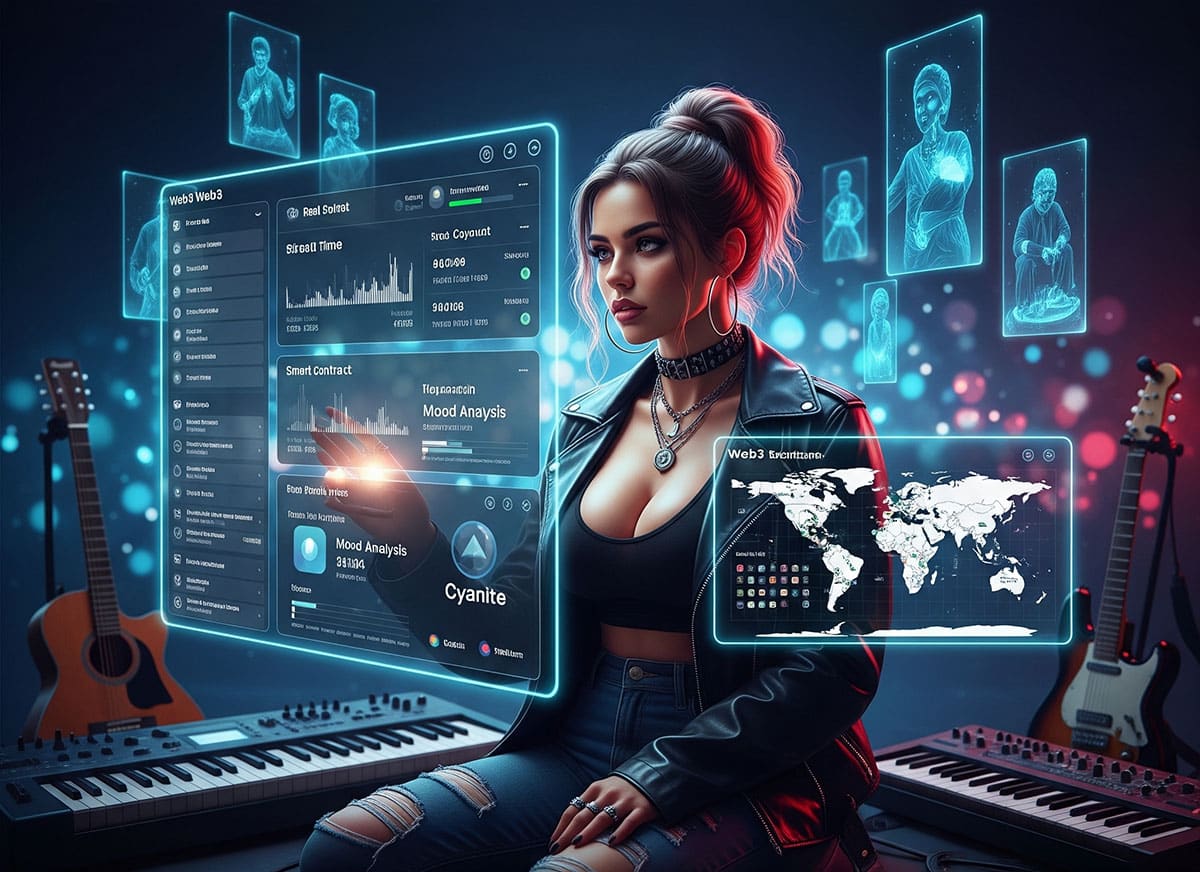
Another standout tool is Cyanite.ai, which specializes in AI-driven music tagging and mood detection. Cyanite goes beyond genre and listens to your actual audio files, analyzing tempo, mood, energy, and emotional cues. This can help you understand how your track might be categorized by algorithms that feed playlists, sync libraries, or music supervisors. If your song scores high on “longing” or “melancholy,” you might angle for a placement in film and TV, or aim for playlists that cater to those emotional landscapes.
Then there’s Beatchain, which offers a more visual, dashboard-style platform that tracks audience growth, engagement, and campaign performance. With Beatchain’s fan builder tools, you can segment your audience by geography, platform, and behavior, helping you run hyper-targeted campaigns on Instagram, Facebook, or even YouTube. And because Beatchain integrates social and streaming data, you can watch how a TikTok clip, for example, translates into Spotify plays and then adjust your strategy in real time.
So how do you actually use these insights to run smarter, AI-assisted campaigns?
Let’s walk through a hypothetical single rollout for an indie artist named Maya Rae, who’s releasing a new track called “Glass Houses”—a lush, late-night indie-pop tune with dreamy synths and reflective lyrics.
Before releasing the track, Maya uploads the final mix to Cyanite.ai. The AI determines that the song is tagged as “melancholy,” “introspective,” and “electronic-pop,” with an energy level suited for “winding down” or “late-night driving.” She now knows that her music sits perfectly in emotional and atmospheric spaces, making it ideal for playlists, sync opportunities, or tokenized fan drops focused on mood-based experiences.
Instead of relying on traditional streaming platforms, Maya uses Audius, a decentralized music streaming platform built on blockchain. Audius allows her to upload the track directly and tag it by mood, genre, and vibe. Using community analytics tools built into platforms like Audius or third-party dashboards like Sound.xyz, she can see which listeners are saving the track, what other artists they’re supporting, and where those users are located. She notices a surge of engagement from users who are part of mood-based listening DAOs and collect “late-night vibes” playlists curated by fans, not algorithms.
To deepen her connection with those fans, Maya mints a limited-edition NFT of “Glass Houses” on Zora, offering bonus stems, a handwritten lyric sheet, and a personal thank-you video as unlockable content. She also uses Bonfire to token-gate a Discord listening party, where holders of her fan token or NFT get exclusive early access to her next single. By doing this, she’s no longer guessing who her audience is—she’s engaging with them directly in communities that form around shared values, aesthetics, and emotions.
She doesn’t stop there. With tools like Medallion and Coop Records, she identifies collectors and superfans who own similar genre NFTs or engage with artists in her niche. She runs a targeted marketing campaign within this Web3 ecosystem, offering limited-time bundles that include the NFT, a vinyl pre-order, and membership to her governance DAO that helps shape future creative projects.
Rather than boosting a TikTok or Spotify algorithm, Maya’s campaign thrives on ownership-based engagement. Her top fans are no longer passive listeners—they’re collectors, community members, and stakeholders. As her music travels across decentralized platforms, it becomes easier to trace who’s supporting her, where they are, and how they’re participating. With platforms like GM.xyz and Rally, she can send airdrops to engaged fans, reward community curation, and create voting rights around the direction of future releases.
Conclusion
That’s what an AI + Web3-powered campaign looks like—it’s not about chasing algorithms, it’s about finding your people and giving them a real stake in your journey. Let’s be honest: with over 900 years’ worth of music already on Spotify and thousands of new tracks uploaded every day, it’s nearly impossible for an indie artist to stand out without help. You need more than just talent—you need tools that help you find the right fans and build a system that works while you focus on making music. AI helps you spot patterns in listener behavior, and Web3 gives you the power to build direct, ownership-based relationships with your audience. It’s not just a smarter music industry—it’s a more human one.
Subscribe to Our Newsletter
Discover more from Making A Scene!
Subscribe to get the latest posts sent to your email.


