The Indie Artist Flywheel: How to Build a Music Career That Feeds Itself




Making a Scene Presents – The Indie Artist Flywheel: How to Build a Music Career That Feeds Itself
Listen to the Podcast Discussion
Most independent musicians are stuck in a cycle that feels like it never ends. They release a song, promote it, play a show, post on social media, sell a few shirts, send a few emails, and then start all over again from zero. Every release feels like a brand-new mountain to climb. Every show feels like a separate event. Every post feels like it disappears in a few hours.
That is not because indie artists are lazy. It is because most artists are working without a system.
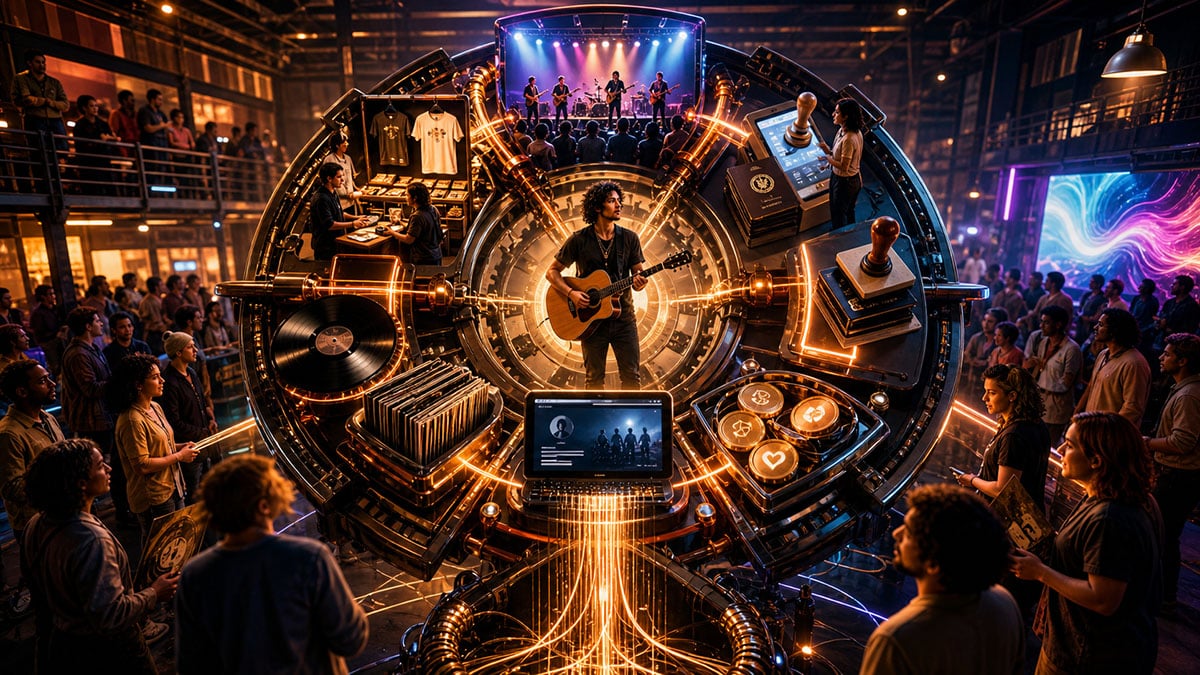
A real music business should not be a pile of disconnected tasks. It should be a machine where every action makes the next action easier. Every show should grow the fanbase. Every fan interaction should create useful data. Every data point should help the artist make better decisions. Every better decision should lead to more direct revenue. Every dollar earned should help build the next show, the next release, the next merch drop, the next membership offer, and the next fan relationship.
That is the flywheel principle.
A flywheel is a system where each part feeds the next part. At first, it takes work to get moving. The first push is hard. The second push is a little easier. But once the wheel starts turning, momentum builds. The business starts carrying some of the weight.
For independent musicians, this can be the difference between constantly chasing attention and actually building a career.
Stop Thinking in Campaigns and Start Thinking in Systems
Most artists think in short bursts. They promote a single. They promote a show. They promote a video. They promote a new shirt. Each push has a beginning and an end. When that campaign is over, the artist starts again.
That is exhausting. It is also a bad way to build a business.
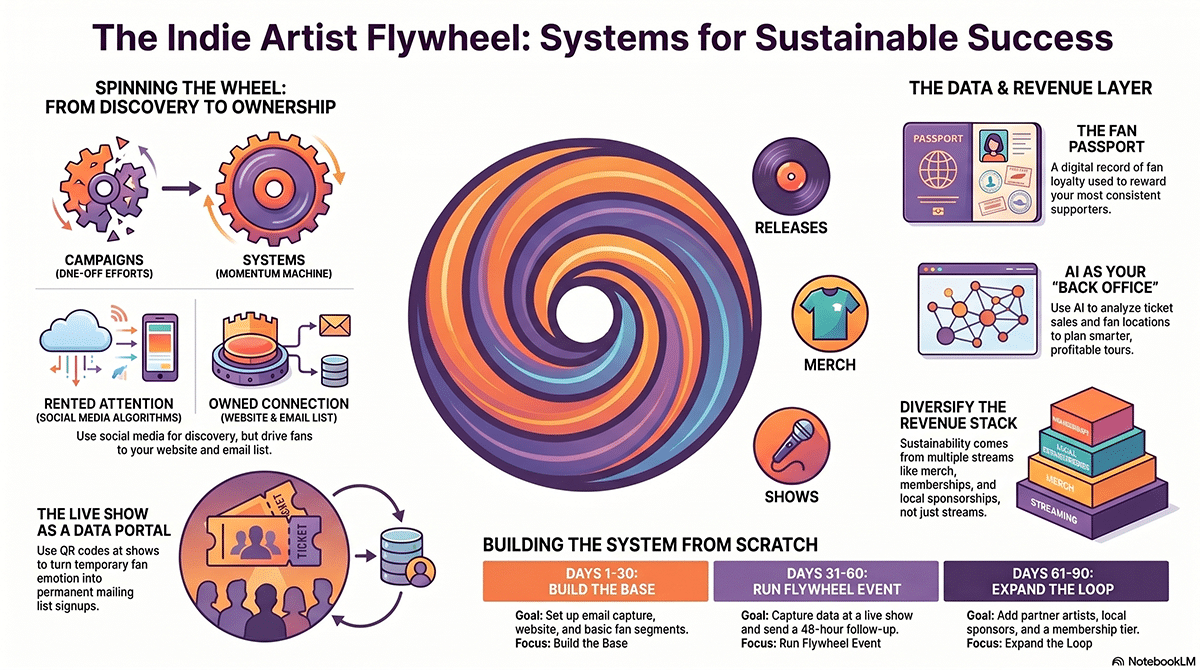
The modern music economy pushes artists to keep feeding platforms. Post more. Stream more. Share more. Boost more. Make more short videos. Chase more followers. Try to get more likes. Try to make the algorithm notice. But attention without ownership is a leaky bucket. You can pour in more effort, more money, and more time, but much of the value runs out the bottom and lands somewhere else.
The better question is not, “How do I get more views?” The better question is, “How do I turn every view, stream, ticket sale, merch sale, and conversation into an owned relationship?”
That is the heart of the indie artist flywheel.
The artist can still use streaming platforms, social media, video platforms, ads, playlists, press, and live shows to create discovery. Those tools still matter. But discovery should never be the final destination. Discovery is the front door. Once someone discovers the artist, they need a clear path into the artist’s owned world.
That owned world should include the artist’s website, email list, store, fan passport, membership program, community space, and direct sales system. Once fans enter that world, the artist can reach them again without begging an algorithm for permission.
Social media is rented attention. The artist’s own system is owned connection.
The Live Show Is the First Spin of the Wheel
The live show is one of the strongest places to start the flywheel because it proves real interest.
A stream is passive. A like is easy. A follow may mean very little. But a fan who comes to a show has taken real action. They left the house. They made time. They paid money or showed up at the door. They gave the artist their attention in a room full of real energy.
That moment should never be treated as a one-night transaction.
Every live show should become the start of a deeper relationship. The artist should make it easy for fans to join the mailing list, enter the fan passport, buy merch, get a live recording, follow future shows, and become part of the artist’s community.
A simple QR code at the merch table can do more than a month of random posting when it sends fans to the right place. That QR code should not send people to a generic list of links. It should send them to one clear artist-owned landing page.
That page should make one simple offer. Join the fan list and get something special from tonight.
That special thing could be a live recording, a private video, an unreleased demo, a discount code, a digital poster, a signed lyric sheet giveaway, or early access to the next show. It does not need to be expensive. It needs to feel personal.
The live show creates emotion. The artist’s job is to turn that emotion into connection before it fades.
The Fan Passport Becomes the Memory of the Relationship
The next piece of the flywheel is the Fan Passport.
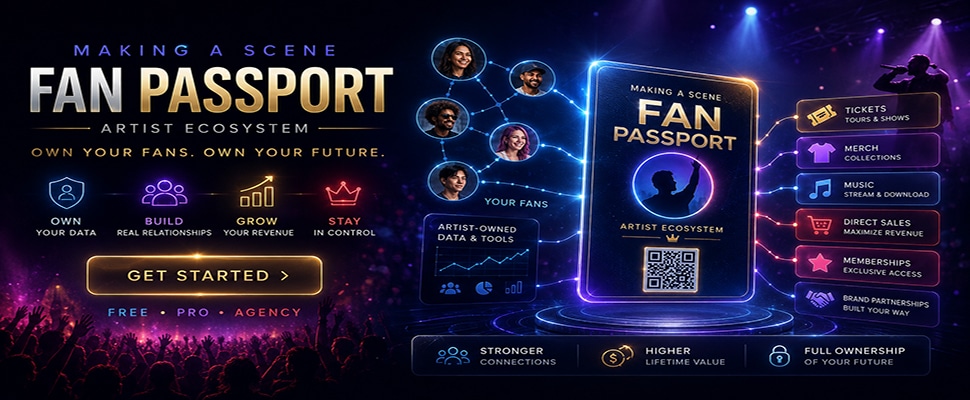
A Fan Passport is a simple record of how a fan supports the artist. It can track shows attended, merch bought, cities visited, memberships joined, livestreams watched, street team actions completed, and special rewards unlocked.
This does not have to start with complicated technology. It can begin with a basic email form and a simple database. The fan gives their name, email, city, and maybe a few music preferences. When they attend a show or scan a QR code, they get a stamp.
That stamp is more than a digital badge. It is a memory. It says, “I was there.”
This matters because fans want to feel part of something. They do not want to be treated like numbers in a marketing spreadsheet. They want to feel seen. A Fan Passport lets the artist recognize real support and reward it.
A fan who attends three shows should be treated differently than someone who just followed yesterday. A fan who buys vinyl should get different offers than a fan who mostly attends livestreams. A fan who lives in a city where the artist is planning a tour should get early notice before the general public.
That is not spam. That is smart relationship building.
The Fan Passport becomes the data layer of the artist’s business. It helps the artist understand who the fans are, where they live, what they care about, and how they like to support music.
That is how the flywheel gets smarter with every turn.
The Artist Website Becomes the Headquarters
The artist’s website should be the center of the whole system.
Not just a bio page. Not just an electronic press kit. Not just a place with old tour dates. The website should be the artist’s headquarters, store, media channel, fan club, ticket hub, and community entrance.
This is where the artist owns the relationship.
The site should collect email addresses. It should sell music and merch. It should host videos, live recordings, tour updates, stories, photos, and fan-only content. It should explain how fans can support the artist directly. Most important, it should give people a reason to come back.
The artist can still use Spotify, YouTube, Instagram, TikTok, Facebook, and every other discovery platform. But those platforms should feed the website. They should not replace it.
The old mistake is sending fans everywhere else first. Stream here. Watch there. Follow over there. Buy from this other company. Message me on this platform.
That scatters the relationship. The new model is simple. Use outside platforms to attract attention, then bring that attention home.
The website is home.
Email Is Still the Road Back
Email may not feel flashy, but it is still one of the most important tools an artist can own.
An email list gives the artist a direct way to reach fans without waiting for a platform to show the message. When an artist has a new show, new song, new video, new merch item, new live recording, or new membership offer, they can tell the fans directly.
But email should not be used like a megaphone. It should be used like a relationship.
A fan who just attended a show should get a thank-you message. A fan who bought merch should get a personal follow-up. A fan in a specific city should get local updates. A fan who joined the passport should get rewards. A fan who has supported many times should feel valued.
This is where AI can help. The artist can use AI tools to organize fan segments, draft messages, summarize survey responses, find patterns in ticket and merch data, and plan better campaigns.
But the voice should still be human. The artist should not sound like a robot with a sales quota. The artist should sound like a person talking to people who care.
That is the balance. Use AI for the workload. Keep the heart human.
Merch Becomes Part of the Story
Merch should not be treated like random stuff on a table. Merch is part of the artist’s story. It is a physical memory of the relationship between the artist and the fan.
A shirt is not just a shirt. A poster is not just a poster. A vinyl record is not just a product. A signed setlist is not just paper. These things become proof that the fan was part of something.
The artist can make merch more powerful by tying it to moments. A limited shirt for one tour. A city poster for one night. A live recording bundle from a specific show. A handwritten lyric sheet tied to a new release. A fan passport reward for people who buy at the merch table.
This turns merch from inventory into experience.
It also helps the artist make more money without needing millions of listeners. A small number of committed fans can create real income when the artist gives them meaningful ways to support. That is the middle-class music business. It is not chasing one giant payday. It is building many direct revenue streams that add up.
Ticketing Is Not Just Admission. It Is Intelligence.
Ticketing has been treated as a necessary evil for too long. In the old system, the artist often gets the worst of it. The venue chooses the ticketing company. The fan pays fees. The platform gets the data. The artist gets a settlement sheet and maybe a list if they are lucky. That cannot be the future.
In the indie flywheel, ticketing must become part of the data system. Every ticket buyer should flow into a pre-show and post-show relationship. The artist should know what city the buyer is in, whether they bought one ticket or four, whether they came from an email, a social ad, a venue post, a partner artist, a sponsor, or a street team QR code. That data changes everything.
If twenty fans drive from a nearby city, that city may need a show. If fifty people click but only five buy, the offer may be wrong. If one opener brings thirty new email signups, that opener is a real partner. If one venue sells tickets but captures no fan data, that venue may be less valuable than a smaller room that helps build the artist’s list.
Ticket Tailor promotes options like white-label ticketing and simple pricing without long contracts or setup fees, which makes it one possible tool for artists and small events that want more control over the ticket-buying experience. Bandsintown for Artists also offers tools that can collect fan contacts through widgets, smart links, and signup forms when fans choose to share their information.
The specific ticketing tool is less important than the rule. The artist must fight for access to their own audience data. If a fan buys a ticket to see you, that relationship should not disappear into someone else’s database.
AI Becomes the Back Office
Most indie artists do not have a full team. They do not have a data analyst, marketing department, tour planner, copywriter, video editor, grant writer, and business strategist sitting in the next room.
AI can help fill some of that gap.
AI can help the artist study ticket sales, merch numbers, email results, fan locations, streaming data, website traffic, and tour history. It can help find which cities are growing, which offers are working, which songs are connecting, and which shows actually made money.
This is where AI becomes more than a toy.
The artist can ask AI real business questions. Which city should I play next? Which fans should get the early ticket offer? Which merch item had the best profit? Which email subject worked best? What did fans say in the survey? What kind of sponsor would fit this audience? What should I offer after the show?
AI should not replace the artist’s creativity. It should protect the artist’s time.
The goal is not to have AI run the career. The goal is to help the artist make better decisions, faster. That is how the flywheel becomes sharper with every turn.
Web3 Can Add Ownership, Access, and Trust
Web3 should not be forced on fans. That is one of the biggest mistakes artists can make. Most fans do not care about wallets, tokens, chains, or technical terms. They care about music, access, belonging, and trust.
So Web3 should work quietly in the background when it adds value.
It can be used for digital memberships, proof-of-attendance badges, collectible fan rewards, community voting, shared treasuries, ticket access, and special fan experiences. But there should always be a simple option for fans who just want to use email, credit cards, or cash at the merch table.
The best use of Web3 is not hype. It is proof.
Proof that someone attended a show. Proof that someone is a member. Proof that a fan unlocked access. Proof that a community vote happened fairly. Proof that artists in a cooperative are managing shared funds clearly.
Used this way, Web3 supports the flywheel. It does not become the whole show. The music comes first. The fan relationship comes first. The technology serves the relationship.
The Artist-Owned Cooperative Is the Power Move
One artist can build a flywheel. But a group of artists can build something bigger. This is where the idea gets exciting.
Independent artists can form local or regional cooperatives where they share tools, knowledge, venues, sponsor contacts, touring information, and promotional support without giving up ownership.
This is not a label. It is not a manager. It is not a booking agency taking control. It is a shared support system. Each artist keeps their masters, publishing, fan list, merch, website, and creative control. But they share what helps everyone grow.
They can share which venues treat artists well. Which cities are worth playing. Which sponsors support live music. Which photographers are reliable. Which merch items work. Which ticket prices make sense. Which local media outlets respond. Which house concert hosts are serious. Which routes save money. This kind of shared knowledge is powerful.
Most indie artists learn everything the hard way. They lose money, get burned, and then warn a few friends. A cooperative turns those hard lessons into useful intelligence for the whole scene.
That is how artists build leverage without becoming gatekeepers.
The Scene Membership Pass
A cooperative can also create a Scene Membership Pass. This would let fans support not just one artist, but a whole local or regional music scene. A fan could join the pass and get early show alerts, member discounts, private recordings, special events, artist interviews, listening parties, and rewards across multiple artists.
This helps fans discover more music while helping artists share audiences in a healthy way.
A fan who loves one artist may also love three others in the same circle. Instead of each artist fighting alone for attention, the scene becomes easier to follow. The fan feels connected to a movement, not just a mailing list.
This is how a local scene becomes an economy.
The pass should not be sold as an investment. It should be sold as access, support, and belonging. Fans are not trying to become stockholders. They are trying to be part of something real.
That is where independent music has an advantage. It can still feel human.
Sponsorship Becomes Local Partnership
Sponsorship should not be treated like begging. A sponsor is not doing the artist a favor. A good sponsor is buying access to a trusted community. An artist with a real fan list, real attendance data, real email engagement, and real local support can offer value. A coffee shop, brewery, record store, guitar shop, music school, studio, restaurant, clothing brand, or local arts group may want to support that community.
The artist can offer more than a logo on a flyer. They can offer email mentions, social content, show signage, video shout-outs, fan passport rewards, merch-table placement, private events, and local storytelling.
This becomes another spin of the flywheel.
The sponsor helps fund the show. The show grows the fan list. The fan list creates more data. The data proves value. The value attracts better sponsors. Better sponsors help fund better shows.
That is how sponsorship becomes part of the system instead of a random favor.
The Revenue Stack
The Indie Circuit Flywheel needs multiple revenue streams because no single stream is enough. The goal is not to make one viral song pay the rent. The goal is to create a balanced artist business.
The first revenue stream is tickets. But the artist should not see tickets as just admission. Tickets are data. Every ticket buyer should be invited into the artist’s world before and after the show.
The second stream is merch. Merch should be tied to the show, the city, and the fan passport. Limited city posters, signed setlists, live-night shirts, QR-linked vinyl, lyric books, and bundle offers turn merch into memory.
The third stream is direct music sales. Bandcamp, WooCommerce, Shopify, and artist-site downloads can sell albums, live recordings, stems, demos, acoustic versions, and collector editions. The recorded song becomes product again.
The fourth stream is memberships. This can start as $5, $10, or $20 per month. Members get early tickets, private livestreams, live recordings, writing-room updates, behind-the-scenes videos, discount codes, and voting rights on covers or setlist choices. Web3 memberships can be added with Unlock, but the plain email/password version should always exist.
The fifth stream is sponsorship. Not corporate nonsense. Local alignment. A guitar shop sponsors a songwriter night. A brewery sponsors a roots music series. A coffee roaster sponsors acoustic sessions. A local clothing brand sponsors tour content. The artist uses fan data to prove value.
The sixth stream is publishing and royalty cleanup. Every artist in the cooperative should be registered properly with a PRO, The MLC for U.S. digital mechanicals, SoundExchange where applicable, and a publishing administrator if needed. Songtrust says it helps creators register songs and collect publishing royalties globally without taking ownership or creative control.
The seventh stream is sync and licensing. The artist should package instrumental versions, clean edits, stems, one-sheets, metadata, mood descriptions, and contact info. AI can help organize the catalog and create pitch language, but ownership and licensing terms must stay clear.
The eighth stream is education and experience. Workshops, songwriting circles, guitar clinics, production breakdowns, listening parties, and fan retreats can become serious income for artists with a loyal base.
The ninth stream is cooperative touring packages. Three artists with overlapping fanbases can create a rotating “Indie Circuit Night” that travels between small venues, record stores, listening rooms, and house concert hosts. Each artist brings fans. The co-op captures data. Everybody grows.
The First 90 Days
In the first 30 days, the artist builds the base. Create the website splash page. Set up email capture. Build the first Fan Passport form. Connect ticketing to the email system. Create three basic fan segments: local fans, buyers, and superfans. Build a simple store with merch, music, and one limited offer. Set up a spreadsheet or dashboard to track tickets, merch, signups, cities, and revenue.
In days 31 to 60, the artist runs the first flywheel event. Book one show, listening party, livestream, or house concert. Add QR codes everywhere. Offer a reward for joining the passport. Capture data at the door and merch table. Record the show if possible. Send follow-up emails within 48 hours. Offer the live recording, merch bundle, or membership invite. Use AI to analyze what happened.
In days 61 to 90, the artist expands the loop. Add one partner artist. Add one sponsor. Add one local media partner. Add one venue or house concert host. Share only aggregated results. Build a two- or three-show micro-route. Launch a small membership tier. Start collecting fan votes on the next city, cover song, merch item, or private event.
After 90 days, the artist should know more than they knew after years of random posting.
They should know where fans live, what they buy, what shows work, what content converts, what offers matter, and which partners are worth keeping.
That is power.
What Success Really Means
Success is not just streams. It is not just followers. It is not just views.
Success is when the artist can reach fans directly. Success is when shows lead to future sales. Success is when merch connects to real moments. Success is when fan data helps plan better tours. Success is when AI helps the artist make better decisions. Success is when the website becomes a working business hub. Success is when fans support because they feel part of the story.
A strong indie flywheel may start small.
Maybe 100 people come to a show. Fifty join the email list. Twenty buy merch. Ten buy the live recording. Five join the membership. Three bring friends next time. One sponsor supports the next event. The next show draws 125 people.
That may not look like fame. But it looks like a business. And for most independent artists, that is the real goal. Not lottery-ticket fame. Not platform dependency. Not endless chasing.
A real business. A real fanbase. Real ownership. Real income.
The Future Is Artist-Owned Momentum
The future of independent music will not belong only to the artists who post the most. It will belong to the artists who build the best systems.
The song creates the spark. The live show creates the bond. The website captures the relationship. The email list brings fans back. The Fan Passport remembers their support. The store creates direct income. The membership creates recurring support. AI helps make smarter decisions. Web3 adds optional ownership and access. The cooperative helps artists scale together.
That is the indie artist flywheel.
It is not about becoming a giant corporation. It is about building a self-feeding music business where each piece makes the next piece stronger.
This is how independent artists stop starting over.
This is how live shows become more than one night.
This is how fans become more than followers.
This is how songs become more than content.
This is how local scenes become working economies.
And this is how we build the music industry middle class: not by waiting for permission, not by begging platforms, and not by hoping for a lucky break, but by building artist-owned systems that turn momentum into income.
 |  Spotify |  Deezer |  Breaker |
 Pocket Cast |  Radio Public |  Stitcher |  TuneIn |
 IHeart Radio |  Mixcloud |  PlayerFM |  Amazon |
 Jiosaavn |  Gaana |  Vurbl |  Audius |
 Reason.Fm | |||
Find our Podcasts on these outlets
Subscribe to Our Newsletter
Discover more from Making A Scene!
Subscribe to get the latest posts sent to your email.


