How AI Can Turn One Song Into a 30-Day Marketing Plan




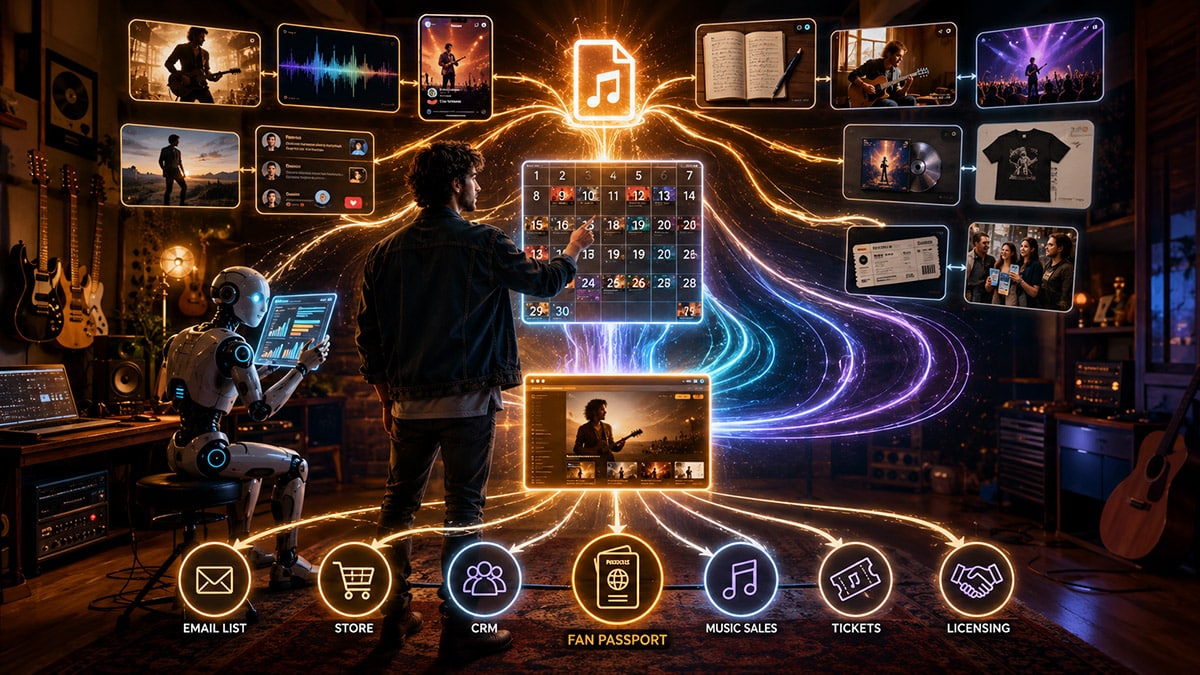
Making a Scene Presents – How AI Can Turn One Song Into a 30-Day Marketing Plan
Listen To the Podcast Discussion
Your Song Is More Than One Release-Day Post
Independent artists are often told that they need more content.
More videos. More posts. More stories. More emails. More reels. More reasons to dance in front of a phone while pointing at words floating over their heads.
The pressure never stops.
The problem is not that artists have nothing to say. The problem is that most artists do not have a system for turning what they have already created into a steady flow of useful stories, fan conversations, and income opportunities.
A song may take months to write, record, mix, master, and release. Then the artist posts the cover art, drops a streaming link, asks everyone to listen, and moves on three days later because the algorithm has already developed the attention span of a caffeinated squirrel.
That is a terrible return on the time, money, and emotion that went into the music.
One song can support a full month of marketing without the artist repeating the same sales pitch thirty times. The song contains lyrics, emotions, production choices, personal stories, visual ideas, fan questions, live-performance moments, merchandise ideas, video clips, and reasons for people to join the artist’s journey.
Artificial intelligence can help uncover those pieces. It can organize them, rewrite them for different platforms, create variations, suggest visuals, draft emails, outline reels, and build a working calendar.
But AI should not become the artist.
The artist supplies the truth, personality, music, feelings, and point of view. AI helps turn that raw material into a usable plan. Think of it as a fast assistant who never gets tired, but occasionally says something ridiculous with complete confidence. You still need to be the boss.
Most important, the goal of this campaign is not simply to create thirty days of social media activity. Social media should be the doorway. The artist’s own website, email list, store, fan community, and permission-based fan system should be the destination.
A like is nice. A direct relationship is better.
A view may disappear into a platform report. An email signup, direct purchase, ticket buyer, Fan Passport follow, or membership can become part of the artist’s real business.
That is how one song starts doing more than collecting streams. It begins building the music industry middle class.
Stop Treating Social Media Like Your Headquarters
Instagram, TikTok, Facebook, YouTube, Threads, and other platforms can help people discover music. They can introduce an artist to listeners who may never have heard the song otherwise.
That makes them useful.
It does not make them home.
The artist does not control the algorithm, the account rules, the advertising prices, the reach, or the amount of fan information a platform chooses to share. A page with thousands of followers can still struggle to reach those followers when a release, ticket, or merchandise offer goes live.
This does not mean artists should leave social media. It means they should stop sending fans in circles inside social media.
Every useful post should offer a path toward something the artist controls. That path might lead to the artist’s website, email signup, direct store, show page, membership, Fan Passport, Bandcamp page, or a release landing page that brings several choices together.
A social post should not end with, “Please make the algorithm happy.”
It should lead toward, “Come into my world.”
The basic fan path is simple. A person discovers a clip. The clip creates curiosity. The person follows a link. The link leads to an artist-controlled page. That page gives the person a reason to listen, join, buy, attend, reply, or participate. The artist then has permission to continue the relationship.
That last part matters. Permission-based communication is not just a legal checkbox. It is a sign of respect. Fans should knowingly choose to join an email list or share information, and commercial email must provide a working way to opt out. The Federal Trade Commission’s CAN-SPAM guidance explains that commercial senders must honor opt-out requests and cannot create needless barriers for people who want to unsubscribe. https://www.ftc.gov/business-guidance/resources/can-spam-act-compliance-guide-business
Owning the relationship does not mean trapping the fan inside a different machine. It means earning the right to communicate directly.
Build the Destination Before You Build the Traffic
Before asking AI to create thirty days of marketing, decide where all that attention will go.
An artist-owned website is usually the strongest center because it can connect music, email, shows, merchandise, memberships, press materials, direct offers, and fan activity under one brand and domain.
Artists can build that home with WordPress at https://wordpress.org and add a store using WooCommerce at https://woocommerce.com. WooCommerce supports online products and includes order-related emails that can be edited to match the artist’s brand.
Bandzoogle at https://bandzoogle.com is built specifically for musicians. Its official tools include artist websites, mailing lists, direct music sales, merchandise, tickets, subscriptions, electronic press kits, and commission-free selling through the artist’s site, although normal payment processing costs can still apply.
Shopify at https://www.shopify.com can work well for artists with a larger merchandise operation, several products, or more advanced store needs. Bandcamp at https://bandcamp.com/artists can provide another direct-to-fan sales layer. Bandcamp gives artists access to sales history and tools for communicating with supporters through Bandcamp and email.
For email, artists can consider Mailchimp at https://mailchimp.com or Kit at https://kit.com. Mailchimp offers signup forms, campaign tools, and landing pages that can collect email addresses or direct visitors toward an offer. Kit provides forms, landing pages, email broadcasts, automation, subscriber organization, and creator commerce features.
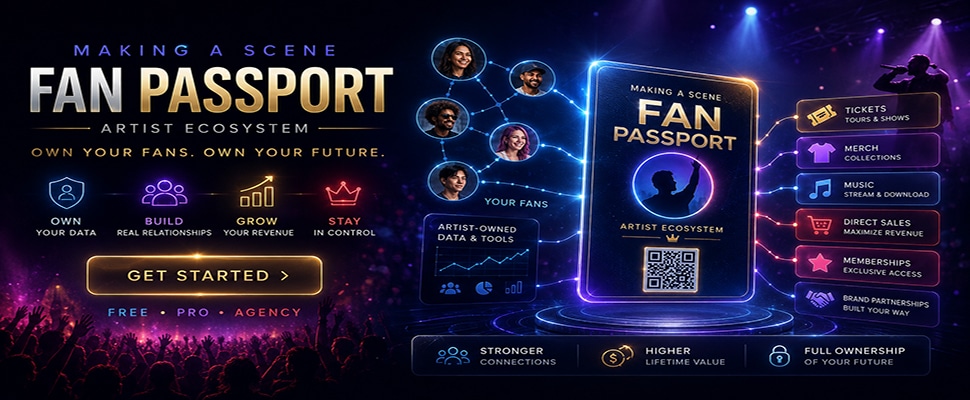
The Making a Scene Artist Fan Passport system at https://www.masfanpassport.com (coming soon) is another option within this artist-owned stack. It is designed to connect fan follows, show check-ins, QR codes, passport stamps, rewards, direct updates, and permission-based fan relationships. Instead of allowing a concert, merch purchase, or release interaction to disappear after the moment ends, the artist can give the fan a way to remain part of the journey.
The fan-facing MAS Fan Passport app is available for Apple devices through https://apps.apple.com/app/mas-fan-passport/id6775512690. The Apple listing describes fan check-ins, stamps, rewards, QR engagement, artist updates, show activity, and tools intended to help independent artists build stronger direct relationships.
The published Android link is https://play.google.com/store/apps/details?id=org.makingascene.fanpassport. Making a Scene’s Artist Fan Passport overview directs Android users to that Google Play address and explains the system’s artist-owned, permission-based approach.
The artist does not need every tool mentioned in this article. That would replace one problem with seventeen monthly subscriptions and a nervous twitch.
The goal is to choose a workable center. The artist needs a release page, a way to collect permission-based fan contact information, and at least one direct support option.
Everything else can grow from there.
Create a Revenue Stack Around the Song
A release campaign should give fans more than one way to support the artist.
Not every fan wants the same thing. One person may stream the song. Another may buy a digital copy. Another may want a shirt. Another may attend a show. Another may join a monthly membership because they enjoy being close to the creative process.
This is a revenue stack.
The bottom of the stack is the easiest action. Listen to the song. Watch the video. Share the link. These actions create discovery, but they usually produce limited income on their own.
The next layer is connection. Join the email list. Follow the artist through Fan Passport. Reply to a question. Download a free lyric sheet. Enter a giveaway. Collect a show or release stamp. These actions help turn an unknown viewer into a recognized fan.
The next layer is a small direct purchase. The artist might sell a high-quality download, digital lyric booklet, alternate mix, signed download card, live version, or low-cost supporter package.
Above that might be physical merchandise, vinyl, CDs, shirts, posters, lyric prints, handwritten lyric sheets, limited bundles, or show tickets.
The deeper layer may include memberships, private streams, listening sessions, VIP experiences, house concerts, custom recordings, supporter credits, or access to an ongoing fan community.
Patreon at https://www.patreon.com supports memberships and one-time digital product sales. Ko-fi at https://ko-fi.com supports tips, memberships, a shop, and other creator offers. Both can provide useful revenue options, but artists should review current platform fees, payment processing costs, and export options before choosing a home for their supporters.
A song may also have long-term value through publishing and licensing. An artist who controls the needed rights can prepare instrumental versions, clean versions, accurate metadata, ownership details, split information, and clearance contacts for possible licensing opportunities. DISCO at https://www.disco.ac is one tool used to organize and share music for professional purposes. Its guidance stresses the importance of rights ownership and clearance contact information when preparing music for sync pitching.
The point is not to put seven buy buttons under every reel.
The point is to give different fans a natural next step.
Give AI a Song Source Packet
AI produces better marketing when it receives better information.
Do not begin with, “Make thirty posts about my new song.”
That is how an artist ends up with a month of empty lines such as, “Music is the language of the soul. Stream my new single now.” The internet already has enough captions that sound like they were written on a scented candle.
Instead, create a song source packet.
The packet should contain the exact song title, artist name, release date, genre, mood, full lyrics, short biography, song credits, recording details, cover image, approved photos, available video clips, and every true story the artist is willing to tell.
Include why the song was written. Describe the event, feeling, question, person, or idea that started it. Explain whether the song changed during recording. Mention any lyric that carries special meaning. Add a few production details, such as an unusual guitar sound, a vocal recorded in one take, a drum part that changed the arrangement, or a background sound listeners may not notice at first.
Include the business information too. Add the artist’s release-page URL, store URL, email signup, show dates, available merchandise, membership, Fan Passport page, direct-sale link, and support options.
Then explain the artist’s voice. Is it funny, direct, thoughtful, rebellious, warm, strange, serious, or playful? Give AI three or four examples of past captions or emails that sound right.
Tools such as ChatGPT at https://chatgpt.com, Claude at https://claude.ai, and Gemini at https://gemini.google.com can help turn this source packet into campaign material. ChatGPT can assist with writing and image creation, while Claude Projects can use uploaded background material such as style guides, notes, and past writing to provide more grounded output.
Do not give AI permission to invent missing facts.
Tell it to mark missing information, avoid fake quotes, avoid made-up fan reactions, and use only the personal stories provided by the artist. Read every output before publishing. AI can organize the truth. It should not manufacture the artist’s life story because it needs a stronger opening sentence.
Unreleased masters, private fan information, contracts, and sensitive business data also deserve care. Before uploading them to any outside service, review that service’s current terms, data controls, and privacy settings.
The Master Prompt That Builds the Campaign
Once the source packet is ready, the artist can give the AI tool a clear job.
A useful prompt might say: “Act as a marketing assistant for an independent musician. Using only the facts, lyrics, links, offers, photos, and stories in the source packet I provide, create a 30-day campaign around this song. Do not invent facts, quotes, reviews, fan comments, credits, or personal stories. The campaign must include social posts, short video ideas, emails, lyric graphics, behind-the-song stories, fan questions, show promotion, and direct support offers. Every social post must point toward an artist-controlled destination such as my website, email list, store, direct sales page, membership, or Fan Passport. For each day, give me the main story, recommended content format, opening hook, visual idea, call to action, owned destination, possible revenue layer, and any asset I need to create. Keep my voice human and conversational. Do not make every post a sales pitch. Build a journey that moves fans from discovery to connection, participation, and support.”
The first plan may not be perfect. That is fine.
Ask AI to revise anything that sounds generic. Tell it which ideas feel natural and which ones make you sound like a motivational speaker who was trapped overnight inside LinkedIn.
The best use of AI is often conversation. Give feedback. Add missing facts. Ask for three different hooks. Ask for shorter versions. Ask it to make a caption warmer, funnier, clearer, or less sales-heavy.
The artist remains the editor.
Making the Visual and Video Assets
The campaign will need more than captions.
Canva at https://www.canva.com can create social graphics, lyric images, posters, short videos, release announcements, and other campaign pieces. Canva also offers AI-assisted social post creation and tools for resizing or adapting designs. Its Content Planner can schedule posts from a built-in calendar on supported plans.
Adobe Express at https://www.adobe.com/express can create social posts, flyers, images, videos, and reels using templates and generative features. It is useful when the artist wants several matching pieces built around the same cover art, colors, fonts, and release look.
CapCut at https://www.capcut.com can help edit vertical clips, add automatic captions, resize footage, and turn longer videos into short pieces. Descript at https://www.descript.com allows creators to edit audio and video through a transcript, add captions, and create shorter clips from longer recordings.
The artist does not need thirty full video shoots. One honest recording session can produce many assets.
Film the full song. Film a chorus. Film one verse. Record a spoken story about the lyric. Capture the guitar, keyboard, beat, or vocal by itself. Film the artist holding the lyric sheet. Show the session inside the home studio. Record a few seconds of silence before the performance begins. Capture the laugh after a mistake.
These small pieces make the campaign feel human.
AI can help identify good moments, write opening text, create captions, resize clips, and generate versions. It cannot replace the feeling in the artist’s face when the song means something.
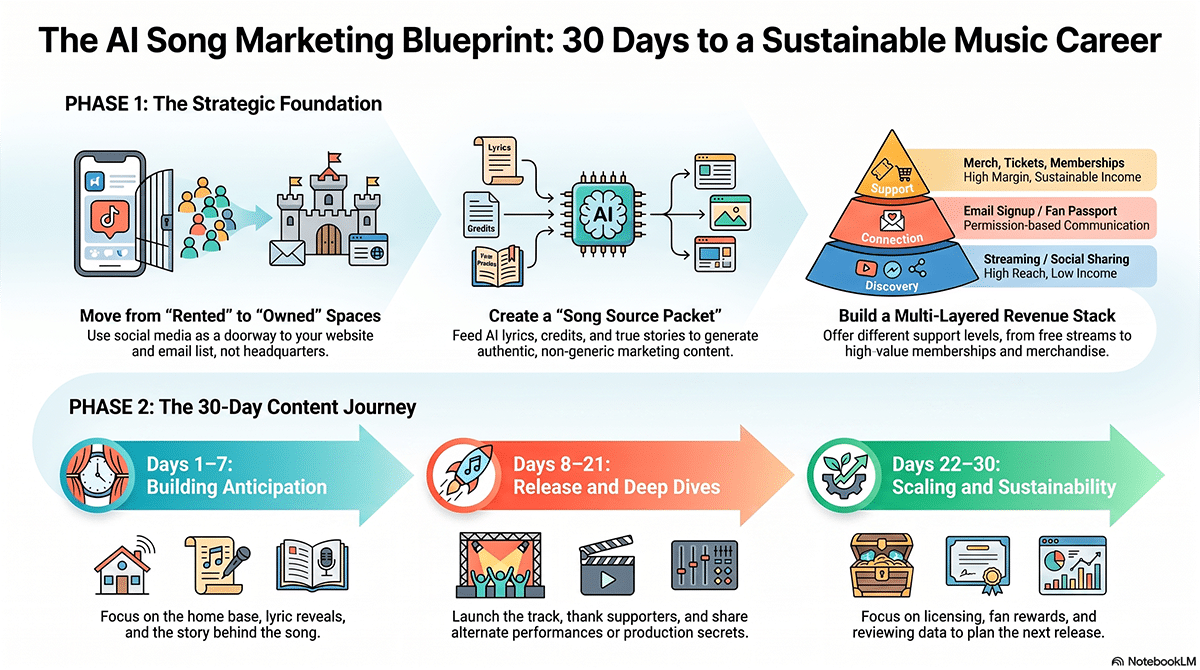
The 30-Day Campaign
This example begins seven days before the release and continues for twenty-three days after it. An artist whose song is already available can begin with Release Day and return to the earlier ideas as “the story behind the release.”
Day 1: Build the Home Base
Day 1 is not a social post. It is the day the artist builds the release destination.
Create one page that contains the song title, cover art, release date, short story, listening or buying options, email signup, Fan Passport path, store offer, and upcoming show information.
Do not send people to a confusing forest of thirty unrelated buttons. Give them a clear first action and a few useful next choices.
The main goal on Day 1 is to make sure every future post has somewhere valuable to go.
Day 2: Reveal the Cover and Open the Story
Share the cover image and explain what it represents.
Do not simply write, “New single coming soon.” Tell the fan what they are looking at. Explain the image, color, place, object, person, or emotion behind it.
Ask fans what feeling they get from the cover before hearing the song. Send them to the release page where they can join the list for the song, early access, a private note, or a release-day reminder.
The first doorway is curiosity. The owned connection is the signup.
Day 3: Introduce the Strongest Lyric
Choose one lyric that can stand on its own.
Use Canva, Adobe Express, or another design tool to place the lyric over a simple version of the cover artwork. In the caption, explain why that line matters without explaining the entire song.
Invite people to join the artist’s email list or Fan Passport to receive the full lyric sheet, a handwritten lyric image, or the story behind the line.
The lyric graphic creates attention. The bonus lyric material creates a reason to enter the artist’s ecosystem.
Day 4: Tell the Moment That Started the Song
Record a short vertical video explaining where the song began.
The strongest version is often specific. “I wrote this after a difficult night” is less powerful than describing the room, phone call, drive, argument, memory, or small moment that made the artist pick up an instrument.
AI can help turn a longer explanation into a clear thirty-second script. The artist should still speak in their own words.
Close with a simple invitation to hear the full story on the release page or in the artist’s email.
Day 5: Send the First Email
The first email should not look like a billboard.
Tell subscribers why the song exists, what it means, and what they will receive during the release journey. Include the cover and one clear link.
Give readers a reason to reply. Ask whether they have ever experienced the feeling at the center of the song.
Replies create real conversation. They may also provide themes for future posts, as long as the artist never shares a private response without permission.
Day 6: Ask the Fan Question
Turn the song’s central theme into a question.
A song about leaving might ask, “What finally made you walk away?” A song about home might ask, “What place still feels like home no matter how long you have been gone?” A song about hope might ask, “What kept you moving during a hard year?”
The question should not feel like an engagement trick. It should open a real conversation.
Invite fans to answer publicly, reply privately, or join the artist’s list to take part in a longer release discussion.
Day 7: Show the Song in Progress
Share a rehearsal clip, voice memo, early demo, handwritten lyric page, session photograph, or brief studio video.
Explain what changed between that version and the finished release.
The call to action can lead to an early listening event, a Fan Passport release stamp, a subscriber-only preview, or a reminder signup.
This gives fans the feeling that they saw the song before the curtain opened.
Day 8: Release Day
Release Day needs one strong central message.
Do not bury the song under six paragraphs of marketing language. Tell people the song is available, explain why it matters, and give them one main link.
That release page should offer listening choices while also presenting the artist’s direct path. A fan might stream the song, buy a download, order a bundle, join the list, follow through Fan Passport, or purchase a ticket.
The post creates the doorway. The release page creates choices. The direct options create revenue and fan memory.
Day 9: Thank the People Who Showed Up
Most release campaigns move too quickly from “Please listen” to “Here is the next post.”
Stop and say thank you.
Share a short video or personal note. Mention the messages, purchases, shares, or conversations that mattered without inventing numbers or exposing private information.
Invite fans who listened to tell you where they were when they heard the song. This can create stories for later in the campaign.
Gratitude is not filler. It is part of the relationship.
Day 10: Explain One Lyric
Choose a line that has not been discussed yet.
Create a lyric graphic, but let the caption carry the deeper meaning. Explain whether the line was easy to write, hard to admit, or almost removed from the song.
Link to the full lyrics on the artist’s website. That page can include a direct download, merch offer, email signup, or lyric-print purchase.
One lyric becomes a story. The story becomes a reason to visit the artist’s home base.
Day 11: Create the First Reel From the Hook
Use the strongest ten to thirty seconds of the song to build a reel or short.
The visual could be a performance, studio clip, travel footage, animation, fan-created video, or a simple shot that fits the mood.
Add readable captions or on-screen lyrics, but do not bury the entire screen under text.
The call to action should match the clip. A performance clip can lead to tickets. A lyric clip can lead to the song page. A studio clip can lead to a supporter membership or behind-the-scenes email.
Day 12: Give Credit to the People Behind the Record
Tell the story of the musicians, producer, engineer, mixer, mastering engineer, photographer, designer, video creator, or anyone else who helped bring the release to life.
Tag people only when appropriate and spell every name correctly.
This is not only polite. It widens the story beyond one person. Collaborators may share the post, introduce the release to their own audience, and become part of a larger scene around the music.
The destination should still be the full credit page or release page on the artist’s site.
Day 13: Send the Second Email
The second email can take listeners deeper.
Share a lyric explanation, production detail, studio photograph, or short clip that subscribers have not seen elsewhere. Include a direct support option, but keep it connected to the story.
For example, a song built around handwritten lyrics could lead to a signed lyric print. A studio-heavy track could lead to a supporter package containing the demo and final version. A live song could lead to a ticket.
The offer should feel like the next chapter, not a toll booth.
Day 14: Perform a Different Version
Record an acoustic, piano, solo, stripped-down, rehearsal-room, or live version.
A different arrangement lets fans hear the writing underneath the production. It also creates a fresh piece of music content without pretending the artist has released another new song.
The full alternate performance can live on the artist’s website, membership, direct store, or subscriber page. A short section can be used as the social doorway.
Day 15: Invite Fans Into a Merchandise Decision
Show two possible shirt designs, lyric prints, poster treatments, button ideas, stickers, or bundle concepts.
Ask fans which one they would actually want.
This creates participation before the product is manufactured. It may help the artist avoid buying a box of shirts that spends the next five years touring the inside of a closet.
Send voters to the artist’s website or email form, where interested fans can join a waiting list. That waiting list is far more useful than a poll result trapped inside a platform.
Day 16: Connect the Song to a Show
Create a flyer or short video connecting the release to an upcoming performance.
The message should explain why this show matters. Maybe it is the first live performance of the song. Maybe the artist will tell the full story. Maybe attendees can collect a Fan Passport stamp, receive a special download, buy a limited item, or hear an unreleased follow-up.
Artists without an upcoming show can promote an online listening room, livestream, rehearsal broadcast, or subscriber gathering.
The content points toward a ticket or registration page the artist controls.
Day 17: Create a Fan Reward
Give fans a reason to do more than click.
A reward might be a release stamp, downloadable lyric card, private performance, discount, bonus track, digital badge, early ticket access, or entry into a listening event.
The MAS Fan Passport system can support QR check-ins, stamps, rewards, artist follows, and fan journeys that continue beyond one post or show.
The reward does not need to be expensive. Recognition and access often mean more than another random giveaway.
Day 18: Break Down One Production Choice
Choose one sound from the record.
Explain the vocal chain, guitar tone, drum sound, sample, arrangement change, harmony, keyboard texture, or mixing decision in plain language.
This post can reach musicians, producers, and curious fans without turning into a technical lecture.
Offer a longer breakdown, alternate mix, session video, or home-studio note through the artist’s email list or supporter area.
The recording process becomes content. The deeper material becomes a connection or revenue layer.
Day 19: Put the Song Into a New Visual World
Use the song under footage that changes how it feels.
Try nighttime driving, an empty venue, backstage preparation, a neighborhood connected to the lyrics, a dance, a quiet room, or images from the recording process.
AI image tools can help create backgrounds or concepts, but the artist should avoid pretending generated scenes are real documentary moments.
Use imagination honestly. “A visual dream inspired by the song” is better than fooling fans into believing something happened when it did not.
Day 20: Send the Direct Support Email
By Day 20, the fan has heard the story, seen the lyrics, watched a performance, and met the people behind the track.
Now the artist can make a clearer offer.
The email might present a song bundle, shirt, signed lyric print, ticket, private stream, membership, tip page, or Fan Passport reward.
Explain where the money goes. It may help fund the next recording, tour travel, video, vinyl order, rehearsal space, or musician payments.
Fans are more likely to understand the offer when they can see the journey it supports.
Day 21: Feature the Fan Side of the Story
Share a fan’s reaction, cover version, artwork, video, photograph, or story only after receiving clear permission.
The artist can also create a collage of public posts or invite people to submit their own interpretation through the artist’s website.
This turns the release from a broadcast into a community event.
The fan is no longer being treated like a target at the end of a marketing funnel. The fan becomes part of the song’s life.
Day 22: Prepare the Song for Licensing
Use one post to show how the song might live inside a scene.
Pair an instrumental section with a short visual idea. Describe the mood in simple terms. Is it tense, hopeful, romantic, restless, joyful, dark, or reflective?
Behind the scenes, make sure the song’s ownership, splits, writer information, publisher information, master ownership, contact details, clean version, and instrumental version are organized before pitching.
AI can help draft descriptions and organize metadata. It cannot clear rights that are not actually controlled.
Day 23: Build a City Connection
Ask listeners where they are hearing the song.
Instead of collecting answers only in comments, direct fans to a show-interest form, email signup, Fan Passport follow, or website page where they can identify their city with permission.
Location information can help an artist plan shows, route a tour, target local emails, or decide where a small event may work.
A map of real supporters is more useful than a cloud of mystery followers.
Day 24: Answer Fan Questions
Collect the best questions from the campaign and record short answers.
One question might become one reel. Another might become an email. A deeper answer might become a website article or podcast segment.
AI can help group similar questions and turn a long answer into several shorter versions.
Do not let AI answer personal questions on the artist’s behalf. It can shape the response. The meaning must still come from the artist.
Day 25: Create Honest Urgency
If a limited offer is closing, explain that clearly.
The deadline might involve a small merchandise run, signed item, early ticket price, private stream, supporter credit, or release bundle.
Do not create fake scarcity. If an item is not limited, do not pretend that only three remain because some marketing guru said panic is good for conversion.
Trust has more long-term value than one rushed sale.
Day 26: Rework the Best Idea
Look at the campaign so far and identify what produced the strongest real response.
Do not judge only by views. Look at website visits, email signups, replies, Fan Passport follows, direct sales, ticket activity, and meaningful comments.
Take the strongest story and create a new version. Turn a written post into a reel. Turn a reel into an email. Turn a fan question into a lyric graphic. Turn a long performance into three short clips.
AI is especially useful here because it can repurpose a proven idea instead of forcing the artist to invent something new.
Day 27: Show What Fan Support Made Possible
Explain what happened because people paid attention and participated.
Maybe fans funded a new video. Maybe a show sold more tickets. Maybe the artist discovered interest in a new city. Maybe a merch design was chosen. Maybe the email list grew. Maybe several people shared stories connected to the song.
Use real results. Small numbers are not embarrassing. Twenty real supporters are more valuable than twenty thousand empty impressions.
This is how the artist shows fans that their support has an effect.
Day 28: Send the Campaign Recap Email
The fourth email can bring the month together.
Share the best performance, strongest fan moment, most meaningful lyric, and one clear support option. Thank readers for being part of the campaign.
Then tell them what happens next.
A fan relationship should not end because the thirty-day calendar reached its final page.
Day 29: Hold a Listening Room
Host a live online or in-person session where the artist plays the song, tells the story, answers questions, and previews what may come next.
The event can be free, ticketed, subscriber-only, member-only, or connected to a Fan Passport reward.
Record the session with permission. It can later become short clips, an archive for members, a live release, or material for the next campaign.
One event may create both income and future content.
Day 30: Close the Loop
Day 30 is the day to review the business, not just the feed.
Count how many people joined the email list. Look at direct purchases, tickets, Fan Passport activity, memberships, replies, website visits, city interest, and repeat supporters.
Compare those results with the posts and emails that produced them.
Then make a decision. Which story should continue? Which offer worked? Which city responded? Which fans deserve a thank-you? Which asset can support the next song?
The campaign does not end with “Thanks for streaming.”
It ends with a clearer understanding of the artist’s audience and a stronger path into the next release.
Scheduling Without Losing the Human Voice
Creating thirty days of material does not mean the artist must live inside a phone.
Buffer at https://buffer.com can help organize, repurpose, and schedule social posts, and it includes AI-assisted tools for drafting and adapting content. Later at https://later.com supports social scheduling, media organization, analytics, and link-in-bio pages. A link-in-bio service can be useful as a bridge, but it should still direct fans toward the artist’s website, store, list, or fan system rather than becoming another rented destination.
Schedule the basic campaign in advance, but leave space for real life.
A fan may ask a great question. A show may produce an unexpected video. A lyric may connect to something happening in the world. A collaborator may share a new story. Those moments should not be ignored because the calendar says today is “Graphic Number Four.”
Automation should protect the artist’s time. It should not make the artist feel automated.
Measure What Builds a Career
Social media platforms will happily provide mountains of numbers.
Views, impressions, reach, watch time, likes, saves, shares, profile visits, and follower changes can help show which content caught attention.
But attention is only the first part of the story.
The artist should also measure website visits, email signups, Fan Passport follows, QR scans, direct purchases, average order value, tickets sold, membership activity, replies, city information, and repeat support.
These numbers are closer to the business.
A reel with fewer views may produce more email signups. A small email list may sell more tickets than a large social following. A behind-the-song story may create more direct purchases than a polished video. A show QR code may identify fans who want to see the artist again.
Do not let the platform decide what success means.
Success is not simply how many people looked. It is how many people moved closer.
The Artist Still Has to Be the Artist
AI can make one song easier to market.
It can take a transcript and create captions. It can turn an email into shorter posts. It can suggest fan questions, visual ideas, video hooks, alternate headlines, flyer copy, merchandise descriptions, and follow-up messages.
It can reduce the blank-page problem.
But AI cannot decide what the artist truly means.
It was not in the room when the lyric was written. It did not lose the person, drive through the night, play the empty club, argue with the band, record the final vocal, or stand at the merch table speaking with the fan who needed that song.
The human experience is the valuable part.
Artists should use AI to increase the value of their work, not remove themselves from it.
That means keeping the strange details. Keeping the humor. Keeping the rough edges. Keeping the local references. Keeping the sentence that may not be perfect but sounds exactly like the person who wrote the song.
The old gatekeepers wanted artists to fit a market.
The new machines may tempt artists to fit a template.
Independent artists should refuse both.
One Song Can Build More Than Attention
A strong thirty-day campaign does not squeeze a song dry.
It lets people enter the song from different directions.
One fan may connect through a lyric. Another may care about the recording process. Another may discover the artist through a live clip. Another may answer a question. Another may buy a shirt. Another may attend a show. Another may collect a Fan Passport stamp and remain part of the journey for years.
AI makes it easier to organize all those doors.
The artist still decides where they lead.
When every door points back toward an artist-owned website, permission-based email list, store, direct fan system, membership, or live experience, marketing stops being an endless performance for the algorithm.
It becomes infrastructure.
The song creates attention. The story creates connection. The owned ecosystem creates memory. The revenue stack gives fans ways to support the work. The artist uses that support to make the next record, play the next show, hire the next musician, print the next shirt, and continue building.
That is how one song becomes thirty days of meaningful marketing.
More important, it is how thirty days of marketing can become a sustainable career.
 |  Spotify |  Deezer |  Breaker |
 Pocket Cast |  Radio Public |  Stitcher |  TuneIn |
 IHeart Radio |  Mixcloud |  PlayerFM |  Amazon |
 Jiosaavn |  Gaana |  Vurbl |  Audius |
 Reason.Fm | |||
Find our Podcasts on these outlets
Subscribe to Our Newsletter
Discover more from Making A Scene!
Subscribe to get the latest posts sent to your email.


