Fan Loyalty Is Becoming The New Currency of the Music Industry




Listen to the Podcast Discussion
Making a Scene Presents – Fan Loyalty Is Becoming The New Currency of the Music Industry
The Future of the Music Business Will Not Be Built on Likes
For years, independent artists were told to chase attention as if attention alone was a business plan. Get more followers, get more likes, get more views, get more streams, post more videos, feed the machine, stay visible, and hope the algorithm decides to smile on you for a few minutes. That became the daily routine for thousands of artists who were already writing songs, recording music, booking shows, selling merch, and trying to keep their creative lives alive.
The problem is that attention by itself does not pay the rent. A like does not fill the gas tank. A follow does not guarantee a ticket sale. A stream does not always mean someone knows your name, cares about your story, or will come back when you release the next song. A viral clip can feel like a breakthrough, but if those viewers do not move into a relationship the artist can actually reach, it often fades into the same black hole as every other passing trend.
This is the hard truth that too many people in the modern music business do not want to say out loud. Most platform engagement is passive. It looks exciting because the numbers move, and it feels good because the dashboard lights up, but a lot of that activity has very little business value unless it turns into something the artist owns. If the artist cannot reach the fan again, invite that fan to a show, thank that fan after a purchase, offer that fan something special, or learn what that fan actually cares about, then the artist is still standing outside the real economy of their own music.
That is why the next music economy will not be built around empty attention. It will be built around loyalty. Fan loyalty is becoming a currency because it is one of the few things in the modern music business that can still become real income, real community, and real leverage for the artist. Not fake internet money, not crypto hype, not another overblown tech promise, but loyalty that can be tracked with permission, rewarded with meaning, and turned into direct support.
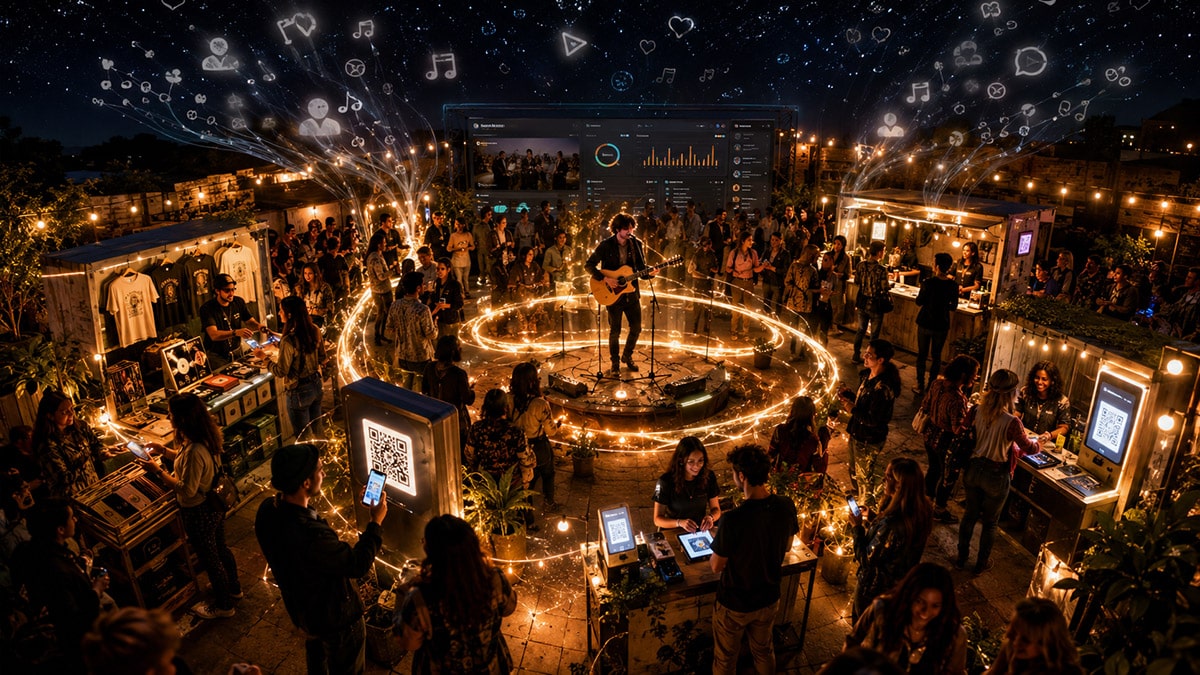
When a fan comes to a show, that matters. When a fan scans a QR code at the merch table, that matters. When a fan joins an email list or agrees to receive show alerts, that matters. When a fan buys vinyl, downloads, merch, tickets, memberships, or VIP access, that matters. When a fan keeps coming back, telling friends, and choosing to support the artist directly, that is not just a nice feeling. That is an asset.
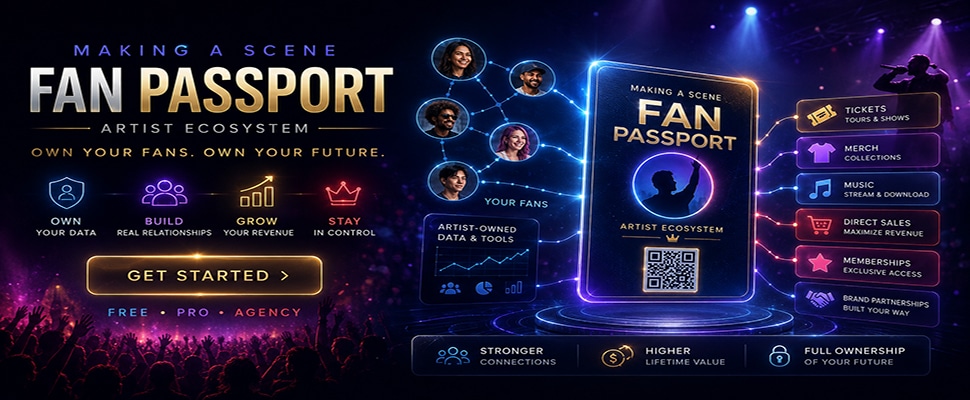
This is the thinking behind the Making a Scene Artist Ecosystem and the Fan Passport. We are close to release, and it is time to start saying the quiet part out loud. Independent artists need a system that moves fans from rented platform spaces into an artist-owned world where loyalty can be recognized, rewarded, and converted into real support. The future does not belong to the artist with the most random views. It belongs to the artist who knows who their real fans are and has a way to serve them directly.
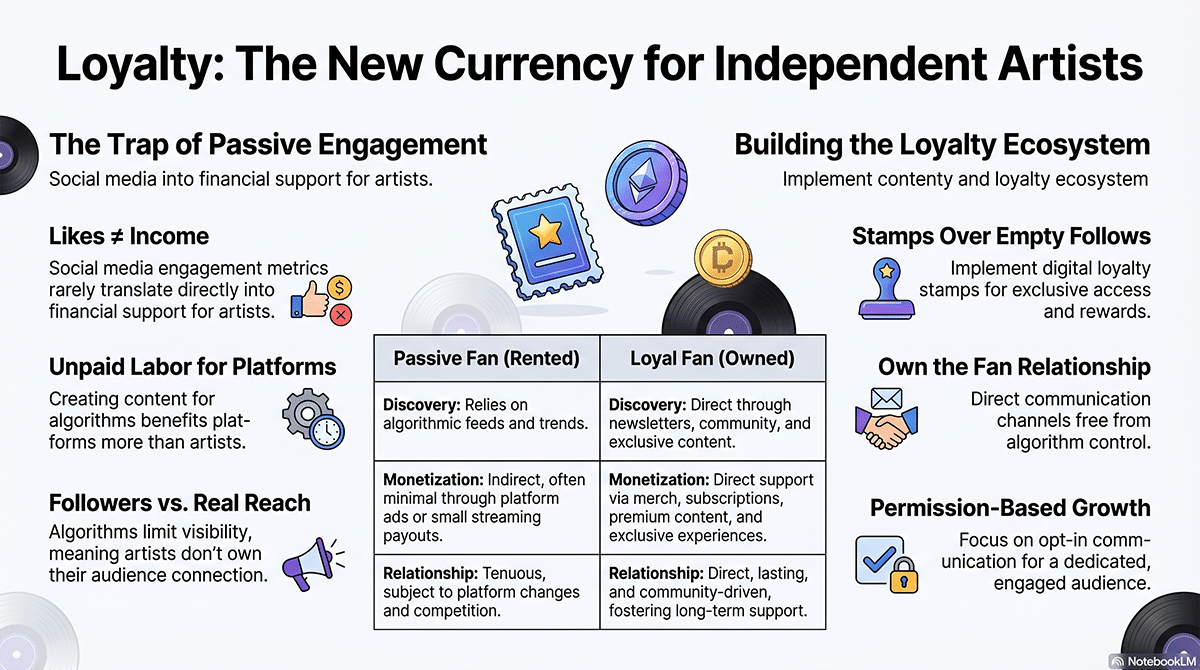
The Trap of Passive Engagement
The modern independent artist is doing more unpaid labor than ever before. They are expected to write the songs, record the music, edit the videos, post the reels, manage the comments, learn the trends, update the website, design the merch, book the shows, pitch the playlists, talk to the fans, and somehow keep a creative soul intact while living inside an endless content machine. The platforms call it opportunity, but from the artist’s side it often feels like running a whole media company for free.
Spotify for Artists at https://artists.spotify.com can be useful. TikTok for Artists at https://artists.tiktok.com can help artists understand how music moves on TikTok. Instagram for Creators at https://creators.instagram.com can teach creators how to use Instagram more effectively. YouTube creator tools and channel memberships at https://www.youtube.com/intl/en_us/creators/channel-memberships/ can help artists build audience and income on YouTube. None of these tools are bad by themselves, and smart artists should use whatever helps them reach people.
The problem comes when artists confuse those platforms with ownership. A Spotify follower is not the same as a fan relationship the artist controls. An Instagram like is not the same as consent. A TikTok view is not the same as a customer. A YouTube subscriber is not the same as someone who will buy a ticket, join a membership, or drive across town to hear the artist play live. These platforms can be doorways, but they should never be mistaken for home.
Platforms are built to keep users inside the platform. That is their business. They make money when people keep scrolling, watching, listening, reacting, and coming back for more. The artist supplies the songs, the images, the stories, the personality, the pain, the hope, and the entertainment that keeps those systems alive, but the artist often gets only a tiny piece of the value they create.
This is the trap of passive engagement. It makes the artist feel like they are building something because the numbers are visible, but the relationship is usually owned by somebody else. One algorithm change, one account problem, one policy shift, one playlist removal, or one trend moving on can wipe out months of momentum. That is not a stable business foundation. That is rented land with a flashing sign that says “exposure.”
The issue is not whether artists should use Spotify, TikTok, Instagram, YouTube, Facebook, Bandcamp, or any other platform. Of course they should use them, because discovery matters and artists need to go where people already are. The issue is whether the artist has a plan for what happens after discovery. If a fan hears the song, sees the clip, likes the post, or follows the profile, where does that fan go next?
If the answer is “nowhere,” the artist is losing the game. If the answer is “back into the platform feed,” the artist is still working for the machine. The goal should be to move that fan into the artist’s own ecosystem, where the relationship can grow beyond passive attention and become something useful, respectful, and real.
Loyalty Is the Metric That Actually Matters
A real fan relationship has weight because it carries action. It is not just a number on a screen or a vague impression in an analytics dashboard. It tells the artist that someone did more than drift past the music. That person took a step closer, and every step closer has meaning when the artist knows how to recognize it.
That step might be small at first. Maybe the fan clicked from a social post to the artist’s website. Maybe they joined the email list. Maybe they scanned a QR code after a show. Maybe they saved a concert date. Maybe they bought a download on Bandcamp at https://bandcamp.com/artists. Maybe they supported the artist on Patreon at https://www.patreon.com, Ko-fi at https://ko-fi.com, or Substack at https://substack.com. Maybe they bought merch from an artist store built with Shopify at https://www.shopify.com, Bandzoogle at https://bandzoogle.com, Square at https://squareup.com/us/en/online-store, or Bonfire at https://www.bonfire.com.
Each action tells the artist something useful. It may show that the fan likes live shows, buys merch, wants early access, prefers email, lives in a certain city, or cares enough to come back more than once. That is very different from a passive follower who clicked a button and disappeared. A loyal fan leaves a trail of meaningful choices, and those choices can help the artist build a better business.
The old music business measured popularity from the top down. Labels cared about sales, radio spins, press, chart positions, and later streaming numbers. The new independent music business has to measure loyalty from the ground up. The artist needs to know who can be reached, who can be invited, who can be thanked, who can be rewarded, and who is likely to take action when the next offer appears.
This is where the scoreboard has to change. Instead of asking only how many followers an artist has, we should ask how many fans the artist can actually reach without permission from a platform. Instead of asking how many streams a song received, we should ask how many listeners moved into an owned relationship. Instead of asking how many views a clip earned, we should ask how many fans bought tickets, joined the list, collected a stamp, bought a shirt, or came back for more.
That is the real fanbase. It is not the total number of people who drifted past the artist’s content while scrolling half-asleep. It is not the number of accounts that followed three years ago and never engaged again. It is the group of people who can be reached, served, invited, rewarded, and moved to action. That is why loyalty is becoming currency, because loyalty is the first metric that can honestly connect attention to income.
Passport Stamps Are Better Than Empty Follows
When people hear words like tokens, badges, or digital rewards, they often think of hype. They think of crypto schemes, fake scarcity, confusing wallets, and people trying to turn music into a tech casino. That is not what this conversation is about, and it is not what independent artists need. The better model is much simpler and much more human. Think passport stamps.
A passport stamp is easy to understand because it marks participation. You went somewhere, you took part in something, and you have a mark that says you were there. That idea fits music perfectly because music has always been tied to moments. The show you attended, the record you bought, the signing you showed up for, the small venue where you first discovered a band, and the night you brought your friends all matter because they are part of the story between the artist and the fan.
A Fan Passport-style stamp can turn those moments into something visible. A fan comes to a show and scans a QR code, so they earn a show stamp. A fan buys merch, so they earn a merch stamp. A fan joins the artist’s list, so they earn a new fan stamp. A fan supports a release, attends a listening party, signs up for a VIP event, or brings a friend, so they earn another mark in the relationship.
Over time, those stamps tell a story that both the artist and the fan can understand. They show that the relationship is not random. They show that the fan is not just listening from a distance but actively taking part in the artist’s world. They also give the artist a way to reward real behavior instead of chasing empty attention that may never turn into support.
This is the missing piece in the streaming age. Platforms can show that someone listened, followed, saved, viewed, or clicked, but they often do not help the artist build a full relationship across shows, merch, email, memberships, tickets, direct sales, and community. A stamp system connects the dots because it follows loyalty where it actually happens. It recognizes that the fan who shows up in person, buys something, joins the list, and returns later is worth more than a stranger who watched ten seconds of a clip and vanished.
A stamp can unlock a thank-you message, a live recording, early ticket access, a merch discount, a private listening party, a meet-and-greet, or a fan-only download. It can also unlock simple emotional value, which should not be underestimated. Fans like to feel seen, and artists need ways to say, “I noticed that you showed up.” In a world where platforms turn everyone into numbers, recognition can be powerful.
None of this needs to be complicated. The artist is not tricking the fan, and the fan is not being pulled into some fake reward economy. The fan gives attention, trust, and permission. The artist gives access, recognition, and value. That is a fair exchange, and it is the kind of exchange that can help rebuild the middle class of music from the ground up.
The Making a Scene Artist Ecosystem and Fan Passport
This is where the Making a Scene Artist Ecosystem and Fan Passport enter the picture. The goal is not to create another social network where artists fight for attention inside another feed. We do not need another place where musicians scream into the void while an algorithm decides whether their work deserves to be seen. The goal is to help artists build their own ecosystem around the fan relationship.
The artist website becomes the hub, and the Fan Passport becomes the bridge between the fan’s actions and the artist’s owned business. The fan relationship becomes the asset. That shift matters because the artist should own the connection between music, shows, merch, memberships, fan data, direct sales, and support. When all those pieces are scattered across disconnected platforms, the artist may have activity everywhere but still have no clear picture of the actual fanbase.
For too long, the artist website has been treated like a digital poster. Many artists put up a bio, a few photos, a music player, social links, and maybe a contact form, then forget about it. That might have worked when a website only needed to prove an artist was legitimate, but it is not enough now. The website has to become the command center for the artist’s business.
A real artist hub should help fans join the list, follow shows, collect stamps, claim rewards, buy merch, hear music, support releases, find tour dates, and become part of the artist’s world. It should also help the artist understand what actions are happening and which fans are moving closer. In plain English, the website should help make money, not because it squeezes fans, but because it gives fans clean and meaningful ways to support the artist directly.
The Making a Scene Artist Ecosystem is being built around this exact belief. The artist does not need more disconnected dashboards and scattered tools. The artist needs a system that connects the fan journey in a way that is practical, consent-based, and built around real income. The Fan Passport gives fans a simple way to follow artists, collect stamps, unlock rewards, and stay connected to real activity.
This is not just about software. It is about control. It is about moving from rented attention to owned relationships. It is about giving artists a way to stop depending on platforms as the final destination and start using them as doorways into something the artist controls. That is how an independent artist turns attention into action and action into income.
Consent Is the Line Between Loyalty and Exploitation
Fan data is powerful, and that means it must be handled with respect. The music business has a long history of taking value from artists and fans without being clear about who benefits. We should not rebuild that same broken model with better technology. If loyalty is going to become a currency, then consent has to be the foundation.
Data should not be stolen, scraped, hidden, guessed, or buried under confusing language. If a fan follows an artist inside the Fan Passport, joins the artist’s list, scans a QR code, signs up for a reward, or chooses to share an email, city, phone number, or preference, that exchange should be clear. The fan should understand what they are sharing and why it matters. The artist should treat that information like trust, because that is exactly what it is.
Consent is not just a legal box to check. Consent is the beginning of a stronger relationship. When a fan says, “Yes, you can contact me,” they are giving the artist something more valuable than a like. They are opening a door. If the artist abuses that door with spam, pressure, or careless messaging, the relationship weakens. If the artist uses it with care, the relationship becomes stronger.
This is why fan data should never be treated like a gimmick. A fan is not a data point. A fan is a person who chose to take a step closer. The artist’s job is to respect that choice by sending useful updates, meaningful rewards, honest invitations, and real value. If a fan shares their city, tell them when the artist is playing nearby. If a fan shares an email, send something worth opening. If a fan buys merch, thank them. If a fan collects stamps, reward them in ways that feel human.
The whole point of loyalty data is to serve fans better while helping artists earn more. That is not manipulation. That is good business built on trust. The artist learns what the fan cares about, and the fan gets a better experience. Both sides benefit, and the value of the relationship stays closer to the people who created it.
How Loyalty Changes Fan Behavior
Fans behave differently when they feel connected to something. That has always been true, long before anyone used words like platform, analytics, conversion, or fan data. Street teams understood it. Fan clubs understood it. Jam bands understood it. Punk scenes understood it. Blues societies understood it. Local venues understood it. Music has always grown through belonging, and fans have always wanted to feel like they were part of a story bigger than one song.
What has changed is that independent artists can now track and reward loyalty without needing a major label, a national fan club company, or a large marketing department. That changes the behavior because the fan has a path to follow. Instead of hearing a song and drifting away, the fan can enter the artist’s world. Instead of seeing a show poster and maybe remembering it, the fan can get a direct alert because they opted in. Instead of watching a clip and scrolling past, the fan can scan a code, collect a stamp, and unlock a reason to come back.
This is the difference between a passive fan and an active fan. A passive fan likes a post. An active fan joins the list. A passive fan watches a video. An active fan buys the shirt. A passive fan says they should check out a show someday. An active fan saves the date, buys the ticket, scans at the door, and gets a reward after the show. The difference is not only money. The difference is momentum.
When fans are rewarded for taking part, they often take part more. When they feel seen, they are more likely to come back. When they know there is a reason to scan, join, attend, buy, and share, they move from casual interest into active support. That is how a fan becomes part of the artist’s economy. They are no longer standing outside the artist’s career as a distant listener. They are helping fuel the next step.
This does not mean every fan needs to buy everything. That would be ridiculous and unfair. Some fans will only stream, some will only come to one show, some will only open the newsletter once in a while, and some will support in ways that have nothing to do with money. The artist still needs to understand the difference between a passing listener, a new fan, a repeat buyer, a show regular, a member, and a true supporter.
That understanding changes how the artist communicates. You do not talk to a first-time listener the same way you talk to someone who came to five shows. You do not offer the same reward to someone who just discovered you as you offer to someone who bought vinyl, joined the list, and brought friends to the last gig. You do not build a tour plan only from streaming numbers when your strongest buyers may be showing up in a different pattern. Loyalty data helps artists stop guessing and start building from real behavior.
How Loyalty Changes Artist Income
The old industry trained artists to think in big numbers. Millions of streams, hundreds of thousands of followers, big playlists, viral clips, major press, and giant moments became the dream. Those things can help, but they can also distract artists from the smaller, stronger numbers that actually build careers. A working artist does not need every listener to become a buyer. They need enough loyal fans to support the business.
That support can show up through tickets, merch, vinyl, CDs, downloads, memberships, house concerts, private events, crowdfunding, VIP upgrades, live recordings, lessons, workshops, licensing, publishing, and direct fan support. A stronger fan relationship makes all of these income streams easier because the artist is no longer starting from zero every time they make an offer. They are speaking to people who already care.
Imagine an artist with 50,000 followers across social platforms but no direct way to reach most of them. That number looks good in a bio, but when the artist announces a show, only a small percentage may see the post. When the artist launches merch, the post may get buried. When the artist needs support for a new record, the algorithm decides whether fans even know about it. That is not a healthy business model because the artist is depending on permission from a system that has no personal loyalty to their career.
Now imagine the same artist has 2,000 fans in an owned system. These fans gave permission to receive updates, and the artist knows basic useful information like where they live, what they bought, which shows they attended, and what rewards they claimed. The artist can email them through Mailchimp at https://mailchimp.com, sell tickets through Eventbrite at https://www.eventbrite.com, sell direct through Bandcamp, run a membership through Patreon, Ko-fi, Substack, or Memberful at https://memberful.com, sell merch through Shopify, Square, Bonfire, or Bandzoogle, and use Bandsintown for Artists at https://www.artist.bandsintown.com to help fans track shows.
That smaller owned group may be worth more than the larger platform following because the artist can actually move them. The artist can reach them, invite them, reward them, learn from them, and build offers around what they already do. That is not some fancy music-tech theory. That is basic business. A fan you can reach with permission is more valuable than a stranger who clicked a button inside a feed you do not control.
This is where income starts to change. A show can lead to a follow-up message. A merch purchase can lead to a thank-you and a future offer. A mailing list signup can lead to a welcome path. A release supporter can be invited into a membership. A repeat fan can unlock deeper access. Every one of those steps can lead to revenue, not because the artist is squeezing the fan, but because the artist is building a clear path for support.
A Fan Journey That Actually Makes Sense
Let’s imagine how this works in the real world. A fan named Lisa sees a short clip of an artist on Instagram. Maybe it is a chorus that hits her at the right time, a guitar tone that catches her ear, or a lyric that feels like it was pulled straight out of her own life. She follows the artist because the moment connects, but in the old system that might be the end of the story.
The artist gets one more follower, and Lisa disappears into the platform crowd. The algorithm may or may not show her the next post. The artist feels like the audience is growing, but they do not really know Lisa. They cannot email her, they do not know where she lives, and they do not know whether she would buy a ticket, join a membership, or become a real supporter.
Now imagine a better system. The artist’s profile points Lisa toward the artist’s own website, where she sees a simple invitation to join the Fan Passport, collect stamps, receive show alerts, and unlock fan rewards. She signs up, chooses what she wants to share, gives her email, maybe shares her city, and opts into show updates. The key is that she understands the exchange and chooses to take part.
At that point, Lisa is no longer just a follower. She is a known fan relationship. When the artist releases a new song, Lisa gets an email with the story behind the song and links to listen, buy, or support. The artist is not begging for attention. They are inviting someone who already raised her hand.
A month later, Lisa gets a show alert because the artist is playing near her city. She buys a ticket, attends the show, and sees a QR code near the merch table. She scans it and collects a show stamp in her Fan Passport. After the show, she receives a thank-you message that includes a private live recording from that night or a discount on merch.
Lisa buys a shirt, and that earns another stamp. Later, she joins the artist’s membership because the artist offers early demos, livestream hangs, and first access to special shows. Her support becomes recurring, and the artist now has a deeper understanding of what kind of fan she is. She started as a passive follower, but the artist gave her a path into real connection.
Six months later, the artist is planning another run of shows. Instead of guessing where to play, they can look at real fan signals. They can see where fans are joining, where fans are buying, where fans attended shows, and where support is getting stronger. That information can shape booking, merch planning, release strategy, and even the kind of content the artist shares with fans.
This is the difference between hoping and building. Lisa did not become loyal because a platform forced her to. She became loyal because the artist created a clear path and gave her reasons to keep moving closer. That path is what most artists are missing, and it is exactly the kind of path the new music economy requires.
Memberships Are Not Just Subscriptions
Memberships are often misunderstood by artists because they sound like another chore. Some artists think they do not have enough fans to start one. Others think they will have to post bonus content forever until they burn out. Some worry that their fans will not pay monthly, and sometimes that concern is fair. A bad membership can become another content treadmill, and nobody needs a new machine eating the artist’s life.
A good membership is not just a subscription. It is a container for loyalty. Patreon, Ko-fi, Substack, Memberful, YouTube memberships, and similar tools can help artists offer paid access, but the platform itself is not the strategy. The strategy is the relationship between the artist and the fans who want to support more deeply.
A membership can be simple and still be valuable. It can offer early access to tickets, monthly live recordings, private behind-the-scenes updates, song demos, studio notes, fan-only livestreams, merch discounts, first chance at limited vinyl, supporter gifts, or invitations to small gatherings. The artist does not have to invent a whole new life to make this work. The best membership is usually built around what the artist is already doing.
If the artist is already rehearsing, they can share a rehearsal clip. If they are already recording, they can share a rough mix or studio note. If they are already touring, they can share a road update. If they are already playing shows, they can share a live track. If they are already printing merch, they can give members early access. Membership should bring fans closer without turning the artist into a content hamster on another wheel.
This matters because the purpose of the loyalty economy is freedom. If artists escape the social platform machine only to trap themselves in another system that demands endless output, they have not really won. The goal is to build meaningful access, not nonstop noise. Fans do not always need more content. Often, they need better connection.
When membership connects to Fan Passport-style loyalty, it becomes even stronger. A fan who attends shows, buys merch, joins the list, and supports releases can be recognized in a way that feels earned. The artist can build rewards that value action, not only spending. That matters because the best fan is not always the fan with the deepest pockets.
A fan with little money can still matter deeply. A fan who brings friends, shares honestly, shows up early, talks about the artist, helps build the local scene, and supports the community is valuable. A healthy loyalty system should recognize that kind of support too. The goal is not to rank fans by wealth. The goal is to recognize participation and make fans feel like they belong.
The Artist Website Must Stop Being a Brochure
The artist website has to stop being treated like an online brochure. Your social profile is not your headquarters, and your streaming profile is not your headquarters. Those places can introduce people to your music, but they should not be where the relationship ends. The artist website should be the home base because it is the one place built around the artist’s own world.
That does not mean every artist needs a massive expensive website with every feature imaginable. It means every artist needs a controlled hub with a clear purpose. Fans should be able to hear the music, find the shows, join the list, buy the merch, support the work, collect rewards, and understand what makes the artist worth following. If the website cannot help move a fan closer, then it is not doing its job.
A modern artist website should make it easy for fans to act. It should answer the most important questions without making people work too hard. How does a fan join your world? How do they know when you are playing? How do they buy from you? How do they support you? How do they get rewarded for showing up? How do you, the artist, learn what is actually working?
Tools like Bandzoogle can help musicians build websites and stores. Shopify can help with merch. Bandcamp can help with music sales and direct fan support. Eventbrite can help with ticketing. Bandsintown can help with show discovery. Mailchimp can help with email. Stripe at https://stripe.com can help with payments. Linktree at https://linktr.ee can help organize links. Discord at https://discord.com can help build community spaces.
Those tools are useful, but tools alone are not a system. An artist may have ticket buyers in one place, merch buyers in another, email fans in another, streamers in another, social followers in another, and members in another. That creates a mess. The artist may be surrounded by data but still not know who their best fans are or what action to take next.
The Making a Scene Artist Ecosystem is built to solve that problem from an artist-first point of view. The goal is not to make artists live inside more dashboards. The goal is to bring the fan journey closer to the artist’s own hub. Who followed, who came to a show, who bought, who joined, who came back, who should be thanked, and who is ready for the next step should not be mysteries.
That kind of knowledge is business intelligence for independent artists. It does not have to be corporate, cold, or confusing. It just has to be useful. The artist who understands their loyal fans can make better decisions, send better messages, plan better shows, create better offers, and build a stronger business with less guessing.
Direct Engagement Beats Algorithmic Hope
Hope is not a strategy, especially when the hope is aimed at an algorithm. Posting and hoping the platform pushes the content is not a strategy. Uploading a song and hoping a playlist changes everything is not a strategy. Waiting for someone else to discover, validate, fund, promote, and rescue the artist is not a strategy. It is a lottery ticket with a guitar case.
A real strategy has a path. Discovery comes from platforms, shows, press, podcasts, playlists, radio, blogs, friends, and word of mouth. Then the artist captures the relationship with permission. Then the artist gives the fan a reason to stay. Then the artist rewards action. Then the artist offers direct ways to support. Then the artist keeps serving that relationship over time.
This does not require artists to hate platforms. It requires artists to stop worshiping them. Use Spotify, TikTok, Instagram, YouTube, Facebook, Bandcamp, Bandsintown, and every useful tool available. Just do not treat them as the final destination. Every platform should be a doorway into the artist’s own ecosystem.
The streaming profile should lead fans to shows, merch, and the artist website. The TikTok clip should lead fans to the song, the story, and the fan list. The Instagram reel should lead fans to the show, the QR code, and the Fan Passport. The YouTube video should lead fans to the membership, merch, and email signup. The live show should lead fans to the passport stamp, the merch table, and the next event.
That is how attention becomes useful. Not by pretending attention is enough, but by converting it into a relationship. The fan takes one step, then another, then another. The artist builds the path, honors the permission, and creates reasons for the fan to stay close.
This is the opposite of algorithmic hope. It is direct engagement. It is not as flashy as a viral spike, but it is much stronger over time. A viral spike can disappear by next week. A loyal fan relationship can support a career for years.
The Industry Side of the Shift
This shift is not only an artist issue. It is an industry issue because every part of the music business depends on understanding demand. Managers should care because loyalty data helps them make smarter decisions. Booking agents should care because real fan location data is more useful than vague follower counts. Venues should care because an artist who can activate fans directly is less risky.
Festivals should care because loyalty is a better signal than social noise. Publicists should care because press should drive fan capture, not just ego. Labels should care because an artist with owned fan relationships has more leverage. Brands should care because loyal communities are more valuable than random impressions. The whole industry has been drunk on reach for too long, and it is time to sober up.
Reach matters, but reach without relationship is weak. The better question is not just how many followers an artist has. The better question is how many fans that artist can actually move. Can they sell 100 tickets in a market? Can they move merch after a livestream? Can they get 300 fans to support a vinyl pre-order? Can they bring people to a listening party? Can they keep fans engaged between releases?
Those are the questions that matter in the next music economy. An artist who can answer them has power because they are no longer walking into every opportunity empty-handed. They have proof of loyalty. They have proof of demand. They have fans they can reach directly, and that changes the conversation with everyone from venues to sponsors to managers to potential partners.
That is why fan loyalty is becoming a currency. It is not just about love, although love matters. It is about leverage. The artist who owns the fan relationship owns a piece of their future. The artist who depends only on platform attention is still waiting for permission.
AI Can Help, But the Relationship Still Belongs to the Artist
AI can play a useful role in this new loyalty economy. It can help artists understand fan behavior, write better email drafts, organize fan segments, plan tours, identify active supporters, suggest rewards, and reduce the workload that often buries independent musicians. Used well, AI can help artists work smarter without needing a giant team.
But AI should never replace the artist’s voice. The fan relationship is human, and fans can feel when a message has no soul. They do not want to join a robot funnel. They want to feel closer to the artist. They want the message to sound like the person whose music they care about. They want the reward to feel real, not automated in the worst possible way.
AI should be the assistant, not the artist. It can help prepare the message, but the artist should bring the heart. It can help organize the data, but the artist should decide what matters. It can suggest patterns, but the artist should protect the relationship. Technology is useful only when it gives the artist more control, more time, and more income without draining the humanity out of the work.
That is the Making a Scene philosophy. We do not need technology that eats the soul of music. We need technology that helps artists own their business, serve their fans, and build sustainable careers. AI can help with that, but loyalty is still built by trust, and trust is built by humans.
The New Middle Class of Music
The old dream was to get discovered. The new dream is to get organized. That may not sound as romantic, but it is much more useful for independent artists who are trying to build real careers. Discovery can open a door, but organization turns that open door into income, community, and long-term survival.
An independent artist does not need to wait for a label to build a career. They need a system that turns listeners into fans, fans into supporters, and supporters into a community that can sustain real work. That is what a music industry middle class looks like. It is not superstardom, and it is not poverty with a blue checkmark. It is a working life where artists can keep creating because the business around the music actually functions.
A middle class of music means artists can earn enough to record, tour, pay musicians, buy gear, promote releases, hire help, take care of their families, and build catalog value. It means they can make decisions from strength instead of desperation. It means they can own their data, own their fan relationships, and own more of the income their work creates.
Fan loyalty is the missing business layer because it connects the emotional power of music to the practical needs of a career. The song is still the heart. The performance still matters. The story still matters. The scene still matters. But in the modern music business, the relationship around the music must be owned and nurtured.
If the artist does not own that relationship, someone else will. It may be a social platform, a streaming service, a ticketing platform, a merch company, a label, or a marketplace. Some of those partners may be useful, but none of them should own the center of the artist’s economy. The artist should.
The Fan Is Not Outside the Business Anymore
For a long time, artists thought of fans mostly as an audience. Fans were the people out there listening, clapping, buying tickets, buying records, and following along. That view is not wrong, but it is incomplete now. In the new independent music economy, the fan is not outside the artist’s business. The fan is part of it.
That does not mean the fan owns the artist or gets to control the creative process. It does not mean the artist owes every fan unlimited access or a vote on every decision. It means the fan relationship is one of the most important assets an artist can build. When fans are organized, recognized, and rewarded, they become more than consumers. They become the living network around the artist’s work.
Fans help fund releases, fill rooms, spread songs, prove demand, and create momentum. They help the artist survive the long stretches between viral moments, press hits, playlist bumps, and outside industry attention. They are the reason a career can continue when the hype cycle moves on. That is real power, and it should not be handed away casually.
This is why the loyalty economy matters. It gives the artist a way to see the fan relationship as something active instead of invisible. It gives the fan a way to feel recognized instead of being treated like a nameless follower. It gives both sides a better path than endless posting, endless scrolling, and endless hoping.
The fan of the future is not just a listener, follower, or subscriber. The fan of the future is part of the artist’s economy because their choices help shape what becomes possible. When they show up, buy, share, join, collect, and come back, they are helping the artist build something that can last.
Stop Chasing Empty Numbers
The music industry needs a new scoreboard because the old one is broken. Followers are not enough. Likes are not enough. Views are not enough. Streams are not enough. Playlist saves are not enough. Some of these signals are useful, but many of them are weak unless they lead to an owned fan relationship.
The real scoreboard is loyalty. How many fans have given the artist permission to reach them? How many fans take action when invited? How many fans buy directly? How many fans show up more than once? How many fans are moving from passive attention into active support? How many fans are truly part of the artist’s economy?
Artists who understand this will stop treating platforms like destinations and start using them as doorways. They will stop confusing attention with ownership. They will stop mistaking passive engagement for real support. They will build systems that reward loyalty, protect fan trust, and connect the fan journey to real revenue.
They will make the website matter again. They will turn the merch table into more than a sales spot. They will turn the live show into the start of a deeper fan journey. They will turn the email list into a direct relationship. They will turn the Fan Passport stamp into a marker of loyalty. They will turn loyalty into income.
That is not selling out. That is building a business around the people who already care. The old gatekeepers taught artists to wait for permission, but the new model teaches artists to organize the support they already have. That is a much better road for independent music.
The Bottom Line
Fan loyalty is becoming a currency because attention has become too cheap. Everybody is fighting for views, posting content, chasing trends, and feeding the machine. The platforms are crowded with artists doing free labor in the hope that a number on a screen will turn into a career. Sometimes it does, but most of the time it does not unless the artist has a way to turn that attention into ownership.
Loyalty still means something. A fan who shows up means something. A fan who scans a QR code means something. A fan who buys direct means something. A fan who joins the list means something. A fan who comes back again and again means everything because that fan is no longer passive. They are part of the artist’s real economy.
The next era of the music business will belong to artists who can turn those moments into a system. Not a cold system, not a scammy system, and not a fake tech gimmick. A human system that respects the fan, supports the artist, protects consent, and keeps the value of the relationship where it belongs.
That is why the Making a Scene Artist Ecosystem and Fan Passport matter. They are not just tools. They are part of a larger shift away from rented attention and toward artist-owned fan relationships, direct revenue, and a real independent music economy. This is how we move past the old gatekeeper game and build something stronger for working artists.
The fan of the future is not just a listener. They are not just a follower, a subscriber, or a number in a dashboard. They are part of the artist’s economy, and the artist who understands that will not just build an audience. They will build a business.
Download the Beta Version of the Fan Passport NOW!
Iphone
Android
 |  Spotify |  Deezer |  Breaker |
 Pocket Cast |  Radio Public |  Stitcher |  TuneIn |
 IHeart Radio |  Mixcloud |  PlayerFM |  Amazon |
 Jiosaavn |  Gaana |  Vurbl |  Audius |
 Reason.Fm | |||
Find our Podcasts on these outlets
Subscribe to Our Newsletter
Discover more from Making A Scene!
Subscribe to get the latest posts sent to your email.


