
Building a Self-Sustaining Marketing Machine: The AI System That Runs Your Career




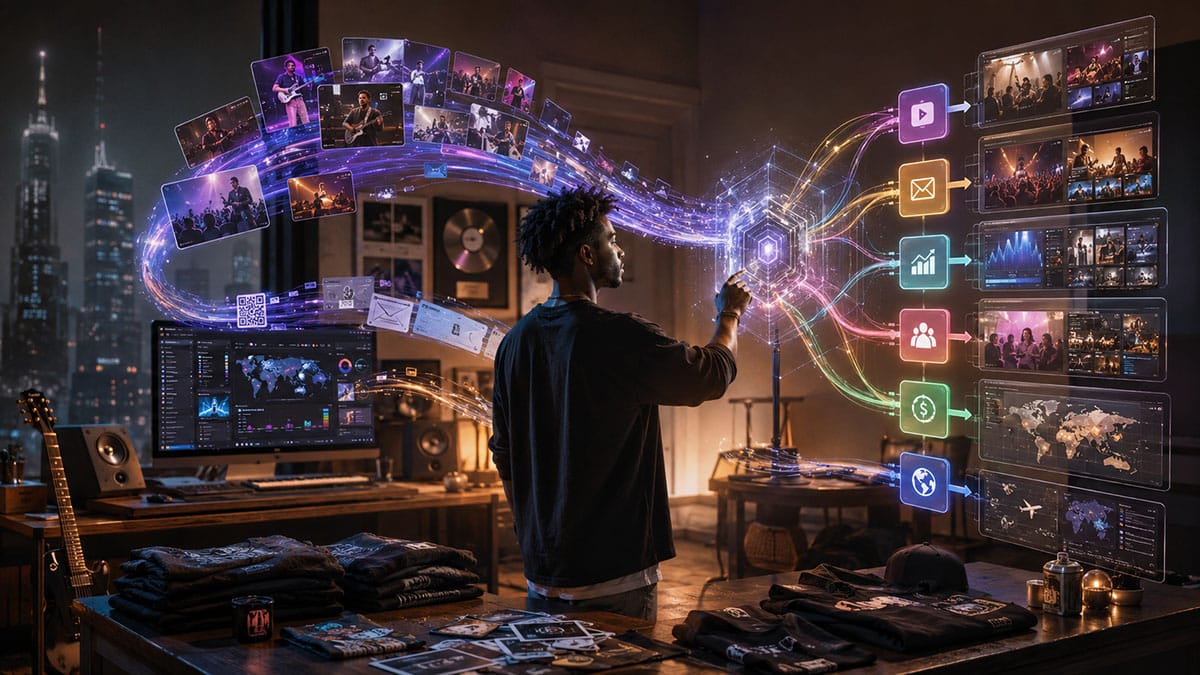
Making a Scene Presents – Building a Self-Sustaining Marketing Machine: The AI System That Runs Your Career
Listen to the Podcast Discussion
The Artist Should Not Be the Entire Marketing Department
There is a dirty little secret in the modern music business. Most independent artists are not only expected to write the songs, rehearse the band, book the shows, record the music, mix the tracks, post the videos, design the merch, answer the messages, build the email list, study the analytics, pitch the playlist, sell the tickets, update the website, and somehow still have enough soul left to be creative. That is not independence. That is exhaustion wearing a DIY T-shirt.
The old music industry told artists to wait for a label. The social media era told artists to become content machines. The streaming era told artists to chase algorithms. The new era has to tell artists something better. Build your own machine.
Not a soulless machine. Not a fake-artist machine. Not a bot farm. Not an AI replacement for your voice, your songs, your fans, or your story. I am talking about a self-sustaining marketing system that handles the repetitive daily work of your career while you stay focused on the work only you can do: create, perform, connect, and build culture.
That is the real promise of AI for independent musicians. It is not just “write me a caption.” That is tiny thinking. The real play is connecting your content, email list, fan data, website, merch, ticketing, analytics, social media, and fan engagement into one living ecosystem. When that happens, your career stops being a pile of disconnected chores and starts becoming a system.
This is where the independent artist has a real opening. For years, the major labels had the advantage because they had departments. They had marketing teams, data teams, radio teams, publicity teams, design teams, tour marketing teams, and people whose only job was to look at numbers and decide where money should go next. Most indie artists had a laptop, a phone, a bad night of sleep, and a prayer.
AI changes that balance. Not by making the artist lazy. Not by replacing human connection. AI changes the balance because it gives the independent artist a way to build a small, smart, automated command center. It gives the artist a way to make decisions from real fan behavior instead of guesswork. It gives the artist a way to turn one song, one show, one video, one merch drop, or one email signup into a chain reaction that can keep working every day.
The question is no longer, “How do I post more?” The better question is, “How do I build a system that turns attention into ownership, ownership into revenue, and revenue into a real career?”
That is the machine we need to build.
First, Understand the Difference Between a Tool and a System
Most artists already use tools. They may use ChatGPT to write ideas, Canva to design graphics, CapCut to edit short videos, Mailchimp or MailerLite to send emails, Bandcamp to sell music, Shopify or WooCommerce to sell merch, Spotify for Artists to check streaming data, and Google Analytics to see what happens on their website. Those are all useful tools. But a pile of tools is not a business. A pile of tools is a junk drawer.
A system is different. A system has a path. A system knows what happens first, what happens next, and what happens after that. A system knows that a TikTok view should lead somewhere. A system knows that a Spotify listener should be invited into an email list. A system knows that an email subscriber should be welcomed, tagged by location, invited to a show, shown relevant merch, and later asked what kind of experience they want from the artist. A system does not just create noise. It moves people closer to the artist.
This is where we need to explain a few basic terms in plain English. A funnel is simply the path a fan takes from first discovery to deeper support. At the top of the funnel, somebody finds you through a song, video, playlist, review, reel, show, or recommendation. In the middle of the funnel, they start paying attention. They visit your site, follow you, watch another video, or join your email list. At the bottom of the funnel, they support you directly. They buy a ticket, purchase merch, join a fan club, buy vinyl, license a song, tip you, subscribe, or bring a friend to a show.
Automation means some part of that path happens without you manually doing it every time. For example, when a fan joins your email list, the system automatically sends a welcome email. A trigger is the thing that starts that action. The trigger might be a new signup, a merch purchase, a ticket scan, a Bandcamp sale, a form submission, or a clicked link. A workflow is the chain of actions that follows the trigger. The fan signs up, gets a thank-you email, receives a free song, gets asked for their city, and then gets added to a local fan segment. A segment is a smaller group inside your audience, such as fans in Atlanta, vinyl buyers, people who attended a show, or fans who clicked on your tour announcement.
A CRM, which means customer relationship management, is just a fancy business term for the place where you keep track of people and your relationship with them. For artists, that means fans. A music CRM does not have to be scary. At a beginner level, it can be your email platform, your website database, your store customer list, or a spreadsheet. The point is simple. You should know who your fans are, where they are, what they care about, what they bought, and how they found you.
That is not creepy. That is respectful when used properly. You are not spying on fans. You are learning how to serve them better. If someone bought a ticket in Nashville, they probably care about your next Nashville show. If someone bought vinyl, they may care about your next physical release. If someone joined your list from a guitar lesson video, they may care about behind-the-scenes studio content. Good data lets you stop shouting at everyone and start talking to people like people.
Official pages for tools like Mailchimp, MailerLite, The Newsletter Plugin for WordPress, Zapier, Make, Canva, Adobe Express, Buffer, Metricool, Hootsuite, Shopify, WooCommerce, Stripe, Square, Google Analytics, Spotify for Artists, Bandcamp, Unlock Protocol, POAP, and Audius all show pieces of this larger ecosystem already exist. The indie artist’s job is not to invent every part from scratch. The job is to connect the parts into an artist-owned system that serves the career instead of draining it.
The Website Is the Command Center
Here is where we need to get a little rebellious, because the industry has trained artists to build their careers on rented land.
Spotify is not your home. Instagram is not your home. TikTok is not your home. Facebook is not your home. YouTube is not your home. They are stages, billboards, highways, discovery engines, and public squares. Use them. Learn them. Feed them. But never confuse them with ownership.
Your website is the home base. Your email list is the relationship. Your fan data is the map. Your store is the cash register. Your content library is the archive. Your fan club is the community. Your analytics are the dashboard. Your AI system is the assistant sitting inside the command center, watching the signals and helping you decide what to do next.
That is why an artist-owned website should sit at the center of the self-sustaining marketing machine. For most independent artists, WordPress is still one of the most powerful options because it is open source, highly customizable, and built around publishing. WordPress can become more than a digital brochure. It can become the artist’s platform. It can host the bio, music, videos, tour dates, merch, press kit, blog, fan signup forms, gated content, fan club, community, and data systems. WordPress.org describes WordPress as an open source publishing platform with flexible design tools, blocks, themes, and plugins, which is exactly why it remains so important for artists who want control instead of dependency.
This matters because the whole goal of AI marketing is not to make more disposable content for platforms that own the audience. The goal is to bring fans into a place the artist controls.
A self-sustaining marketing machine should work like this. Social media creates discovery. Streaming creates discovery. Press creates discovery. Live shows create discovery. But every discovery point should point back to the artist-owned hub. That hub should capture first-party data, which means information a fan gives directly to the artist. First name. Email. City. State. Maybe phone number, if the artist uses SMS responsibly. Favorite song. Favorite format. Local market. Purchase history. Show attendance. That information is gold, not because it turns fans into numbers, but because it lets the artist build real relationships that are not controlled by an algorithm.
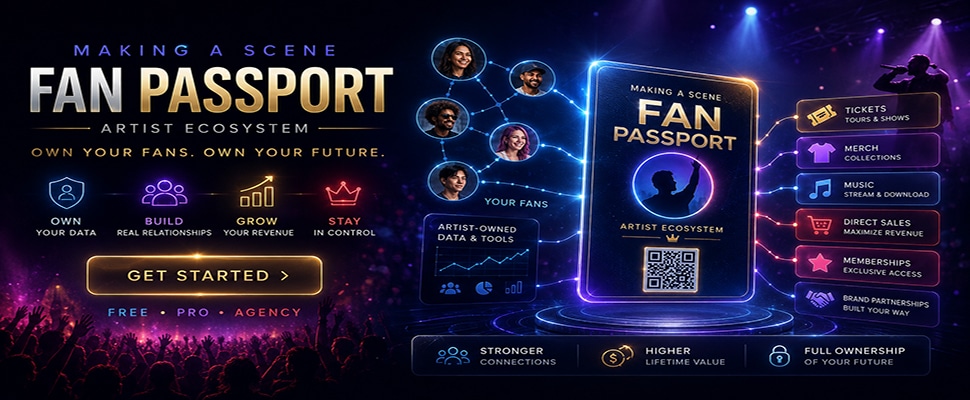
This is also why the coming Making a Scene Fan Funnel and website ecosystem concept matters. The idea is simple but powerful. Instead of sending fans from social media to a Linktree-style page filled with exits, the artist sends them to one focused splash page. That page offers something valuable, such as an unreleased track, live video, discount, lyric sheet, sample pack, behind-the-scenes story, or fan passport signup. In exchange, the fan gives the artist an email address and location. From there, the system begins a relationship.
That is the start of the machine.
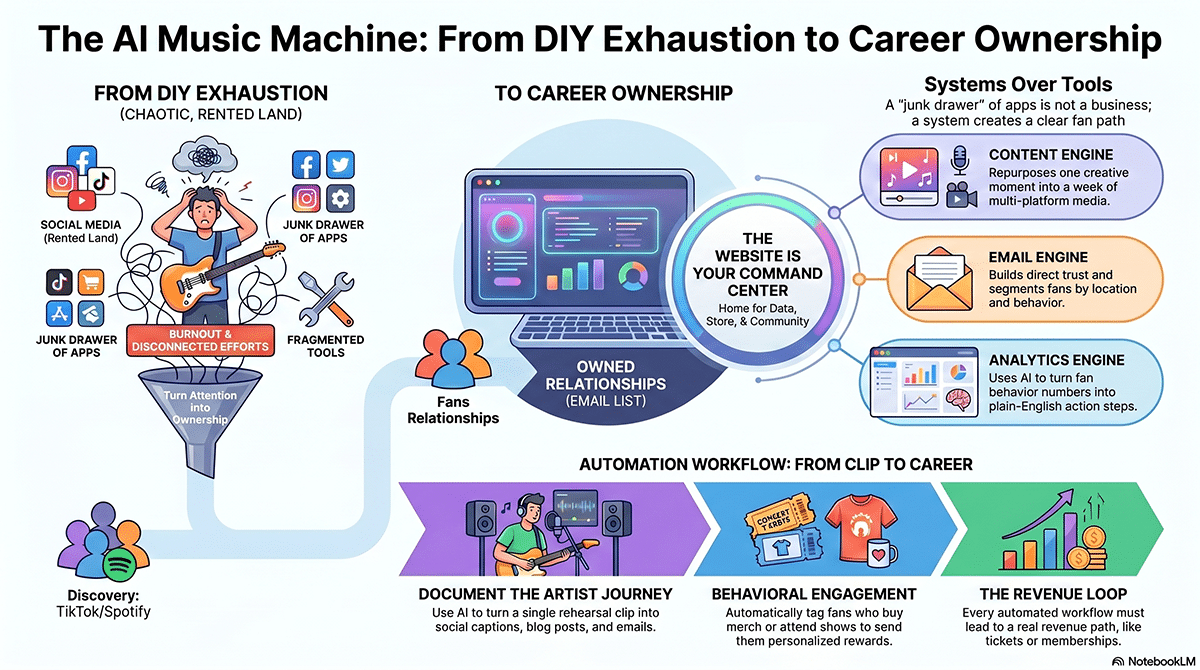
The Content Engine: Turn One Creative Moment Into a Week of Marketing
Artists do not need to become influencers. They need to become better at documenting the world around their music.
That is a major difference. An influencer often creates content for attention first. An artist creates music, stories, rehearsals, shows, studio moments, lyrics, lessons, failures, breakthroughs, relationships, and culture. The content is already there. The problem is that most artists do not have a system for capturing it, organizing it, repurposing it, and sending it to the right people.
This is where AI becomes useful. Let’s say you play a show on Friday night. Someone records three short clips from the stage. You take a photo at the merch table. You write a quick note about the crowd singing the chorus. You also have a setlist, a city, and maybe a few new email signups from the QR code at the venue. In the old model, you might post one clip, forget the rest, and move on exhausted. In the new model, those raw materials enter the content engine.
You can use ChatGPT to turn your show notes into a short tour diary, a newsletter intro, five social captions, a local thank-you post, a blog paragraph, and a follow-up email to fans in that city. You can use Canva or Adobe Express to create graphics from the best photo. You can use CapCut to edit the show clip into vertical videos with captions. You can use Buffer, Metricool, or Hootsuite to schedule posts across platforms. These tools are already built around creating, editing, scheduling, analyzing, or managing social content, which makes them useful parts of a connected artist workflow.
But the content engine should not stop at posting. That is the trap. Posting is not the business. Posting is the doorway.
Every piece of content should have a job. One video might drive fans to a presave. Another might push people to a show page. Another might invite them to join the email list. Another might sell the story behind the vinyl. Another might build trust by showing your process. Another might bring people into a fan club. Another might remind fans that you are not just a song in a playlist. You are a living artist building a world.
AI can help by creating versions of your message for different platforms. The same story should not be said the exact same way everywhere. Instagram may need a visual hook. TikTok may need a faster opening. YouTube Shorts may need a stronger title. Facebook may work better with a community-style post. Email can go deeper. Your website can hold the full story. AI helps translate the same truth into different formats without making the artist start from a blank page every time.
The key is to build from real material. Real songs. Real shows. Real fans. Real photos. Real voice. Real mission. AI should not invent a fake version of you. It should help organize the real version of you so people can find it, understand it, and support it.
The Funnel Engine: Stop Letting Attention Leak Away
Attention is not the same as a fanbase. This may be the most important sentence in the whole article.
A video view is not a fanbase. A stream is not a fanbase. A like is not a fanbase. A follower is not even fully a fanbase, because the platform still controls whether that follower sees your next post. A fanbase begins when there is a direct connection between the artist and the listener.
That is why the funnel engine matters.
A funnel engine is the part of your system that turns casual attention into owned relationships. It does not have to be complicated. At the beginner level, it starts with a clear offer and a simple signup page. The offer might be “Get the unreleased acoustic version.” It might be “Join the hometown show list.” It might be “Get early access to tickets.” It might be “Download the lyric book.” It might be “Join the fan passport and collect rewards at shows.” The point is that the fan has a reason to step closer.
The worst funnel is the one most artists accidentally build. A fan sees a video, clicks a social profile, sees twelve links, clicks Spotify, listens for thirty seconds, and disappears into the streaming ocean. The artist gets a tiny stream payout and no relationship. That is not a funnel. That is a leak.
A better funnel sends fans to the artist’s website. The page has one job. It captures the fan relationship. After the fan signs up, the system automatically sends the first email. This email delivers the promised item and says thank you. The second email introduces the artist’s story. The third email asks where the fan is located or what kind of updates they want. The fourth email invites them into the deeper ecosystem, such as the fan club, store, show calendar, community, or fan passport.
This is where email platforms become important. Mailchimp offers email marketing and automation tools. MailerLite includes email marketing, automations, landing pages, signup forms, and websites. The Newsletter Plugin is built for sending newsletters from a WordPress website. For artists who want to keep more of the system close to their own site, WordPress-based tools can be especially attractive.
This is also where services like SendGrid can come into the picture as email delivery infrastructure. In plain English, delivery infrastructure helps make sure your emails actually go out properly instead of depending only on basic website mail functions. That may sound boring, but boring plumbing matters. Nobody brags about pipes until the water stops running.
A funnel should not feel like a scam. It should feel like hospitality. The fan raised their hand. Your system welcomes them into the house. That is the energy.
The Email Engine: The Money Is Not in Spam, It Is in Trust
Some artists hear “email marketing” and think it sounds old. That is because they are thinking about spam. Spam is old. Trust is not.
Email is still one of the most important tools an independent artist can own because it gives the artist a direct communication line. You are not waiting for a platform to show your post. You are not hoping the algorithm is in a good mood. You are not shouting into the feed next to political fights, cat videos, ads, and whatever chaos is trending this hour. You are sending a message directly to someone who asked to hear from you.
But email only works when you respect the relationship.
The self-sustaining marketing machine should use email in a smart, human way. A new fan should not get the same message as a long-time supporter. A fan in Chicago should not always get the same show announcement as a fan in Atlanta. A vinyl buyer should not be treated exactly like someone who only watched one video. A street team member should not be treated like a passive listener. This is where segmentation becomes powerful.
Segmentation simply means grouping fans based on what you know. You can have a segment for fans by city. You can have a segment for merch buyers. You can have a segment for fans who attended a show. You can have a segment for people who clicked on your vinyl campaign but did not buy yet. You can have a segment for superfans who open almost everything. You can have a segment for people who have not engaged in six months.
AI can help you write different messages for each group. Not fake messages. Better messages. More relevant messages. A fan who came to your last show in Philadelphia might get a note that says, in plain language, “You were part of a great night, and we wanted you to see this live clip first.” A merch buyer might get, “You grabbed the last shirt design, so here is early access to the new one.” A fan who has not opened in a while might get, “Still want to hear from us? No hard feelings either way.” That kind of honesty builds trust.
This is where AI should be used as a writing assistant, not a personality replacement. You can ask ChatGPT to draft three versions of an email, then you rewrite it in your real voice. You can ask it to make the message clearer, shorter, warmer, more direct, or more beginner friendly. You can ask it to create subject lines, but you should choose the one that sounds like you. The machine helps. The artist decides.
Email is also where revenue becomes real. A post might get likes. An email can sell tickets. An email can move vinyl. An email can fill a small room. An email can launch a membership. An email can invite fans to a livestream. An email can drive direct downloads. An email can ask fans to support a recording project. An email can connect fans to a licensing-friendly catalog page. The difference is that email reaches people who have already stepped closer.
This is why the artist-owned funnel matters so much. The email engine is not separate from the content engine. It is where content becomes relationship, and relationship becomes income.
The Analytics Engine: Let Fan Behavior Tell You What to Do Next
Most artists look at analytics only when they feel insecure. They check streams, monthly listeners, views, likes, saves, follows, and comments, then they either feel good for ten minutes or terrible for the rest of the day. That is not analytics. That is emotional gambling.
A real analytics engine has a different purpose. It helps the artist make decisions.
Google Analytics can help track website activity and show what people do on the artist’s site. Spotify for Artists gives artists access to music and audience data inside Spotify. Bandcamp is built around fans discovering, connecting with, and directly supporting artists, and it can also be part of the direct-sales data picture. Chartmetric and Viberate are examples of music analytics platforms that help track performance across streaming, social, playlists, audience behavior, and wider music data.
But here is the important part. Data only matters if it leads to action.
If your analytics show that fans in Charlotte are opening emails, buying shirts, and streaming the new single, maybe Charlotte deserves a show. If fans in Austin are watching live clips but not buying tickets, maybe the offer is wrong or the venue is wrong. If a behind-the-scenes studio video gets more email signups than a polished promo clip, maybe your fans want the real process, not the glossy ad. If a certain song drives more merch sales than other songs, maybe that song’s story should be used in the next campaign.
AI can help you read these patterns. You can export numbers from your email platform, website, store, ticketing system, or social scheduler and ask AI to summarize what changed this week. You can ask, “Which cities show the strongest fan activity?” You can ask, “Which emails led to the most clicks?” You can ask, “Which content brought people to the merch page?” You can ask, “What should I test next?” You can ask, “What are the top three actions I should take this week to grow direct revenue?”
This is the beginning of a real artist dashboard.
The goal is not to drown in numbers. The goal is to turn fan behavior into better decisions. That is how the machine starts improving itself. Your content creates signals. Your funnel captures relationships. Your email creates engagement. Your store and ticketing show buying behavior. Your analytics reveal patterns. Your AI assistant turns those patterns into next steps.
That is a feedback loop. And when it works, your marketing gets smarter every week.
The Engagement Engine: Fans Do Not Want to Be Processed
Automation can become dangerous when artists forget that fans are human beings. The point of this machine is not to process fans like cattle. The point is to make sure no real connection gets lost in the noise.
A good engagement engine helps the artist notice people. It can remind you who bought the new shirt. It can flag the fan who has attended three shows. It can show which fans always click on studio updates. It can identify the people in a city who are most likely to help spread the word before a show. It can help you send better thank-you notes. It can help you create rewards that actually match the fan’s behavior.
This is where the Making a Scene Fan Passport idea becomes powerful. Imagine a fan goes to a show and scans a QR code at the merch table. They receive a digital stamp for that night. If they buy a shirt, they get another stamp. If they bring a friend, they get credit. If they attend three shows in one year, they unlock a private live recording. If they support a release campaign, they unlock early access to vinyl, a private listening room, or a behind-the-scenes video.
That is not just a gimmick. That is a relationship record.
Web3 can add another layer when used carefully. Tools and concepts like POAP, which stands for Proof of Attendance Protocol, can be used to create digital mementos tied to shared moments. Unlock Protocol focuses on memberships and token-gated access. Audius presents itself as a music streaming and sharing platform that puts more power in the hands of creators. These are not magic buttons, and artists should never jump into Web3 just because the buzzword sounds futuristic. But the core idea matters: fans can carry proof of support, membership, attendance, or access in ways that are not fully controlled by traditional platforms.
For beginners, the practical version is simple. A fan passport can start as a database inside your artist website. It does not have to begin with crypto wallets or complicated blockchain language. The first goal is to track meaningful fan actions and reward them. The Web3 layer can come later for artists and fans who want portable digital collectibles, token-gated access, or ownership-style membership.
The deeper point is that engagement should be remembered. In the old industry, fans were often treated as anonymous consumers. In the platform era, fans became metrics. In the artist-owned era, fans can become known supporters in a real community.
That is how you build a middle class music economy. Not by chasing faceless scale forever. By building durable relationships that produce repeat support.
The Revenue Engine: Every Workflow Should Lead Somewhere Real
A self-sustaining marketing machine is not successful because it posts every day. It is successful because it helps the artist make money in honest, direct, repeatable ways.
This is where we need to get very practical. Every workflow in the machine should connect to a revenue path. If you create a behind-the-scenes video, where does it lead? Maybe to the email list. If someone joins the email list, where does that lead? Maybe to a welcome sequence. If they click the vinyl story, where does that lead? Maybe to a preorder. If they buy the vinyl, where does that lead? Maybe to a collector segment. If they are in the collector segment, where does that lead? Maybe to a private listening event, deluxe bundle, or membership tier.
Revenue does not always mean an immediate sale. Sometimes revenue is built through relationship steps. But the path should exist.
For music sales and direct fan support, Bandcamp remains important because it is built around fans directly supporting artists. For merch and ecommerce, WooCommerce gives WordPress users an open-source commerce system, while Shopify offers a full commerce platform with store, checkout, inventory, and sales tools. For payments, Stripe and Square can help artists accept payments online, in person, or through payment links, depending on the setup.
Now connect that to AI.
AI can help write product descriptions that tell the story behind the merch. It can help turn a tour poster into an email campaign. It can help create different sales messages for local fans, collectors, casual listeners, and superfans. It can analyze which products are selling in which cities. It can help calculate what merch to bring on tour based on past sales. It can help draft a licensing pitch for a song that fits film, TV, podcasts, games, or YouTube creators. It can help organize a membership calendar so fans get something valuable every month.
This is where artists need to stop thinking like beggars and start thinking like builders.
A stream is not the only product. A song can lead to a live show. A live show can lead to merch. Merch can lead to a fan passport stamp. A fan passport stamp can lead to a membership. A membership can lead to a private event. A private event can lead to a recording project. A recording project can lead to sync licensing. A sync placement can lead back to the website. The website can capture new fans. New fans can become supporters.
That is a revenue ecosystem.
The old industry wanted artists dependent on gatekeepers. The new artist-owned model wants artists to build multiple income paths that work together. Shows, merch, direct music sales, publishing, sync, subscriptions, fan clubs, VIP offers, lessons, workshops, sample packs, patron support, collector editions, and community events can all live inside the machine. AI does not replace those revenue streams. AI helps coordinate them.
The Automation Layer: Connect the Pieces Without Becoming a Programmer
This is the part that scares people, but it should not.
You do not have to be a coder to automate basic workflows. Tools like Zapier and Make are designed to connect apps and build workflows. Zapier describes automation around triggers and actions across thousands of apps, while Make focuses on visual workflow automation and AI workflows.
In beginner language, this means one thing happens, and then another thing happens automatically.
A fan fills out a form on your website. That triggers your email platform to add them to a welcome sequence. A fan buys merch. That triggers a tag in your email platform that marks them as a merch buyer. A fan buys a ticket. That triggers a reminder email before the show and a thank-you email after the show. A fan scans a QR code at the merch table. That triggers a fan passport stamp. A new blog post goes live. That triggers a social post draft. A new YouTube video is published. That triggers an email to fans who like video updates.
At a more advanced level, AI can sit inside these workflows. A new show recap form is submitted after a gig. AI summarizes the notes into a newsletter draft. It pulls out three social hooks. It identifies the city and venue. It suggests a follow-up offer. It checks whether there were merch sales or new signups from that show. It updates the artist dashboard with a simple summary.
That is not science fiction. That is workflow thinking.
The danger is trying to automate everything too soon. Start small. The first workflow should be your email signup sequence. The second should be your show follow-up. The third should be your content repurposing workflow. The fourth should be your merch buyer follow-up. The fifth should be your weekly analytics summary. Do not build a spaceship before you build the engine.
The best automation is invisible to the fan. They should not feel like they are trapped in a robot maze. They should feel like the artist is organized, thoughtful, and present.
A Simple Blueprint for the Self-Sustaining Artist Marketing Machine
Picture the machine as seven connected engines.
The website engine is the home base. It holds the artist’s identity, music, videos, store, tour dates, press kit, signup forms, fan club, content library, and fan passport. For many artists, WordPress is the best center because it can grow from simple website to full artist-owned ecosystem.
The content engine turns real artist activity into useful media. Songs, rehearsals, show clips, studio stories, lyrics, photos, interviews, and fan moments become posts, emails, blogs, videos, and campaigns. AI helps repurpose the material, but the artist provides the truth.
The funnel engine turns attention into owned relationships. Social media, streaming, press, QR codes, and shows all point back to the artist website. The fan gets a clear reason to sign up. The artist gets direct contact and location data.
The email engine builds trust over time. It welcomes new fans, tells the story, segments the audience, promotes shows, sells merch, announces releases, rewards supporters, and keeps fans connected without begging the algorithm for permission.
The analytics engine watches behavior. It looks at website visits, email clicks, merch sales, ticket activity, streaming signals, city data, and content performance. AI turns the numbers into plain-English recommendations.
The engagement engine remembers the relationship. It tracks show attendance, purchases, street team activity, fan club status, rewards, and fan passport stamps. It helps the artist recognize supporters and build community.
The revenue engine connects all of it to money that can actually support a career. Tickets, merch, direct sales, memberships, sync licensing, publishing, VIP experiences, crowdfunding, fan clubs, and collector offers become part of one connected system instead of random one-off pushes.
When these engines talk to each other, the artist no longer wakes up every day asking, “What should I post?” The better question becomes, “What is the system telling me today?”
Maybe it says fans in Detroit are active and should get a show announcement. Maybe it says the acoustic clip is outperforming the polished video and should become an email story. Maybe it says merch buyers love the new design but are dropping off at checkout. Maybe it says your top fans are opening every message but have not been offered a membership yet. Maybe it says your last three sales came from the same blog post, so that topic deserves a video.
This is how the machine runs daily marketing tasks while the artist keeps creating and performing.
What This Looks Like in a Real Week
Let’s make this real.
On Monday, the artist uploads a short rehearsal clip. AI helps turn the clip into three captions, a short email teaser, and a blog paragraph about the song’s meaning. The post scheduler places the content across the week. The website gets the longer version of the story. The email list gets a personal note that points back to the site.
On Tuesday, the analytics engine checks the last campaign. It sees that fans in two cities clicked the tour interest link. AI summarizes the results and suggests that the artist create city-specific segments. The email engine tags those fans by location. The artist now has a better map for future shows.
On Wednesday, the artist announces a new shirt. AI helps write the product story, but the artist keeps it honest and personal. The merch page goes live through WooCommerce, Shopify, Bandcamp merch, Square links, or another direct sales setup. Fans who bought before get early access. Fans who clicked but did not buy get a softer follow-up later, not a spam attack.
On Thursday, the artist sends a behind-the-scenes newsletter. The email is not just “buy my thing.” It tells the story behind the song, includes a live photo, links to the merch, and invites fans to join the fan passport list for show rewards. Every click becomes a signal.
On Friday, the artist plays a show. QR codes at the merch table invite people to join the list, claim a show stamp, or get a free live track. New fans enter the funnel. Existing fans get credit for attending. Merch buyers are tagged. The system remembers the night.
On Saturday, AI helps turn the show notes into a recap. The artist edits it so it sounds human. A thank-you email goes to the people from that city. A short clip becomes a social post. A private photo gallery goes to fan passport members.
On Sunday, the weekly dashboard gives the artist a plain-English summary. It says which content worked, which city showed activity, which email got clicks, which product sold, which fan segment grew, and what to do next week.
That is a self-sustaining marketing machine. Not because the artist disappears. Because the artist finally has help.
The Human Rule: Never Let Automation Steal Your Soul
There is one rule that matters above all others. The machine must serve the artist’s humanity, not erase it.
Do not let AI flatten your voice into corporate oatmeal. Do not let automation turn fans into targets. Do not let analytics convince you that only numbers matter. Do not let templates replace truth. Do not let content scheduling make you forget why people care in the first place.
People do not become fans because your workflow is efficient. They become fans because something about your music, story, voice, performance, message, or presence makes them feel something. The machine exists to protect that connection and help it grow.
Use AI to get out of the weeds. Use it to organize. Use it to draft. Use it to summarize. Use it to compare. Use it to find patterns. Use it to remind you who needs attention. Use it to turn one creative moment into many useful touchpoints. But do not hand it the steering wheel.
The artist is still the source.
That is why the Making a Scene philosophy matters here. We are not trying to build a colder music business. We are trying to build a fairer one. A more human one. One where artists do not have to beg gatekeepers for a chance to survive. One where fans are not just data points trapped inside platforms. One where the money flows closer to the people who create the music and the people who support it.
AI and Web3 are not the revolution by themselves. Ownership is the revolution. Direct relationships are the revolution. Artist-controlled systems are the revolution. AI and Web3 are tools that can help build the road.
The Coming Artist-Owned Ecosystem
The future independent artist website will not be a static page with a bio, a few photos, and a few links to platforms that take the fan away. That model is dead, even if too many artists are still using it.
The next artist website will be an ecosystem.
It will have a fan funnel that captures direct relationships. It will have a music player that keeps fans on the site. It will have a merch store that feeds buyer data back into the artist dashboard. It will have tour pages that collect city interest. It will have email automation that welcomes fans properly. It will have fan passport rewards that recognize attendance and support. It will have gated content for members, collectors, street teams, and superfans. It will have analytics that tell the artist what is working. It will have AI summaries that turn data into action.
This is the direction Making a Scene is moving toward with the coming Fan Funnel and artist website ecosystem concept. The goal is not just another plugin, page builder, or marketing toy. The goal is an artist-owned operating system for the independent music economy. A place where the fan relationship, content, data, commerce, shows, rewards, and communication can finally live together.
That matters because independent artists do not need more disconnected chores. They need infrastructure.
The major labels already have infrastructure. The platforms already have infrastructure. The ticketing companies already have infrastructure. The merch companies already have infrastructure. The question is whether independent artists will keep renting access to everyone else’s infrastructure or start building their own.
That is the line in the sand.
The New Job of the Independent Artist
The artist’s job is not to become a tech expert. The artist’s job is to become the owner of their system.
That means you do not need to know every technical detail. You do need to know the shape of your business. You need to know where fans come from. You need to know where they land. You need to know how you capture the relationship. You need to know how you talk to them after that. You need to know what offers create real support. You need to know which cities matter. You need to know which fans are showing up. You need to know what content is building trust. You need to know what revenue streams are growing.
AI can help with all of this, but only if you give it the right mission.
Do not ask AI to make you famous. Ask it to help you build a system. Ask it to help you create a better welcome sequence. Ask it to summarize fan behavior. Ask it to turn a show recap into a newsletter. Ask it to identify your strongest markets. Ask it to create a weekly direct-to-fan plan. Ask it to help you write a merch campaign that sounds human. Ask it to organize your release calendar. Ask it to compare which content brought people to your website. Ask it to help you serve the fans you already have.
That is how the independent artist becomes dangerous in the best possible way.
Not dangerous because they are gaming the algorithm. Dangerous because they are no longer helpless.
The Call to Action: Take Back the Machine
For too long, artists have been told that the music business belongs to someone else.
The label owns the master. The publisher owns the song. The platform owns the audience. The promoter owns the room. The ticketing company owns the transaction. The social network owns the reach. The algorithm owns the discovery. The distributor owns the doorway. The artist gets whatever is left and is told to be grateful for exposure.
Enough.
The next music industry has to be built around ownership, direct relationships, and sustainable artist income. Not fantasy income. Not lottery-ticket fame. Not “go viral and hope.” Real income. Middle-class income. Working artist income. Money from shows, merch, direct sales, licensing, publishing, memberships, fan support, and community. Money that flows closer to the artist because the artist built the system to receive it.
A self-sustaining AI marketing machine is not about replacing the grind with a robot. It is about replacing chaos with structure. It is about giving artists the kind of operational power that used to belong only to companies with staff. It is about turning scattered effort into repeatable momentum. It is about making sure every post, every show, every release, every email, every fan interaction, and every sale feeds the artist-owned ecosystem.
The future does not belong to the artist who posts the most. It belongs to the artist who owns the relationship.
The future does not belong to the artist who chases every trend. It belongs to the artist who builds a system that turns discovery into community.
The future does not belong to the platforms. Not if artists wake up.
This is the moment for independent musicians to stop acting like guests in the music industry and start acting like builders of the next one. Build the website. Capture the email. Learn the data. Reward the fans. Connect the tools. Use AI wisely. Use Web3 where it creates real value. Sell directly. Communicate honestly. Own the machine.
Because when enough artists do that, we are not just talking about better marketing.
We are talking about taking back the music industry and building the music industry middle class that should have existed all along.
 |  Spotify |  Deezer |  Breaker |
 Pocket Cast |  Radio Public |  Stitcher |  TuneIn |
 IHeart Radio |  Mixcloud |  PlayerFM |  Amazon |
 Jiosaavn |  Gaana |  Vurbl |  Audius |
 Reason.Fm | |||
Find our Podcasts on these outlets
Subscribe to Our Newsletter
Discover more from Making A Scene!
Subscribe to get the latest posts sent to your email.


