The Fan the Brand and the Music




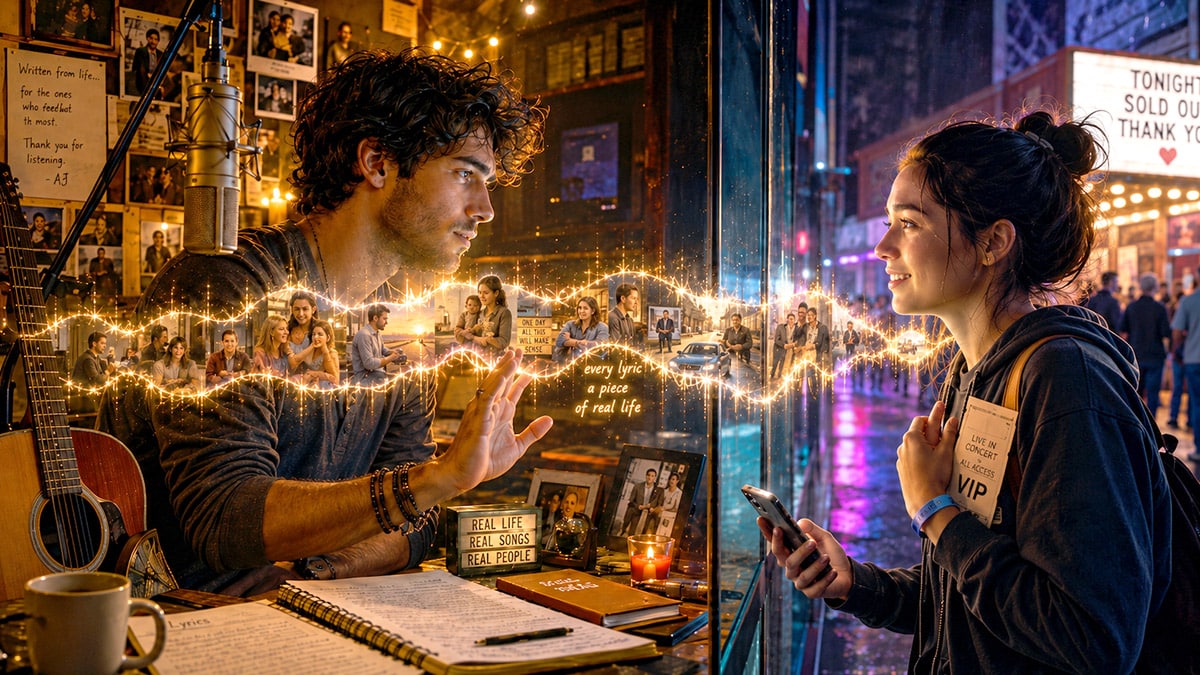
Making a Scene Presents – The Fan, the Brand and the Music
Listen to the Podcast Discussion
Why the Future of an Independent Music Career May Depend Less on Finding More Listeners and More on Building Better Relationships
There is something wonderfully strange about the modern music business. An independent artist can sit in a bedroom in Georgia, make a record, distribute it around the world, reach listeners in countries they have never visited, sell a ticket directly to someone three states away and talk to a fan on the other side of the planet before breakfast. The machinery that once required record companies, distributors, radio promotion departments, warehouses, retail stores and a fair amount of begging is now available to almost anyone with a laptop and enough patience to remember seventeen passwords.
Yet somehow, after all this technological progress, many artists know less about their actual fans than the local bar band knew thirty years ago.
That old bar band might not have known how many “impressions” it generated last month, but the singer knew that Mary and Jim came to almost every show, that Steve always brought three friends, that Donna wanted the new CD when it was finished, and that the couple sitting near the sound booth had driven two hours because they had heard the band at a festival the previous summer. There was no analytics dashboard involved. Nobody called it customer relationship management. They simply knew the people who cared about their music.
Today an artist can have 50,000 followers and still have no idea who those people are. A song can collect hundreds of thousands of streams without giving the artist a practical way to contact the listeners. A video can explode across social media on Tuesday and become yesterday’s forgotten internet event by Friday. The platform knows exactly who watched, how long they watched, what else they like, which advertisements caught their attention and what they did next. The artist is often handed a graph and a congratulations message.
We have become very good at measuring attention while sometimes forgetting that attention is only the beginning of a relationship.
That is where the fan, the brand and the music come together. For an independent artist trying to build a sustainable career, the real opportunity is not simply getting people to hear a song. It is understanding what happens after they hear it, what makes them curious enough to come closer, what makes them recognize something of themselves in the artist, and what keeps that connection alive long enough for a casual listener to become part of a community.
When that happens, the economics begin to change as well. The person is no longer only generating a stream or clicking a heart icon. They may come to a show, buy the record, wear the shirt, support a crowdfunding campaign, join a membership, recommend the artist to somebody else or simply remain around long enough to buy the next album five years later. None of that begins with a clever sales funnel. It begins with one human being becoming interested in another.
Fans Can Enter Through Either Door
We usually imagine the fan journey beginning when somebody discovers the music, but that is only half the story. Some of an artist’s earliest and strongest fans may have known the human being long before they knew much about the music.
Think about the people already surrounding any working musician. There are friends, relatives, former coworkers, neighbors, people from school, members of local organizations, musicians from other bands, people met through hobbies and people who have simply crossed paths over the years. They may know the artist as the person who tells terrible jokes at cookouts, repairs motorcycles on weekends, coaches youth baseball, works in real estate, rescues dogs or can somehow turn a twenty-minute trip to the hardware store into a three-hour adventure.
Then one day they discover that this person makes music.
That discovery comes with an advantage because the relationship did not begin with promotion. They already know something about the artist’s personality. They may understand their values, humor, background and way of looking at the world. When they hear the music, they hear it in the context of a person they already recognize.
These people form a kind of natural inner circle. That does not mean every friend should immediately be treated as a marketing opportunity, and it certainly does not mean uploading the family Christmas-card list into an email campaign and shouting about the new single. A friendship is not a mailing list waiting to be harvested. It simply means that an artist should not become so obsessed with reaching strangers that they forget there are people already interested in who they are.
The second path begins in the opposite direction. Someone hears the music without knowing anything about the person who made it. Maybe a song turns up in a recommendation, a friend sends a link, a festival introduces the artist, a video catches someone’s attention or the person happens to walk into a club on the right night. The music comes first, but if it creates enough curiosity, the listener begins looking for the person behind it.
They want to know where the artist came from. They want to hear another song. They may look at a photograph, watch an interview, visit a website or read the story behind the record. Slowly, the human being begins emerging from behind the waveform.
These two journeys appear completely different at the beginning, but they eventually arrive in the same place. One person discovers the music through the human being while another discovers the human being through the music. In both cases, a lasting fan relationship becomes possible only when those two identities finally connect.
An Introduction Is Not Yet a Fan
The music business has spent a remarkable amount of time teaching artists to confuse introductions with relationships. Streams, video views, social-media followers, playlist additions and impressions all have value because they create opportunities for discovery, but they do not automatically mean that a relationship exists.
A stream may represent someone who adores the song, someone who allowed a playlist to continue while making dinner, or someone who accidentally heard eighteen seconds before skipping it. Those are not the same human experiences, even though an analytics screen may place them uncomfortably close together.
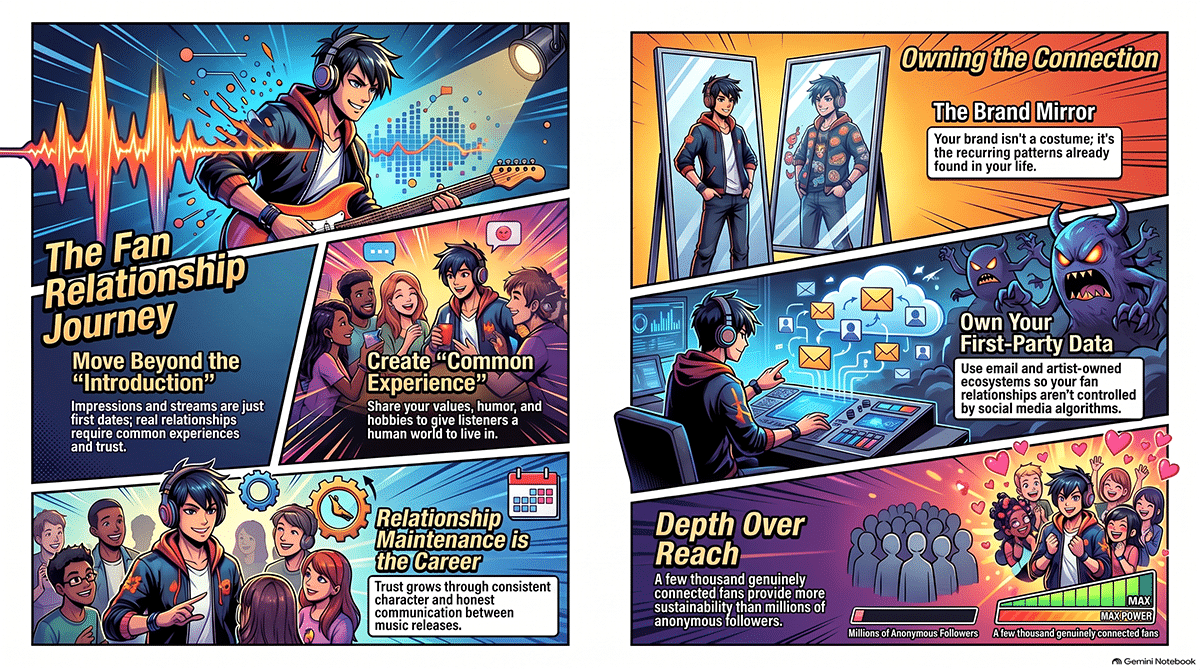
The fan relationship makes more sense if we think about it the same way we think about ordinary human relationships. People generally move from an introduction into some kind of common experience. If enough connection exists, that common experience can grow into a relationship, and if the relationship matters, both sides do things that help maintain it.
That journey from Introduction to Common Experience to Relationship and eventually Relationship Maintenance is not really a marketing invention at all. Marketing departments merely gave expensive names to things human beings had already been doing for thousands of years.
You meet someone. Something about them interests you. You discover that you have something in common. You talk again. Eventually you develop expectations about one another, and if the relationship continues, trust grows through repeated experience.
Music can begin exactly the same way.
The problem comes when artists spend all their energy acquiring introductions. We run advertisements, chase playlists, make videos, fight for press, pay publicists, pitch radio, post constantly, feed social networks and drive six hours to play for a room full of people who have never heard our names. Then somebody finally raises a hand and says, in effect, “I like this,” and we often have almost no strategy for what happens next.
We simply hope the algorithm introduces us again.
That is an enormous amount of work to leave the second date entirely up to a machine.
Common Experience Is Where the Brand Comes Alive
This is where we need to rescue the word “brand,” because somewhere along the way the music business managed to turn it into a discussion about logos, fonts and carefully selected shades of purple.
Those things can be useful. Consistent visual presentation helps people recognize an artist. Good photography matters. Album artwork matters. Stage presentation matters. A recognizable logo can certainly help. None of those things, however, are the artist’s brand by themselves.
Your brand is what people come to understand about you.
It grows from your music, personality, beliefs, humor, stories, experiences, interests, visual choices, values and behavior. It is the feeling people begin to associate with entering your world. It is the collection of patterns that eventually makes somebody recognize something as yours before they even see your name attached to it.
That is why real brand development usually begins with discovery rather than invention. The artist is not sitting down to manufacture a new personality. The artist is figuring out which parts of their existing personality, history and creative life keep showing up anyway.
Imagine a songwriter who grew up in a mill town, loves restoring old cars, has a dry sense of humor, writes frequently about work and family, dresses pretty much the same onstage as offstage and spends half the merchandise-table conversation talking with fans about their own hometowns. There is already a brand forming there. It may not have a Pantone number yet, but human beings can recognize it.
The connection becomes powerful because fans are always looking for pieces of themselves in the people and art they love. Someone hears a song about losing a parent and recognizes their own grief. Someone hears a story about a first job and remembers theirs. Another person discovers that the artist loves the same old horror movies, motorcycles, dogs, fishing spots, baseball team or ridiculous recording equipment.
Suddenly the relationship contains more than music.
That does not weaken the musical identity. It gives the music a human world in which to live.
A blues artist is allowed to talk about astronomy. A country songwriter can love science fiction. A metal guitarist can be obsessed with gardening. A jazz musician can spend weekends building furniture. If those things are real parts of the artist’s life, they provide natural opportunities for conversation with people who share them.
That is Common Experience, and it is where a listener can begin thinking something much more important than “I like this song.” They begin thinking, “I understand this person.”
The Brand Mirror
Artists often have trouble identifying their own brand for the same reason most of us have trouble describing our own accents. We have been living inside them for so long that they sound normal to us.
The answer is to look into what might be called a Brand Mirror. Instead of asking what sort of personality would be easiest to market, look at what has already been reflected back through the music and through other people.
Pay attention to the stories fans mention after shows. Notice which lyrics cause people to tell you about their own lives. Look at the subjects that keep appearing in interviews and songs without anyone planning them. Think about the stories your friends have heard you tell so many times that they can now finish them for you. Notice what you wear when no photographer is directing the session and what your home, studio, instruments and personal spaces look like when nobody is arranging them for social media.
Your strongest visual and emotional language is often hiding in plain sight.
The same is true of values. Some artists are naturally optimistic and encouraging. Others are restless outsiders. Some are deeply connected to a hometown or cultural tradition. Others seem to spend their entire lives moving. Some create a sense of humor around everything they do, while others are thoughtful and introspective. None of these is inherently more marketable than another. The important thing is that the identity makes sense when the artist walks into the room.
Trying to create a brand by studying what is fashionable can produce the opposite result. If a forty-eight-year-old roots musician who loves woodworking, old amplifiers and black coffee is suddenly told that his authentic market position requires neon cyberpunk clothes and videos filmed in simulated spaceships because “the algorithm likes futuristic content,” everyone involved has probably taken a wrong turn.
That is not brand development. That is costume design.
A useful brand makes the artist easier to recognize without forcing the artist to become somebody else.
What Taylor Swift Actually Teaches Us About Fans
Taylor Swift is almost comically oversized as an example for an independent artist. The scale of her career makes direct comparisons useless. A musician trying to fill a 200-seat theater does not need advice based on what somebody can accomplish with one of the largest touring operations in the world.
The interesting lessons appear when we ignore the size and examine the relationship underneath it.
Swift has spent years giving fans reasons to participate in an ongoing story around her music. TIME documented her 2014 1989 Secret Sessions, during which fans Swift had identified through platforms including Twitter, Tumblr and Instagram were invited to intimate listening events held at several of her homes and a London hotel. Fans heard the unreleased album, received commentary about the songs and interacted with Swift in an environment that turned an album preview into a personal memory.
An independent artist obviously cannot reproduce the celebrity circumstances surrounding those events, but that is not the useful part anyway. The useful part is understanding that the fans were not simply given early access to audio. They were given participation in a story.
That distinction matters.
The same pattern appears in Swift’s long-running use of hidden clues and references. She has openly discussed using Easter eggs to expand the experience surrounding the music, encouraging fans to examine lyrics, visual details, videos and promotional material for connections. Reporting around her 2019 Lover rollout described how this became part of the audience experience, with fans collectively decoding and debating the meaning of details rather than simply receiving a finished promotional campaign.
Again, an independent artist does not need to start hiding cryptic numerology in every Instagram photograph. Copying the technique would miss the point. What matters is that the audience is being invited to do something with the art.
That idea became even more obvious with the friendship-bracelet culture surrounding the Eras Tour. The practice grew from a lyric in “You’re On Your Own, Kid,” but fans themselves transformed the reference into a concert ritual, making and trading bracelets containing song titles, lyrics, jokes and references to the larger fan culture. The Guardian described how this became a recognizable social part of the Eras Tour experience.
This is where branding becomes something much more interesting than a logo. The audience understands the artist’s world well enough to create within it.
An indie artist can absolutely work with that idea. Maybe there is a phrase fans repeat from a song, a running joke that always appears during performances, a yearly acoustic show, an unusual encore ritual, a visual symbol that keeps turning up, a cover song fans vote on, or a tradition that began accidentally at the merchandise table. You cannot manufacture all of these things successfully because communities have a stubborn habit of deciding for themselves what they care about. You can, however, pay attention when something catches.
The artist’s job is not always to create the tradition. Sometimes the smartest thing an artist can do is recognize that the fans have already created one.
The Relationship Can Become Part of the Business
Swift’s business provides another lesson that translates surprisingly well to independent artists even when the scale is stripped away. When Taylor Swift: The Eras Tour went into theaters in 2023, Swift bypassed the traditional Hollywood studio route and worked directly with AMC on distribution. TIME reported that Swift described the decision as betting on herself, while her father questioned why another middleman needed to be involved. Independent artists should find that question familiar. Why does there always have to be another middleman?
Sometimes there does. A good partner can provide expertise, reach, infrastructure or access that an artist cannot efficiently build alone. The Making a Scene philosophy is not that artists should crawl into a bunker and refuse to work with anybody. It is that artists should understand what they own, what the partner contributes and what happens to the relationship when the partnership ends.
The fan relationship is particularly important because almost every other part of the business can grow from it. If people trust an artist and remain connected over time, the artist no longer has to begin every release from zero. The next album already has an audience waiting to hear about it. The next tour begins with people who have attended before. A new merchandise idea can be tested with fans who actually understand the artist’s world. A crowdfunding project begins with existing relationships rather than a desperate appeal to strangers.
The economic value does not come from extracting money from those relationships. It comes from being able to offer something useful to people who already care.
That is a much healthier business.
Authenticity Does Not Require Living in Public
This is also where brand discussions can become dangerous if artists are told that authenticity means unrestricted access.
The internet has encouraged a strange belief that a musician proves authenticity by showing everything. Artists are encouraged to share relationships, families, private struggles, homes, emotional breakdowns and daily routines because personal content often generates engagement. That can create a great deal of attention while quietly destroying the artist’s ability to have a private life. Authenticity is not the absence of boundaries. Authenticity means that what you choose to show is genuinely you.
An artist can be completely honest about their humor, beliefs, creative process, interests and experiences while keeping parts of their family, relationships, finances, health or private life entirely outside the public relationship. Those boundaries should be decided intentionally rather than discovered after somebody crosses them.
This matters because fan relationships are unusual. The fan may know hundreds of details about the artist, while the artist may know only a username or perhaps nothing at all about the individual fan. Social media can make that connection feel very personal, and in many ways it is, but it remains asymmetrical.
A healthy artist brand respects that reality. The artist can care about the community without pretending every fan is a close personal friend. Fans can feel meaningful connection without being promised unlimited access. The relationship becomes stronger, not weaker, when both sides understand what it actually is.
Relationship Maintenance Is Where Careers Are Built
Music marketing tends to be obsessed with acquisition. There is endless discussion about reaching new listeners, growing follower counts, getting playlist placements and increasing impressions. Far less attention is given to the people who have already decided they like you. That is an odd way to build anything meant to last.
Once someone has entered the artist’s world, the communication should not disappear until the next release requires promotion. A relationship needs some life between transactions. The artist can share stories about songs, talk about the making of a record, introduce influences, discuss something funny that happened on the road, explain the history of an instrument, show part of the creative process or simply communicate about something that matters to them. This is where a clear brand becomes extremely useful because it gives the artist more things to talk about than the music release calendar.
If fans know you love vintage recording equipment, there are conversations available there. If local history repeatedly appears in your songs, there is an entire world surrounding those stories. If your live performances are funny and informal, your emails do not have to sound as though they were issued by a multinational entertainment corporation. The fan should hear the same recognizable human being in all of these places.
That does not mean every message must sound identical. People communicate differently onstage, in an email, at the merchandise table and in a long interview. The consistency comes from character rather than format.
Trust grows when that character behaves consistently over time. If you say an item is limited, it should actually be limited. If you promise something to members, deliver it. If a release is delayed, tell people what happened. If a customer receives the wrong shirt, fix it. If you made a mistake, admitting it generally creates more trust than inventing six paragraphs explaining why the universe technically made the mistake for you.
Relationship maintenance is not glamorous, but very little about owning a sustainable business is glamorous once the photographs are finished.
Your Fan Data Should Belong to the Relationship
Eventually every artist reaches the practical problem hiding inside all this theory. You cannot maintain a direct relationship with people you have no way to reach.
A social-media follower is valuable, but the platform controls access to that person. A streaming listener may deeply love the music, but the artist often receives very little information that allows the relationship to continue somewhere else. The platform may know nearly everything about the listener’s behavior while the musician receives an audience percentage and a map. That imbalance is why first-party fan data matters.
First-party data sounds technical, but the concept is simple. It is information a fan knowingly gives directly to the artist or the artist’s business. An email address is the obvious example. A fan might also choose to provide a city so they can hear about nearby shows, indicate that they enjoy vinyl, join a membership, purchase a record, claim a show reward or tell the artist what kinds of updates they want to receive. The word “knowingly” matters enormously.
Owning fan data should never mean building your own creepy little surveillance operation. The goal is not to collect everything that can possibly be collected. The goal is to understand enough about the relationship to serve the fan better and keep the connection portable.
Federal Trade Commission business guidance has repeatedly emphasized collecting only information that serves a legitimate need, protecting the information that is retained and being clear with people about how their data is used. The FTC’s security guidance makes the wonderfully uncomplicated point that information you never collect cannot later be stolen from you. Artists should take that seriously.
If all you need is an email address to send release updates, you do not need someone’s complete life history. If you ask for a city because you want to send local concert information, tell them why. If someone no longer wants those messages, make leaving easy. The fan relationship should be based on voluntary exchange, because trust becomes remarkably difficult to rebuild once people discover that information they gave for one reason is being used for another.
The artist should own the relationship, but the fan should still own themselves.
Data Becomes Useful When It Helps You Listen
The real value of fan data is not having an impressive database. It is learning that different people value different parts of the artist’s world.
One fan may live nearby and attend nearly every performance but rarely purchase physical music. Another may live a thousand miles away, have never attended a show and own every vinyl record the artist has released. Another may love songwriting content and acoustic versions. Someone else may care mostly about the live band. A fan who joined through a guitar video may have different interests from somebody who discovered the artist through a deeply personal song. When artists understand those differences, marketing becomes less annoying.
The local fan can hear about the Friday-night show without forcing the person 1,200 miles away to receive twelve messages about it. The vinyl collector can learn when a special pressing becomes available. Someone interested in songwriting can be invited to a workshop or livestream built around that subject. The fan who only wants release announcements can receive exactly that instead of being punished for joining the email list.
Traditional marketing calls this segmentation, which makes it sound as if human beings are being stacked into labeled storage containers. In practical terms, it simply means paying attention to what people have told you.
When data is used this way, better marketing and better treatment of fans become the same thing.
The Artist-Owned Destination
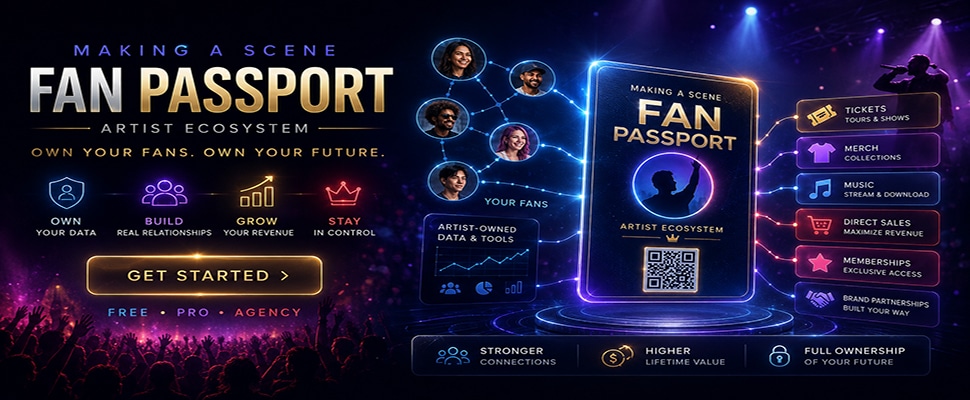
This is also the philosophy behind the Making a Scene Artist Ecosystem and Fan Passport at masfanpassport.com. The important idea is not simply building another platform. The important idea is creating an artist-controlled relationship layer that allows interactions occurring at shows, on websites, through merchandise, around releases and inside fan communities to remain connected to the artist rather than scattered across unrelated companies.
Think about what happens in the normal platform economy. One company knows who bought the ticket. Another knows who purchased merchandise. Another knows who streamed the song. Another knows who opened an email. Another knows who watched the video. Each business sees one piece of the fan, while the artist who created the reason for all those interactions may have the least complete picture of anyone involved. An artist-owned ecosystem begins reversing that relationship.
The goal is not to replace every outside service. Streaming platforms, social networks, ticketing companies and marketplaces can all be useful. They are excellent doors into the artist’s world. The problem comes when the artist mistakes the doorway for the house.
Discovery can happen anywhere. The long-term relationship needs somewhere the artist can control.
The Show Is One of the Best Places to Begin
Live performance offers an especially powerful opportunity because the fan and artist have already shared something that cannot be reproduced by an algorithm. They were in the same room at the same time.
The person heard the performance, saw the artist’s personality, experienced the audience around them and probably learned more about the artist in forty-five minutes than they would have learned from months of seeing occasional social posts. There is a naturally heightened moment of connection after a good show. Then many artists simply let that person walk out the door.
That is where a fan journey can continue without becoming intrusive. A QR code at the merchandise table might give the audience access to a live track, show photographs, a reward, a future ticket announcement or some other useful reason to identify themselves voluntarily. The next morning, a short message could thank people for coming and tell them how to hear more. Now the show has created something that can survive the show.
When the artist returns to that city six months later, they do not have to pay a social-media company to rediscover every person who was already in the room last time. Some of those people can be reached directly because they chose to remain connected.
That is how audience development begins becoming an asset instead of a recurring expense.
Brand Changes What You Can Sell
This is where the relationship between branding and revenue becomes much more interesting than simply deciding what logo belongs on a shirt.
If the artist understands who they are and understands why people connect with them, revenue opportunities begin emerging naturally from the relationship.
Consider an artist whose fans are fascinated by recording. Maybe that musician frequently talks about production, owns a studio, experiments with microphones and attracts questions about how records are made. Workshops, studio livestreams, production breakdowns or other educational experiences could make sense because those offers belong naturally in the artist’s world.
Another artist may have built a community around storytelling. Fans repeatedly respond to lyrics, ask about the people behind the songs and enjoy hearing the stories from the stage. That artist might discover that acoustic storytelling shows, lyric books, demos, handwritten lyrics or expanded physical editions carry real meaning because they deepen something the audience already values.
A touring artist whose community is built around the live experience might find that soundcheck experiences, house concerts, special live recordings or local fan gatherings make more sense than trying to launch an online production course simply because somebody on YouTube said courses create passive income.
The brand does not tell you what is popular to sell. It helps identify what makes sense for you to sell. That difference protects artists from building businesses they hate.
Merchandise Becomes More Interesting When It Belongs to the Community
For decades, musician merchandise has often followed a dependable formula in which the artist’s name or logo is placed on a black shirt and everyone goes home pleased with themselves. There is nothing wrong with the basic logo shirt, and plenty of fans want one, but branding creates possibilities that go much further.
The most interesting merchandise can say something about the person wearing it rather than simply advertising the person who sold it.
A lyric can carry a private meaning. A running joke from the shows can identify people who understand it. A symbol from an album may become recognizable without the artist’s name appearing anywhere. A local reference, recurring character or fan tradition can turn an ordinary product into something that represents membership in a community.
That is why the Taylor Swift friendship-bracelet phenomenon is so interesting even though the scale is completely different from the indie world. The bracelets became useful socially because fans recognized one another through shared knowledge of the music and its references.
Independent artists should not copy the bracelets. They should notice the principle. When the brand becomes strong enough, fans can carry pieces of the culture with them.
Direct Music Sales Become More Meaningful Too
Streaming has changed what recorded music means economically. For many listeners, the song is something they expect to access as part of a subscription rather than something they purchase individually. A deeper fan relationship creates another kind of value.
The person may already have access to the album through a streaming service and still want to own the physical record. They may want a signed edition, a special mix, a live version or a package that includes artwork and stories connected with the recording. They may buy the music directly simply because they understand that the purchase supports the artist.
That behavior makes far more sense when we stop assuming that the only thing being purchased is access to audio. A committed fan may be buying participation. The record becomes part of the relationship rather than simply a delivery format.
That opens a different economic door for independent musicians. Instead of trying to convince the entire population to start buying downloads again, the artist concentrates on building enough meaning around the work that a smaller number of people genuinely want to own something connected with it.
There is no guaranteed formula for that, and artificial scarcity does not magically create demand. A limited edition of something nobody wants is still something nobody wants, only now there are fewer of them.
The relationship has to come first.
A Better Way to Discover Your Own Brand
The most difficult part of this process for many artists is figuring out how all these ideas apply to them. That is where artificial intelligence can become genuinely useful, not by inventing a marketable personality but by helping an artist identify patterns that are difficult to see from inside their own life.
Instead of giving an artist a ninety-question worksheet that starts to feel like applying for a mortgage, AI can conduct the brand discovery as a conversation. The artist can paste one prompt into ChatGPT or another capable AI assistant and allow the system to interview them gradually. The result can become a living Brand Blueprint rather than a quiz scored by some imaginary music-business authority.
The following prompt is designed for exactly that purpose. The questions should come one at a time, because honest answers become much more useful when the artist is not trying to complete a giant questionnaire as quickly as possible.
The Artist Brand Discovery Interview
Copy the following section into ChatGPT or another AI assistant and begin the conversation.
“I want you to help me discover my authentic artist brand, but I do not want you to invent a marketing character for me. Treat this as a thoughtful interview in which your job is to discover patterns that already exist in my life, music, personality, values, interests, experiences, visual preferences, communication style and relationships with fans. Ask me one question at a time, respond briefly to what I tell you when doing so helps clarify my answer, and use follow-up questions whenever something important deserves more exploration. Do not rush toward conclusions.
“Begin by getting to know who I am when I am not performing. Ask about where I grew up, the experiences that shaped me, the work I have done outside music, why I began making music and what events changed the direction of my life. Explore the stories I naturally tell repeatedly and the parts of my history that keep appearing in my songs, because I want to understand which pieces of my personal story actually belong in the public identity surrounding my music.
“Then explore the music itself. Ask me what I believe I sound like without forcing me into standard genre labels, what subjects repeatedly appear in my songs, which emotions I return to, which songs feel most representative of me and which songs have caused listeners to tell me meaningful stories about their own lives. Ask what musical qualities I would refuse to abandon even if somebody claimed changing them would make me more commercially successful.
“Spend time learning my personality rather than assuming my stage image defines it. Ask what makes me laugh, what irritates me, what my closest friends tease me about, how those friends would describe me and how my personality changes when I am performing. Ask about the conversations that naturally happen when I meet people after shows and what would feel completely fake if a manager, publicist or marketing consultant told me to make it part of my image.
“Explore my beliefs and values carefully without assuming that everything I believe needs to become public content. Ask what matters deeply to me, what principles influence the way I treat people, what issues I am comfortable discussing with fans and what subjects I would rather keep private. Help me establish boundaries around family, relationships, home life and other subjects so that the brand you eventually describe can be authentic without requiring me to surrender my privacy.
“Learn about the parts of my life that have nothing to do with music. Ask about hobbies, books, movies, sports, technology, food, crafts, communities, causes, places and strange interests I can talk about for an hour without preparation. Look for common experiences that could create natural bridges between me and people who share those interests, but do not recommend that I suddenly turn every hobby into promotional content.
“Explore my visual world by asking how I naturally dress, which environments make me comfortable, which photographs of myself feel most truthful and what colors, objects, places or symbols repeatedly appear in my music and life. Ask me to describe what the room would look and feel like if my music could become a physical space. Use those answers later to identify a visual identity that feels like an extension of me rather than a costume.
“Then help me understand the people who already connect with my work. Ask what fans say after shows, which people have supported me longest, how they originally discovered me, what questions they repeatedly ask, what kinds of posts or stories create real conversation and whether fans have already created any jokes, phrases, traditions or behaviors around the music without my deliberately designing them. Help me find the Common Experience that may already exist between me and those people.
“Once you understand me, examine the business side. Ask what fans currently buy, what they have requested that I do not currently offer, what parts of my creative life seem to fascinate them and what kinds of interactions with fans I actually enjoy. Ask what skills I have beyond performing and what products, experiences or services could logically exist inside my world. Do not assume I need memberships, courses, merchandise, VIP experiences or any other particular revenue stream. Recommend something only if my answers suggest that it would provide genuine value to the people who connect with me and that I would actually enjoy or be willing to deliver it.
“Also ask about my current fan data and direct relationships. Help me determine how many supporters I can reach without depending on a social-media or streaming algorithm, what information fans have voluntarily shared with me, where that information is stored and what opportunities exist to move interested people from platform discovery into an artist-owned relationship. Keep privacy, consent and trust at the center of those recommendations.
“When the interview is complete, do not immediately give me a generic marketing plan. First summarize the recurring patterns you found and ask me whether the description actually feels like me. If anything seems contradictory or unclear, ask more questions until we resolve it.
“After I confirm that you understand me, create an Artist Brand Blueprint written in plain language. Explain the core themes of my identity, the values that naturally appear, the common experiences that may connect me with fans, the parts of my personality that should remain visible and the boundaries that should remain protected. Describe how this identity could appear naturally in my music, website, photography, artwork, videos, interviews, email communication, social media, live performances, merchandise and fan community without making every part of my career look mechanically identical.
“Then map a Fan Relationship Journey specifically for me. Explain how someone might first encounter me, what could create Common Experience, what actions could allow that person to develop a direct Relationship with me and how I can maintain that Relationship between releases without constantly trying to sell something.
“Finally, identify revenue opportunities that grow naturally from the brand and relationship you have discovered. Explain how direct music sales, shows, merchandise, memberships, fan support, licensing, publishing, workshops, special experiences or other possibilities might fit where appropriate, but reject anything that seems artificial. I want a business built around who I actually am and what my community genuinely values, not a list of revenue ideas copied from a music-marketing blog.
“Throughout this process, remember that your job is to act as a mirror. Do not decide who I should become. Help me recognize who I already am, understand why certain people connect with that person and build a career that makes that connection stronger.”
That conversation can become surprisingly revealing because AI is good at finding repeated ideas across a large amount of information. The machine may notice that the artist mentions community in six unrelated answers, that nearly every favorite song involves resilience, or that fans repeatedly respond to the same kind of storytelling even though the artist never consciously considered it part of the brand.
That is a productive use of AI because the technology is organizing the artist’s truth instead of manufacturing one.
AI Should Help You Become More Yourself
The temptation with generative AI is to ask it what kind of artist will perform best in the market and then try to become that person. That may generate plenty of content, but it creates a long-term problem because the artist is now performing a character every time they communicate.
A better use of AI is amplification.
The system can study fan responses and help identify recurring themes. It can help organize audience information, find patterns in sales, prepare different versions of an email for people with different interests and suggest content connected with subjects the artist already cares about. It can help a working musician manage administrative tasks that otherwise consume hours of creative time. What it should not do is replace identity.
If the machine concludes that your optimal marketing persona is a tattooed outlaw beekeeper who only records on cassette because three current trends happen to overlap there, and you are actually a suburban piano teacher who becomes nervous around insects, you have not discovered your brand. You have been assigned a role.
The most valuable AI tools in the artist’s business will eventually be those that understand enough about the artist’s own data, history, catalog and community to help the artist make better decisions while leaving the human identity in charge.
Web3 Has a Role When It Makes the Relationship Portable
Web3 can fit into this discussion as well, although we should leave the speculative hype outside the door.
The valuable part of decentralized technology is the possibility that identity, ownership and relationships do not always have to remain trapped inside one company’s platform. A fan who has supported an artist for ten years should not suddenly become an anonymous stranger because a service shuts down or changes direction.
Portable identity, verifiable membership, digital provenance and artist-controlled credentials can eventually help preserve those relationships across systems. The important question is not whether something uses a blockchain. The important question is whether the technology gives the artist and fan greater control over a relationship they created together.
If it does that, it may be useful. If its primary purpose is convincing fans to become amateur currency traders so they can listen to a song, we may have wandered away from the mission. Decentralization matters when it removes unnecessary gatekeepers rather than inventing exciting new ones with more complicated names.
Revenue Is the Result of the Relationship
There is a phrase used constantly in music-business discussions that tells artists they need to “monetize their fanbase.” The industry generally understands what it means, but it is still an unfortunate way to describe human beings who care about someone’s work. Fans are not mineral deposits waiting to be extracted. A healthier question is to ask what this particular community values enough to support.
Maybe the answer is music. Maybe it is shows. Maybe it is merchandise tied to something meaningful inside the artist’s world. Maybe fans want access to songwriting demonstrations, studio sessions, private performances, house concerts or other experiences. Maybe they want nothing more complicated than a simple place to buy the next record directly and know that more of their money reaches the artist. The answer will be different for every artist because every real brand creates a different community.
This is where the Fan Relationship Journey becomes a revenue journey without turning into a sales funnel. A person is introduced to the artist, recognizes something meaningful, chooses to stay connected and eventually encounters something worth buying. The transaction makes sense because it is occurring inside an existing relationship. The artist is no longer interrupting strangers to ask for money.
They are offering something relevant to people who already understand why it exists.
The Real Difference Between an Audience and an Asset
Imagine one artist with 100,000 social followers but only a few hundred people they can contact directly. Now imagine another with a much smaller public following but several thousand fans who have voluntarily joined the artist’s own community, purchased music, attended shows or asked to receive direct communication. The first artist may look much larger from the outside. The second artist may own something much more valuable.
That does not mean follower counts are meaningless. Reach matters because every relationship needs an introduction somewhere. Large platforms can introduce an artist to people at a scale that would have been unimaginable in the old music industry. The mistake is stopping there.
If a platform disappears tomorrow, an artist should not lose every relationship created there. If an algorithm changes, loyal fans should not suddenly become unreachable. If a streaming service stops recommending a song, the artist should still be able to tell supporters that a new album exists. The independent artist’s objective is not to abandon platforms. It is to use them intelligently. Let them provide discovery. Then give people somewhere else to go.
The Music Still Has to Matter
After all this discussion about branding, data, technology and business, there is an important danger of accidentally making the music sound like the least important part. It is not.
The song is often what gives the relationship emotional gravity in the first place. Branding cannot rescue work nobody cares about, and a perfectly designed fan database cannot manufacture genuine emotional attachment. Technology can help artists find people, understand them and maintain communication, but it cannot create the moment when somebody hears a song and feels as though another human being somehow understood something they had never managed to say themselves. That is still the magic. Everything else should help protect and extend what happens after that moment.
The artist’s brand gives the listener more ways to understand the person behind the music. Common experiences give them more reasons to stay curious. Trust allows the relationship to deepen. Artist-owned data keeps that relationship from being permanently controlled by somebody else’s platform. Technology reduces the work required to maintain it. Revenue appears when the artist creates music, products or experiences that the community genuinely values. That is not a replacement for the music business. That is the music business finally remembering why it exists.
Building the Music Industry Middle Class One Relationship at a Time
Independent artists have spent decades being told that success lives somewhere above them. The right label has to choose them, the right playlist has to add them, the right algorithm has to notice them, the right influencer has to post them, the right executive has to discover them or the right song has to explode into enough anonymous streams that everything somehow sorts itself out afterward. There is another way to build. It begins much smaller and looks far less impressive on a screenshot.
An artist learns who they are and becomes comfortable expressing it consistently. The music introduces that person to others. Some listeners recognize something familiar and choose to come closer. The artist gives those people a way to maintain the connection directly rather than requiring an algorithm to arrange every future meeting. Over time, trust grows because the artist behaves honestly and the community discovers that being involved has value even when nothing is being sold.
Some of those people eventually spend money because there are things they genuinely want. They buy records because ownership matters to them. They attend shows because the live experience has value. They purchase merchandise because it represents something about the community. They support projects because they want those projects to exist. No single transaction creates the career. The relationship underneath all those transactions does.
That is why an independent artist does not necessarily need millions of fans. A sustainable career can be built from a much smaller group of people when the relationship is strong enough, the artist can reach those people directly and the business gives them meaningful ways to participate.
Taylor Swift demonstrates what this looks like at an almost unimaginable scale, but the underlying human behavior does not require stadiums. Fifty people can develop traditions around an artist. Five hundred can support a meaningful local and regional career. A few thousand genuinely connected people can become the foundation for records, tours, merchandise, memberships, licensing opportunities and whatever else fits naturally around that particular artist. The exact numbers will be different for everyone, and there is no magic threshold where a spreadsheet suddenly announces that you have achieved a career.
The important change happens when the artist stops thinking only about how many people have heard the music and begins understanding how many people have chosen to stay. Those are the people worth knowing.
They entered through the music or they entered through the person, but eventually they found both. They discovered something they shared with the artist and decided that the relationship was worth maintaining. If the artist treats that trust with respect, gives the fan a direct place to remain connected and continues creating things that matter to that community, the relationship can survive long after a social trend, playlist or platform disappears. That is where the fan, the brand and the music finally become one business. Not a business built around chasing everybody.
A business built around finding your people, knowing why they care and making sure you never hand the keys to that relationship entirely to somebody else.
 |  Spotify |  Deezer |  Breaker |
 Pocket Cast |  Radio Public |  Stitcher |  TuneIn |
 IHeart Radio |  Mixcloud |  PlayerFM |  Amazon |
 Jiosaavn |  Gaana |  Vurbl |  Audius |
 Reason.Fm | |||
Find our Podcasts on these outlets
Subscribe to Our Newsletter
Discover more from Making A Scene!
Subscribe to get the latest posts sent to your email.


