How To Build A Simple Artist CRM Without Getting Overwhelmed




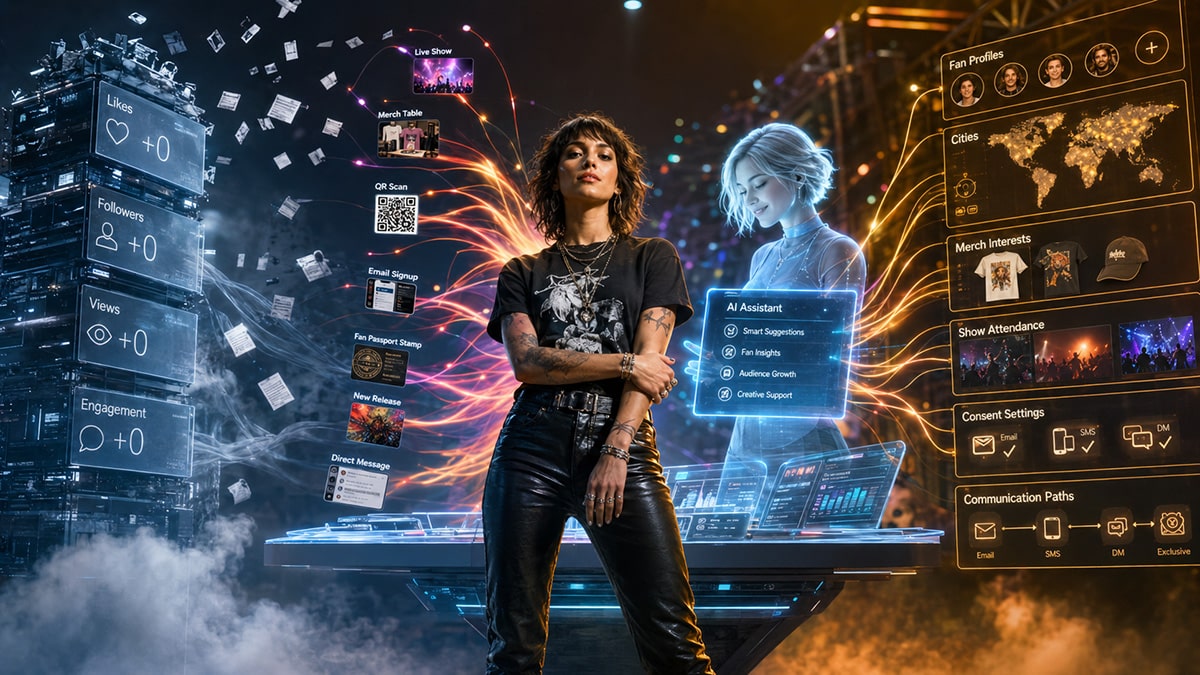
Making a Scene Presents – How To Build A Simple Artist CRM (Customer Relationship Management) Without Getting Overwhelmed
Listen to the Podcast Discussion
The Fan List Is Not The Boring Part
Somewhere along the way, independent artists were tricked into thinking the “business side” of music was a separate, joyless dungeon where creativity goes to die under a pile of spreadsheets. The myth says the real artist writes songs, plays shows, makes records, and posts into the algorithmic void while some mysterious business goblin with a laptop handles the rest. That myth has been very useful for platforms, labels, middlemen, and anyone else who benefits when artists stay disorganized.
The truth is much simpler and much more dangerous to the old system. Your fan list is not the boring part. Your fan list is the beginning of your independent music business.
Not your follower count. Not your monthly listeners. Not the number of people who tapped a heart while waiting for their microwave burrito. Your real business starts with the people who have given you permission to contact them directly. Those are the people who want to know when you are coming to their town. Those are the people who might buy the vinyl, grab the shirt, join the membership, bring a friend to the show, license a song, support a crowdfunding campaign, or become part of the small army that keeps your music alive when the platform gods are busy selling attention to somebody with a bigger ad budget.
That is what a CRM is supposed to help with. CRM stands for Customer Relationship Management, which sounds like something invented in a conference room with bad lighting and worse coffee. For artists, a CRM is simply a way to remember your fans, respect their permission, and communicate with them in ways that actually matter. It is not a corporate surveillance machine. It is not a creepy database where you collect every scrap of personal information like a digital hoarder with Wi-Fi. It is a relationship notebook with structure.
The goal is not to know everything about everybody. The goal is to know the right things, ask permission, organize it clearly, and use it to serve the fan better. That is how shows get better attended. That is how merch offers become less random. That is how release campaigns stop feeling like screaming into a snowstorm. That is how direct communication becomes a revenue path instead of another exhausting chore.
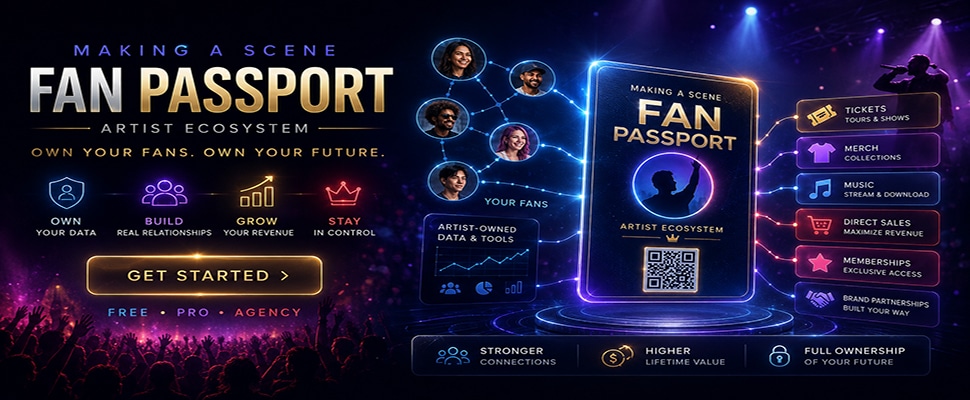
And yes, this is exactly where the Making a Scene Artist Fan Passport OS fits into the larger picture. A spreadsheet can get you started. An email platform can help you send better messages. A CRM can help you track the relationship. But the long-term goal is bigger than “having a list.” The goal is an artist-owned business system where your website, fan data, shows, QR codes, merch, rewards, email, text, AI analysis, and direct-to-fan revenue all work together instead of living in seven separate tabs and one cursed notebook from 2019.
Start Smaller Than Your Ego Wants
The first mistake artists make with CRM is trying to build the whole spaceship before they have learned how to ride the bicycle. They start imagining advanced automations, birthday campaigns, VIP scoring, fan journeys, merch triggers, regional segmentation, AI predictions, backstage access tiers, secret listening rooms, and a dashboard that looks like it was stolen from NASA.
Slow down, Captain Spreadsheet.
A simple artist CRM begins with one humble question: what do I need to know so I can communicate with this fan respectfully and usefully?
That question saves you from collecting garbage data. It also saves you from getting overwhelmed. If a piece of information will not help you invite someone to a show, thank them, send the right update, offer the right merch, understand their city, honor their consent, or build a stronger relationship, you probably do not need it at the beginning.
A starter CRM can be as simple as a Google Sheets spreadsheet, an Airtable base, or the contact tools inside an email platform like Mailchimp, Brevo, Kit, or MailerLite. If you want a more traditional small-business CRM, tools like HubSpot CRM, Zoho CRM, and Less Annoying CRM can work too, though many artists will find them more sales-team flavored than fan-community flavored.
The tool matters less than the habit. You are building a clean, permission-based record of real fan relationships. You are learning how to turn scattered attention into owned connection. You are refusing to let every show become a beautiful little explosion that leaves no useful trace behind.
The Information That Actually Matters
The first field that matters is the fan’s name. Not because you need to cosplay as a bank, but because “Hey Sarah, thanks for coming to the Asheville show” feels like a human being talking to another human being. “Dear valued subscriber” sounds like a printer jam wearing a necktie.
The second field is email address. Email is still one of the most important direct communication channels for artists because it does not depend on a social platform showing your post to a fraction of the people who already asked to hear from you. In the United States, commercial email has rules under the CAN-SPAM Act. The FTC’s business guidance says commercial emails must avoid deceptive headers and subject lines, include a valid physical postal address, provide a clear way to opt out, and honor opt-out requests within 10 business days. That is not a vibe. That is the rule.
The third field is city, state, region, or country. This is where CRM becomes useful for shows. If you are playing Richmond, you do not need to blast the entire planet with “Come see me Friday,” unless your fans own teleportation devices and have very flexible jobs. You need to reach people close enough to come. A fan’s location helps you send smarter show announcements, plan routing, identify strong markets, and avoid training fans to ignore you because half your emails have nothing to do with them.
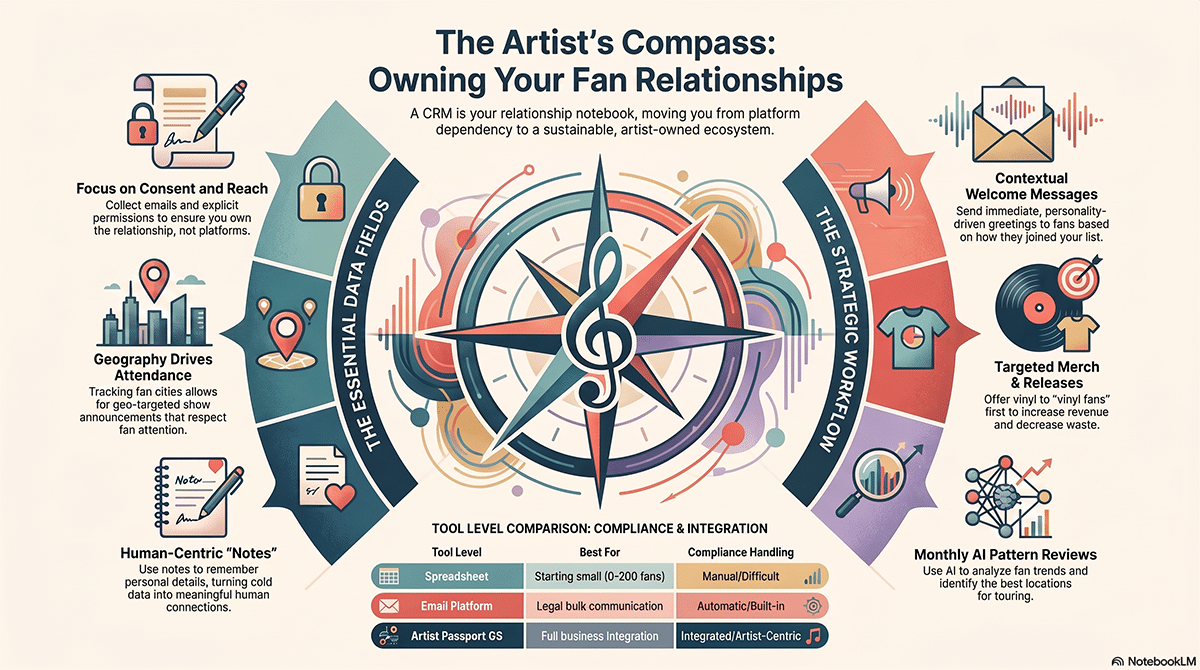
The fourth field is consent. This is the big one. Consent is not fine print. Consent is not “well, they bought a sticker once, so I now own their inbox until the sun burns out.” Consent means you know whether the fan agreed to receive email, SMS, app notifications, or other updates. It also means you record when and how they gave that permission. For artists with fans in the UK, the ICO’s PECR guidance says electronic marketing to individuals generally needs specific consent unless a limited “soft opt-in” applies to existing customers who were given a clear opt-out. For Canada, the CRTC’s CASL guidance says commercial electronic messages generally require consent, identification information, and a working unsubscribe mechanism. If you have international fans, the safest artist-friendly habit is simple: ask clearly, record permission, and make leaving easy.
The fifth field is source. Where did this fan come from? Did they scan a QR code at a show? Join from your website? Sign up through a merch table form? Enter through Bandcamp, Shopify, Square, Eventbrite, Bandsintown, or a giveaway? Source matters because it tells you which doors are actually working. If 60 people join from a QR code at your merch table and two join from a social post you spent three hours making, that is not a moral judgment. It is useful information. The data is quietly telling you where real connection is happening.
The sixth field is fan interest. This does not need to be weird. You do not need a psychological profile. You just need useful signals. Are they mainly interested in live shows, vinyl, CDs, shirts, house concerts, guitar content, songwriting videos, behind-the-scenes studio updates, VIP events, memberships, or new releases? A fan who loves live shows should hear about shows. A fan who buys vinyl should hear about vinyl. A fan who asked for songwriting stories might appreciate a release email that explains where the song came from. This is not manipulation. This is manners with a database.
The seventh field is activity history. Did they attend a show? Buy merch? collect a Fan Passport stamp? RSVP to a livestream? Join a membership? Click on a release announcement? Reply to an email? You do not need to track everything forever, but you do want enough history to understand the relationship. In the Making a Scene Artist Fan Passport OS, that history becomes more powerful because fan actions like following an artist, scanning QR codes, collecting stamps, responding to rewards, and engaging around shows can become part of a larger artist-owned business picture instead of being trapped inside separate platforms.
The eighth field is notes. This is where the human part lives. “Met at merch table in Knoxville.” “Bought the blue vinyl.” “Asked about house concert in fall.” “Photographer, may want press pass.” “Loves the acoustic version.” Notes are not for stalking. Notes are for remembering. There is a huge difference. One makes fans uncomfortable. The other makes them feel seen.
Ethics Are Not Optional Decoration
A fan CRM without ethics is just a spam cannon with better stationery. Nobody needs that. The world is already full of brands trying to sound like your best friend while stalking your shoe size. Artists have a chance to do this differently.
The ethical rule is simple: collect only what you need, explain why you need it, use it for the purpose the fan expected, protect it, and let people leave.
If you ask for an email address, tell fans what you will send. If you ask for a phone number, be extra clear because SMS feels more personal and intrusive than email. If you ask for a birthday, consider asking only for month and day, not the year, unless you truly need the year. If you ask for location, city and state are usually enough. You are not delivering a refrigerator. You probably do not need their full home address unless they bought something that must be shipped.
For U.S. email, the CAN-SPAM rules are about honest identity, honest subject lines, a valid postal address, and a working opt-out path. For UK and EU-style privacy thinking, the standard is more permission-forward and data-minimizing. The European Commission’s GDPR information frames personal data protection around rights, lawful processing, and control over personal information. For Canada, CASL is famously stricter than many artists expect, and the CRTC states that commercial electronic messages sent to recipients in Canada from another country still need to comply when CASL applies. In plain English, if your fan base crosses borders, do not play cowboy with consent.
This does not mean artists need to become privacy lawyers before selling a T-shirt. It means artists need to build clean habits early. Use permission-based forms. Do not buy email lists. Do not scrape addresses from social media. Do not add everyone who entered a contest unless they clearly agreed to marketing. Do not keep emailing people who unsubscribed. Do not hide the unsubscribe link like it owes you money.
The rebellious move is not spamming harder. The rebellious move is building trust while the rest of the internet burns its credibility for a 0.7 percent click rate.
Spreadsheet, Email Platform, CRM, Or Full Artist Business System?
A spreadsheet is the easiest place to start. Google Sheets is free, familiar, and good enough for a few hundred contacts if you are disciplined. Airtable feels more like a lightweight database and can be better when you want linked tables for fans, shows, merch, and campaigns. The upside is control and simplicity. The downside is that spreadsheets do not automatically handle unsubscribe compliance, email delivery, segmentation, or consent workflows unless you build those habits yourself. A spreadsheet is a notebook with columns. It will not save you from yourself.
An email platform is the next step. Mailchimp lets users organize contacts with groups, tags, and segments; Mailchimp describes groups as interest or preference categories that subscribers can help define, while tags can be used internally to organize contacts. Brevo also supports contact attributes and segments, and its help documentation explains that segments can save search conditions and update dynamically as contact data changes. Kit is popular with creators who want email sequences, landing pages, and audience tagging. MailerLite is another approachable option for artists who want email campaigns, signup forms, and automations without immediately needing an enterprise cockpit.
The strength of an email platform is that it helps you communicate legally and consistently. You can create forms, manage unsubscribes, send campaigns, and segment fans by interest or location. The weakness is that email platforms are not always built around the specific life of an artist. They may know a subscriber clicked an email, but they may not naturally understand that the person also came to the merch table in Chattanooga, collected a show stamp, bought the hoodie, and should get first notice when you return within 90 miles.
A traditional CRM like HubSpot CRM, Zoho CRM, or Less Annoying CRM can help with contact records, notes, pipelines, tasks, and follow-ups. These tools can be useful if you are managing booking contacts, sponsors, licensing leads, private event buyers, house concert hosts, donors, or industry relationships. But for fan relationships, some traditional CRMs can feel like wearing a three-piece suit to load out at midnight. Powerful, yes. Artist-shaped, not always.
Then there is the full artist business system approach, which is where the Making a Scene Artist Fan Passport OS becomes different from a normal CRM. It is not just a place to store contacts. It is designed as an artist-owned ecosystem where the website, Fan Passport app, fan permissions, QR codes, show activity, rewards, merch moments, direct communication, and AI analysis can work together. The Fan Passport system is built around the idea that fans choose to follow artists, share permission-based data, collect stamps, receive updates, and participate in rewards. That turns fan data into a living relationship instead of a dead export file.
That distinction matters. A spreadsheet can tell you who is on the list. A CRM can tell you what you know about them. A complete business system can help you decide what to do next.
Where AI Fits Without Making It Creepy
AI should not replace your relationship with fans. If you use AI to spray fake intimacy over a list of people you barely understand, congratulations, you have invented spam with jazz hands.
Used properly, AI helps artists see patterns they might miss. That is where tools like ChatGPT, Claude, Gemini, and Microsoft Copilot can be useful, especially when working from anonymized or summarized data. The key is to avoid casually uploading sensitive personal fan information into random tools without understanding the privacy settings, terms, and risks. AI does not need every fan’s private details to help you think. Often, it only needs a clean summary.
For example, an artist could export a consent-safe summary from their CRM showing fan counts by city, recent show attendance by region, merch interest categories, email engagement by campaign type, and Fan Passport stamp activity. AI can then help answer practical questions. Which cities look ready for a return show? Which merch items seem strongest among live-show fans? Which fans are engaged but have not bought yet? Which subject lines worked best for release announcements compared with show announcements? Which regions have enough fans to support a house concert weekend? Which fans should get a thank-you message instead of another sales pitch?
That last part is important. AI should not only help you sell. It should help you serve. If your data shows that 40 fans came to three shows in one year, maybe the next move is not “buy my deluxe bundle.” Maybe the next move is “thank you for being part of this.” Relationship first. Revenue follows trust.
Inside the Making a Scene Artist Fan Passport OS, AI analysis can become especially powerful because the data is artist-centered. Instead of asking AI to guess from social vanity metrics, the artist can analyze real fan actions: follows, stamps, show engagement, merch moments, location, reward activity, and communication preferences. That is the difference between asking the algorithm for mercy and asking your own business what your fans are showing you.
AI can also help you write better messages without sanding off your personality. You can ask it to draft three versions of a show announcement for fans within 50 miles of Philadelphia, one warm, one funny, and one urgent. You can ask it to turn a merch table note into a thank-you email. You can ask it to summarize fan replies after a release. You can ask it to identify common themes in survey responses. But the final voice should still be yours. Fans signed up for you, not a beige robot wearing your hat.
Shows: Stop Promoting To The Whole Planet
The most obvious use of an artist CRM is show promotion. It is also where many artists immediately reveal that their “marketing plan” is mostly panic with a Canva account.
When you have location data, you can stop blasting everyone about every show. Fans in Atlanta should hear about Atlanta. Fans in Nashville should hear about Nashville. Fans within a reasonable drive should get a different message from fans across the country. A CRM helps you avoid exhausting people with irrelevant updates.
A simple show workflow might look like this in real life. Six weeks before the show, you email fans in the region with the announcement and ticket link. Three weeks before the show, you send a story-driven reminder about why this show matters. One week before the show, you send a short reminder with the practical details. The day after the show, you send a thank-you message to people who scanned the QR code, joined the Fan Passport, bought merch, or checked in. A few weeks later, you invite them to the next step: a live recording, a membership, a new release, a private event, or early access to the next show.
This is not aggressive. This is organized. The difference between “annoying” and “useful” is often relevance.
QR codes are a major bridge here. A QR code at the merch table, on a poster, on a table tent, or on the back of a sticker can send fans to a signup form, a Fan Passport follow page, a reward, or a post-show offer. The point is to capture the moment while the emotional connection is still alive. If someone just watched you play your heart out and is standing ten feet from you with a phone in their hand, that is not the time to say, “Please remember to search for me later on a platform designed to distract you every four seconds.”
That is the time to invite them into your world.
Merch: Use Data To Stop Guessing
Merch is one of the clearest places where fan data turns into real money. Not fake exposure money. Not “great opportunity” money. Actual money with numbers and rent-paying potential.
A simple CRM can help you track who is interested in vinyl, CDs, shirts, hats, posters, limited bundles, lyric books, signed items, digital downloads, or VIP experiences. If you sell through Bandcamp, Shopify, Square, or Stripe, you may already have order data that can teach you what fans buy and where they are. The challenge is getting that knowledge into a structure you can use.
If 30 fans in your CRM have bought vinyl, they should get early notice when the new pressing arrives. If fans in one city consistently buy shirts at shows, bring enough shirts to that city. If fans who collect Fan Passport reward stamps respond well to limited merch drops, offer them first access. If AI analysis shows that your acoustic fans buy different items than your high-energy festival crowd, do not treat them like the same person wearing two hats.
Merch data also helps reduce waste. Nothing says “I am an independent artist” like having 87 extra small shirts and one large left after a show because hope was your inventory strategy. Data will not make merch perfect, but it can make it less ridiculous.
Releases: Talk To Fans Like They Are Part Of The Story
Most release campaigns are backwards. Artists spend months making the music, then treat the release like a one-day panic parade. They post the cover, beg for pre-saves, drop the link, refresh the stats, and wonder why the whole thing feels like yelling into a canyon.
A CRM lets you turn a release into a relationship arc.
Before the release, you can tell your most engaged fans the story behind the song. You can invite Fan Passport followers to collect a release stamp. You can give your email list early access to a video, demo, lyric page, or behind-the-scenes note. You can ask fans which city should get a listening party. You can segment messages by interest, sending studio-process notes to fans who like recording content and show-focused messages to fans who mainly care about tour dates.
After the release, you can watch what happens. Who clicked? Who replied? Who shared? Who bought the download? Who bought the vinyl? Who joined after hearing the song live? Who ignored five emails and maybe needs fewer messages? AI can help summarize these patterns, but the artist has to decide what they mean. Data is a flashlight, not a manager.
This is where the Making a Scene philosophy really matters. Streaming platforms are discovery tools, but they are not the whole business. Spotify, Apple Music, YouTube, and TikTok can help people find you. Great. Use them. But discovery without capture is a leaky bucket with a nice logo. The CRM is how you turn discovery into connection. The Fan Passport is how you turn connection into participation. The business system is how you turn participation into revenue that comes back to the artist.
Direct Communication: The Inbox Is A Stage Too
Every artist understands stage presence. Not every artist understands inbox presence. But direct communication has its own performance rules.
Do not only email when you want money. Do not make every subject line sound like an emergency siren. Do not pretend a mass email is a personal message if it clearly is not. Do not send the same thing to everyone forever. Do not write like a corporate intern trapped in a branded content factory.
Write like a person. Tell fans what is happening. Tell them why it matters. Give them a reason to care. Thank them. Invite them. Reward them. Occasionally make them laugh. If your band has a strange sense of humor, let it breathe. If your songs are deeply emotional, let the email carry some of that honesty. If your live show is sweaty, loud, and half-unhinged in the best way, maybe your emails should not sound like a dental reminder.
A CRM helps because it lets you send the right message to the right people. New fans can get a welcome message. Local fans can get show announcements. Merch buyers can get early access. Superfans can get private offers. Lapsed fans can get a gentle re-introduction. Fan Passport followers can get reward updates. You are not shouting through a megaphone at a crowded mall. You are opening different doors for different people.
SMS should be used more carefully. Text messages feel immediate and personal, so they should be reserved for things that deserve that level of attention, like day-of-show reminders, ticket links, important updates, or rewards the fan clearly asked to receive. For Canada, the CRTC states that commercial texts can fall under CASL when sent to an electronic address, requiring consent, identification, and unsubscribe. For the UK, ICO guidance treats texts as part of electronic mail marketing rules. The safest practice is obvious: do not text people unless they clearly opted in to texts, and make stopping easy.
Tags, Segments, And The Art Of Not Losing Your Mind
Once you have more than a few dozen fans, you need a simple organization system. This is where tags and segments come in.
A tag is usually a label attached to a contact. It might say “Atlanta,” “vinyl buyer,” “house concert lead,” “street team,” “VIP,” “met at merch table,” “Fan Passport follower,” or “press contact.” A segment is usually a group created from conditions. For example, you might create a segment of fans within 75 miles of Chicago who opted into email and clicked on a show announcement in the last six months. Email tools define these features differently, so read the documentation for the platform you use. Mailchimp’s groups guide explains groups as subscriber-facing interests or preferences, while tags are often used internally. Brevo’s segmentation guide describes segments as saved search conditions that can be reused for campaigns and contact management.
The trick is to keep tags simple. Artists love making things complicated because we are sensitive people with dangerous imaginations. Resist. You do not need 400 tags named things like “possible vinyl person maybe from Ohio?” That road ends in madness.
Start with tags for location, source, interest, activity, and relationship level. Keep them consistent. Decide on naming rules. “NYC,” “New York,” “New York City,” and “ny fans” should not all exist unless you enjoy suffering. Use one format and stick to it.
A good CRM does not require perfection. It requires enough order to take the next useful action.
The Simple Artist CRM Workflow
The workflow begins when someone enters your world. That might happen at a show, on your website, through a QR code, from a merch purchase, through a Fan Passport follow, from a release campaign, or through a membership. Wherever it happens, the fan should know what they are signing up for and what they will receive.
After signup, the fan should get a welcome message. This does not need to be fancy. It should sound like you. Thank them, tell them what kind of updates you send, point them to one meaningful next step, and remind them they can unsubscribe or update preferences. If they joined through Fan Passport, explain how stamps, rewards, and updates work. If they joined at a show, mention the show. Context makes communication feel human.
Then you update the record. The source gets recorded. The location gets recorded if they shared it. Their consent status is clear. Any relevant interest or activity gets tagged. If they bought merch, that gets noted or imported. If they attended a show, that becomes part of the history.
Next, you communicate based on relevance. Show announcements go to the right regions. Merch offers go to the fans most likely to care. Release stories go to fans who want deeper connection. Thank-you messages go to people who showed up. VIP offers go to fans who have earned that invitation through engagement, not because you got impatient and decided everyone is a VIP now.
Finally, you review what happened. This is where AI can help. Once a month, look at fan growth by source, city, campaign, show, merch interest, and engagement. Ask what the data is telling you. Ask where the next show should be. Ask which fans need thanks. Ask which messages worked. Ask which offers fell flat. Ask whether you are building owned relationships or just making more noise.
That monthly review is where an artist CRM stops being a list and becomes a business brain.
The Real Point Is Ownership
The old music industry trained artists to chase permission. The new platform economy trained artists to chase attention. Neither one is enough.
Permission from gatekeepers can disappear. Attention from platforms can vanish. The algorithm does not love you. It does not hate you either. It is a machine built to serve its own business model, and your song is just one more object flying through the feed.
Owned fan relationships are different. When a fan joins your list, follows you in Fan Passport, gives consent, buys directly, collects a reward, attends a show, replies to an email, or supports your work, that relationship becomes part of your business. Not in a cold corporate way. In a real way. A human way. A way that can become tickets, merch, memberships, house concerts, licensing leads, crowdfunding support, patronage, and long-term community.
That is how a music industry middle class gets built. Not from one viral miracle. Not from waiting for a label to decide you are useful. Not from feeding every platform until you are exhausted and still broke. It gets built when artists own their data, respect their fans, communicate directly, and turn real relationships into sustainable revenue.
A simple CRM is the first step. The Making a Scene Artist Fan Passport OS is the bigger system. AI is the assistant that helps you understand the patterns. Your website is the home base. Your fans are the community. Your ethics are the foundation. Your music is still the reason any of it matters.
So start small. Create the spreadsheet if that is where you are. Use an email platform if you are ready. Move into a full artist-owned business system when you want the pieces connected. Ask permission. Keep good records. Send better messages. Thank people more often. Stop worshiping fake metrics. Stop letting platforms own the relationships you earned in real life.
The fan list is not homework.
It is the map out of dependency.
 |  Spotify |  Deezer |  Breaker |
 Pocket Cast |  Radio Public |  Stitcher |  TuneIn |
 IHeart Radio |  Mixcloud |  PlayerFM |  Amazon |
 Jiosaavn |  Gaana |  Vurbl |  Audius |
 Reason.Fm | |||
Find our Podcasts on these outlets
Subscribe to Our Newsletter
Discover more from Making A Scene!
Subscribe to get the latest posts sent to your email.


