
Making Recorded Music a Product Again




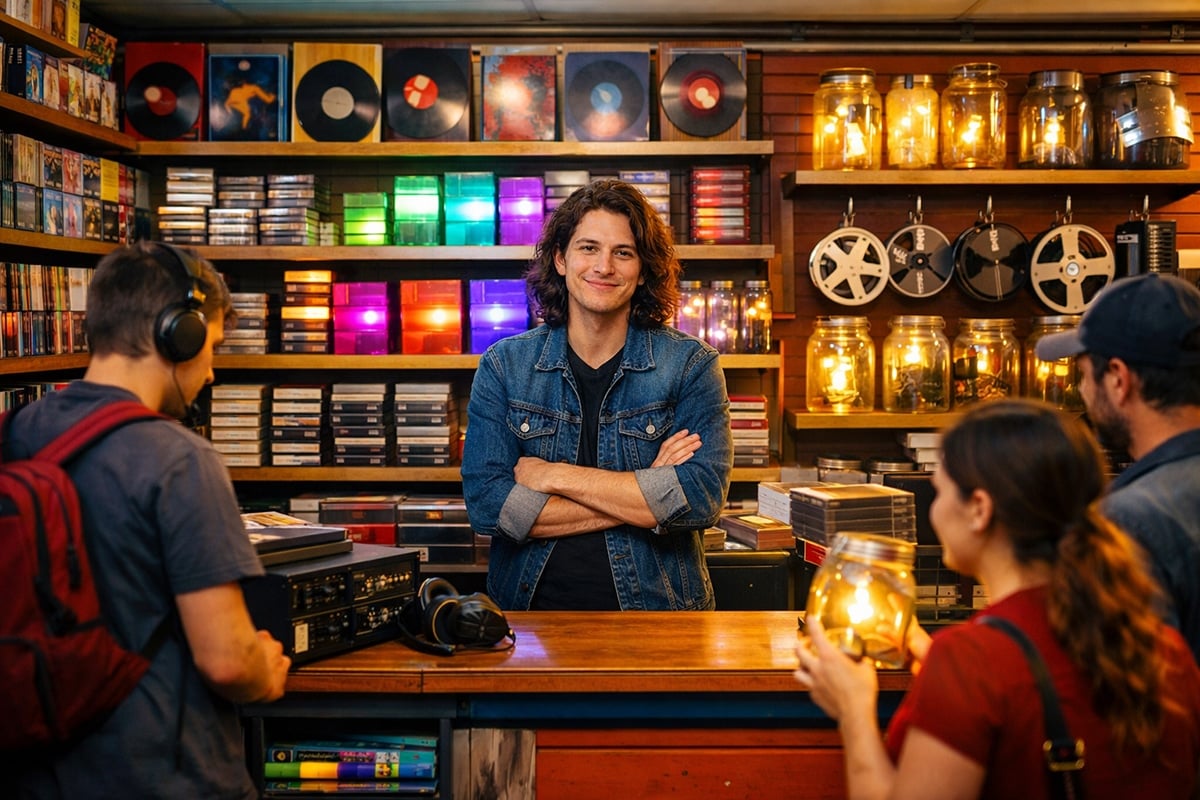
Making a Scene Presents – Making Recorded Music a Product Again
Listen to the Podcast Discussion
There was a time when recorded music was the thing. The record was not the flyer. It was not the teaser. It was not the loss leader for a T-shirt, a tour, or a playlist slot. It was the product. Fans saved up for it, hunted for it, lined up for it, argued about it, and lived with it. The album sat on a shelf, in a car, in a stereo, in a stack by the bed. It had weight. It had ritual. It had value.
Now a lot of indie artists are stuck in a bad joke. They make the most expensive thing in their business, then hand it over to platforms built to train listeners that music should feel endless, cheap, and disposable. The song becomes background utility. The album becomes content. The recording becomes marketing for the real business, which lately means touring, merch, and trying not to drown. And yet the bigger joke is this: the public still pays for music when music feels like a real object, a real event, or a real piece of access. In the U.S., streaming made up 82% of recorded music revenue in 2025, but vinyl still passed the $1 billion mark. Globally, streaming drove most recorded music income in 2025, yet physical formats also grew, pushed by strong vinyl demand. That does not say fans refuse to buy music. It says fans will not pay much for the plainest possible version of it anymore.
That is the opening. That is the whole fight. The working-class indie artist does not need to revive 1997. The artist needs to redesign the offer. The base stream can stay where it is, out there in the algorithmic ocean, doing its job as discovery. But the recording itself has to become a product family again. Not just one flat file. Not just “here is my single, please care.” A song can become an exclusive edition, a stem pack, a sync-ready asset, a subscriber reward, a collector object, a live souvenir, a fan passport unlock, a city-specific keepsake, a membership key, a teaching tool, a remix source, a licensing catalog item, and a direct sale that puts real money in the artist’s own pocket.
That is the attitude shift this moment demands. Stop thinking of recorded music as one thing. Start thinking of it as inventory.
The lie was never “nobody pays for music”
The lie was that fans stopped valuing recordings. What really happened is that the industry stripped away the things that made recordings worth buying and then acted shocked when the price collapsed. The average streaming experience offers convenience, not ownership. Access, not identity. Exposure, not intimacy. That is a utility model. Utilities are great if you own the pipes. Most indie artists do not own the pipes.
But direct-to-fan platforms keep proving the same point over and over. Bandcamp says fans have paid artists and labels $1.7 billion through the platform, including hundreds of millions in the last year alone across digital albums, tracks, vinyl, CDs, cassettes, and merch. Bandcamp also says its artist accounts are free, it takes 15% on digital music and 10% on merch, and the remainder goes to artists on average within 24 to 48 hours through PayPal. That is not a theory. That is evidence that when the offer is framed as support, ownership, and discovery in an artist-first setting, people still open their wallets.
So the mission is not to beg listeners to behave like it is 1978. The mission is to make the recording feel worth purchasing in 2026. That means giving it shape. Context. Scarcity. Function. Story. Access. Utility. A plain stream is not a product. It is a sample. It is the free smell from the bakery. The product starts when the artist gives the recording a reason to be owned.
Recorded music has to do more than one job
For years, artists were told to make the song, upload the song, promote the song, and pray the song turns into ticket sales. That is backwards. A recording should not be a dead end. It should be a machine that does several jobs at once.
First, it should still attract new listeners. That is what streaming is good for. Second, it should give current fans something they can buy directly. Third, it should create reusable business assets. Fourth, it should deepen the relationship between artist and fan. Fifth, it should open side doors into licensing, education, collaboration, or community. When a recording does all of that, it stops being content and starts being infrastructure.
This is where a lot of indie artists undersell themselves. They think product means vinyl, CD, or a download. Those are products, yes. But a product is really any version of your recording that solves a want. Some fans want the finished song before everybody else. Some want the raw session files. Some want the live take from the night they were in the room. Some want instrumentals for workouts, karaoke, dance classes, or cover videos. Some want a collector edition tied to a show, a city, or a limited window. Some want access to your vault. Some want to hear how the song changed from demo to master. Some want a license they can actually use in a podcast, short film, or indie game. Your job is not to guess one perfect product. Your job is to create several right-sized products from the same body of work.
That is how a working artist makes the recording pay rent again.
Sell ownership again
Ownership is not dead. Plain ownership is dead. A normal MP3 with no story around it feels like a copy. A designed edition feels like an object.
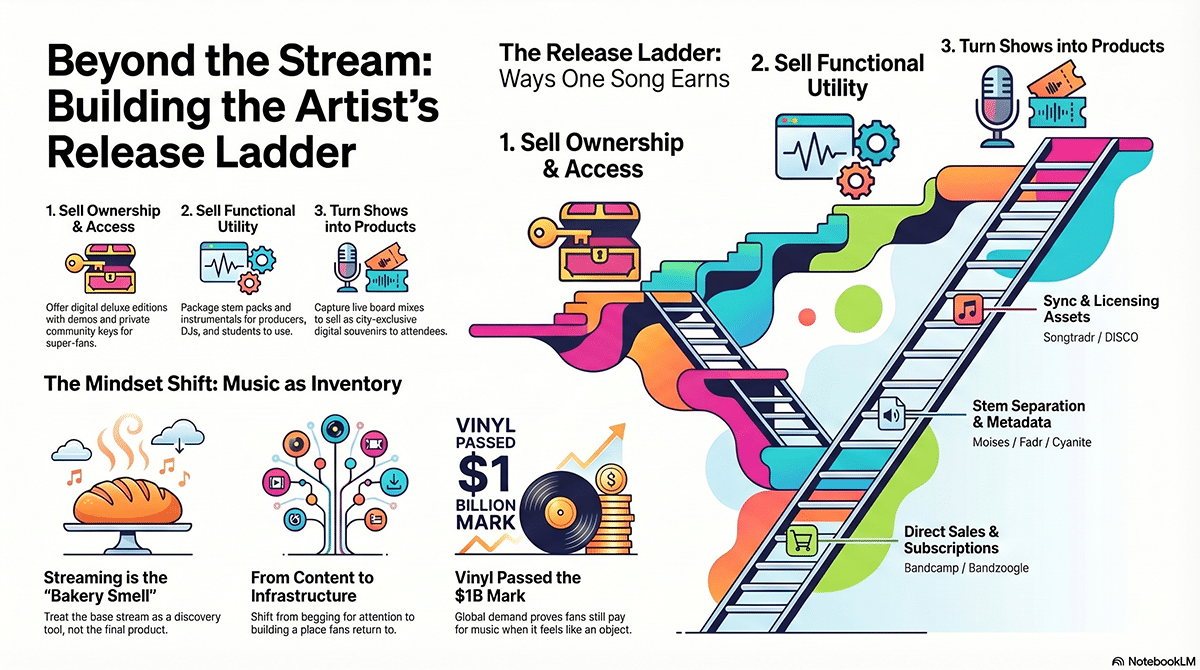
This is why exclusive editions still work. A digital deluxe version can include alternate artwork, lyrics, liner notes, a thank-you voice memo, a demo, an acoustic take, and a commentary track where the artist explains how the song was built. That package does not require a pressing plant. It requires intention. Fans are not just buying audio. They are buying the feeling that they own a fuller, closer, more human version of the work.
Bandcamp makes this kind of thinking easier because it supports digital sales, physical sales, and the bundling of digital music with physical items, so a fan who buys vinyl or a shirt can also get instant streaming and optional download access. It also offers artist subscriptions, which let artists set a monthly or annual price and deliver music and extras on a recurring basis. That matters because ownership does not have to be one-and-done anymore. It can be serialized. It can become a club.
This is where the working-class indie artist can get smart. You do not need 10,000 fans to make this work. You need a small group of real supporters who want more than a stream. Give them numbered digital editions. Give them “first press” downloads that disappear after 72 hours. Give them an album booklet PDF with photos, session notes, and stories. Give them the rough mix edition. Give them the “night shift version” made for fans who buy before midnight. The point is not gimmicks. The point is to restore a sense that buying recorded music means getting something that is yours.
Sell access, not just files
Sometimes the real product is not the audio file at all. It is the door the audio opens.
Patreon now positions itself as a place where creators build community with their biggest fans, and it supports memberships as well as digital products, including audio, video, and downloadable files. EVEN is built around direct-to-fan releases, early access before streaming, exclusive content, fan chat, and daily payouts. Nina Protocol lets artists set releases at any price, in limited or unlimited quantities, and use those releases as keys that unlock bonus material; Nina also says artists receive 100% of the sale price when supporters purchase a release. Those are three different roads to the same idea: the recording can be the ticket into a deeper room.
That matters because fans often pay faster for access than for format. A fan may shrug at a regular single on a platform they already rent. That same fan may happily pay for “hear it seven days early,” “join the private listening chat,” “get the post-release Q&A,” or “unlock the live mix from your city.” The recording becomes the proof of membership.
This is where artists can start taking power back from social media. Stop treating your best music like bait scattered across rented land. Use the base stream to attract. Then move serious fans into your own access system. A subscriber vault. A buyer-only chat. A release club. A private page on your site. A bonus archive that grows over time. Once recorded music becomes a pass, the artist stops begging for attention and starts building a place fans return to.
Sell usefulness
This is the most ignored lane, and it may be the one with the most upside for working musicians.
Not every buyer wants to consume a song the same way. Some want to listen. Some want to use it. That one word changes everything. The moment a recording becomes useful, it stops being just entertainment and starts becoming a tool.
Stem packs are the clearest example. A fan who produces can buy stems to study your arrangement, make a remix, or learn your mix decisions. A DJ can use them for live edits. A student can use them for practice. A collaborator can use them to build a new version. A church band, wedding singer, music teacher, dance studio, podcaster, or content creator may want a clean instrumental, a no-lead-vocal mix, or a 60-second edit. Suddenly the song is not just a song. It is raw material.
AI tools can help here in very practical ways. Moises offers stem separation, backing-track creation, and high-fidelity exports up to 48kHz/24-bit WAV in its pro features. Fadr offers stem splitting, vocal isolation, MIDI extraction, chord detection, key finding, tempo finding, and even a DAW plugin for stem extraction. None of that means you should let AI replace your art. It means you can turn one finished master into several sellable utilities without spending days buried in cleanup work.
The smart move is to package usefulness clearly. Do not just throw stems into a zip folder and hope for the best. Create a “Producer Edition.” Include tempo, key, lyric sheet, chord chart, BPM-marked stems, instrumental mix, clean edit, and a note that explains what rights the buyer does and does not have. Now the product has shape. Now it has a market.
A lot of indie artists are sitting on a second customer base they do not even see. Producers, beat makers, cover artists, rehearsal bands, music students, filmmakers, indie game developers, and creators of all kinds need good audio building blocks. Your recording can serve them. That means the same song can earn from listener demand and maker demand at the same time.
Turn every show into a recorded product factory
Live music does not have to compete with recorded music. Live music can manufacture recorded products.
Think about what usually happens after a good show. Fans go home with a memory, maybe a shirt, maybe a blurry phone clip. The feeling fades. The artist moves on. Money is left on the table. But that same show can produce a paid live EP for attendees, a city-exclusive board mix, a one-song encore recording, a signed thank-you download card, or a next-day “you were there” bundle sent only to ticket buyers.
This works because live context restores value to recordings. A stream is abstract. A show-specific recording is personal. The fan is not buying generic audio. They are buying proof of a shared night.
This is where your recorded music starts behaving like memorabilia. If you play Atlanta on Friday, that audience can get “Live in Atlanta: one-night mix” by Saturday afternoon. If you play a listening room, you can sell the stripped-down acoustic set to that room only. If the crowd sang the bridge louder than anywhere else on tour, that version becomes special because of the crowd, not despite it. A recording tied to a room, a date, and a story feels collectible again.
Web3 tools can make this even stronger without turning the whole thing into crypto theater. POAP describes itself as Proof of Attendance Protocol and lets people mint digital mementos for events. POAP’s help docs also say a POAP can be reserved with an email address and minted to a wallet later, which matters because it lowers the barrier for normal fans who are not deep in Web3. That means a fan can attend your show, claim a digital proof of attendance, and use that proof later to unlock the attendee-only live mix or city-specific bonus track. The token is not the product by itself. It is the receipt, the memory, and the access pass.
That is the kind of Web3 that makes sense for a working artist. Not speculation. Not casino nonsense. Just verifiable fan history tied to music products.
Sync licensing is one of the best ways to make recordings act like assets
A lot of artists still treat sync as a lucky break. That is the wrong mindset. Sync is product thinking.
Songtradr says music licensing is basically renting your music to someone else instead of selling it outright, in exchange for fees and royalties. The platform also pitches itself to artists as a place to distribute, license, and monetize music. DISCO is built to organize, share, and discover tracks, and its sync tools emphasize searchable catalogs and mini-sites that music supervisors and clients can search. Cyanite uses AI to tag tracks by mood, genre, instruments, tempo, and lyric themes, and it creates auto-descriptions meant to help with licensing, playlisting, and catalog management. Put those together and you can see the bigger truth: a sync-ready recording is not just art. It is licensable inventory.
The working-class indie artist should start building songs like they are building shelves in a small store. Every song does not need to chase radio. Some songs can be made ready for film, ads, podcasts, trailers, YouTube creators, indie games, or branded content. That means keeping clean metadata, exporting instrumentals, making 30-second and 60-second edits, having clean versions ready, keeping your splits clear, and being able to say fast whether the song is one-stop or not.
That is where AI becomes useful again. Not as the songwriter. As the warehouse manager. Let AI help tag mood, pace, genre, energy, lyrical themes, and comparable sounds so your catalog is easier to search and pitch. Let it help draft first-pass descriptions. Then clean them up in your own voice. The faster your catalog can be understood, the faster it can be licensed.
Sync also teaches an important lesson about recorded music in general: context increases price. A track on a streaming platform is one thing. The same track properly described, neatly edited, rights-cleared, and ready for visual media is a different product with a different customer and a different margin.
AI should multiply the value of the work, not replace the work
This is where artists need to stay disciplined. AI can either cheapen your catalog or help you productize it. The difference is intention.
The lazy use of AI is trying to make more filler. The smart use is making your real recordings do more jobs. Use it to separate stems. Use it to create backing tracks. Use it to generate metadata. Use it to organize your vault. Use it to find the emotional language that helps a supervisor, fan, or buyer understand a track. Use it to speed alternate edits. Use it to help turn your catalog into a better store.
That matters because time is money, and working artists do not have extra time. If a tool can help you take one song and quickly produce a clean edit, instrumental, rehearsal version, and stem bundle, that is not selling out. That is labor efficiency. That is how a middle class gets built. The artist keeps authorship and uses new tools to make the authored work travel farther.
There is also a fan angle here. AI can help segment offers. Your biggest fans do not need the same product your casual listeners do. A supporter who buys every release might get the demo notebook edition. A local showgoer might get the live city mix. A producer on your list might get the stem lab version. A sync contact might get the metadata-clean licensing folder. One catalog. Several lanes. Better fit.
That is what modern product thinking looks like in music. Not replacing the song. Wrapping the song in smarter offers.
Web3 makes more sense when it is boring
The best Web3 uses for indie music are the least flashy ones.
Unlock Protocol says it lets creators monetize content in a decentralized way, and its guides define token gating as restricting access to content or areas of a site to people who hold a particular NFT or token. That is useful because it turns recorded music into programmable access. A fan can buy one release and unlock a vault. A show attendee can collect one proof token and unlock the city mix. A member can hold one pass and get every monthly demo drop, live stream archive, and secret single.
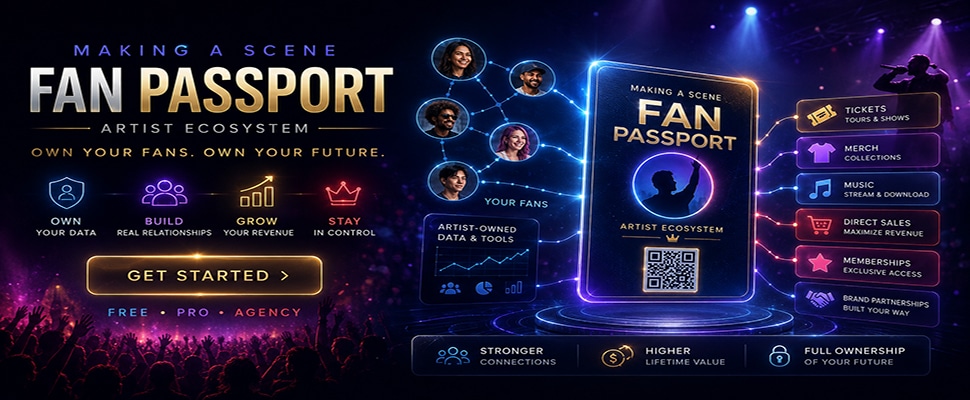
That kind of system is powerful because it ties product, identity, and memory together. The fan is no longer just another anonymous stream inside someone else’s dashboard. The fan becomes a known participant inside the artist’s own ecosystem. That is the whole Making a Scene argument in practice. Own the relationship. Own the data. Own the sales path. Own the music. Own the memory layer around the music.
Nina Protocol gives another good model. It frames releases as something fans can collect, and its help docs say downloading a release and accessing bonus material requires collecting it. One recent example on the platform was Machinedrum releasing a single that was exclusive on Nina and Bandcamp for a limited window and included a bonus-material zip file. That matters because it shows exclusivity still works when the release is framed as a collectible direct-to-fan event instead of a plain upload.
Again, the lesson is simple. Web3 is not the product. It is the rails. The real product is a better relationship around the recording.
One song should be able to earn ten ways
This is the mental reset most artists need.
A single should not come into the world as one file with one price and one fate. It should arrive with a release map. The streaming version can be the public doorway. The direct sale can be the higher-quality download. The deluxe edition can include extra notes and art. The stem edition can serve producers and remixers. The instrumental can serve performers and content creators. The clean version can serve licensing. The live version can serve ticket buyers. The subscriber version can include a voice memo or demo. The collectible version can be limited by date, city, or quantity. The sync package can sit in a clean folder ready for pitches.
That is not overkill. That is sane business. Restaurants do not make one ingredient and sell it one way. They use the same ingredients across dishes. Filmmakers do not shoot one scene and use one frame. They cut trailers, teasers, behind-the-scenes pieces, stills, commentary, and extras. Authors do not just sell the hardcover. They sell ebook, audiobook, signed copy, deluxe edition, workbook, and course. Music is one of the only fields where artists were trained to believe their most valuable work should mainly generate fractions of pennies unless they leave home and physically perform it. That idea needs to be thrown in the trash.
The recording is not supposed to be a brochure for your real business. The recording is part of the real business.
A working-class DIY setup that can actually do this
The good news is that building this kind of system no longer requires label money. It requires a clear stack and a clear offer.
If you want the simplest direct-sale path, Bandcamp is still strong for digital music, subscriptions, merch, and bundles. If you want your own branded storefront with no commission on sales, Bandzoogle says it lets artists sell music and merch direct-to-fan from their own sites, commission-free, and connect Stripe or PayPal. If you already run WordPress and want maximum control over data, checkout, and site ownership, WooCommerce positions itself as an open-source ecommerce platform with full control over checkout, data, and features, and its Audio Player extension supports previews and downloadable audio products. If you want a storefront built around digital delivery, Shopify’s Digital Downloads app and help docs show it can deliver songs and other files automatically after purchase.
If your goal is to build a release club, a fan vault, or a members-only archive, Patreon works for recurring support and downloadable media, and EVEN is built specifically for direct-to-fan releases, early access, exclusive content, and fan chat. If you want a more Web3-native release layer where buyers collect music and unlock bonus material, Nina Protocol is worth a serious look.
If your goal is to create more useful versions of the same recordings, Moises and Fadr can help you separate stems and build alternate assets faster. If your goal is to make your catalog sync-ready, Songtradr, DISCO, and Cyanite can help you package, tag, describe, search, and pitch your recordings more professionally. If your goal is to use Web3 in a fan-friendly way, POAP and Unlock Protocol give you a way to tie attendance, membership, and access back to the music itself.
That is already enough tech for a real business. The trick is not adding more tools. The trick is making your recordings travel through them with purpose.
How to take it back with one single
Let’s bring this down to street level.
Say you are a DIY artist releasing one new single next month. The old model says you upload it everywhere, post about it for two weeks, and hope. The better model is to build a release ladder.
Start by deciding that streaming is your top-of-funnel sample, not your whole product. Before the stream goes live, offer a paid early-access edition direct to fans. That edition can include the song, cover art, a lyric sheet, and a short voice memo about why you wrote it. A little later, offer a producer edition with stems, BPM, key, and instrumental. On release week, sell a supporter edition that includes the demo and an acoustic version. At your release show, capture the board mix and send a link the next day only to attendees or buyers. Thirty days later, put the song into your subscriber vault with commentary and an unreleased companion piece. Meanwhile, export a clean edit and instrumental and file the song into your sync catalog with clear metadata.
That is one song doing several jobs. One session. One core recording. Many doors.
This is not about draining your fans. It is about respecting the truth that different fans want different depths of connection. The casual listener gets the stream. The supporter gets the story. The producer gets the stems. The attendee gets the memory. The supervisor gets the clean asset. The collector gets the limited version. Everybody is not asked to buy everything. Everybody is invited to buy the version that fits them.
That is a healthier business because it is based on consent and fit instead of endless begging for generic support.
Recorded music becomes valuable when it helps fans say who they are
There is one more piece most artists miss. Fans do not just buy music because it sounds good. They buy it because it says something about them.
A generic stream says almost nothing. A limited city edition says, “I was there.” A member-only live archive says, “I am inside this circle.” A demo edition says, “I care enough to hear the unfinished version.” A collectible tied to your fan passport says, “I have history with this artist.” The product is not just audio. It is identity.
That is why version culture matters so much. Different versions let different fans locate themselves in the story. The person who bought the first-run demo pack is not just a customer. They are an early believer. The person who unlocked the tour-stop mix is not just a listener. They are a witness. The person who bought the stem edition is not just a fan. They are a participant.
This is how you rebuild the middle class layer in music. Not by waiting for a platform to suddenly become fair. Not by hoping streams magically turn into grocery money. By making the art ownable again, useful again, memorable again, and close again.
The future belongs to artists who treat recordings like property, not promo
Here is the hard truth. If recorded music only functions as promo, then the artist is trapped in a treadmill. Always posting. Always teasing. Always driving traffic somewhere else. Always hoping the song will sell something other than itself.
That is not a stable life. It is not a middle class. It is not independence.
But if recorded music becomes product again, everything changes. The catalog starts earning in layers. The fan relationship deepens because buying music once again means entering the artist’s world. The live show stops being the only place where value gets captured. The song becomes a long-term asset instead of a short-term splash. AI helps you build more usable versions of your work. Web3 helps you verify access, attendance, and membership. Sync turns your recordings into licensable inventory. Direct sales put money and data back in your hands.
That is the real point. “Making recorded music a product again” is not nostalgia. It is leverage. It is how indie artists stop acting like unpaid suppliers to giant access platforms and start acting like owners of a catalog business.
The stream can still exist. Let it do its job. Let it attract. Let it whisper. Let it introduce.
But the sale, the story, the memory, the access, the exclusivity, the usable assets, the collectible editions, the live souvenirs, the subscriber vault, the sync folder, the fan passport unlocks, the stem packs, the backstage versions, the direct-to-fan windows, the city drops, the limited runs, the owned data, the owned store, the owned relationship, that is the business.
And that business is how a working artist starts building something the old system never wanted them to have in the first place.
A middle class
 |  Spotify |  Deezer |  Breaker |
 Pocket Cast |  Radio Public |  Stitcher |  TuneIn |
 IHeart Radio |  Mixcloud |  PlayerFM |  Amazon |
 Jiosaavn |  Gaana |  Vurbl |  Audius |
 Reason.Fm | |||
Find our Podcasts on these outlets
Subscribe to Our Newsletter
Discover more from Making A Scene!
Subscribe to get the latest posts sent to your email.


