
Your Studio Has New Landlords: Native Instruments, iZotope and the Price of Trusting an Ecosystem





Making a Scene Presents – Your Studio Has New Landlords: Native Instruments, iZotope and the Price of Trusting an Ecosystem
Listen to the Podcast Discussion
There are few relationships in modern music more intimate than the one between a producer and a piece of software that has been sitting inside every session for ten years. We may pretend plugins are tools in the same way a screwdriver is a tool, but nobody has ever opened an old album session and discovered that their screwdriver needs to log into an account in Germany before it can turn a screw. Music software is different. We buy it, learn it, build templates around it, save presets in it, use it on records, recommend it to friends and eventually stop thinking about the company behind it because the software has quietly become part of the studio furniture.
That is why the 2026 breakup of the Native Instruments family deserves more attention than the usual music-technology acquisition story. Native Instruments is now part of inMusic, while iZotope has gone in a different direction and is now part of Boris FX. This is not rumor, a proposed deal waiting for signatures or one of those corporate announcements in which everybody says they are “joining forces” and six months later nobody can quite explain who owns the coffee machine. The underlying sale of the Native Instruments group was completed as part of its German insolvency process, with the German insolvency administrator saying the transaction took effect July 1, 2026. Native Instruments’ core operations went to inMusic, while the U.S. company containing iZotope was acquired by Artel Software Inc., the legal company behind Boris FX. Boris FX describes its iZotope purchase as a coordinated transaction that occurred alongside inMusic’s acquisition of Native Instruments, which it dates as completed June 30. The slight difference in closing-date language reflects the respective transaction notices, but there is no uncertainty about the important fact: the ownership split is complete.
For musicians, producers and engineers who own Native Instruments or iZotope products, there is no reason to start carrying boxes of Kontakt libraries into the backyard and building a ceremonial bonfire. Existing licenses have not simply disappeared, and both new owners are publicly committing to continued product development. But there is also no good reason to shrug and assume nothing has changed. Something important has changed, because an ecosystem that spent several years telling customers that its products were coming together has now been divided among different owners, and customers are beginning to see the practical results of that separation.
The lesson here is bigger than Native Instruments or iZotope. Independent artists have learned the hard way that they should not build their entire business on a social platform they do not own, a mailing list they cannot export or a streaming service whose algorithm can change before breakfast. The same thinking now needs to enter the studio. You may own your license, but if the installer, authorization system, operating-system compatibility, subscription entitlement and old project session all depend on corporate infrastructure you do not control, your ownership is not quite as complete as the receipt made it feel.
How We Got From One Big Happy Family to Two Different Houses
Native Instruments and iZotope did not accidentally end up sharing a hallway. In March 2021, the companies announced that they were joining forces to create a larger music and audio group. Native Instruments said at the time that the two companies would continue with their own brands and product lines while working toward a broader vision in which music creation and audio production could become more connected. Later that year their management teams were unified, further turning the relationship from a friendly collaboration into an increasingly integrated business.
That process continued. The larger group eventually brought Native Instruments, iZotope, Plugin Alliance and Brainworx under a broader strategy, first associated with the Soundwide name and later presented more directly under Native Instruments. Customers saw increasing cross-brand promotions, bundles and software-management integration. This mattered because people were no longer simply being asked to buy an isolated synthesizer or mastering processor. They were being encouraged to think in terms of an ecosystem that could carry a track from the first sound through mixing and mastering.
By 2026, that vision had run into a less romantic part of the music business known as financial reality. In January, Native Instruments confirmed that Native Instruments GmbH and several German holding companies had entered preliminary insolvency proceedings. The company repeatedly stressed that products remained available for sale, download and activation and that customer support continued. In March, Native Instruments said the restructuring had moved into the expected formal insolvency stages and that a search for new investors was underway.
Then came inMusic. On May 8, Native Instruments announced that a definitive agreement had been signed for inMusic to acquire the company. inMusic is the music-technology group behind brands including Akai Professional, Moog Music, Denon DJ, Numark, Rane and M-Audio, so this was not a refrigerator company suddenly deciding that virtual instruments looked like a fun diversification project. Native Instruments and inMusic had already worked together on NKS and MPC-related integrations, and inMusic CEO Jack O’Donnell promised continued investment in the product lines.
At that moment, the announcement still spoke about Native Instruments, iZotope, Plugin Alliance and Brainworx as continuing. That was correct at the time of the announcement, but it did not describe the final ownership structure that emerged when the insolvency transaction closed. The administrator’s final statement makes the outcome much clearer. inMusic took Native Instruments’ principal German operations and certain international subsidiaries, while the U.S. iZotope business went separately to Artel Software, which is Boris FX.
On July 2, Boris FX publicly announced its acquisition of iZotope. Boris said iZotope would operate as a business unit inside Boris FX, with its core engineering, product and support teams remaining in place. The company also said product development would continue and that existing iZotope products, licenses and subscriptions remained active.
This is the part of the story that matters to customers. The old Native Instruments family did not merely get a new parent company. It was divided.
Native Instruments Is Really Part of inMusic Now
There is sometimes a strange period after a corporate acquisition when the paperwork says one thing while websites, accounts and support pages still look exactly as they did before. That can make customers wonder whether the deal actually happened or whether everyone simply issued press releases and wandered off. In this case, inMusic’s current corporate site now lists Native Instruments as one of its brands and describes the company as having joined inMusic in 2026. The acquisition is not sitting in regulatory limbo. Native Instruments is part of the inMusic portfolio.
inMusic has also begun integrating the organization itself. In August, MusicRadar reported changes involving Native Instruments’ UK operation and senior leadership. More importantly than the rumors surrounding the extent of the layoffs, inMusic gave MusicRadar an on-the-record statement saying it was simplifying Native Instruments’ organizational and legal structure as part of the integration. The company said Native Instruments remained strategically important and that major hardware and software projects were underway for 2027 and beyond. That does not guarantee that every current product will live forever, because no company can honestly promise that, but it is a considerably stronger statement than simply saying the logo will remain on the website.
For musicians who live inside the Native Instruments world, the most important products remain very much alive. Kontakt 8 is still the center of a massive third-party instrument market, while Komplete 26 remains Native Instruments’ major production bundle. The current Native Instruments site continues selling and supporting these products, and inMusic is openly talking about tighter connections between its hardware world and Native Instruments software.
That could actually create some interesting products. inMusic owns Akai Professional, M-Audio, Moog Music, Denon DJ, Rane and other hardware and software businesses, which gives it a much larger physical-product ecosystem than Native Instruments previously controlled on its own. The idea of deeper connections between controllers, standalone production systems, DJ hardware, NKS instruments and Native Instruments software is hardly difficult to imagine, especially because those relationships had already started before the acquisition. What customers should resist, however, is turning an interesting possibility into an imaginary product roadmap. Until something is announced, it remains potential rather than fact.
The healthier attitude is cautiously optimistic. Native Instruments survived a serious restructuring and now has an owner whose core business is music technology. That is preferable to many possible outcomes. At the same time, acquisitions are not charities. inMusic will shape Native Instruments around the strategy it believes will create a sustainable business, which means some products may receive more investment while others may eventually receive less.
Anyone who has been using music software for more than fifteen minutes knows how this works. Every customer’s favorite obscure product is apparently “absolutely essential to the entire industry,” according to the twelve people posting about it on a forum. Companies, unfortunately, have spreadsheets.
iZotope Has Gone Somewhere Very Different
The iZotope side of the transaction is almost more interesting because Boris FX does not come from exactly the same corner of music technology. Boris FX built its name in professional visual effects and post-production, but it has been expanding aggressively into professional audio. Before acquiring iZotope, Boris FX had already added audio products and platforms including Sequoia, Samplitude and other tools to its portfolio. The acquisition of iZotope gives Boris a highly respected collection of audio repair, mastering, mixing and production technology.
That should immediately calm one understandable fear among music producers. iZotope is not being purchased merely so Boris FX can extract RX technology, stuff it into video software and leave musicians standing outside in the rain. iZotope addressed this directly in July, saying that music products would continue and that the company was not pivoting exclusively toward post-production. It specifically reaffirmed its commitment to the music-production side of the business.
For users of RX, Ozone 12, Neutron 5 and Nectar 4, the most important official statement is refreshingly plain. iZotope says existing products, licenses and subscriptions remain fully active and support continues. Boris FX has also said iZotope’s core engineering, product and support teams remain in place.
There is another promise worth paying attention to. During its post-acquisition customer discussion, iZotope explicitly said it is not moving to a subscription-only business model and is committed to continuing perpetual licenses. For customers who have watched half the software world develop an apparently incurable monthly-payment allergy, this is significant. It does not mean pricing, upgrade policies or product packaging can never change, but the company has put a clear public marker down that customers will continue to have a perpetual-purchase option.
Boris FX has already begun presenting iZotope as part of its active professional audio business rather than as an acquisition being parked in a corporate warehouse. In September, Boris was promoting iZotope RX 12 alongside its broader audio and visual post-production product line for IBC 2026. That does not tell us what Ozone 14 might look like three years from now, but it does show that iZotope is already being placed visibly inside Boris FX’s ongoing product strategy.
The First Real Crack in the Old Ecosystem Is Already Visible
Corporate ownership becomes interesting when it changes what customers can actually use, and we already have a very clear example. NI 360 was built as a subscription ecosystem that combined Native Instruments creation tools with mixing and mastering products from the larger family. That made perfect sense when the brands shared an owner. It makes considerably less sense when one of the major software companies inside the subscription has moved to somebody else’s house.
Native Instruments has now published exactly how that transition works. New NI 360 subscriptions beginning after August 1, 2026 do not include the iZotope products that previously formed part of the service. Existing qualifying subscribers can continue using their iZotope toolkit through July 31, 2027 as long as they maintain the applicable existing subscription. Native Instruments also warns that changing tiers is treated as a new subscription, which can end that protected iZotope access earlier.
That is not a theoretical consequence of corporate restructuring. That is an ecosystem changing underneath paying customers.
Native Instruments is compensating for the change by adding other mixing and mastering products. Interestingly, some of those come from Plugin Alliance and Brainworx, which themselves returned to founder Dirk Ulrich’s ownership in July under his new company structure. The continued inclusion of those tools is a useful reminder that corporate ownership and commercial licensing are not the same thing. Companies can separate while still licensing products to one another for bundles, which is probably going to become increasingly common as the old combined portfolio is untangled.
For someone who bought a perpetual product, this rearrangement is much less dramatic. A perpetual license does not suddenly vanish because the company that developed the software gets a new owner. That distinction between owning a license and renting access through a subscription has always mattered, but this transaction has put it under a rather bright studio spotlight.
If you are currently getting mission-critical iZotope products through NI 360 rather than owning perpetual licenses, you now have a known date to consider. July 31, 2027 is not tomorrow, and there is no reason to panic-buy anything tonight. It is, however, a sensible deadline for asking whether software you depend on to finish paid work should remain tied to temporary subscription access or whether a perpetual license makes more business sense.
The Bigger Problem Is Not the Plugin, It Is the Dependency
When musicians talk about protecting software investments, they usually think about serial numbers. That is part of the problem, but it is not the whole problem. A modern plugin may depend on an account, an installer application, an authorization server, a supported operating system, a compatible plugin format, a particular sample library location and a DAW that still recognizes the version used when the project was created.
That means the real asset is not just the software. The real asset is your ability to reconstruct the workflow.
Native Instruments currently uses Native Access as the main application for downloading, installing, activating and updating current Native Instruments software. Native Instruments also provides a web-based Download Manager that can supply direct installers for many registered products, including particular versions, which can be extremely useful when rebuilding an older system or troubleshooting a session.
iZotope still maintains its own Product Portal for registering, downloading, installing and authorizing products. iZotope has already warned that the transition to Boris FX could eventually bring changes to account logins or installation tools and says those changes will be communicated in advance. That sentence deserves to be read carefully, because it tells customers that today’s installation system should not automatically be assumed to remain tomorrow’s installation system forever.
There is nothing sinister about that. Boris FX may eventually want a common account infrastructure across its growing software family, just as Native Instruments previously worked to bring more iZotope products into Native Access. The danger comes when customers mistake convenience for permanence.
Your First Defense Is a Boring Folder, and That Is Beautiful
The most glamorous studio advice usually involves microphones with German names, analog compressors that weigh as much as a Buick or some new AI system promising to make your chorus emotionally available. Protecting your software investment is much less exciting. It starts with keeping records.
Every serious studio should have its own independent record of purchased software, license information, original purchase receipts, account email addresses, serial numbers, installed versions and the computer systems on which critical projects were created. Do not assume the manufacturer’s account page will always be your permanent archive. Keep your own archive because businesses merge, account systems migrate, websites get redesigned and support databases occasionally develop the digital equivalent of amnesia.
This matters especially for musicians who have accumulated years of upgrades. A current license may have been built on an earlier qualifying product, and Native Instruments explicitly notes that upgrade eligibility can depend on the qualifying base product remaining registered. The company also provides a formal license-transfer system for eligible products, reinforcing the fact that your account history and registered entitlement are important parts of what you purchased.
iZotope similarly lets customers locate serial numbers in their account history, and its authorization system supports several methods depending on the product and license. Current support documentation describes Product Portal authorization, serial-based authorization, offline challenge-and-response authorization and optional iLok USB authorization for supported products. That gives users more than one path, which is useful when trying to preserve a working studio through future account or computer changes.
None of this requires paranoia. It requires the same attitude you should already have toward your masters, publishing information and fan database. If something has economic value to you, keep your own records of it.
Download What You Are Allowed to Download
One of the smartest things Native Instruments users can do right now is become familiar with the company’s direct installer options instead of assuming Native Access will forever be the only doorway into the software they own. Native Instruments says its Download Manager can provide direct ISO or ZIP installers for registered products and particular versions where available. It also maintains legacy installer resources for a range of older products.
iZotope likewise provides alternative installers for current and legacy software through its support system. If you depend professionally on a particular version, keeping an authorized backup copy of the installer that the company makes available to you is simply sensible studio management. An installer sitting on two backed-up drives is considerably more useful during a deadline than a fond memory of where the download page used to be.
There is an important warning here, though. Possessing an installer does not necessarily guarantee that you can authorize the software forever. Native Instruments has already documented older products whose former Service Center activation system has reached end of life. Some already-authorized installations can continue running while future reinstallation or authorization is no longer possible on certain obsolete systems. That is exactly why protecting a production environment involves more than downloading a file.
A good archive should therefore include the software installer, but it should also include the operating system environment and project data that made the software useful. Studio computers that generate income should be treated more like production machinery and less like phones that must receive every operating-system update before lunch.
Stop Updating Working Studios Just Because a Button Turned Blue
A stable production computer is not a moral failure. You do not receive extra musician points because your operating system was released Tuesday.
When a computer contains old sessions that generate money through remixes, licensing, catalog reissues, alternate versions or client recalls, compatibility is part of the value of that machine. Before making a major operating-system or DAW change, check whether the versions of your Native Instruments and iZotope products used in important sessions are supported. If they are not, decide whether the shiny new operating system is worth losing immediate access to old work.
This is especially important now because both product families are entering new corporate eras. Neither inMusic nor Boris FX can reasonably be expected to support every version of every product on every future operating system forever. No software company can do that. The customer’s defense is to preserve a known-good environment instead of making the company’s compatibility roadmap the only thing standing between a client and a ten-year-old mix.
That can mean keeping a cloned system drive, maintaining an older production computer, documenting the exact DAW and plugin versions used on important projects and delaying major upgrades until the compatibility picture is clear. None of that prevents you from using modern systems for new work. It simply means your archive does not have to hitchhike into the future every time Apple or Microsoft decides the furniture needs rearranging.
Print the Music, Not Just the Settings
There is another layer of protection that matters even more than software licensing. Finish important projects in a way that does not require the original plugin to exist forever.
If a virtual instrument is central to a finished record, preserve the MIDI and settings, but also render the part to high-quality audio. If a complicated vocal chain defines a mix, preserve the unprocessed recording and the processed result. If a mastering chain is essential to an approved release, keep the pre-master and final master along with enough documentation to understand what was done.
For independent artists, this is not merely archival housekeeping. Your catalog is a business asset. Ten years from now, somebody may want an instrumental for television, a clean version for advertising, a stem package for immersive audio, a remix for a new release, a restored version for a documentary or a machine-readable rights package for an AI licensing opportunity that has not even been invented yet.
That opportunity becomes much harder to monetize when the original album depends on seventeen plugins that cannot be authorized on the only computer still capable of opening the session.
This is the same reason Making a Scene keeps arguing that artists should build a source-of-truth system around their music. The master is not only the stereo WAV file sitting in the distributor. The valuable asset includes the recording, stems, instrumental, alternate mixes, metadata, ownership information, permissions and the technical information needed to use that material again. The Native Instruments and iZotope ownership changes should encourage artists to extend that thinking all the way back into the production session.
As AI becomes more deeply embedded in production, restoration, mastering and licensing, this will matter even more. AI may give us better ways to recover, separate and transform audio, but it should not become an excuse for sloppy archives. The artist who controls clean source files and understands how the work was created will have far more options than the artist whose entire catalog exists as a pile of mysterious DAW sessions praying that a 2018 authorization server answers the phone.

+-Subscription Customers Need to Read the Fine Print Now
The biggest immediate action item belongs to NI 360 subscribers who depend on iZotope. Native Instruments has given those customers an unusually clear transition schedule, which is good. Existing eligible subscribers can retain the iZotope portion of the service through July 31, 2027, but changing tiers can change that status, while new subscribers after August 1, 2026 no longer receive the iZotope products through NI 360.
That means this is not the moment to casually click an upgrade or downgrade button because a different tier happens to be twenty dollars cheaper. Read the current terms first. If continued iZotope access matters to active projects, understand what a tier change does before changing anything.
At the same time, iZotope’s commitment to perpetual licensing gives customers another path. Someone who depends every day on an iZotope processor obtained through temporary subscription access can spend the coming months evaluating whether owning the relevant perpetual license is financially smarter. That calculation should be made calmly, based on actual workflow and expected years of use, rather than because somebody on YouTube put a red circle around the Boris FX logo and typed “EVERYTHING CHANGES!” in forty-eight-point type.
Subscription software can make enormous sense when it gives a working producer access to a broad toolbox for less than the cost of buying everything. The mistake is forgetting that access is what you purchased. When the subscription ends or its contents change, the tools can change too.
Perpetual Does Not Mean Immortal
It is also important not to turn perpetual licenses into a magical shield. A perpetual license generally means your right to use that licensed version does not expire merely because you stop making payments. It does not mean the developer promises compatibility with every computer humanity builds until the sun burns out.
Old software eventually collides with new operating systems, processor architectures and security requirements. Plugin formats change. Drivers disappear. Activation methods become obsolete. That is why the strategy cannot simply be “buy perpetual and forget about it.”
The stronger strategy combines perpetual licensing where it makes business sense with archived installers, stable systems, exported audio and independent records of ownership. That gives you several ways back into a project instead of one.
Native Instruments’ own legacy documentation demonstrates why this matters. Some older products remain available through legacy installers while other discontinued products tied to obsolete authorization technology have tighter limitations. The company has done a respectable job documenting much of this, but the unavoidable conclusion is still that software ownership has a technical life cycle.
Do Not Confuse a Company With Your Studio
There is a psychological trap in software ecosystems. Once we have spent enough money with one company, we start thinking of the company as part of our studio.
It is not.
Native Instruments does not own your studio, and Boris FX does not own your studio. More importantly, neither company owes you a corporate structure that remains unchanged forever simply because you became comfortable with it. Companies are allowed to merge, sell divisions, discontinue products, change management and pursue new markets.
Your job is to build a studio that can survive those decisions.
That means no single manufacturer should be the only doorway into an irreplaceable part of your catalog. This does not mean deliberately avoiding integrated systems. Integration is wonderful when it saves time. Native Instruments built its reputation partly because its hardware, software, libraries and standards can work together extremely well.
The trick is enjoying integration without becoming hostage to it.
Use the ecosystem while it works for you, but archive the results in open formats. Keep MIDI when it matters, but print audio. Keep presets, but document important settings. Keep sessions, but export stems. Keep software accounts, but maintain your own purchase records. Keep cloud installers available, but download authorized offline installers where the manufacturer provides them.
The point is not to run your studio like a survival bunker. The point is to make sure a corporate acquisition does not become an artistic emergency.
There Is Also a Real Upside Here
It would be unfair to tell this story entirely as a warning. Both acquisitions could lead to genuinely good outcomes.
Native Instruments entered 2026 under financial pressure serious enough to require formal restructuring. It emerged with inMusic, a well-established music-technology owner that says it is investing in the brand and has new hardware and software initiatives underway. The inMusic portfolio creates obvious possibilities for hardware and software collaboration, especially across production and DJ workflows.
iZotope, meanwhile, joins a company that has been assembling a formidable professional post-production and audio portfolio. Boris FX has publicly committed to iZotope’s existing customer base, perpetual licenses, music-production products and continued engineering work. The September activity around RX and Boris FX’s larger professional lineup suggests the company is actively putting iZotope to work rather than merely putting the logo in a trophy cabinet.
There is even a healthy business logic to separating the companies. Native Instruments fits naturally with inMusic’s world of instruments, controllers, performance systems and DJ products. iZotope fits naturally with Boris FX’s growing world of professional finishing, restoration, mastering and post-production. The old combined company tried to span all of those areas under one giant umbrella. The new structure may allow each business to focus more clearly on what it does best.
That is the optimistic case, and it is a reasonable one.
But optimism is much nicer when you have backups.
What Independent Artists Should Learn From This
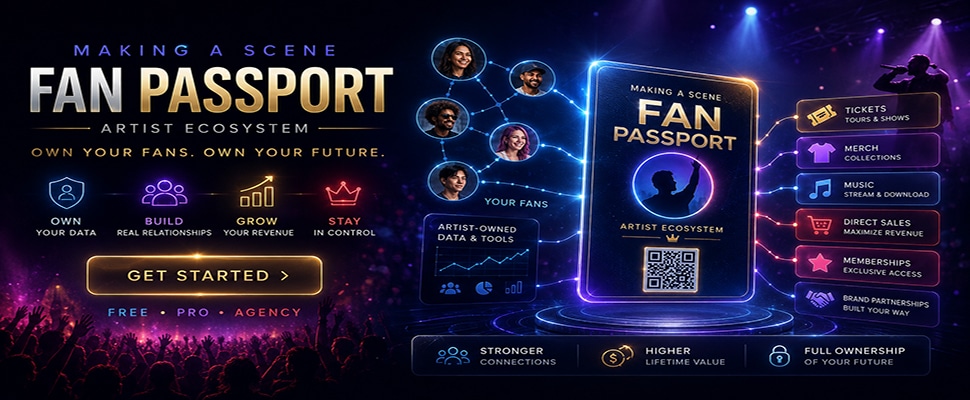
At Making a Scene, we spend a lot of time telling artists that ownership matters. Own the master. Know the publishing. Keep the fan relationship. Build your email database. Maintain your website. Understand your metadata. Do not hand the keys to your entire business to a company whose terms of service can change while you are sleeping.
The exact same philosophy belongs in the studio.
A recording is not truly secure simply because you own the copyright if you cannot reliably reconstruct the session that created it. Your master recording is more useful when you also control the stems, alternate mixes, instrumentals and technical archive. Your production workflow is more secure when the important pieces can survive the disappearance of a plugin, a subscription or an old computer.
This is particularly important for the music industry middle class we are trying to build. Major labels and large studios can pay people to rescue old sessions, maintain legacy systems and rebuild missing production chains. Independent artists usually discover the problem at 11:47 p.m. when a music supervisor needs stems by morning.
That is not the ideal time to discover that your snare drum requires an account migration.
A little preparation turns those future opportunities into revenue rather than archaeology. If the catalog is organized, the software environment is documented and the audio assets have been properly printed, an old song can keep earning through licensing, reissues, alternate versions, remixes, live production, fan releases and whatever new AI-assisted licensing markets emerge.
That is what ownership is supposed to do. It gives you options.
The Future Belongs to Portable Workflows
The Native Instruments and iZotope story should not make musicians afraid of buying software. These companies make extraordinary tools, and both have new owners publicly saying they intend to keep developing them.
What the story should change is the way we define a software investment.
The investment is not merely the money paid for Kontakt, Ozone, RX or a bundle. The investment includes the years you spent learning it, the presets you created, the sessions containing it, the sounds attached to those sessions and the future income those recordings may still produce. Protecting that investment therefore requires more than keeping the license active.
A resilient studio has portable assets. Audio can leave the DAW. Stems can leave the plugin chain. License records can leave the manufacturer’s account portal. Installers can live on your own backup drives when the developer permits them to be downloaded. Project documentation can survive a computer replacement. Your music can continue functioning even when the companies supplying your tools rearrange themselves.
That may sound slightly less exciting than the industry’s favorite phrase, “seamless ecosystem,” but seamless ecosystems are seamless right up until somebody sells half the ecosystem to another company.
Then the seams become surprisingly educational.
Where Things Stand Right Now
As of September 4, 2026, Native Instruments is part of inMusic. The acquisition emerging from Native Instruments’ insolvency process has been completed, and inMusic lists Native Instruments as a current member of its brand portfolio. inMusic says Native Instruments remains strategically important and that future hardware and software development is underway.
iZotope is part of Boris FX and operates as a business unit there. Boris FX and iZotope say existing products, licenses and subscriptions remain active, support continues, music-production products remain part of the plan and perpetual licenses will continue to be offered. They have also warned that customer-account and installation systems may evolve as the transition progresses.
NI 360 customers are already seeing the ownership split reflected in the subscription. New NI 360 subscriptions after August 1, 2026 do not include iZotope products, while eligible existing subscribers can keep that access through July 31, 2027 under the published conditions. That is the clearest example so far of why customers need to understand the difference between owning a tool and receiving temporary access to it through somebody else’s bundle.
None of this says Native Instruments or iZotope are disappearing. The verified evidence currently points in the opposite direction. Both brands are continuing, both have active product strategies, and both owners are publicly investing in their futures.
The sensible response is therefore neither panic nor blind faith. Keep making music with the tools that work for you, but start treating your production environment with the same ownership mindset you should already be bringing to your masters, publishing, metadata and fan relationships.
Because independent artists cannot control who buys the company that made the plugin. They can control whether that sale gets to hold their catalog hostage.
 |  Spotify |  Deezer |  Breaker |
 Pocket Cast |  Radio Public |  Stitcher |  TuneIn |
 IHeart Radio |  Mixcloud |  PlayerFM |  Amazon |
 Jiosaavn |  Gaana |  Vurbl |  Audius |
 Reason.Fm | |||
Find our Podcasts on these outlets
Subscribe to Our Newsletter
Discover more from Making A Scene!
Subscribe to get the latest posts sent to your email.


