
Touring Used to Sell Records. Now Records Exist to Sell Touring. What Happens Next?




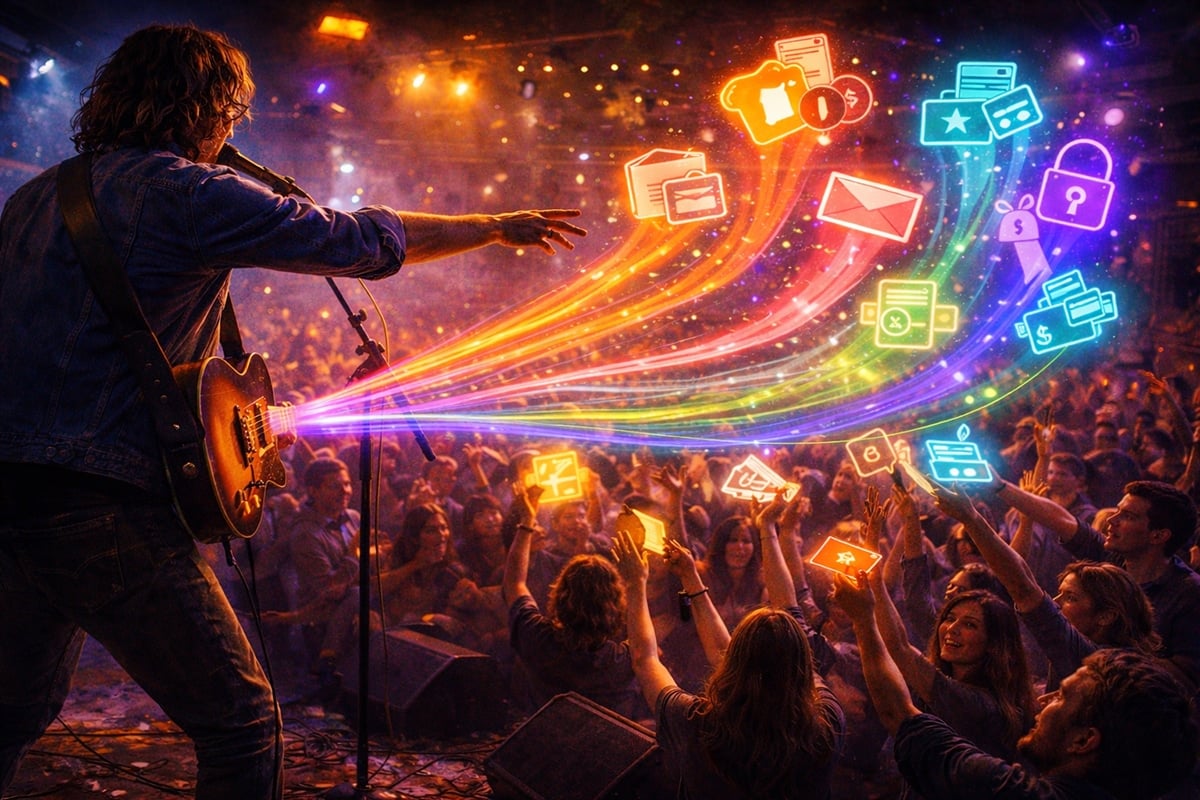
Making a Scene Presents – Touring Used to Sell Records. Now Records Exist to Sell Touring. What Happens Next?
Listen to the Podcast Discussion
The old deal is dead
For a long time, the bargain in music was pretty clear. You made records so people would care. Then you hit the road and turned that attention into ticket sales, merch money, and a bigger audience. Before streaming ate the center out of recorded music, albums were not just art. They were products with real cash value. Touring was promotion, and the record was the thing being promoted.
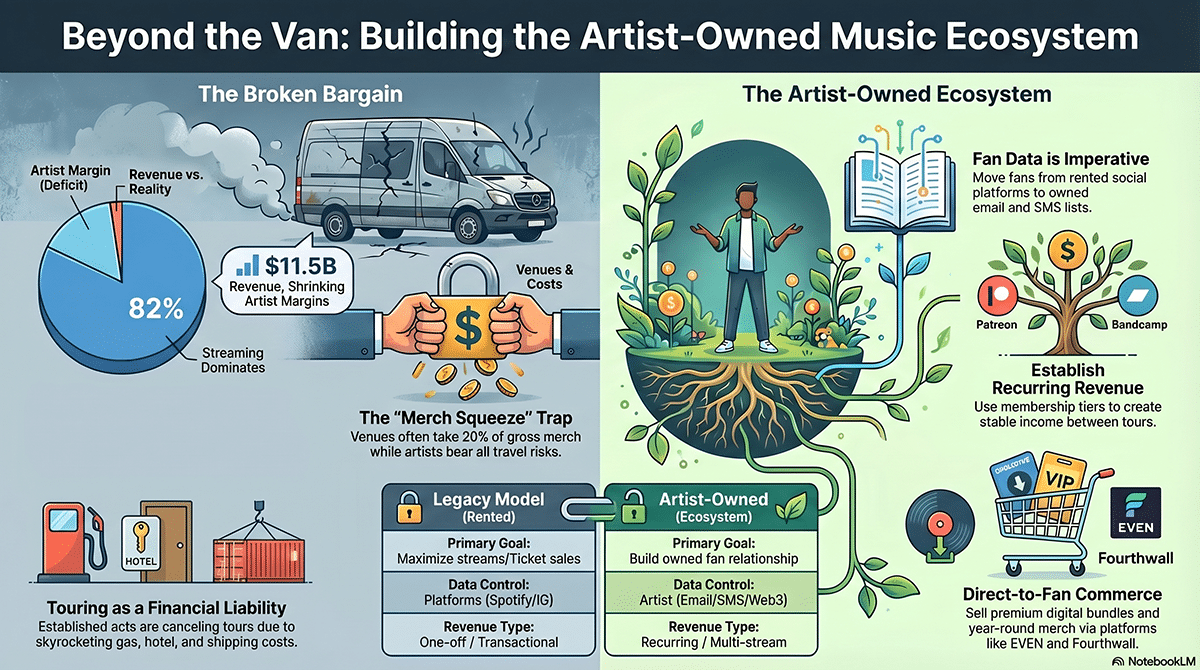
Now that whole machine has flipped. In 2025, U.S. recorded music revenue hit a record $11.5 billion, with streaming making up 82% of the market, while global recorded music revenue reached $31.7 billion. On paper, that sounds like a healthy business. But those big numbers do not mean the average artist is healthy. They mostly mean the pipes are full. The question is who controls the pipes, who gets the margin, and who is left paying for the van, the hotel, the crew, the ads, and the gas.
At the same time, live music at the top end looks enormous. Live Nation said 2024 was its biggest year yet, with more than 150 million fans across 50,000-plus shows in 45-plus countries. The company also said it now supports three times as many artists on the road as it did a decade ago. That sounds like a golden age. But read the fine print and you see the real story. Live Nation also tells investors it plans to grow “revenue per show” through ticket pricing, broader distribution, and better onsite monetization, including food, beverage, merch, and premium experiences. In plain English, the modern live business is not just about selling tickets. It is about squeezing every inch of spending around the ticket.
That is the contradiction sitting in the middle of the 21st-century music business. Recorded music became cheap, abundant, and mostly useful as marketing fuel. Touring became the place artists were told to go make the real money. Then touring got more expensive, more consolidated, more risky, and in many cases less profitable. So the backup plan became the trap.
The new role of recorded music
Streaming did not just lower the value of a song. It changed what a song is for. For a lot of artists, especially independent ones, a new single is no longer the thing that pays. It is the thing that triggers the algorithm, feeds social clips, gives the email list a reason to wake up, and helps sell the next run of shows. The record became an ad for the live experience.
That shift did not happen because artists suddenly fell in love with sleeping in a van and loading their own merch tubs. It happened because the economics pushed them there. If the recording itself does not pay enough, then the recording has to point somewhere else. It has to move people toward the show, the shirt, the vinyl, the meet-and-greet, the membership, the deluxe box, the private community, the crowdfund, the sync placement, the workshop, the guitar tab pack, the signed lyric book. The song is no longer just a product. It is the front door.
That sounds efficient until you remember one brutal fact: front doors are only useful if the house behind them makes money. If your music drives people into a touring model that barely breaks even, then your art is being used to feed a machine that is already coughing smoke.
The boom that is leaving too many artists behind
The headlines tell us live is thriving. For the biggest names, that is true. Stadium tours, VIP packages, brand deals, dynamic pricing, and global fan travel have turned the top of the market into a money cannon. But the music industry has always been great at hiding the middle. It loves to point at the mansion and ignore the neighborhood.
The middle is where the damage shows. Clyde Lawrence told the Senate Judiciary Committee that when his band played certain Live Nation venues, the company could take around 20% of gross merch sales while the artist got nothing from ticketing fees, bar tabs, coat checks, or parking. That testimony mattered because it pulled back the curtain. It showed how many little cuts can be taken from the one part of the night artists were told was still theirs. Live Nation later said its On the Road Again program helped thousands of developing artists keep 100% of merch revenue in club venues, which is good news, but the fact that such a program had to be announced at all tells you how broken the baseline had become.
The Guardian reviewed a dozen real tour budget sheets from artists ranging from rising acts to charting names and found that almost all of them lost money. The band English Teacher told the paper they had never directly paid themselves from a gig and that a headline tour usually came out in deficit. Nubiyan Twist projected a loss on a European run even with strong reputation and millions of streams. One artist who did show something close to a healthy profit came away with £6,550 after a 29-date tour, which is not exactly retirement money when that run may represent months of work and a long gap before the next one.
That is the part the glossy trade stories skip. You can be respected, reviewed, streamed, and still be running a business that looks good from ten feet away and terrible in a spreadsheet.
The road became a liability
Artists have been screaming this for years, and people in suits keep acting surprised. Santigold canceled a North American tour in 2022 and described a post-pandemic reality of skyrocketing gas, bus, hotel, and flight costs, a flooded venue market, and the personal toll that comes with trying to push through an industry that no longer seemed interested in artist welfare. Animal Collective canceled a U.K. and Europe run after saying inflation, currency problems, and bloated shipping and transportation costs made it impossible to build a budget that would not lose money, even if everything went right. Those were not beginners whining because the snacks were bad. Those were established artists publicly saying the numbers did not work.
And the pressure did not stop there. Chartmetric wrote in 2025 that rising costs, low ticket sales, and strict visa rules were reshaping the touring landscape around the world. That matters because the touring squeeze is not just one bad season or one bad fuel bill. It is structural. It hits travel. It hits crew. It hits visas. It hits venue availability. It hits audience buying power. It hits the risk math before the first note is played.
Kate Nash pushed the point into public view in a way nobody could ignore. Speaking to U.K. lawmakers in early 2026, she said her 2024 and 2025 European touring left her more than £26,000 out of pocket, with additional losses on U.K. dates, and that she used OnlyFans to cover touring costs and make sure people got paid. That story went viral because it was shocking, but it should have been shocking for a different reason. Not because an artist used an unconventional platform. Because a working musician with a real career had to improvise outside the music business just to keep touring inside the music business.
That is where we are now. Records were supposed to sell tours. Tours were supposed to pay the bills. Now touring itself is unstable. So what happens next? Either artists keep feeding a machine that burns them out, or they rebuild the business around owned revenue instead of rented attention.
Stop building a career around one fragile income stream
Here is the first hard truth. Touring is too important to be your only important thing. Live shows still matter. They matter emotionally. They matter culturally. They matter for fan conversion. They matter for merch. They matter because music is a living art form and live performance is still where trust gets sealed. But if your entire business depends on your ability to keep driving, flying, and hoping that every room overperforms, then you do not have a business. You have a high-risk hustle with a guitar strapped to it.
The next version of the independent artist has to think less like a touring act and more like a small media company, a micro-label, a membership brand, a local events business, and a rights holder all at once. That may sound less romantic than “I just want to make music,” but there is nothing romantic about going broke in front of a sold-out room.
The goal is not to stop touring. The goal is to make touring optional enough that you can do it well. That means you tour when the route makes sense, when the margins are healthy, when the rooms are primed, when the merch is ready, when the local data says go, and when the run feeds a bigger system you actually own. Touring should be one engine in the machine, not the whole machine.
Recorded music has to become a product again
The biggest mistake artists make now is treating the release like a marketing event and the song like a free sample forever. That is exactly what the platforms want. They want endless low-cost content feeding discovery, habit, and subscriptions. But if touring is becoming harder, then recorded music has to recover some of its direct value.
That does not mean pretending it is 1998 again. It means using recorded music in layers. Let streaming be the wide top of the funnel. Fine. But build premium versions beneath it. Early-access releases. deluxe versions. commentary editions. signed files. demo bundles. stem packs. alternate mixes. acoustic versions. lyric PDFs. studio journals. behind-the-song video. fan-club-only drops. song breakdowns. virtual listening rooms. The point is not to put the basic song behind a paywall and disappear. The point is to stop acting like the only possible paid product is a ticket.
Tools already exist for this. Bandcamp Subscriptions lets artists set a monthly or annual price and offer ongoing value directly to fans. EVEN for Artists is built around selling music and other creative work directly to fans, with early-release options, daily payouts, and direct fan data. On EVEN’s own site, a case study says Queen Drie earned more from her first project there than she had from a year of streaming, while the platform also emphasizes getting closer to fans and owning the data relationship.
That is the flip independent artists need to understand. The record should not only sell the tour. The record should also sell itself again, in smarter forms, to the part of your audience that actually wants more than passive access.
Membership is not a side hustle. It is recurring revenue
Artists talk a lot about superfans, but too many still build for casual listeners and then wonder why the math is thin. A career gets stable when you stop chasing anonymous scale and start organizing committed support. Membership is how that happens.
Amanda Palmer remains one of the clearest examples. Her Patreon currently shows more than 24,000 members, and her tiers include monthly webchats, workshops, works-in-progress, downloads, and even physical mail at higher levels. That is not charity. That is structured value. It is a reminder that fans will pay for access, continuity, intimacy, process, and belonging when the offer is real.
Bandcamp Subscriptions can do a version of that inside a music-native environment. Patreon can do it in a broader creator framework. And for artists who want a Web3 layer, Unlock Protocol is built specifically for memberships, including expirations and renewals, while also supporting familiar tools like email and Apple or Google wallet-style delivery. In other words, you do not have to force every fan to become a crypto hobbyist just to give them a digital membership pass.
The smart move is to think in levels. A free list. A low-cost core membership. A premium collector tier. Maybe a local-supporter tier tied to early ticket access. Maybe a songwriter tier that gets demos and livestreams. Maybe a musician tier that gets stems, tabs, presets, or monthly Q&A. Membership works when it feels like a club, not a tip jar.
Merch has to stop living only at the venue table
One reason touring margins got so dangerous is that merch became the patch for everything else. When the show money is weak, the shirt has to save the night. That is too much pressure for cotton.
Merch needs to become a year-round, artist-owned retail business. Not random junk with a logo slapped on it. Thoughtful products tied to identity, story, place, and ritual. Tour posters. lyric zines. limited vinyl. signed test pressings. lyric books. handmade items. wearable inside jokes. membership-only drops. city-specific items. seasonal items. bundles timed to releases instead of only to road dates.
Fourthwall offers no-code storefront tools built for creators and musicians, while Shopify Magic gives artists AI-assisted help with product descriptions, store writing, customer segments, support, and even media generation inside Shopify’s system. That matters more than it sounds. A lot of indie artists do not fail because they have no merch ideas. They fail because they do not have staff. AI can help close that labor gap.
The key is not to ask, “What can I sell after the show?” The key is to ask, “What can I sell all year that deepens identity and rewards loyalty?” That is a different business. It is slower, more intentional, and much more stable.
Fan data is not optional anymore
This is the hill independent artists need to be willing to die on: fan data is imperative. Not nice. Not helpful. Imperative.
Because here is the ugly truth. If a platform can reach your audience more directly than you can, then the platform owns your career more than you do. Follower counts are not ownership. Streams are not ownership. Views are not ownership. Your owned audience is your email list, your phone list, your customer history, your location data, your attendance history, your purchase behavior, your membership records, and your ability to contact people without asking a platform for permission first.
That is why tools like Laylo and Feature.fm matter. Laylo says artists can segment fans by location, purchase history, and more, then message them across SMS, email, and Instagram; it also pushes a strong first-party-data pitch, saying once a fan signs up they are on your list. Feature.fm says artists can collect fan emails directly on smart links and pre-save pages, see fan data in analytics, export that data, and build segments by platform, subscription type, and location. This is not abstract marketing talk. This is the infrastructure of survival.
The next great indie-artist divide will not be talent versus no talent. It will be artists who know who their fans are versus artists who keep sending their people back into rented platforms and hoping the algorithm remembers them.
The fan passport is how you turn attention into a system
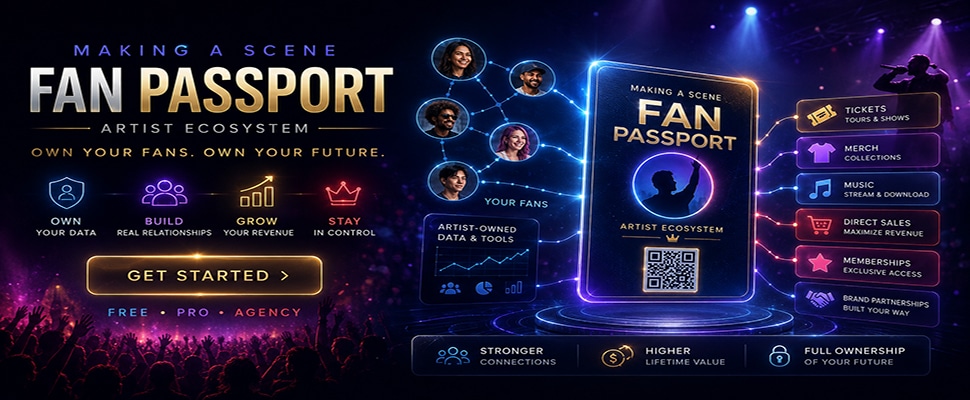
This is where the fan passport comes in, and why it matters so much. A fan passport is not just a cute loyalty gimmick. It is an artist-owned record of fan relationship. It tracks who showed up, who bought merch, who joined the list, who came back, who unlocked something, who traveled, who supports the community, who lives in what city, and who is moving from casual listener to true supporter.
The simple version can live in your existing stack. A QR code at the merch table. An email capture at the show. A city tag in your CRM (Customer Relationship Management) system. A reward after three visits. A special bundle for people who attended last time. A private song for members who brought a friend. A live version of a song or set from the show they just attended. That alone is powerful.
The Web3 version makes it portable and verifiable. POAP at lets organizers mint proof-of-attendance collectibles tied to an event. Unlock Protocol can power memberships and access. ENS can give an artist a simple Web3 identity and domain front door. Audius now offers Artist Coins, describing them as blockchain-based tokens that can act like fan-club access or backstage passes. None of this should be used as hype bait. It should be used as infrastructure.
The job is to turn fandom into a relationship system that artists can carry with them, instead of leaving value trapped inside ticketing platforms and social feeds.
That is what a real fan passport does. It turns scattered moments into owned history. And owned history becomes predictable revenue.
AI is not the art. It is the labor you could not afford
A lot of artists still hear “AI” and think either cheat code or apocalypse. Both reactions miss the point. For independent musicians, AI’s best use is not replacing the music. It is replacing friction.
ChatGPT and Claude are useful because they can help artists think, organize, write, sort, and analyze faster. Shopify Magic helps with store copy and customer segmentation. Descript can transcribe, clip, caption, clean audio, and turn long videos or podcasts into short-form assets. Together, these tools act like junior staff you do not have to hire full-time.
That matters for revenue in very practical ways. AI can help an artist turn a show recap into an email, three clips, a merch post, a local-fan follow-up, and a premium members-only recap in one afternoon. It can tag a catalog for sync. It can draft better product descriptions. It can sort fan comments into themes. It can help compare city-by-city performance. It can build smarter release calendars. It can help you spot which offer is actually converting.
In other words, AI helps you do the boring work that makes the creative work profitable. It does not replace trust. It does not replace taste. It does not replace human connection. But it can absolutely replace hours of unpaid admin labor that used to crush independent artists at the exact moment they needed to be making art or talking to fans.
Sync, teaching, and digital products are not backup plans either
One of the worst habits in music is treating non-touring income like a consolation prize. Sync is not a consolation prize. Education is not a consolation prize. Sample packs are not a consolation prize. Production templates are not a consolation prize. Those are rights-based and knowledge-based businesses, and they can keep working when your body is home.
DISCO is built to help rights holders and artists organize catalogs, show up in supervisor searches, and respond to briefs quickly. Songtradr positions itself as a place where artists can distribute, license, and monetize music. For a serious indie act, that means your recording catalog is not just content for streaming. It is inventory for licensing, pitching, and long-tail income.
The same goes for what you know. If you are a touring artist, you know things already. You know how to rehearse. How to sing with less strain. How to load a van. How to mic a cab. How to book a weekend run. How to build harmonies. How to make a cheap stage plot. How to use a DAW. How to design a setlist. New artists will pay to learn what you had to learn the hard way, especially if the lesson is specific and useful. AI can help package that knowledge into mini-courses, PDFs, templates, and workshops without burying you in prep time. And if you want the premium layer to live inside an artist-owned ecosystem, Web3 access tools can help gate it cleanly.
The future indie middle class will not be built by one big score. It will be built by stacking dependable midsize incomes that protect each other.
Web3 should be boring enough to work
Let’s say the unfashionable part out loud: most music Web3 projects failed because they were built like stunts, not systems. Too much jargon. Too much speculation. Too much asking normal fans to act like venture capitalists. That model deserved to crash.
But the useful part of Web3 is still here. It is ownership, portability, verifiable access, programmable membership, collectible attendance, and direct digital commerce that can live outside one company’s database. Kings of Leon’s 2021 NFT album mattered less because it was flashy and more because it showed that recorded music could be bundled with access, scarcity, and collectible value again. The technology was never the point. The point was that music plus rights plus experience could become a direct offer to fans, not just another item inside a platform shelf.
So the smart artist move now is not “launch a token and pray.” It is much simpler. Use Web3 where it clearly improves ownership. Use it for membership keys, attendance badges, collector drops, ticket-linked access, and portable fan identity. Keep the user experience easy. Let fans pay with cards when possible. Let the blockchain do the backend work. Make the front end feel like fandom, not homework. Unlock, POAP, ENS, and even Audius’s newer artist-coin tools all point in that direction.
That is how artists build their own ecosystem. Not by preaching decentralization in theory, but by quietly replacing dependence with ownership one layer at a time.
The new touring model is fewer shows, deeper monetization, stronger ownership
What happens next is not that touring disappears. It gets demoted from savior to servant.
The smarter independent artist will do fewer bad tours and more intentional live work. Shorter runs. Better routing. More hometown leverage. Better local presales because the fan list is tagged by city. More targeted merch because past purchases are known. More membership conversions at the show because the offer is ready. More collector items tied to attendance. More content captured from each date and turned into assets. More reasons for the show to feed the ecosystem instead of standing there alone like a naked Profit & Loss statement.
This is also why fan data and AI belong in the same conversation. If your fan passport tells you that 230 people in Asheville bought merch in the last 18 months, that 90 of them opened your last three emails, that 40 are paid members, and that your last poster bundle sold out in two days, you do not have to “feel” whether Asheville is worth it. You can model it. You can build the offer before you announce the room. You can decide whether this should be a full-band show, a duo set, a listening party, a private member event, or no show at all. That is what ownership looks like when it matures.
The old artist was told to go on tour because that was where the money was. The new artist should go on tour because the data says the trip strengthens a machine that already makes money.
This is the moment to take the business back
The industry keeps asking artists to solve problems they did not create. Streaming devalued the recording. Ticketing and venue economics squeezed the live margin. Consolidation reshaped bargaining power. Social media made attention addictive and unstable. Then the same system looked artists in the face and said: just work harder, post more, tour more, hustle more.
No. That era needs to end.
The answer to unsustainable touring is not giving up. It is refusing to build your entire life around a broken bargain. It is making records that still lead people somewhere, but making sure they lead into things you own. It is treating fan data like oxygen. It is building memberships instead of waiting for streams. It is selling music directly, not only leasing access. It is creating merch that lives off the road. It is licensing your catalog. It is packaging your knowledge. It is using AI to reduce labor and Web3 to increase ownership. It is turning the fan passport into the operating system of a career.
Touring used to sell records. Then records started selling touring. What happens next is up to the artists who are willing to admit that neither side of that old equation is enough anymore.
The next middle class in music will be built by people who stop asking the platforms to save them and start building artist-owned ecosystems that can survive without permission. That is not a trend piece. That is the assignment.
 |  Spotify |  Deezer |  Breaker |
 Pocket Cast |  Radio Public |  Stitcher |  TuneIn |
 IHeart Radio |  Mixcloud |  PlayerFM |  Amazon |
 Jiosaavn |  Gaana |  Vurbl |  Audius |
 Reason.Fm | |||
Find our Podcasts on these outlets
Subscribe to Our Newsletter
Discover more from Making A Scene!
Subscribe to get the latest posts sent to your email.


