
Build the Website Like a Platform: How Indie Artists Keep Fans Inside Their Own Ecosystem





Making a Scene Presents – Build the Website Like a Platform
How Indie Artists Keep Fans Inside Their Own Ecosystem
There is a moment almost every indie artist knows by heart. A fan finally pays attention. They click the link in your bio. They hear part of a song. They watch a clip. They feel something. Then they disappear. Not because your music failed. Not because your story was weak. They disappear because you sent them into somebody else’s machine. You handed them to Spotify, YouTube, Instagram, or TikTok, and those platforms did exactly what they were built to do. They kept the fan for themselves.
That is the leak in the modern indie music business. It is not just about bad payouts or falling reach. It is about attention escaping before it ever becomes a relationship. That is why more indie artists need to stop thinking of their website as a digital business card and start building it like a platform. A real artist website should not just tell people who you are. It should give them a reason to stay, listen, watch, buy, join, return, and belong.
That is where WordPress and WooCommerce come in. WordPress, is still one of the best open foundations for building an owned online home. WooCommerce, turns that home into a store, a membership system, a checkout engine, and a customer database. Together, they give artists something the platforms never will: control over the space, the experience, the data, and the money.
This matters because the next version of the indie music business will not be built by chasing followers and hoping an algorithm feels generous. It will be built by creating owned infrastructure. That means a site where the artist captures fan data, hosts music on-site, streams video on-site, sells direct, runs memberships, rewards loyalty, and builds a real community without constantly pushing people toward outside platforms. That is what a music industry middle class looks like in practice. It is not glamorous at first. It is infrastructure. But infrastructure is what creates durable income.
Why Most Artist Websites Still Leak Fans
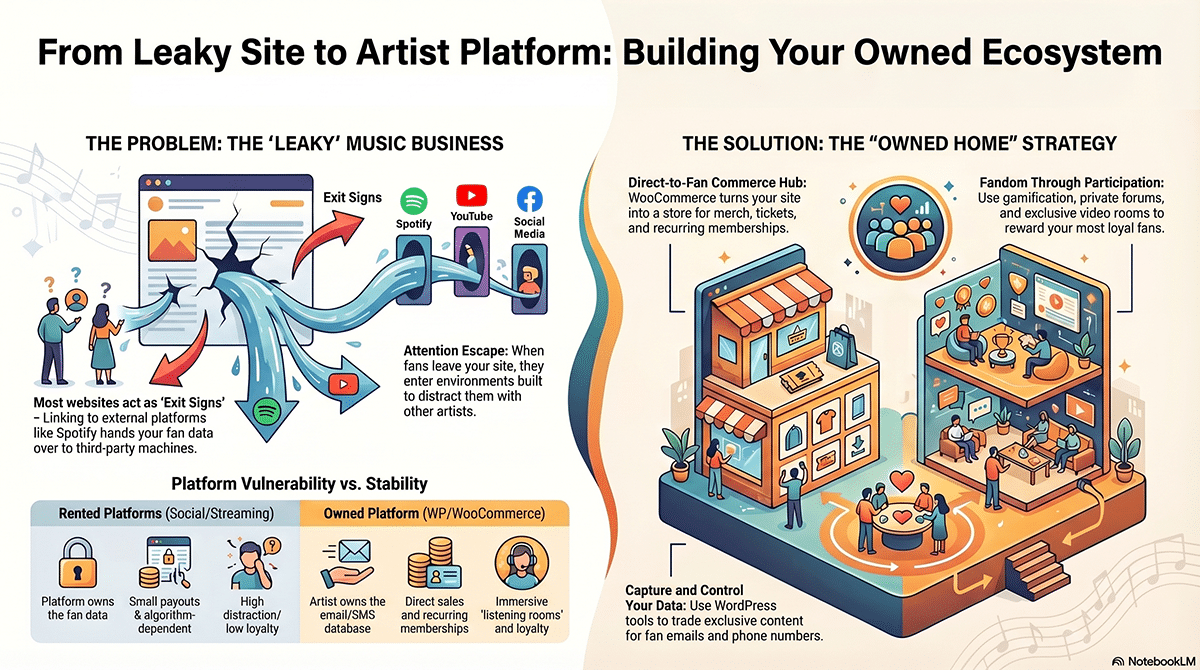
Most artist sites are still built like a hallway full of exit signs. The homepage sends you to Spotify. The video page sends you to YouTube. The community lives on Facebook or Discord. The merch is on another store. The ticketing is somewhere else. The mailing list sits inside a separate service. The artist may own the domain, but the actual fan journey is scattered across rented spaces.
That is the old mistake. It feels modern because it uses all the latest services, but it is actually weak business design. Every time a fan leaves your site, they enter an environment built to distract them, retarget them, and train them to care about somebody else. That is not paranoia. That is the business model of every big platform on the web. Your song becomes one tile in a giant machine designed to maximize platform time, not artist loyalty.
A platform-style website flips that relationship. Discovery can still happen on outside services. That is fine. But the destination needs to be yours. Your site should be where the deeper fan experience lives. That means the music player is there. The exclusive videos are there. The store is there. The members area is there. The loyalty rewards are there. The game room is there. The ticketing is there. The community is there. The owned relationship is there.
That shift is philosophical, but it is also practical. When fans stay on your site, you gather better first-party data. You get more chances to sell directly. You can guide the fan from free listener to buyer to member to superfan without handing off the relationship at every step. That is not just smarter marketing. It is a better business model.
Why WordPress Is Still the Right Base
Some people hear “WordPress” and think it sounds old. That is a mistake. WordPress is not exciting because it is trendy. It is powerful because it is flexible. It lets you publish content, build pages, organize media, add plugins, control your own domain, and keep growing without being trapped inside a locked system. For artists, that matters. A serious music business needs a home that can change as the career changes.
That is where WordPress wins. A beginner can start with a homepage, a music page, a store, and a signup form. A more established artist can build a full media hub with members-only content, a private video archive, a podcast, a blog, a forum, ticketing, a loyalty system, and even branded mini-games. The platform does not force you to stay small, and it does not punish you for growing.
WooCommerce is what turns that publishing system into a real business engine. It lets you sell physical merch, digital downloads, memberships, subscriptions, bundles, and ticket-driven offers from the same core site. That means the store is not some isolated afterthought sitting off to the side. It becomes the commercial center of the ecosystem. A fan can hear a track, buy the album, join a members tier, add merch to a wishlist, and later come back through their account area to unlock more. That is how a website starts acting less like a brochure and more like a platform.
The First Job of the Site: Capture the Fan’s Data
Before the artist worries about stylish transitions or fancy effects, the site needs to do one brutally important thing well. It needs to capture fan data. Not shady data. Not creepy tracking. First-party data the fan chooses to give because they want more from you. Name. Email. City. Maybe mobile number if they opt in. Maybe favorite song or favorite type of content. Maybe whether they care more about live shows, vinyl, downloads, videos, or backstage access.
That information is gold because anonymous traffic is not a fan base. Ten thousand random visits can feel exciting, but they do not mean much if you cannot reach those people again. A thousand email addresses from people who actually care is far more valuable than a flood of passive views.
A strong WordPress-centered tool for this is The Newsletter Plugin. It is designed to manage newsletters, build signup forms, collect list data, and send campaigns from inside WordPress. It also supports custom fields and automated newsletters, which means you can build more than just a simple email list. You can start organizing fans by city, interest, or behavior. That is the beginning of a real artist-owned database.
For delivery, pairing it with Twilio SendGrid gives you a more reliable email-sending layer. That matters because a list is only useful if your messages actually arrive. A welcome email, a merch drop, a presale notice, or a members update is not just communication. It is the bridge that brings fans back into the site again and again.
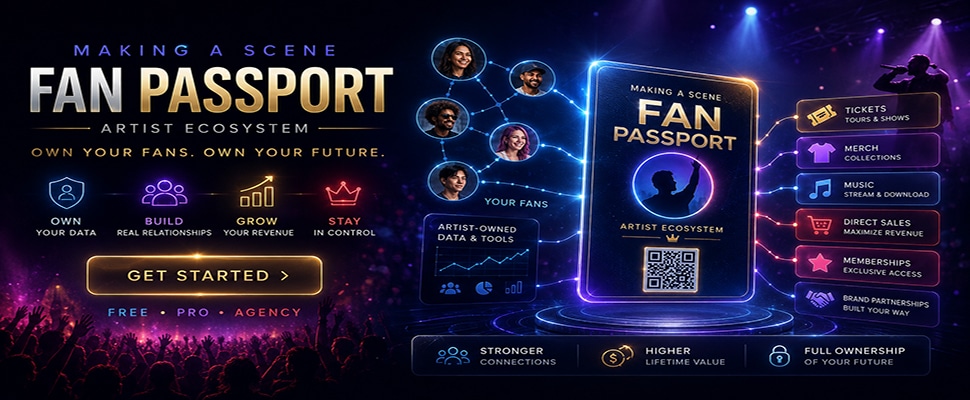
This is where the artist has to think like an operator. Do not ask fans to join your list just because “that’s what artists do.” Give them a reason. Offer an unreleased demo, a live session, early ticket access, a private video, a discount code, a fan passport, or a members trial. The goal is not to collect an email for vanity. The goal is to start a direct relationship you own.
Build a Listening Room, Not a Spotify Redirect
Streaming platforms trained artists to think that the “real” listening experience happens somewhere else. Your website, in that model, becomes a promo doorway that points outward. That is backward. Your site should be the premium listening room. Spotify can still be part of discovery, but your domain should be where the fan listens when they actually care.
For that, Sonaar MP3 Audio Player Pro is one of the more useful WordPress tools in the music space. It is designed for musicians and supports playlists, call-to-action buttons, analytics, WooCommerce integration, sticky playback, and continuous playback across pages. That last part is a bigger deal than it sounds. When the music keeps playing as the fan browses the site, the whole experience feels more like a destination and less like a set of disconnected pages.
This is where you can build a layered listening strategy. The free tier can offer singles, selected tracks, maybe a sampler playlist or one full EP. Enough to draw people in. Enough to feel generous. But not so complete that there is no reason to step deeper into the ecosystem. Then the premium layer takes over. Full albums before release day. Demo vaults. live board tapes. commentary mixes. stems. alternate masters. acoustic versions. These are the things that matter to real fans and collectors, and they do not need to live on Spotify to have value.
WooCommerce can support the direct-sale side of this through digital and downloadable products. That means your site can become a real place to listen and buy, not just a place to preview and leave. And once that happens, the artist starts capturing both attention and transaction inside the same ecosystem.
Build a Screening Room Without Handing Fans to YouTube
Video is where many artists lose control all over again. They work hard to make great visual content, then they put it inside a system that immediately recommends twenty other distractions around it. YouTube can still be useful for reach, but it is a terrible place to host the heart of your premium fan experience.
That is why the platform-style artist website needs its own screening room. Public videos can live there. Exclusive videos should definitely live there. Album films, behind-the-scenes sessions, archive performances, backstage diaries, lessons, breakdowns, and members-only premieres all work better when they stay on the artist’s own domain.
Presto Player is one of the strongest WordPress tools for this. Its official documentation highlights private video support, logged-in access, dynamic expiring links, and optional watermark overlays tied to the logged-in user. That gives artists real control over who can watch what and helps protect the value of exclusive content. It will not make piracy impossible, but it gives you much more control than tossing a private link into the wild.
For hosting, there are two strong models. Bunny Stream gives you secure delivery with token authentication and protection against unauthorized embedding. Vimeo is another strong option if you want domain-level privacy so videos only embed on approved sites. The important distinction is this: you can use outside infrastructure without sending the fan away. That is a good trade. The fan still watches on your site. The experience still belongs to you.
That is the mindset shift. Do not ask whether the file technically lives on your server. Ask whether the fan is staying inside your ecosystem. If the answer is yes, you are moving in the right direction.
The Members Area Should Feel Like Backstage
Too many artists treat membership like an add-on. They slap a hidden page behind a login and call it exclusive. That is not enough. A true members area should feel like backstage. It should feel like the deeper layer of the artist’s world. The public side of the site says, “Here is who I am.” The members side says, “Here is where the real relationship lives.”
WooCommerce Memberships lets you restrict content, products, and discounts to members. WooCommerce Subscriptions adds recurring billing, free trials, and flexible subscription products. Used together, they make it possible to create a real paid membership system that lives inside the same store and customer account structure as everything else.
This is where artists can start building steady, direct revenue. Not just spikes. Not just campaign launches. Recurring income. A few hundred paying members can mean more to a working indie artist than thousands of passive followers. And the member area can hold all kinds of meaningful value. Full album listening rooms. Archive films. Monthly Q&A replays. songwriting notebooks. exclusive merch drops. early ticket windows. producer breakdowns. studio diaries. members-only forums. private live events. The point is not to lock fans out. The point is to reward the people who step further in.
When this is built well, the artist is no longer dependent on outside platforms to create intimacy. The intimacy happens on the site.
Use Web3 as a Value-Add Layer, Not a Costume
Web3 gets weird fast when artists use it as a fashion accessory. But it becomes practical when it solves a real problem. On an artist platform site, token gating solves one very clear problem: access control based on ownership.
Unlock Protocol is built for onchain memberships and subscriptions, and its WordPress integration lets artists gate content using blocks inside the Gutenberg editor. Unlock also supports membership logic tied to NFT holdings and other supported token types. That means a collector pass, a show token, or a membership NFT can act as a real key inside the site.
This is where Web3 starts making sense for indie artists. A tour token could unlock a private gallery and video archive from that run. A collector edition NFT could open an album film or a hidden merch category. A longtime community token could trigger early ticket access or a permanent discount tier. The key is that the site should still work for fans who know nothing about wallets. WordPress and WooCommerce should carry the core experience. Then Web3 becomes an extra layer for collectors and deeper supporters.
That keeps the ecosystem inclusive for newcomers and powerful for superfans. More importantly, it keeps Web3 tied to real artist-controlled utility instead of hype.
Put WooCommerce at the Center of the Map
The smartest move an artist can make with this whole setup is to stop thinking of WooCommerce as “the merch plugin.” It should not just be the gift shop. It should be the commercial engine under the whole platform.
WooCommerce already handles digital products, physical products, customer accounts, and extensions for memberships and subscriptions. Add Product Bundles, and now you can package experiences instead of just items. A fan can buy an album plus a shirt plus a members trial. Or a vinyl plus a private stream replay plus early ticket access. Or a live ticket plus a digital zine plus a backstage archive page. That is not just ecommerce. That is platform logic.
Once the store sits at the center, every other part of the site becomes more powerful. A video page can lead into a bundle. A listening room can lead into a download. A member page can lead into a special merch drop. A game room can lead into a points reward and a discount code. A show page can turn directly into a ticket sale. The artist stops running isolated channels and starts running one connected system.
That is where the website begins to feel like a living business rather than a collection of pretty pages.
Email and SMS Are the Nervous System
The site is where fans come in, but email and SMS are what keep the whole system alive after the visit ends. If your site is the house, email and text are the nervous system. They carry the signal back out and bring the fan back in.
The Newsletter Plugin can do much of the email work from inside WordPress, especially when paired with SendGrid for delivery. It supports forms, automation, and scheduled content, which means the artist can create welcome sequences, city-based tour alerts, new release campaigns, and member onboarding that feel personal instead of random.
On the SMS side, Twilio is one of the strongest infrastructure options for sending business text messages, and WSMS brings SMS and MMS workflows directly into WordPress. WSMS supports notifications and ecommerce integrations, which makes it useful for things like ticket reminders, special access links, or presale alerts.
The important thing is how you use these tools. Do not blast people. Invite them. Tell them when something meaningful is happening. Remind them about a local show. Give them access before the general public. Let them know a hidden video just unlocked. Text and email work best when they feel like a direct line, not like a billboard.
That is how you turn a website from a passive destination into an active relationship machine.
Build the Community Inside the House
The big platforms trained artists to assume community always has to happen somewhere else. It does not. If your website is truly built like a platform, conversation can happen there too.
bbPress is a long-running WordPress forum plugin that is simple, streamlined, and designed to grow with a community. That makes it useful for members-only discussion spaces, local fan groups, touring threads, songwriting rooms, or special release conversations.
This matters because participation is retention. A fan who comments, asks questions, posts photos, or joins a thread is more invested than a fan who just watches one clip and leaves. When those conversations happen inside your site, the attention stays in your ecosystem and the culture stays closer to the artist.
You can do the same thing with events. FooEvents is built for WooCommerce and is designed to let artists sell tickets and manage events on their own terms. It uses the same WooCommerce store logic and customer data structure, which means shows become part of the owned business instead of a separate disconnected channel.
That is a huge deal for indie artists. Live music should not just be a calendar entry. It should be a data event, a sales event, and a loyalty event. When a fan buys a ticket through your own system, you know who came, what they bought, and what to offer them next.
Add a Loyalty Layer So Fans Feel Progress
One of the secret weapons of every major platform is progress. Badges. saved items. streaks. ranks. achievements. They all make the user feel like their activity means something. Indie artists can use the same psychology without turning the site into a carnival.
Gamepress is built for exactly that. It lets WordPress sites reward users with points, achievements, and ranks. WooCommerce can extend that logic through wishlists, rewards, and saved products. Put that together, and you can create a fan experience where people earn status by showing up, buying, participating, and returning.
This is where the site starts feeling sticky in the best possible way. A fan watches a premiere and earns points. They attend a show and unlock a badge. They buy a bundle and move up a rank. They comment in the forum and earn access to a hidden reward page. Suddenly fandom has memory. It has shape. It has movement.
POAP adds a Web3 version of that idea. POAPs are digital proof that someone attended or participated in an event, and they can later be used as keys to unlock future utility. That makes them perfect for a fan-passport system. A fan can attend a show, receive a POAP, and later use it to access a hidden video, a discount, or a special merch page on the artist’s own site.
That is how fandom becomes participation instead of passive consumption.
Add a Game Room and Turn the Site Into a Place Fans Play
Here is where things get really interesting. Once the site handles listening, viewing, buying, joining, and returning, the next move is to give fans something to do. Not just something to watch. Not just something to scroll. Something to play.
That is why a game room can make so much sense on an artist platform. Not as a gimmick. Not as a random distraction. As a retention layer. The big platforms know people stay longer when they interact. An artist-branded game room can extend an album world, deepen a visual era, reward repeat visits, and give fans one more reason to come back when they are not shopping or watching a long video.
Construct 3 is a browser-based game creation tool that is designed to let people build games with little or no code. Phaser is a fast, open-source HTML5 framework for browser-based 2D games. Both are made for the web, which means the finished game can live right inside your artist site instead of sending fans to an app store or some outside gaming platform.
That opens up all kinds of artist-owned possibilities. A poker-style green-room game with your imagery. A match-three puzzle built from guitar picks, cassettes, pedals, or lyric symbols. A touring van game where fans collect posters and merch boxes as they move from city to city. A memory game built around instruments, artwork, or songs from a new record. The public can play a free version. Members can unlock bonus levels, hidden soundtrack pieces, or reward pages.
Tie that into GamiPress, and now the game starts feeding the rest of the ecosystem. Beat a level and earn points. Find hidden art and unlock a badge. Reach a rank and get a merch discount. Finish a themed game during album week and unlock a private video. Now the game is not just a toy. It is platform infrastructure. It keeps the fan inside the artist’s world and makes the next step feel earned.
There is one important line, though. If you do a poker-themed experience, keep it in the world of entertainment and loyalty, not gambling. Stripe’s restricted business policies specifically call out gambling, sweepstakes, and skill games with monetary or material prizes, and WooPayments also maintains restricted and prohibited categories. So a branded poker room with fake chips, leaderboard bragging rights, and loyalty rewards can work. A cash-prize gambling system is a very different and far riskier thing.
The right move is to keep it playful, artistic, and tied to fandom, not wagering.
Use AI to Make the Site Smarter
AI belongs on this kind of site, but only if it makes the fan experience easier and more useful. The goal is not to replace the artist’s voice with machine mush. The goal is to reduce friction.
AI Engine is one of the more flexible WordPress tools in this area. It connects WordPress to AI models and supports chatbots, forms, automations, and content workflows. Its official site also highlights embeddings, AI forms, and on-site assistants. If you pair it with the OpenAI platform, you can build much smarter site experiences.
Imagine a visitor landing on your site and getting guided to the right era of your catalog. Or a member using a site assistant to find hidden archive material. Or a customer being shown the right bundle based on what they watched or bought before. Or a fan answering a couple of questions and being routed toward the right membership tier, tour date, or merch package.
That is where AI becomes valuable. It turns a cluttered site into a guided experience. It helps the artist run a smarter platform without losing the human feel.
What the Ideal Fan Journey Looks Like
Picture the homepage. It is clean. Fast. Clear. Not a mess of social icons and exit ramps. The promise is simple. Listen here. Watch here. Join here. The player is already embedded. The signup offer is visible and useful. The video teaser plays on the site. The merch and membership are close by, but nothing feels pushy.
The fan listens to a track. The music keeps playing as they browse. They watch a teaser. They sign up with their email and city in exchange for a live cut or backstage clip. The welcome sequence begins. The site knows a little more about who they are now.
Maybe they browse the store and save something to a wishlist. Maybe they buy a digital EP. Maybe they join the members tier and unlock full albums, exclusive videos, and a forum. Maybe they buy a ticket to a local show. Maybe they attend, collect a POAP, and later use it to unlock something special. Maybe they come back the next week and play the artist-branded game, earn points, and unlock a reward.
That is the difference between a website and a platform. A website presents information. A platform creates movement. One step leads naturally to the next. The fan does not feel pushed off-site at every turn. They feel invited deeper into the same world.
Beginners Should Build in Layers
If you are just starting out, do not try to build the full empire in one weekend. That is how artists drown in plugin overload and half-finished ideas. Start with the core. WordPress. WooCommerce. Email capture. An on-site music player. A basic store. Then add exclusive video. Then membership. Then loyalty. Then community. Then game mechanics and token gating if they truly fit your brand.
A small system that actually works is more powerful than a giant system full of broken dreams. The goal is not to impress people with complexity. The goal is to keep fans inside your ecosystem and create direct revenue.
That means even a modest first version can already be powerful. A solid WordPress site. WooCommerce at the center. The Newsletter Plugin for capture. Sonaar for music playback. Presto Player with Bunny Stream or Vimeo for exclusive video. One or two direct offers. One clear membership path. That is enough to start changing the economics of your career.
Established Artists Should Consolidate
If you already have a catalog, a following, or years of content, your problem is probably not a lack of material. It is fragmentation. The music is here. The merch is there. The fan club is over there. The archive lives in three different places. The audience exists, but the journey is broken.
For seasoned artists, the move is consolidation. Bring the premium listening experience home. Bring the premium video experience home. Tie tickets into WooCommerce. Make the account area matter. Add loyalty, community, and members-only perks inside one owned system. Use email and SMS to reconnect the audience around a single destination.
In other words, stop living out of rented rooms all over town. Build one house and invite the fans all the way in.
The Real Goal
The goal is not to clone Spotify. It is not to imitate YouTube. It is not to turn every artist into a software company. The goal is to steal the useful parts of the platform model and rebuild them on land you own.
Keep the fan in your listening room. Keep them in your screening room. Keep them in your members lounge. Keep them in your store. Keep them in your community. Keep them in your game room. Keep them in your loyalty loop. Keep them on a site where every action strengthens the relationship instead of handing it to a gatekeeper.
That is how indie artists stop being unpaid suppliers for somebody else’s platform and start becoming operators of real businesses. A WordPress and WooCommerce site, sharpened with on-site music, private video, memberships, token-gated access, email and SMS, ticketing, loyalty, AI guidance, and branded gameplay, can do far more than look professional. It can hold attention. It can create direct revenue. It can build recurring income. It can turn fandom into participation. It can turn participation into ownership.
And that is what the music industry middle class looks like when it is built the right way. Not on borrowed reach. On owned infrastructure. Not on somebody else’s platform. On yours.
 |  Spotify |  Deezer |  Breaker |
 Pocket Cast |  Radio Public |  Stitcher |  TuneIn |
 IHeart Radio |  Mixcloud |  PlayerFM |  Amazon |
 Jiosaavn |  Gaana |  Vurbl |  Audius |
 Reason.Fm | |||
Find our Podcasts on these outlets
Subscribe to Our Newsletter
Discover more from Making A Scene!
Subscribe to get the latest posts sent to your email.


