

Ticketmaster LiveNation Court Decision




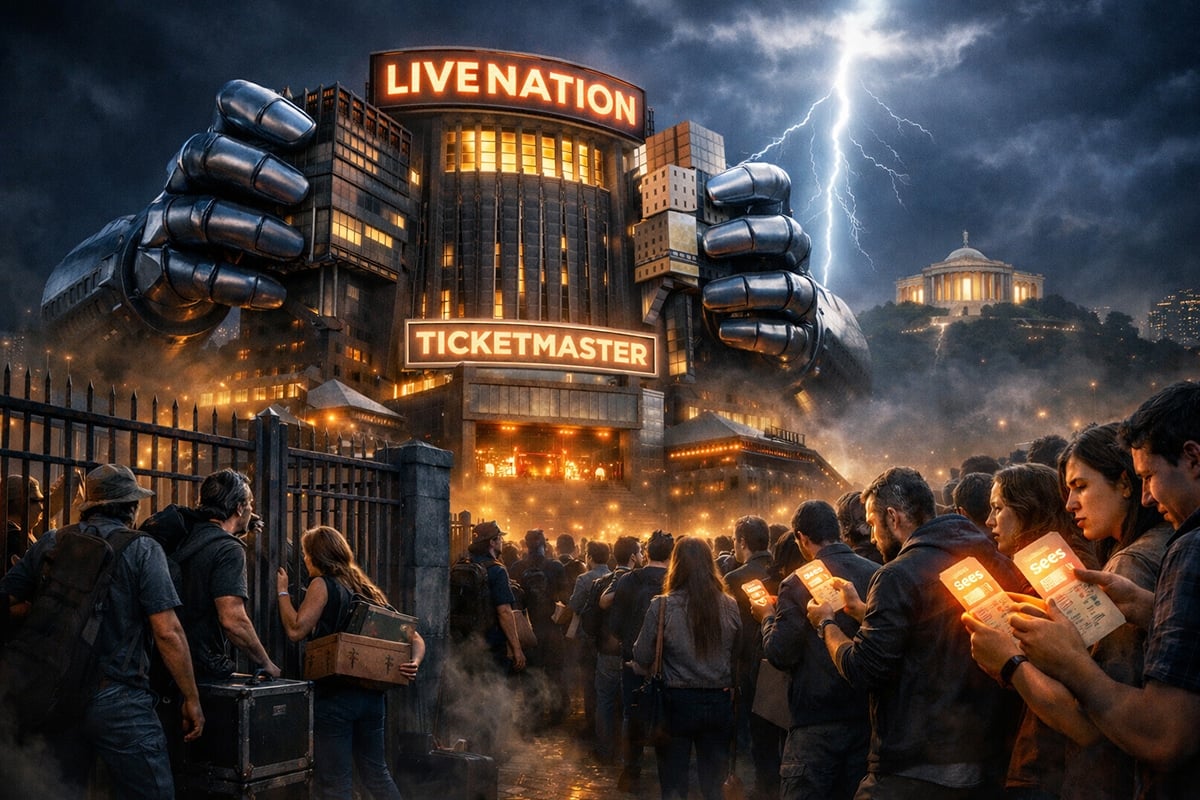
Making a Scene Presents – Ticketmaster LiveNation Court Decision -When the Gatekeeper Finally Got Dragged Into Court
Listen to the Podcast Discussion
In May 2024, the U.S. Department of Justice walked into federal court and said out loud what fans, working artists, indie promoters, and venue operators had been saying for years: the live music business was not just frustrating, it was structurally broken. The government sued Live Nation and its ticketing arm Ticketmaster, alongside 30 state and district attorneys general, and asked for structural relief. That was not some polite regulatory slap. It was the government saying the company’s grip on live music had become so deep that fans were paying more, artists were getting fewer real opportunities, smaller promoters were getting squeezed, and venues were being pushed into fewer real choices. The DOJ said the goal was to restore competition, lower prices, and “open venue doors for working musicians and other performance artists.”
That is why this case matters so much more than the usual “Ticketmaster fees are awful” headline. Fees are the symptom people feel in their wallet. The bigger issue is control. Who controls the room? Who controls the route? Who controls the on-sale? Who controls the data around the sale? Who decides whether a venue can try another ticketing company without fearing retaliation? Those are the questions sitting underneath the courtroom drama, and those are the questions that matter most to indie artists trying to build a living in a live market that has too often felt rigged from the top down.
The broad arc of this story now stretches from the 2010 merger, to the 2019 consent-decree crackdown, to the huge 2024 DOJ lawsuit, to a softer federal settlement in March 2026, and then to the April 15, 2026 jury verdict in New York that found Live Nation and Ticketmaster had maintained an illegal monopoly in key parts of the live-entertainment business. The penalties are still to come, and appeals are still on the table, but the central fact has changed: this is no longer just a public-relations problem for Live Nation. It is a court-validated antitrust problem.
This Story Did Not Start in 2024
To really understand the weight of this case, you have to go backward before you go forward. Live Nation and Ticketmaster were allowed to merge in 2010, but only under a consent decree that was supposed to keep the combined company from abusing its power. The deal was never supposed to be a blank check. In fact, the later court record notes that the merger was permitted only under terms that required divestitures and barred retaliation against venues that worked with Ticketmaster competitors.
Then came 2019, and the DOJ said the company had repeatedly violated the spirit, and in the department’s view the terms, of that original deal. The Justice Department moved to significantly modify and extend the consent decree. It clarified that Live Nation could not threaten to withhold concerts from a venue for choosing another ticketer, could not actually withhold concerts in retaliation, would be monitored, would have to appoint an internal antitrust compliance officer, and would face an automatic $1 million penalty for each violation. That is not the language of a regulator dealing with a harmless misunderstanding. That is the language of a regulator saying, “We told you not to do this, and you kept doing it anyway.”
Even after that, the company kept growing. By early 2026, Judge Arun Subramanian described Live Nation as being involved at almost every stage of an event’s life. The judge wrote that Live Nation promotes artists, owns or operates venues, and sells tickets directly to fans, putting it up and down the supply chain in live entertainment. That matters because a monopoly case is never just about size by itself. It is about what happens when size turns into leverage, and leverage turns into a system where everybody else starts making decisions based on fear.
How Big the Machine Became
By Live Nation’s own investor materials, the company posted $25.2 billion in revenue in 2025, with operating income up to $1.3 billion. It said it connected 159 million fans across 55,000 events in 55 countries. On paper, that sounds like a victory lap. In antitrust terms, it sounds like a warning label.
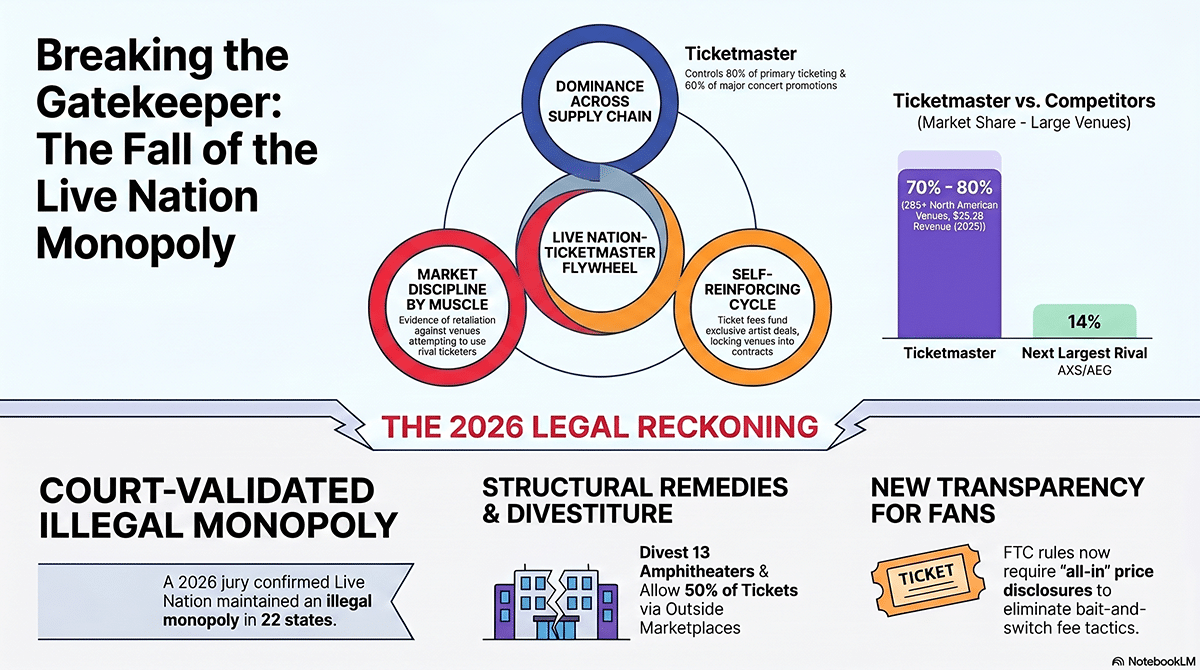
The 2024 complaint gave the sharper version. It said Live Nation directly managed more than 400 musical artists, controlled around 60% of concert promotions at major concert venues across the country, and owned or controlled more than 265 concert venues in North America, including more than 60 of the top 100 amphitheaters in the United States. Through Ticketmaster, the complaint said, Live Nation controlled roughly 80% or more of major concert venues’ primary ticketing for concerts. Elsewhere in the complaint, the government said that in 2022 Ticketmaster accounted for at least 70% of the total face value associated with all tickets sold at large arenas and amphitheaters, while no rival topped 14%.
That is the part many casual fans miss. Ticketmaster is not just a website where you buy a ticket. Ticketmaster sits inside a corporate structure that also includes promotion, venue control, sponsorship, artist management, and massive scale in live-event operations. The judge summarized the business simply: promoters compete for artists by offering guarantees, profit splits, and access to desirable venues. If one company is deeply embedded on both the promotion side and the venue side, that company is not just participating in the market. It is shaping the market.
And the rivals were not tiny nobodies. The complaint named AEG’s AXS as the second-largest primary ticketer in the United States, but said it was less than one-fifth the size of Ticketmaster. It also described how SeatGeek, StubHub, Oak View Group, and others kept running into the same wall: they were not only competing against a ticketing platform. They were competing against a whole ecosystem with control over shows, rooms, and relationships.
How the “Flywheel” Worked
The 2024 DOJ press release leaned hard on one word: “flywheel.” That was the government’s name for the self-reinforcing machine it said Live Nation and Ticketmaster had built. The DOJ said the system captured fees and sponsorship revenue from fans, used that power to lock up artists to exclusive promotion deals, and then used its live content to sign venues into long-term exclusive ticketing deals, which then fed the cycle again. The point was simple: every piece of the business helped strengthen every other piece. This was not one moat. It was a ring of moats.
The government then filled that story with specifics. It said Live Nation used long-term exclusive contracts to lock venues out of rival ticketing options. It said venues were blocked from using multiple ticketers, which mattered because multi-ticketing could let venues compare prices, quality, fees, and fan experience. It said Live Nation increasingly gained control over key venues, especially amphitheaters, and restricted artists’ use of those venues unless the artists also used Live Nation’s promotion services. That is not just market strength. That is pressure placed on the exact choke points artists need to get from a routing sheet to a real stage.
The complaint also laid out what retaliation looked like in plain English. In one 2021 example, the government said Live Nation warned a venue that was considering a switch to SeatGeek to think about its “bigger relationship” with Live Nation. When the venue switched, the complaint said Live Nation rerouted concerts elsewhere and demanded that the venue disable secondary ticketing on SeatGeek for Live Nation-promoted shows. Later, according to the complaint, Live Nation relented only after the venue agreed to split secondary fee revenue and SeatGeek agreed to change parts of its interface to conform to Ticketmaster’s preferences. That is not healthy competition. That is market discipline by muscle.
The AEG and AXS example told a similar story. The complaint said AEG’s partial ownership stake in ASM Global should have created room for AXS to grow at those venues. But the government alleged that fear of retaliation from Live Nation kept Ticketmaster in the dominant position at many of those rooms. In other words, the issue was not just whether another company existed. The issue was whether the room felt safe enough to choose that company.
Even the secondary market got dragged into the story. The complaint said that when TEG tried to work with StubHub on a major concert at the Los Angeles Coliseum, Ticketmaster threatened to deny entry to fans holding StubHub-issued tickets. StubHub stopped selling the tickets, tried to work with Ticketmaster to fulfill what it had already sold, and many of those customers still did not get honored. Again, the larger point was not just that rivals existed. It was that the system around Live Nation could make their existence feel conditional.
The Oak View Group material may have been the most revealing of all, because it showed how cozy the top layer of the industry could become. The complaint said Live Nation once viewed Oak View Group as a major threat, then described a later relationship in which Oak View Group executives assured Live Nation they would “protect” it on promotion, ticketing, and venue matters. The complaint alleged Oak View Group projected that it could flip at least 22 venues to Ticketmaster over four years and in 2023 converted six venues to Ticketmaster. That is the kind of detail that makes an indie artist look at the whole industry and say, “So this is how the board gets set before I even get to roll the dice.”
Why This Matters to Indie Artists More Than Many Headlines Admit
Most mainstream coverage of this fight has centered on angry fans staring at giant service fees, and that anger is real. But for indie artists, the deeper injury is often invisible. It sits upstream. It lives in the routing conversation, in the promoter conversation, in the venue conversation, and in the simple fact that if one company has unusual power over large rooms and the booking pipeline around them, everybody below that level feels the pressure too. The DOJ said the result of Live Nation’s conduct was not only that fans paid more, but that artists had fewer opportunities to play concerts, smaller promoters got squeezed out, and venues had fewer real ticketing choices. That is an artist story, not just a fan story.
The judge’s explanation of how the business works makes that even clearer. Artists generally need promoters to shoulder risk, market the show, and get them into desirable venues. Promoters compete in part based on guarantees and access. So when one giant player controls a huge share of promotion at major venues and also owns, operates, books, or has stakes in hundreds of venues, the market does not just become inconvenient. It becomes shaped around that company’s logic. Even artists who are not playing amphitheaters can feel it, because the whole touring ladder is connected. The leverage used at the top bends the possibilities in the middle. That is an inference, but it is a grounded one.
Independent venues have been saying this for a long time. After the April 15, 2026 verdict, the National Independent Venue Association said the jury had confirmed what artists, fans, and independent venues believed for 15 years: Live Nation was an illegal monopoly. NIVA argued the consequences should be “swift and disruptive” and explicitly said the damages should help the venues, promoters, festivals, and fans that suffered under this system. That response matters because NIVA is not talking from theory. Its members live with the ground-level impact.
So when the headline asks what this case means for indie artists, the right answer is not just, “Maybe their fans will save a few bucks.” The bigger answer is that indie artists may finally get a little more oxygen in a live market where the biggest player has long had an oversized hand on the valve. If rooms can choose other ticketing partners without fear, if regional promoters can compete more honestly, if venue access is less tied to one corporate pipeline, then the market gets a little less pre-decided before the artist even enters it. That does not guarantee fairness. But it does create the possibility of it.
The Federal Government Settled. The States Kept Swinging.
Then came one of the stranger turns in the whole saga. In March 2026, while trial was underway, the DOJ reached a tentative settlement with Live Nation. The deal did not break up the company. Instead, it aimed for narrower remedies. According to Reuters and AP, Live Nation agreed to give up ownership and/or control of 13 amphitheaters, let up to 50% of tickets at Live Nation-owned, operated, or controlled amphitheaters be sold through any ticketing marketplace, cap Ticketmaster’s service fees at those amphitheaters at 15%, stop retaliating against venues that chose other ticketing partners, and stop requiring artists to use Live Nation promotion services to play at its owned outdoor amphitheaters. Reuters also reported that Ticketmaster would have to build a standalone product so third-party platforms like SeatGeek and StubHub could plug into its technology. The settlement also involved an eight-year extension of the consent decree and a $280 million fund for state claims or civil penalties.
On paper, that looked like relief. In practice, a lot of people saw it as a half-step. AP reported that multiple states planned to keep fighting because they believed the settlement did not address the monopoly at the center of the case. Reuters reported that New York and a bipartisan coalition of more than two dozen states, plus Washington, D.C., planned to press ahead. Competitors and industry groups said surface-level remedies were not enough. NIVA pointed out that the $280 million amount was tiny next to Live Nation’s revenue base. This is where the case split into two stories: one federal story about narrower reform, and one state story about whether the underlying structure itself had to be broken open.
Even Judge Subramanian seemed irritated by how the settlement showed up. Reuters reported that he called it “entirely unacceptable” that the court had not been told sooner. That moment mattered symbolically. It showed how much tension there was between moving fast to get some relief and digging deep enough to change the system. For fans desperate for any improvement, the settlement sounded better than nothing. For indie artists and independent venues tired of living under the same architecture, it sounded a lot like letting the machine keep its engine while replacing a few bolts.
Then the Jury Delivered the Punch
On April 15, 2026, the states got their verdict. A jury in New York found that Live Nation and Ticketmaster had maintained an anticompetitive monopoly over major concert venues and that Ticketmaster’s conduct caused people in 22 states to overpay by $1.72 per ticket. AP reported that the ruling does not immediately bring relief to concertgoers, but it could cost the company hundreds of millions of dollars and could even force the sale of some concert venues once the judge determines penalties. That verdict did not automatically break the company up, but it did something politically and culturally powerful: it stamped the monopoly claim with a jury’s approval.
The company’s response was immediate and combative. In its April 15 statement, Live Nation said the verdict was “not the last word,” said it would renew its motion for judgment as a matter of law, said there was a pending motion to strike the damages testimony, and said it would appeal any unfavorable rulings. It also argued that the $1.72 figure applied only to tickets sold at 257 venues, about 20% of total tickets, and estimated the aggregate single damages figure would be below $150 million before trebling. Live Nation said it had already accrued $280 million toward state damages and civil penalties in connection with the DOJ settlement.
That response is important for two reasons. First, it reminds everybody that this fight is still moving. Remedies matter. Appeals matter. A verdict is a huge moment, but it is not the end. Second, it shows what the company fears most. Live Nation did not respond like a business annoyed by bad headlines. It responded like a business trying to narrow the damage, limit the math, and make sure whatever comes next looks as much like the earlier federal settlement as possible. In other words, the company seems to understand that the truly dangerous part of this case is not only the money. It is the chance that the court could pull apart some of the strategic wiring that made the company so powerful in the first place.
What This Could Mean for Live Nation and Ticketmaster
If you only look at the dollar amounts, Live Nation may survive this just fine. By its own numbers, it generated $25.2 billion in revenue in 2025 and $1.3 billion in operating income. Against that backdrop, even a damages bill in the hundreds of millions is painful but not necessarily fatal. That is why the deeper threat is structural. The real danger to Live Nation and Ticketmaster is not simply writing checks. It is losing parts of the system that help them set the terms for everybody else.
Think about what that means in practice. If venues can use multiple ticketers more easily, Ticketmaster loses some of its lock. If Live Nation cannot lean on venue relationships the same way, its promotion muscle gets a little less automatic. If third-party marketplaces can plug into Ticketmaster technology, the checkout experience becomes less of a closed garden. If amphitheaters are divested or booking control changes hands, then Live Nation’s leverage over artists and promoters changes too. A company this integrated does not get weaker one feature at a time. It gets weaker when the pieces stop feeding each other the way they used to. That is why the DOJ kept talking about the “flywheel.” The company’s power was cumulative, so the remedies that matter most are the ones that interrupt that cycle.
There is another risk too: the story itself has changed. For years, Ticketmaster could hide behind the idea that fans simply hated fees and hated waiting in lines. That let the company frame the backlash as emotional, messy, and maybe uninformed. But a federal jury saying the company maintained an illegal monopoly is a different kind of headline. It invites more scrutiny from states, more suspicion from venues, more pressure from competitors, and more confidence from artists and independent operators who want to challenge the status quo. Even if the final remedy is narrower than the critics want, the myth of inevitable invincibility has taken a hit.
Will Fans Actually Feel Relief?
Here is the honest part: fans should not expect some magical golden age of cheap tickets next week. AP has been blunt that the verdict will not immediately bring relief for concertgoers. That matters because there is a lazy version of this story that says, “Monopoly bad, verdict good, tickets cheaper.” Real life is uglier than that.
First, ticket pricing is messy. The 2024 complaint says face values are typically set or approved by artists, though promoters influence those values. Artists, managers, and promoters can also enable dynamic pricing through Ticketmaster tools called Pricemaster and Platinum, which let face values rise based on demand. That means not every painful ticket price is a pure Ticketmaster decision. Some of it is the economics of modern touring. Some of it is artists and promoters trying to capture demand that would otherwise go to resellers. Some of it is plain old greed spread across multiple parties.
Second, the fee problem is real, but it is not always as simple as “Ticketmaster made one evil choice.” The complaint says service or convenience fees are negotiated between the venue and the ticketer in different ways. At the same time, the complaint also says those fees often have no meaningful relation to the actual cost of providing the service and that Ticketmaster’s retained share shapes the outcome behind the scenes. In other words, the fees are not fake, but the logic around them has often been built inside a system with weak competitive pressure. That is exactly what antitrust law is supposed to care about.
The clearest short-term relief for fans may actually come from transparency, not instantly lower prices. The FTC’s rule on unfair or deceptive fees took effect on May 12, 2025. It requires sellers of live-event tickets to disclose the total price, including mandatory fees, up front and more prominently, rather than burying those costs late in the checkout flow. The FTC has also stressed that the rule does not ban fees altogether. Sellers can still charge them. They just have to tell the truth sooner and more clearly. That means comparison shopping gets easier, bait-and-switch pricing gets harder, and fans at least have a fighting chance to know what a ticket really costs before they emotionally commit to the purchase.
So the fan relief here is real, but it is likely to come in layers. One layer is clearer pricing. Another is more competition among ticketing and venue partners if the remedies stick. Another is the possibility that some fee structures soften when venues have more real options. But the live business is still expensive, touring is still risky, and superstar demand is still insane. The verdict can help break a rigged market. It cannot repeal supply and demand, and it cannot instantly make arena shows run on basement-show economics.
What It Could Trickle Down to for Indie Artists
Now we get to the part that matters most in a Making a Scene world. The real question is not whether a giant company has a bad quarter. The real question is whether the ground gets a little less hostile for independent music workers trying to build real income from live performance. On that front, this case matters a lot. The DOJ said the lawsuit sought to open venue doors for working musicians. The judge explained that promoters compete on guarantees and access to desirable rooms. NIVA said independent venues and promoters have suffered under this market power for years. Put those pieces together, and the likely trickle-down becomes pretty clear: if the top of the market gets less locked, the middle of the market gets a little more breathable.
That could show up in practical ways. More freedom for venues to choose alternative ticketing partners could improve fan data access, lower friction at checkout, or create room for local operators to experiment with models that serve their scenes better. A less intimidating environment for regional promoters could mean more competition for shows that never would have touched an amphitheater anyway. And if access to certain high-value rooms is less tied to one promotion pipeline, artists and managers may have more leverage when mapping tours. None of that is guaranteed, and a lot depends on the final remedies. But those are the real channels where this decision can trickle down.
For indie artists, that matters because live music is not just about the ticket itself. It is about the ticket plus the merch table, plus the fan email capture, plus the local press hit, plus the private membership offer, plus the repeat attendance next time you come through town. When a monopoly-like system makes access harder, it does not just skim money off one checkout screen. It slows the whole machine an indie artist uses to turn a show into a sustainable career. That is why the legal fight over Live Nation and Ticketmaster is also a fight about whether artists get to build a middle class at all, or whether they remain temporary labor feeding somebody else’s vertically integrated empire.
The Bigger Lesson: Do Not Wait for the Court to Save You
Here is the rebel part of the story. Even if the judge goes hard. Even if the states win strong remedies. Even if Ticketmaster’s moat shrinks. Indie artists still should not build their future around giant outside systems. This case is a warning flare, not a rescue plan.
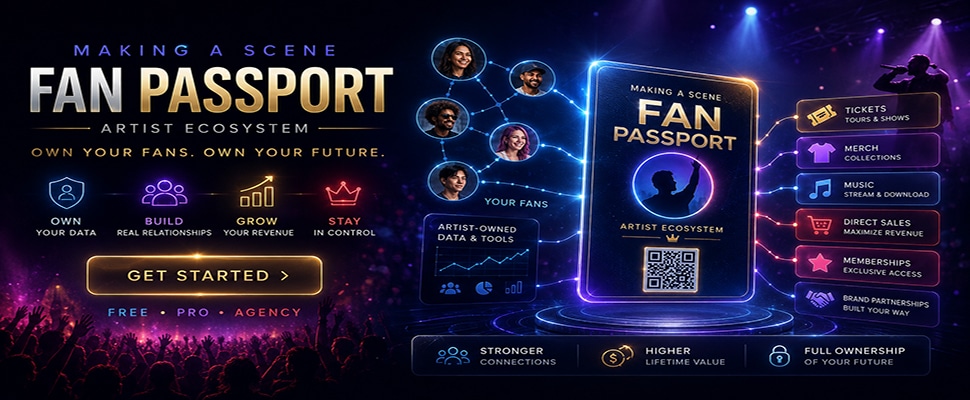
If one lawsuit has taught musicians anything, it is that control over live access, fan checkout, and venue relationships is too valuable to hand away casually. That means the smartest indie artists will use any opening this case creates to build more ownership, not more dependence. They will push fans into direct channels they control. They will capture first-party data at shows. They will use merch, memberships, fan clubs, and direct offers to turn one ticket buyer into a long-term supporter. They will stop acting like the only value in a live show is the face value printed on the ticket. That ticket is the front door. The real business is everything built around it.
This is also where AI and Web3 become useful in a very non-hype way. AI can help artists read their own touring data, email behavior, merch history, city-level demand, and repeat-attendance patterns so they can route smarter, spend smarter, and stop guessing. Web3-style verified access can help prove attendance, reward superfans, and create portable loyalty systems that are not trapped inside one platform’s database. The point is not to act futuristic for the sake of it. The point is to use every tool available to move the artist closer to ownership of fan relationships, data, and revenue.
Because that is the quiet truth this whole case exposed: a monopoly is strongest where artists and fans do not own enough of the connection between them.
The Making a Scene Bottom Line
The Live Nation-Ticketmaster monopoly case matters because it finally named the disease instead of just describing the fever. For years, the public conversation stayed trapped in customer-service hell: hidden fees, long queues, broken on-sales, angry fans, viral screenshots. The 2024 DOJ lawsuit and the April 2026 jury verdict dragged the conversation back to structure. The government said artists had fewer opportunities, smaller promoters were squeezed, and venues had fewer choices. A jury agreed that the company had maintained an illegal monopoly in key parts of the market. That is a huge shift.
Will it break the company apart? Maybe. Will it instantly make tickets cheap? No. Will it force some real changes in how Live Nation and Ticketmaster operate? Very possibly. And even if the final remedy ends up narrower than many critics want, the case has already done something powerful: it put the business model itself on trial and made the rest of the industry imagine a world where the gatekeeper does not get to write every rule.
For fans, the likely relief comes first in truth and choice: clearer pricing, less room for coercion, and possibly more competition over time. For indie artists, the payoff could be even bigger if the live ladder opens up, if regional promoters regain breathing room, and if independent venues can make more choices without looking over their shoulder. That is not the end of the fight. It is the beginning of a different one.
And that is the Making a Scene attitude right there. Do not celebrate like the empire already fell. But do notice when the wall cracks. Then build your own door before they patch it back up.
EDITORS NOTE:
If the states win real money out of this case, that money should not vanish into government filing cabinets while the live music ecosystem keeps bleeding out. It should be redirected into the exact part of the industry this monopoly helped crush: small venues, local promoters, and community-based live music spaces that still give indie artists a fighting chance. Canada has already shown through support systems like FACTOR that public investment in music infrastructure is not charity. It is economic development, cultural development, and career development all at once. If Live Nation and Ticketmaster helped drain the soil that once grew local music scenes, then the fines should be used to put nutrients back into that soil. Help the small rooms stay open. Help the indie promoters take chances. Help rebuild the ladder that monopoly power spent years kicking apart.
See: “Canada Just Put Money Behind the People Who Build the Stages“
 |  Spotify |  Deezer |  Breaker |
 Pocket Cast |  Radio Public |  Stitcher |  TuneIn |
 IHeart Radio |  Mixcloud |  PlayerFM |  Amazon |
 Jiosaavn |  Gaana |  Vurbl |  Audius |
 Reason.Fm | |||
Find our Podcasts on these outlets
Subscribe to Our Newsletter
Discover more from Making A Scene!
Subscribe to get the latest posts sent to your email.


