Stop Feeding the Algorithm: The Indie Artist Content Strategy That Brings Fans Home




Making a Scene Presents – Stop Feeding the Algorithm: The Indie Artist Content Strategy That Brings Fans Home
Listen to the Podcast Discussion
For years, indie artists have been told that the answer to every career problem is to post more content. If the song is not getting heard, post more. If the show is not selling tickets, post more. If the album is coming out, post more. If the merch is sitting in boxes, post more. The advice always sounds simple on the surface, but it often leaves artists trapped in a cycle where they are constantly creating for platforms instead of building a real music business for themselves.
That is the problem. Most artists are not failing because they do not post enough. They are struggling because the content they post has no real path attached to it. It may get a few likes, a few comments, or a small burst of attention, but it does not move the fan anywhere useful. It does not bring the fan into the artist’s website. It does not grow the email list. It does not create direct sales. It does not build a deeper relationship. It simply feeds the machine and disappears into the endless scroll.
The music industry has trained artists to chase attention as if attention alone is the prize. But attention is only valuable when it leads somewhere. A view is not a fan. A like is not a relationship. A comment is not income. A follower is not something you truly own. The real goal is not to keep people entertained on social media. The real goal is to use social media as the doorway into an artist-owned ecosystem where the fan relationship can grow.
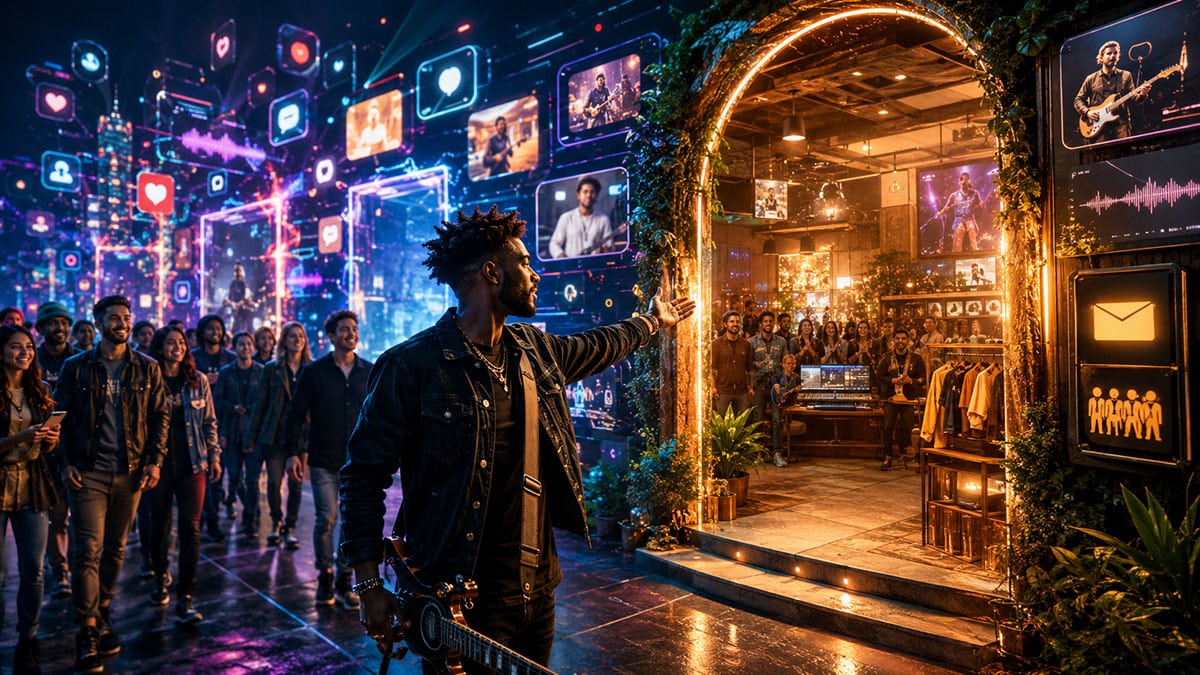
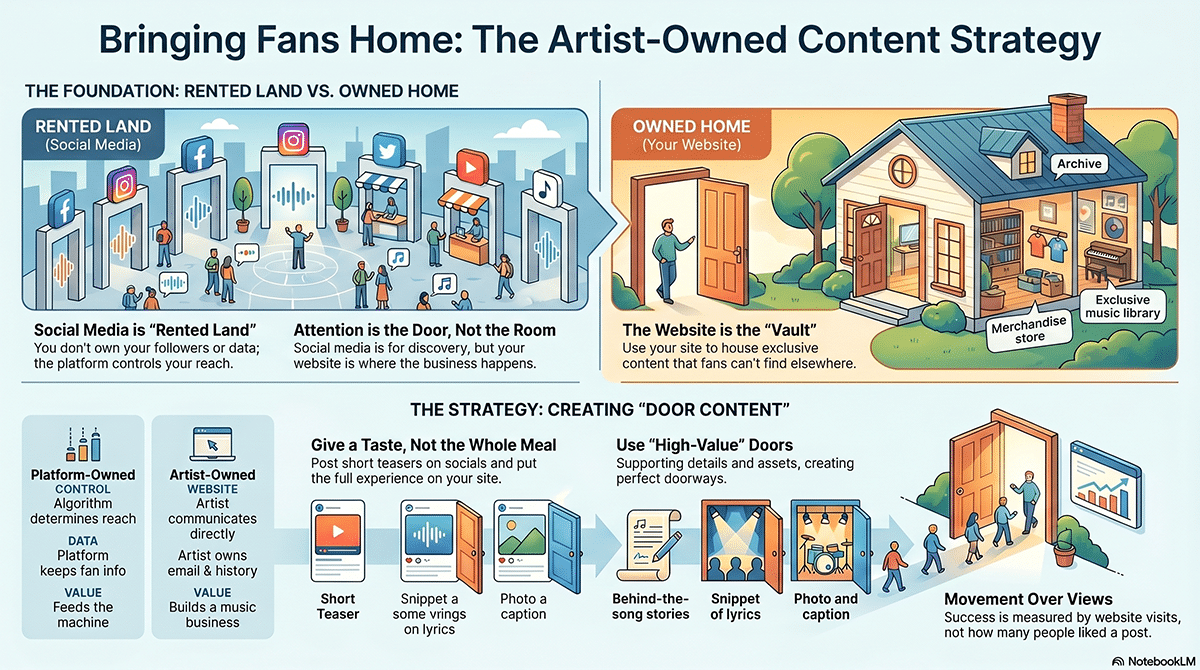
That is the shift indie artists need to make. Social media is not the home. Streaming is not the home. TikTok, Instagram, Facebook, YouTube Shorts, Threads, Spotify, Bandcamp, and every other platform can help people find you, but they should not be the final destination. They are the signs on the road. Your website is the house. Your own artist ecosystem is where the fan should eventually land, because that is where the relationship, the data, the sales, the rewards, and the long-term value live.
Once an artist understands this, the whole content strategy changes. The question is no longer, “What can I post today to get the algorithm to notice me?” The better question is, “What can I post today that gives the right fan a reason to come home to my website?” That one question changes the type of videos you make, the photos you share, the stories you tell, the links you use, the offers you create, and the way you measure success.
Social Media Is the Door, Not the Room
Social media still matters, and indie artists should not ignore it. TikTok at https://www.tiktok.com/, Instagram at https://www.instagram.com/, Facebook at https://www.facebook.com/, YouTube Shorts at https://www.youtube.com/intl/en_id/creators/shorts/, and Threads at https://www.threads.com/ can all help artists reach people who might never find them otherwise. Spotify for Artists at https://artists.spotify.com/en/home gives artists tools to manage their Spotify presence, while Bandcamp at https://bandcamp.com/artists gives artists a more direct way to sell music and merch. These platforms have real value, but the value is in discovery, not ownership.
The trouble begins when artists treat these platforms like the center of their business. A social media following can feel powerful, but the artist does not control it. The platform controls the feed, the reach, the rules, the format, and the data. An artist can spend years building an audience and still only reach a small portion of that audience when they post. A platform can change overnight, and the artist has no vote in that decision.
That is why social media should be treated like rented land. You can set up a booth there. You can play a few songs there. You can talk to people there. You can hold up a sign and invite people in. But you should not build your whole house there, because the land does not belong to you. At any time, the rules can change, and the audience you thought you had can become harder to reach.
The artist’s website is different because it can become the place where the fan relationship is built on the artist’s terms. It is where fans can join the email list, buy merch, see tour dates, unlock exclusive content, collect fan rewards, watch private videos, hear live recordings, and support the artist directly. It is also where the artist can collect permission-based fan data, such as email, location, purchase history, show attendance, and fan activity. That kind of information helps artists make better decisions, and it is far more valuable than a pile of likes.
The Wrong Kind of Content Feeds the Machine
A lot of artists are creating content that only helps the platform. They post random clips because they feel pressured to stay active. They jump on trends that have nothing to do with their music. They make jokes that get views but bring in no real fans. They post “new single out now” graphics over and over, even though most people scroll right past them. The artist is busy, but the business is not growing.
That kind of content can create the feeling of motion without creating real progress. A video can get views and still do nothing for the artist’s career. A post can get likes and still bring nobody to the website. A reel can perform well and still fail to sell one ticket, one shirt, one download, or one membership. This is where artists need to be honest about the difference between attention and movement.
The platforms want more content because more content keeps people on their platforms. When people stay on the platform, the company sells more ads, collects more data, and becomes more powerful. That is their business model, and artists need to understand it clearly. The platform is not asking you to post more because it cares about your career. It wants content because content feeds the system.
The artist’s goal has to be different. The artist’s goal is not to make the platform stronger. The artist’s goal is to build a fanbase that can be reached, understood, served, and supported outside of the platform. That means the best content is not always the content that gets the most views. The best content is the content that moves the right fan one step closer to the artist’s own ecosystem.
The Right Kind of Content Opens a Door
The most effective content for an indie artist works like a doorway. It catches attention, creates interest, and gives the fan a clear reason to step into the artist’s world. It does not dump everything onto the platform. It offers enough to make people care, then points them toward the place where the deeper experience lives. That place should be the artist’s website.
This kind of content has a different purpose than ordinary social media filler. A strong live clip does not just say, “Look at me performing.” It says, “This is what it feels like to be in the room, and here is where you can see the next show.” A behind-the-scenes video does not just say, “Here is a random studio moment.” It says, “This is how the song was made, and the full story is waiting on my website.” A lyric graphic does not just put words on a screen. It creates an emotional pull that makes the fan want to hear the whole song, read the full lyric, or unlock the acoustic version.
Door content gives the fan a next step. That next step could be joining the email list, watching a private video, claiming a fan stamp, unlocking a live recording, buying merch, voting on the next song, joining a city list, or seeing the tour dates. The point is that the content does not end on the platform. The post starts the relationship, but the website continues it.
This is where many artists need to change their thinking. The goal is not to create content that simply performs on social media. The goal is to create content that moves the fan. A post with fewer views but more website visits may be more valuable than a viral post that sends nobody anywhere. A video that sells ten tickets is more useful than a video that gets ten thousand views from people who never care again.
Your Website Has to Be Worth the Visit
This strategy only works if the website gives fans a reason to be there. If an artist sends people to a dead website with an old bio, a few broken links, and no clear offer, fans will not come back. If the website is nothing more than a fancy link page that sends fans back to Spotify, Instagram, and YouTube, the artist has not built an ecosystem. They have built a traffic circle.
A real artist website should feel alive. It should show the newest music, the latest videos, the current show dates, the merch, the email signup, the fan offer, the story, and the deeper content that fans cannot get on social media. It should make the fan feel like they have entered the artist’s actual world. The site should not be a digital business card. It should be the center of the artist’s business.
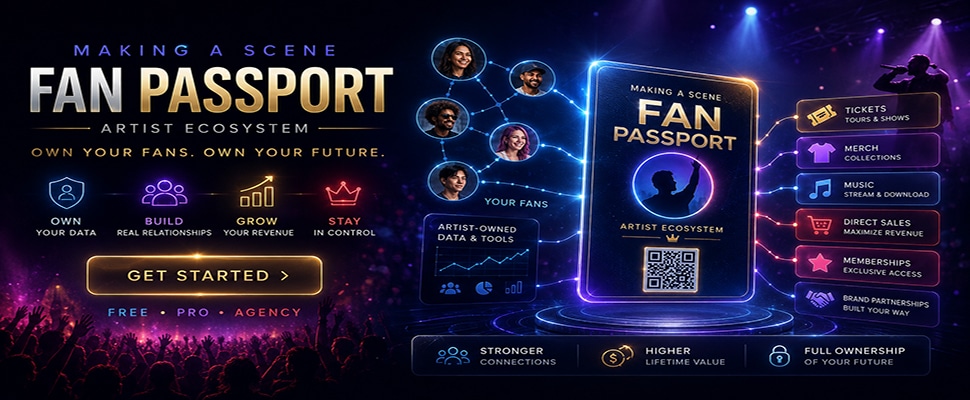
This is where the Fan Passport-style concept becomes powerful. A fan should not just visit the website once and disappear. The site can give them a reason to return by letting them collect rewards, unlock content, claim show stamps, access live recordings, vote on songs, and become part of the artist’s community. The more the fan participates, the more valuable the relationship becomes for both the fan and the artist.
That is a very different mindset from chasing followers. A follower may or may not see the next post. A fan inside the artist’s ecosystem can be contacted directly. They can be invited to shows, offered merch, given exclusive content, and recognized for their support. That is the foundation of a real independent music business.
Exclusive Content Is the Reason Fans Come Home
The artist’s website needs to offer something fans cannot get on social media or streaming. This is one of the most important parts of the whole strategy. If fans can get everything on Instagram, TikTok, YouTube, Spotify, and Facebook, they have no reason to visit the artist’s website. The website becomes optional, and optional things are easy to ignore.
The answer is exclusive content. Social media should get the teaser, streaming should get the public release, and the website should get the deeper experience. The artist should not give every behind-the-scenes video, every live clip, every demo, every acoustic version, and every personal story to platforms that do not belong to them. Some of the best material should live in the artist’s own ecosystem, where it can build direct value.
Exclusive content can take many forms. It can be private behind-the-scenes video from the studio, rehearsal footage, songwriter commentary, tour diaries, acoustic versions, unreleased demos, lyric notebooks, fan-only livestreams, private interviews, early merch access, and live recordings from shows fans attended. The key is that this content should feel special. It should make fans understand that the website is not just a place to visit once. It is the place where the real fan experience lives.
This also changes the value of the social post. Instead of posting the whole behind-the-scenes video on Instagram, the artist posts a short clip and says the full version is on the website. Instead of posting the whole live recording on YouTube, the artist posts the best chorus and tells fans who were at the show where they can unlock the full track. Instead of putting every version of the song on streaming, the artist keeps the acoustic demo or live version as a website-only reward.
The Website Should Be the Vault
The artist’s website should be treated like a vault. Not everything needs to be locked away, but some things should be saved for the fans who take the next step. This does not mean being stingy with fans. It means creating a healthy exchange where the public platforms create curiosity and the artist’s own site delivers the real value.
The public feed can show twenty seconds of a rehearsal, while the website holds the full rehearsal breakdown. The public post can show the chorus from a live show, while the website holds the full live recording for fans who attended. The public photo can show part of the lyric notebook, while the website offers the full handwritten lyric sheet. The public announcement can say the new song is out, while the website holds the story, credits, lyrics, demo, video, merch, and fan signup.
This teaches fans an important lesson. If they want the deeper experience, they need to go to the artist’s website. Over time, this builds a habit. Fans begin to understand that social media gives them a taste, but the site gives them the full meal. That is exactly the behavior indie artists should want to create.
The website vault also gives the artist more control. When fans come to the website, they are no longer being pulled away by the next suggested video or the next random post in the feed. They are inside the artist’s world. That is where the artist can guide the fan toward a song, a story, a signup, a show, a reward, a purchase, or a deeper relationship.
Private Video Makes the Website Feel Valuable
Video is one of the strongest forms of exclusive content because it lets fans see and hear the artist in a more personal way. A private studio video, rehearsal breakdown, backstage moment, or tour diary can make fans feel closer to the music. But artists need to think carefully about where that video lives. If every full video is uploaded to public social platforms, the platforms get the attention, the traffic, the data, and the next recommended click.
When exclusive video is embedded on the artist’s website, the fan stays inside the artist’s ecosystem. Services like Bunny Stream at https://bunny.net/stream/ and Vimeo at https://vimeo.com/features/video-privacy can help artists host video and control how it is shared or embedded. The technology is useful because it lets the artist put private or controlled video inside their own site instead of handing the whole experience to another platform.
This can become a major part of the fan journey. A band can create a members-only studio documentary. A solo artist can post a private songwriting breakdown. A touring act can build a show archive. A blues artist can share a short lesson connected to a song. A folk artist can explain the meaning behind each lyric. A rock band can post backstage footage only for fans who attended the show or joined the fan club.
The value is not just in the video itself. The value is in where the video lives and what happens around it. On the artist’s website, that video can sit next to a signup form, merch offer, tour page, fan stamp, lyric page, or membership invitation. The video becomes part of a larger relationship instead of another piece of content floating through the feed.
Live Recordings Can Turn One Show Into Long-Term Value
A live show should not end when the last note rings out. Most indie artists think of a show as a single night where they get paid, sell some merch, pick up a few followers, and move on. But inside an artist-owned ecosystem, every show can keep working after it is over. The show can become a source of content, data, memories, rewards, and future revenue.
If the artist records the show, even with a simple board mix, that recording can become exclusive website content. Fans who attended can unlock it through a QR code, fan account, or show stamp. Email subscribers might get one song from the set. Fan club members might get the full recording. VIP supporters might get access to the full live archive. Fans in different cities can receive content tied to the night they were actually in the room.
This kind of content feels personal because it is connected to a real memory. A live recording from a show you attended is not the same as a random live video online. It is your night, your room, your crowd, and your experience. When the artist says, “If you were there, your live recording is now available on the website,” that fan feels remembered.
This can also help sell future shows. When fans know that attending a concert may unlock exclusive recordings, show stamps, private photos, or fan rewards, the live event becomes more valuable. The ticket is no longer just entry into the room. It becomes entry into the artist’s ongoing world. That is how one show can lead to more data, more connection, more return visits, and more direct support.
The Best Social Content Gives a Taste, Not the Whole Meal
Artists need to learn the discipline of not giving the whole meal to the platform. Social media should give fans a taste of the experience, not the complete experience. That taste should be strong enough to create interest, but it should leave room for the fan to want more. The “more” should live on the artist’s website.
This is not about tricking fans. It is about creating a fair exchange. The artist gives the public enough value to earn attention, and then offers a deeper experience for fans who want to step closer. That deeper experience may require an email signup, a fan account, a merch purchase, a ticket, a membership, or a show attendance stamp. Each of those actions helps build the artist’s business.
For example, an artist can post the first fifteen seconds of a backstage video and send fans to the website for the full version. A band can share one live chorus and invite fans to unlock the full show recording. A songwriter can post a clip of a demo and offer the complete version to email subscribers. A touring artist can show a crowd moment and invite fans to claim the show stamp from that night.
This turns social media into a true doorway. The content does not simply entertain and vanish. It creates a reason to move. That movement is where the value begins, because it brings the fan into a space the artist controls.
Behind-the-Song Content Makes Fans Care
Behind-the-song content is one of the strongest doors into an artist’s ecosystem because stories make songs feel personal. A listener may enjoy a track on streaming, but when they learn where the song came from, they often hear it differently. The song becomes attached to a memory, a struggle, a place, a person, or a moment. That emotional connection is what turns casual listeners into real fans.
This kind of content can be very simple. The artist can talk about the first line of the song, the place where it started, the mistake that became the best part, or the emotion that pushed it into existence. They can show the notebook, the voice memo, the first demo, the studio session, or the old version that almost got thrown away. These pieces do not need to be polished to death. They need to feel true.
The public platform should get the short version of the story. The website should hold the full experience. A short video might say, “I wrote this song after driving away from the town I thought I would never leave.” The website page can then include the full story, the lyrics, the demo, the acoustic version, the music video, the credits, and an email signup for the private version.
This is how a song becomes more than a track on a streaming platform. It becomes a world the fan can enter. Once the fan is inside that world, the artist can offer more than a song. They can offer a relationship.
Live Performance Clips Are Proof
Live performance clips are some of the most effective door content an artist can make because they prove the music works in the real world. They show energy, connection, skill, emotion, and community. They let fans see what it feels like to be in the room. In a world full of polished promo, real live clips can cut through because they show the artist actually doing the work.
A live clip does not have to be perfect to be effective. Sometimes a raw phone video with a strong crowd reaction is more powerful than a polished multi-camera clip with no energy. A crowd singing along, a drummer locking into a groove, a singer hitting the line, a guitarist catching fire, or a quiet room going silent during a ballad can all stop the scroll. The key is to choose clips that make people feel something.
The clip should always have a path attached to it. If the artist is touring, the clip should point fans toward the tour page. If the clip is from last night’s show, it can point fans toward the show archive or live recording. If the artist is building a city list, it can ask viewers to vote for the next city. If the artist wants house concerts, it can send fans to a booking inquiry page.
The live clip proves the experience, but the website captures the action. That is the whole purpose of door content. The platform shows the spark, and the artist-owned ecosystem gives the fan somewhere to go with that excitement.
Rehearsal Content Shows the Work
Rehearsal content works because fans like to see things being built. They enjoy the process, the changes, the mistakes, the laughter, and the small moments that happen before a song becomes finished. It lets them see the band or solo artist as real working musicians, not just as a final product. That can make the fan feel closer to the music before it is even released.
A rehearsal clip can show the band working out a chorus, a drummer finding the pocket, a singer trying a harmony, a guitarist changing a part, or a songwriter testing a new lyric. These moments do not have to be perfect. In fact, part of their value is that they are not perfect. They show the work behind the magic, and that makes the final song feel more human.
Again, the social platform should get the teaser while the website gets the deeper content. A short rehearsal clip can lead to a full rehearsal breakdown on the site. It can invite fans to vote on whether the song should enter the setlist. It can lead to an exclusive demo or a private fan club post showing the full writing session. It can also build excitement before a release, because fans feel like they watched the song grow.
This makes the fan more invested. They are not just hearing the finished song after it appears on streaming. They saw the song take shape. They were part of the journey. That kind of involvement makes people more likely to listen, share, attend, and support.
Lyric Content Works When It Hits a Nerve
Lyric graphics and lyric videos can still be effective when they are created with feeling. The problem is not lyric content itself. The problem is lazy lyric content that looks like a random line slapped on a boring background. Fans scroll past that because it gives them no reason to stop.
A strong lyric post should choose a line that can stand on its own. It might sound like a confession, a warning, a joke, a wound, or a truth. It should be the kind of line that makes someone think, “That is exactly how I feel.” When a lyric hits a nerve, it can pull a stranger into the song before they have even heard the whole thing.
The visual should match the emotional world of the lyric. It might be a studio photo, a road image, a handwritten page, a dark room, a bright stage, a lonely street, or an AI-assisted visual that captures the mood. Tools like Canva at https://www.canva.com/, Adobe Express at https://www.adobe.com/express/, and Midjourney at https://www.midjourney.com/ can help artists create these images, but the artist still has to decide what feels honest.
The post should lead somewhere deeper. The public feed can show the lyric, but the website can hold the full lyric page, the story behind the line, the acoustic version, the handwritten lyric sheet, or a fan comment area. That turns a simple lyric post into another door into the artist’s ecosystem.
Merch Content Should Tell a Story
Merch posts often fail because they look like ordinary product ads with no emotion. “New shirt available” may be true, but it does not give fans much to care about. A shirt, vinyl record, poster, hoodie, or sticker becomes more powerful when it has a story attached to it. Fans do not just buy objects. They buy meaning, memory, identity, and belonging.
The artist should explain why the merch exists. Maybe the design came from a lyric, a tour, a city, a fan joke, a song, or a scene. Maybe it was made to help fund the next record. Maybe it is printed by a local shop. Maybe it is only available for fans who attended a certain tour. Maybe it connects to a Fan Passport reward or a special website unlock. The more the merch feels connected to the artist’s world, the more valuable it becomes.
The content should show the merch in real life. A shirt on a real fan is stronger than a flat mockup. A record being packed by the artist is stronger than a clean product image. A merch table after a show tells a better story than a plain sales graphic. A short video of orders going out can make supporters feel like they are part of the journey.
Stores can be built with tools like Shopify at https://www.shopify.com/ or through artist-friendly platforms like Bandcamp at https://bandcamp.com/artists. Patreon at https://www.patreon.com/create can also support membership-style fan support. The tool is less important than the path. Merch should connect back to the artist’s website, fan data, and direct relationship instead of floating around as another random link.
Fan Testimonials Are Stronger Than Self-Promotion
Artists often feel awkward sharing fan reactions, but fan testimonials can be powerful because they show that the music matters to real people. An artist saying “my song is powerful” is not nearly as strong as a fan saying, “That song helped me through a hard year.” A fan reaction carries emotional proof. It tells other people that there is something real happening around the music.
These moments can come from many places. A fan after a show can talk about what the performance meant to them. A photo of fans wearing the merch can show community. A message from someone who drove two hours to attend a show can show commitment. A clip of fans singing along can show that the room was alive. With permission, these moments can become some of the most effective content an artist shares.
Social media is a good place to show the proof, but the website should be the next step. A testimonial can lead to a fan story page, a show memory page, a city fan list, a live recording, a fan stamp, a street team signup, or a “come to the next show” page. The fan reaction becomes more than a nice post. It becomes part of the larger journey.
This also helps make the community visible. People are more likely to join something when they see others already inside it. A strong fan ecosystem should not make supporters feel hidden. It should show that real people are showing up, listening, buying, attending, sharing, and becoming part of the artist’s world.
Email Signup Offers Need to Feel Like a Gift
“Join my newsletter” is one of the weakest calls to action an artist can use. Most people do not want another newsletter. Their inboxes are already crowded, and the word “newsletter” sounds like homework. Fans need a better reason to give an artist permission to contact them.
That reason should feel like a gift. The artist can offer a private acoustic track, a live recording, early ticket access, a tour diary, a backstage video, a lyric sheet, a fan stamp, a private livestream invite, or an unreleased demo. The offer should be connected to the music and valuable enough that the fan feels the trade is fair.
Email platforms like Mailchimp at https://mailchimp.com/, Kit at https://kit.com/, and Substack at https://substack.com/ can help artists send updates and build direct communication. But the platform is not the strategy. The strategy is the offer, the relationship, and the way the artist uses that connection after the fan signs up.
A stronger social post might say, “I recorded a stripped-down version of the new single that will not be on streaming, and I put it on my website for subscribers.” That feels different from “join my list.” The fan knows what they are getting, and the artist gets permission to stay in touch. That is a fair exchange, and fair exchanges build trust.
Tour Routing Content Should Build a Map
One of the smartest uses of organic content is tour routing. Many artists ask, “Where should we play next?” and then leave all the answers buried in comments. That may create engagement, but it does not create useful data unless the artist captures the information in a way they can actually use. The better move is to send fans to a city signup page on the website.
A city signup page can ask fans where they live, what type of show they would attend, and whether they want alerts when the artist comes nearby. A solo artist can use it to plan house concerts. A band can use it to route a club tour. A folk artist can ask for listening room suggestions. A blues artist can find festival towns. A rock band can learn which markets have enough real interest to justify the drive.
This kind of content turns casual engagement into business intelligence. Instead of guessing where the fans are, the artist starts building a map. That map can help with tour routing, merch planning, email targeting, livestream timing, and city-based fan campaigns. It can also help prevent artists from wasting money on weak markets while ignoring places where real fans are waiting.
Social media comments are nice, but owned fan data is useful. The difference matters because artists cannot build a sustainable career on scattered comments. They need information they can act on. A website-based city list gives them that.
QR Codes Connect the Stage to the Ecosystem
QR codes are simple, but they can be powerful when they lead to something worth claiming. The problem is that many artists use QR codes in a boring way. A code that leads to a generic homepage is fine, but it does not create much excitement. A code that unlocks a live recording, fan stamp, merch discount, private video, or show-specific reward is much stronger.
At a show, the fan is warm. They just heard the music. They are in the room. They may be standing near the merch table, holding a drink, talking with friends, and feeling the energy of the night. That is the perfect moment to invite them into the artist’s ecosystem. If the QR code gives them a reason to act right then, the artist can turn a live moment into an ongoing relationship.
This can be built into the show experience. Before the show, the artist can post that tonight’s QR code will unlock a private live track or show stamp. During the show, the QR code can appear at the merch table, on a sign, on a sticker, or on a screen. After the show, the artist can post that fans who were in the room can now claim the recording or reward on the website.
That connects the stage, the social feed, and the artist’s website into one system. The fan does not just leave with a memory. They leave with a reason to visit the site, join the list, and stay connected. That is how live performance becomes more than a one-night transaction.
AI Can Help Artists Create Better Door Content
AI should not replace the artist, the song, the voice, or the story. The artist is still the source of meaning. But AI can be a useful assistant for planning, testing, writing, organizing, and improving the content that leads fans into the ecosystem. Used correctly, AI can help artists make better decisions without handing their creativity over to a machine.
ChatGPT at https://chatgpt.com/ can help brainstorm content angles, write captions, create video hooks, turn one song story into many posts, build weekly content plans, write email drafts, and analyze what kind of content is moving fans to the website. Canva at https://www.canva.com/ and Adobe Express at https://www.adobe.com/express/ can help create graphics, videos, thumbnails, lyric cards, tour images, merch promos, and social templates. CapCut at https://www.capcut.com/ can help edit short-form videos and add captions. Runway at https://runwayml.com/en can help create AI-assisted video concepts and visual scenes, while Midjourney at https://www.midjourney.com/ can help create image ideas and mood boards.
The key is to give AI a real job. Asking “give me social media ideas” is too vague. A better prompt would explain the song, the audience, the platform, the website offer, and the action the artist wants fans to take. For example, an artist could ask for short video ideas that send fans to a website-only acoustic version, or caption ideas that invite fans to unlock a live recording from a recent show.
This is how AI becomes useful. It is not there to create empty content for the sake of posting. It is there to help the artist create better door content. The goal is movement, not noise.
AI Can Help Find What Actually Works
Most artists look at the wrong numbers because the platforms train them to care about visible attention. Likes, views, comments, and followers can tell part of the story, but they do not tell the whole story. The better question is not “which post got the most views?” The better question is “which post brought fans into my ecosystem?”
Google Analytics at https://marketingplatform.google.com/about/analytics/ can help artists understand website traffic and behavior. Google Search Console at https://search.google.com/search-console/about can help artists see how people find their website through search. Google’s Campaign URL Builder at https://ga-dev-tools.google/campaign-url-builder/ can help create trackable links so the artist knows which posts, emails, or campaigns sent traffic.
AI can help the artist read the patterns. The artist can look at weekly results and ask which posts drove website visits, which videos led to signups, which clips sold tickets, which behind-the-scenes teasers made fans unlock the full video, which cities responded to tour routing posts, and which live recordings were claimed. These are the signals that matter because they show movement, not just attention.
This changes how the artist judges success. A funny video with a lot of views may not be as valuable as a behind-the-scenes clip that sends forty fans to the website. A live clip with fewer likes may be better if it sells tickets. A lyric post with modest reach may be a winner if it leads fans to download the acoustic demo. AI can help the artist see these patterns more clearly and build a smarter strategy from them.
The Most Effective Content Has a Clear Job
Every post does not need to sell something, because fans do not want to be hammered with sales pitches all day. But every post should have a job. Some content should attract new fans. Some should build trust. Some should prove the live experience. Some should invite action. Some should reward loyalty. When the artist knows the job of the post, the content becomes easier to create and easier to measure.
Attraction content might include short performance clips, strong hooks, emotional lyric moments, bold visuals, or quick stories that make a stranger curious. Trust-building content might include behind-the-scenes videos, rehearsal clips, studio moments, personal stories, and honest talking videos. Proof content might include live clips, fan reactions, crowd moments, and show footage that makes people want to be in the room.
Action content is where the website connection becomes clear. This includes exclusive content teasers, email signup gifts, tour routing questions, fan votes, QR code campaigns, merch stories, and live recording unlocks. Loyalty content goes deeper by rewarding fans who have already stepped into the ecosystem. This can include fan stamps, private videos, early merch access, show archives, member-only livestreams, and special rewards for repeat support.
The problem is not that artists need more content. The problem is that most content has no clear purpose. When content has a job, the artist stops shouting into the void and starts building a path. That path is what turns casual attention into direct support.
What Artists Should Post This Week
A strong weekly content rhythm does not have to be complicated. An artist can start the week with a story post that explains what they are working on and why it matters. This could be a short talking video, a rehearsal photo, a studio clip, or a post about the meaning behind a song. The purpose is to create connection, and the website can hold the deeper story, demo, lyric page, or private video.
During the week, the artist can post a performance clip that lets people hear the music quickly. It can be live, acoustic, rehearsal-based, or recorded in the studio. The goal is to prove the song and make people want more. The next step can be the song page, tour page, video page, or exclusive version on the artist’s website.
The artist can also post a behind-the-scenes teaser that shows the process. This could be the room, the gear, the mistake, the laugh, the first demo, the harmony attempt, or the moment the song changed. Social media gets the taste, while the website gets the full version. That teaches fans where the deeper experience lives.
Later in the week, the artist can post an invitation. This might ask fans to vote on a song, pick a city, claim a show stamp, unlock a live recording, join the email list, or get early access to merch. The action should happen on the website because that is how engagement becomes useful. A comment is nice, but a fan inside the ecosystem is far more valuable.
After a show, the artist should post proof. This could be the crowd, the room, the merch table, the fan reaction, the setlist, or the best musical moment. The post should invite fans back to the website to claim the live recording, collect the show stamp, join the city list, or see the next dates. That way, one night on stage becomes part of the larger fan journey.
Stop Giving the Platforms Your Whole Fan Experience
The old content model tells artists to put everything on social media because attention is hard to get. That approach may seem logical, but it weakens the artist’s own ecosystem. If the full video, full story, full live clip, full demo, and full fan experience are always available on the platform, the fan has no reason to leave. The artist ends up training people to stay on rented land.
The better model gives the platforms enough to create desire, then saves the deeper value for the artist’s website. The public feed can entertain, explain, tease, and invite. The website can deliver, remember, reward, and convert. This gives each part of the system a clear job. Social media opens the door, while the artist-owned ecosystem builds the relationship.
This is not about being anti-social media. It is about refusing to let social media become the whole business. Indie artists should use every useful tool available, but they should use those tools with purpose. The platform should not be the place where the fan relationship begins and ends. It should be the place where the relationship begins and then moves to a space the artist controls.
That is how content turns into revenue. The email list grows. Merch sells. Fans claim rewards. Show data becomes useful. Exclusive videos get watched. Live recordings get unlocked. Memberships become possible. Fans become more than numbers on a screen. The artist begins to build something real.
The Final Rule: Never Waste Attention
Attention is hard to earn, so artists should not waste it. When someone stops scrolling, that is a moment. When someone watches a video, that is a moment. When someone comments, that is a moment. When someone comes to a show, that is a much bigger moment. When someone buys merch, joins the email list, scans a QR code, unlocks a live recording, or claims a fan stamp, that is not just attention anymore. That is a relationship.
The artist’s job is to build a path for those moments. Social media introduces the artist. Streaming lets people hear the music. The website delivers the deeper value. The fan system remembers the relationship. The email list keeps the connection alive. The store creates income. The show calendar brings fans into the room. Exclusive content gives them a reason to return.
This is the real content strategy for indie artists. It is not about feeding the algorithm just because the platform is hungry. It is not about chasing empty numbers or giving away the whole fan experience to companies that do not belong to the artist. It is about using public platforms as doors into an artist-owned ecosystem where fans can become part of something deeper.
The future belongs to artists who understand that content is not the destination. Content is the invitation. Use the platforms to open the door, but do not leave your fans standing outside on rented land. Bring them home.
 |  Spotify |  Deezer |  Breaker |
 Pocket Cast |  Radio Public |  Stitcher |  TuneIn |
 IHeart Radio |  Mixcloud |  PlayerFM |  Amazon |
 Jiosaavn |  Gaana |  Vurbl |  Audius |
 Reason.Fm | |||
Find our Podcasts on these outlets
Subscribe to Our Newsletter
Discover more from Making A Scene!
Subscribe to get the latest posts sent to your email.


