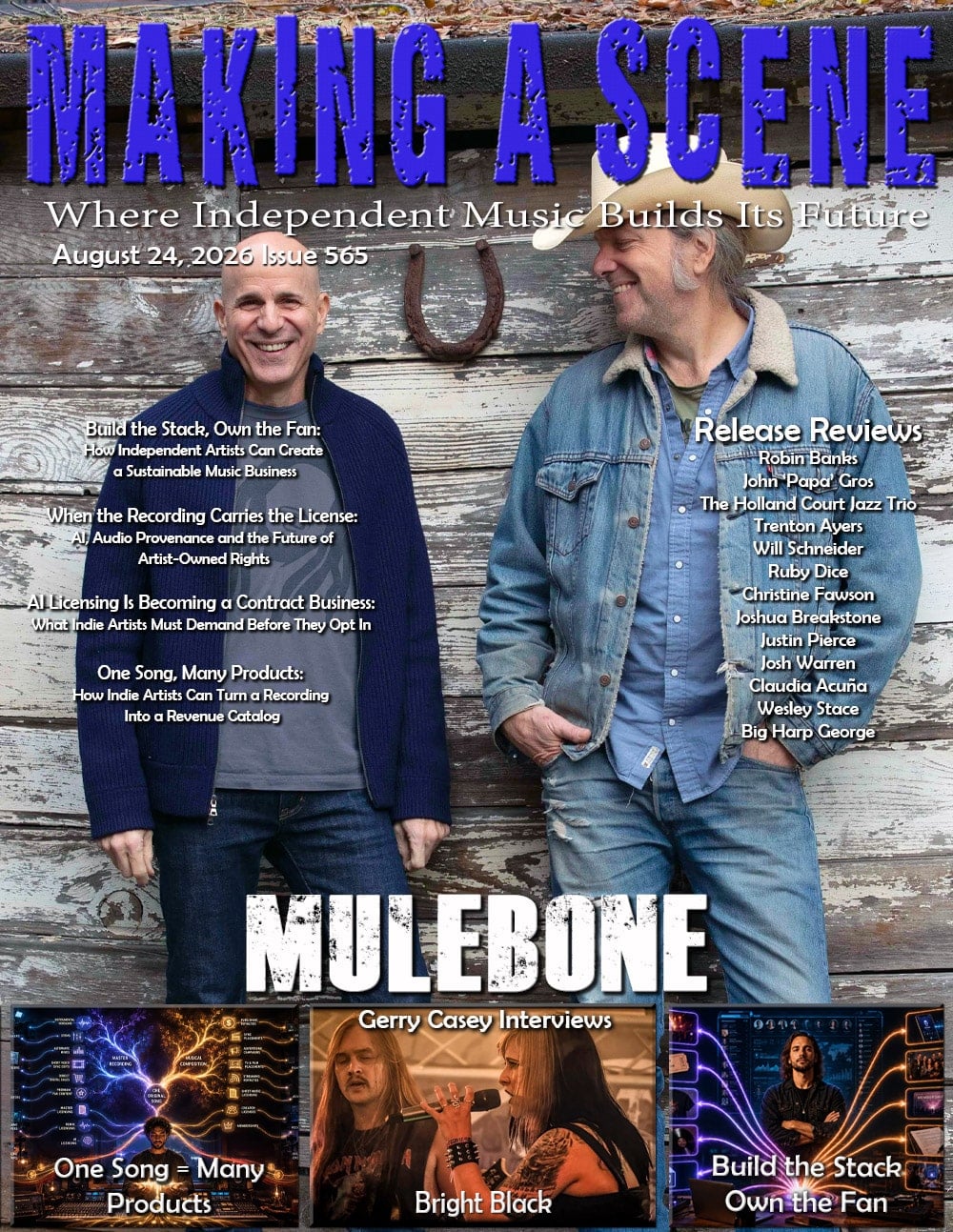

Direct-to-Fan Platforms Are Becoming Discovery Platforms. Don’t Make the Same Mistake Twice





Making a Scene Presents – Direct-to-Fan Platforms Are Becoming Discovery Platforms. Don’t Make the Same Mistake Twice
Listen to the Podcast Discussion
There was always something pleasantly old-fashioned about the original idea behind https://www.patreon.com/. You went out into the world, made music, played shows, posted videos, appeared on podcasts, begged the algorithm gods for mercy, handed out flyers, annoyed your friends, annoyed your friends’ friends, and somehow found people who cared about what you did. Then Patreon gave some of those people a way to support you every month. It was less like a giant advertising billboard and more like a cash register sitting near the back of the club.
That basic bargain was easy to understand. You brought the fan, and Patreon helped you monetize the relationship. Patreon did not have to become Facebook, YouTube, TikTok, Spotify, a record store, a fan club and your manager all before lunch. That distinction is getting blurrier.
On August 20, 2026, Patreon CEO Jack Conte published a large product roadmap describing a much more ambitious Patreon. The company is not simply trying to help creators make money from people they already know. It increasingly wants to help creators get discovered by people they have never met, move those people into free memberships, deepen the relationship through content and community, and eventually convert some of them into paying supporters.
For independent musicians, that could be very good news. It could also create exactly the kind of temptation that has gotten artists into trouble before. If one platform can help you get discovered, publish your work, communicate with supporters, host video, run a community, sell digital products, collect membership payments and analyze the audience, why bother building anything outside that platform? Because discovery is valuable, while dependency is dangerous. That distinction may become one of the most important business lessons an independent artist can learn.
Patreon Is Trying to Become More Than the Cash Register
Patreon’s new roadmap deserves a fair hearing because this is not simply another tech company claiming that it has invented community after adding a comment box. Conte openly admits that Patreon’s current discovery system has not worked well enough for smaller creators. Patreon says the problem is not merely a few unhappy comments from users. The company says it can see the problem in its own data. According to Conte, the recommendation system had been focused heavily on finding creators similar to creators a fan already liked, but that approach tended to favor people who already had larger audiences.
You can see the problem immediately if you are an indie musician. Imagine two artists. One has 100 members, while another has 20,000. If the system learns largely from existing fan relationships and the size and overlap of those audiences, the artist who already has 20,000 people creates a much bigger pile of signals for the recommendation engine to study. Popularity starts feeding popularity.
The artist with 20,000 fans gets more opportunities to find fan number 20,001. The artist with 100 fans is still standing outside waving both arms and yelling, “Hello? I made a record over here.” Patreon says it wants to change that by putting more weight on the individual post rather than primarily comparing whole creators with other creators. Conte says the system is being changed so posts can be compared using qualities such as topic, style, craft and themes, regardless of how many members the creator already has.
That is a meaningful difference. Suppose a relatively unknown blues guitarist posts a wonderful video about using open tunings in a small-room recording session. Under a system that leans heavily on audience relationships, the size of that guitarist’s existing Patreon audience can become an important part of whether the system knows what to do with the post. Under the approach Patreon is describing, the post itself may have a better chance of being connected with people who regularly engage with blues, guitar technique, home recording or similar work.
That does not mean Patreon has solved the problem, and Patreon has not claimed that it has. The company is talking about what it is changing and what it hopes those changes will accomplish. That distinction matters because roadmaps have a bad habit of turning into finished products in news headlines long before they turn into finished products on anybody’s phone.
Some of This Exists. Some of It Is Still Being Built.
Patreon is unusually clear about that point in Conte’s announcement. He warns creators that the roadmap includes things being built, things being tested and things that have not yet fully rolled out. The feature list itself says some items are pilots or tests and that Patreon may not ultimately release everything shown. So when you hear that Patreon is launching a miniature civilization inside its app, keep the champagne cork in the bottle for another minute.
Some of the network foundation is already there. Patreon says its network beta has been opened to the vast majority of what it calls “all ages” creators. Those creators have access to Quips, which are shorter posts designed for the Home feed, public posts that can reach beyond existing members, and a Home feed that includes discovery while still giving fans a separate memberships view if they do not want discovery mixed into everything.
Other features are in different stages. Clips, which can automatically pull short moments from longer videos, is listed as iOS early access. Patreon says those clips can become Quips or be downloaded for use outside Patreon. Suggested video previews are being developed to choose a more interesting preview from paid content instead of simply showing the opening section. A redesigned creator page is in beta and being rolled out, with more control over presentation. Patreon is also developing text quoting for Quips, better image previews, locked-post previews in the feed and a web version of the Home feed.
Then there are ideas that are much earlier. Fan profiles are described as coming. “Niches,” Patreon’s proposed topic-based community areas, are described by Conte as being in the “super early stages,” with prototypes rather than a finished public network. The concept is something like an interest community where creators and fans can gather around a subject.
For musicians, the possibilities are obvious even if the actual communities do not yet exist. A future interest community could theoretically form around slide guitar, independent hip-hop production, Americana songwriting, modular synthesis, regional scenes or home recording. Those are examples of what the idea could enable, not claims about Niches Patreon has already launched. That difference between “could be useful” and “is currently available” should remain tattooed on the forehead of everyone who covers technology.
Patreon’s Own Numbers Are Encouraging, but They Are Patreon’s Numbers
Patreon says the network is already delivering 1.5 million new free and paid memberships to creators each month. It also says creators publishing public posts grew paid memberships 25% to 30% more than similar creators who did not, and that new memberships resulting from discovery in the feed have increased fivefold since an April launch.
Those are interesting numbers, but they are also company-reported numbers. That does not make them false, but it does mean we should describe them accurately. Patreon has access to its own platform data and is reporting what it says it sees. These are not independent academic studies proving that every musician who posts publicly will increase paid membership by 30%.
More important for this story is what Patreon says is not working. Conte says smaller creators have not benefited enough from the new discovery tools. He does not blame small creators for failing to master some secret algorithmic handshake. He says Patreon needs to improve the system.
That level of honesty is refreshing in a technology business where the traditional solution to a poorly performing creator feature is often to release a webinar explaining why the creator is using it wrong. The interesting question is what happens if Patreon actually improves it.
Discovery and Direct Commerce Are Colliding
For years, musicians could divide the internet into fairly understandable jobs. Some platforms helped people discover you, other platforms streamed your music, a different company handled your email, another sold your merchandise, something else handled tickets, and membership platforms dealt with recurring support. That neat little diagram is falling apart because
https://www.youtube.com/ is now a discovery engine, video platform, livestreaming service, advertising business, membership service and shopping surface, with eligible creators able to sell channel memberships while YouTube Shopping connects products and merchandise to videos, Shorts, livestreams and channel pages.
https://www.tiktok.com/ remains one of the most powerful attention machines in popular culture, but it also offers monetization systems that include subscriptions, LIVE gifts, creator rewards, Series and TikTok Shop, which can put products directly into short videos, livestreams and creator storefronts.
https://www.spotify.com/ is no longer simply a place where songs sit waiting to be streamed because Spotify artist profiles can feature concerts, merchandise, fundraising links, social links and pre-save Countdown Pages, while Spotify can also send ticket and merchandise offers to listeners it identifies as strong fans.
Then there is https://bandcamp.com/, which has long blurred the distinction in almost the opposite direction. Bandcamp started with direct sales at the center, but it also operates a discovery marketplace, editorial system, fan collections, recommendations and Discover tools. Bandcamp itself describes the service as both an online record store and a music community, and in July 2026 it added more controls to its Discover system.
Everybody wants pieces of everybody else’s business. Discovery companies want transactions, transaction companies want feeds, streaming services want deeper fan relationships, social networks want stores, and membership companies want recommendation engines. Eventually every platform seems to wake up one morning and announce that it would also like to be television, a record shop, a bank, a fan club and possibly your drummer. For independent artists, this is not automatically bad. It is actually full of opportunity. The danger begins when convenience becomes architecture.
A Small Artist Could Benefit Enormously From Better Discovery
Suppose Patreon really does get better at recommending individual posts based on what is inside them. That could matter more to the working independent artist than it does to the creator who already has a stadium-sized audience. The musician with 200 dedicated supporters does not necessarily need another tool for reaching the same 200 people; that artist needs a way to find supporter number 201.
If a public post, performance video, demo, studio diary, songwriting breakdown or behind-the-scenes story can reach someone because that particular piece of work matches that person’s interests, the artist has a new discovery channel. If Niches eventually becomes a useful interest-based community system, it could add another route that is not driven mainly by celebrity size. That would be worth using. In fact, refusing to use it because “real independent artists should own everything” would be a strange way to run a business.
Artist independence does not mean hiding in a digital bunker. If TikTok introduces your music to 50,000 people, take the introduction. If YouTube puts your live session in front of the exact people who like the kind of music you make, wonderful. If Spotify recommends your record to a listener in another state, celebrate it. If Bandcamp’s Discover page produces a sale, cash the money. If Patreon puts a public post in front of somebody who eventually becomes a monthly supporter, terrific. Discovery is not the enemy. Confusing discovery with ownership is the mistake.
The Algorithm Is Not Your Fan Club
One reason artists fall into platform dependency is that dashboards are wonderfully good at making numbers feel like relationships. Ten thousand followers looks like an audience, a million views feels like reach, and fifty thousand monthly listeners sounds suspiciously like a fanbase. Sometimes those numbers do represent real momentum. They can lead to bookings, press, streams, sales and opportunities. The mistake is assuming that every number measures the same thing.
Someone who watches 15 seconds of a video once is not in the same relationship with you as somebody who buys a concert ticket. A monthly listener is not automatically the same as someone who bought the vinyl, and a follower is not automatically someone you can contact outside the platform. A person who paid for three albums, attended five shows and voluntarily joined your email list is economically and emotionally different from somebody who tapped a heart icon while waiting for their pizza to arrive.
The first group is deeper in what marketers call a fan funnel, which is simply a fancy name for the path people take as they become more connected. A stranger hears a song, some strangers become listeners, some listeners become interested enough to follow, some give permission to stay in touch, a smaller number buy something, attend a show, join a membership or support repeatedly, and an even smaller group becomes the people who tell everyone else about you, bring friends to shows and buy the weird deluxe box set you probably should not have manufactured at two in the morning. The point is not to force everyone to the bottom of the funnel. The point is to understand that discovery is the top. It is where the relationship starts.
“Owning the Customer” Does Not Mean Owning a Human Being
Making a Scene talks frequently about artists owning customer relationships, but the phrase needs some care because nobody owns a fan. Fans are people. They have privacy rights, preferences, unsubscribe buttons and a perfectly reasonable expectation that buying your album does not result in you following them around the internet like a musical door-to-door salesman.
What an artist can own is the infrastructure of an authorized direct relationship. That might mean a person voluntarily joining an artist-controlled mailing list, maintaining a customer account in the artist’s own store, joining an artist-controlled fan system, giving text-message permission, creating a purchase record or establishing another relationship where the fan understands what they are agreeing to. That is very different from simply having a follower.
A Spotify listener does not arrive with an email address stapled to their forehead, a TikTok follower exists inside TikTok, and a YouTube subscriber exists inside YouTube. Those connections have value, but the platform controls the system through which the connection operates. If the ranking system changes, the connection can behave differently. If the platform changes its rules, the relationship may change with it. If the service disappears, the artist may discover how much of the “audience” actually knew where to find them somewhere else. That is why permission and portability matter.
Patreon Is Better About Portability Than Some Critics Pretend
This is where the Patreon story gets especially interesting because the easy version of the anti-platform argument would be inaccurate. Patreon does not simply lock every useful piece of member information inside the platform. Its Relationship Manager lets creators view and filter paid and free members, membership status, join dates, payment information and other relationship details. Creators can export their member lists as CSV files, and Patreon also has customer export tools for one-time purchasers.
Patreon also allows member email addresses to be shared with creators. By default, Patreon says a fan’s email address is shared with a creator when that fan subscribes, although fans can change that setting, stop sharing with future creators or turn sharing off for particular creators they already follow. Patreon notes that there can be a buffer period before a previously shared address disappears from creator view because the address may be needed to fulfill benefits.
That is meaningful portability, but it is not unlimited marketing permission. That distinction is crucial. Patreon’s Creator Privacy Promise says the member data Patreon supplies to creators exists for providing what it calls Membership Services. It describes Patreon as the controller and the creator as a processor or service provider in relation to that Patreon-provided member data. The agreement says creators should process that data only as needed for those membership services rather than for unrelated purposes, and it includes requirements concerning security, third-party transfers, retention and deletion.
So exporting a Patreon email address does not mean an artist should casually drop that person into every marketing database they have ever created and begin advertising guitar lessons, somebody else’s festival and their cousin’s new hot sauce. If the fan separately joins the artist’s own mailing list and gives appropriate permission for that relationship, now the artist has another basis for communicating with that person. That is the smart move, not secretly stealing the relationship away from Patreon, but creating an additional relationship with the fan’s knowledge and permission.
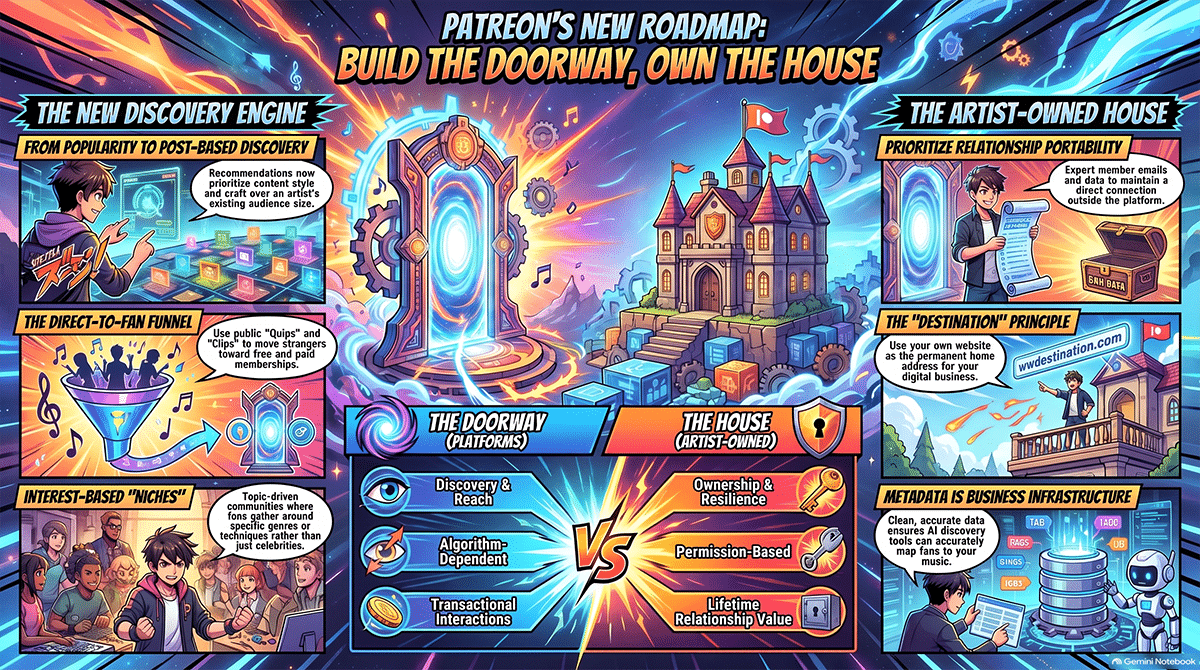
Portability Should Be Built While the Door Is Open
This nuance actually strengthens the independence argument. Patreon gives creators useful ways to know who their members are, communicate with them and export certain information. Good. Use those tools properly and understand the privacy terms. Invite supporters, where appropriate, to establish a broader relationship directly with the artist.
Maybe that Patreon member also chooses to join the artist’s mailing list, claims an artist Fan Passport, buys a record through the artist’s store, attends a show, scans a QR code and chooses to receive future show alerts, or eventually participates across several authorized systems. At that point Patreon is still valuable; it simply is not the only wire connecting the artist to the fan. That is what resilience looks like.
Artists Have Seen This Movie Before
None of this requires believing that technology companies are evil. Platforms change because markets change, competition changes, owners change, advertising changes, regulations change, technology changes and user habits change. Companies make strategic decisions because their executives are responsible for running their companies, not your touring career. The mistake is assuming their priorities will remain permanently aligned with yours.
Facebook provides a useful historical example. In 2018, https://www.facebook.com/ changed News Feed ranking to prioritize friends, family and posts creating what it called meaningful interactions. Facebook explicitly warned that Pages could see lower reach, video watch time and referral traffic as a result. Facebook was not secretly breaking into band rehearsal rooms and unplugging amplifiers; it was changing its own product. But artists and businesses that had spent years treating Facebook Page followers as if they were a portable database suddenly had to live with the new economics of reaching those people.
Then there are services that simply disappear. https://vine.co/ was once a major creator platform. In October 2016, Vine and Twitter announced that the standalone mobile app would be discontinued. The company later provided ways for users to download their videos and helped Vine followers connect to creators on Twitter, but the network creators had built was still being fundamentally changed by a decision outside their control.
Older musicians hardly need a lecture about changing platforms. Ask somebody who spent 2006 perfecting a https://myspace.com/ page. Fans move, technology moves and attention moves. The lesson is not “never trust a platform.” The lesson is “never make one platform the only address where your business lives.”
Building your entire career on one platform is a little like building a beautiful house on rented land and then becoming furious when the landlord eventually changes the lease. The landlord may even have a perfectly reasonable reason. You still do not own the land.
Patreon Can Be the Doorway Without Becoming the House
Imagine that Patreon’s new recommendation system works beautifully. Someone who has never heard of your band sees one of your public posts, watches a preview, likes it, follows for free and becomes a paid Patreon member a month later. That is already a successful business outcome.
Now think one step further. Perhaps that supporter eventually visits your own website, joins your email list because they want tour announcements, buys a vinyl record directly from you, scans a QR code at a show and joins a loyalty program. Their purchase history, show activity and permissions begin forming a larger relationship with the artist.
Patreon did not lose, and the artist did not “steal” the customer. The fan gained more ways to participate, and the artist gained resilience. Patreon can continue doing what Patreon does well: memberships, content, community, transactions and perhaps increasingly discovery. The artist simply avoids making Patreon the only database, the only communication system, the only storefront, the only discovery source and the only place where the relationship exists.
That is not duplication for the sake of duplication. It is basic business continuity. A working musician probably would not feel comfortable discovering that every dollar of next year’s income depends on one club owner booking the band 120 nights. The digital business deserves the same common sense.
The Artist-Owned Layer Underneath the Platforms
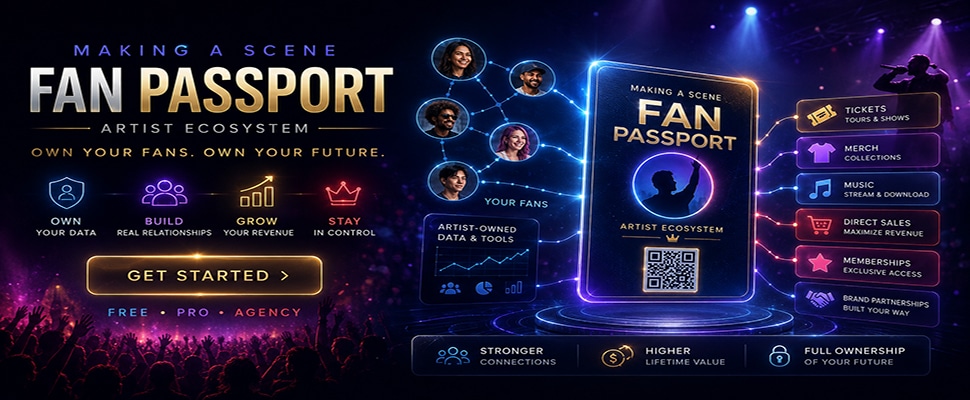
This is exactly where the philosophy behind the https://masfanpassport.com/ Making a Scene Artist Ecosystem and Fan Passport becomes relevant. The idea is not to replace Patreon or Spotify, and it is certainly not to build a tiny independent version of TikTok and hope 1.5 billion people suddenly wander in. The Artist Ecosystem is built around a different job: outside platforms create doorways, while the artist-owned system provides the relationship layer behind those doorways.
The current Fan Passport system describes permission-based fan relationships, consent-aware email and SMS tracking, fan capture through websites, QR codes, NFC and shows, direct-support workflows, show management, basic rewards, fan records and consent-safe data exports as part of its Free Core level. Pro expands that structure into deeper segmentation, campaign workflows, memberships, commerce, ticketing, merch-table tools, touring, rights management, licensing and reporting.
That matters because a fan can enter from many directions. One person may arrive from Patreon, another may scan a QR code at the merch table, somebody else may discover the artist on Spotify, another may come from YouTube and another may follow after a live show. The source can change, but the relationship layer should survive.
Fan Passport is intended to give fans a continuing identity in that ecosystem rather than reducing every encounter to another disconnected follow, purchase or scan. The technology is useful. The philosophy is more important.
The Website Matters Again
For years, artists were told that websites were becoming less important because “everybody is on social media.” That statement always left out one awkward detail: everybody is not always on the same social media. The social platform that dominates this year may not dominate five years from now.
An artist-controlled website does not need to beat TikTok at discovery. That would be ridiculous. A four-piece roots band should not spend Tuesday afternoon designing a global recommendation engine because their drummer watched a coding tutorial. The website has a simpler job. It needs to be home.
It can connect music, shows, merchandise, membership, email signup, Fan Passport, licensing information, press material, booking contacts and whatever else belongs to the artist’s business. It is the place discovery can lead. Think of it less like the nightclub where everyone meets and more like the address printed on the driver’s license. The nightclub may change. Home should remain findable.
Follow the Money, Not Just the Follower Count
This conversation becomes much more useful when we stop talking about philosophy for a moment and talk about money. Patreon currently has different fee arrangements depending on when and how a creator established their page. For creators who published a page after August 4, 2025, Patreon says the standard platform fee is 10% of successfully processed payments. Legacy creators may still be on older 5%, 8% or 11% platform plans depending on their history and plan. Patreon also charges payment-processing fees, and those vary according to payment method, location and currency.
For a standard-plan creator receiving a U.S. dollar payment by credit card or Apple Pay on the normal payment system, Patreon currently lists processing at 2.9% plus 30 cents. So, in a simplified $10 example before taxes, payout fees or other complications, the 10% platform fee is $1 and standard payment processing is 59 cents, leaving roughly $8.41 before any remaining applicable costs.
That example is not universal. A legacy plan may work differently, PayPal can differ for non-U.S. members, currencies can change processing costs, currency conversion can carry another fee and payout fees vary. Purchases made through Apple’s in-app purchase system inside the Patreon iOS app can also involve a 30% Apple service fee, which Patreon says replaces its standard payment-processing fee for that transaction.
This is why artists should read actual fee documentation instead of hearing “Patreon takes ten percent” at the bar and treating that sentence as federal law. But the more interesting economics are not hidden inside a fee table. They are hidden in the lifetime of the fan relationship.
One Fan Can Be Worth Much More Than One Transaction
Suppose somebody discovers you through a Patreon recommendation and becomes a $10 member. Great. But perhaps that is only the first economic event. Maybe six months later they buy a $25 shirt, a year later they spend $30 on a ticket, later they buy vinyl, then they join a special release campaign, bring two friends to a show and support you for eight years.
Now you are no longer looking at a $10 customer. You are looking at a relationship. Business people call this customer lifetime value, which sounds like something invented by a consultant who charges by the PowerPoint slide. The idea itself is simple: a fan who stays connected for years can create much more value than the amount they spend on the day you first meet them.
That is why artists should care about portable relationships. If the only thing you know about a listener is that Spotify showed “one monthly listener” on a dashboard, your options are limited. If that same person later chooses to join your mailing list, buys from your store and attends shows, you have more opportunities to serve that fan and earn revenue over time. The money is not always in the first click. The money is often in the relationship that follows.
Own Less Data, but Make It Better Data
“Own your data” can become another empty music-business slogan if we are not careful. The goal is not to collect every fact about every fan. You do not need to know what somebody ate for breakfast because they bought your record. The useful data is the information that helps you serve a real business purpose and that the fan has appropriately allowed you to use.
Where does this person live? Did they ask for show announcements? Have they bought from you before? Did they attend a previous show? Are they interested in vinyl? Are they a member? What communication have they actually agreed to receive? Used responsibly, those records can help an artist understand which cities contain active supporters, which products people buy, which releases create the strongest response and which fans are becoming repeat customers.
That can influence touring, merchandise and release planning. It can help the artist stop wasting money advertising a Nashville show to somebody living in Oregon. Useful data improves decisions. Responsible data handling protects trust. A music-industry middle class is not going to be built by independent artists becoming tiny surveillance companies with guitars.
AI Will Scatter Discovery Even Further
The next stage makes this entire issue more important because music discovery is becoming conversational. Spotify introduced “Talk to Spotify” in beta in July 2026 for eligible Premium users in the United States, Ireland and Sweden. Listeners can type or speak requests, ask for artists they have not heard, refine the result and ask follow-up questions about what is playing.
Spotify also offers prompt-driven playlist systems that let listeners describe moods, situations and musical ideas in natural language. Instead of searching for “indie rock” and scrolling through a list, somebody can increasingly describe the feeling they want and let an AI-assisted recommendation system do the digging.
Think about what that means for an unknown musician. Tomorrow’s fan may not discover you by typing your name into a search box, and they may not know your name. They may ask for “a gritty independent soul singer with live horns and songs about working-class life,” request “new blues guitar that sounds raw but not retro,” or describe a mood, scene, instrument, lyric or local experience and receive music in response.
That makes accurate metadata, artist identity, searchable information, provenance and an authoritative web presence increasingly important. The artist does not have to own the AI recommendation engine. Good luck with that. The artist does need to make sure that when a recommendation engine finds the music, the trail can eventually lead back to somewhere meaningful. That is the same principle again: use the discovery engine, but own the destination.
This Is Why Metadata Becomes Business Infrastructure
In the old model, metadata could feel like paperwork somebody made you fill out before distributing a song. In an AI-driven discovery world, metadata starts looking much more like a map. Genre matters, instrumentation matters, mood matters, lyrics matter, location can matter, credits matter, song ownership matters, accurate artist identity matters and a clear authoritative website matters.
If recommendation systems become increasingly capable of understanding natural-language requests, artists with well-structured information around their music are easier for machines and people to understand. This connects directly to the bigger Making a Scene philosophy around rights, metadata and artist-controlled source-of-truth records.
Discovery may become more scattered, but the data underneath the artist needs to become more organized. The artist does not have to predict which AI assistant, streaming service, search engine or social platform will dominate discovery in 2030. That would be a wonderful way to waste an afternoon. The smarter move is to maintain clean, accurate information and a durable artist-owned destination that can accept attention from whatever discovery systems emerge.
Discovery Should Always Lead Somewhere
Every discovery platform should contain some appropriate path toward a deeper relationship. Not every post needs a screaming “JOIN MY EMAIL LIST” button because that would be unbearable. Sometimes the next step is simply another song, a free follow, a public Patreon post, a website visit, a ticket or a Fan Passport QR code sitting quietly at the merch table until a person actually wants to use it.
The important thing is that the artist understands the path. Suppose somebody discovers you on YouTube. The video might lead to your website, the website might show your next concert, the concert might create a QR interaction, and the fan might voluntarily join your direct communication system. Six months later that person buys a ticket, and a year later they buy vinyl. Now YouTube was not the business. YouTube was the doorway that began the business relationship. That distinction changes how artists should measure success.
Use Patreon Harder, Not Blindly
Nothing in Patreon’s August roadmap suggests that independent musicians should delete Patreon. Quite the opposite. If Patreon’s discovery system starts helping smaller musicians reach more potential supporters, artists should experiment with it. Use public posts, try Quips where they fit the work, test Clips if you have access, pay attention to the new creator-page tools, watch the recommendation changes, experiment with previews, explore Niches if and when useful communities actually become available, and study which activity produces free followers and which free followers eventually become paying supporters.
Patreon is even improving its analytics around earnings, membership and growth, while its roadmap describes additional tools intended to show creators how network discovery contributes to membership revenue. That information can help musicians run Patreon like a business instead of a digital tip jar. Just do not confuse a useful platform with a permanent foundation. Use Patreon harder, but do not use it blindly.
Every Doorway Can Feed the Same Business
The music industry has always trained artists to trade control for access. Labels controlled distribution, radio controlled access to mass audiences, retailers controlled shelf space, promoters controlled stages and media outlets controlled publicity. Digital technology changed many of those gates, but it did not magically eliminate gatekeepers. It created more gates.
That is not necessarily a tragedy. More gates can mean more ways in. Spotify can introduce somebody to the song, TikTok can introduce somebody to the personality, YouTube can introduce somebody to the live performance, Patreon can introduce somebody to the membership, Bandcamp can introduce somebody to the record, and a concert can introduce somebody to the actual human being standing behind all of it. Search engines and AI systems can create still more introductions.
The strategic mistake is building a separate little business behind every doorway. The smarter system lets those doorways feed one artist-owned business.
Independence Does Not Mean Doing Everything Yourself
There is also an important misunderstanding buried inside the word independence. Independent does not mean isolated. Independent artists use distributors, venues, payment processors, streaming platforms, social networks, Patreon, ticket companies, manufacturers, publicists, booking agents, lawyers, producers and studios.
The goal is not to remove every outside company from the career. The goal is to maintain enough control that no single outside company can erase the career. That is a much more practical definition of independence. You can rent tools without renting your entire future. You can use a platform without giving it sole custody of your audience. You can accept discovery without surrendering the relationship that may grow from it. That is where the artist gains leverage.
The Real Opportunity in Patreon’s Roadmap
Patreon’s decision to push harder into discovery could become genuinely important for independent musicians. If its new post-centered recommendation system gives smaller creators more opportunities to be seen, that is worth celebrating. If public posts create a useful path from stranger to free follower to paid supporter, use it. If Niches eventually produces healthy communities organized around interests rather than raw popularity, explore them. If previews help potential supporters understand why something behind the paywall is worth paying for, fantastic.
Patreon should get credit for acknowledging that smaller creators have not received enough value from its current discovery system and for trying to address the problem instead of pretending everything is already perfect. But the best way to benefit from those improvements is not to surrender more of the business to Patreon. It is to build stronger bridges between Patreon and everything else the artist owns. Discovery becomes more valuable when it feeds a durable relationship.
Use Every Doorway. Own the House.
This is the strategic lesson that should survive long after Patreon’s current roadmap has been replaced by another roadmap. The discovery source will change because it always does. Twenty years ago an artist might have obsessed over Myspace, later it was Facebook, then Instagram, then YouTube, then Spotify playlists, then TikTok, and now recommendation feeds are moving into direct-to-fan platforms while AI systems are changing how people ask for music in the first place.
There will be another platform after these, and another after that. Trying to predict the last platform artists will ever need is about as useful as predicting the final guitar pedal. The answer is always somehow one more.
The durable strategy is different. Let Patreon find a fan, let YouTube find another, let Spotify find another, let TikTok introduce fifty more, let Bandcamp create a sale, let a music blog send somebody over, let a podcast introduce the story, let a live show produce a roomful of believers, and let an AI recommendation system someday find the perfect listener because your song happens to match exactly what that person asked to hear.
Welcome every legitimate doorway that works, then give those people a reason and a permission-based way to come closer. Some will join a mailing list, some will buy directly, some will join Patreon, some will claim a Fan Passport, some will show up at the next gig and some will disappear forever because that is what humans do.
You do not need to own every person who walks past the house. You need to own enough of the house that somebody else cannot change the locks. That is the opportunity hidden inside Patreon’s new discovery push. The goal is not independence from platforms. The goal is independence through the intelligent use of platforms.
Patreon can help you find the fan, Spotify can introduce another, YouTube can introduce another and a live show can introduce fifty more. But when those people voluntarily decide to build a lasting relationship with you, that relationship should become part of the music business you are building rather than remaining forever as another number on somebody else’s dashboard.
Discovery is valuable, and dependency is dangerous. Use every useful doorway, but remember who should own the house.
 |  Spotify |  Deezer |  Breaker |
 Pocket Cast |  Radio Public |  Stitcher |  TuneIn |
 IHeart Radio |  Mixcloud |  PlayerFM |  Amazon |
 Jiosaavn |  Gaana |  Vurbl |  Audius |
 Reason.Fm | |||
Find our Podcasts on these outlets
Subscribe to Our Newsletter
Discover more from Making A Scene!
Subscribe to get the latest posts sent to your email.


