
The Tap Is the Door: How NFC Turns a Merch Table Into an Artist-Owned Revenue Machine




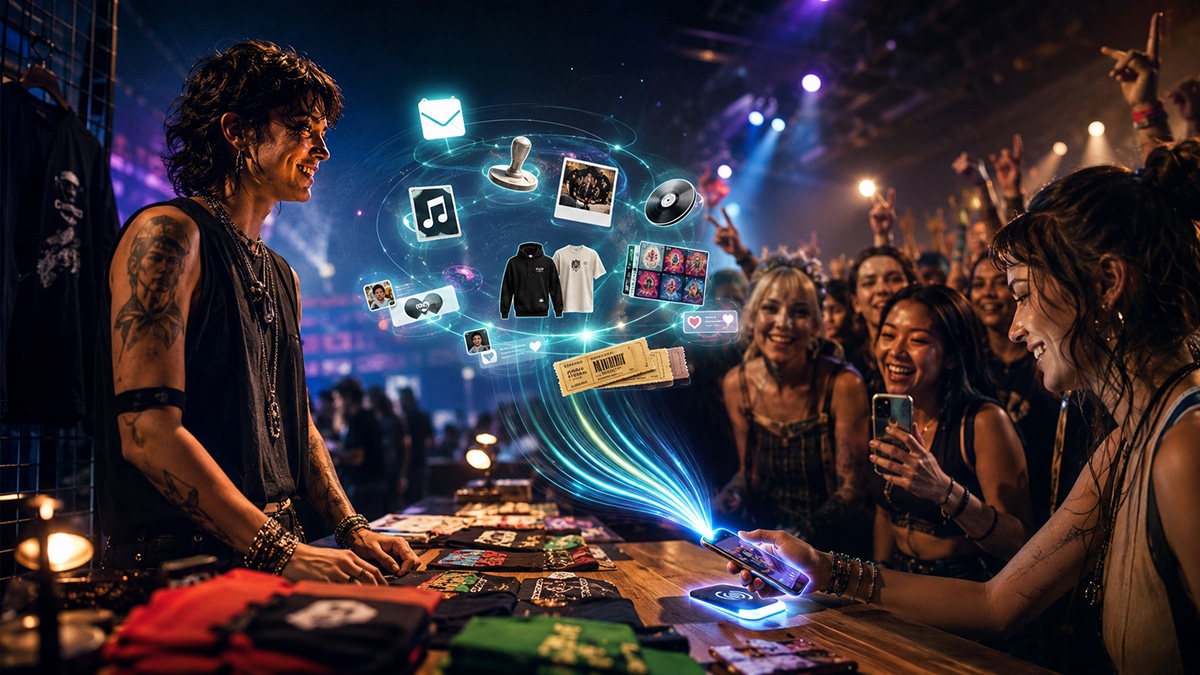
Making a Scene Presents – The Tap Is the Door: How NFC Turns a Merch Table Into an Artist-Owned Revenue Machine
Listen to the Podcast Discussion
There is a moment at every live show that most indie artists are letting slip right through their fingers. It does not happen onstage. It does not happen when the crowd cheers. It does not happen when someone posts a blurry video clip to Instagram and tags the band. It happens at the merch table, right after the show, when a real person is standing in front of you with a real emotional connection to what they just heard.
That person may have laughed, cried, danced, bought a shirt, asked about the next show, or told you that one song hit them right in the ribs. That moment is gold. Not fake internet gold. Not vanity-metric gold. Real career-building gold. The kind of gold that turns a casual listener into a fan, a fan into a supporter, and a supporter into someone who buys the vinyl, shows up again, brings friends, joins the Fan Passport, and becomes part of the artist’s world.
For years, indie artists have been trained to send that person away. “Follow me on Instagram.” “Find us on Spotify.” “Check us out on YouTube.” Those are not bad tools, but they are bad destinations. They are rented rooms inside someone else’s casino. You may get discovered there, but you do not own the room, you do not own the data, and you do not control what happens next. The platform does. The algorithm does. The advertising machine does.
That is why NFC phone tapping, when tied to the Making a Scene Fan Funnel WordPress plugin and the Fan Passport system, is not just a tech trick. It is a new handshake. It is a way to turn the merch table, the stage door, the record store appearance, the festival booth, the house concert, and even the back of a sticker into an artist-owned doorway. A fan taps their phone, gets something special they cannot get on Spotify or YouTube, and enters a direct relationship with the artist. That is the shift. The tap is not the business. The relationship is the business.
What NFC Really Is
NFC stands for Near Field Communication. In plain English, it is the technology that lets two things talk when they are very close together. You already know it from tap-to-pay systems like Apple Pay and Google Wallet. When someone taps a phone on a payment terminal, that is NFC doing its quiet little magic trick behind the curtain.
For an artist, the useful part is simple. An NFC sticker, card, sign, wristband, or tag can hold a small piece of information, usually a web link. When a fan taps their phone near that tag, the phone reads the link and opens it. That link can lead to a landing page, a Fan Funnel opt-in form, a free unreleased track, a show-specific Fan Passport stamp, a merch discount, a private video, or whatever piece of the artist ecosystem you want that fan to enter first.
NFC does not require the fan to type a web address. It does not require them to search your band name and accidentally find the wrong artist. It does not require them to scan a QR code if their hands are full of a drink and a vinyl record. They tap, the phone opens the page, and the moment keeps moving. That matters because live-show attention has a short shelf life. The fan may love you at 10:45 p.m., but by 11:30 they are in the parking lot, checking traffic, answering texts, and trying to remember where they put your card. Every extra step loses people. NFC removes steps.
The best way to understand NFC is to think of it as a bridge between the physical world and the artist-owned digital world. The physical world is the show, the poster, the merch table, the sticker, the record, the guitar case, the setlist, or the back of the laminate. The digital world is your website, your Fan Funnel, your email list, your Fan Passport, your store, your membership, your private content, and your long-term fan relationship. NFC connects those two worlds with one tap.
That is why this is bigger than “cool merch table tech.” The old industry used radio, retail, press, and label power to control access to fans. The new indie artist has to build their own access. Not by begging algorithms. Not by shouting into a feed with ten million other desperate creators. By creating direct doors that lead back to the artist’s own ecosystem.
Why the Free Gift Has to Be Better Than a Stream
The first mistake many artists make with email capture is treating the fan like a name on a list instead of a person making a trade. A fan is giving you something valuable. They are giving you their email address, possibly their name, city, phone number, show location, genre interests, birthday, or permission to be contacted. That is not nothing. In a platform economy where data is power, fan data is one of the most important assets an indie artist can own.
So the trade has to feel fair. “Join my mailing list” is weak. “Get updates” is weaker. Nobody wakes up excited to receive more updates. Fans already have enough updates. Their inbox is a junk drawer with a search bar. If you want the fan to tap, opt in, and trust you, you need to offer something that feels like a private key, not a coupon from a mattress store.
The gift should be something they cannot get on Spotify, YouTube, TikTok, Facebook, or Instagram. That is the whole point. If the fan can get it anywhere, there is no real reason to give you their information. But if the tap unlocks an unreleased live recording from that night, an acoustic version of the song they just heard, a behind-the-song video, a digital lyric booklet, a private rehearsal-room performance, a stem pack for remix fans, a signed digital poster, a secret merch discount, an early ticket code, a tour diary, or a Fan Passport stamp from the show, now the fan is not joining a list. They are entering the artist’s world.
That is the language we need to use. Not “subscribe.” Not “sign up for spam.” Not “give me your email so I can bother you later.” The offer should feel like, “Tap here and unlock something from tonight that only people in this room can get.” That is a much stronger emotional trade.
This is also where the Making a Scene philosophy comes into focus. The goal is not to squeeze fans. The goal is to respect them enough to give them value first. The old music industry treated fans as consumers at the end of a chain. The new artist-owned ecosystem treats fans as relationships at the center of the career. A good funnel does not trick people into buying. It gives them a reason to care, then gives them a path to support.
The Making a Scene Fan Funnel WordPress Plugin as the Engine
The Making a Scene Fan Funnel WordPress plugin should be understood as the engine that lives inside the artist’s website. It can work as part of the larger Making a Scene Artist Ecosystem, but it should also stand on its own as a focused WordPress tool for artists who are ready to capture fan data, deliver a trade, and build a relationship without giving the whole process to a third-party platform.
That independence matters. A lot of marketing tools are designed for generic businesses. They can work, but they do not think like musicians. They do not think in terms of live shows, merch tables, fan clubs, show stamps, street teams, unreleased songs, vinyl campaigns, ticket links, and the emotional timing of a fan who just saw you perform. The Fan Funnel plugin should be built around that reality.
At its core, the plugin creates a trade delivery system. The artist sets up a landing page for a specific offer. That offer may be tied to a show, tour, release, venue, merch item, city, QR code, NFC sticker, or Fan Passport campaign. The fan taps the NFC tag, lands on the offer page, enters their information, gives clear permission to receive the free gift and follow-up messages, and the system automatically delivers the first email.
That first email is not a newsletter. It is delivery. It is the artist keeping a promise. The fan tapped because the sign said they would get something exclusive, so the first email should deliver it quickly, clearly, and warmly. This can be handled directly through the Making a Scene Fan Funnel system if email delivery is built into the plugin, or it can connect with outside email tools when needed.
There are many outside options. The Newsletter Plugin is useful for artists who want to manage newsletters inside WordPress. Mailchimp is widely known and offers forms, campaigns, and automation. MailerLite is friendly for artists who want simple landing pages, signup forms, and automations without feeling buried in enterprise software. Brevo combines email marketing, SMS marketing, CRM, and transactional email. Twilio SendGrid is strong for email API and SMTP delivery when the system needs reliable transactional sending. Kit, formerly ConvertKit, is built around creators and offers forms, opt-ins, newsletters, and automated sequences. ActiveCampaign is more advanced and can be powerful for artists or teams who want deeper automation, tagging, and segmentation.
The important thing is not which outside tool gets name-dropped. The important thing is that the Fan Funnel plugin keeps the artist’s website at the center. The NFC tag should not send fans to a random social profile. It should not send them to a generic link-in-bio page controlled by someone else. It should send them to the artist’s own domain, where the artist owns the relationship, controls the offer, tracks the campaign, and can connect the fan to the Fan Passport.
The Four-Email Trust Sequence
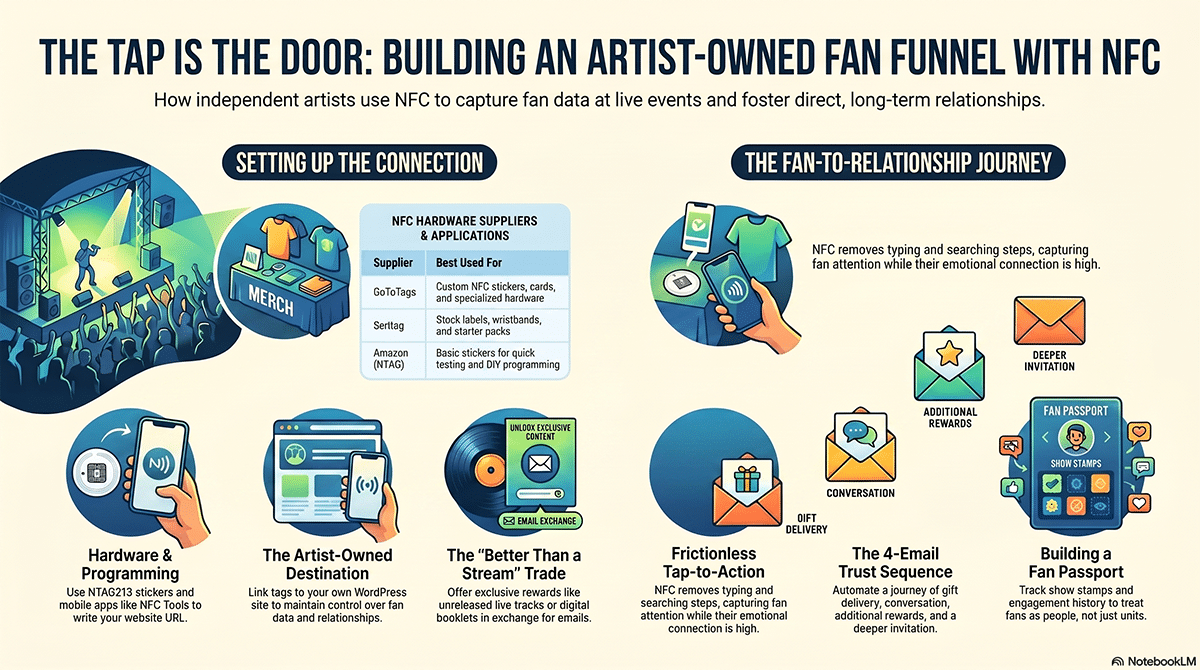
The simplest version of the Fan Funnel should begin with four emails. Not twenty-seven. Not a complicated maze where every click triggers a different psychological trap. Just four human messages that move the fan from curiosity to trust.
The first email delivers the free gift. This email should arrive fast, because the fan is still emotionally connected to the show or the moment where they tapped. The subject line should be clear, not clever to the point of confusion. Something like “Here’s your unreleased live track from tonight” is better than “You won’t believe what’s inside.” The body should thank the fan for being part of the night, deliver the link, and remind them why the gift is special. This is not the time for a hard sell. This is the time to prove that when the artist promises something, the artist delivers.
The second email should ask what they thought of the free gift. This is more powerful than most artists realize. A reply is not just engagement for the inbox. It is a human signal. It tells the artist what moved the fan. It also helps email providers see that the fan is interacting with the artist’s messages. People often call this “whitelisting,” but it is better to be honest and say that a real reply can help build sender trust and future deliverability, though it does not guarantee inbox placement. The email should feel like a real person wrote it. “Did that live version hit for you? Hit reply and tell me what you thought.” That is enough. Do not make it weird. Do not ask for a full review. Do not sound like a brand manager pretending to have a soul.
The third email can reward the reply or deepen the relationship with another free gift. This is where the fan learns that engaging with the artist brings them closer, not just deeper into a sales funnel. If they replied to the second email, they might get a private acoustic performance, a behind-the-song note, an alternate mix, a tour diary clip, or a discount code for the merch table. If the system cannot automatically detect replies yet, the third email can still be sent to everyone with a message that says, “Whether you replied or just listened quietly, here is one more thing I wanted you to have.” That keeps the tone generous instead of transactional.
The fourth email introduces the next step. This can be an offer, but it should be framed as an invitation. The artist can invite the fan into the Fan Passport, offer a limited merch bundle, announce a private livestream, share early access to tickets, introduce a membership, or invite them to collect future show stamps. The key is that the fourth email should not feel like a bait-and-switch. The fan received value first. They were asked for their opinion. They were given something else. Now the artist can say, “If you want to go deeper, here is where the real community lives.”
This four-email sequence works because it follows the rhythm of a relationship. Gift, conversation, reward, invitation. That is not spam. That is courtship. That is how indie artists build a middle class in the modern music economy.
How the NFC Tap Works at the Merch Table
Picture the setup. The artist has a small sign on the merch table that says, “Tap here for an unreleased live track from tonight.” The sign has an NFC sticker hidden behind the tap area and a QR code printed beside it as a backup. The fan taps the phone, opens the page, sees the offer, enters their first name and email, checks a clear permission box, and gets the first email with the free gift.
This is simple on the surface, but underneath it is a powerful system. The Fan Funnel plugin knows that this fan came from the merch table NFC sign. It knows which show, city, tour, venue, or campaign created the opt-in. If the Fan Passport is connected, the system can invite the fan to claim a show stamp, follow the artist, or save the artist inside their passport. Over time, the artist is not just building a list. The artist is building a memory system.
That memory matters because all fans are not the same. A fan who tapped at a blues festival in Atlanta is different from a fan who joined through a studio video in Chicago. A fan who bought vinyl is different from a fan who downloaded a lyric sheet. A fan who collected three show stamps is different from someone who clicked once from a social post. The Fan Passport helps the artist remember the relationship, not just count the subscriber.
This is where the old music business falls apart. The old system flattened fans into units. Streams. Likes. Followers. Impressions. The artist-owned system turns fans back into people. Who came to the show? Who bought merch? Who replied? Who wants tour alerts? Who wants early access? Who cares about vinyl? Who is willing to support directly? That knowledge is the beginning of real revenue.
Ordering NFC Stickers, Cards, and Signs
An artist does not need a giant budget to start with NFC. The first version can be cheap and practical. You can buy blank NFC stickers, write your Fan Funnel link to them, and stick them behind a printed sign. You can upgrade later into custom printed NFC cards, table tents, wristbands, laminates, or merch tags.
For blank and custom NFC tags, GoToTags is a strong place to start because it sells NFC stickers, cards, hardware, and encoding services. If you want custom NFC stickers made for a specific merch-table campaign, GoToTags Custom NFC Stickers is worth looking at. If you want another serious NFC supplier, Seritag offers stock and custom NFC tags, including labels, cards, wristbands, keyfobs, and starter packs. Tagstand is another option for custom NFC tags, stickers, tokens, keychains, and wristbands.
For quick testing, many artists buy basic NTAG213, NTAG215, or NTAG216 stickers through Amazon, then program them with a phone. NTAG213 is usually enough for a simple URL. NTAG215 and NTAG216 have more memory, but for a Fan Funnel link, you usually do not need much storage because the tag is only opening a web page. The smarter move is to keep the tag simple and let the website do the heavy lifting.
For more polished tap products, Tap Tag sells NFC-enabled products that can share websites and digital profiles. Popl is built more for lead capture and digital business card use, but some artists may like it for networking, conferences, sponsorship meetings, and industry events. The caution is simple: for fan capture, do not let a vendor profile become the final destination. Whenever possible, make the tap open your own artist website or your own Fan Funnel landing page.
For printed signs, stickers, table cards, and merch-table displays, Sticker Mule is useful for custom stickers, labels, magnets, and printed pieces. VistaPrint is useful for business cards, signs, banners, flyers, table displays, and other show materials. MOO is known for premium printed business cards, but artists should be aware that MOO NFC Business Cards+ were discontinued, so do not order from MOO expecting their old NFC card product unless they bring back a new one. You can still use MOO, VistaPrint, or Sticker Mule for beautiful printed pieces and attach an NFC tag yourself.
The best merch table setup usually includes both NFC and QR. NFC is fast and fun, but not every phone behaves the same way, and not every fan knows where to tap. A QR code is the backup. The sign should make the action obvious. “Tap or scan to unlock tonight’s private track” is better than “Join our mailing list.” The fan should know what they get, why it matters, and how to do it in three seconds.
How to Program the NFC Tag
Programming an NFC tag is easier than most artists think. You do not need to code. You do not need to solder anything. You do not need to build a robot in your basement, though admittedly that would be a fun album-release stunt.
The basic process is simple. First, create the Fan Funnel landing page on your WordPress site. This page should have a clean URL, a strong offer, a simple form, a consent notice, and a clear thank-you or confirmation path. Then copy that URL. Next, open an NFC writing app on your phone. NFC Tools by WAKDEV is a common option for Android, and WAKDEV also offers NFC Tools for PC/Mac if you use a desktop NFC reader. GoToTags also offers software and encoding options through GoToTags.
Inside the NFC writing app, you choose the option to write a URL, paste the Fan Funnel link, and then hold the blank NFC tag to the phone until the app confirms the write. Then test it with another phone. Do not skip the test. In fact, test it like a suspicious old road manager who has seen every cable fail at the worst possible moment. Test it with an iPhone. Test it with an Android phone. Test it at the merch table. Test it through the material of the sign if you are hiding the sticker behind a printed piece. Test it before doors open, not while a fan is standing there waiting.
If the tag is going on metal, such as a metal sign stand, cash box, pedalboard case, or merch rack, use an on-metal NFC tag. Regular NFC tags can fail on metal because the metal interferes with the signal. This is one of those tiny details that can make the difference between “wow, this is slick” and “uh, just scan the QR code instead.” GoToTags, Seritag, and other NFC suppliers sell tags made for metal surfaces.
A smart setup uses a dynamic link controlled by the Fan Funnel plugin. Instead of writing a final, never-changing page directly to the tag, the artist writes a campaign link that can be redirected inside the plugin. That way, the same physical sticker can be reused. Tonight it can point to the Atlanta show gift. Next month it can point to a vinyl preorder. Later it can point to a Fan Passport campaign. The tag should be physical. The destination should be flexible.
This is where the Fan Funnel plugin can become very powerful. Each NFC item can have a campaign ID. The merch table sign can be one campaign. The poster by the door can be another. The sticker on the vinyl bin can be another. The street team flyer can be another. The artist can later see which doorway brought in the most fans. That is not just marketing. That is intelligence.
Setting Up the Fan Funnel Offer Page
The offer page should be simple enough to understand while standing in a noisy room. This is not the place for a long biography, a giant press quote, twelve menu links, and a video that autoplays over the house music. The fan tapped for one reason. Give them that reason.
The headline should name the gift. “Unlock the unreleased live recording from tonight.” “Get the acoustic version we only share with fans who were there.” “Claim your private show stamp and bonus track.” The form should ask for only what the artist will actually use. A first name and email address are enough for the first trade. If SMS is part of the plan, the phone field should be optional unless the offer is specifically text-based, and the consent language must be clear. Do not sneak people into text marketing. That is how trust dies.
The page should explain the trade in human language. “Enter your email and we’ll send the private track. We’ll also send a few follow-up emails from the artist. You can unsubscribe anytime.” If the Fan Passport is part of the offer, say that too. “You’ll also be invited to claim your Fan Passport stamp from this show.” Transparency is not a legal chore. It is part of the relationship.
The thank-you page should not be dead air. After the fan submits the form, the page can tell them to check their inbox, ask them to reply to the first email, invite them to follow the artist in the Fan Passport, and show them a soft next step such as “Visit the merch table for tonight’s vinyl bundle” or “Show this screen for a sticker.” That last part matters because the funnel can connect digital action back to real-world revenue. A fan who just opted in may still be standing at the merch table. Give them a reason to buy while the emotion is alive.
Get your FREE Making a Scene Fan Funnel Plugin for WordPress
Setting Up the Fan Passport for Maximum Effect
The Fan Passport should not feel like another account the fan has to manage. It should feel like a memory book for their relationship with music they care about. That is the emotional difference. Fans do not want another login. They want proof that they were there, access to things outsiders cannot get, and a closer relationship with the artists they support.
The most effective Fan Passport setup begins with simple fan identity. Let the fan follow the artist, claim a show stamp, and choose what kind of notifications they want. Some fans want show alerts. Some want release alerts. Some want rewards. Some want nothing unless they choose it later. Respecting those choices builds trust.
Each show should have its own stamp or event record. The stamp can include the artist name, venue, city, date, and possibly a reward. That reward does not have to be expensive. It can be a private song link, a merch discount, early access to the next show, a backstage photo gallery, or a thank-you message from the artist. The value is not always the object. Sometimes the value is being recognized.
The Fan Passport becomes more powerful when it connects to real artist revenue. A fan who has collected one stamp might get a welcome gift. A fan with three stamps might unlock early ticket access. A fan with five stamps might get a private livestream. A fan who brings a friend might get a street team badge. A fan who buys merch might get a merch stamp. A fan who joins a membership might get a supporter stamp. Now the artist has a living map of the fan relationship.
This is not about turning music into a video game in a cheap way. It is about giving fans visible proof of their support and giving artists a memory system they never had inside Spotify or YouTube. Streaming platforms know who your fans are. Social platforms know who your fans are. Ticketing companies know who your fans are. The artist is often the last one to know. That is backwards. The Fan Passport fixes that by making the fan relationship artist-owned and permission-based.
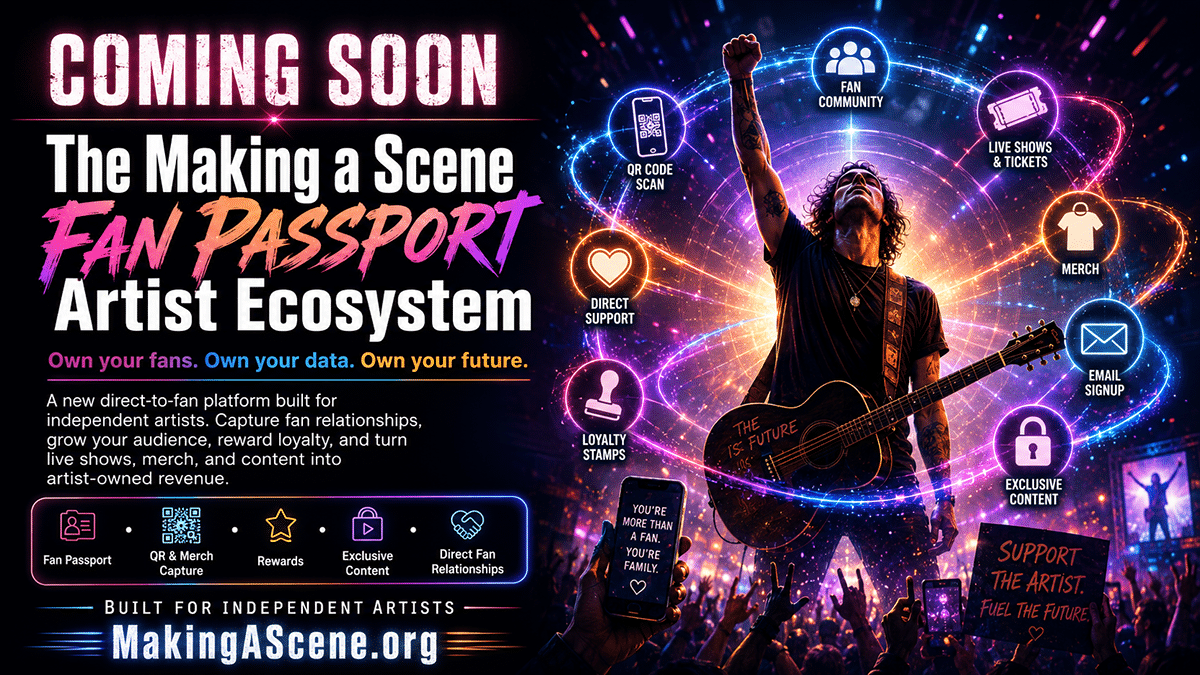
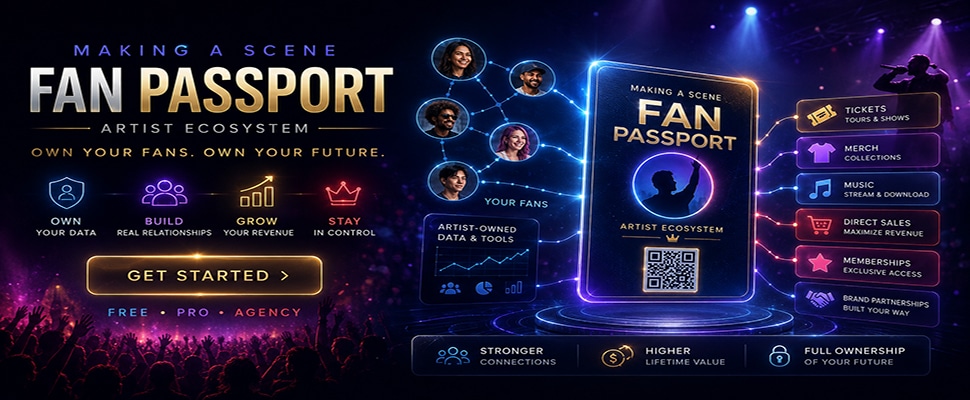
The Making a Scene Fan Passport Core and Fan Passport App for IOS and Android will be FREE!
Privacy Is Not Optional
Fan data is powerful, and because it is powerful, it has to be handled with respect. This is where indie artists need to grow up fast. Owning fan data does not mean grabbing everything you can and blasting people until they leave. It means earning permission, storing information responsibly, and giving fans control.
Every Fan Funnel page should be clear about what the fan is signing up for. If they enter an email to get a free track and receive a short follow-up sequence, say that. If they are joining the artist newsletter, say that. If SMS is involved, say that separately. If the fan is joining the Fan Passport and sharing profile data with an artist they follow, make that transparent.
The artist should collect only what is needed. In the beginning, name, email, city, and optional phone may be enough. Do not ask for a birthday, mailing address, favorite color, blood type, childhood nickname, and the name of their first pet unless there is a real reason. Data should serve the relationship. It should not become digital hoarding.
Email compliance also matters. In the United States, commercial emails must follow rules like honest header information, non-deceptive subject lines, a physical mailing address, and a clear way to opt out. If an artist reaches fans in Canada or Europe, consent rules can be stricter. The safe artist-owned approach is simple: ask clearly, deliver what you promised, make unsubscribing easy, and do not sell or share fan data without permission.
This is not just about avoiding legal trouble. It is about brand trust. An indie artist does not have a giant corporate shield. Your name is the brand. If fans trust you, they will open your emails, buy your merch, support your projects, and tell friends. If fans feel tricked, you lose something harder to replace than money.
The Revenue Stack Behind the Tap
The magic of the NFC Fan Funnel is that it connects attention to revenue without making the first move feel like a cash grab. A tap can lead to a free gift, but the system behind it can support many revenue streams over time.
The fan who taps at a show can later receive an offer for the vinyl edition of the song they heard live. They can be invited to a private livestream. They can get early ticket access for the next local show. They can receive a merch bundle tied to the tour. They can join a membership. They can support a crowdfunding campaign. They can license music if they are a filmmaker or content creator. They can become part of a street team. They can buy direct from the artist’s website instead of being pushed back to a platform that pays pennies and keeps the fan relationship hidden.
This is what a revenue stack looks like. It is not one miracle income stream. It is a connected set of small and medium income streams that the artist owns. Shows, merch, direct music sales, vinyl, digital exclusives, memberships, livestreams, fan clubs, licensing, publishing, workshops, sample packs, lessons, patron support, and Web3-style proof-of-attendance rewards can all connect through the artist ecosystem.
NFC is not the revenue stack. The Fan Funnel is not the revenue stack. The Fan Passport is not the revenue stack. They are the pipes, doors, and memory system that help the revenue stack work. The real business is the relationship between the artist and the fan.
A Real-World Example
Let’s say an indie artist plays a 200-cap room on a Friday night. At the merch table, there is a small sign that says, “Tap here to get the live version of the last song we played tonight.” Under the words is a tap symbol, an NFC sticker hidden behind the sign, and a QR code for backup.
A fan taps. The phone opens the artist’s website, not a social platform. The landing page says, “Thanks for being here tonight. Drop your first name and email and we’ll send you the private live track from this show.” The fan enters their info and checks the permission box. The first email arrives with the track. The next day, the second email asks, “What did you think of that live version?” The fan replies, “That was the song that made me come to the merch table.” Now the artist knows something no streaming dashboard could ever tell them.
Two days later, the third email sends a behind-the-song voice memo or acoustic video. The fan feels seen, not sold to. A few days after that, the fourth email says, “We’re building a Fan Passport for people who want to collect show stamps, get private music, and get early access when we come back through town.” The fan joins. Now the artist knows the fan came from that venue, heard that song, claimed that gift, replied to that email, and joined the Passport.
Six months later, when the artist returns to that city, they do not have to hope the algorithm shows a post to the right people. They can email the fans who tapped at the last show in that city. They can offer early tickets. They can invite them to bring a friend. They can give Fan Passport holders a merch-table bonus. They can make the return show feel like a continuation of a relationship, not another cold promotion.
That is how an artist builds momentum. Not by chasing everyone. By remembering the people who already cared.
The Artist-Owned Future Is Built One Tap at a Time
The modern music industry wants artists to believe attention is the finish line. Get more streams. Get more followers. Get more views. Get more likes. But attention without ownership is a leak. It feels busy, but it does not always build anything. It can make an artist feel visible and broke at the same time.
The real finish line is not attention. The real finish line is a direct relationship that can turn into trust, community, support, and income. That is why NFC tapping belongs in the indie artist toolkit. It takes the most powerful moment an artist has, the live human moment, and gives it a direct path into the artist-owned ecosystem.
A fan at a show should not be sent back into the noise. They should be invited through a door. The Making a Scene Fan Funnel WordPress plugin creates that door. The free gift creates the trade. The four-email sequence creates the trust. The Fan Passport creates the memory. The merch table becomes more than a place to sell shirts. It becomes a data capture point, a fan relationship station, and a revenue engine.
This is how indie artists stop acting like tenants in the platform economy and start acting like owners. Not by abandoning Spotify, YouTube, TikTok, Instagram, or Facebook, but by demoting them. Let them be discovery doors. Let them introduce strangers to the music. But when the fan is ready to step closer, bring them home.
Bring them to your website. Bring them into your funnel. Bring them into your Fan Passport. Give them something they cannot get anywhere else. Ask what they think. Reward the reply. Invite them deeper. Remember them the next time you come to town.
That is not just marketing. That is a new music business. And it can start with one sticker, one sign, one song, one fan, and one tap.
 |  Spotify |  Deezer |  Breaker |
 Pocket Cast |  Radio Public |  Stitcher |  TuneIn |
 IHeart Radio |  Mixcloud |  PlayerFM |  Amazon |
 Jiosaavn |  Gaana |  Vurbl |  Audius |
 Reason.Fm | |||
Find our Podcasts on these outlets
Subscribe to Our Newsletter
Discover more from Making A Scene!
Subscribe to get the latest posts sent to your email.


