The Myth of “Exposure” in the Modern Music Industry




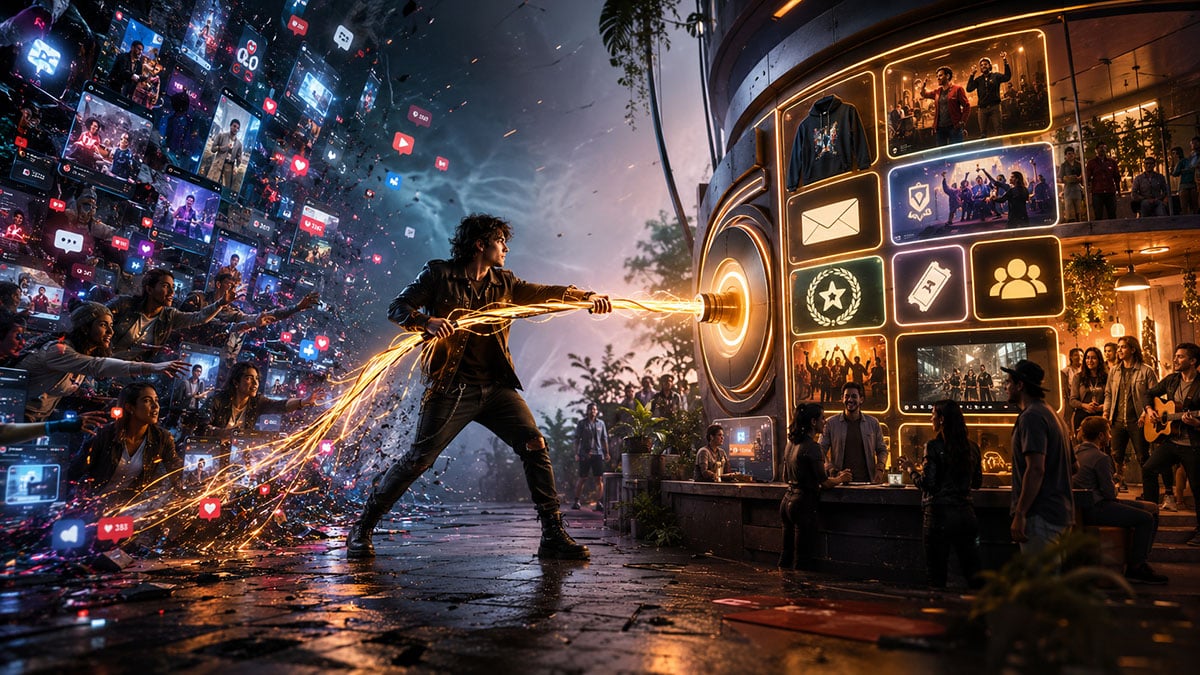
Making a Scene Presents – The Myth of “Exposure” in the Modern Music Industry
Listen to the Podcast Discussion
The Most Expensive Free Thing in Music
There is a word that has haunted musicians for decades. It shows up in emails from promoters, club owners, playlist curators, content creators, brands, festivals, podcasters, bloggers, and random people with ring lights who say things like, “This could be great exposure for you.”
That word is exposure.
Exposure is the unpaid intern of the music industry. It is always excited to be there, never has gas money, and somehow keeps promising it knows people.
For years, artists were told that exposure was a kind of currency. Play this show for free. Let us use your song in this project for credit. Come perform at this event because “industry people might be there.” Post more content. Feed the algorithm. Get on playlists. Go viral. Build your brand. Stay visible. Keep grinding.
And yes, visibility matters. Nobody buys music they do not know exists. Nobody comes to a show for an artist they have never discovered. Nobody joins a fan club, buys a shirt, downloads a live recording, tips the band, or licenses a song they have never heard.
But exposure by itself is not a business model. It is not income. It is not ownership. It is not a fan relationship. It is not a customer list. It is not a community. It is not even a promise. It is a door. That is all.
The problem is that modern music culture has confused the door with the house.
An artist can get 50,000 views, 10,000 likes, a spike in streams, a few playlist adds, a short burst of TikTok attention, and still have no money, no email addresses, no city data, no merch sales, no show demand, no fan database, and no clue who actually cared. Congratulations. You were seen. Now what?
That is the question the modern indie artist has to ask every single time a platform, promoter, playlist, venue, festival, media outlet, or influencer waves the magic exposure wand. Seen by whom? Sent where? Captured how? Monetized when? Owned by who?
If the answer is “the platform keeps the data and maybe you get vibes,” then exposure is not opportunity. It is unpaid labor wearing sunglasses.
The Old Exposure Deal Was Never Fair, But At Least It Had a Ladder
The music business has always loved telling artists to work now and get paid later. This is not new. Radio was built on that argument for decades. Labels pushed singles to radio because airplay could drive record sales, touring demand, publishing income, and chart movement. Radio exposure did not directly pay performers in the United States the way many artists thought it should, but it was tied to a larger machine that could move product. The system was still tilted, unfair, and gatekept to death, but at least the exposure had somewhere to go.
A song on radio could lead people to a record store. A record store sale could show up in chart activity. Chart activity could lead to more radio, better bookings, press, label support, and touring leverage. That did not mean every artist got rich. Most did not. But the old system had a visible ladder, even if the ladder was guarded by three guys in suits and one of them owned the building.
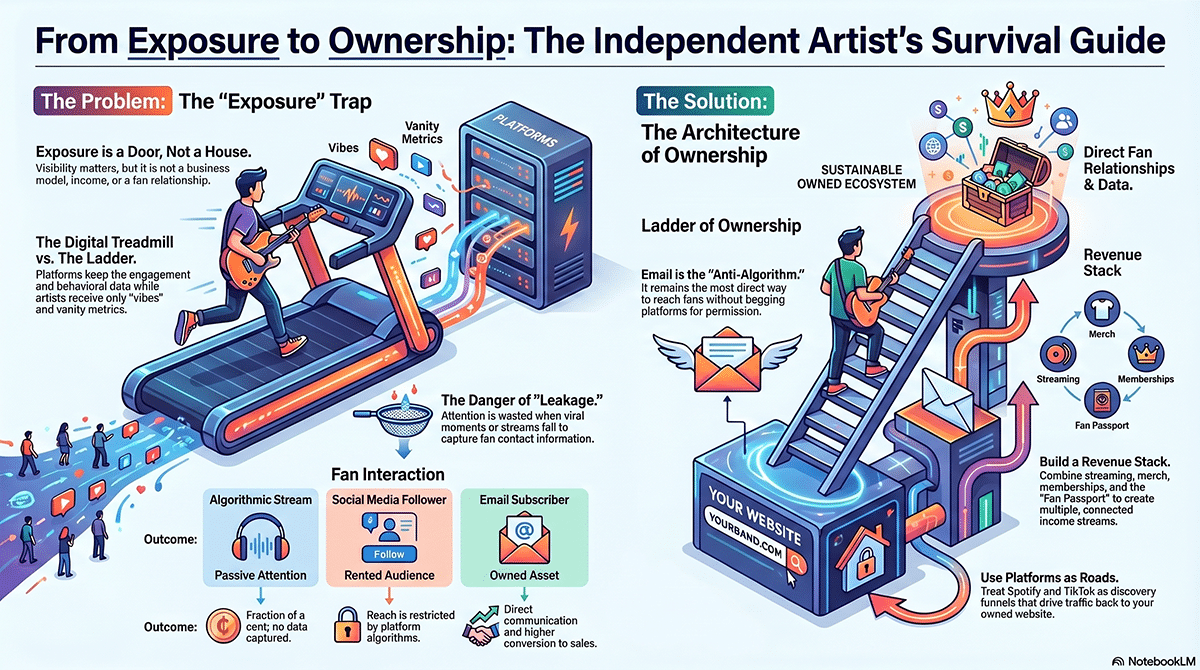
Today’s digital exposure often has no ladder. It has a treadmill.
The artist posts to TikTok, Instagram, YouTube, Facebook, Spotify, and every other attention machine, hoping that one piece of content catches fire. Sometimes it does. But then the fire burns inside someone else’s fireplace.
The platform gets the engagement. The platform gets the user session. The platform gets the behavioral data. The platform gets the advertising value. The platform learns who clicked, skipped, watched twice, shared, saved, commented, bought later, or disappeared. The artist gets a number on a screen and maybe a dopamine problem.
That is not a fan relationship. That is renting a crowd.
Spotify Is Useful. Spotify Is Not Your House.
Let us name names, because this is not a fairy tale and the dragon has a monthly subscription plan.
Spotify is one of the most important discovery platforms in music. It is also one of the most misunderstood. Spotify can help people hear your music. It can spread your songs across borders. It can make your catalog searchable, shareable, and playlistable. Spotify itself says its 2025 payouts to the music industry reached more than $11 billion, and that independent artists and labels accounted for half of royalties. That is a massive number, but it is paid into the industry, not magically dropped into every indie artist’s checking account like some benevolent Scandinavian tooth fairy.
The real issue is not whether Spotify has value. It does. The issue is whether Spotify should be treated as the destination.
For indie artists, Spotify should be the discovery door, not the living room. It should be the sample table at the grocery store, not the whole restaurant. The goal is not to get someone to stream one song and vanish into algorithmic mist. The goal is to move that listener into an artist-owned ecosystem where the artist can build a relationship and earn real revenue.
That means your Spotify profile should point people toward your website. Your artist pick, bio, links, social content, Canvas strategy, playlist pushes, and release campaigns should all have one deeper goal: turn listeners into reachable fans.
Because here is the brutal little math problem hiding under the velvet blanket. A stream pays fractions. A fan can buy a ticket, a shirt, a vinyl record, a private livestream pass, a subscription, a download, a signed poster, a house concert, a lesson, a limited release, a remix pack, a sample pack, or a VIP experience. A listener is attention. A fan is an asset.
The mistake is treating platforms like homes. Platforms are roads. Roads are useful. You still need a place to bring people.
TikTok Virality Is Not a Career Plan
TikTok has become one of the most powerful music discovery engines on earth. The platform launched TikTok for Artists globally in 2025 as a music insights platform for artists, labels, and teams to understand fan engagement and promote music on and off the platform. That matters. TikTok can break songs. TikTok can revive old songs. TikTok can turn a bedroom hook into a global sound.
But TikTok virality can also become a carnival mirror. Everything looks bigger, louder, and more important than it actually is.
A million views can feel like success until you ask how many people joined your mailing list. A viral sound can feel like momentum until you ask how many people bought the record. A trending clip can feel like a breakthrough until the algorithm moves on to a raccoon playing piano or a guy explaining why your refrigerator has trauma.
TikTok is not bad. Instagram is not bad. YouTube Shorts is not bad. The problem is building your career around borrowed attention. The algorithm is not your manager. It does not care whether your van needs tires. It does not care whether your drummer has dental bills. It does not care whether your next tour is profitable. It cares whether people stay on the platform.
That is its job.
Your job is different. Your job is to turn attention into connection, connection into trust, and trust into revenue.
YouTube, Instagram, Facebook, and the Great Platform Hotel
YouTube for Artists calls the Official Artist Channel a main stage for fans and new listeners, bringing music, brand, presence, and community into one place. YouTube’s support materials explain that an Official Artist Channel brings subscribers and content from different YouTube channels together and provides access to artist tools like Analytics for Artists.
That is useful. Very useful. YouTube can be a powerful platform for long-form videos, live sessions, lyric videos, shorts, behind-the-scenes content, gear breakdowns, tour diaries, and fan education. It is one of the few major platforms where older content can keep working for years.
But it is still a platform hotel. Your room might be nice. The lobby might be full. The view might be great. But you do not own the building. The rules can change. The monetization rules can change. The recommendation engine can change. Your reach can change. Your account can get flagged. Your comments can become a swamp. Your fans can be there every day and still not belong to you.
The same is true for Instagram and Facebook. They are useful for discovery, social proof, retargeting, video, messaging, and event promotion. But they are not replacements for an owned audience. They are billboards on rented land.
And billboards are fine. But you would not sleep under one and call it a business headquarters.
Exposure Without Ownership Is Leakage
The modern artist problem is not lack of tools. The problem is leakage.
Attention leaks when a viral post does not send fans anywhere useful. Streaming leaks when listeners never become contacts. Press leaks when a review does not lead to a signup, sale, or show. Live shows leak when people clap and leave without scanning a QR code. Merch tables leak when buyers pay cash and the artist never captures a name, email, city, or purchase history. Playlists leak when streams rise but the artist cannot identify where new listeners live. Social media leaks when followers stay locked behind platform walls.
Every leak is lost leverage.
This is why the old exposure pitch is so dangerous. It keeps artists focused on being seen instead of being remembered, reached, and paid. It tells artists to chase audience size while ignoring audience ownership. It celebrates visibility even when visibility produces no business outcome.
A working indie artist does not need empty exposure. A working indie artist needs conversion.
Conversion does not mean becoming a soulless marketing goblin. It means building pathways. It means that when someone discovers you, there is a clear next step. Listen here. Join here. Get the unreleased track here. Scan this. Buy this. Come to this show. Unlock this video. Join the fan club. Get stamped in the fan passport. Become part of the ecosystem.
That is not selling out. That is refusing to be farmed.
The Website Has to Become the Artist’s Revenue Engine
This is where the artist website comes back from the dead.
For years, too many musicians treated websites like digital brochures. A homepage, a bio, a few photos, some tour dates, maybe a contact form last updated during the Obama administration. Meanwhile, all the real action moved to social platforms. That made sense for a while. Social media felt easier, faster, cheaper, and more alive.
But now the bill is due.
The modern indie artist website cannot be a brochure. It has to be a self-contained ecosystem. It has to be the place where discovery becomes ownership. It has to combine music, video, email capture, merch, memberships, tour dates, fan rewards, community, data, and direct sales in one artist-controlled environment.
WordPress remains one of the strongest foundations for this because it is an open-source publishing platform with flexible website tools. Add WooCommerce and the artist can build a store with control over products, checkout, data, and costs. WooCommerce describes itself as an open-source commerce platform for WordPress that gives users control over checkout, data, and costs. For artists who want a lighter self-hosted commerce option, FluentCart is positioning itself as a fast WordPress eCommerce system for physical products, digital products, subscriptions, and more.
That matters because direct commerce changes everything.
A stream is passive. A store purchase is active. A follower is rented. An email subscriber is reachable. A like is vague. A merch order tells you what someone wanted, where they live, and what kind of offer may matter later. A ticket sale tells you where demand exists. A membership tells you who is willing to support the artist beyond casual listening.
Your website should not ask, “How do I look professional?”
It should ask, “How do I turn attention into income without surrendering the relationship?”
Email Is Still the Anti-Algorithm
Every few years somebody announces that email is dead, and every few years email quietly walks over, picks up the check, and proves everyone wrong.
For indie artists, email is still one of the strongest tools in the entire business. It is not sexy. It does not dance. It does not come with a trending audio clip. Nobody has ever said, “That mailing list signup form has rizz.” And yet, email remains one of the most direct ways to reach fans without begging an algorithm for permission.
A WordPress-based tool like The Newsletter Plugin allows artists to manage newsletters from inside their WordPress dashboard, create campaigns, build lists, and track emails. A delivery system like SendGrid can help handle email delivery at scale through email API and SMTP tools.
This is not just tech plumbing. This is power.
When an artist collects first name, email, city, state, and optional SMS number, they are not just building a list. They are building leverage. They can see where fans live. They can route shows smarter. They can announce merch drops. They can offer local presales. They can sell private livestream access. They can invite fans to listening parties. They can segment by city, purchase history, fan level, or show attendance.
That is the difference between “I have followers” and “I have a business.”
Followers are a crowd behind glass. Subscribers are people you can reach.
The Fan Passport: Turning Attention Into a Relationship
This is where the Fan Passport concept becomes more than a cute phrase. It becomes a missing layer in the indie music economy.
A fan passport is a system that records and rewards fan engagement across the artist’s world. It can track show attendance, merch purchases, email signups, QR scans, digital content unlocks, memberships, listening parties, street team actions, livestream participation, and direct support. Instead of treating every fan interaction as a one-time event, it turns those interactions into a living fan history.
Think of it like a loyalty system, a tour diary, a membership key, and a direct-to-fan data engine all rolled into one. But instead of helping an airline sell you a middle seat with emotional damage, it helps artists understand and reward the people who actually support them.
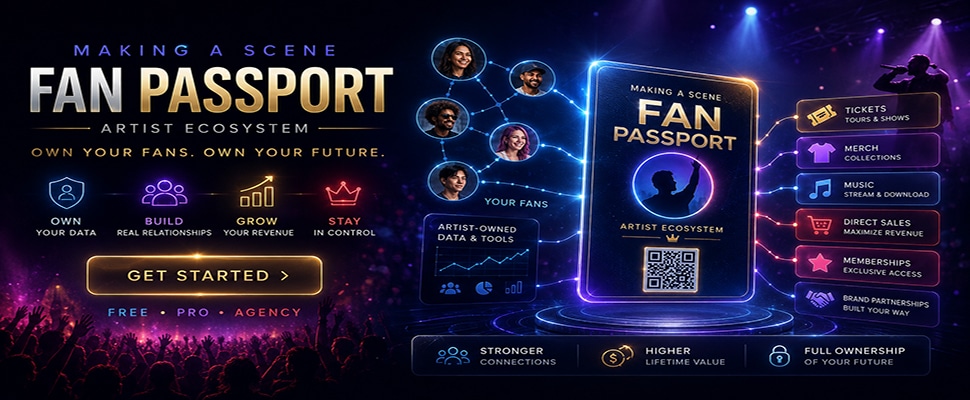
The coming Making a Scene Fan Passport plugin and the Making a Scene Artist Platform theme/plugin suite fit directly into this shift. The goal is not just to give artists another shiny widget. The goal is to help artists build their own connected ecosystem, where the website, fan data, merch, content, tour activity, memberships, and rewards all work together.
This is also where Web3 can be useful without turning the artist’s career into a crypto vocabulary hostage situation.
POAP describes Proof of Attendance Protocol as a way to mint memories as digital mementos, giving people collectibles tied to shared experiences. In an indie artist context, that idea can become a digital stamp for attending a show, joining a livestream, supporting a release, or participating in a fan event. Unlock Protocol provides membership tools through smart contracts, including membership status, expirations, and renewals, and its guides explain token-gating as restricting access to content for holders of a particular NFT or token.
The point is not to worship blockchain. The point is utility. Can it help the artist prove participation, reward fans, unlock content, build memberships, and create portable fan identity? Then it belongs in the toolbox. If it only exists so someone can say “decentralized” 47 times on a webinar, please place it gently in the nearest dumpster.
Exposure Must Lead Somewhere
An indie artist should treat every exposure opportunity like the top of a funnel.
A TikTok clip should lead to a website landing page. A Spotify listener should be invited toward an exclusive download, fan club, or tour alert signup. A YouTube viewer should be sent to the artist’s site for bonus video, stems, lyrics, behind-the-scenes content, or a members-only performance. A live show should have QR codes at the merch table, on posters, on the stage banner, and maybe tattooed on the bass player if morale is high. A press article should point to a landing page that captures fans. A playlist campaign should connect to a release hub. A radio interview should mention the artist’s website, not just “find me everywhere,” which is the modern equivalent of saying “wander into the forest and good luck.”
Bandcamp is a good example of a platform that at least understands the language of direct support. Its own homepage frames the experience around discovering music and directly supporting the artists who make it. Patreon does something similar from the membership side, positioning itself around creators building community with their biggest fans and turning creative work into a lasting business. Substack has built a creator subscription model around writing, podcasts, video, and communities.
These tools can be useful. But the Making a Scene mentality pushes one step further: use outside platforms when they help, but make the artist website the center of gravity.
That means the artist’s own domain should be the main hub. It should host the fan funnel. It should explain the offer. It should capture the fan. It should sell the merch. It should manage the membership. It should connect to the Fan Passport. It should store the relationship. It should make the next step obvious.
Exposure should never be allowed to float around like glitter after a craft accident. It should be directed.
The New Artist Business Is a Revenue Stack
The old industry taught artists to chase one big break. The new industry rewards artists who build revenue stacks.
A revenue stack is not one magic income stream. It is a connected set of smaller income streams that support each other. Streaming creates discovery. Social content creates awareness. The website captures fans. Email brings them back. Merch monetizes identity. Shows monetize local demand. Memberships monetize deeper loyalty. Exclusive content monetizes access. Licensing monetizes songs beyond fan consumption. Fan Passport rewards increase repeat engagement. Data improves booking, routing, merch planning, and marketing.
No single piece has to carry the whole career.
That is good news, because the one-big-break model was mostly a casino with better jackets.
The modern indie artist has to think like a small media company, a touring business, a merch brand, a community builder, a rights owner, and a data strategist. That may sound like a lot, because it is. But the alternative is worse: keep feeding platforms and hoping one day the exposure fairy shows up with health insurance.
The artist does not need to become a tech genius. The artist needs a system.
This is why the coming Making a Scene Artist Platform theme/plugin suite matters as a concept. Indie artists do not need more disconnected tools that each solve one tiny problem while creating seven new logins and a monthly subscription rash. They need connected infrastructure built around the actual artist business: music, fans, shows, content, merch, data, and direct revenue.
Managers, Labels, Promoters, and Media Need to Stop Selling Smoke
This is not only an artist problem. Managers, indie labels, promoters, playlist curators, podcasters, bloggers, venues, festivals, and music-tech companies all need to rethink what they mean when they offer exposure.
A manager should not simply chase visibility. They should build systems that capture and monetize it.
A small label should not simply get artists playlisted. It should help build owned fan databases and release funnels.
A promoter should not simply say a show is “good exposure.” They should help artists collect fan data at the event, sell merch, issue Fan Passport stamps, and bring those fans back for future shows.
A venue should not think the transaction ends when the artist leaves the stage. The venue, artist, and promoter can build shared value when fans are encouraged to connect directly with the performer.
Media outlets should not just publish reviews into the void. They should understand that every article can become a bridge between discovery and artist support.
Music-tech builders should stop making toys for dashboards and start building tools that help artists earn. Analytics are only useful if they lead to action. A beautiful graph that does not help an artist sell a ticket, route a tour, identify a market, reward a fan, or grow a list is just wallpaper for disappointment.
The question for everyone in the indie ecosystem should be simple: does this exposure produce ownership, data, revenue, or relationship?
If not, it is probably just noise with better branding.
The Website as the Indie Artist’s Complete Ecosystem
The artist website should become the place where everything connects.
A fan lands on the site from Spotify, TikTok, Instagram, YouTube, Facebook, Bandcamp, a QR code, a live show, a review, a podcast, or a newsletter share. They are greeted with a clear offer. Maybe it is a free live track in exchange for an email. Maybe it is a tour alert signup. Maybe it is a Fan Passport entry. Maybe it is an exclusive video. Maybe it is a merch discount. Maybe it is a members-only listening room.
Once they join, the system should begin working. The fan gets tagged by interest, city, source, campaign, or action. They receive a welcome sequence. They are invited to follow the next step. If they attend a show, they scan a QR code and receive a stamp. If they buy merch, that purchase becomes part of their fan profile. If they join a membership, they unlock deeper content. If enough fans appear in a city, the artist has booking intelligence. If certain merch sells better in certain regions, the artist can plan smarter.
That is not fantasy. That is basic business architecture applied to music.
And it is long overdue.
For too long, artists have been told to build audiences everywhere except the places they own. They were told to become content machines for platforms that do not share the full relationship. They were told that followers meant power, even when they could not contact those followers directly. They were told that going viral was the prize, even when virality came with no customer list, no sales funnel, and no durable community.
The next phase of the indie music business has to reject that.
The website is not dead. The bad website is dead. The boring brochure website is dead. The “here is my bio and three broken links” website is dead. Good riddance. It had a nice run and terrible fonts.
The new artist website is alive. It listens. It sells. It rewards. It remembers. It routes. It connects. It grows.
Exposure Is Not the Enemy. Exposure Without Capture Is
This is the important distinction. Exposure is not evil. Discovery matters. Press matters. Streaming matters. Social media matters. Playlists matter. Video matters. Interviews matter. Reviews matter. Festivals matter. Radio still matters in the right context. Podcasts matter. Influencers can matter. Even a random viral meme can matter, depending on whether the artist is ready when attention arrives.
The enemy is exposure without capture.
The enemy is visibility that leaves no trail. The enemy is applause that cannot be reached again. The enemy is a crowd that belongs to someone else. The enemy is a platform strategy with no owned destination. The enemy is thinking that attention is the same as demand.
Attention is only the first spark. The artist has to build the fireplace.
That means every artist needs a home base. Every campaign needs a landing page. Every show needs a capture plan. Every release needs a fan journey. Every merch sale should become a relationship. Every stream should point toward something deeper. Every platform should feed the artist’s ecosystem instead of draining it.
This is how indie artists stop begging for exposure and start building power.
The Punchline: You Can Die of Exposure
There is an old survival joke that you can die of exposure. In the music industry, that joke is not even a joke anymore. Artists can absolutely die of exposure. Not creatively, maybe. But financially? Strategically? Emotionally? Absolutely.
You can be visible and broke. You can be streamed and unknown. You can be liked and unsupported. You can be followed and unreachable. You can be viral and still unable to sell 50 tickets in your own market. You can be praised by people who never buy anything. You can be “on the radar” for ten years and still not have a business.
That is the myth we have to bury.
Exposure does not lead to opportunity by magic. Exposure leads to opportunity only when the artist owns the next step.
The new rule is simple: never waste visibility. Capture it. Route it. Reward it. Monetize it. Build with it.
Use Spotify, but do not live there. Use TikTok, but do not worship there. Use YouTube, but do not confuse it with ownership. Use Instagram and Facebook, but remember they are rented stages. Use Bandcamp, Patreon, Substack, and every useful platform as part of the stack, not the whole house.
Then bring fans home.
Bring them to the artist website. Bring them into the email list. Bring them into the Fan Passport. Bring them into the store. Bring them into the membership. Bring them into the community. Bring them into a system where their support is seen, remembered, rewarded, and turned into real income for the artist.
That is the future of the indie music business. Not exposure for exposure’s sake. Not begging the algorithm for crumbs. Not waiting for some gatekeeper to tap you on the shoulder and say, “Congratulations, you may now have a career.”
The future belongs to artists who turn attention into ownership.
And honestly, it is about time.
 |  Spotify |  Deezer |  Breaker |
 Pocket Cast |  Radio Public |  Stitcher |  TuneIn |
 IHeart Radio |  Mixcloud |  PlayerFM |  Amazon |
 Jiosaavn |  Gaana |  Vurbl |  Audius |
 Reason.Fm | |||
Find our Podcasts on these outlets
Subscribe to Our Newsletter
Discover more from Making A Scene!
Subscribe to get the latest posts sent to your email.


