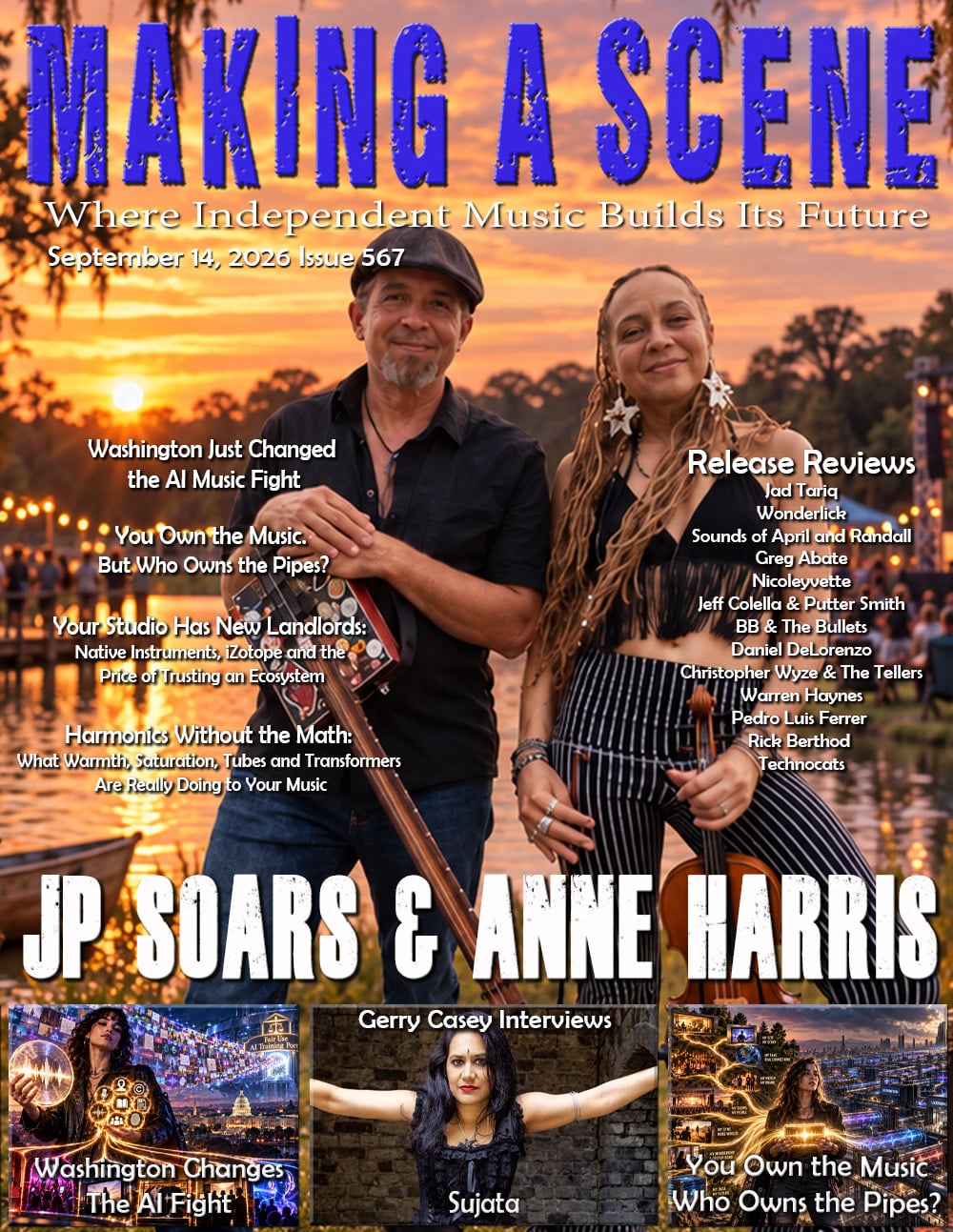

Why Every Indie Artist Needs an Owned Community Forum





Making a Scene Presents – Why Every Indie Artist Needs an Owned Community Forum
Listen to the Podcast Discussion
Social media made indie artists believe they had a direct line to their fans. For a little while, that felt true. You could post a song, share a flyer, drop a behind-the-scenes video, and talk to people who cared. Then the platforms changed the rules. Reach dropped. Algorithms got stingier. The same fans who chose to follow you stopped seeing your posts unless you paid to reach them. The platform still collected the data. The platform still sold the ads. The platform still controlled the room.
That is the problem. Most indie artists are building communities on land they do not own.
A Facebook group can be useful. Instagram can help people discover you. TikTok can make a song move faster than a van with bad shocks on I-95. YouTube can still be powerful. Spotify, Apple Music, Bandcamp, SoundCloud, and all the rest can help people hear your music. But none of those places should be the final home of your fan relationship.
Your own community forum changes the power dynamic.
A forum on your own website gives your fans a place to gather without being swallowed by the feed. It gives your superfans a reason to come back. It gives your casual listeners a path to become real supporters. It gives your audience a place to talk about your songs, your live shows, your merch, your recording process, your lyrics, your influences, and the scene you are building around your music.
More important, it gives you a way to connect fan activity to your own ecosystem. That means your newsletter, your merch store, your memberships, your fan passport, your live show QR codes, your artist profile pages, your private content, your sponsored areas, and your direct-to-fan revenue can all start working together.
That is how indie artists stop chasing attention and start building assets.
The old music business was built around control. Labels controlled recording budgets. Radio controlled exposure. Retail controlled shelf space. Press controlled visibility. Now the new gatekeepers are platforms. They control reach, discovery, data, ads, search, playlists, and fan behavior.
The indie artist’s answer is not to leave every platform. That would be foolish. The answer is to use those platforms as roads that lead back to your own house.
Your own community forum can become that house.
A Forum Is Not Old-School. A Forum Is Owned Infrastructure.
A lot of artists hear the word “forum” and think of something dusty from 2004. That is the wrong way to look at it. A modern forum connected to a social profile system can feel more like a private indie music network than an old message board.
That is where BuddyPress and bbPress come in.
BuddyPress adds the social network layer to WordPress. It can give your site member profiles, activity streams, groups, private messaging, notifications, and custom profile fields. The official BuddyPress plugin page describes features like activity streams, extended profiles, user settings, and public, private, or hidden groups.
bbPress adds the forum layer. It gives you forums, topics, replies, forum roles, subscriptions, and shortcodes that can be placed on WordPress pages. The bbPress Codex explains that bbPress shortcodes can be used to place forum functions into WordPress page layouts, including the forum index, topic forms, login, registration, and lost password screens.
Put them together and you have something powerful. BuddyPress gives your fans identity. bbPress gives your fans conversations. WordPress gives you ownership.
That matters because the future of indie music is not just about getting heard. It is about owning the relationship after someone hears you.
A listener on Spotify is not the same as a fan in your community. A follower on Instagram is not the same as a member on your website. A YouTube subscriber is not the same as someone who joins your forum, signs up for your newsletter, buys a shirt, scans a QR code at a show, earns a fan passport stamp, and joins a paid membership.
That second person is not just a number. That person is part of your business.
Start With the Real Goal
Before you install anything, decide what the community is supposed to do.
If the goal is “I want a forum because forums are cool,” stop. That is not enough. A forum without a purpose becomes a ghost town with login buttons.
The goal should be something like this:
You want a place where your fans can talk to each other instead of only talking to you. You want a place where your live show energy continues after the night ends. You want a place where people who bought merch, backed a release, joined your newsletter, or supported you early can feel seen. You want a place where fan activity can become useful data. You want to know who shows up, who talks, who buys, who shares, who brings friends, who lives in which city, and who is ready for deeper access.
That information is not creepy if you collect it respectfully and use it to serve the fans better. It becomes creepy when platforms collect it silently and sell it to advertisers while the artist gets nothing but a dashboard full of crumbs.
Your own community forum should be built around permission, transparency, and value. The fan gives you attention and data. You give them access, belonging, recognition, and better experiences.
That is the trade.
The Basic Stack
For most indie artists, the cleanest setup starts with WordPress, because WordPress is open-source, flexible, and widely supported. WordPress.org describes WordPress as an open-source publishing platform used by creators, small businesses, and enterprises.
On top of WordPress, use BuddyPress for the social layer and bbPress for the forum layer.
For commerce, use WooCommerce as the main store option. WooCommerce describes itself as an open-source ecommerce platform for WordPress, and its WordPress.org listing emphasizes that open-source commerce lets store owners retain ownership of store content and data.
As an alternative, watch FluentCart. FluentCart describes itself as a performance-first, self-hosted ecommerce platform for WordPress that can sell physical products, subscriptions, downloads, licenses, and more without platform lock-in or transaction fees from the plugin itself.
For email, use The Newsletter Plugin or another serious email platform. The Newsletter Plugin’s WordPress listing says it can manage subscribers, forms, lists, segmentation, custom fields, tracking, and newsletter sending from WordPress.
For email delivery, use Twilio SendGrid or another professional email delivery service. The Newsletter Plugin’s SendGrid documentation says SendGrid can be used as an email delivery service for Newsletter Plugin emails, helping avoid common hosting email problems like server limits and deliverability issues.
For merch fulfillment, especially if you do not want boxes of shirts in your living room, use Printful with WooCommerce. Printful’s WooCommerce integration page says you can connect Printful to WooCommerce, sell print-on-demand products under your brand, and have Printful handle production and shipping.
For site protection and performance, use Cloudflare. Cloudflare’s WordPress integration page says its plugin can help accelerate page load speeds and protect WordPress sites from DDoS attacks and WordPress-specific vulnerabilities.
For optional Web3 fan passport experiments, look at Unlock Protocol and POAP. Unlock describes itself as a protocol that helps creators monetize content in a decentralized way, and POAP describes Proof of Attendance Protocol as a way to mint digital mementos tied to shared moments and attendance.
Now let’s build it.
Step-by-Step Guide: Setting Up BuddyPress 14 and bbPress for an Indie Artist Fan Community
This section is the practical part. Follow it in order. Do not install ten extra plugins until the basic system works. Most community problems come from trying to decorate the house before the foundation is poured.
1. Prepare WordPress First
Make sure your WordPress site is running on reliable hosting, uses HTTPS, and has clean permalinks.
Go to Settings → Permalinks and choose Post name. Then click Save Changes.
Before installing the community tools, make a full backup of your site. Back up the database, files, theme, and plugins. A fan community creates user data, profiles, forum topics, activity records, and email notifications. You do not want to experiment on a live site with no safety net.
Also create a staging copy if your host offers one. Build and test there first.
2. Install BuddyPress
Go to Plugins → Add New.
Search for BuddyPress.
Install and activate BuddyPress.
Then go to Settings → BuddyPress → Components.
Turn on the components an indie artist actually needs:
Extended Profiles for custom member profile fields.
Account Settings so users can manage their account.
Activity Streams so the community has a social feed.
Notifications so members know when someone interacts with them.
Friend Connections if you want a social media-style experience.
Private Messaging if you want fans and members to contact each other privately.
User Groups so you can create focused areas inside the community.
BuddyPress activity streams can aggregate activity across the site, including member activity and group activity, which is why they are useful for a social-style fan hub.
3. Understand BuddyPress 14 URLs
BuddyPress 14 uses the newer BuddyPress URL system. This is important because older tutorials may tell you to assign WordPress pages under a “Pages” tab. In modern BuddyPress, the directory URLs are usually handled under Settings → BuddyPress → URLs unless you are using the BP Classic add-on. BuddyPress support notes that BuddyPress uses the rewrites URL parser by default and creates page equivalents under Settings → BuddyPress → URLs.
Go to Settings → BuddyPress → URLs.
Make sure your slugs are clean and simple:
Members should be members.
Groups should be groups.
Activity should be activity.
Register should be register.
Activate should be activate.
If you see something like groups-2 or register-2, you probably have a slug conflict. Check your WordPress pages and trash for old duplicate pages, permanently delete the duplicate, then return to BuddyPress URLs and set the clean slug again.
After changing BuddyPress URLs, go to Settings → Permalinks and click Save Changes.
4. Turn On Registration
Go to Settings → General.
Check Anyone can register.
Set New User Default Role to Subscriber.
Do not make new community users Authors, Contributors, Editors, or Administrators. A fan does not need publishing access to your site. They need a member account.
Test registration in an incognito browser window. If you are logged in as admin, you may not see the register form the way a new visitor sees it.
5. Create the Profile Fields That Matter
Go to Users → Profile Fields.
This is where BuddyPress becomes more than a login system. BuddyPress Extended Profiles let you create field groups and custom profile fields, and the Codex notes that xProfile fields can be rearranged in the registration form or member profile area.
For the signup form, keep it short. Long forms kill momentum.
Create fields like:
I am a…
Fan, indie artist, musician, producer, recording engineer, venue owner, promoter, songwriter, manager, music journalist, publicist, other.
City / State
This helps with touring, regional fan activity, and future fan passport ideas.
Favorite styles of music
This helps you understand your audience.
What brought you here?
Discover music, get recording help, follow the artist, learn music business, join the fan community, find collaborators, learn AI tools, learn Web3/direct-to-fan tools.
Artist or website link
Optional, but useful if your fan community includes other musicians.
Do not ask for everything at signup. Put deeper questions on the profile page, not the registration page. You can ask for more later once the relationship is real.
6. Install bbPress
Go to Plugins → Add New.
Search for bbPress.
Install and activate bbPress.
After activation, you should see Forums, Topics, and Replies in the WordPress dashboard.
Go to Settings → Forums.
Turn on the basic features you want: subscriptions, favorites, topic tags, search, revisions, and user posting controls.
Make sure Auto Role is enabled and set the default forum role to Participant. The normal setup should be this: the fan registers as a WordPress Subscriber, then bbPress gives that user the forum role needed to post in forums.
7. Build the Main Forum Structure
Go to Forums → New Forum.
Create a top-level category called Community Forums.
Set the type to Category.
Then create child forums under it.
For an indie artist, useful starter forums might be:
Start Here
Use this for rules, welcome posts, and how the community works.
Introduce Yourself
This is where fans say hello and tell you where they are from.
Song Discussions
This is where fans talk about your songs, lyrics, videos, and releases.
Live Shows and Tour Talk
This is where fans talk about upcoming shows, past shows, setlists, rideshares, photos, and venue memories.
Merch and Releases
This is where you announce vinyl, CDs, shirts, limited drops, bundles, and special offers.
Behind the Music
This is where you talk about songwriting, recording, gear, production stories, and studio notes.
Fan Passport and Rewards
This is where you explain how fans earn stamps, badges, perks, discounts, and access.
Members Only
This can be private if you are building a paid or supporter-level community.
Do not create fifty forums on day one. Empty rooms make a community look dead. Start with a few strong rooms and expand later.
8. Create a Community Front Page
Do not make the activity feed your front door at launch. A raw feed can look confusing when the community is new.
Create a WordPress page called Community.
Use the slug community.
Write a short welcome message that explains what the fan community is and why fans should join.
Add buttons or links to:
/register/
/activity/
/groups/
/forums/
/members/
This page becomes the front porch. BuddyPress and bbPress are the rooms inside the house.
9. Create BuddyPress Groups
Go to your Groups directory, usually /groups/.
Create a few focused groups.
For an indie artist, strong group ideas include:
Official Fan Community
Street Team
Behind the Songs
Live Show Crew
Collectors and Merch
Home Studio Friends
VIP Supporters
BuddyPress groups can gather members and user-generated content, and BuddyPress says groups can be public, private, or hidden depending on what the admin allows.
Use public groups for general fan conversation. Use private groups for paid members, street team members, supporters, or people who bought a specific release.
10. Connect bbPress Forums to BuddyPress Groups
This is where many people get stuck.
Go to Forums → New Forum.
Create a forum called Group Forums.
Set it as a Category.
Then go to Settings → Forums.
Find the BuddyPress section.
Enable Group Forums.
Set Group Forums Parent to the Group Forums category you just created.
The BuddyPress Codex explains that sitewide forums give your site a central discussion area, while group forums give each BuddyPress group its own attached forum. It also says that after group forums are enabled and a group has its forum turned on, a Forum link becomes visible in the group’s main navigation.
Now go into each BuddyPress group.
Click Manage or Admin.
Look for the Forum setting.
Check Yes, I want this group to have a forum.
Save.
Now that group should have its own Forum tab.
11. Add Login, Register, and Lost Password Pages
BuddyPress should handle the main registration page at /register/.
For login, you can create a page called Community Login and use the bbPress shortcode:
For lost password, create a page called Lost Password and use:
bbPress also has a register shortcode,
, but if you are using BuddyPress as your social identity system, do not create two competing registration paths unless you have a specific reason. The cleaner model is BuddyPress for registration and profiles, bbPress for forum participation.
12. Add Community Rules
Create a page called Community Rules.
Then create a sticky forum topic in Start Here that links to those rules.
Your rules should cover respect, spam, scams, piracy, self-promotion, privacy, AI-generated content, Web3 hype, political flame wars, harassment, and moderation.
Promotion should be allowed, because artists need to promote. But link dumping should not be allowed. A good rule is simple: be a member before you become a billboard.
13. Protect the Site From Spam
Turn off anonymous posting in bbPress.
Hold posts with too many links for moderation.
Use an anti-spam plugin.
Add Cloudflare protection, but be careful not to aggressively cache or challenge community pages.
Avoid heavy caching on:
/register/
/activate/
/members/
/groups/
/activity/
/forums/
/wp-login.php
Community pages rely on sessions, login states, form submissions, and user-specific content. Caching them like static blog posts can cause weird behavior.
14. Test Before Launch
Create test accounts.
Test as a logged-out visitor.
Test as a new fan.
Test as a paid member, if you have memberships.
Test as a moderator.
Make sure registration works. Make sure activation emails arrive. Make sure users can post. Make sure private forums stay private. Make sure group forum tabs appear. Make sure the store, newsletter signup, and community login do not fight each other.
Only then invite the public.
How the Forum Becomes Part of Your Revenue Ecosystem
A forum by itself does not make money. A forum connected to an artist-owned ecosystem can.
That is the big idea.
Your community should connect to your newsletter, your commerce store, your fan passport, your live shows, your memberships, and your content strategy. Each part should feed the next part.
The forum gives fans a reason to create an account. The account gives you permission to build a relationship. The relationship gives you a reason to send useful emails. The emails bring people back to the site. The site leads to merch, tickets, memberships, direct sales, and fan rewards. The fan passport records participation. The community gives that participation meaning.
That is the flywheel.
The Newsletter Is the Spine
Your forum should not replace your newsletter. It should feed it.
When someone registers for your community, give them a clear option to join your email list. Do not sneak them onto the list. Ask. Make the value obvious.
Tell them they will get show announcements, release news, community highlights, exclusive content, early merch drops, discount codes, and fan passport updates.
Use The Newsletter Plugin if you want the newsletter to live inside WordPress. Use Twilio SendGrid for stronger delivery if your hosting email is unreliable. The point is not just sending newsletters. The point is building a direct communication channel that is not controlled by an algorithm.
Every week, your newsletter can feature the best forum conversations. That gives members a reason to post. It also gives non-members a reason to join.
A subject line like “This week inside the fan room” is more personal than “New update from artist.” It makes the fan feel like something is happening behind the door.
The Fan Passport Turns Activity Into Belonging
A fan passport is where your community gets really interesting.
Think of it as a record of fan participation. A fan can earn stamps, badges, points, or access for doing meaningful things. They attend a show. They buy merch. They join the forum. They introduce themselves. They bring a friend. They buy a vinyl release. They scan a QR code at the merch table. They join a listening party. They support a crowdfunding campaign. They review a show. They help promote a local gig.
Each action becomes part of their story with you.
This can be simple at first. You do not need a complicated blockchain system on day one. You can begin with WordPress user roles, profile fields, coupon codes, manual badges, private groups, and member-only forums.
Later, you can experiment with Web3 tools like POAP for proof-of-attendance style collectibles or Unlock Protocol for token-gated access. POAP describes these digital mementos as ways to mark shared moments, while Unlock focuses on creator monetization and membership-style access.
The point is not to make fans buy crypto. The point is to recognize participation.
A fan who has been to five shows should be treated differently from a random visitor. A fan who bought vinyl, joined the forum, and brought three friends to a show should be seen. That recognition can become early access, discounts, private streams, bonus tracks, meetups, merch bundles, or special status in the community.
That is how you turn attention into loyalty.
QR Codes Connect the Real World to the Community
Live shows should feed the forum.
Put QR codes at the merch table, on table tents, on posters, on postcards, on stickers, and near the stage exit. Use a tool like QRCode Monkey if you need a simple QR code generator, or use your own WordPress-generated codes if you are building a deeper system. QRCode Monkey describes itself as a free QR code generator for high-quality QR codes.
Do not send every QR code to your homepage. That is lazy.
Create specific landing pages.
A show QR code should lead to a page that says, “Thanks for coming to tonight’s show.” From there, fans can join the community, get a free live track, claim a fan passport stamp, join the mailing list, buy merch, or talk about the show in a dedicated forum thread.
A merch QR code should lead to a product page, bundle page, or fan passport claim page.
A vinyl insert QR code should lead to liner notes, bonus tracks, behind-the-song discussions, or a members-only listening room.
A street team QR code should lead to a private group.
Every QR code should have a job.
Commerce Should Be Built Into the Community, Not Bolted On
Your store should not feel like a separate cash register hidden in the back of the site. It should be part of the fan experience.
Use WooCommerce if you want the most established WordPress commerce ecosystem. It is flexible, open-source, and widely supported. If you want a newer, lighter WordPress-native option, test FluentCart as an alternative. FluentCart is positioning itself as a self-hosted ecommerce system for physical products, subscriptions, downloads, and licenses.
The store should connect to the forum in smart ways.
When you release a new shirt, create a forum thread about the design. When you release vinyl, create a listening discussion. When you sell a limited bundle, give buyers access to a private group. When someone buys a ticket or merch item, give them a fan passport stamp. When a fan posts a photo wearing the shirt at a show, feature it in the community.
If you use Printful with WooCommerce, you can test merch without buying inventory upfront. Printful says its WooCommerce integration can push products to the store and handle fulfillment when customers buy.
That matters for indie artists because cash flow is real. A bad merch order can eat rehearsal money, gas money, studio money, or rent money. Print-on-demand is not always the highest-margin option, but it can be a safe way to test designs before placing larger orders.
Memberships Create Predictable Support
A community forum gives you a reason to create memberships that are not just “please support me.”
A good membership should feel like access, belonging, and participation.
You can use tools like WooCommerce Memberships, Paid Memberships Pro, or MemberPress depending on your needs. WooCommerce Memberships lets site owners restrict content to members and can connect membership access to purchasing, registration, or manual assignment; Paid Memberships Pro says it supports restricted content, recurring payments, user registration, custom profile fields, and member management.
Start simple.
A free member can join the basic community.
A supporter member can access private forums, early demos, livestream hangouts, pre-sale codes, merch discounts, and behind-the-scenes posts.
A superfan member can get deeper access, such as private listening sessions, monthly Q&A threads, limited merch windows, songwriting notes, stem packs, early ticket access, or fan passport perks.
Do not make the paid area feel like a hostage situation where all the good stuff disappears behind a wall. Keep the public community alive. Use the paid tier for deeper access, not basic respect.
Artist Profiles Turn Fans Into a Network
If your community includes other musicians, let artist members create richer profiles.
This can be powerful.
An artist profile can include music links, location, genre, website, store, booking contact, latest release, studio setup, collaboration interests, and forum activity.
This turns your community into a scene directory.
Fans can discover artists. Artists can find collaborators. Producers can find clients. Venue owners can find acts. Writers can find stories. Sponsors can see an active culture instead of a random pile of social posts.
BuddyPress Extended Profiles are perfect for this because you can create custom fields around music identity instead of forcing artists into generic social media bios.
Sponsored Community Areas Can Create Revenue Without Selling Out
Sponsorship does not have to mean plastering ugly ads all over your community.
A sponsored community area can be useful if it is honest and relevant.
A guitar shop could sponsor a gear forum. A local venue could sponsor a live show discussion area. A recording studio could sponsor a home recording help section. A print company could sponsor a merch strategy area. A music lawyer could sponsor an educational Q&A series. A distributor, plugin company, or music tech tool could sponsor a monthly workshop.
The rule is simple: sponsorship should serve the community.
Make it transparent. Label sponsored areas clearly. Do not let sponsors pretend to be regular members. Do not sell access to member data. Do not let a sponsor turn the community into a pitch room.
The best sponsorship model is education plus support. The sponsor helps fund the community. The members get useful knowledge, discounts, workshops, or access. The artist gets revenue without handing control back to the platform economy.
What This Has to Do With the Music Industry Middle Class
The music industry middle class will not be built by one viral song.
It will be built by systems.
A community forum is one of those systems.
It helps artists move beyond the lottery model of music. Instead of waiting for a playlist, a label, a sync placement, or an algorithmic miracle, the artist builds a place where fans can gather. That gathering becomes data. The data becomes better decisions. Better decisions lead to better shows, better merch, better releases, better offers, better memberships, and better fan relationships.
That is how real income starts to stack.
A forum member joins the newsletter. A newsletter reader comes to a show. A show attendee scans a QR code. That QR code adds a fan passport stamp. The fan buys a shirt. The shirt buyer joins a private group. The private group member joins a paid membership. The paid member brings a friend. The friend discovers the artist through the community instead of through a platform ad.
That is not fantasy. That is infrastructure.
The old music business wanted artists to chase permission. The new independent model asks artists to build systems they own.
Your songs are still the center. Do not misunderstand that. The music has to matter. The live show has to connect. The recording has to move people. The story has to feel real.
But in today’s world, music alone is not enough. The artist needs a place where the relationship can continue after the song ends.
That place should not belong to Mark Zuckerberg. It should not belong to TikTok. It should not belong to Spotify. It should not belong to an algorithm that changes its mind every time a shareholder sneezes.
It should belong to the artist and the fans.
That is what a BuddyPress and bbPress community can become when it is done right. Not just a forum. Not just a social feed. Not just another login screen.
It can become the living room of your independent music business.
And if enough artists build those rooms, connect them to newsletters, commerce, memberships, fan passports, QR codes, live shows, artist profiles, and direct support, we stop talking about saving the music industry and start building the next one.
 |  Spotify |  Deezer |  Breaker |
 Pocket Cast |  Radio Public |  Stitcher |  TuneIn |
 IHeart Radio |  Mixcloud |  PlayerFM |  Amazon |
 Jiosaavn |  Gaana |  Vurbl |  Audius |
 Reason.Fm | |||
Find our Podcasts on these outlets
Subscribe to Our Newsletter
Discover more from Making A Scene!
Subscribe to get the latest posts sent to your email.


