
You Finished the Record Now Build the Smart Media Album




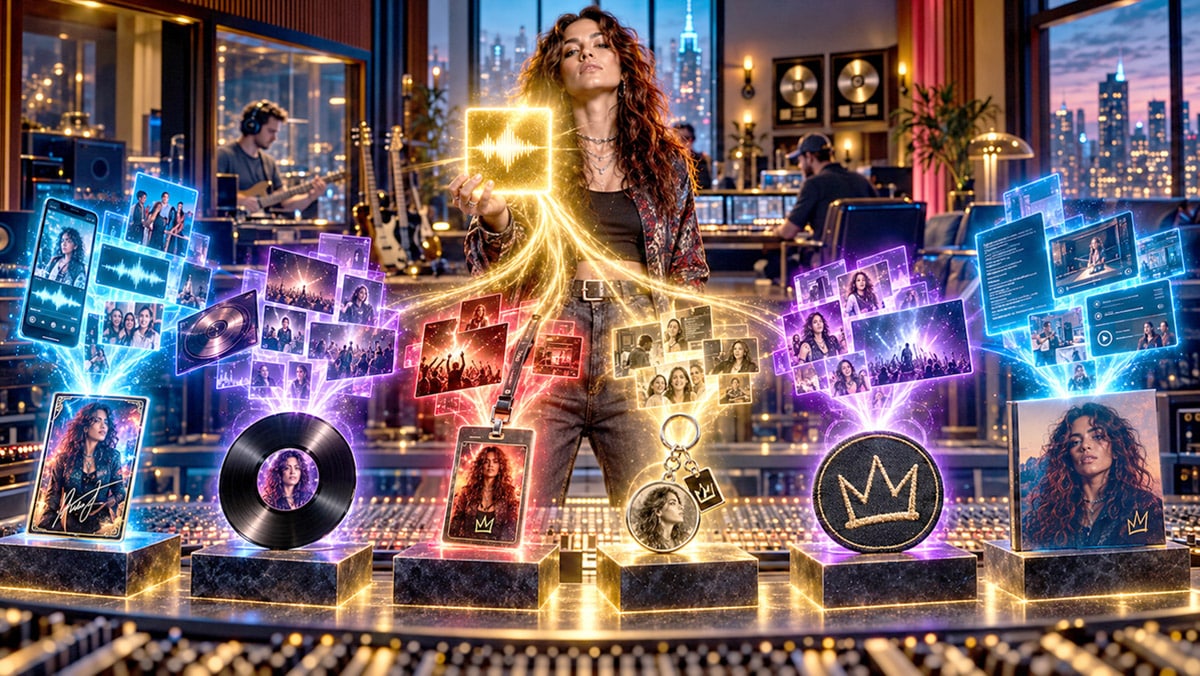
Making a Scene Presents – You Finished the Record Now Build the Smart Media Album
Listen to the Podcast Discussion
A Making a Scene Practical Guide to Turning a Finished Album Into a Physical-Digital Product Fans Can Buy, Tap, Keep and Come Back To
In our previous Making a Scene feature on Smart Media Albums, we looked at why this emerging physical-digital format could become important for independent artists. Luminate has now recognized Smart Media as a physical music category in the United States and Canada, and qualifying products will become eligible for Billboard charts beginning with the October 2–8, 2026 tracking week. That development is important, but knowing that Smart Media exists and actually building a Smart Media release are two very different things.
This article is about the second part. We are going to assume you already understand the basic idea: a fan buys a physical object, taps or scans it with a phone, and enters a digital album experience containing the music and whatever additional material the artist decides belongs in that world. Instead of spending another few thousand words explaining why that is interesting, we are going to take a finished record and walk it toward the merch table.
There are several decisions that have to be made along the way, and some of them need to be made much earlier than most artists would expect. You need to decide whether Billboard chart eligibility matters, determine what fans will physically receive, choose where the digital experience will live, prepare the album assets, select an NFC or Smart Media provider, decide what fan information you want to collect with permission, test the experience on actual phones, calculate the economics and build a plan for what happens after somebody buys it.
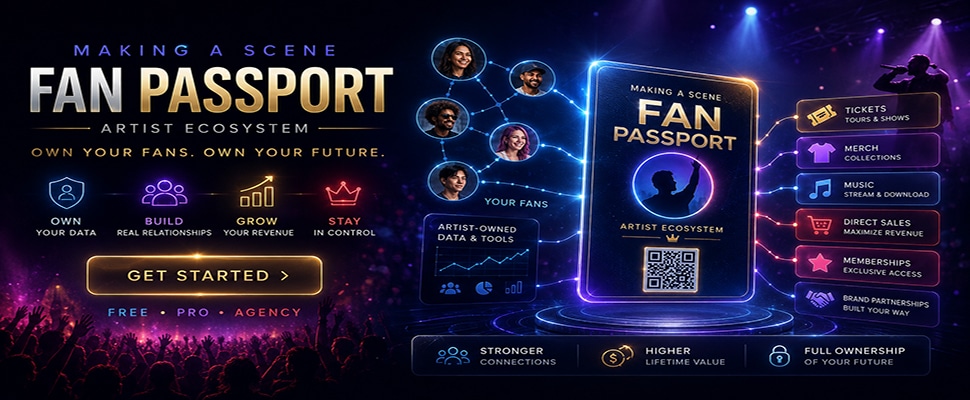
This is also where the Smart Media workflow being developed inside the MAS Artist Ecosystem becomes useful. Instead of treating Smart Media as another disconnected website where an artist uploads files and starts over again, the Artist Ecosystem is designed to help orchestrate the release from the artist’s existing Source of Truth, prepare the necessary assets and metadata, guide the artist toward the appropriate provider and connect the finished product back to Fan Passport and the artist’s owned fan relationship.
That distinction is important because the goal should never be to create another platform account just because technology companies have apparently decided musicians do not already have enough passwords.
The goal is to build a product.
Start With the Finished Record, Not the NFC Chip
The easiest mistake to make is beginning by shopping for an NFC card because the physical product is the exciting part. You see a tiny cassette, a beautiful acrylic token or a custom keychain and immediately start imagining your album logo printed across it. That is understandable, but it is backwards.
The Smart Media release should begin with the finished album and its business information. Before deciding what the fan will tap, make sure you know exactly what they are buying.
Your final masters should be approved and archived, and the track sequence should be settled. Every recording should have the correct ISRC associated with it, while the album or EP should have the appropriate UPC or EAN where required. Songwriter information, publishing ownership, performer credits, producer credits, artwork ownership and release information should be accurate before the Smart Media product enters manufacturing.
This is one reason the MAS Artist Ecosystem’s Source of Truth becomes so important. The artist should not have a version of the album metadata sitting in a distributor, another version in a spreadsheet, another version in a Dropbox folder and another version somebody emailed to the drummer three weeks ago. Smart Media creates another destination for that information, which means bad metadata has another opportunity to reproduce.
Inside the MAS Smart Media workflow, the release should begin with the existing authoritative album record. The system can pull the master identity, ISRCs, UPC, credits, publishing information, artwork and rights information together before building the provider package. That gives the artist one verified starting point rather than asking them to rebuild their album every time another company requests the same information.
Once that foundation exists, you can start thinking about what the Smart Media edition should become.
Decide Early Whether Billboard Matters
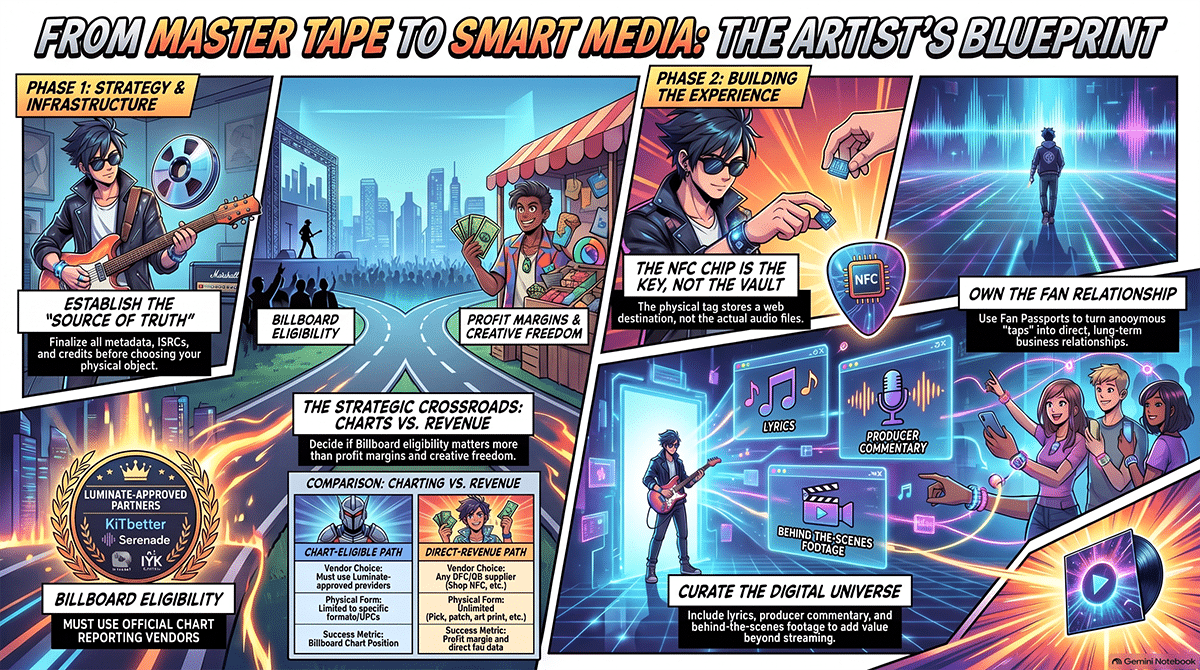
Before choosing the physical object, you need to make one major business decision. You need to decide whether this particular Smart Media edition is intended to qualify for Billboard chart reporting or whether it is primarily being created as a direct-to-fan revenue product.
Those paths overlap, but they are not interchangeable.
Luminate says a chart-eligible Smart Media album must use an approved Smart Media vendor and must lead through activation to a dedicated app, website or platform where the album experience is hosted. A product that simply opens Spotify, Apple Music or another outside streaming service does not meet that Smart Media definition for reporting purposes.
Billboard and Luminate currently recognize seven approved Smart Media vendors and manufacturers: IYK, KiTbetter, Serenade, Totem, WeVerse, Yoto and ZATAP. Eligible album projects are also restricted to two chart-designated Smart Media UPCs, so artists cannot create twelve collectible variations and assume every one of them will count independently toward Billboard.
Luminate’s registration rules go further by stating that once two Smart Media UPCs have been registered as the chart-eligible products for an album project, they cannot later be substituted. If an artist intends to produce more than two Smart Media products, the priority chart editions need to be registered first.
This means the chart decision should be made during product planning rather than after manufacturing. An artist who genuinely expects concentrated first-week sales, wants a Billboard sales-chart story for publicity or believes chart activity could strengthen booking, press or industry leverage may have a good reason to use an approved provider.
An artist who primarily wants an attractive $25 or $40 product to sell after shows may have very different priorities. That artist may care much more about manufacturing cost, control of the digital destination, fan information and profit margin than whether Luminate receives the transaction.
There is nothing second-class about that approach. A profitable product sold directly to 300 fans can have considerably more impact on an independent artist’s business than a chart campaign that produces an impressive screenshot but leaves very little money behind.
The MAS Smart Media workflow should make this decision explicit near the beginning. Instead of forcing every artist down the same path, it can ask what the goal of the release actually is and then open the appropriate workflow.
If You Want Billboard Eligibility, Choose the Provider Before Designing the Product
Artists pursuing the chart route should resist the temptation to design the physical object independently and then search for somebody who can make it qualify afterward. The approved provider should be involved early because the product, activation technology, digital environment and sales reporting all need to work together.
KiTbetter is particularly interesting for independent artists because it already operates a self-release program. The company says musicians can create KiTalbums by uploading their artwork, WAV or lossless audio, lyrics, videos, metadata and credits, and production runs can begin at only 30 units. KiTbetter also offers on-demand fulfillment, which makes the format considerably more accessible than traditional physical manufacturing requiring hundreds or thousands of units.
Artists can investigate the self-release system through KiTbetter. The important thing to understand is that a KiTalbum is not merely an NFC card with a download attached. It is a complete physical-digital format with its own activation system and KiTplayer environment, which is exactly why working with the provider early makes more sense than designing everything somewhere else and hoping it can be grafted onto the system later.
Serenade takes a broader approach to physical form. Its Smart Formats include connected items such as stickers, clothing tags, lanyards, miniature physical formats and other NFC-enabled collectibles, while the digital side can contain audio, photographs, video, PDFs, ZIP files, demos and other album-related content. Serenade says its U.S. Smart Formats become Billboard chart-eligible beginning October 2, 2026.
The company can be explored through Serenade Smart Formats. Serenade is especially worth studying if your creative concept is more interesting than a traditional album-shaped object because its examples demonstrate how far the physical side can move away from the familiar CD box.
IYK moves the format toward connected merchandise and fan identity. Its music products include TapCards, chipped stickers, apparel and lanyards, while its larger system is built around turning real-world interactions into measurable fan relationships. The company is also showing examples of chart-eligible NFC album products in its music program.
Artists can explore the platform through IYK Music. For artists already thinking beyond the album toward loyalty, live-event check-ins and persistent fan relationships, that model deserves attention because the object can become part of a broader fan system rather than remaining a one-time product.
ZATAP is another provider worth examining closely because its connected-product examples stretch across conventional physical music and merchandise. Its current work includes albums, vinyl, CDs, mini CDs, mini cassettes, books, apparel, lanyards, greeting cards, keychains and other physical products capable of opening digital experiences. ZATAP currently states that its NFC music formats will be U.S. and Canadian chart eligible beginning October 2, 2026.
Artists can investigate the service through ZATAP. Its catalog is also useful simply as a creative reference because it demonstrates that Smart Media does not have to resemble the format it is replacing.
WeVerse Albums provides another established interpretation of the idea. A physical release can use a QR code to import a digital album into the WeVerse Albums environment, where listeners can access music, high-resolution photo books, digital photo cards and animated covers.
You can see the platform at WeVerse Albums. WeVerse is enormously important in understanding where the format came from, particularly in K-pop, although a small American independent artist should investigate availability and onboarding carefully rather than assuming every Billboard-approved provider operates like an open self-service pressing plant.
Yoto is a more specialized option built around its physical audio cards and dedicated players. The company’s creator program has allowed independent musicians and other audio creators to publish original work as Yoto Cards, particularly for children and family audiences.
Artists working in that market can explore Yoto. For most rock, blues, roots or electronic artists it may not be the natural starting place, but its inclusion in the approved Smart Media category shows just how broad the format can become.
Totem is also included on Luminate’s current list of Smart Media manufacturers. At the time of this writing, however, I have not found a public artist-facing Smart Media onboarding site that I can verify confidently enough to send independent artists toward without qualification. Because several unrelated companies use the Totem name, artists interested in that option should confirm the correct provider through Luminate’s current approved-vendor guidance rather than assuming the first search result wearing the correct name is necessarily the right company.
That may feel overly cautious, but manufacturing several hundred units with the wrong company is a particularly expensive way to discover the value of fact checking.
If Billboard Does Not Matter, Your Options Become Much Bigger
The direct-revenue route gives the artist far more freedom because the physical object no longer has to satisfy Luminate’s chart rules. You can still build a genuine Smart Media experience, but its success is measured in fan engagement and money going into the artist’s business rather than chart units.
This is where things get fun.
A Smart Media album can be built into a traditional album package, but there is no reason to stop there. A singer-songwriter might create a numbered art card containing the album and handwritten lyric scans, while a blues artist could sell a miniature backstage laminate that unlocks the record and a live session. A punk band might embed an NFC chip in a patch, while an electronic artist could build the release into a small acrylic artwork.
A folk artist could place the experience behind a wooden token engraved with the album artwork. A touring band could sell an NFC tour pass that unlocks the studio record at first and gains live material as the tour progresses. A guitar-driven artist could create a collectible shaped like a guitar pick, although anyone manufacturing an actual playable NFC guitar pick should test it thoroughly before letting an enthusiastic fan introduce the chip to a set of .011 strings.
The point is not to become clever for the sake of cleverness. The point is to create a physical object that belongs naturally to the world of the album.
Find the Physical Object Before You Order Hundreds
If you are building the direct-revenue version yourself, NFC suppliers can give you a relatively inexpensive way to prototype ideas. Shop NFC carries programmable cards, stickers, key fobs and other NFC products, including printable NFC keyrings that can be ordered in small quantities.
Artists can explore its products through Shop NFC. The supplier is especially useful for prototyping because you do not necessarily need to begin with a fully custom manufactured product.
Seritag is another useful source because it offers NFC cards, tags, key fobs, wristbands and components that can be embedded inside other merchandise. Its custom PVC cards, for example, can be printed with the artist’s artwork and ordered with NFC encoding, while some products can also use dynamic link-management systems that allow destinations to be changed later.
The catalog is available through Seritag NFC products. Looking through a supplier such as this is useful even before choosing what to buy because seeing the available shapes often generates ideas for how the physical product could fit the artist’s identity.
You are not limited to buying a finished NFC product, either. An adhesive or embedded NFC tag can be incorporated into another collectible, which means an artist can work with a normal merchandise manufacturer and add the connected layer separately.
That opens possibilities such as photo books, boxes, patches, posters, art prints, laminated passes, wooden items or premium packaging. The NFC component can be very small, so the creative object around it can remain the star.
Understand What the NFC Chip Actually Does
One of the easiest misconceptions to clear up is that the album usually does not live on the NFC chip. The chip is simply too small.
Common NFC tags such as the NTAG213 hold only enough user memory for small amounts of information such as an identifier or web address. Seritag’s custom NTAG213 card, for example, specifies 144 bytes of memory.
That means the chip is the key, not the vault.
When the fan taps the physical item, the phone reads the information on the tag and opens the appropriate destination. That destination may be a dedicated Smart Media platform, an artist-controlled web experience, a membership environment or another digital system.
For a DIY Smart Media product, this creates an important architectural choice. You can write the final hosting address directly onto the tag, or you can write an artist-controlled redirect address that can later point somewhere else.
The second approach is usually much safer.
If you print 1,000 NFC cards that point permanently to a third-party platform and that platform disappears in three years, the artist now owns 1,000 extremely attractive pieces of plastic that remember the Internet of 2026. If the tag instead points to an address controlled by the artist, that address can later redirect the fan to a new platform without replacing the physical product.
The MAS Artist Ecosystem should automate this idea wherever possible. The artist-facing workflow can create a persistent Smart Media destination associated with the release, while the underlying hosting location can change behind it.
That may sound like boring technical plumbing, but boring plumbing is wonderful when it prevents the basement from flooding.
Now Build the Digital Album Experience
Once the physical concept is clear, you can design the world that opens after the tap. This is where a Smart Media Album should become more interesting than a fancy download card.
Begin with the album itself. The fan should be able to reach the music easily without hunting through twelve screens of marketing material first.
From there, build outward.
Lyrics can restore the experience of sitting with an album booklet while listening. Recording credits can finally give musicians, engineers, producers and photographers the recognition that tiny streaming interfaces often bury several menus deep. High-resolution artwork can make the visual side of the release part of the experience again.
Studio photographs and behind-the-scenes footage can show how the record came together. A producer commentary can explain why a song changed during recording, while an artist commentary can tell the story behind the lyric.
Instrumental versions may be valuable for musicians and fans who enjoy hearing the arrangement without the vocal. Alternate mixes, acoustic performances and demos can reveal how the songs evolved.
The important thing is not to upload everything you have simply because storage is cheap. A Smart Media Album should feel curated rather than like somebody accidentally gave the customer access to the band’s hard drive.
The test is simple. Every piece of content should make the fan feel closer to the album, the artist or the story surrounding the record.
Think About Downloads Before You Promise Them
You also need to decide whether the Smart Media experience provides streaming access, downloadable files or both. This affects hosting cost, customer expectations and the long-term value proposition.
An artist may decide that purchasers should receive high-resolution WAV or FLAC versions of the record. Another artist may provide MP3 downloads while keeping bonus videos inside the online experience.
There is no single correct answer, but the language used to sell the product should make the arrangement clear. If the customer believes they are buying downloadable ownership and later discovers they only purchased access to a proprietary player, the Smart Media product has just reinvented one of the things fans already dislike about streaming.
For Making a Scene, the stronger philosophy is usually to give the fan meaningful value while ensuring the artist retains control of the underlying assets. The physical collectible can be the access key while the master recordings remain safely archived in the artist’s own system.
Choose the Non-Charting Hosting Route That Fits the Artist
Artists building a direct-revenue Smart Media release need somewhere for the digital experience to live. The most artist-controlled approach is usually the artist’s own website, particularly when it can connect directly to the commerce and fan systems the artist already uses.
WordPress combined with WooCommerce can sell physical products, digital products and physical products that include downloadable files. That makes it possible for an artist to sell the Smart Media object through the same website that controls the customer relationship while also delivering protected digital content. WooCommerce documents its downloadable-product system through WooCommerce downloadable products.
This route requires more setup than a completely hosted service, but it also gives the artist more control. Within the MAS Artist Ecosystem, it creates an especially interesting path because the Smart Media release can live inside the same environment that already contains the artist’s fan CRM, Source of Truth, memberships, show information and commerce tools.
Fourthwall offers another possibility for artists who want a more hosted experience. The platform supports music and other digital downloads, custom domains, creator storefronts and customer data access, and Fourthwall explicitly says creators control supporter emails and information while the company does not remarket those supporters.
Artists can explore the service through Fourthwall digital products. Fourthwall currently states that it charges a 3 percent platform fee on digital products, while physical products from its own catalog are handled through the margin between manufacturing cost and the artist’s selling price.
Ko-fi can provide an even simpler test environment. Its shop supports both physical items and digital products such as original music, and payments can go directly into the creator’s PayPal or Stripe account. Ko-fi currently charges a 5 percent service fee on shop sales under its standard model, in addition to normal payment-processing costs.
Artists can explore that system through Ko-fi Shop. A small artist could use a service like this to test 25 or 50 connected products before spending money building a more elaborate environment.
Bandcamp can also participate in a non-charting Smart Media strategy through album redemption codes. Bandcamp allows artists to generate codes that give fans unlimited streaming through the Bandcamp app and high-quality album downloads, which means an NFC collectible could potentially direct a buyer toward a redemption experience.
Artists can read about those codes through Bandcamp’s album-code system. There is an important catch, however, because Bandcamp says codes sold independently at a concert are not reported as chart sales even though the subsequent redemption appears in the artist’s statistics.
That distinction should be burned into the Smart Media planning process. A platform may already report certain music sales to Luminate without making your homemade NFC collectible an approved Smart Media Album.
Chart reporting follows the qualified transaction, not the artist’s optimism.
Build Fan Permission Into the Experience
A Smart Media Album becomes much more valuable when it does not end with content access. The product can also create a direct relationship between the purchaser and the artist, but that relationship should be voluntary and clearly explained.
When somebody taps the item for the first time, the digital experience can invite that fan to claim the release. The fan may choose to provide an email address, create an account, connect a Fan Passport or opt into future communication.
That permission matters.
The point is not to secretly collect whatever information the phone happens to reveal. The point is to give the fan a good reason to identify themselves because doing so improves the experience.
A fan who claims the album might receive future bonus content, early ticket information or an anniversary release. Another artist might offer owners a merch discount or early access to the next physical edition.
The relationship becomes valuable because the fan understands the exchange.
This is where the MAS Fan Passport should become an important part of the Smart Media workflow. A fan who buys and claims the release can become known inside the artist’s own ecosystem rather than disappearing into anonymous platform analytics.
The artist can then know something more useful than “4,312 people streamed Track Four.”
The artist can know that Sarah bought the Smart Media edition at the Atlanta show, claimed it, chose to receive updates and later came back to watch the bonus studio film. That is not just audience data. That is the beginning of customer history.
Do Not Confuse Fan Data With Fan Ownership
When Making a Scene talks about owning the fan relationship, we are not suggesting that artists own human beings. That would be both ethically alarming and a spectacularly bad merchandise slogan.
What the artist should own is the business relationship they have earned.
If a fan knowingly gives the artist an email address, the artist should not have to rent access to that person from Facebook every time they want to announce another show. If somebody has purchased three albums, attended five shows and joined a membership, that relationship should not disappear because a social platform changes its algorithm.
Smart Media provides another chance to move that relationship onto artist-controlled ground.
The physical product gets the fan through the door. Fan Passport can help the artist continue the relationship after they arrive.
Create a Product Experience for the First Tap
The first activation matters enormously because that is when the fan decides whether the Smart Media concept feels magical or unnecessarily complicated.
The tap should open quickly. The page should work properly on a phone. The fan should know immediately that the product worked and understand where the album is.
Do not greet somebody who just paid $35 for your record with a seven-field form demanding their address, birthday, favorite color and the name of their childhood pet before they can hear Track One.
Give them the experience first.
If account creation is required by the selected provider, explain why. If claiming the release unlocks future benefits, show those benefits clearly.
The physical object should also communicate how it works. A small tap symbol, simple instruction or QR backup can save considerable confusion at the merch table.
People who work with NFC every day assume everybody knows where the NFC antenna is located on every model of phone. Everybody else is just holding a card against various parts of an iPhone while quietly wondering whether they have purchased modern art.
Test for normal humans.
Build a Backup Into the Product
NFC is convenient, but the physical design should generally include another way to access the experience. A discreet QR code can provide a useful fallback when a phone does not respond to the tap, the user has disabled NFC or the physical tag is damaged.
That backup should point to the same controlled destination rather than creating two different album experiences. The MAS workflow can generate both activation methods from the same release record so the artist is not manually maintaining separate links.
The physical package should also include enough information for the customer to find support if something goes wrong. That might be a short artist-controlled web address printed on the card or packaging.
Remember that this object may stay in a fan’s collection for years. A good Smart Media product should not require the customer to remember which app somebody mentioned at a merch table in Cleveland in 2026.
Prototype the Entire Experience Before Manufacturing
Before ordering a serious production run, build a prototype.
It does not have to look beautiful.
Take an inexpensive programmable NFC card or sticker and connect it to the proposed digital album experience. Hand it to somebody who was not involved in building it and do not explain what to do.
Watch.
If they cannot figure out where to tap, change the physical design. If they tap successfully but cannot find the album, fix the digital design.
If the page takes too long to load, investigate the hosting. If video starts automatically while the person’s phone is connected to cellular data, consider whether you have just created a small machine for eating fan data plans.
Test multiple phones, including iPhone and Android devices. Test Wi-Fi and cellular connections.
Test the experience inside the venue where you expect to sell it because the merch table sitting in a concrete basement beneath a club may not enjoy the same glorious Internet connection as your office.
Then let a few actual fans use the prototype and ask what they think they purchased. Their description may be more useful than your marketing copy.
If they say, “It is basically a download card,” you probably have not built enough value yet.
If they say, “Wait, all of this comes with it?” you are moving in the right direction.
Work Out the Economics Before Choosing the Retail Price
Now comes the part musicians occasionally try to avoid by staring intensely at a guitar.
You need to do the math. The manufacturing cost of the physical object is only the beginning. You may also have custom printing, packaging, shipping from the manufacturer, fulfillment, envelopes, postage, payment processing, platform fees, damaged products and replacement units.
If you are using a chart-eligible provider, ask exactly what is included in the quote. Determine whether manufacturing, digital hosting, fulfillment, sales reporting and customer support are included or billed separately. Then determine the realistic retail price.
A product that costs $11 all-in and sells for $15 is probably creating more work than income. A connected collectible costing $8 to produce and selling for $30 has a very different business model. Do not price it by asking what people pay for streaming. Streaming access is not what you are selling.
You are selling a physical collectible, the album, a curated digital experience and potentially an ongoing relationship with the release. The fan decides whether that package is worth $20, $30, $50 or considerably more. Your job is to make the value obvious.
Consider More Than One Edition
A Smart Media project can be especially effective when the physical editions serve different kinds of fans.
A simple edition might be an inexpensive connected card designed for people who want the album and a collectible. A premium edition could contain a signed physical object, additional artwork or exclusive material.
If Billboard chart eligibility matters, remember that only two Smart Media UPCs can be designated as chart eligible for the album project under the current rules. That means those chart editions need to be chosen carefully.
Additional non-charting merchandise can still exist around the release, but the Artist Ecosystem should know which products are part of the official chart strategy and which are direct-revenue merchandise. Keeping those distinctions in the Source of Truth prevents the artist from accidentally treating an ineligible version as chart-reportable. The software should make this complicated distinction boring.
That is a compliment.
Prepare the Provider Package Once
Once the album, physical format and hosting route have been selected, the artist needs to assemble everything the provider requires.
This is another place where the MAS Smart Media workflow can remove a large amount of repetitive work. Instead of hunting through folders for album artwork, WAV files, metadata and credits every time another provider asks for them, the system can generate the delivery package from the Source of Truth.
For a typical album, that package may include approved masters, cover artwork, track information, ISRCs, UPC information, lyrics, credits, publishing details, artist imagery and any bonus material selected for the digital experience.
The exact requirements will vary by provider, and the MAS workflow should adapt the export rather than forcing the artist to remember what each service expects.
Artist Academy can sit beside this process and explain unfamiliar requirements as they appear. If a provider asks for a UPC, the artist should be able to learn what that identifier means without leaving the workflow and disappearing down a Google rabbit hole that ends two hours later with an advertisement for blockchain mastering.
Education is most useful when it appears at the moment a decision has to be made.
Manufacture Conservatively the First Time
One of the best things about connected physical products is that they can often be manufactured in smaller quantities than traditional vinyl production.
KiTbetter, for example, says its artist program can begin at 30 units, which dramatically reduces the inventory risk compared with ordering several hundred records before knowing whether fans actually want the product. Even when using a DIY manufacturer, the first production run should usually be conservative.
If you believe you can sell 500, there is nothing wrong with beginning with 100 and discovering you were right. Selling out creates another production decision. Sitting beside 425 unsold electronic keychains creates a storage decision.
Pre-orders can also help measure real demand before manufacturing. A prototype can be photographed, demonstrated in a short video and offered to the artist’s existing fanbase before committing to the full order. That information is far more trustworthy than asking the bass player whether they think everybody will want one. The bass player will say yes, for some reason they always say yes.
Make the Merch Table Demonstration Part of the Product
A Smart Media Album has one enormous advantage over a conventional CD at a live show: it can demonstrate itself. Put a sample item on the merch table and let fans tap it. The phone opens the experience and immediately shows the buyer what is inside. They can see the album, photographs, bonus material and whatever additional value the release contains before they decide whether to purchase.
That matters because Smart Media is still unfamiliar. A sign saying “NFC ALBUM $30” assumes the customer knows what NFC means and why they should care. Showing them works better.
The merch person should also be able to explain the product in one natural sentence. Something like, “Tap this with your phone and the whole album opens with the lyrics, studio video and bonus tracks,” is considerably more useful than delivering a keynote address about near-field communication while six people wait to buy shirts. The technology should become invisible as quickly as possible.
The fan should remember the experience.
Connect the Sale Back to the Show
The live environment also creates possibilities that normal streaming cannot easily reproduce.
A tour-specific Smart Media edition can remember where it was sold. The artist might offer different bonus photographs from different legs of the tour or unlock a particular live recording for fans who claimed the product at a certain show.
That does not necessarily mean manufacturing a different physical item every night. The same product can lead to an experience that changes according to campaign or redemption information if the underlying system supports it.
Within the MAS Artist Ecosystem, this can eventually connect directly to the Show Business Workflow and Fan Passport. The artist already knows which show occurred, which products were available and which fans voluntarily claimed them.
Now Smart Media becomes part of the artist’s touring business rather than an isolated novelty sitting next to the T-shirts.
The same connection can create future offers. Someone who bought the Smart Media album in Atlanta might receive an early ticket offer when the artist returns to Atlanta the following year.
That is much more useful than knowing somebody somewhere streamed the record while cooking dinner.

Do Not Stop Adding Value on Release Day
Traditional physical products are generally finished when they leave the factory. Smart Media does not have to be. If your selected platform allows content updates, build a simple post-release plan before launch. A month after release, owners might receive an acoustic version of one song. Later they might get a behind-the-scenes video from the tour.
Six months later the artist could add a live performance. On the anniversary of the album, owners might receive an alternate mix, documentary or retrospective message from the band. None of that requires overwhelming the fan with constant updates. The goal is simply to make owning the product feel increasingly valuable.
This also creates reasons to remind customers to tap the album again. An email announcing that new owner-only material has been added brings the fan back into the artist’s environment instead of sending them toward a social platform. The physical object starts behaving like a persistent media channel.
That is where Smart Media gets genuinely interesting.
Build the Product Into the Next Sale
A strong Smart Media strategy should also consider what happens when the fan finishes exploring the album. If the person loves the studio documentary, perhaps there is a ticket offer for the upcoming tour. If they are viewing the album near the holidays, there may be related merchandise available.
If the fan owns the basic edition and the artist later creates a deluxe edition, the system can recognize that history and offer an upgrade. Membership can become another natural extension. A Smart Media buyer who already enjoys receiving continuing content may be a much stronger candidate for a paid Fan Passport membership than somebody who merely followed the artist once on Instagram.
The first product should never turn into a relentless sales funnel where every screen screams for another credit card transaction. That becomes exhausting very quickly. Instead, the album should establish trust. Once the fan feels that buying directly from the artist produces a better experience, future direct sales become easier.
Where AI Fits Into the MAS Workflow
AI can make this creation process considerably easier without becoming the reason anyone buys the product.
Inside the Artist Ecosystem, AI can help inspect the release record for missing credits, inconsistent spellings, absent assets or mismatched metadata. It can help organize video transcripts, prepare descriptions, assist with accessibility text and create translations for international fans.
The system could eventually warn an artist that a Smart Media package contains a 48 kHz master for nine tracks but a 44.1 kHz file for Track Seven. It could notice that a songwriter appears in the Source of Truth but is missing from the digital liner notes.
Those jobs are boring, which is precisely why computers are welcome to have them.
AI can also help the artist think through the experience. It might suggest that the recording-session photographs be organized chronologically or help turn a long interview into short song-by-song commentary pages.
What it should not do is replace the human story with fifteen pages of synthetic filler. Nobody buys a deluxe album because they desperately want to read an AI-generated paragraph describing how emotional Track Six feels. Use AI to help build the package.
Let the artist remain the reason the package matters.
Where Web3 Could Fit Without Making Everyone Wear a Crypto Helmet
Smart Media also creates a reasonable opportunity for Web3 technology when it solves a genuine ownership or authenticity problem.
A limited physical edition could carry a provenance record proving when it was created and which edition number it represents. A signed collectible could eventually include a verifiable authenticity record, making resale and ownership history easier to establish.
That type of technology can work quietly behind the experience without requiring the fan to learn about seed phrases, gas fees or token economics before hearing the chorus. If blockchain makes the physical object easier to authenticate, it has a useful job. If it exists mainly so the press release can say “Web3,” perhaps let it take the afternoon off.
The Making a Scene philosophy remains the same whether the technology is NFC, AI, blockchain or something invented next year. Technology earns its place when it helps the artist own the asset, strengthen the fan relationship or create revenue that reaches the artist directly.
How the MAS Smart Media Workflow Pulls This Together
The long-term purpose of the MAS Artist Ecosystem’s Smart Media workflow is to hide most of the complexity described in this article behind a sensible artist-facing process.
The artist begins with the completed release already stored in the Source of Truth. The system verifies that the required masters, artwork, identifiers, credits, rights information and metadata are present before the project proceeds.
The artist then identifies the release goal. If Billboard eligibility matters, the system presents the current approved-provider path and explains the restrictions before money is spent.
If the artist wants direct revenue without chart reporting, the workflow opens the broader connected-merchandise route. The artist can choose an NFC product, establish an owned destination, select the appropriate hosting option and connect the release back to Fan Passport.
Artist Academy explains unfamiliar concepts as they appear, while the workflow keeps technical complexity away from the artist whenever possible.
Once the physical and digital plans are established, the system prepares the provider package from the Source of Truth. The artist does not rebuild the album metadata from scratch simply because another company wants the information in a different form.
The system can also maintain the connection between the physical edition and the artist’s underlying release record. That becomes especially useful when an album has a chart edition, deluxe direct-to-fan edition and tour edition existing at the same time.
When the product launches, the Fan Passport connection gives the artist an owned destination for fans who voluntarily claim the release and want to continue the relationship.
The result is not MAS trying to become the manufacturer, pressing plant, giant media CDN and every Smart Media platform at once. The Artist Ecosystem becomes the control room that keeps the artist’s assets, data, choices and relationships connected while specialist providers do the work they are best equipped to handle.
That is a much healthier role.
The Final Test Is Not Whether the Technology Works
Before declaring the Smart Media Album finished, ask a more important question than whether the NFC chip successfully opens the page. Ask whether you would want to own the thing. Put the physical object in your hand. Look at the artwork, packaging and presentation without touching your phone.
Does it feel like something connected to the album, or does it feel like promotional material somebody handed you at a conference? Then tap it. Does the digital experience deepen the record, or does it merely recreate information the fan could already find on Spotify and Instagram?
If the physical object is meaningful on its own and the digital world makes owning it more valuable, the product is probably heading in the right direction. If either side is weak, keep building.
The Smart Media Album Should Become a Revenue Asset
The most exciting thing about this format is not that Billboard has finally decided to recognize it. That recognition is useful because it establishes Smart Media as a legitimate physical music category and creates another option for artists running serious release campaigns.
The bigger opportunity for most independent artists may happen far away from the Billboard charts.
It may happen when a fan walks away from the merch table carrying a $30 object instead of generating another fraction of a streaming royalty. It may happen when that person taps the object three months later and discovers a new live performance.
It may happen when the fan chooses to join the Artist’s Fan Passport and the musician no longer has to hope an algorithm delivers the next tour announcement.
That is why this companion piece begins with the finished master rather than the technology. Smart Media only matters when it becomes part of the artist’s business.
The album already contains the hardest thing to create: the music.
The job now is to package that music into something fans can hold, make the digital experience worth returning to, build the direct relationship around it and make sure the money created by that relationship travels toward the artist rather than disappearing through another layer of gatekeepers.
If independent artists approach Smart Media that way, the format can become much more than this year’s new piece of music technology. It can become a new kind of merch-table asset, a fan-relationship tool and a physical doorway into an artist-owned digital business.
That is a future worth building, one tap at a time.
 |  Spotify |  Deezer |  Breaker |
 Pocket Cast |  Radio Public |  Stitcher |  TuneIn |
 IHeart Radio |  Mixcloud |  PlayerFM |  Amazon |
 Jiosaavn |  Gaana |  Vurbl |  Audius |
 Reason.Fm | |||
Find our Podcasts on these outlets
Subscribe to Our Newsletter
Discover more from Making A Scene!
Subscribe to get the latest posts sent to your email.


