
Beating Creative Block with AI: Tools That Empower Songwriters Instead of Replacing Them




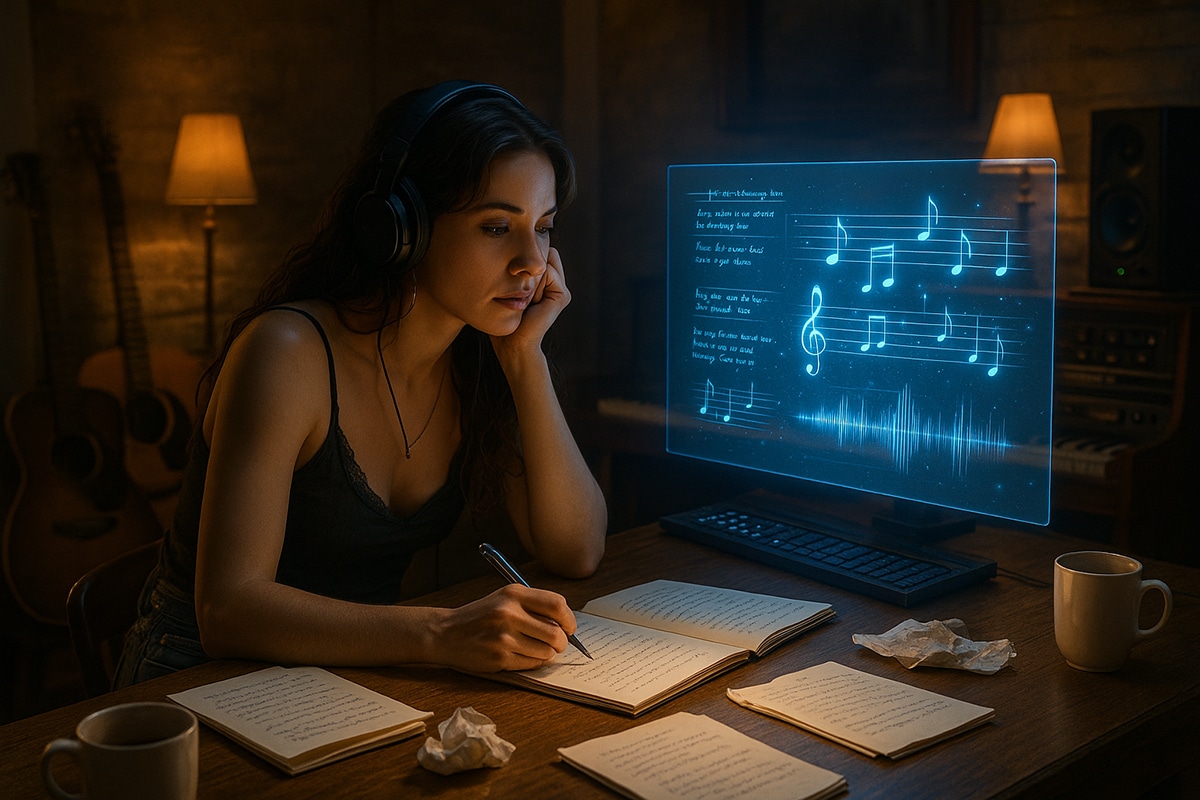
Beating Creative Block with AI: Tools That Empower Songwriters Instead of Replacing Them
Let’s be real for a second—when AI first started creeping into the music world, a lot of songwriters and musicians felt a deep pit in their stomachs. The headlines didn’t help: “AI Can Write a Song in Seconds!” or “Is This the End of Human Creativity?” It was enough to make any artist clutch their notebook a little tighter. For many, the fear was simple and raw: that AI might replace the very soul of songwriting—the messy, emotional, deeply human process of turning life into lyrics and melody.
But here’s the truth that rarely makes it into clickbait headlines: AI isn’t here to replace artists. It’s here to work with them. And when it’s used right, it can be one of the most powerful tools in a songwriter’s toolbox—not as a ghostwriter, but as a creative partner that never sleeps, never judges, and always has a fresh idea ready to riff on. The key is learning how to use AI as a spark, a sounding board, a collaborator that helps you beat creative blocks rather than try to write the song for you.
Every songwriter hits that wall. Maybe you’ve got a killer hook but no verse to match it. Maybe your brain keeps feeding you the same three chords and you’re craving something fresh. Or maybe the blank page just stares back at you in silent defiance. That’s where AI can shine—not by solving everything, but by nudging you forward with new ideas, unexpected turns, and just enough novelty to get your wheels spinning again.
Take tools like Suno or Boomy, for example. These platforms let you guide the AI toward a specific vibe, genre, or mood. You can feed it a rough vocal idea or a few lines of lyrics, and it can generate instrumental arrangements or melodic suggestions that help you hear your work from a different angle. It’s like having a bandmate who never gets tired of jamming, and who isn’t bound by genre conventions or creative ruts.
Then there’s AIVA or Soundraw, which let you sculpt musical pieces based on your emotional intent or storytelling goals. You tell it you want a slow build, a moody bridge, or a bright, energetic chorus—and it gives you a starting point that feels tailored to your vision. You can tweak and rewrite from there, building on what the AI offers without ever feeling like you’ve lost authorship of the song.
Some artists are even turning to ChatGPT or Sudowrite to break through lyrical blocks. Not to write verses for them, but to play with metaphors, brainstorm rhymes, or test how a certain narrative might unfold. It’s like having a supercharged writing partner who can throw out a hundred ideas in the time it takes you to sip your coffee. You’re still the editor, the final voice, the emotional core—but now you’re not alone in the brainstorming phase.
One of the most beautiful parts of using AI like this is that it strips away the pressure to be brilliant on the first try. You can experiment freely, follow strange tangents, and explore musical or lyrical directions you might never have considered. That kind of creative safety net—where judgment is off the table and ideas flow fast—is often where real breakthroughs happen.
And let’s talk about one more powerful effect of working with AI: it builds momentum. When you’re stuck, getting any kind of response—whether it’s a beat that catches your ear or a turn of phrase that feels fresh—can be the jumpstart you need to keep moving. AI doesn’t replace your voice; it reminds you that it’s still there, just waiting for the right invitation.
Of course, not all AI tools are created equal. Some are better at textures and tone, others at structure or form. And it’s true that if you lean too heavily on AI to generate full songs without infusing your own heart into the process, the results can sound hollow. But when you treat AI like a creative partner instead of a crutch, you keep the soul of your music intact—and often discover new sides of it in the process.
The bottom line is this: AI doesn’t have to be a threat to your creativity. In fact, it can be the very thing that helps you rediscover it when it’s hiding. The songwriting process has always evolved—through tape decks, synths, digital audio workstations—and AI is just the next tool on that evolutionary path. It’s not here to write your story. It’s here to help you tell it, in ways you never imagined.
So next time you’re staring at the blinking cursor or strumming the same chord progression for the tenth time, consider inviting a bit of machine magic into the room. You’re still the songwriter. AI just helps turn the lights on.
Subscribe to Our Newsletter
Discover more from Making A Scene!
Subscribe to get the latest posts sent to your email.


