
You Own Your Masters. So Why Can Someone Else Make Your Music Disappear?




Making a Scene Presents – You Own Your Masters. So Why Can Someone Else Make Your Music Disappear?
Listen to the Podcast Discussion
The DistroKid and Universal Music Group dispute exposes a dangerous weakness in the independent music business. Artists fought for the right to own their recordings, but owning the music means surprisingly little when someone else controls access to the audience. It’s time to rethink what artist independence really means.
The Day Your Music Disappears
Imagine waking up on a Tuesday morning, pouring yourself a cup of coffee, and checking your streaming numbers. You have spent the last six months promoting your latest record, playing shows, sending emails, talking to radio stations, and convincing every friend and relative who still answers your calls to give the music a listen. Your songs are finally starting to find an audience. Maybe one has landed on a popular playlist, or perhaps a music blogger has discovered your work and started sending listeners your way. Things are moving in the right direction, which is about as close to a miracle as most independent musicians experience in today’s music business.
Then you discover that your music is gone.
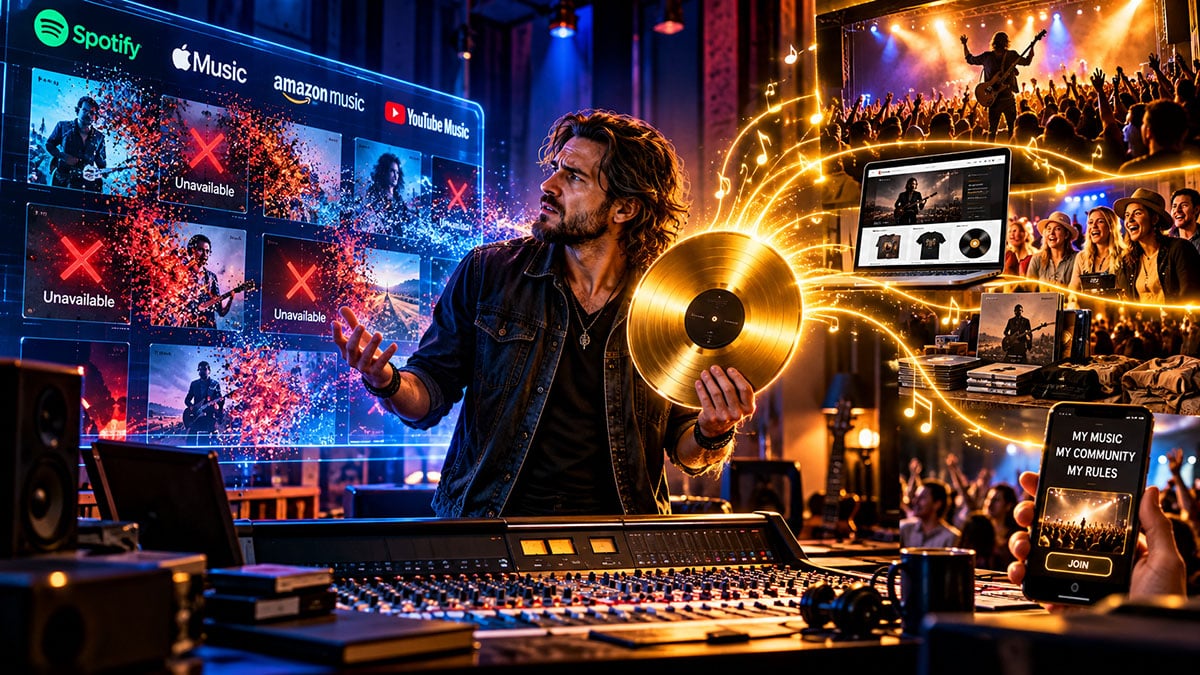
Your recordings have disappeared from streaming services. The links you have been sharing no longer work properly. Fans are sending messages asking what happened, and the promotional campaign you spent months building has suddenly developed a rather serious problem. You didn’t authorize the removal, you haven’t received a useful explanation, and you certainly didn’t wake up that morning planning to spend the next several hours trying to convince a customer service chatbot that you are a human being who owns the music in question.
Here is the part that should make every independent musician uncomfortable. You might own the masters, have paid for the recording sessions, control your publishing, and possess every legal document proving that you have the right to release your songs. None of that necessarily prevents a distributor from removing your recordings from the streaming services that connect you with your listeners.
That is the uncomfortable lesson emerging from the October 2026 dispute between Universal Music Group and DistroKid. The immediate controversy involves copyright infringement allegations, artificial intelligence, distribution responsibilities, and recordings removed from streaming services. But the larger story goes much deeper. It exposes a weakness in the modern independent music business that has been hiding in plain sight for years.
We have spent decades telling artists that they need to own their masters. That advice remains absolutely correct. But ownership of a recording and control over its commercial availability are two very different things, and the digital music business has made it remarkably easy to confuse them.
At Making a Scene, we have long argued that the future of independent music depends on building a sustainable music industry middle class. That means giving working musicians the tools to earn a living from their creative work without surrendering their copyrights, their fan relationships, or their financial future to powerful intermediaries. The DistroKid controversy offers an important reminder that we need to expand that philosophy. It is no longer enough to own the music. Artists must also protect the business infrastructure that allows their music to generate income.
What Actually Happened Between Universal Music Group and DistroKid?
On September 15, 2026, Universal Music Group filed a lawsuit against DistroKid in the United States District Court for the District of Delaware. The complaint, brought by Universal recording companies, alleges that DistroKid distributed recordings that infringed copyrights controlled by Universal. It also criticizes the enormous volume of music entering streaming services, particularly recordings associated with automated production and artificial intelligence.
Universal’s argument is that distributors cannot simply accept enormous quantities of music, collect distribution revenue, and leave copyright owners and streaming platforms to deal with the consequences. According to the lawsuit, DistroKid continued distributing certain recordings even after rights conflicts had been identified on some digital services. Universal is seeking damages and legal remedies that include broader removal of recordings found to infringe its copyrights.
Those are serious allegations, but allegations are not court findings. DistroKid disputes the claims, and the legal responsibility of the company has not been established simply because Universal filed a lawsuit. The distinction matters because the independent music industry already has enough misinformation circulating through social media without turning every legal complaint into a proven fact.
Universal’s complaint also makes an important distinction concerning artificial intelligence. Despite much of the coverage describing the dispute as a battle against AI-generated music, the company says its lawsuit is not directed at AI-generated recordings merely because AI was used and properly disclosed. Its legal claims center on alleged copyright infringement and related conduct. Whether a recording was produced with a guitar, a synthesizer, a computer, or a generative AI system does not automatically establish whether someone else’s copyrights have been violated.
The situation became considerably more interesting when independent musicians began reporting that their recordings had disappeared from streaming services. On October 10, The Verge published accounts from artists who said their music had been removed without adequate notice or explanation. Two days later, Music Business Worldwide reported that DistroKid had confirmed taking down a small number of recordings in response to Universal’s claims.
Amanda Ferri, DistroKid’s vice president of artist services, acknowledged the removals while maintaining that the company strongly disputed the lawsuit’s underlying allegations. DistroKid expressed regret for the disruption and said it was working to minimize the impact on affected artists.
Among the reported cases was musician McGwire, who said six of his songs had been removed. According to the reporting, those recordings included a Stevie Wonder cover that he said had been licensed, a song using a commercially purchased beat, and another recording that he believed had been wrongly identified as containing an unauthorized sample. Other musicians reported similar experiences involving original recordings and previously released albums.
We need to be careful about what those accounts actually establish. Independent reporting had not verified the complete ownership and licensing history of every recording involved, nor had it established that every reported removal resulted directly from Universal’s particular claims. Some musicians may have legitimate disputes over rights documentation, while others may have experienced incorrect identification or inadequate communication. The available evidence does not justify declaring that every affected artist was entirely cleared of wrongdoing.
But that uncertainty is precisely why this story deserves attention.
A musician should have a reasonable opportunity to understand an allegation, provide evidence, and pursue an appropriate dispute process. Copyright owners deserve protection from infringement, but artists who have followed the rules deserve protection from avoidable business damage as well.
The problem is not that distributors sometimes need to remove recordings. The problem is what happens when the removal process is more efficient than the process for determining whether a particular artist actually did something wrong.
Owning the Music Is Not the Same as Controlling the Distribution
For much of the history of recorded music, the relationship between artists and record labels was relatively straightforward, even when the contracts were anything but fair. The label generally financed the recording, owned or controlled the masters, manufactured the records, arranged distribution, and managed much of the marketing. An artist seeking national exposure often had little choice but to enter that system.
Digital technology changed the economics of recording and distribution. Affordable recording equipment allowed musicians to produce professional recordings outside traditional studios, while digital distribution companies created pathways into major streaming services without requiring conventional label contracts.
This was an enormous victory for independent musicians. An artist could record an album in a home studio, keep ownership of the master recordings, pay a distributor to deliver the music, and potentially reach listeners around the world. A process that once demanded warehouses, manufacturing plants, trucks, retail relationships, and substantial investment could now begin with an internet connection and a modest distribution fee.
The revolution was real, but it did not eliminate gatekeepers. It changed where they were located.
Today, an independent musician may own the recording while a distributor controls its delivery into the streaming economy. The streaming service determines whether the recording is available through its platform, applies its own content policies, and controls much of the audience experience. Recommendation systems influence discovery, while playlists and search functions shape which recordings listeners encounter.
The artist owns the product, but the companies operating the distribution network control important parts of the route to the customer.
Think about a small business that manufactures a beautiful product and sells it exclusively through a giant retailer. The manufacturer owns the design, pays for production, and maintains ownership of its inventory. But if the retailer suddenly removes the product from its shelves, that ownership does not guarantee continued sales.
The manufacturer still owns the product. What it has lost is access to the customer.
That is what makes digital distribution control such an important issue. Copyright ownership establishes who has legal rights in a creative work, but it does not automatically guarantee placement on Spotify, Apple Music, YouTube Music, or another commercial service. Those relationships operate through contracts, delivery systems, platform policies, and legal obligations.
A distributor usually does not acquire ownership of an independent artist’s master simply by delivering it to streaming services. However, distribution agreements commonly give the company authority to manage deliveries, respond to disputes, and remove recordings under specified circumstances.
DistroKid’s distribution agreement, for example, includes provisions allowing removal when legal claims arise concerning particular recordings. Similar contractual powers can exist elsewhere in the distribution industry, although the exact language and procedures differ between companies.
That distinction should change how musicians evaluate distribution services. A low annual price and access to a large number of streaming platforms are useful, but they do not explain what will happen when something goes wrong. The real test of a business partner often comes when the relationship becomes difficult, not when everything is working perfectly.
An independent artist should understand whether a distributor is merely delivering recordings or effectively becoming the administrator of essential parts of the artist’s music business.
Why Copyright Protection Is Necessary, Even When the System Gets It Wrong
It would be easy to turn this controversy into a simple story about a large record company attacking independent musicians. That would make for an entertaining headline, but it would ignore some very real problems within digital music distribution.
Copyright infringement is not an imaginary threat invented by major labels to make independent artists miserable. Unauthorized recordings, stolen masters, misleading artist profiles, uncleared samples, fraudulent uploads, and recordings designed to impersonate legitimate musicians can cause genuine financial harm. Independent musicians can become victims of those practices just as easily as major-label artists.
Imagine spending thousands of dollars recording an album, only to discover that someone has uploaded your music through another distributor and is collecting income under a different account. You would reasonably expect the platforms and distributors involved to respond. If they refused to investigate or remove the unauthorized material, you would probably have a strong opinion about how seriously they take artist rights.
Universal’s broader concern about distributors accepting infringing content therefore cannot simply be dismissed. Music distributors have responsibilities, and copyright owners need effective mechanisms for protecting their recordings. A system that allows anyone to upload stolen music and collect revenue is not an independent music paradise. It is a very efficient theft operation.
The challenge is designing enforcement procedures that protect legitimate copyright owners without treating every accused artist as guilty before the facts have been examined.
That challenge has become more difficult as the volume of digital music increases. Automated systems can analyze recordings for possible matches, suspicious metadata, duplicated audio, or patterns associated with fraudulent activity. These tools can help companies identify problems at a scale no human review team could reasonably handle alone.
Unfortunately, identifying a possible match is not the same as proving infringement.
Two recordings may share musical elements for lawful reasons. A musician might have licensed a nonexclusive beat that appears in hundreds of other releases. A cover recording might be properly licensed for the intended use. A song might include a sample for which the artist obtained permission, or a system might identify a similarity that does not actually establish copying.
Even the existence of a license does not automatically settle every question. A beat marketplace purchase might grant limited rights rather than unrestricted commercial use. A cover-song license may address the underlying composition without authorizing the use of someone else’s master recording. Different platforms and distribution channels can require different permissions.
These details are exactly why meaningful human review matters. An automated system can identify a potential conflict, but resolving that conflict may require examining contracts, release dates, recording sessions, composition rights, and the scope of the licenses involved.
Artists should not expect every claim to disappear simply because they insist that their music is original. At the same time, distributors should not treat an automated allegation as a substitute for a fair investigation when the facts are genuinely disputed.
The ideal system would combine effective detection with documented explanations, opportunities to supply evidence where legally possible, and clear routes to appeal. That approach would protect both original copyright owners and artists whose recordings have been incorrectly challenged.
For an industry that depends on creative people trusting digital intermediaries with their livelihoods, that seems like a reasonable standard.
The Real Business Damage Goes Far Beyond Streaming Royalties
When musicians hear that a song has disappeared from a streaming service, the first concern is usually the loss of royalty income. That makes sense, particularly for artists who have spent years building a catalog that generates recurring revenue.
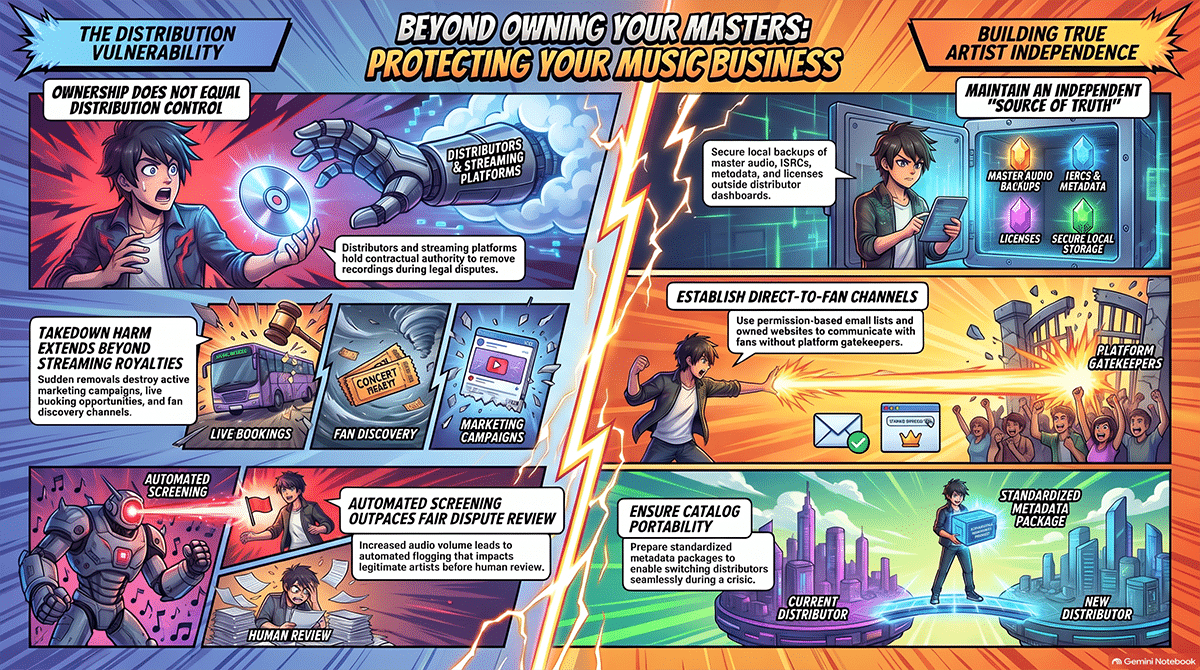
However, the damage caused by an unexpected removal can reach much further than the money associated with the streams that never happen.
Consider a working independent artist preparing for a regional tour. The musician has spent several weeks promoting a new single, arranging podcast interviews, contacting local radio stations, and purchasing online advertisements that direct listeners to the song. The release is intended to introduce the artist to new audiences before the live performances begin.
Then the recording disappears.
An advertisement might continue running even though the destination no longer works. A radio host preparing an interview may discover that the music is unavailable. A potential fan who clicks a link might simply move on to another artist rather than investigate the mystery. Every promotional dollar already spent becomes less effective because the product at the center of the campaign is missing.
Now consider the possible effect on booking. A venue owner or talent buyer may use streaming links as a quick way to evaluate an unfamiliar act. A licensing supervisor might review recordings when considering music for a film, commercial, or television project. A journalist could be preparing a review and discover that the album is unavailable.
None of these situations guarantees a lost sale or opportunity. But they demonstrate how a distribution problem can interrupt business activity that extends well beyond streaming.
This becomes especially important when we recognize how independent musicians actually earn a living. Most working artists are not supporting themselves through one enormous royalty payment. Their income is assembled from performances, merchandise, direct music sales, publishing, licensing, session work, teaching, memberships, and other related activities.
Streaming often functions as the discovery system that introduces listeners to those other opportunities.
A fan hears a song, visits the artist’s website, buys a concert ticket, and eventually purchases merchandise. Another listener discovers the artist through a playlist and becomes a paying supporter. A music supervisor finds the right recording for a project and begins a licensing conversation.
These transactions may originate with a stream, but their potential value extends far beyond that stream.
When a recording disappears, the artist can lose a point of entry into a much larger business relationship. That is why the effects of a takedown should be evaluated as a disruption to the artist’s commercial operation, not merely as a temporary reduction in streaming statistics.
There is also a less obvious cost: the time required to resolve the problem.
For a major recording company, a copyright dispute might be handled by specialized employees and legal representatives. For an independent musician, the person investigating the removal is often the same person who wrote the song, played the instruments, booked the shows, packed the merchandise, and repaired the van.
Every hour spent chasing a customer service response is an hour that cannot be spent creating music, reaching fans, or generating income.
For an industry that constantly celebrates the entrepreneurial spirit of independent artists, we should be asking whether the infrastructure serving those entrepreneurs actually respects the value of their time.
The AI Explosion Is Making a Bad Problem More Complicated
Artificial intelligence has added another dimension to the distribution debate, although it is important not to confuse the use of AI with copyright infringement.
AI tools can help independent artists clean up recordings, edit audio, organize sessions, generate production ideas, prepare marketing materials, or analyze business information. Those uses may improve efficiency and lower operating costs without raising the same rights questions as systems that reproduce protected recordings or imitate an identifiable performer’s voice without permission.
Generative music tools also introduce legitimate questions about training materials, authorization, output similarities, artist identity, and the ownership of the resulting recordings. Those questions deserve serious treatment rather than the familiar internet approach of declaring every technological development either the salvation or destruction of civilization.
The challenge for distributors is that modern tools can make it easier to produce and submit enormous numbers of recordings. Some uploads may represent legitimate creative work, while others may be designed to exploit search systems, imitate popular performers, manipulate platform recommendations, or collect revenue from misleading content.
A company processing huge catalogs cannot reasonably expect employees to listen carefully to every recording before delivery. Automated screening becomes part of the infrastructure, but automated screening introduces another risk when its findings are used to make decisions affecting legitimate artists.
An AI detection system may classify a recording as potentially synthetic without determining whether it infringes a copyright. An audio-matching system may find a similarity without understanding the licensing relationship behind it. A suspicious release pattern may justify closer inspection without proving that the recordings themselves are unlawful.
Those distinctions matter because the consequences of a false identification can be significant.
The industry therefore needs to separate several questions that are too often mixed together. Was artificial intelligence used in creating the recording? Does the artist have the rights necessary to distribute it? Does the recording contain unauthorized protected material? Is someone impersonating another artist? Is the release connected to fraudulent streaming activity?
The answers may overlap, but they are not interchangeable.
A human musician using an AI mastering tool is not the same as someone uploading another artist’s recordings under a false identity. A fully synthetic composition made with properly authorized tools does not automatically infringe a specific existing song. A traditional human recording may contain an uncleared sample and therefore present a genuine copyright problem.
Treating all of these situations as one general category of suspicious music would make enforcement less accurate, not more effective.
This is where better recording documentation, content provenance, and responsible AI-assisted analysis can make a practical difference. If an artist can establish when a recording was created, who contributed to it, what tools were used, and which third-party materials were licensed, that information can help resolve legitimate questions more efficiently.
However, provenance tools are not magical certificates of legal ownership. A digital fingerprint can help identify a recording, and an authenticated production record can support a history of creation, but neither automatically establishes that every sample or composition right has been cleared.
AI should help musicians build better records and help distributors identify issues that deserve investigation. It should not become an unquestionable judge that can erase someone’s livelihood with no meaningful explanation.
The companies building automated enforcement systems need to remember that improving detection is only half the challenge. Improving the accuracy, transparency, and fairness of the decisions that follow is just as important.
Your Music Needs a Source of Truth That You Control
One of the most important lessons from this controversy is that independent musicians need to stop treating their distributor’s dashboard as the permanent home of their music business.
Most artists begin their digital distribution journey by creating an account, uploading an audio file, entering the song title and artist name, and filling in whatever information the distributor requests. Once the release goes live, the information sits comfortably inside the distributor’s system, and the musician turns attention toward promotion.
This arrangement works beautifully until something changes. The artist might decide to switch distributors, discover an error in the recording credits, need documentation for a licensing agreement, or find that a recording has been challenged. Suddenly, information that seemed like routine paperwork becomes critically important.
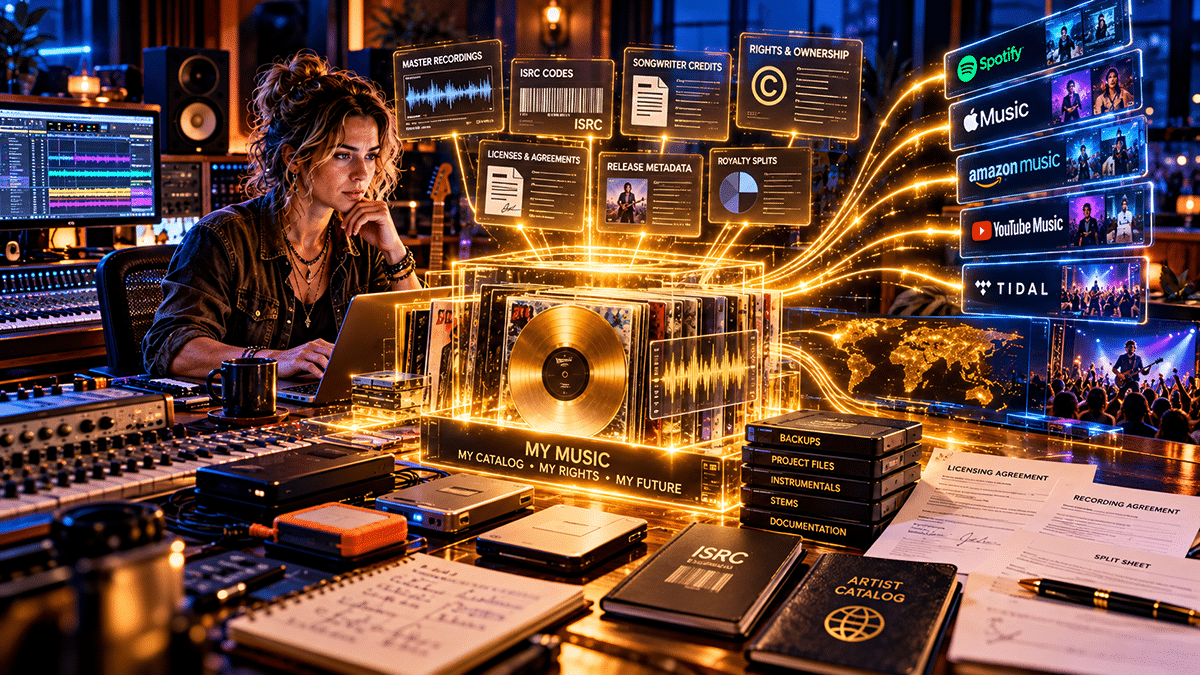
Every recording should have an authoritative business record that exists independently of any distribution platform. We can think of this as the recording’s Source of Truth, a permanent collection of information that establishes its identity, history, ownership, contributors, licenses, and commercial relationships.
At the center of that record is the actual master recording. The artist should preserve the approved audio file in its original release format, along with appropriate production files, instrumental versions, and other assets needed for future commercial uses. These files should be backed up in separate locations under the artist’s control, rather than existing exclusively inside an online account.
But protecting the audio is only the beginning.
Every commercially released recording should also have its International Standard Recording Code, commonly called an ISRC. This identifier helps businesses recognize a specific recording as it moves through the music economy. The US ISRC Agency explains that an ISRC generally remains attached to the same recording even when its ownership or distribution arrangements change.
The ISRC is not proof of copyright ownership, and obtaining one does not register a recording with the government. It is an identifier, not a deed. Nevertheless, it becomes extremely valuable when artists need to track recordings, reconcile royalty information, and move their catalogs between distributors.
Artists also need to preserve release identifiers such as UPC or EAN codes, complete track and album metadata, songwriter and publisher information, performer credits, release dates, copyright notices, and the contractual arrangements governing ownership and royalties. The distinction between the underlying musical composition and the particular master recording should be documented, because owning one does not automatically mean owning the other.
The documentation becomes especially important when a recording includes material created by someone outside the artist’s immediate organization. A producer might have supplied a beat under a nonexclusive license. A session musician might have performed under a written agreement. A song might contain an authorized sample, or the artist might have obtained permission to use a particular recording in a remix.
Keeping the relevant agreements together with the recording’s business record can make the difference between resolving a misunderstanding quickly and spending weeks searching old emails for a document nobody remembers saving.
For independent musicians, this is not simply an exercise in organizing files. It is the foundation of a portable music business.
When an artist controls the complete record of a release, the distributor becomes a service provider rather than the only practical keeper of essential information. The artist can evaluate competing services, move between providers when permitted, pursue licensing opportunities, and answer questions about ownership without reconstructing years of history from scattered accounts.
That is a much stronger position than having to ask a company for permission to retrieve the information necessary to run your own business.
Can You Really Change Distributors Without Losing Everything?
One encouraging aspect of modern digital distribution is that artists can often move recordings between providers while retaining their underlying copyrights and much of the information associated with the releases.
Unfortunately, switching distributors is not quite as simple as transferring money between bank accounts. Streaming services have their own systems for recognizing recordings, matching metadata, maintaining playlists, and associating listening histories with particular releases.
DistroKid’s own help documentation explains that artists moving from another distributor should preserve the same audio files, song titles, album information, and ISRCs wherever possible. These details help streaming services recognize that a newly delivered recording is the same one that previously appeared through another distributor.
When everything matches correctly, a platform such as Spotify may connect the new delivery with the existing recording history. That can help preserve accumulated play counts and playlist relationships. However, DistroKid explicitly states that it cannot guarantee these results because the final decisions belong to the streaming services.
That qualification deserves attention.
Owning the master and possessing its identifying information can make a catalog more portable, but neither gives the artist complete control over how a streaming platform handles a distributor change. Some information may transfer successfully, while other platform-specific activity may be interrupted or lost. Even when a migration works as expected, it may require coordination between the old distributor, the new distributor, and the streaming platforms receiving the recordings.
A sensible migration therefore requires more preparation than canceling one subscription and opening another.
Before making a change, an artist should review the existing distribution agreement, confirm ownership and licensing rights, preserve all release identifiers, and obtain complete records of earnings and royalty splits. The new distributor should be able to explain how it handles existing ISRCs, metadata matching, overlapping releases, and any restrictions concerning recordings that are currently subject to legal claims.
A planned transfer may allow the new distributor to deliver matching recordings before the previous versions are removed. That overlap can improve the chances of successful track matching where a platform permits it, but the exact sequence needs to follow the policies of the services involved.
An artist dealing with a disputed copyright claim must be particularly careful. Uploading the same contested recording through another distributor without resolving the underlying problem could create additional violations or make the dispute more complicated. Moving the business relationship is not a substitute for establishing the right to distribute the recording.
The larger lesson is that portability should be treated as an important feature of any distribution agreement.
An artist who can leave a distributor without surrendering ownership, authoritative catalog records, or access to essential financial information has considerably more bargaining power than an artist whose entire operation depends on remaining with one provider.
That does not mean every independent musician needs to change distributors. It means every independent musician should understand what changing distributors would involve before a crisis makes the decision unavoidable.
What Happens When a Recording Is Removed?
The moment an artist discovers that a recording has disappeared, the natural temptation is to become angry, post about the situation on social media, and start searching for another distributor. Considering the frustration involved, that reaction is understandable.
Unfortunately, it may not be the most effective response.
The first business priority is establishing what actually happened. A recording can become unavailable for several different reasons, including a copyright complaint, a metadata problem, an expired distribution arrangement, a territory restriction, a suspected fraud violation, or an administrative mistake. Each situation can involve different procedures.
Spotify’s official artist support guidance states that musicians whose recordings have been unexpectedly removed should contact their label or distributor for information. Spotify generally relies on its delivery partners to manage the recordings they submit, which illustrates why the distributor relationship becomes so important during a dispute.
If the removal involves copyright, the artist needs to learn precisely what material has been challenged and which rights are allegedly involved.
An allegation concerning an unauthorized sound recording is different from a claim involving the underlying composition. A question about a sample license is different from a complaint alleging that an entire master was uploaded without authorization. The distinction determines which documents and permissions may be relevant.
DistroKid provides a support process for artists who believe their recordings were removed because of a mistake or misidentification. Its published guidance specifically discusses documentation involving licensed beats, authorized samples, cover recordings, and original project files.
That means an artist who has preserved the relevant paperwork may be able to provide meaningful evidence rather than relying exclusively on a general statement that the music belongs to them.
There is also a formal legal process under the Digital Millennium Copyright Act, commonly called the DMCA. When a qualifying takedown notice leads to removal, a person who believes the action resulted from a mistake or misidentification may be able to submit a compliant counter-notification.
According to the United States Copyright Office, the standard counter-notification process generally involves a period of 10 to 14 business days before material may be restored, unless the complaining party takes specified legal action. However, that process applies to particular statutory circumstances and should not be confused with a guaranteed solution to every distributor or platform removal.
A counter-notification is a legal statement with consequences, including consent to applicable court jurisdiction. Artists should understand those consequences and seek qualified legal advice when the dispute involves substantial rights, unclear licenses, or the possibility of litigation.
Even when an artist successfully resolves a claim, restoration across every streaming service is not necessarily automatic. Individual platforms may have additional contractual rules or technical requirements.
This is another reason accurate documentation matters. The faster an artist can identify the recording, locate the license, provide its history, and communicate with the appropriate people, the better prepared the artist will be to address a potentially expensive interruption.
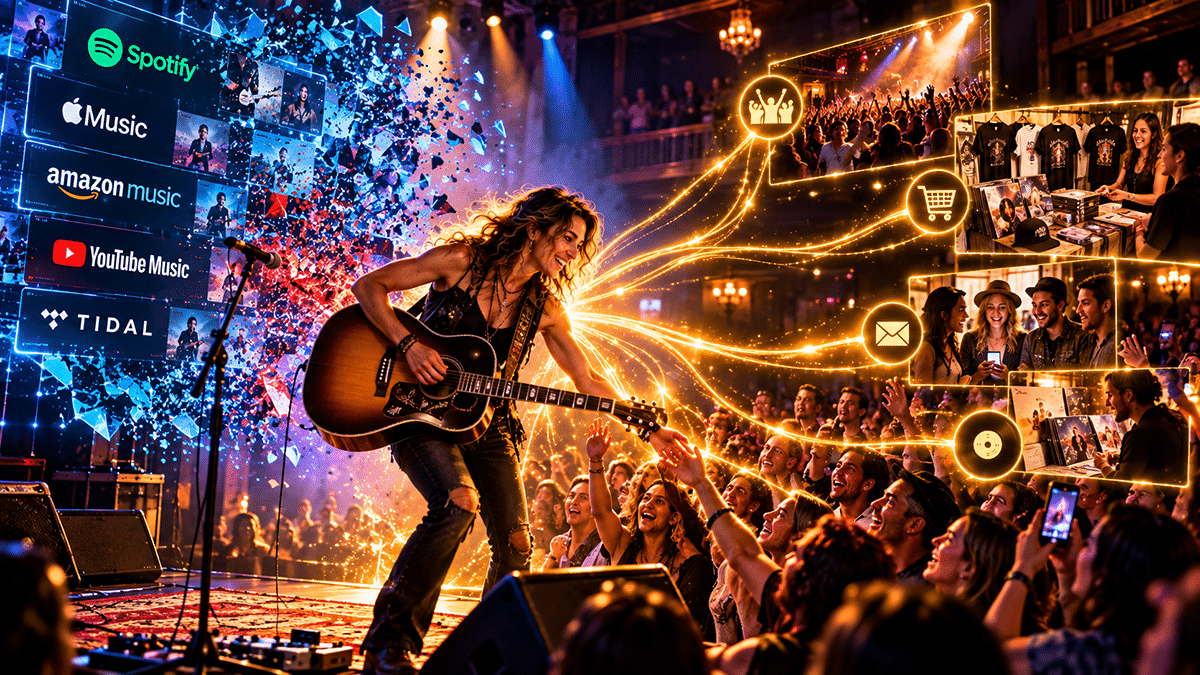
Your Fan Relationships Are the Best Insurance Against Platform Problems
There is another kind of independence that rarely receives enough attention in conversations about music ownership.
It is the ability to contact the people who actually care about your music.
Consider two independent musicians with similar audiences. Both own their masters, distribute their songs to the major streaming services, and perform regularly. The first musician relies almost entirely on streaming profiles and social media accounts to communicate with listeners. The second also maintains an artist-controlled website, a permission-based email list, and a system for keeping track of meaningful fan interactions.
Now imagine that both musicians experience a temporary streaming disruption.
The first musician must depend on social media posts, algorithms, and the hope that followers happen to see an explanation. Some fans may not even realize that the music has disappeared. Others may assume the artist removed it intentionally or stopped releasing music.
The second musician has another option. They can contact supporters who have agreed to receive updates, explain the situation, and direct interested listeners toward authorized ways to support the artist. If recordings remain available through lawful direct-sales channels, the artist may be able to promote those options. If the recordings are under a genuine rights dispute, the musician can avoid further unauthorized distribution while continuing to sell tickets, offer unrelated merchandise, or maintain memberships that do not involve the disputed material.
This difference can have enormous consequences for a working musician.
A streaming follower is valuable, but that relationship normally exists within the streaming company’s environment. The artist may know that thousands of people follow a profile without having permission or a practical way to contact those people individually.
An email subscriber who has knowingly agreed to receive communications from the musician represents a different kind of relationship. The artist has a more direct connection that can continue even when an outside platform changes its rules, limits visibility, or removes particular content.
This is why Making a Scene continues to emphasize direct-to-fan commerce.
Streaming services should be used for discovery, and social media should help artists introduce themselves to new audiences. But the artist’s own website, consent-based fan database, and direct communication channels should become the foundation of a lasting business.
A fan who attends a show, purchases merchandise, buys a recording, or joins a membership is doing more than generating a single transaction. With appropriate permission, those interactions can help the artist understand what supporters value and build an ongoing relationship.
That information makes it possible to promote future performances more effectively, recognize loyal supporters, offer relevant products, and maintain an audience that does not disappear when an algorithm changes.
Of course, direct relationships still involve outside companies. Websites need hosting, payment processors can suspend accounts, and email services have their own terms and policies. The goal is not to pretend that an artist can operate a completely isolated digital economy.
The goal is to prevent any single company from controlling every path between the musician and the audience.
An artist who maintains independent backups, portable data, multiple communication channels, and lawful ways to conduct business is in a much stronger position than one who depends on a single platform for everything.
The Next Generation of Artist Technology Should Protect the Business, Not Just Promote the Music
The DistroKid controversy also reveals an opportunity for companies developing technology for independent musicians.
For years, much of the music technology industry has focused on helping artists upload more recordings, schedule more social media posts, generate more promotional content, and analyze more streaming statistics. Those tools can certainly be useful, but they tend to concentrate on growth.
What happens when the business needs protection?
A truly useful artist management ecosystem should help musicians maintain authoritative catalog information, preserve ownership records, track licensing permissions, document release histories, and understand the relationships between their recordings and the services distributing them.
It should also connect that information with the commercial side of the artist’s career.
Imagine a system where an independent musician finishes mixing an album and begins preparing it for release. The approved masters are recorded in a catalog database, along with the songs’ creators, contributors, identifiers, rights information, and relevant agreements.
When the musician selects a distributor, the system prepares the appropriate information for that company’s requirements. It also records which service handles the distribution, the date of delivery, the original release details, and the destinations where the music becomes available.
If the artist later decides to change distributors, the system can help prepare an export package containing the catalog information required for migration. It could identify missing identifiers, inconsistent credits, or licenses that need review before the transfer begins.
Now imagine that a recording is challenged.
Instead of spending several days searching old folders, the artist could retrieve the documented recording history, relevant licenses, approved audio files, and contact information for the distributor. An AI assistant could help organize the evidence, summarize the nature of the allegation, and prepare a draft response for the artist to review.
That would not mean AI should decide who owns the recording or issue legal conclusions. It would mean using technology to reduce the administrative work required to address a complicated business problem.
The system might also monitor the availability of public release links and alert an artist when a previously accessible recording becomes unavailable. Such monitoring could identify a possible problem quickly, although it would still need confirmation because temporary platform errors and geographic restrictions can produce misleading results.
This represents an important shift in how we think about music business software.
Artists do not simply need tools that help them upload music. They need systems that help them maintain control over the business built around that music.
Where the Making a Scene Artist Ecosystem Fits Into This Future
The Making a Scene Artist Ecosystem is being developed around the idea that independent musicians should control their creative assets, business information, and relationships with fans. The distributor controversy reinforces why that philosophy matters and suggests several areas where the system can become even more useful.
The Artist Source of Truth concept provides a natural foundation. Recording identity, ownership, rights documentation, metadata, and release history belong in an authoritative artist-controlled record rather than being scattered across distributor accounts.
The next logical development is a more formal distribution resilience capability built around that Source of Truth.
Such a capability could maintain a record of every commercial release, document its distribution relationships, and prepare portable catalog packages for authorized migration between services. It could preserve the business information necessary to support a transfer without claiming to control the policies or technical decisions of Spotify, Apple Music, or other outside platforms.
This is particularly important because the Making a Scene ecosystem should not attempt to become another company that makes artists dependent on a new gatekeeper. The purpose of the system is to help musicians use outside services intelligently while retaining their own authoritative records.
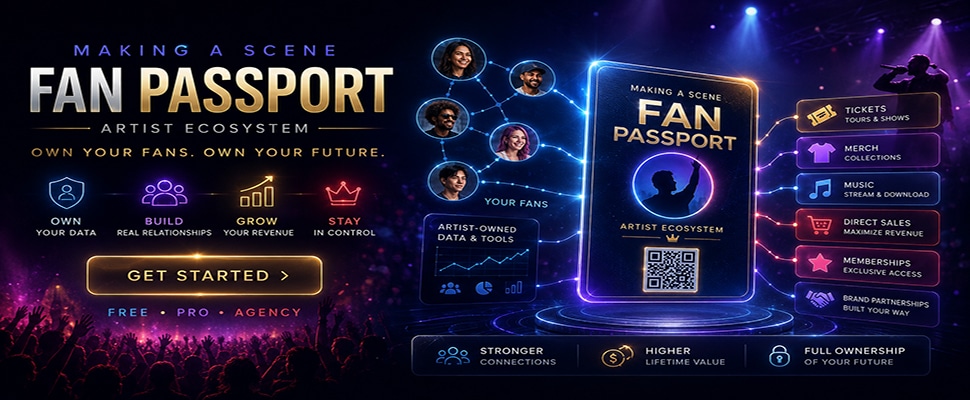
The Fan Passport concept addresses the other half of the problem.
When a musician has built direct, consent-based relationships with supporters through concerts, merchandise purchases, memberships, and other genuine interactions, a temporary problem with a streaming release becomes easier to manage.
Instead of treating a platform follower as the final destination, the artist can invite interested listeners into a continuing relationship. A fan who discovers a song through streaming might eventually join the artist’s email community, attend a performance, purchase exclusive merchandise, or support another release.
That relationship has business value independent of the original streaming service.
The Artist Ecosystem’s planned or developing integrations with music commerce, catalog intelligence, AI-assisted workflows, and direct fan engagement could bring these activities together into a more coherent business system. However, proposed distribution-monitoring, dispute-assistance, and catalog-migration features should be treated as development opportunities unless their operation has been separately verified in the live product.
There is even a responsible role for decentralized technology.
Web3 has often been marketed to musicians as though placing something on a blockchain magically solves every problem in the music industry. That promise has never been especially convincing. A blockchain entry cannot force a streaming service to restore a recording, resolve a complicated copyright dispute, or prove that the person creating the entry actually owns the music.
Nevertheless, carefully designed cryptographic records could help establish the integrity and history of certain documents. A system might record verifiable hashes of important agreements, identify the version of a master associated with a release, or create an independently checkable history of authorized changes to catalog metadata.
Those capabilities could support documentation and audits without requiring artists to publish private contracts or valuable audio files on a public blockchain.
The important principle is that technology should serve the artist’s business requirements rather than forcing the artist’s business to revolve around the technology.
A musician should not need a degree in computer science, an understanding of blockchain infrastructure, or a personal legal department to maintain reliable ownership records and prepare a professional distribution package.
The complexity belongs inside the software. The control belongs with the artist.
Distribution Companies Need to Compete on Trust, Not Just Price
The independent distribution business has become extremely competitive, and that competition has brought real benefits to musicians. Lower costs, broader access to streaming platforms, faster release tools, and automated royalty management have made professional distribution available to artists who would once have struggled to get their records into a local music store.
Those improvements deserve recognition.
But the next stage of competition should involve more than pricing plans, delivery destinations, and promises about how quickly a song can reach Spotify.
Distributors should be judged by how clearly they explain their contracts, how effectively they communicate with artists, and how fairly they handle disputes.
A musician evaluating a distributor should be able to understand what kinds of complaints can trigger a removal, whether advance notice is normally provided, what documentation may be requested, and how a disputed decision can be reviewed. The company should explain its process for returning or exporting useful catalog information and how outstanding royalties are handled if the business relationship ends.
Some circumstances will require immediate action, especially when credible infringement, fraud, legal orders, or other serious risks are involved. A distributor cannot promise that every challenged recording will remain available while a dispute continues. However, urgent enforcement does not eliminate the need for meaningful communication and appropriate opportunities to correct mistakes.
There is also a strong argument for better industry-wide standards concerning catalog portability.
Recording identifiers, contributor information, licensing records, and release metadata should not become practically inaccessible merely because an artist changes service providers. Musicians who have invested years building their catalogs should be able to retain their business records in usable formats.
Standardized export procedures would benefit artists, distributors, and streaming platforms by reducing mismatched metadata and unnecessary administrative work.
Better transparency could also become a competitive advantage.
A distributor willing to publish clear policies, provide meaningful human escalation for serious disputes, and demonstrate reliable catalog migration procedures would have something valuable to offer beyond inexpensive uploads.
Independent musicians are running businesses. They should expect business-grade support from the companies handling essential parts of their commercial operations.

Protecting the Music Industry Middle Class
The concept of a music industry middle class is not built around the dream that every musician will become a superstar. It is built around something both more modest and more important: the possibility that skilled, hardworking musicians can build sustainable careers through ownership, professional management, and genuine relationships with their audiences.
Some artists may earn part of their living from streaming, while others depend more heavily on touring, teaching, licensing, merchandise, direct recording sales, or production work. Most will combine several sources of income as their careers evolve.
The common requirement is a business structure that allows them to keep earning as their music finds new listeners and opportunities.
That structure becomes fragile when one intermediary controls an essential connection and the artist has no practical backup plan.
Major recording companies generally have legal departments, distribution relationships, accounting systems, and established procedures for dealing with rights disputes. An independent musician earning enough to support a household from several connected music activities rarely has comparable resources.
That imbalance should influence how technology companies, distributors, and industry organizations approach artist protection.
An independent musician should not need to spend thousands of dollars on legal and administrative services merely to understand why an original recording has become unavailable. The information needed to investigate a claim should be reasonably accessible, and legitimate appeal procedures should not depend entirely on an artist’s ability to attract public attention.
This does not require abandoning copyright enforcement. In fact, a more transparent system could make enforcement stronger by helping legitimate copyright owners identify infringement while reducing unnecessary disputes involving properly licensed recordings.
Music industry organizations, independent labels, distributors, and artist advocates have an opportunity to develop more consistent practices concerning notice, evidence, catalog records, dispute resolution, and commercial portability.
The difficulty is that these improvements may not appear as exciting as the next artificial intelligence music generator or a new social media marketing trick.
They are nevertheless essential to building a sustainable independent music economy.
Professional infrastructure is rarely glamorous. Neither are accounting records, insurance policies, business contracts, or properly documented royalty splits. But these are the things that allow a creative business to survive difficult periods.
An artist who owns the masters but cannot demonstrate the necessary rights, retrieve essential release information, or reach paying supporters independently remains vulnerable.
An artist who has those capabilities is building a business with much stronger foundations.
The Future of Artist Independence Is About Control That Can Survive a Crisis
The dispute between Universal Music Group and DistroKid will continue through the legal process, and the eventual outcome may influence how distributors evaluate rights claims, manage large catalogs, and respond to alleged infringement.
The case may also contribute to broader discussions about the use of artificial intelligence, automated content screening, and the responsibilities of companies that deliver recordings into the streaming economy.
Those developments deserve continued reporting. But independent musicians do not need to wait for a court ruling to recognize the larger business issue.
The modern music industry has made ownership of master recordings more attainable than at almost any previous point in its history. Recording technology is accessible, distribution services are widely available, and musicians can develop audiences without first obtaining permission from a major record company.
At the same time, the infrastructure surrounding those recordings remains concentrated among companies that operate according to their own contracts, commercial priorities, and legal obligations.
That creates a difficult but manageable reality.
Artists should absolutely continue to own their masters whenever their business arrangements allow it. They should protect their publishing rights, understand their licensing agreements, and make informed decisions about the companies they hire.
But those efforts must now extend to the business systems that connect their creative work with the outside world.
An artist-controlled catalog should be portable. Ownership information should be documented. Financial and release records should be preserved. Fan relationships should be built through permission-based channels that the artist can maintain independently. Distribution partners should be evaluated for reliability, transparency, and fair procedures, not simply their advertising claims.
AI and other emerging technologies should make these responsibilities easier to manage rather than creating additional layers of dependence.
Most importantly, musicians need to begin thinking of distribution as one component of their business instead of allowing it to become the foundation on which everything else depends.
Streaming platforms are valuable places for fans to discover music, and distributors provide an essential service by connecting recordings with those platforms. Neither should be expected to guarantee perpetual access or replace the artist’s responsibility for maintaining an independent commercial operation.
That responsibility belongs to the artist, supported by tools and business partners that respect the artist’s long-term interests.
The DistroKid controversy is not proof that digital distribution has failed, and it is certainly not evidence that independent musicians should abandon streaming. What it demonstrates is that copyright ownership, commercial access, and business independence are related but separate questions.
If we want to create a genuine music industry middle class, we need to address all three.
Owning your masters gives you the legal foundation for controlling the recordings you create. Maintaining portable business records helps protect your ability to manage and monetize those recordings over time. Building direct relationships with fans gives you a way to continue earning even when an outside company’s decision disrupts one part of your business.
That combination is far more powerful than copyright ownership alone, because it recognizes that a sustainable music career is not merely a collection of songs. It is a collection of valuable creative assets, trusted relationships, reliable information, and commercial opportunities that must work together.
The independent music revolution gave musicians the opportunity to own their recordings. The next stage should make sure they have the practical tools to protect the businesses those recordings make possible.
And perhaps the greatest measure of progress will come when an independent musician can change a distributor, challenge an incorrect claim, or survive a platform disruption without feeling as though years of work might disappear along with a streaming link.
That is the kind of independence worth building, and it is the kind of music industry Making a Scene believes working artists deserve.
 |  Spotify |  Deezer |  Breaker |
 Pocket Cast |  Radio Public |  Stitcher |  TuneIn |
 IHeart Radio |  Mixcloud |  PlayerFM |  Amazon |
 Jiosaavn |  Gaana |  Vurbl |  Audius |
 Reason.Fm | |||
Find our Podcasts on these outlets
Subscribe to Our Newsletter
Discover more from Making A Scene!
Subscribe to get the latest posts sent to your email.


