Facebook Just Gave Independent Musicians the Best Argument Yet for Owning Their Fan Relationships




Making a Scene Presents – Facebook Just Gave Independent Musicians the Best Argument Yet for Owning Their Fan Relationships
Listen to the Podcast Discussion
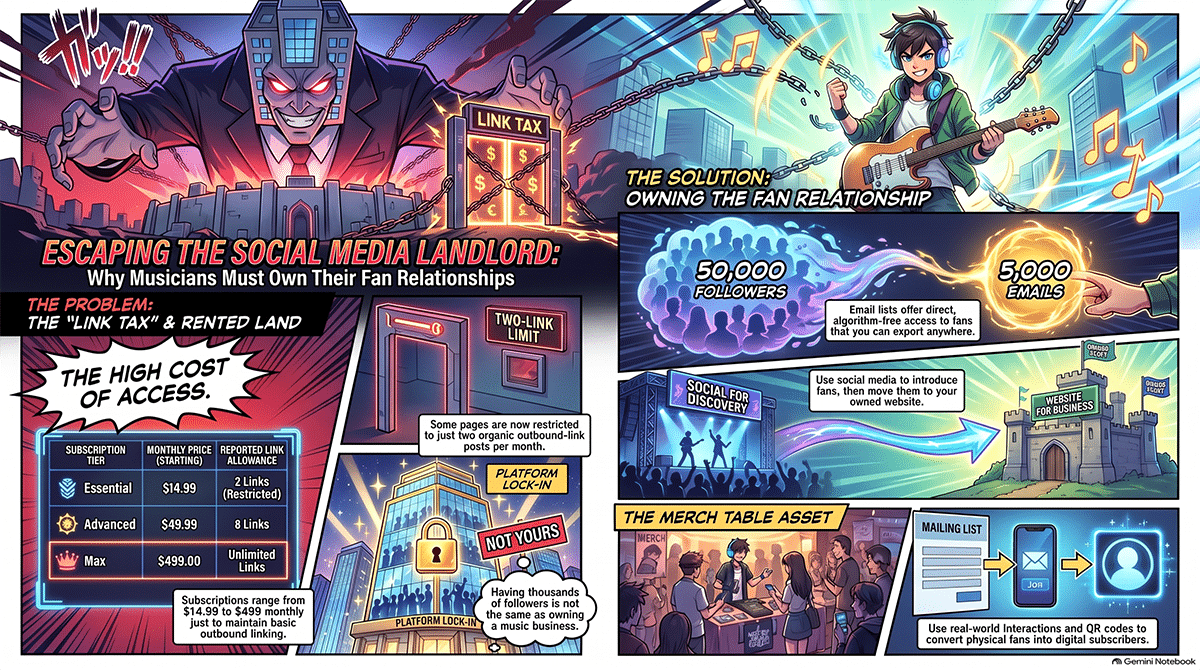
Meta’s new subscription plans and reported restrictions on outbound links expose a problem independent musicians have been living with for years. Artists have spent decades building audiences on social media, only to discover that having thousands of followers and having control of a music business are two very different things.
The Landlord Has Decided to Charge for the Front Door
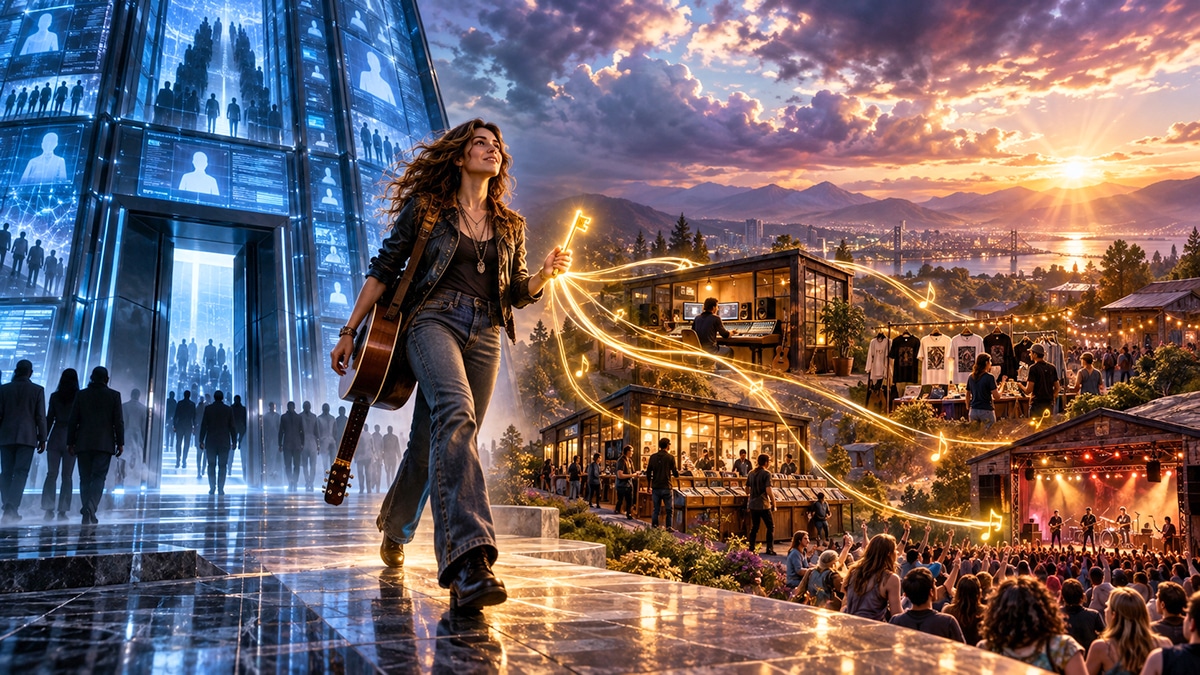
Imagine spending fifteen years building a music venue. You book the bands, paint the walls, install the sound system, promote the shows, and convince thousands of people that this is where they should come to hear great music. You develop relationships with regular customers who return every weekend, bring their friends, buy merchandise, and become part of the community surrounding the music. Eventually, you have built a thriving little business around something you created, and although the building belongs to somebody else, you have every reason to believe the people who keep coming through the door are your customers.
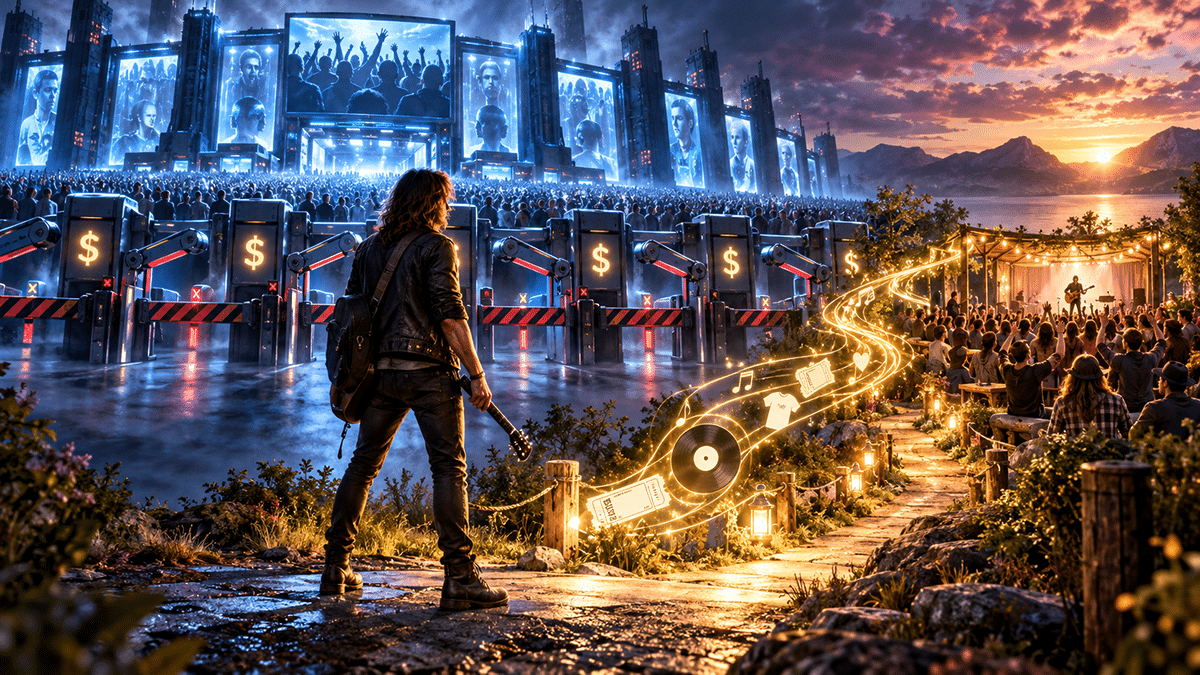
Then one morning, the landlord announces that you can still invite people into the building, but you may only tell them about two events happening somewhere else each month. If you want to direct more people to your merchandise store, another venue, or your own website, there will now be an additional monthly charge. Apparently, the rent was only for the building, and the ability to speak to your customers about anything happening outside the building requires a different subscription. You might even discover that the landlord has been charging you to put up posters inside the building because the regular customers you worked so hard to attract were not seeing your announcements in the first place.
Welcome to the latest chapter in the wonderful world of social media, where independent musicians are discovering that building an audience on somebody else’s property can come with some rather interesting surprises. For years, musicians have been encouraged to build their Facebook Pages, collect followers, and use those audiences to promote recordings, concerts, merchandise, and other parts of their careers. Now, with Meta introducing additional paid business tools and some Facebook Pages reporting restrictions on outbound links, the industry is getting another reminder that the platform controlling access to an audience can change the price of reaching that audience whenever its business model changes.
On September 21, 2026, independent music publication Saving Country Music published a report examining the impact of Facebook’s new linking restrictions on musicians, venues, promoters, and independent music publications. The report described some Pages being limited to two outbound-link posts per month, with additional posting privileges associated with higher-priced subscriptions. For musicians who depend on Facebook to direct listeners toward concert tickets, new releases, and merchandise, the development raises a fairly uncomfortable question about how much control an artist really has over an audience that took years to build. (Saving Country Music)
The story deserves attention because it reaches far beyond the immediate cost of posting links. It exposes a weakness in the way independent musicians have been taught to build their careers since social media became an essential promotional tool. Artists were encouraged to bring everyone into somebody else’s digital environment, while relatively little attention was given to what would happen if that company eventually decided to charge admission to the relationships the musicians had helped create.
What Facebook Is Actually Changing
Before we start dragging Mark Zuckerberg into the town square and demanding that he explain himself to a gathering of angry guitar players, it is worth understanding what has actually been announced. Social media policy changes often develop through limited experiments, gradual rollouts, and account-specific offers, which means one artist may encounter a restriction while another continues operating normally. That distinction matters when musicians are making financial decisions, especially when a new subscription can cost more than the profit from an entire evening playing a local club.
In December 2025, Meta confirmed that it was testing restrictions on the number of organic Facebook posts containing external links that certain professional accounts and Pages could publish without a paid subscription. The experiment included a two-link monthly limit for some affected accounts, although Meta described the program as a limited test rather than a universal policy covering every Facebook user. TechCrunch reported on the experiment at the time, establishing that the idea of charging for additional linking privileges had been under consideration well before the September announcement. (TechCrunch)
On September 15, 2026, Meta officially announced its new Meta One subscription service, which brings together additional capabilities across Facebook, Instagram, WhatsApp, and Meta AI. The company described the service as offering expanded artificial intelligence tools, publishing features, audience insights, verification, and other services for individuals, creators, and businesses. Its published starting prices for creator and business subscriptions include Essential at $14.99 per month, Advanced at $49.99, Expert at $149, and Max at $499, with Meta explaining that pricing, benefits, and availability can differ according to region, application, and account. (Facebook)
The September 21 Saving Country Music report described the Advanced subscription as providing eight outbound links per month, Expert as providing twenty, and Max as providing unlimited links, while noting that the lower-priced verified subscription reportedly does not exempt affected Pages from the two-link restriction. Those specific Facebook Page allowances have not been established as identical for every account in Meta’s public announcement, and musicians should check the actual terms displayed to them before purchasing anything. Social Media Today also reported on September 17 that more Page managers were encountering restrictions following the Meta One introduction, although the relationship between every Facebook linking feature and the various subscription levels was not fully explained in the original announcement. (Saving Country Music)
What matters to independent musicians is that Meta has confirmed the original experiment, introduced subscription packages that include expanded linking capabilities, and received reports of additional Pages encountering restrictions. We do not need to pretend that every artist in America is already facing exactly the same limitations to recognize the business problem. The possibility that ordinary communication between a musician and interested fans can become subject to additional fees should be enough to make artists examine how their businesses depend on platforms they do not control.
Remember When Building Your Facebook Audience Was the Plan?
There was a time when social media appeared to offer independent musicians a way around the traditional gatekeepers of the music industry. Instead of begging radio programmers, record labels, booking agents, and music journalists for attention, an artist could connect directly with listeners through a Facebook Page. A musician could upload a performance video, announce an upcoming concert, share a new recording, and develop a community without waiting for somebody in an expensive office to decide whether the music was commercially acceptable. For working musicians who had spent years trying to break through an industry built around access to distribution and promotion, the opportunity was genuinely exciting.
Artists responded by doing exactly what they were encouraged to do. They printed Facebook addresses on posters, added social media icons to album packaging, mentioned their Pages from the stage, and asked audiences to follow them after performances. Promoters included Facebook links in event announcements, music publications encouraged readers to follow their Pages, and bands celebrated each new milestone as their audiences grew from hundreds to thousands and eventually tens of thousands of people. The follower count became a visible measurement of progress, even when nobody could explain exactly how that number translated into the ability to pay for recording sessions, merchandise inventory, or gasoline for the van.
Over time, artists began discovering that a person following their Page did not necessarily mean that person would see their announcements. Facebook’s distribution system determined which posts appeared in each user’s feed, and musicians had limited control over how much attention their content received. A band might have spent years developing an audience of people genuinely interested in its music, only to discover that an announcement about a new album reached a relatively small portion of those followers. The available solution was often to pay for additional distribution, which created the peculiar arrangement of musicians purchasing advertising to increase the likelihood of reaching people they had already worked to attract.
There is nothing inherently wrong with paying for advertising when it helps an artist reach new listeners, sell concert tickets, or introduce a recording to an appropriate audience. A carefully planned campaign can be a useful part of a working musician’s business, particularly when the artist understands the costs and can measure the results. The problem begins when paying becomes necessary simply to maintain access to relationships the musician thought had already been established, especially when that expense is added to all the other costs of running an independent career.
The reported link restrictions introduce another layer to that problem because they affect the movement from attention toward actual business activity. An artist may succeed in getting someone interested in a recording or concert, yet the ability to direct that person toward the place where a purchase can happen may depend on another paid feature. When the platform controls both the visibility of the announcement and the availability of the route leading to the artist’s business, the musician becomes increasingly dependent on decisions made by a company whose financial interests are not necessarily the same as those of a working independent artist.
Fifty Thousand Followers Can Be a Terrible Business Asset
Imagine two independent musicians working in the same regional music scene. The first has spent years building a Facebook following of 50,000 people and regularly posts photographs, performance clips, and announcements about upcoming shows. The second has a much smaller social media audience but has developed a permission-based mailing list containing 5,000 people who voluntarily signed up to hear about new music, concerts, and merchandise. Looking at their public profiles, the first musician appears to have a substantially larger business, but those numbers tell us very little about which artist can actually communicate with interested customers and turn that attention into income.
When the first musician announces a concert, the announcement enters Facebook’s distribution system, where its visibility depends on factors the artist cannot fully control. Some followers may see the post immediately, others may encounter it several days later, and some may never see it at all. The artist can purchase advertising to increase its reach, but that creates another expense without guaranteeing that enough people will buy tickets to justify the campaign. Having 50,000 followers can still be useful, but the musician needs to understand that a follower count is not the same thing as having reliable access to 50,000 potential customers.
The second musician has a different opportunity because those 5,000 email subscribers have chosen to establish a direct communication relationship. When the artist announces a concert, the mailing list can be organized according to information the fans have voluntarily provided, allowing the musician to contact people who live near the venue or have expressed interest in similar performances. Email is not guaranteed to arrive in every inbox or produce a sale, and the artist still needs to maintain the list responsibly, but the relationship is no longer dependent entirely on whether a social media algorithm decides to distribute a particular post.
The difference becomes even more important when the musician wants to change technology providers. If an email service becomes too expensive or stops providing useful features, the artist can generally export the authorized contact records and move them to another compliant provider while respecting the permissions and preferences associated with those records. If Facebook introduces new restrictions, closes an account, or changes its distribution system, the musician cannot simply download those 50,000 followers and recreate the same relationships somewhere else. Facebook maintains the platform accounts and the connections between them, while the artist has access to whatever information and features the platform currently chooses to provide.
This is what Making a Scene means when we discuss owning the fan relationship. The musician does not own the people, their attention, or their willingness to support the music, because fans are human beings who can make their own decisions about where they spend their time and money. What the artist can control is the business identity, website, authorized contact information, purchase records, and communication systems that allow a relationship to continue independently of any one social media company. Once those assets are connected, an artist can begin developing a business that becomes more useful with every genuine fan interaction rather than one that has to be rebuilt whenever a platform changes its rules.
The Cost of Staying Connected Is Becoming Part of the Cost of Making Music
Independent musicians already operate with an impressive collection of expenses, many of which have a remarkable ability to arrive before the first dollar of income. Recording equipment, studio time, rehearsal space, website hosting, distribution, merchandise production, transportation, advertising, insurance, and instrument maintenance all compete for money that might otherwise be used to pay the musicians themselves. Anyone who has spent a weekend driving several hundred miles to play two shows understands that revenue and profit are not the same thing, particularly when the van develops an expensive opinion about the transmission halfway through the trip.
Against that reality, a new monthly subscription needs to be evaluated as a business expense rather than simply another feature that might make promotion easier. Meta’s published $499 starting price for its Max creator and business package would represent nearly $6,000 over twelve months before considering any other promotional spending. For an established company managing numerous accounts, that expense might be relatively modest, but for a working musician or a small independent venue, it could represent a substantial portion of the money available for recording, touring, or merchandise inventory. The financial question is whether the additional capabilities produce enough value to justify the expense when compared with other ways the artist could use that money.
A musician might reasonably decide that paying for expanded Facebook features makes sense if the investment produces measurable ticket sales, merchandise purchases, or other useful business results. The concern is that purchasing the ability to publish additional links does not necessarily mean that those posts will receive additional visibility or generate enough sales to cover the subscription. An artist could end up paying for greater posting privileges while still purchasing advertising to increase the likelihood that interested followers encounter the announcement. The distinction between being allowed to publish something and having that content reach an audience becomes particularly important when the musician is trying to calculate the actual cost of acquiring a customer.
Independent music publications and small venues face a similar problem because their businesses often depend on publishing frequent links to content or ticketing pages. A venue presenting performances throughout the month needs to announce each event and give interested people a way to purchase admission, while a music publication may publish several articles every day. Saving Country Music explained in its September 21 report that its publishing schedule would make the higher subscription levels particularly difficult to justify financially, illustrating how a policy that appears manageable for a large company can create a much more serious problem for an independent operation. (Saving Country Music)
The broader concern is that musicians are being asked to spend increasing amounts of money maintaining access to promotional infrastructure that they do not control. At some point, artists need to consider whether another monthly subscription is improving the business or simply helping preserve an arrangement that has become less useful over time. That does not mean abandoning Facebook, but it does mean developing other ways to maintain relationships so that every new platform policy does not become an emergency requiring another payment.
Social Media Should Introduce Fans to the Artist, Not Become the Artist’s Entire Business
Whenever a social media company introduces an unpopular change, somebody inevitably announces that everyone should abandon the platform and move to the newest alternative. Independent musicians have been through enough of these migrations to know how exhausting that process can become, particularly when artists are expected to rebuild audiences from scratch while continuing to record, rehearse, perform, and maintain some resemblance of a personal life. Moving every few years from one social media service to another may provide temporary relief, but it does not solve the underlying problem if the artist continues allowing a third party to control the entire relationship.
Facebook remains useful because people spend time there, and many music fans continue using it to discover performances, follow artists, communicate with friends, and participate in local music communities. Depending on an artist’s audience, the platform may be especially useful for reaching listeners who regularly attend live shows and purchase physical music. Abandoning those people because a technology company has introduced an irritating subscription would make about as much sense as refusing to play a profitable venue because the person operating the parking lot has become unpleasant.
The better approach is to give social media a specific job within the artist’s larger business. A performance video can introduce someone to the music, a concert photograph can remind people why they enjoyed the last show, and a compelling story about a recording can encourage listeners to learn more about the musician. These activities create attention and interest, but the next part of the relationship should give the fan an opportunity to visit a destination where the artist has greater control over the experience and the business information that develops from it.
That destination should ordinarily be the artist’s own website, where people can hear the music, discover upcoming performances, purchase merchandise, and choose whether they want an ongoing direct connection. A musician who owns a domain name and maintains access to the underlying website content and business records can change hosting providers, redesign the site, and connect different services without necessarily losing the business identity that fans recognize. The website becomes the central location around which other promotional activities operate, while Facebook and similar services continue helping new people discover that location.
This approach also changes how musicians evaluate promotional success because the goal is no longer simply to collect another follower. An artist can begin examining whether social media attention leads people toward the website, whether those visitors become direct subscribers, and whether those relationships eventually support concerts, recordings, merchandise, or other income. The value of a promotional campaign becomes easier to understand when it is connected to activities that can actually sustain the career, rather than being measured entirely by numbers displayed inside somebody else’s application.
Your Website Should Be More Than a Digital Business Card
For years, musicians have been told that websites are becoming less important because everyone spends time on social media. That argument confuses the place where people discover music with the place where the artist conducts business, which is a distinction that becomes increasingly important when platforms begin placing additional conditions on outbound links. An artist’s website should not exist merely to display a biography, a few promotional photographs, and a collection of icons sending people straight back to the services they were trying to leave.
A properly developed website gives fans a place to experience the music and understand the different ways they can participate in the artist’s career. Someone visiting after hearing a performance should be able to find upcoming shows, explore the recordings, learn about the musicians, and discover merchandise or special experiences without navigating an unnecessarily complicated collection of unrelated services. The artist should also provide a clear opportunity for interested visitors to receive future updates, because a fan who enjoys the music today may not be ready to make a purchase until the next recording or concert announcement.
The current Facebook controversy makes this kind of central destination particularly useful because an artist may need to make fewer outbound links accomplish more. Rather than using one available post to send people to a ticketing service, another to a merchandise platform, and another to a digital release, a musician can direct interested fans toward a central landing page that connects the different parts of the business. The landing page can be updated as campaigns change, allowing the same artist-controlled destination to support a new album this month, a regional tour next month, and a limited physical release later in the year.
The landing page becomes even more useful when it helps the artist develop an ongoing relationship instead of simply sending visitors to another company. A fan looking for concert tickets might also discover that the artist has released a new recording, while someone interested in merchandise might decide to subscribe to future updates. The musician gains an opportunity to connect those interests through a coherent artist experience, provided the fan understands and agrees to any collection or use of personal information associated with the interaction.
An independent artist should also avoid replacing dependence on Facebook with dependence on another service that makes it difficult to leave. Website hosting, email delivery, merchandise fulfillment, and other business functions will still involve outside providers, but the artist should understand whether the underlying records can be exported and whether the business can continue if a provider becomes unsuitable. Independence does not require musicians to build every technical system themselves, because that would leave very little time for writing songs, but it does require choosing tools that serve the artist rather than making the artist permanently dependent on the tools.
The Merch Table May Be the Most Valuable Fan Development Tool You Already Have
There is something wonderfully absurd about watching a musician spend an afternoon studying Facebook engagement while ignoring the person standing six feet away asking when the band is coming back to town. That person has already demonstrated more meaningful interest than somebody who watched four seconds of a performance video while trying to find a photograph of their neighbor’s dog. The fan may have purchased a ticket, spent an evening listening to the music, bought a recording, and started a conversation with the artist, which creates an opportunity that deserves more attention than another social media notification.
The merch table is particularly valuable because it connects a real-world experience with the possibility of a continuing relationship. A musician can invite fans to join a mailing list, scan a QR code, or participate in a digital fan experience that provides something meaningful after the performance ends. The invitation works best when it gives people a reason to participate, such as access to an unreleased live recording, advance information about future shows, or special opportunities connected to the music they have just enjoyed.
Consider a blues artist who has finished a successful performance at a regional club. Several audience members visit the merchandise table to purchase CDs, while others want a photograph or simply wish to talk about the music. Instead of making every interaction end when the fan walks away, the musician can offer a simple digital connection that allows interested people to receive future updates and remain part of the artist’s community. When that artist returns to the same city several months later, the musician may have a group of people who have voluntarily expressed interest in hearing about the next performance.
The information collected through those interactions can become useful when the musician begins planning future tours and release campaigns. Knowing that fans in a particular region have attended previous performances or purchased merchandise may help an artist evaluate whether another concert is worth pursuing. That information becomes especially valuable when it is connected to accurate show records and direct sales history, because the artist can begin making decisions based on actual business activity rather than relying entirely on social media engagement.
Fans should always understand what they are signing up for, and musicians should respect the distinction between someone purchasing a product and someone agreeing to receive promotional communication. The Federal Trade Commission’s CAN-SPAM compliance guidance explains important requirements for commercial email in the United States, including accurate sender information, valid contact details, and functioning unsubscribe methods. A musician building an independent fan community should treat those obligations as part of maintaining a professional business rather than an inconvenient technical detail to be ignored until somebody complains. (Federal Trade Commission)
An Email Address Is Useful, but a Fan Relationship Contains Much More Information
A permission-based email list is an important starting point for artist independence, but an address alone provides only a small amount of information about someone’s relationship with the music. An artist may know that a fan wants to receive updates without knowing whether that person enjoys attending concerts, collecting physical recordings, supporting new projects, or purchasing merchandise. Those differences matter because the musician’s communication becomes more useful when it reflects the kinds of experiences that people have actually chosen to support.
Imagine an artist who performs regularly throughout the Southeast and has developed relationships with fans in Atlanta, Nashville, Birmingham, and several smaller communities. Some fans attend nearly every local performance, while others travel considerable distances to see the band a few times each year. Certain supporters purchase physical recordings whenever a new album appears, while others prefer digital music or enjoy participating in membership experiences. Over time, the artist may develop a useful picture of these different relationships through authorized information collected from performances, direct purchases, website interactions, and voluntary fan participation.
That information can help the musician communicate more effectively without treating every subscriber as an identical customer. Someone who attends concerts in Atlanta may appreciate an announcement about an upcoming performance nearby, while a fan who regularly purchases vinyl might be interested in a limited physical release. A supporter who helped finance an earlier recording may want to hear about the next album project, particularly if the artist is offering direct preorders or other ways to participate.
The artist should not use these capabilities as an excuse to collect every possible detail about someone’s life, because meaningful fan relationships are built on trust rather than surveillance. Useful information should be connected to a legitimate purpose, protected appropriately, and handled according to the permissions and preferences associated with it. Fans should be able to decide how they want to participate, and the musician should respect those decisions while using the information to improve the experience.
When these records are organized properly, the artist begins developing something that social media follower counts cannot provide by themselves. The musician gains a better understanding of how people interact with the music across different activities and can use that understanding to make decisions about touring, merchandise, release planning, and direct communication. The relationship becomes part of the artist’s long-term business knowledge rather than another collection of numbers stored inside separate platforms.
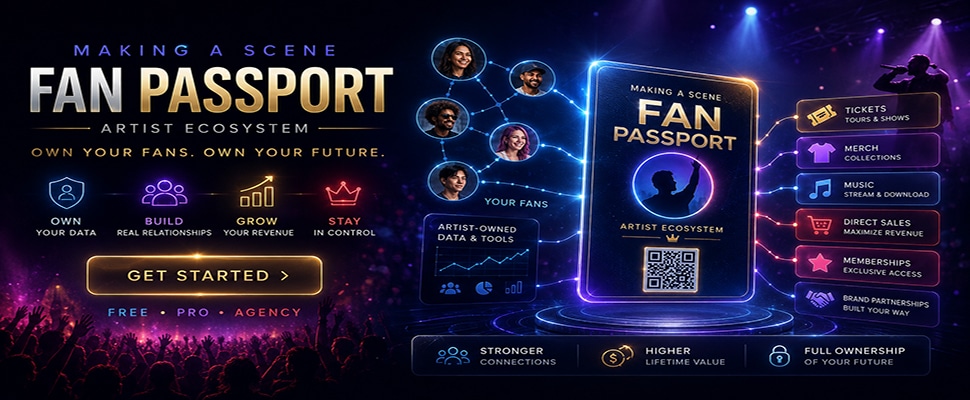
This Is Exactly Why We Are Building the Making a Scene Artist Ecosystem
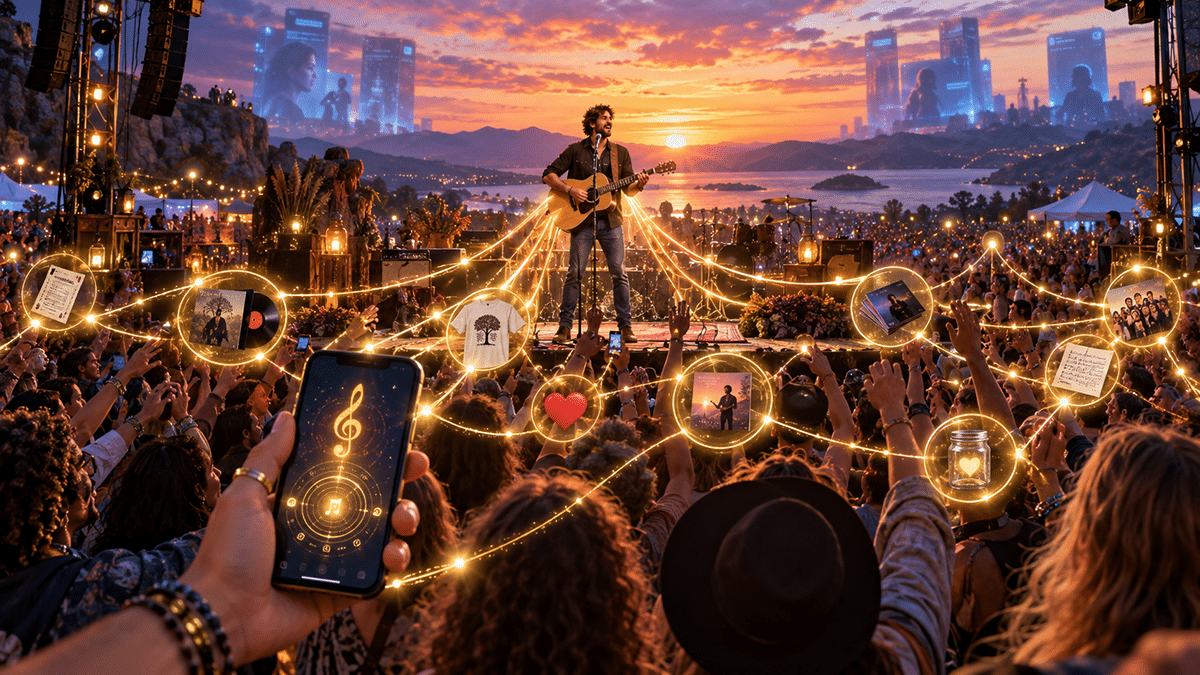
The Facebook development illustrates the business problem behind the Making a Scene Artist Ecosystem and Fan Passport. For years, musicians have been encouraged to collect followers, streams, video views, and other platform measurements, but those numbers do not automatically create a sustainable independent career. An artist might have substantial online attention while struggling to understand who is purchasing the music, which cities support the live show, or how to contact interested fans without purchasing another advertising campaign.
The Artist Ecosystem is designed around a different relationship between music, technology, and the business itself. Instead of allowing the artist’s career to become scattered across disconnected services, the system brings the musician’s identity, business information, fan relationships, shows, merchandise, releases, and other activities into a more organized environment. The purpose is to help artists understand and manage the parts of their careers that produce real income while maintaining control over the information needed to operate the business.
Fan Passport extends that approach into the relationship between the artist and the people supporting the music. A fan who discovers a musician through Facebook might attend a concert several weeks later and choose to connect directly with the artist through a QR code or other fan experience. When that person returns for another performance, purchases merchandise, or participates in a special release, authorized information about those interactions can become part of the continuing relationship rather than remaining scattered across unrelated transactions.
Consider how that might work for a regional band preparing to release a new album. The musicians share a performance video on Facebook, attracting attention from people who have never heard the group before. Interested listeners visit the artist’s website, where they can explore the music and choose whether to receive future updates. Some of those fans later attend concerts, purchase merchandise, or support the new recording, giving the band opportunities to develop a continuing relationship that extends beyond the original social media post.
The important change is that Facebook remains part of the discovery process without becoming the only place where the artist can communicate with interested supporters. If Meta introduces another restriction, the band can continue promoting through its website, mailing list, and established fan relationships while deciding whether additional paid platform services deserve a place in the budget. That flexibility is particularly valuable for independent musicians because it allows the business to develop without requiring every new marketing campaign to begin with the purchase of access to an audience that already knows the music.
The system also needs to remain understandable to the musicians using it, because an independent artist should not have to become a software engineer to sell a recording or announce a concert. Technology should simplify the repetitive work involved in maintaining accurate business records, organizing fan information, and connecting different revenue opportunities. When a musician can understand the business without constantly switching between disconnected applications, more time and energy remain available for the work that attracted the fans in the first place.
Artificial Intelligence Becomes More Valuable When the Artist Controls the Information
Artificial intelligence adds another dimension to this conversation because the usefulness of AI-assisted business tools depends heavily on the information available to them. A general-purpose AI system can suggest ways to promote an album or organize a tour, but its recommendations become more relevant when the musician can provide accurate information about actual performances, merchandise sales, direct fan relationships, and recording plans. The difference is similar to asking somebody who has never heard the band for business advice compared with working with a manager who understands the artist’s history and knows where the money has been coming from.
An artist preparing a regional tour might use AI-assisted tools to help examine previous performances, organize venue information, and develop promotional material for the cities being considered. If the musician has accurate records of direct fan activity and merchandise sales, those records may provide useful context when evaluating whether another visit is financially practical. The artist would still make the decisions, approve communications, and determine the budget, but the technology could reduce the administrative work involved in putting the necessary information together.
The same principle applies to recording and release campaigns. An artist who knows which physical products have sold successfully, which audiences have supported previous projects, and which communication channels have generated useful responses can make more informed decisions about manufacturing and promotion. AI can help organize that information, identify patterns worth examining, and prepare campaign materials, but the value comes from combining useful technology with business knowledge the artist has developed over time.
There is also an important responsibility attached to using artificial intelligence with customer information. Musicians should understand whether a service retains submitted data, how that information may be used, and whether the artist has permission to process the records for the intended purpose. Independent musicians do not gain much by escaping dependence on one technology company only to transfer confidential business information and fan relationships into another system without understanding its terms.
For Making a Scene, the real opportunity is developing tools that help musicians run their businesses more effectively while preserving their control over the underlying information. AI should be able to assist with the work of understanding fan activity, planning tours, preparing releases, and organizing revenue opportunities without becoming another gatekeeper between the artist and the people who support the music. That makes artist-controlled information an important part of the foundation for future music technology rather than simply another administrative responsibility.
Smart Media Can Turn a Physical Purchase Into a Continuing Relationship
The growing importance of direct fan relationships also creates an interesting opportunity for Smart Media products, particularly for independent musicians who own their recordings and want to develop additional ways of selling music. A traditional physical album gives fans something tangible to purchase and collect, while a Smart Media product can connect a physical object to an expanding digital music experience. An NFC-enabled collectible might provide access to recordings, artwork, lyrics, credits, photographs, videos, and additional material that the artist chooses to make available over time.
Imagine a musician releasing a new album through a limited physical collectible that fans can purchase at concerts or through the artist’s website. When someone taps the product with a smartphone, the fan enters an experience built around the music rather than simply being sent to another streaming service. The artist might include an acoustic performance, footage from the recording sessions, commentary about the songwriting, or a live recording from the album release concert, creating something that offers a different kind of value from ordinary digital access.
The opportunity becomes even more useful when the product provides a clear way for interested fans to establish an ongoing relationship with the musician. A purchaser may want to receive announcements about new material added to the experience, future performances, or other releases connected to the artist. When those interactions are handled through appropriate permissions and an artist-controlled fan system, the physical purchase can become the beginning of a continuing relationship rather than an isolated transaction.
This kind of experience does not require an artist to abandon traditional distribution or streaming services, because the same recording can remain available through multiple channels while the physical-digital product offers something different for fans who want to support the musician more directly. It also does not require every product to use blockchain technology, although Web3 tools may provide useful options for particular kinds of digital ownership and access management. The artist should choose the technology according to what the product needs to accomplish, with careful attention to production expenses, hosting costs, fan accessibility, and the actual rights associated with the music and collectible.
The connection to the Facebook story becomes clearer when we consider what happens after the original purchase. A musician who has established an authorized direct relationship with a Smart Media customer can continue providing new experiences through the product without depending entirely on another social media announcement to bring that fan back. The artist still needs reliable technology and a meaningful reason for people to return, but the relationship can develop around something the musician created and controls rather than existing only as another follower count.
The Music Industry Has Been Measuring the Wrong Kind of Success
Independent musicians have become accustomed to celebrating numbers that look impressive on a screen while providing relatively little information about whether the artist can afford another year of making music. Follower counts, streaming totals, video views, and social media engagement can all be useful indicators of attention, but none of them automatically explains how much income remains after recording expenses, manufacturing, transportation, and promotional costs have been paid. An artist can appear successful online while struggling to finance the next recording, particularly when attention does not translate into meaningful business activity.
A musician with a relatively modest audience may have a sustainable career because those fans attend performances, purchase recordings, and support new projects. Another artist may have a much larger online presence while receiving limited direct support, creating a business that depends on constant promotion without developing enough predictable income. The difference is difficult to understand when all the musician can see are the separate measurements provided by social media, streaming, ticketing, and merchandise companies.
An artist-controlled business system creates opportunities to examine how those activities connect. A musician can begin understanding whether a performance introduces new supporters, whether direct communication helps fans discover upcoming shows, and whether a particular release generates enough revenue to justify its production costs. The information may also reveal that an audience in one city provides stronger direct support than a larger online audience somewhere else, which could influence future touring decisions.
These insights become particularly important when musicians are deciding where to invest limited promotional money. Paying for an advertising campaign might make sense when the artist can connect that spending to ticket sales, direct purchases, or other useful results, but the decision becomes much harder when success is measured only through impressions and engagement. A campaign that creates plenty of online activity without generating meaningful business opportunities may still have promotional value, although the musician needs to understand what that value is and whether it justifies the expense.
That is why the new Meta subscription discussion should encourage artists to look beyond the immediate price of posting links. The more important question is how much the business depends on a platform-controlled audience and whether the musician has developed ways to measure the activities that actually sustain the career. When an artist understands the relationship between discovery, fan participation, and income, social media becomes one part of a larger business strategy rather than the system upon which everything depends.
Building a Business That Can Survive the Next Algorithm Change
An independent musician does not need to delete Facebook, purchase an expensive software package, or completely rebuild a career before the next rehearsal to respond intelligently to this development. The useful starting point is examining what happens when someone discovers the music and wants to learn more. If the only available destination is another social media profile, the artist has an opportunity to develop a more direct relationship through a website, permission-based communication, and business tools that can remain useful beyond the original platform.
That process can begin with something as familiar as an upcoming concert. The musician shares a compelling performance video on Facebook and invites interested listeners to visit the artist’s website, where they can find information about the show and discover other parts of the music business. Fans who want future updates can choose to join the mailing list or participate in an artist-controlled fan community, giving the musician another way to maintain contact after the immediate concert promotion has ended.
The next performance can build on the same foundation because the artist may already have permission to communicate with people who attended previous shows or expressed interest in returning. Instead of treating every appearance as an isolated promotional campaign, the musician begins developing relationships that can support future activity. The artist may still use paid advertising when it produces useful results, but there is less need to depend entirely on advertising simply to reach people who have already chosen to remain connected.
Musicians should also examine whether their existing business services allow authorized information to be exported, backed up, and connected to other tools. A mailing list that can be moved between providers is useful, but its value increases when the artist also maintains accurate show records, release information, and appropriate purchase histories. These records help the musician understand the business while preserving flexibility if a technology provider introduces new fees or changes its services.
The transition does not have to happen all at once, and artists should avoid becoming so absorbed in designing the perfect digital business that they forget to make music. A working musician can begin improving the fan relationship through ordinary activities that are already part of the career, including concerts, direct sales, website visits, and release announcements. Each useful connection makes the business a little less dependent on any one platform, while the artist continues taking advantage of the promotional opportunities those platforms still provide.
The Music Industry Middle Class Will Not Be Built on Rented Audiences
At Making a Scene, we have spent years discussing the need to create a music industry middle class in which independent musicians can build sustainable careers without waiting for permission from major record labels, streaming platforms, or other companies controlling access to the audience. That goal depends on artists understanding the business assets they need to develop, including their recordings, publishing rights, creative identity, direct revenue opportunities, and relationships with the people who support the music. Owning a master recording is important, but that ownership becomes much more useful when the artist also has a reliable way to reach interested listeners and offer them opportunities to participate in the career.
The traditional music industry concentrated power around access to recording studios, manufacturing, radio, retail distribution, and promotional infrastructure. Digital technology lowered many of those barriers, allowing independent musicians to record, distribute, and promote music without securing a conventional record deal. Yet as the industry became increasingly dependent on digital platforms, new forms of control developed around audience discovery, customer information, online transactions, and the systems used to communicate with listeners.
An artist can now release music around the world without signing away the master recording, but that achievement does not automatically produce independence if the musician remains dependent on another company’s permission to contact the audience. The artist may control the creative product while having relatively little control over the business relationship surrounding it. When a platform changes its subscription structure or promotional rules, that weakness becomes visible because the musician has few alternatives for maintaining the connections developed over years of work.
A sustainable independent music business needs to connect ownership of creative work with ownership and portability of the business information surrounding that work. The musician should understand who controls the website, where authorized fan records are maintained, whether purchase histories can be exported, and how the artist can communicate when a particular platform becomes too expensive or no longer serves the career. Those practical questions deserve as much attention as recording quality and promotional strategy because they determine how much of the business the artist can actually carry forward.
This is where AI, Web3, Smart Media, and direct-to-fan technology become part of a larger conversation about artist independence rather than isolated trends competing for attention. AI can help reduce repetitive business work, while selected Web3 tools may support particular ownership and access models. Smart Media can create new kinds of physical-digital music experiences, and artist-controlled fan systems can help maintain the relationships that develop around performances and purchases. Their value comes from helping musicians build businesses that generate income through activities they understand and can manage, not from convincing artists to purchase another collection of subscriptions in the hope that technology will eventually solve everything.
Facebook Can Keep Its Algorithm. The Artist Needs a Business That Doesn’t Depend on It.
There is a certain irony in watching technology companies introduce increasingly sophisticated artificial intelligence tools while independent musicians are still trying to accomplish something as ordinary as telling people where they are playing next Saturday. The artist records the music, promotes the performance, develops the audience, travels to the venue, loads the equipment, and delivers the show, while a technology company determines how easily the musician can communicate with interested listeners. When that communication becomes another feature attached to a paid subscription, the artist has an opportunity to reconsider whether the underlying business arrangement has been serving the music as well as it should.
The answer does not require musicians to abandon the platforms that help people discover their work, because those services can continue providing valuable opportunities when used appropriately. An artist can publish performance videos on Facebook, share recordings through streaming services, and introduce new music through whichever platforms attract interested listeners. The important change is giving those listeners a clear opportunity to develop a relationship that extends beyond the original platform, allowing the musician to remain connected through a website, authorized fan records, and direct communication.
For a working independent artist, those relationships can become the foundation of a more predictable business. Fans who attend concerts may return for future performances, people who purchase recordings may become interested in special releases, and supporters who follow the artist over time may choose to participate in memberships or new recording projects. These opportunities do not appear automatically, and they still require musicians to create compelling music and provide experiences worth supporting, but they become easier to develop when the artist has a continuing relationship with the audience.
The September 21 Facebook report is important because it illustrates how an audience-building opportunity can become an additional business dependency when the artist has no independent way to maintain the connection. The exact restrictions and subscription benefits may continue changing as Meta develops its new service, and musicians should make decisions according to the actual conditions affecting their accounts. The underlying business question, however, will remain relevant long after this particular controversy disappears from the news because every independent artist needs to understand who controls the path between the music and the people willing to support it.
An artist who spends years building a fan community should be able to carry the value of that work into future recordings, performances, and business opportunities without depending entirely on the continued generosity of a social media platform. Facebook can remain useful for discovery, advertising, and communication, but the musician should develop an artist-controlled destination where interested people can become part of something more lasting. The same principle applies to every other company operating between the artist and the audience, regardless of whether its current subscription package includes an attractive blue checkmark or a helpful artificial intelligence assistant.
The most productive response to Facebook’s changing business model is to build an independent music career in which social media helps introduce people to the artist while direct relationships help sustain the business. That means treating the website, permission-based fan records, direct sales, and continuing fan experiences as essential parts of the career rather than optional additions to a successful Facebook Page. It also means investing in technology that strengthens those assets and allows them to remain useful when the musician decides to change providers.
The artist may still have to deal with rising costs, difficult venues, unpredictable ticket sales, and the occasional Saturday-night performance where somebody asks the band to play a song that requires three more musicians and a horn section. Independent music will never be free from uncertainty, but musicians can reduce one important source of it by developing businesses that do not require a single outside company to control every conversation with the audience.
When the next social media subscription appears, the artist with a strong direct fan community will be able to evaluate the offer according to whether it produces meaningful additional income. The musician can continue using Facebook where it makes sense, decline features that do not justify their cost, and maintain relationships with fans through the business infrastructure developed over time. That is a much stronger position than discovering that years of audience building have produced a large public number and very few ways to reach the people behind it.
Facebook’s latest development may be an unwelcome surprise for musicians who have depended heavily on the platform, but it also provides a useful reason to change how independent artists think about their careers. The goal should be to develop a business in which the recordings, creative identity, authorized fan information, and opportunities for direct support remain connected to the artist, while outside platforms compete for the privilege of helping that business grow.
After all, musicians have spent enough years paying people for access to their own careers. There is no particular reason to keep building the entire house on somebody else’s property when the technology now exists to create a place where fans can find the music, support the artist, and remain connected long after Facebook decides to remodel the front door.
 |  Spotify |  Deezer |  Breaker |
 Pocket Cast |  Radio Public |  Stitcher |  TuneIn |
 IHeart Radio |  Mixcloud |  PlayerFM |  Amazon |
 Jiosaavn |  Gaana |  Vurbl |  Audius |
 Reason.Fm | |||
Find our Podcasts on these outlets
Subscribe to Our Newsletter
Discover more from Making A Scene!
Subscribe to get the latest posts sent to your email.


