
Universal Music’s Stock Crash Is a Warning About Building a Career on Streaming Alone




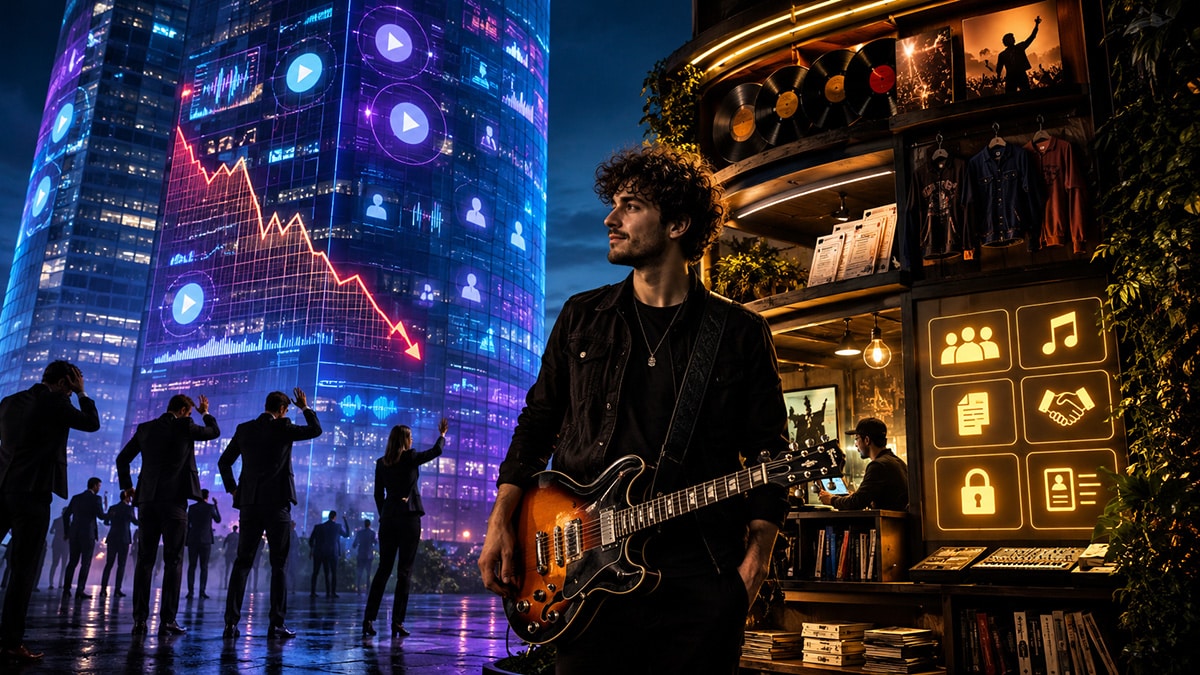
Making a Scene Presents – Universal Music’s Stock Crash Is a Warning About Building a Career on Streaming Alone
Listen to the Podcast Discussion
The Music Business Had a Very Bad Day
On July 31, 2026, Universal Music Group had the kind of day that gets the attention of everyone in the music business. Shares of the world’s largest music company lost roughly one-quarter of their value in Amsterdam. It was Universal Music Group’s worst trading day since the company became publicly traded in September 2021. The decline erased approximately $10 billion from the company’s market value, based on the exchange rate at the time.
At first glance, a drop that large might make it appear that Universal Music Group had reported a financial disaster. That was not what happened. The company had not stopped growing, music fans had not abandoned streaming, and the public had not suddenly decided it had heard enough songs for one lifetime.
Universal Music Group reported approximately $3.8 billion in revenue for the second quarter of 2026. Its revenue increased 10.5 percent on a reported basis and 13.3 percent at constant currency. When the newly consolidated Downtown Music business was excluded, revenue still increased 6.4 percent at constant currency. Universal Music Group remained an enormous and profitable company with recordings, publishing rights and music services reaching nearly every part of the global market.
The problem was not that Universal Music Group failed to grow. The problem was that one specific part of its business did not grow as quickly as investors expected.
Recorded-music subscription revenue increased by 6.7 percent at constant currency during the quarter. That was slower than the 7.9 percent growth reported during the previous quarter and below the level some financial analysts had predicted. Investors who viewed Universal Music Group as a dependable streaming-growth company became concerned that its most important growth engine was losing speed.
Most independent artists would probably be pleased if one of their major income streams grew by 6.7 percent. Public markets operate under a different set of expectations. Investors are not only interested in whether a company grows. They are interested in whether it grows as quickly as financial forecasts promised.
When investors expect growth of around 9 percent and receive 6.7 percent, a positive number can suddenly be treated as a disappointment. That is how a company can report billions of dollars in quarterly revenue, show strong overall growth and still lose approximately one-quarter of its market value in a single trading day.
Independent artists do not need to become experts in European stock markets to understand the lesson. They simply need to pay attention to what the market reaction tells us about the future direction of the music industry.
The reaction suggests that the largest music companies no longer believe ordinary streaming-subscription growth will be enough to satisfy investors forever. They are searching for additional revenue through catalog acquisitions, higher subscription prices, advertising, merchandise, premium fan products, artificial-intelligence licensing, direct-to-fan sales and new uses of audience data.
Independent artists should also be building several connected income streams. The difference is that artists should build those systems around assets and fan relationships they control.
Streaming Is Not Collapsing
Universal Music Group’s stock decline does not mean streaming is dying. Streaming remains the largest source of recorded-music revenue in the world, and it continues to grow.
According to IFPI, worldwide recorded-music revenue reached $31.7 billion in 2025, an increase of 6.4 percent. It was the industry’s eleventh consecutive year of growth. Paid subscription-streaming revenue increased 8.8 percent and represented 52.4 percent of worldwide recorded-music revenue. When advertising-supported streaming was included, streaming accounted for 69.6 percent of the global recorded-music market.
The United States shows a similar pattern. According to the Recording Industry Association of America, wholesale recorded-music revenue reached a record $11.5 billion in 2025. Streaming represented 82 percent of American recorded-music revenue for the fifth year in a row.
Those figures do not describe a collapsing business. Music fans still value the ability to open an application and immediately hear almost any song they want. Paid subscriptions continue to grow, and streaming services remain powerful tools for listening, discovery and royalty generation.
The Universal Music Group story contains a more complicated warning. Streaming can continue growing while investors become disappointed by how quickly it is growing. Those statements can both be true.
The recorded-music industry has experienced more than a decade of expansion, largely powered by the worldwide adoption of paid subscriptions. Millions of listeners moved away from piracy, downloads and physical collections toward monthly access plans. That change created a dependable flow of recurring revenue for streaming platforms, record companies, publishers and rights holders.
Every fast-growing market eventually begins to mature. The first wave of subscribers is usually easier to attract because these customers already value the product, own compatible devices, have reliable internet service and can afford the monthly price.
Finding the next large group of subscribers can be more difficult. Companies may need to expand into markets with lower household incomes, offer discounted plans, bundle music with other services or convince existing subscribers to pay more.
None of this means streaming will disappear. It means that streaming companies and music rights holders must work harder to produce the next stage of financial growth.
The industry is moving beyond the question of how to attract more subscribers. It is increasingly asking how each subscriber, listener, song and fan can generate more value.
That question will shape the next phase of the music business, and independent artists need to understand what it may mean for them.
Investors Are Measuring Growth, Not Love for Music
Investors who sold Universal Music Group shares were not deciding that music had become less important. They were questioning whether subscription revenue could continue expanding at the pace already built into the company’s stock value.
Financial markets do not measure music the same way artists and fans do. A fan may measure a song by whether it helped them survive a difficult year. An artist may judge an album by whether it honestly captured an experience. A songwriter may consider a song successful because one person wrote to say it made them feel less alone.
A financial analyst is more likely to ask whether subscription revenue increased by 6.7 percent or 9 percent.
That does not make investors uniquely heartless. Public companies accept investment capital and promise to pursue financial returns. Problems can arise, however, when the demand for constant growth begins shaping the rules used throughout the music ecosystem.
Large record companies depend heavily on digital service providers. A relatively small number of streaming platforms control access to enormous audiences, along with the systems used to recommend music, measure engagement and distribute revenue.
Changes in subscription prices, recommendation systems, royalty qualifications, fraud policies or product design can affect millions of recordings at once. Major record companies can negotiate directly with the largest services, while most independent artists receive the resulting terms after the negotiations are finished.
The average independent musician does not sit in the room when a major label and a streaming platform negotiate a new payment model. The artist usually learns about the change through a distributor email, an updated help page or a royalty statement that suddenly looks different.
That is why streaming should not be treated as an artist’s entire business. A career that depends on one form of platform revenue remains exposed to decisions made by companies the artist does not control.
Streaming is useful and necessary for many artists. Complete dependence on it is a different matter.
The Search for Streaming 2.0
Universal Music Group has described the next stage of the market as “Streaming 2.0.” The strategy includes higher-value subscriptions, new premium products, stronger fraud prevention, artist-centered payment systems and more ways to earn money from serious fans.
In January 2025, Universal Music Group and Spotify announced a new multiyear agreement intended to expand product offerings and advance what the companies described as artist-centered principles. Spotify, available at https://www.spotify.com, and Universal Music Group said the agreement would support new subscription products, stronger monetization and improved fraud enforcement.
Universal Music Group has also worked with Deezer on an artist-centered royalty model. Deezer, available at https://www.deezer.com, designed its system to give additional weight to music that attracts meaningful listener engagement while reducing the rewards available to fraud, noise recordings and some types of functional audio.
These programs involve debates about fairness, but they are also attempts to produce more growth. When the number of new subscribers cannot increase forever at the same rapid pace, companies begin looking for ways to raise the value of each subscription.
That may include higher monthly prices, premium service levels, exclusive products, enhanced audio, early access, artist communities, remix tools and special offers for highly engaged listeners.
Universal Music Group has placed growing importance on superfans. The idea is that a casual listener and a dedicated supporter should not be viewed as identical customers. One person may play a song twice and move on. Another may buy an album, attend a concert, purchase a shirt and join a paid fan community.
In February 2026, Universal Music Group announced an agreement with the direct-to-fan platform EVEN, available at https://www.even.biz. The agreement gives participating Universal artists and labels access to tools for selling early music access, exclusive material, communities and artist-led experiences before releases arrive on streaming services.
Universal Music Group described direct-to-fan engagement as an important layer that works alongside streaming. That is a major statement from the largest music company in the world.
Direct-to-fan is no longer being treated as a backup plan for artists who could not enter the traditional industry. It is becoming part of the traditional industry’s own strategy for future growth.
Major Companies Are Moving Toward the Indie Business Model
The emerging major-label growth strategy sounds familiar to anyone who has followed independent music for the past several years.
Large music companies want streaming royalties, merchandise income, direct sales, fan memberships, premium experiences, licensing revenue, catalog ownership, artificial-intelligence agreements and better audience data. They want to identify the most committed fans, communicate with them more effectively and give those fans more ways to spend money.
In other words, the major music companies are building diversified artist businesses.
That is exactly what independent artists should be building. The purpose, however, should be different.
A publicly traded music company must increase the value of its catalog, contracts and shareholder investment. An artist-owned system should increase the stability, income and long-term value of the artist’s career.
Those goals may overlap, but they are not the same.
Independent artists do not need to recreate Universal Music Group from a home studio. They do not need an international legal department, offices in several countries or a quarterly conference call with nervous analysts.
They do need more than one dependable source of income.
A healthy independent music business may include streaming royalties, live performances, merchandise, direct music sales, publishing, synchronization licensing, memberships, fan support, teaching, production work, session work and selected brand relationships.
Not every artist will use every income source. A touring band may earn most of its money from tickets and merchandise. A songwriter may concentrate on publishing and licensing. A producer may combine recording fees, mixing work, royalties and educational products. A regional performer may build a stable career through local shows, private events, lessons and a loyal audience.
The goal is not to chase every new business idea. The goal is to prevent one company, one algorithm or one royalty statement from deciding whether the artist can continue working.
A Stream Is Income, but It Is Not a Fan Relationship
Streaming platforms are extremely good at making music easy to hear. They are not necessarily designed to give artists ownership of the listener relationship.
An artist may have thousands of followers on a streaming service without knowing who those followers are. The artist may not have their names, email addresses, purchase histories or permission to contact them outside the platform.
The service may know which songs those people played, when they listened, what devices they used and which recommendations kept them engaged. The artist usually receives a dashboard containing totals, percentages, cities and demographic estimates.
That information can be valuable, but it is not the same as owning a direct relationship.
A direct relationship begins when a fan knowingly gives the artist permission to communicate. The fan may join an email list, create an account, buy a product, register through an artist-controlled fan page or join a membership.
That permission gives the artist a way to continue the relationship when a platform changes. A properly maintained email list can be moved between service providers. An artist-controlled fan database can connect communication preferences with purchases, event attendance and membership activity.
A platform follower may be valuable, but the platform controls access to that person. An email subscriber who gave clear permission to hear from the artist is part of an audience the artist can reach directly.
Artists must handle that permission responsibly. Fans should understand what they are joining and what messages they will receive. They should have an easy way to unsubscribe, and their personal information should be protected.
Owning a fan relationship does not mean sending more messages. It means creating a useful connection based on consent and trust.
Streaming Should Be the Front Door
The Making a Scene philosophy does not call for independent artists to leave streaming services. That would remove music from some of the largest discovery systems in the world.
Streaming is where millions of people already listen. It is one of the easiest places for a potential fan to discover an artist, explore a catalog and decide whether to learn more.
The mistake is treating the streaming profile as the final destination.
A streaming page should be a front door leading into an artist-owned ecosystem. That ecosystem may include the artist’s website, email list, concert calendar, merchandise store, direct music catalog, membership program and fan community.
The journey may begin with a playlist, recommendation, video, social post or conversational search. It should not end with a single anonymous stream.
The artist’s streaming profiles, biography pages, videos and social accounts should guide interested people toward a clear next step. That step might be joining the email list, receiving an unreleased recording, buying a limited edition, finding a nearby concert or entering a membership program.
Marketers often call this a funnel. In practice, it is simply a path that makes it easy for a listener to become more involved.
The listener discovers the music. The listener explores the artist. The listener gives permission to stay connected. Over time, that listener may become a supporter who attends shows, buys products or joins a membership.
Not every listener will follow the entire path, and they should not be pressured to do so. Some people will stream a song and move on. Others may become lifelong supporters.
The artist’s job is to make the next step visible to the people who are already interested.
Growth Pressure Eventually Reaches Independent Artists
When a major music company loses about $10 billion in market value because subscription revenue grew more slowly than expected, the rest of the music ecosystem should pay attention.
Public companies face constant pressure to restore confidence and increase financial results. They may respond by cutting costs, making acquisitions, renegotiating contracts, raising prices or creating additional products.
Some changes could benefit artists. Higher subscription prices may increase the money available to rights holders, depending on the agreements and payment systems involved. Better fraud detection could keep more money from being diverted to artificial streams. Premium fan products could create new income for artists with committed audiences.
Other changes may create additional pressure.
Platforms may establish new activity requirements before recordings qualify for payments. Distributors may introduce added charges, service levels or promotional bundles. Features that were once included may be moved behind paid plans. Payment formulas may favor established catalogs or recordings that meet particular engagement standards.
Royalty requirements have already changed on major services. In 2024, Spotify began requiring a recording to receive at least 1,000 streams during the previous twelve months before it could generate recording royalties from Spotify’s recorded-music royalty pool.
Spotify said the policy was intended to reduce fraud, eliminate payments that failed to reach artists because of distributor minimums and prevent very small royalty amounts from being captured by bad actors. Critics argued that the change removed income from smaller and developing catalogs.
Whatever position an artist takes on that policy, it demonstrates a larger truth. Platforms can change the economic value of a stream.
An independent artist cannot safely assume that today’s royalty formula, qualification threshold or recommendation system will remain unchanged. Building several income channels gives the artist protection when one part of the system changes.
Catalogs Become More Attractive When Growth Slows
Large music companies can increase revenue by earning more from their existing catalogs, but they can also grow by purchasing additional rights and businesses.
Catalog acquisitions give companies access to songs that already have listening histories, licensing potential and established royalty income. A proven catalog may appear less risky than trying to create new hits, although no music asset is completely protected from changing tastes and technology.
Universal Music Group’s second-quarter results included the consolidation of Downtown Music Holdings. The acquisition expanded Universal Music Group’s position in independent music services, publishing administration and rights management. The company reported that total second-quarter revenue increased 13.3 percent at constant currency, but growth was 6.4 percent when Downtown was excluded.
That difference matters. A company can grow because its existing operations are producing more income, or it can grow by acquiring additional companies and catalogs. Both methods increase reported revenue, but they reveal different conditions within the underlying business.
If streaming-subscription growth continues to mature, valuable music rights may become even more attractive to labels, investment firms and private-equity funds. Songs that generate steady royalties can be treated as long-term financial assets.
This can create opportunities for artists who want to sell a catalog or use it to raise capital. It can also place artists at risk when they do not understand exactly what they are giving up.
A catalog sale is not simply a large advance on future royalties. Depending on the agreement, an artist may permanently transfer master rights, publishing rights or future income that could otherwise continue for decades.
Artists considering a catalog sale need qualified legal and financial advice. They must understand which rights are included, how the catalog was valued, what future revenue is being surrendered and whether the agreement includes approval rights, name-and-likeness rights or control over future uses.
A large payment can be attractive, but the size of the check does not remove the permanent language from the contract.
Artificial Intelligence Offers Growth and Risk
Artificial intelligence is another major part of the music industry’s search for new revenue.
Record companies, publishers, artists and technology companies are negotiating over whether recordings, compositions, lyrics, voices and performances may be used to train or operate artificial-intelligence systems. They are also experimenting with licensed tools that allow fans to create authorized remixes, covers and personalized music experiences.
These developments expand the possible value of a recording. A song may produce income when it is streamed, licensed for film, used in advertising, sold directly, included in a fan experience or licensed for an authorized artificial-intelligence product.
Independent artists should examine these opportunities carefully. Before licensing music or identity rights to an artificial-intelligence company, an artist must know who owns the master, who controls the composition, whether all collaborators have agreed and exactly what the company is permitted to do.
The agreement should explain what material will be used, how long permission lasts, whether the material can train future models, how the artist will be paid and whether the artist can withdraw from the program.
Voice, image and likeness rights require special attention. A one-time payment should not automatically give a company permanent permission to generate new performances using an artist’s identity.
Artists who maintain accurate records will have more leverage. Organized masters, signed split sheets, producer agreements, copyright registrations, publishing information and complete metadata make it easier to prove ownership and negotiate from a position of strength.
In the emerging artificial-intelligence licensing market, catalog organization is no longer just an administrative chore. It can determine whether an artist is able to participate, negotiate and get paid.
The Superfan Is Not New
The music industry talks about superfans as if they recently appeared in a software update. Dedicated supporters have always existed.
They were the people who joined fan clubs, waited outside record stores, collected tour shirts, followed bands from city to city and bought multiple versions of the same album.
Technology did not create these fans. It gave companies new ways to identify, measure and sell products to them.
Independent artists do not necessarily need millions of casual listeners to build sustainable careers. A smaller community of committed supporters may provide more dependable income than a large group of people who heard one song through a playlist and never learned the artist’s name.
A supporter who purchases a $25 album, a $30 shirt and two $20 concert tickets spends $95 directly within the artist’s business. The artist does not keep the full amount because manufacturing, venue percentages, payment fees, taxes and other expenses must be covered.
Even after expenses, however, direct fan support can create far more value than a casual stream. It can also produce information that helps the artist understand what supporters value, where they live and which future offers may be useful to them.
Streaming allows listeners to enjoy music with very little friction. Direct products allow the people who care most to support the artist at a higher level.
Artists should provide several levels of participation. One person may only be able to stream and share the music. Another may buy a download or attend a show. A more committed supporter may purchase vinyl, collect merchandise or join a monthly membership.
The goal is not to make every listener spend the same amount. It is to create reasonable ways for fans to participate according to their interest and financial ability.
Building an Artist-Owned Revenue System
A sustainable independent music business begins with assets the artist controls.
The artist should control the domain name, website, email list, customer records, master recordings and any publishing rights that belong to the artist. Streaming profiles and social accounts should direct people toward these owned assets.
The website should function as the center of the artist’s business. It should explain who the artist is, make the music easy to find, display upcoming performances and offer a clear way to join a permission-based contact list.
It should also connect visitors to tickets, merchandise, direct music sales, memberships and other offers. The website does not need to be complicated, but it should provide a dependable destination that is not controlled by a social or streaming company.
The artist’s email system should allow subscriber records to be exported in a useful format. The merchandise platform should provide access to customer and order information. A membership service should not make it impossible to move the community if the company changes its terms or closes.
Artists should regularly back up important business records. These include fan contacts, mailing permissions, purchase histories, show information, accounting records, masters, artwork, photographs, contracts, split sheets and publishing data.
Ownership also brings responsibility. Artists should collect only the information they need, protect it properly and honor unsubscribe or deletion requests.
A fan database has value because it contains trust. Treating it carelessly destroys the very asset the artist is trying to build.
Every Release Should Build More Than Streams
A release should not consist of uploading a song, announcing it several times and hoping an algorithm takes over.
The streaming release should be one part of a wider campaign. Streaming can provide discovery and easy access, while direct products can create deeper experiences and stronger income.
An artist might offer high-resolution audio, alternate mixes, acoustic versions, demos, lyrics, artwork or studio commentary through a direct package. A physical edition can turn the music into a collectible object. A release concert can turn online attention into a live experience.
Listeners might be invited to join the artist’s contact list for an unreleased track, early ticket access or a behind-the-scenes series. Fans who purchase directly can receive meaningful extras without preventing casual listeners from hearing the main release.
The artist should also prepare the recording for publishing, performance royalties, mechanical royalties and synchronization licensing. Instrumental versions, clean versions, stems, accurate metadata and clear ownership records can make a song much easier to license.
Artificial-intelligence tools can help organize release calendars, produce early drafts of promotional copy, generate content ideas and examine sales patterns. They should not be trusted to invent ownership information, legal agreements or collaborator permissions.
The artist remains responsible for knowing who created the work, who owns it and what everyone agreed to.
Every Performance Should Help Build the Next One
Live performance gives artists another opportunity to turn temporary attention into a lasting relationship.
A full room is valuable, but a ticket sale does not automatically give the artist permission to contact the person who attended. The venue, promoter or ticketing platform may control the customer information.
Artists need their own method of inviting fans to remain connected.
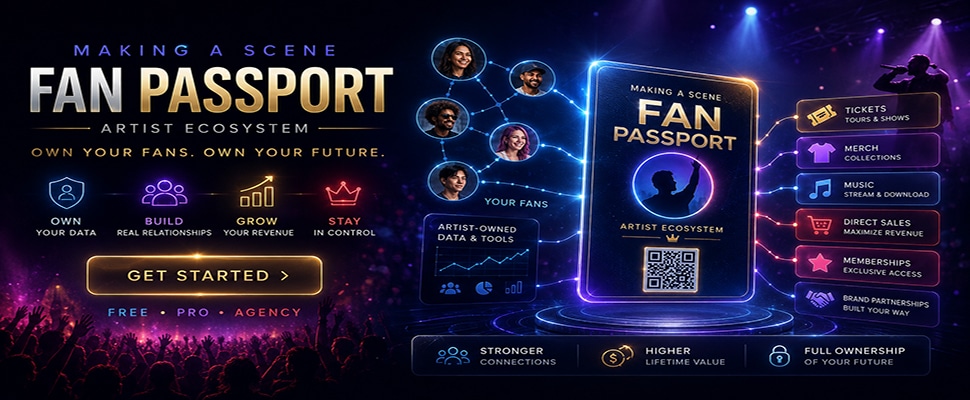
A QR code at the merchandise table can lead to a mobile-friendly signup page. The artist might offer a live recording, early access to the next show, a merchandise discount or entry into a fan reward program.
The signup page should clearly explain what the fan will receive and request permission for future communication. The artist can mention the offer from the stage without turning the performance into a seminar on customer-data management.
The merchandise table can become more than a place to sell shirts. It can connect purchases, fan signups, memberships and information about upcoming shows.
After the event, the artist can thank attendees, share photographs or video, announce the next local appearance and offer related merchandise.
The original performance then helps create attendance and revenue for the next performance. That is how live music becomes part of a connected artist business rather than a series of isolated dates.
Convenience Can Hide Dependence
Streaming dependence often begins because streaming is convenient.
The artist uploads a recording through a distributor, completes the metadata and waits for the song to appear on major services. There is no physical inventory to manufacture, no shipping department and little direct customer support.
Building direct income requires more effort. Products must be created, websites maintained, messages written, orders handled and fan information protected.
Convenience is valuable, but it can hide dependency. When another company controls discovery, communication, sales, payments and customer information, the artist may be building a business that cannot function without that company.
The easiest system today may become restrictive when prices, rules or ownership change.
Artists do not need to reject outside platforms. They will continue to need distributors, ticketing providers, payment processors, email services and other technology partners.
The goal is to make those partners replaceable.
An artist should be able to export important information and move to another provider without losing the audience, sales history and basic structure of the business. Technology should support the artist’s operation rather than become the operation.
What Universal Music Group’s Stock Decline Really Means
Universal Music Group’s July 2026 stock decline does not prove that streaming has failed. It shows that investors no longer consider ordinary streaming growth sufficient.
The recorded-music business is still expanding. Paid subscriptions are still increasing, and Universal Music Group is still generating billions of dollars in quarterly revenue.
The market’s reaction showed that financial expectations have moved beyond simply adding more subscribers. The next phase will involve higher prices, new subscription levels, catalog acquisitions, artist-centered royalty systems, superfan products, direct-to-fan commerce, advertising, artificial-intelligence licensing and deeper use of audience information.
Some of those changes will create real opportunities for artists. Others may increase pressure on smaller catalogs and deepen artist dependence on systems they do not control.
Independent musicians do not need to wait to see which version of the future arrives. They can begin protecting their careers now by building several connected sources of revenue.
Streaming should remain part of the plan, but it should feed an artist-owned business containing direct sales, live performances, merchandise, memberships, publishing, licensing and permission-based fan relationships.
Each stream can begin a longer journey. Each performance can help build the audience for the next performance. Each purchase can deepen the connection, and each permission-based signup can become a relationship the artist has the right to maintain.
The largest music companies are searching for new growth because billions of dollars in streaming revenue are no longer enough to satisfy the market. Independent artists should pay attention to that message.
One royalty statement was never a complete business plan.
 |  Spotify |  Deezer |  Breaker |
 Pocket Cast |  Radio Public |  Stitcher |  TuneIn |
 IHeart Radio |  Mixcloud |  PlayerFM |  Amazon |
 Jiosaavn |  Gaana |  Vurbl |  Audius |
 Reason.Fm | |||
Find our Podcasts on these outlets
Subscribe to Our Newsletter
Discover more from Making A Scene!
Subscribe to get the latest posts sent to your email.


