The Revenue Stack: How Indie Musicians Build Music Career One Layer at a Time




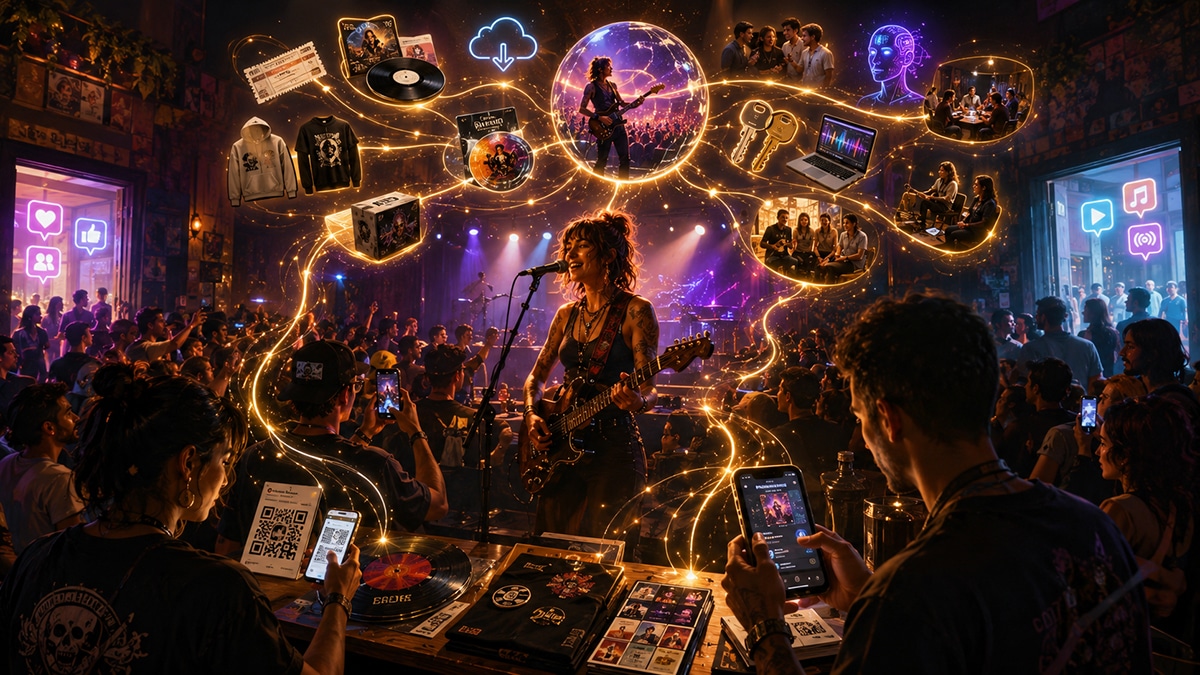
Making a Scene Presents – The Revenue Stack: How Indie Musicians Build Music Career One Layer at a Time
Listen to the Podcast Discussion
There was a time when the music business sold artists a very simple dream. Get discovered. Get signed. Get played on the radio. Get into the stores. Get on the charts. Then, if the machine liked you enough, maybe you could build a career. That system was never as fair as people pretend it was, but at least everyone understood the path. The gatekeepers owned the doors, and the artist stood outside hoping someone would let them in.
Today, the doors are everywhere. That is the good news. The bad news is that too many artists still treat the doors like they are the destination. A TikTok view is not a career. A Spotify stream is not a business model. An Instagram follower is not a customer. A YouTube subscriber is not automatically a fan. These platforms can help people find you, and that matters. Discovery still matters. But discovery without ownership is just borrowed attention. If the fan finds you on a platform and stays on that platform, the platform wins. If the fan finds you on a platform and enters your world, you win.
That is where the revenue stack comes in.
A revenue stack is the collection of income streams an artist builds around their music, their story, their live show, their catalog, their skills, their fan relationships, and their community. It is not one thing. It is not just merch. It is not just streaming. It is not just ticket sales. It is not just a Patreon page. A revenue stack is the full artist-owned business system that turns casual listeners into fans, fans into buyers, buyers into supporters, and supporters into long-term believers.
The old music business wanted artists to chase one big break. The new music business demands that artists build many smaller doors into real income. That may sound less glamorous, but it is much healthier. One viral song can disappear as fast as it arrived. One playlist placement can vanish overnight. One social platform can change its algorithm and bury your reach. But a strong revenue stack gives the artist options. It spreads risk. It creates stability. It lets the artist build something closer to a real middle-class music career instead of gambling every month on the mood of a machine.
The goal is not to become famous. Fame is not a business plan. The goal is to become valuable to the right group of people and give those people meaningful ways to support you.
Streaming and Social Media Are Doors, Not the House
Let’s get this out of the way early. Streaming services and social media platforms are not evil. They are useful. They are powerful. They are part of the modern music landscape. Ignoring them completely would be foolish. But worshiping them is just as foolish.
A platform like Spotify for Artists can help listeners find your music, watch your short-form visuals, see your artist profile, and discover upcoming releases. YouTube for Artists can give you a home for videos, performances, interviews, lyric clips, Shorts, and long-form storytelling. TikTok, Instagram, Facebook, and other social platforms can expose your music to people who may have never walked into a club, record store, or festival where you were playing. These tools are doors. Some are big doors. Some are noisy doors. Some are cracked open just enough to let a little light in.
But they are not your house.
Your house is your website, your email list, your fan database, your online store, your membership system, your direct-to-fan offers, your live show funnel, your merch table, your catalog, your licensing opportunities, your community, and your own ability to communicate with your fans without asking permission from a platform. Your house is where the value is created. Your house is where the relationship deepens. Your house is where the money actually has a chance to become meaningful.
If your entire strategy is “go listen to me on Spotify,” you are sending fans away from your business and into someone else’s. If your whole call to action is “follow me on Instagram,” you are asking fans to meet you inside a rented room owned by a company that sells ads against everyone’s attention. If your only link is a link tree full of other platform links, you are building a traffic circle, not a business.
A smart artist uses streaming and social media like a front porch. People pass by, hear something, and get curious. Then the artist invites them inside. The invitation might be a free live track, an unreleased demo, a behind-the-song video, a digital tour poster, a discount code, a fan club stamp, a private listening room, or a limited merch drop. The point is simple: every outside platform should point toward something the artist owns.
This is where too many musicians lose the game before they even start. They spend years building audiences on platforms that give them very little usable fan data. They know how many people watched a video, but they do not know who those people are. They know how many people streamed a song, but they cannot email those listeners. They know a post got likes, but they do not know which fan would buy a ticket, order vinyl, join a membership, or pay for a private show. The artist is left with numbers instead of relationships.
A revenue stack begins when the artist stops chasing numbers and starts building relationships.
What a Revenue Stack Really Means
Think of a revenue stack like a table with many legs. If the table has one leg, it falls over. If it has two legs, it wobbles. If it has three or four, it can stand. If it has ten or twelve strong legs, it becomes hard to knock down. That is what an indie artist needs in this market. Not one magic income stream. Not one platform. Not one product. A stack.
At the bottom of the stack is access. That is the free or low-cost offer that lets someone enter the artist’s world. It might be an email signup gift, a downloadable acoustic track, a phone wallpaper, a private video, a live recording, or a “new fan” digital passport stamp. This layer may not make much money by itself, but it starts the relationship. It gives the fan a reason to trade attention for access.
The next layer is the entry-level purchase. This is where the fan stops being just a follower and becomes a buyer. That shift is huge. It can be a $5 download, a $10 digital booklet, a $12 sticker pack, a $15 live EP, or a $20 shirt. The money matters, but the behavior matters more. When someone buys from you once, they are telling you they value what you do enough to act.
Above that is the core fan layer. This is where the artist offers better products, bundles, and experiences. This could include vinyl, CDs, signed posters, lyric books, limited shirts, show posters, download bundles, live recordings, and exclusive video content. The core fan may not buy everything, but they will buy things that feel real, personal, and connected to the music.
Then comes the collector layer. This is where scarcity and story matter. Not fake scarcity. Not hype garbage. Real scarcity. A signed test pressing. A handwritten lyric sheet. A numbered tour poster. A one-time live recording from a specific city. A backstage photo book. A limited run of 50 cassette tapes. A studio journal. A custom USB drive shaped like something tied to the artist’s world. A fan does not buy these things because they need another object. They buy them because they want a piece of the story.
Above that is the experience layer. This is where the artist sells access to moments, not just products. House concerts, private Zoom shows, backstage hangs, VIP soundcheck passes, songwriting workshops, listening parties, fan dinners, studio visits, online Q&A nights, and small-group masterclasses all belong here. These offers work because music is not just sound. Music is memory. Fans want to feel close to the thing that moved them.
Then comes the recurring layer. This is the heartbeat. A membership, fan club, subscription, supporter circle, or private community gives fans a way to support the artist every month. This could be built through Patreon, Ko-fi, Buy Me a Coffee, Memberful, Fourthwall, or directly through an artist-owned website using WooCommerce and membership plugins. The specific tool matters less than the value. A membership cannot just be “give me money because streaming pays badly.” That pitch gets old fast. A membership has to feel like a living room the fan wants to visit.
The higher layers include licensing, education, sponsorship, consulting, fan-funded projects, Web3 access, AI-assisted personalization, and business-to-business opportunities. This is where the stack gets interesting. A song can become a sync license. A skill can become a course. A tour route can become a local sponsor package. A fan community can become a street team. A live show can become an audio product. A rehearsal can become exclusive content. A back catalog can become a licensing library. A great story can become a podcast, book, workshop, or speaking topic.
That is the beauty of the stack. It grows from who the artist already is.
The First Rule: Your Stack Must Fit Your Reality
One of the biggest mistakes indie artists make is copying another artist’s business model without asking whether it fits their own life. A full-time touring band needs a different revenue stack than a producer who rarely plays live. A singer-songwriter with a loyal house concert audience needs a different stack than a metal band with a wild merch table. A hip-hop artist building a local streetwear culture needs a different stack than an ambient composer landing sync placements. A legacy artist with thirty years of unreleased recordings needs a different stack than a brand-new artist with three singles and no live following yet.
The right revenue stack starts with honest questions. Where are your fans most likely to meet you? Do you play live often? Do you have a strong visual identity? Do fans care about your lyrics? Do you have a story people connect with? Do you teach? Do you produce? Do you write for other people? Do you have a local scene behind you? Do you have unreleased recordings? Do you have superfans who already buy everything? Do you have a niche that brands, festivals, filmmakers, or communities understand?
A revenue stack is not about doing everything. It is about building the right mix.
A studio-only artist may not have ticket sales, but they can build around digital releases, sample packs, stem packs, remix contests, sync licensing, production tutorials, beat leases, custom songs, memberships, private listening rooms, and fan-funded recording sessions. A local gigging artist may focus on QR codes at shows, email capture, live recordings, merch bundles, local sponsor packages, birthday shoutouts, house concerts, and fan club nights. A regional touring band may build city-specific offers, tour posters, VIP soundchecks, road journals, exclusive live albums, and recurring memberships that follow the tour. A legacy artist may build archive releases, signed memorabilia, story-based video series, lyric manuscripts, masterclass content, and collector bundles around the catalog.
The stack should not feel like a costume. It should feel like an extension of the artist’s world.
The Standard Merch Layer Still Matters
Let’s not get so excited about new ideas that we forget the basics. Standard merch still matters. T-shirts, hats, hoodies, stickers, patches, posters, vinyl, CDs, downloads, tote bags, and physical bundles are still part of the indie artist business. The merch table is one of the few places where a fan’s emotional high can turn into direct support immediately. They just saw the show. They felt something. They want to take that feeling home.
The mistake is treating merch like generic band laundry. A shirt with a logo on it is fine, but it is not always enough. The better question is, “Why would this fan want this specific item from this specific artist at this specific moment?” A shirt tied to a tour has more meaning than a random shirt. A poster signed after the show has more meaning than a poster in a box. A vinyl record with a handwritten note has more meaning than a sealed product dropped into a mailer. A CD with a bonus acoustic track available only at the merch table has more value than the same album available everywhere.
Artists can sell physical goods through Bandcamp, Shopify, WooCommerce, Fourthwall, Bonfire, or other direct-to-fan tools. Print-on-demand services like Printful and Printify can help artists test designs without buying boxes of inventory upfront. Manufacturing services like Disc Makers, Kunaki, and elasticStage can help artists create CDs, vinyl, or on-demand physical media, depending on the product and budget.
But the tool is not the strategy. The offer is the strategy.
A $25 shirt is a product. A $45 shirt with a QR code that unlocks a private tour diary is a product plus access. A $75 vinyl bundle with a signed insert, digital stems, and a fan passport stamp is a collectible experience. A $150 “recording session supporter box” with a limited shirt, demo download, handwritten thank-you card, and name in the liner notes is not just merch. It is participation.
That is how an artist starts thinking like a business builder instead of a product seller.
The Digital Product Layer Is Wide Open
Digital products may be the most underused layer in the indie artist revenue stack. Artists often think digital means “download the album,” but that is only the beginning. The real opportunity is creating digital items that feel personal, useful, exclusive, or collectible.
A songwriter can sell a lyric book with stories behind each song. A producer can sell a sample pack built from their own drum sounds, guitar loops, synth textures, vocal chops, or field recordings. A band can sell stems for remix fans. A guitarist can sell tone presets. A vocalist can sell warm-up exercises. A drummer can sell groove packs. A composer can sell meditation loops, soundtrack beds, or licensing-ready instrumental bundles. A touring act can sell city-specific live recordings. A folk artist can sell a digital songbook with chord charts. A hip-hop artist can sell instrumental versions, acapellas, and remix licenses. A jam band can sell high-quality show archives. A worship artist can sell chord charts and backing tracks. A metal band can sell guitar tabs and drum transcriptions. A children’s music artist can sell printable activity sheets. A blues artist can sell lesson videos on phrasing and feel. A DJ can sell curated playlists, mix notes, or edit packs when rights allow it.
Digital products work because they do not require shipping, do not take up a merch table, and can be bundled in creative ways. They can also serve different fan types. Some fans want to listen. Some want to learn. Some want to remix. Some want to collect. Some want to understand the story. Some want tools they can use in their own creative work.
The artist website should make these offers easy to find. A store built with WooCommerce or Shopify can sell downloads, bundles, discount codes, ticket add-ons, and member-only products. Bandcamp remains useful for albums, downloads, merch, and fan-supported music sales. The important thing is that digital products should not feel like leftovers. They should feel like special doors inside the artist’s world.
One powerful idea is the “song universe” bundle. Instead of selling only a single track, the artist sells the song, acoustic demo, voice memo, lyric sheet, studio notes, alternate mix, behind-the-song video, and a limited digital poster. Suddenly one song becomes a small world. That small world can sell for more than a stream ever could. More importantly, it gives the fan a deeper emotional connection.
That is the heart of a revenue stack. Take one creative moment and build more value around it.
The Exclusive Content Layer: Give Fans What They Cannot Get on Spotify
This is where artists need to get very clear. The fan does not need to buy what they can already get for free or almost free. If your offer is simply “hear the same song that is already on Spotify,” there is not much urgency. But if your offer is “hear the first rough demo,” “watch the private acoustic performance,” “get the live version from your city,” “read the real story behind the song,” or “join the listening party before release day,” now there is value.
Exclusivity does not mean hiding everything behind a paywall. It means making certain moments special. Fans still need public content. They need the door. But the deeper experience should belong to the people who step inside.
A great exclusive content stack might include a monthly unreleased demo, a private video diary, a livestream rehearsal, a member-only Q&A, a fan vote on the next cover song, early ticket access, private merch drops, downloadable live recordings, and a yearly collector package. None of these need to be complicated. They need to be consistent, honest, and worth the fan’s time.
The artist can host video privately through tools like Vimeo, gated pages on their own website, membership plugins, or direct fan club platforms. The point is to avoid building the entire experience inside an advertising platform. YouTube can be a discovery engine, but not every video needs to live as public content surrounded by distractions. Some videos should live inside the artist’s ecosystem where the artist controls the context, the offer, and the relationship.
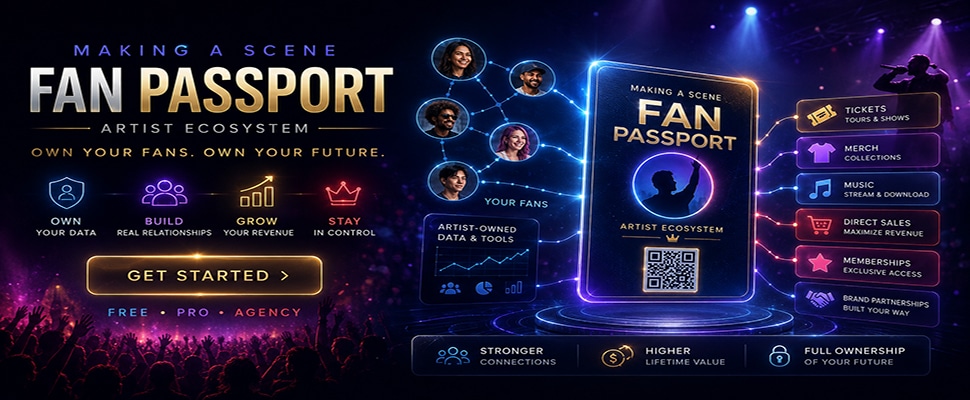
This is also where a Fan Passport becomes useful as a memory system. If a fan attends a show, scans a QR code, joins the list, buys a merch bundle, unlocks a private video, or earns a digital stamp, that action becomes part of the relationship. With permission and transparency, the artist can remember what the fan cares about. A fan who attends three shows should not be treated the same as someone who clicked one link two years ago. A fan who buys vinyl should see collector offers. A fan who watches guitar lesson content should see workshop offers. A fan who scans at a live show should get a show-specific follow-up.
That is not manipulation. That is good hospitality.
The old industry treated fans like market segments. The new artist-owned model treats them like people with history.
The Membership Layer: Build a Club, Not a Tip Jar
Memberships can be powerful, but only when they are built around belonging. Too many artists launch memberships with vague promises and then get tired after three months. The problem is not that fans will not support artists. The problem is that fans need to understand what they are joining.
A good membership has a clear identity. It might be “The Back Room,” “The Listening Society,” “The Road Crew,” “The Kitchen Table Sessions,” “The Archive Club,” “The Beat Lab,” “The Songwriter Circle,” or “The Vinyl Vault.” The name should fit the artist’s world. The fan should feel like they are entering a room with a purpose.
A simple membership could have three tiers. The first tier might offer early access, monthly updates, and a private song or video. The second tier might add live sessions, discounts, digital downloads, and voting rights on certain creative choices. The third tier might include signed annual packages, VIP ticket access, private group hangs, and collector-only drops. The exact price depends on the audience, but the structure should be easy to understand. Confused fans do not buy.
Platforms like Patreon, Ko-fi, Buy Me a Coffee, Memberful, and Fourthwall can help artists launch memberships without building everything from scratch. Artists with stronger web infrastructure can build memberships directly into their own WordPress ecosystem with WooCommerce and related membership tools. The artist-owned path is usually stronger long term because it keeps more of the relationship close to the artist’s own website, but the best tool is the one the artist will actually use consistently.
A membership should not be only about content. Content is part of it, but the real product is connection. Fans join because they want to feel closer to the artist’s journey. They want to see the process. They want to know what is coming. They want to be part of something before the public sees it. They want to help keep the music alive.
That is a very different energy than begging for support. It is not “please help me survive.” It is “come closer, because this is where the real story lives.”
The Live Show Revenue Stack
A live show should never be treated as just one night. A live show is a revenue event, a content event, a data event, a relationship event, and a memory event. The artist who understands that can turn a $500 gig into a much bigger long-term opportunity.
The show starts before the doors open. The artist can sell advance tickets, VIP upgrades, pre-order merch, limited city posters, meet-and-greet passes, and fan club early entry. The artist can offer a “show bundle” that includes a ticket, signed poster, download card, and a private post-show recording. The artist can invite fans to join the email list before the show in exchange for an unreleased live track.
At the merch table, the stack continues. A QR code or NFC tap can lead fans to a show-specific landing page. That page can offer a free gift in exchange for email or phone consent. The free gift should be something they cannot get on a streaming service. A live track, backstage photo set, hidden demo, discount code, or digital show stamp all work. Once the fan joins, the artist can send a follow-up email with the gift, another email asking what they thought, another small reward for replying, and then a real offer. This is how a fan moves from a crowd member to a known supporter.
After the show, the stack keeps working. The artist can sell the live recording from that night, a photo gallery, a city-specific poster, a thank-you video, or a discount on the next show. Fans who scanned at the show can be invited into a local street team. Fans who bought merch can get early access to the next drop. Fans who brought friends can get a reward. Fans who attended multiple shows can earn a special badge, stamp, or VIP offer.
Ticketing platforms like Eventbrite, concert discovery tools like Bandsintown for Artists, and ticketing partners like DICE can help with visibility, ticketing, and event promotion. But again, the point is not to stop there. Every ticket buyer should have a path into the artist’s ecosystem. Every show should build the next show. Every city should grow the artist’s map.
The merch table is not a table. It is a portal.
House Concerts, Private Events, and Small-Room Gold
Not every artist needs to chase bigger rooms right away. Sometimes the better business is smaller, deeper, and more personal. House concerts, private events, backyard shows, listening-room events, and small sponsor-backed performances can become powerful parts of a revenue stack.
A house concert can be sold as a private experience with a guaranteed fee, merch table, email capture, and optional VIP add-ons. A fan who loves the artist may host twenty people in a living room, backyard, barn, gallery, or community space. Everyone who attends gets a unique memory. The artist gets a better connection than they might get from playing in the corner of a noisy bar for tips.
A private event can also become a content source. The artist can record a special acoustic set, capture photos, create a limited “house concert sessions” release, or offer hosts a custom recording. The key is to treat the event as more than performance income. It can lead to merch, memberships, referrals, future bookings, and long-term fan relationships.
Artists can also create subscription-style private show offers. Imagine a “four seasons concert club” where fans in a region host one private show each season. Or a “neighborhood tour” where a fan gathers ten households and the artist plays a small acoustic show. Or a “birthday song package” where a fan hires the artist for a short custom video performance. These are not fantasy ideas. They are practical offers when the artist has a real relationship with fans.
This is where the middle-class music career starts to look different from the fame machine. The artist does not need a million passive listeners. The artist needs a few hundred active supporters who want to participate.
The Collector and Scarcity Layer
Collectors are not just buying objects. They are buying proof that they were there, that they cared, that they got close to the story. That is why limited items can work so well when they are honest and artist-specific.
A collector layer can include signed vinyl, colored vinyl, test pressings, cassettes, numbered CDs, handwritten lyric sheets, original artwork, stage-worn items, used guitar strings, drum heads, setlists, show posters, tour laminates, signed Polaroids, studio notebooks, alternate album covers, and limited photo books. It can also include digital collectibles, private archives, and member-only media.
The difference between meaningful scarcity and cheap hype is story. “Only 100 available” is not enough by itself. Why do these 100 matter? Were they made for a certain tour? A certain anniversary? A specific city? A recording session? A fan-funded project? A live performance? A collector wants context.
One strong idea is the “song relic” bundle. For a specific song, the artist creates a limited package that includes the final recording, original demo, handwritten lyrics, studio notes, alternate mix, signed art print, and a short video explaining the song. Another idea is the “city relic” bundle, where each tour stop gets its own poster, live track, and digital stamp. Another is the “recording room box,” where supporters of an album get pieces of the process, not just the final product.
Companies like Disc Makers, Kunaki, and elasticStage can help artists think through physical media options, while direct-to-fan platforms like Bandcamp, Shopify, and WooCommerce can help sell and bundle those offers. For artists who want more experimental vinyl concepts, a direct-to-vinyl idea inspired by companies like Leesta Vall Sound Recordings shows how a performance itself can become the product.
Collectors want to own the moment. Give them a real one.
The Education and Skill Layer
Many musicians forget that their skills have value beyond their songs. If you can write, sing, play, produce, engineer, arrange, book shows, build a live rig, run a merch table, design a tour flyer, or teach someone how to survive a scene, you may have another revenue layer.
The education layer can include private lessons, group workshops, video courses, downloadable guides, masterclasses, consulting calls, critique sessions, production templates, DAW session breakdowns, songwriting circles, vocal coaching, guitar tone sessions, beat-making classes, stagecraft coaching, and music business workshops. This can be especially useful for artists whose audience includes other musicians.
This does not mean every artist needs to become a guru. Please, no more fake gurus. The internet has enough people yelling into ring lights about seven-figure secrets from rented cars. But honest teaching is different. If you know something useful, and someone wants to learn it, that knowledge has value.
A working artist can teach “how I built my merch table,” “how I recorded my album at home,” “how I book a regional run,” “how I write lyrics from real stories,” “how I build guitar tones,” “how I prep stems for sync,” or “how I use AI to organize my release plan.” A producer can sell mix reviews. A songwriter can host a monthly critique circle. A touring artist can teach younger bands how to route shows without going broke.
The education layer also builds authority. A fan who learns from you may become a buyer, collaborator, student, or supporter. A musician who buys your course may later hire you to produce, mix, write, or consult. The revenue stack becomes stronger when the artist’s knowledge becomes part of the offer.
Licensing, Publishing, and the Business-to-Business Layer
Not every revenue stream comes directly from fans. Some of the best money can come from businesses, filmmakers, podcasters, advertisers, game developers, YouTubers, theaters, dance companies, local brands, and music supervisors who need music for projects.
This is where publishing, sync licensing, and catalog organization matter. Artists should register songs properly, understand who owns the composition and master, and make sure they are collecting what they are owed. In the United States, songwriters and publishers often work with performing rights organizations such as ASCAP, BMI, SESAC, or GMR, depending on eligibility and fit. Artists may also need services like SoundExchange for certain digital performance royalties connected to sound recordings, and publishing administration tools like Songtrust for global publishing royalty collection.
Sync and licensing require preparation. A music supervisor does not want a messy email with a streaming link and no metadata. They want clean files, instrumentals, lyrics, contact info, ownership details, mood tags, tempos, and easy clearance. Platforms like DISCO can help organize and pitch catalog assets. Licensing companies and marketplaces such as Songtradr, Marmoset, and Musicbed show how music can live in a business-to-business world beyond streaming.
For indie artists, the lesson is simple. Your song is not only a song. It can be a recording, a composition, a sync asset, an instrumental, a trailer cue, a podcast theme, a wedding video license, a dance performance piece, a local business campaign, a documentary cue, or a YouTube creator license. Not every song fits every use, but a well-organized catalog creates opportunities.
This layer is not instant money. It takes patience. But it is part of a mature revenue stack because it allows music to earn outside the fan purchase cycle.
Local Sponsorship and Community Partnerships
Here is one of the most overlooked revenue streams for indie artists: local business partnerships. Not cheesy “please sponsor my dream” begging. Real partnerships.
A regional artist with a loyal audience can work with local coffee shops, breweries, restaurants, clothing stores, tattoo shops, music stores, bookstores, record stores, instrument shops, hotels, and tourism groups. The offer should be clear. The artist can bring attention, content, live experience, and community energy. The business can provide money, space, products, cross-promotion, or travel support.
A local sponsor might support a live video series. A coffee shop might sponsor an acoustic session. A brewery might co-create a limited beer for an album release. A clothing store might collaborate on a capsule merch drop. A boutique hotel might host traveling fans for a weekend show package. A restaurant might sponsor a fan dinner before a concert. A music store might sponsor a workshop. A tourism board might support a “songs from our town” series.
The key is to build offers that make sense for both sides. A sponsor does not just want a logo on a flyer. They want connection to an audience. The artist should be able to explain who their fans are, where they live, what kind of events they attend, how many email subscribers they have, and what the sponsor receives.
This is another reason fan data matters. If you can show that you have 500 fans within 30 miles of a city, that is useful. If you can show that 100 fans scanned at your last three local shows, that is useful. If you know which fans buy tickets, merch, or memberships, that is useful. A Fan Passport-style system can help turn live fan activity into a memory map. That map can support smarter offers.
The local scene is not just a place to play. It is part of the stack.
AI as a Revenue Stack Multiplier
AI should not replace the artist. That is the boring, lazy, soulless version of the future. The better use of AI is to help indie artists do more with the time, ideas, and material they already have.
An artist can use ChatGPT to brainstorm offer ideas, write first drafts of email campaigns, organize release calendars, outline fan club tiers, create sponsor pitch drafts, generate product descriptions, build customer segments, and repurpose long stories into social posts that point back to the artist’s website. Tools like Canva can help create merch mockups, posters, digital booklets, social graphics, and fan club visuals. Descript can help edit podcasts, video diaries, interviews, lyric explanations, and behind-the-scenes content. CapCut can help turn raw video into short-form content that opens the door to the artist ecosystem.
The money is not in “using AI.” The money is in using AI to build and sell better offers faster. AI can help an artist turn one live show into ten pieces of content, one song into a full digital bundle, one album into a story campaign, one merch drop into a segmented email sequence, and one fan survey into better product ideas.
AI can also help personalize the revenue stack. Fans who joined at a live show can receive show-based offers. Fans who bought vinyl can receive collector offers. Fans who clicked on lesson content can receive workshop offers. Fans who attended a livestream can receive replay bundles. This should always be done with respect, permission, and common sense. The point is not to stalk fans. The point is to serve them better.
The artist who uses AI well does not become less human. They become more able to show up as human because the machine handles some of the busywork.
Web3 Without the Hype Circus
Web3 has been buried under so much hype, speculation, scams, and confusing language that many musicians understandably roll their eyes when they hear it. Fair enough. The artist does not need a cartoon monkey or a fake coin to build a career. But the useful ideas inside Web3 should not be thrown away just because the hype machine got stupid.
The useful idea is ownership-based access. A fan can hold a digital item that proves they attended a show, supported a project, joined a fan club, unlocked a private release, or earned a special status inside the artist’s world. That item can become a key. It can unlock content, discounts, early tickets, community rooms, private videos, or collector offers.
Tools like POAP show how proof-of-attendance collectibles can mark moments. Unlock Protocol shows how token-based memberships and access can work. Manifold Studio gives creators tools for minting digital collectibles. Paragraph blends publishing, email, wallet-based subscriptions, and audience ownership ideas. These tools are not magic. They are not required. But they point toward a future where a fan’s history with an artist can become portable, ownable, and useful.
For indie musicians, Web3 should be simple. Do not lead with jargon. Do not ask fans to become crypto experts. Do not build financial speculation into the center of your fan relationship. Use the technology only when it makes the fan experience better. A digital show stamp is easy to understand. A token-gated archive is easy to understand. A collector pass that unlocks annual benefits is easy to understand. A fan passport that remembers attendance, purchases, and support is easy to understand.
The value is not the token. The value is what the token unlocks.
Building Tiers That Actually Make Sense
A strong revenue stack often works best when it has clear tiers. Tiers help fans choose their level of support. Some fans only want a free download. Some will buy a shirt. Some will buy every vinyl variant. Some will pay for a private show. Some will join a membership for years. The artist’s job is not to force every fan into the same offer. The artist’s job is to build a ladder.
The free tier is the welcome mat. It should give real value, not junk. A fan who gives you their email should receive something worth having. That could be an unreleased song, a live track, a digital poster, a behind-the-song video, or a fan passport stamp. This tier is about trust.
The entry tier is the first purchase. It should be easy, low-risk, and emotionally connected. A $5 download, a $10 digital bundle, a $15 sticker pack, a $20 show poster, or a $25 shirt can work. This tier turns attention into action.
The core tier is for real fans. This is where albums, vinyl, CDs, hats, hoodies, signed posters, lyric books, ticket bundles, and digital collections live. The fan already cares. Now the artist gives them something more meaningful.
The collector tier is for scarcity. Numbered items, signed items, limited runs, handwritten material, test pressings, special edition media, city-specific show drops, and archive releases belong here. The fan is paying for story, memory, and closeness.
The experience tier is for access. VIP soundchecks, private concerts, backstage hangs, livestream meetups, listening parties, songwriting sessions, studio tours, workshops, and fan dinners live here. The fan is paying to be part of the moment.
The recurring tier is for belonging. Monthly memberships, annual fan clubs, supporter circles, private communities, archive clubs, and road crew memberships belong here. This tier helps stabilize income.
The patron tier is for deep supporters. These fans may help fund an album, sponsor a tour stop, underwrite a video, commission a song, host a house concert, or support a recording session. This tier requires trust and transparency.
The business tier is for outside income. Licensing, publishing, sponsorships, teaching, consulting, session work, and brand partnerships live here. This tier expands the artist beyond fan purchases.
This ladder lets the artist serve different fans without making anyone feel excluded. The casual fan can enter. The superfan can go deeper. The artist can build a business that respects both.
Revenue Stack Examples by Artist Stage
A brand-new artist with no touring history should not start by pressing 500 records and launching a complicated membership. That is a good way to build debt and disappointment. A new artist should start simple. Build a website. Capture emails. Offer a free song or behind-the-scenes video. Sell digital downloads through Bandcamp. Test small merch runs or print-on-demand items through Printful or Printify. Use social content to tell the story and point people back to the artist’s own list. The first goal is not maximum income. The first goal is proof of fan behavior.
A local gigging artist should make the live show the center of the stack. Every show should have a QR code or NFC tap that brings fans into the artist’s world. The artist should offer a show-specific free gift, collect emails with permission, sell merch bundles, record select performances, and follow up after the show. A local artist can also build partnerships with nearby businesses, offer house concerts, and create a simple monthly fan club for the people who already show up.
A regional touring artist should build city-based revenue. Each city can have its own poster, live recording, email segment, local sponsor, and fan passport stamp. Fans who attend in Nashville should not receive the exact same follow-up as fans in Chicago. Regional artists can offer VIP soundchecks, tour diaries, road crew memberships, city-specific merch, and recurring supporter tiers that help fund gas, hotels, and production costs.
A national touring artist should professionalize the stack. This means better inventory planning, stronger email automation, VIP packages, limited drops, memberships, archive recordings, licensing outreach, sponsor decks, and fan data segmentation. At this stage, the artist should know which products sell, which cities perform, which fans buy, and which offers need to be retired.
A studio-based artist should build around digital depth. This stack may include sample packs, stems, remix kits, production breakdowns, sync-ready instrumentals, memberships, private listening rooms, educational content, and collaborations. The artist may not have a merch table, but they can have a strong digital store and licensing catalog.
A legacy artist should build around the archive. Old demos, unreleased live recordings, stories, photos, handwritten lyrics, anniversary editions, commentary tracks, masterclasses, and collector bundles can turn history into revenue. A legacy artist has something younger artists do not have yet: time. Time creates stories. Stories create value.
A niche community artist should build around identity. Maybe the music serves a spiritual community, gaming community, activist community, regional culture, dance scene, wellness space, or storytelling tradition. The stack should fit that world. It might include retreats, workshops, themed merch, community events, private ceremonies, educational resources, or partnerships with aligned organizations.
There is no one perfect stack. There is only the stack that fits the artist and serves the fan.
The 30-Day Revenue Stack Roadmap
In the first 30 days, the artist should stop sending all traffic to platforms they do not own. That does not mean deleting Spotify, YouTube, TikTok, or Instagram. It means changing the call to action. Every bio, video description, show flyer, QR code, and announcement should point toward the artist’s owned hub. That hub can be a simple website with a clear offer, email signup, store, show dates, and a reason to join.
The artist should create one strong free gift. Not a throwaway. A real gift. An unreleased acoustic track, live recording, demo, digital poster, video story, or fan passport stamp. Then the artist should create one entry-level paid offer. A download bundle, shirt, sticker pack, signed poster, or small digital collection. The goal is to test whether people will move from attention to action.
The artist should also clean up the basics. Register songs properly. Make sure distribution is handled through a service like DistroKid or another distributor of choice. Make sure performance rights and royalty collection are not being ignored. Set up a store with a practical tool like Bandcamp, Shopify, WooCommerce, or Fourthwall. Set up email through a tool like Mailchimp, Kit, or another email provider that fits the artist’s needs.
Thirty days is not enough time to build the whole business. It is enough time to stop leaking fan attention.
The 60-Day Revenue Stack Roadmap
By 60 days, the artist should start building tiers. The free gift should lead to a follow-up sequence. The first email delivers the gift. The second asks a simple human question. The third offers another small piece of value. The fourth introduces a paid offer. This does not need to feel like corporate marketing. It should feel like a conversation.
The artist should create a core bundle. This might include a shirt, signed CD, download, sticker, and private video. Or vinyl, lyric sheet, digital booklet, and acoustic demo. Or a ticket, poster, and live recording. The bundle should be easier and more valuable than buying items separately.
The artist should also create one exclusive offer that cannot be found on streaming. This is important. If everything the artist offers is already public, fans have no reason to go deeper. A private live recording, behind-the-song video, rehearsal stream, or member-only demo gives fans a reason to step inside.
By 60 days, live artists should have show QR codes in place. Studio artists should have digital products in place. Teaching artists should have a workshop offer in place. Artists with strong visuals should have a limited merch drop in place. The stack should begin to reflect the artist’s actual strengths.
The 90-Day Revenue Stack Roadmap
By 90 days, the artist should look at behavior. Who joined the list? Who bought? What did they buy? Which posts drove traffic? Which shows produced signups? Which offers got ignored? Which fans replied? Which city showed up? This is where the artist stops guessing.
Now the artist can add a recurring layer. A simple membership is enough. Do not build fifteen tiers. Start with a clear monthly or annual offer that can be delivered without burning out. The membership might include one exclusive item per month, early access, private updates, discounts, and occasional live hangouts. Keep it sustainable.
The artist should also begin building one higher-ticket offer. This could be a house concert, VIP experience, collector box, sponsor package, workshop, private lesson bundle, or fan-funded recording package. Higher-ticket offers do not need massive audiences. They need trust.
At 90 days, the stack should have a free door, an entry product, a core bundle, an exclusive offer, a recurring offer, and one premium offer. That is a real foundation. It may not replace a full-time income immediately, but it changes the direction of the artist’s career. The artist is no longer just posting and hoping. The artist is building.
The Real Product Is Not the Song. It Is the Relationship Around the Song.
This may be the hardest shift for musicians, because musicians love songs. They should. The song is sacred. The song is the reason the whole thing exists. But in the business of independent music, the recording alone is rarely enough to support the artist. The recording is the seed. The revenue stack is the garden.
A song can become a download, a vinyl record, a live version, an acoustic version, a lyric sheet, a story video, a remix pack, a sync asset, a lesson, a private listening party, a collector bundle, a fan club moment, a digital stamp, a tour theme, a sponsor opportunity, and a memory. The artist is not cheapening the song by building around it. The artist is giving the song more ways to live.
The platforms trained artists to think small. Upload the song. Post the clip. Chase the stream. Watch the numbers. Hope something happens. But hope is not infrastructure. Hope does not pay the band. Hope does not fix the van. Hope does not fund the next record. Hope does not build a music industry middle class.
Ownership does.
The independent artist does not need to reject every modern tool. The artist needs to put those tools in the right order. Social media creates discovery. Streaming creates access. The artist website creates home. Email creates communication. Fan data creates memory. Merch creates tangible support. Membership creates recurring support. Experiences create emotional depth. Licensing creates outside opportunity. AI creates leverage. Web3 can create proof and access when used correctly. The revenue stack connects all of it.
This is not about squeezing fans for money. That is the wrong spirit. This is about giving fans more meaningful ways to support the artists they already care about. Some fans will never buy anything, and that is okay. Some will buy a shirt once. Some will join the club. Some will host a house concert. Some will fund the next record. Some will tell ten friends. The artist’s job is to create the path.
The old industry built a system where artists waited to be chosen. The new indie artist builds a system where fans can choose them directly.
That is the revolution hiding in plain sight. Not one big break. Not one viral video. Not one magic platform. A stack. A living, breathing, artist-owned stack that grows with every song, every show, every fan, every story, and every act of support.
That is how we stop treating independent music like a lottery ticket.
That is how we start building a music industry middle class.
 |  Spotify |  Deezer |  Breaker |
 Pocket Cast |  Radio Public |  Stitcher |  TuneIn |
 IHeart Radio |  Mixcloud |  PlayerFM |  Amazon |
 Jiosaavn |  Gaana |  Vurbl |  Audius |
 Reason.Fm | |||
Find our Podcasts on these outlets
Subscribe to Our Newsletter
Discover more from Making A Scene!
Subscribe to get the latest posts sent to your email.


