How to Create a Local Music Scene




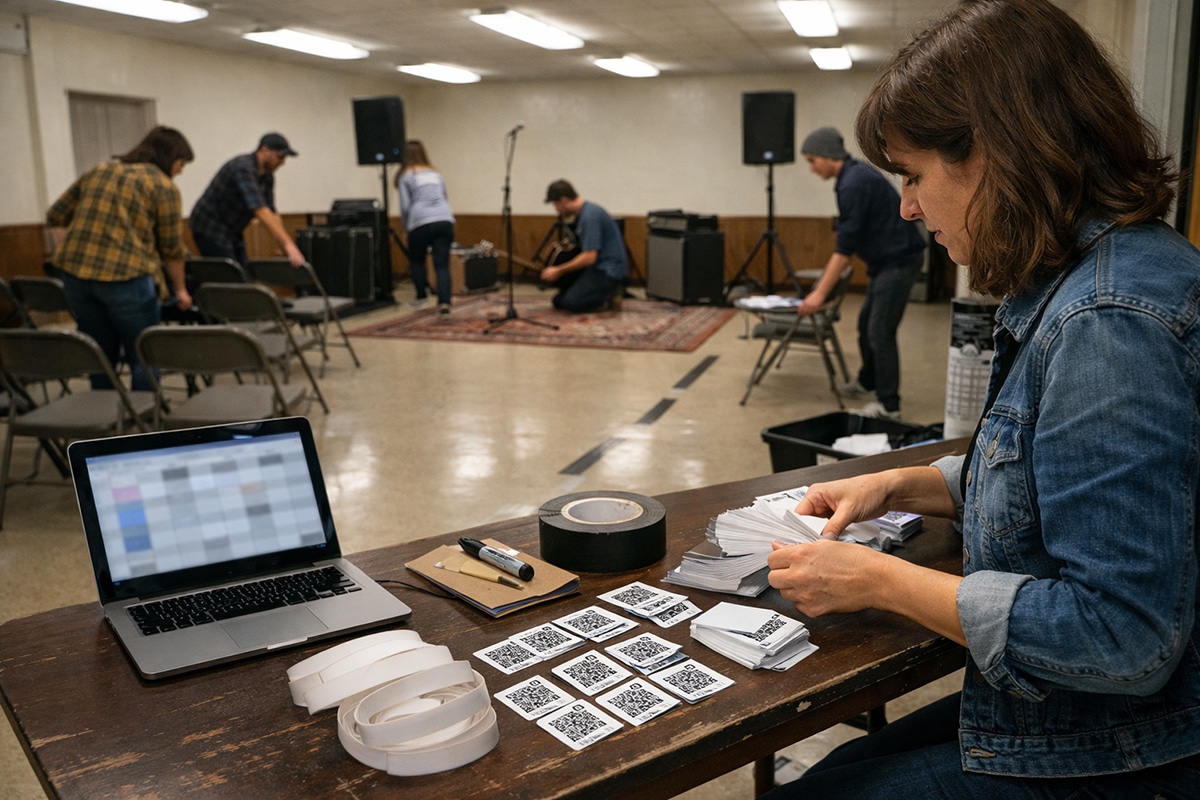
Making a Scene Presents – How to Create a Local Music Scene
How indie artists can “Make a Scene” again with AI, Web3, and real-world hustle
Listen to the Podcast Discussion to Gain More Insight into creating a local Music Scene
If you’re waiting for your local scene to “come back,” you might be waiting a long time.
That’s not because your town stopped caring about music. It’s because the pandemic didn’t just shut down venues. It broke habits. It changed what people consider “worth leaving the house for.” It raised costs for everybody. It made small rooms more fragile. It also trained a lot of artists to aim their whole career at the internet, even though the internet is the worst place to build the kind of trust that turns strangers into regulars.
A local music scene is not a mood. It’s a machine. It’s a repeatable system that turns live music into a community habit, and turns that habit into money that stays in the hands of the people doing the work.
That system matters even more now because independent stages have been under real stress. The National Independent Venue Association’s State of Live reporting has said that 64% of independent stages nationwide reported being unprofitable in 2025. When most rooms are struggling to keep the lights on, artists can’t treat them like disposable backdrops. And venues can’t treat artists like interchangeable labor.
If you want a scene in any U.S. town or city, the move is simple to say and harder to live: artists have to build it together, on purpose, with a plan that creates repeat attendance and direct-to-fan revenue. AI makes the admin lighter. Web3 makes loyalty and membership more ownable. Community groups like Blues Societies and Folk music organizations show you what “repeat culture” looks like, because they’ve been doing it for decades.
This is the Making a Scene philosophy in action. You build a music industry middle class by owning your music, owning your fan data, and owning your fan relationships. A local scene is where those three things stop being theory and start being rent money.
WHAT A “SCENE” REALLY IS (AND WHY IT PAYS)
People talk about scenes like they’re magic. Like a scene appears when a city gets cool enough, or when a few great bands show up, or when the right venue opens. That’s not how it actually works.
A scene is a loop.
Fans know where to look, because there’s a reliable calendar and a reliable place to hear about shows. Artists know how to work together, because they share bills, share audiences, and don’t stack three good shows on the same night like they’re trying to sabotage each other. Venues book more originals because risk goes down when the crowd is predictable. The crowd becomes predictable because the nights repeat and people trust the experience. Then the money gets steadier. Ticket sales improve, merch sales improve, tips improve, and the artist’s email list grows so the next show doesn’t start from zero.
That’s the part a lot of artists miss. A scene is not just culture. It’s infrastructure.
When it’s working, it creates a local music economy. Not just for the bands, but for photographers, sound techs, designers, poster printers, local studios, and small vendors who can plug into show nights. It’s how more people earn enough to keep making music without needing a viral miracle.
THE POST-PANDEMIC HANGOVER (AND WHY IT HIT LOCAL SCENES HARD)
A lot of things are “back,” but the old rhythm isn’t.
Before the pandemic, going out was a habit. After the pandemic, going out is a decision. People ask, “How much is it?” “How late is it?” “How hard is parking?” “Is it safe?” “Is it going to be packed?” “Do I know anyone there?” “Will I enjoy it, or will I stand awkwardly and leave after 20 minutes?”
At the same time, venues got squeezed. Costs rose. Staffing got harder. Insurance got weirder. Rent got uglier in a lot of markets. That’s why the State of Live reporting hits so hard. You can love local venues and still admit many of them are financially unstable. NIVA’s reporting points to a huge economic footprint for the independent live sector while also highlighting widespread unprofitability among independent stages in 2024.
So if you’re an indie artist, the lesson is not “venues are failing, oh well.” The lesson is “if we don’t build a healthier local loop, we’ll have fewer stages to build careers on.”
That loop has to be designed to bring people out again, and it has to be designed to pay artists more reliably than “hope the bar is busy.”
THE SCENE PACT: ARTISTS AND VENUES AS ALLIES, NOT OPPONENTS
There’s a toxic old dynamic in local music that still shows up everywhere. Venues act like artists should be grateful for crumbs. Artists act like venues are exploiters by default. Everybody grumbles about door deals. Everybody posts a bitter rant. Nothing improves.
A post-pandemic scene can’t afford that.
The real upgrade is partnership. Artists stop pitching “book me.” Artists start pitching “let’s build a monthly night that makes your room predictable and makes our income predictable.” Venues stop seeing original nights as a gamble. Venues start seeing them as a community product that can be grown like a series.
This is how you flip the power dynamic without being a jerk about it. You’re not begging. You’re proposing a system.
And when you propose a system, you can build better economics. You can structure a night so artists get paid fairly, the venue doesn’t lose money, and fans feel like the ticket price is worth it. That’s how you build a local middle class instead of a local hunger games.
BUILD THE SCENE STACK (OWNED CHANNELS FIRST)
A scene dies when everything depends on social media. Algorithms don’t care if your town has a show tonight. They care if your post keeps people scrolling.
If you want a scene that lasts, you need a stack that you control.
You need a website or landing page where people can always find the next event and join your list. If you’re on WordPress, that’s perfect because you can own the whole pipeline. You need email because email is the closest thing to owned reach. You can send through a platform like SendGrid at https://sendgrid.com/, MailerLite at https://www.mailerlite.com/, or ConvertKit at https://convertkit.com/. The “best” one is the one you will actually use every week.
You also need a shared calendar that makes the scene visible. Google Calendar at https://calendar.google.com/ is enough. Notion at https://www.notion.so/ or Airtable at https://airtable.com/ can make it cleaner if your community likes organizing. The tool doesn’t matter as much as the habit. Fans should not have to hunt for what’s happening.
You need a coordination space for the artist community that isn’t chaos. Discord at https://discord.com/ works well because you can set up channels for booking, promo swaps, carpools, gear sharing, volunteers, and venue leads. If your crowd is less “online community” and more “text me,” WhatsApp at https://www.whatsapp.com/ or Telegram at https://telegram.org/ can work.
Then you set one rule that changes everything: every show grows the list.
Not “we should.” Every show grows the list. That is how you turn a scene from random to compounding.
AI AS YOUR SCENE ASSISTANT (NOT YOUR PERSONALITY)
Most indie artists don’t fail because the music is bad. They fail because the admin is endless.
That’s where AI is actually useful. Not as a gimmick. As staff.
ChatGPT at https://chatgpt.com/ can write your event descriptions, draft venue outreach emails, create a press release, generate a run-of-show, and turn one announcement into a week of posts that still sound like you after you edit them. Gemini at https://gemini.google.com/ and Claude at https://claude.ai/ can do similar work if you prefer their tone.
Canva at https://www.canva.com/ or Adobe Express at https://www.adobe.com/express/ can turn that copy into clean flyers, stories, and posters. Buffer at https://buffer.com/ or Metricool at https://metricool.com/ can schedule content so you’re not trying to promote a show at 1:00 a.m. while also mixing a track.
The key is how you use it. AI should not be your voice. It should be your first draft machine, your checklist machine, your follow-up machine, and your “make this simpler” machine. The human part is still the most important part. Calling the venue manager. Talking to fans at the door. Meeting the folk society organizer. Showing up consistently.
AI just helps you keep the system running without burning out.
WEB3 WITHOUT THE HYPE: LOYALTY, MEMBERSHIP, AND PROOF
Here’s the easiest way to think about Web3 in a local scene. It’s a way to create membership and proof that you control, instead of letting platforms control it.
In the old world, loyalty is trapped inside Instagram likes and Facebook event RSVPs. You don’t own that. You can’t move it. You can’t build real perks around it without begging a platform to show your posts.
Web3 tools can let you build “scene passes” that function like membership cards, and “attendance stamps” that function like modern ticket stubs fans can keep.
Unlock Protocol is one of the clearest examples because it’s built around memberships and subscriptions, and it also supports event ticketing and check-in features in its documented feature set. https://unlock-protocol.com/ and the docs are at https://docs.unlock-protocol.com/.
POAP, short for Proof of Attendance Protocol, is built around issuing digital collectibles as proof someone participated in something, basically like a stamp that lives with the fan. https://poap.xyz/ and their protocol explainer is at https://poap.xyz/about-the-protocol.
The big idea is not “turn your town into crypto.” The big idea is retention. If fans have a pass, a stamp, or a collectible that unlocks real perks like early access, reserved seating, merch discounts, or private listening rooms, they come back. When they come back, your venue partners get steadier nights, and artists earn steadier money.
And you keep it optional. Nobody should be forced into anything to belong. Web3 should be a bonus layer for fans who want it, not a barrier for fans who don’t.
THE VENUE SUPPORT LOOP (HOW YOU KEEP ROOMS ALIVE AND PAY ARTISTS)
If you want a scene, you need anchor nights.
Anchor nights are recurring events people can count on. Monthly is enough if weekly is too heavy. A consistent series builds habit, and habit is what makes attendance climb again.
The most important shift is this: you stop throwing “one-off shows.” You start producing “series.” That changes everything about how you promote, how you staff, how you budget, and how you negotiate.
A series can also carry a community identity. “First Friday Originals.” “Sunday Listening Room.” “Third Thursday Showcase.” Fans don’t need to remember a dozen band names. They remember a night.
A series also lets you introduce fairer money structures. Maybe you do a better door split because you’re bringing repeat crowds. Maybe you do a small guarantee plus a split once the room breaks even. Maybe you create a season pass. Maybe you build a membership that supports the whole series and gives perks.
This is where the Making a Scene economics show up. The show is not just a performance. It’s a relationship-building event that grows your list, sells merch, and builds a support base that can fund the next record, the next tour run, and the next series.
You can run payments cleanly with tools like Square at https://squareup.com/ or PayPal at https://www.paypal.com/ and sell music and merch directly on Bandcamp at https://bandcamp.com/. None of these are “the answer,” but they remove friction, and friction kills local scenes.
ALTERNATIVE VENUES: BUILD STAGES WHERE STAGES DON’T EXIST
If your town lost venues, don’t wait for new venues to appear. Use the spaces your community already has.
Community halls, Masonic halls, Knights of Columbus halls, VFW halls, American Legion posts, union halls, community centers, church fellowship halls, art galleries, bookstores, coffee shops, and even community gardens can become real stages if you treat them professionally.
The trick is to pitch them like a partner, not like a band asking for a favor. Most of these places already rent for events. They often want more rentals. Live music can be a perfect fit if you bring a clear plan and you don’t cause problems.
You also need to respect the practical side. Many halls and community spaces require liability coverage or rental agreements that put responsibility on the renter. A VFW rental agreement, for example, may require a certificate of general liability insurance naming the post as an additional insured. Many municipal and community hall rentals also explicitly require a certificate of insurance around $1,000,000 in coverage.
That might sound scary, but it’s actually empowering. It means you can act like a real promoter. You can build your own circuit. You can stop being dependent on the few remaining bars.
It also helps you build shows that do not depend on alcohol as the main draw. That opens the door to earlier start times, all-ages crowds, and fans who want something more like a community event than a late-night bar hang.
HOUSE CONCERTS: THE SCENE CHEAT CODE
House concerts are one of the strongest ways to rebuild local live culture right now because they create trust fast.
In a living room, people listen. They talk to the artist. They buy merch. They join the list. They bring friends next time. The host becomes your promoter because it’s their community on the line, and people show up for their friends.
House concerts also work in small towns and big cities because they scale down. You don’t need a “real venue.” You need a safe, respectful space and a plan.
AI makes house concerts repeatable because you can create a host kit once. You write a host invite, a guest email, a neighbor-friendly message, a simple run-of-show, and a follow-up email that turns attendees into subscribers. You can draft it with ChatGPT at https://chatgpt.com/ and design it with Canva at https://www.canva.com/. Then you reuse it every time.
Web3 can fit here in a way that actually makes sense. You can issue a simple proof-of-attendance stamp through POAP at https://poap.xyz/ for fans who want it, and that stamp can unlock early access or a private livestream later. It becomes a modern version of “I was there,” and that kind of belonging is what keeps a scene alive.
WORKING WITH BLUES SOCIETIES, FOLK MUSIC SOCIETIES, AND OTHER MUSIC GROUPS
If you want to rebuild a scene faster, stop thinking only in terms of venues. Think in terms of existing communities that already have members, newsletters, volunteers, and recurring events.
Blues Societies are one of the best real-world examples of how to build a music community because they’ve been doing it in plain sight for years. The Blues Foundation supports a network of affiliated blues societies and notes that affiliates can run local blues challenges and send winning acts to compete at the International Blues Challenge in Memphis. Even if you never compete, that structure matters. It shows you what a scene looks like when it’s organized. Regular events, membership culture, volunteer support, and a calendar people trust.
You can find Blues Foundation affiliates through their affiliate search at https://blues.org/affiliate-search/. When you look at that list, you’re not just finding a “genre group.” You’re finding a working community engine.
Here’s how to approach it in a way that builds income, not just networking.
You start by showing up before you ask for anything. You go to their jam, showcase, or meeting. You meet the organizers. You learn what they care about and what they struggle with. Most of the time, the struggle is the same as every other local scene struggle: getting consistent attendance, attracting new people, keeping volunteers energized, and keeping partner venues happy.
Then you offer a clear win. You propose a co-presented night. The society promotes to their list. You promote to your list. The venue gets a stronger night. You build a shared “next show” funnel so the crowd doesn’t disappear after one event.
This is where indie artists can quietly level up the whole town. Many societies have members who love live music but aren’t living online. Your email list and content habits can help reach them, and their established trust can help you reach people who don’t care about Instagram.
Folk communities offer a similar model, especially because folk culture often already values listening-room behavior. Folk Alliance International’s mission is to serve, strengthen, and engage the global folk music community through preservation, presentation, and promotion. Folk Alliance also has regional affiliates like SERFA, NERFA, FARM, FAR-West, and SWRFA, which operate with their own boards and events. Their main hub is https://www.folk.org/ and the regions overview is at https://www.folk.org/about/regions.
The reason this matters for a genre-neutral scene is simple. Folk groups are good at building repeat gatherings that don’t depend on alcohol. Listening rooms, songwriter circles, workshops, and house concerts are already part of that culture. If you want a town where live music is a habit again, you want that muscle.
A smart indie artist community can partner with these groups without turning the scene into “only blues” or “only folk.” You can use them as examples and allies. You can co-produce a monthly listening night in a community hall. You can help modernize their promo workflow with AI tools so their volunteers aren’t burning out. You can offer a cross-genre bill that still respects the crowd. You can create a membership pass that supports the series and gives perks, whether that pass is traditional or Web3-based.
And it’s not just blues and folk. In almost every town there are music-related groups that already have community gravity. Songwriter associations, college music departments, community theaters, dance communities, cultural organizations, arts councils, and neighborhood associations can all become scene partners if you approach them with a real plan instead of a vague “let’s collaborate sometime.”
The scene-building move is always the same. You connect groups that already gather people to a recurring show night that creates owned fan connections and direct revenue for artists.
THE BORING PART THAT SAVES YOU: LICENSING, RESPONSIBILITY, AND PERMISSION
If you’re producing shows in non-traditional spaces, you can’t ignore music licensing and basic legal responsibilities.
In the U.S., the general rule is that when copyrighted music is performed publicly in an establishment, the business owner or operator needs to obtain permission, usually through a license. BMI’s licensing FAQ says that under federal copyright law, when copyrighted music is performed in an establishment, the business owner must obtain permission, and that permission usually comes in the form of a music license.
SESAC is even more direct about a common misunderstanding. Paying the band is not the same thing as compensating the songwriters and publishers for the public performance of the songs.
This matters because a lot of alternative venues are not “music venues,” so they may not already have blanket PRO licenses in place. That doesn’t mean you can’t do shows there. It means you need to talk about it up front. You ask what licenses the space already has, and if they don’t have them, you get guidance from the PROs like ASCAP at https://www.ascap.com/ or BMI at https://www.bmi.com/licensing/ or SESAC at https://www.sesac.com/.
This isn’t about fear. It’s about sustainability. A scene dies when it starts getting shut down, fined, or blacklisted from spaces because nobody handled the basics.
MARKETING THAT DOESN’T FEEL LIKE BEGGING
The fastest way to kill your own momentum is to make every show promo feel like desperation. Fans can smell it.
Scenes grow when marketing feels like community communication, not sales.
Your scene needs a single “what’s happening” link that is always updated. Your scene needs email that goes out consistently, even when you’re not selling a specific show, because consistency is what rebuilds habit. Your scene needs in-room moments that make people feel included, like simple introductions, shout-outs to volunteers, and thank-yous that feel real.
AI can help you do all of this without becoming annoying. You write one solid story about why the next night matters. Then you ask ChatGPT at https://chatgpt.com/ to turn it into a newsletter, three social posts, and a short press note. You edit it so it sounds like you. You make a clean graphic in Canva at https://www.canva.com/. You schedule it in Buffer at https://buffer.com/ or Metricool at https://metricool.com/. Then you stop. You let the community do the rest.
The best promo is still human. Flyers at the coffee shop. A simple mention at the blues jam. A host telling their friends about a house concert. A folk society email that feels like a personal invite. The tech should support those human channels, not replace them.
A 90-DAY “MAKE A SCENE” RESET (THAT WORKS ANYWHERE IN THE U.S.)
Month one is alignment and infrastructure. You gather a small circle of artists who will actually do the work. You pick one recurring night. You pick one venue or alternative space to start. You build the basic scene stack: a shared calendar link, a simple landing page, and a way to collect emails. You also decide how you’ll pay artists fairly, because scenes die when the economics feel rotten.
Month two is repetition and proof. You run the first event and immediately announce the next one while the energy is still alive. You capture emails at the door and at the merch table. You follow up with attendees within 48 hours and invite them back. If you want a Web3 layer, you test a simple proof-of-attendance stamp through POAP at https://poap.xyz/ or a simple membership key through Unlock at https://unlock-protocol.com/, but only as an optional bonus.
Month three is partnerships. This is where you pull in a Blues Society or a folk community group and co-present a night, or you launch a house concert series on the off weeks, or you add a second venue partner so your scene isn’t dependent on one room. This is also where you start building small sponsor relationships that don’t require alcohol, like coffee shops, local restaurants, music stores, or community organizations that want to be associated with local culture.
By the end of 90 days, you’re not “trying to get gigs.” You’re running a local circuit.
THE REAL FINISH LINE: A LOCAL MUSIC MIDDLE CLASS
A local scene is not just something that looks good in photos. It’s a survival tool.
It’s how artists stop being disposable. It’s how venues stop living in crisis mode. It’s how fans stop feeling like music is something they consume alone and start feeling like it’s something they belong to.
AI keeps the system running without burning you out. Web3 gives you new ways to build loyalty and ownership that you can control. Blues and folk societies prove that community-driven music culture can be organized, repeatable, and strong. Alternative venues prove you don’t need a bar to make live music work.
The gatekeepers don’t have to approve your scene. You just have to build it, keep it consistent, and make sure the money flows back to the artists and the rooms that keep the culture alive.
 |  Spotify |  Deezer |  Breaker |
 Pocket Cast |  Radio Public |  Stitcher |  TuneIn |
 IHeart Radio |  Mixcloud |  PlayerFM |  Amazon |
 Jiosaavn |  Gaana |  Vurbl |  Audius |
 Reason.Fm | |||
Find our Podcasts on these outlets
Subscribe to Our Newsletter
Discover more from Making A Scene!
Subscribe to get the latest posts sent to your email.


