

Wonderlick Wonderlick Loves You




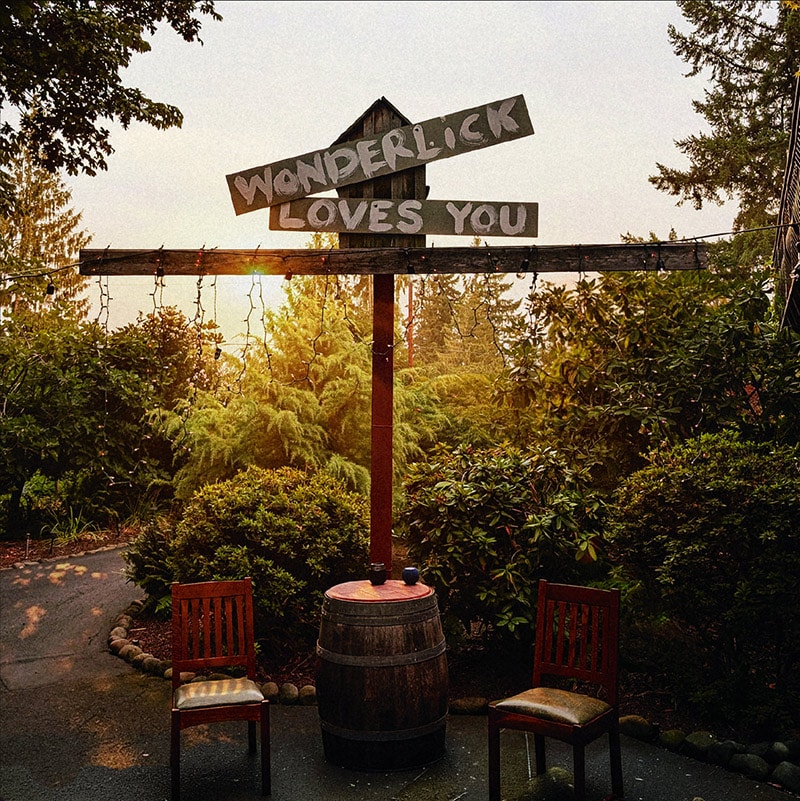
Wonderlick
Wonderlick Loves You
Independent
Wonderlick is a Los Angeles–based indie rock band established in 2001 by Too Much Joy members Tim Quirk and Jay Blumenfield. The band was formed to record free music for a website entitled Susquehanna Hat Company, which they had set up to sell Wonderlick merchandise. After releasing the song “I Disappear” and noticing the overwhelmingly positive response it garnered from their fans, the duo decided to record 12 more songs and release each one monthly. The recording of these songs included a pre-sale that allowed fans to choose whatever price they wanted to pay for the album. The pre-sale was a complete success. They later re-released the songs as their eponymous debut album in 2002 on Future Farmer Records.
Wonderlick eventually followed up with a sophomore album, Topless at the Arco Arena, in 2009 on Rock Ridge Records. The album’s title was based on an essay Quirk wrote comparing an AC/DC concert, where a woman went topless, to the dot-com boom and eventual bust. Wonderlick’s third album, Super, was self-released in 2015.
This new album was recorded at studios in Virginia, North Carolina, and California. Musicians include Jay Blumenfield, guitar and vocals, and Tim Quirk, vocals. They named the musicians’ collective that was formed the Floyd Five, as the duo hired recording engineer and fiddler Mike Mitchell, who also played guitar and mandolin and sang backing vocals, along with additional musicians including Lilli Shelton, banjo, dulcimer, upright bass, clogging, and vocals; Margo MacSweeney, banjo, clogging, and vocals; bassist David Owen; and drummer/percussionist Adam Clark.
The album opens with “Come Get On My Cloud,” as our duo sings, “You seem so frail, you need countless repairs, you need nine reasons not to set yourself ablaze. You’re sure you’ll fail, you think that no one cares, and if you died no one would find you for ten days. I know you’re wrong, I see what’s inside you, I reach down my hand and lift you to the sky, we sing this song, until the words get through, until January starts to feel like July. Hey, you, come get on my cloud. Hey, you, come get on my cloud. Cloud? Yes! Can you elaborate? Hey, you, come get on my cloud.” This Wonderlick song is an answer to the Rolling Stones’ “Get Off of My Cloud,” with some nice banjo and some great harmony.
On “Lucy, Don’t Be Sad,” the duo chimes, “Lucy, don’t be sad, don’t make yourself miserable Lucy, don’t be mad, no one’s looking down at you. You do that to yourself. Don’t do that to yourself. A new day’s begun, after you thought the night had won. Lucy you should be glad, we let you film us, write this song, Lucy, I love your dad, although I give him shit sometimes. We forgive each other’s faults, until we come to love those faults. A new day’s begun, after we thought the night had won.” Here the banjo playing has switched to a style closer to frailing, with some great fiddle playing.
“I’m Gonna Win (Your Love)” features the duo as they chant, “I’m gonna win your love to begin, I’m gonna win anf then violins, and brass and winds kick in, as we spin and shed our skins, and sins, when I win. Once I begin, I’m gonna win. Once I begin. I’m gonna bring a ring, a good king does not just swing his sword at everything. When love takes wing, hope springs my darling, though our heart strings get dinged, it’s thrilling.”
On “Eric,” they wail, “The summer after fifth grade I read the saddest book, the story of a boy who got leukemia, written by his mom. The cover showed a blond boy from behind on a beach, as he gazes at the setting sun, he looks so beautiful and doomed. His mother seemed so nice, she loved her son so much, he barely got to live, but he got enough. Her child’s name was Eric. She recorded his demise, a testament of adoration and also something darker, too. I wanted to be Eric. He wanted to live, she wanted us to know him only not this way, we take what we can get. My mother didn’t love me, or not like Eric’s did, she always satisfied her own needs first, and I am my mother’s kid,” with some more great fiddle.
“You Are Loved” includes the lyric as they howl, “Does it make you sadder than it makes me happy? Can you only feel good when I feel crappy? There’s an invisible little particle, inside of you, oh yes there is. It’s indivisible ‘cept for the particle, hiding inside of it. I hope you know that you are loved, I don’t think that you know that you are loved. Love you like a brother, though I know that hate sells, we could push each other, to become our best selves. It’s undetectable. Just expectable, from what can be observed, we’re all correctable. If not perfectable, evil’s just inferred. We’re acting like saints when we put each other down, we’re all just electrons, spinning round and round,” again with more fiddle.
On “How to Fly,” the duo cries out, “He said he’s jump his motorcycle, across the Grand Canyon, but the government wouldn’t let him, do what he planned on. So he went looking for another way to die, everyone wishes they could figure out how to fly. So he found another canyon, neither as deep nor wide, and built a special rocket bike, to reach the other side. Everyone goes looking for another way to die, we all hoped Evil K, would figure out how to fly. We get bored of what’s possible and try what can’t be done, pursuing the impossible is frightening and fun.”
“When You’re Sad” features the duo as they moan, “You were not looking happy, I was looking somewhere else, inside your swagger there is something vulnerable, you did not say I need you, but you said plenty else, I didn’t hear you, I feel awful. Cuz, when your sad, I can’t help but try to make you smile, but when you’re sad, just need someone to hold you for a while. When we first met you told me, you weren’t as normal as you seemed, and I fell in love a little more, I wasn’t with you when I met you, but I hope I’ve been redeemed, or will be if you wait a little more,” as a voice in the background somehow helps to complete this song.
On “Have You Forgotten Me?,” our duo groans, “Have you forgotten me, have you forgotten me, or have you just not thought about me for a long, long time. Have you forgotton me. Kissed you goodbye, at the Memory Ward, which I didn’t know how to afford, or feel about, beyond feel floored that’s the door, we’re heading toward, you’ll visit less as the days go on, I’ll find others to lean on, some will be real, others pretend, what does it matter, in the end.” It sounds as if they’re talking about Alzheimer’s.
“Les Blank Knew” features our duo as they declare, “Without rhythm there is nothing, without music even less. There are secrets in the flower, on the pattern, of that dress. Les Blank knew!, Les Blank knew!. There are people off the back toads, who can play you back in time, in the bayou, on the borders, if you’re patient, and seem kind. Les Blank proved this with a camera, and the pictures, It had drawn. There is music, there are parties, you just have to pass it on. There is rhythm, we must keep it, that is how the Rumba starts, It’s the first time, you have heard it, but you know it, all by heart.” Les Blank was a famous documentary filmmaker who died in 2013.
On the closer, “Floating Toward Virginia,” the duo croons, “Floating across the river, is the nothing that we feel, floating down the river, there was something that felt real. We tore down the highway toward California, toward the sunset in California, till we turned around in California, headed toward Virginia, headed toward the sunrise, headed toward Virginia, headed toward the sunrise.”
Wonderlick Loves You is not a folk record so much as a Wonderlick record played with folk instruments. And it’s not a collection of love songs so much as a set of songs about people who feel unloved: a boy who’s jealous of all the attention a teenager with leukemia gets, a daughter who can’t stop worrying, a daredevil who jumps over increasingly ludicrous things to command our attention. As the sessions progressed, the local musicians stopped following the chord charts and started inventing. Mike Mitchell heard string quartet parts and plugged in his electric fiddle when a song demanded it. The bassist compared one tune to Elvis Costello and the Attractions. Fifteen-year-old banjo player Margo MacSweeney insisted Mike hire her for the sessions and ended up singing on most of the album. Jay describes her voice as sounding like a vinyl record from the 1920s.
When Tim asked Margo if she’d ever heard of Evel Knievel, she replied, “I don’t really know modern musicians.” I like to call Wonderlick’s music bluegrass pop. They’ve spent forty years together. This is the best thing Wonderlick has ever done.

Subscribe to Our Newsletter
Discover more from Making A Scene!
Subscribe to get the latest posts sent to your email.


