
Why the Music Industry Middle Class Matters More Than Superstars




Making a Scene Presents – Why the Music Industry Middle Class Matters More Than Superstars
Listen To the Podcast Discussion for better insight into The Music Industry Middle Class
The Lie We Were All Sold
From the very beginning, most musicians are taught the same story, whether anyone ever says it out loud or not. If you work hard enough, sacrifice enough, and stick it out long enough, someone with power will eventually notice you. A label. A manager. A gatekeeper of some kind. That moment, we’re told, is when your real career finally begins. Until then, you’re expected to struggle quietly and call it “paying your dues.”
That story used to make sense. There was a time when record labels controlled distribution, radio controlled discovery, and fans had almost no way to reach artists directly. Music lived on physical shelves, in record stores, and on radio playlists that only a few people could influence. If you wanted a sustainable career, you needed scale, and scale required the machinery of the industry. Superstars weren’t just celebrated, they were necessary. They were how the system moved product and justified its own existence.
But that world is gone, even if the industry pretends otherwise.
Today, the lie survives because it’s still profitable for platforms and corporations. The promise of stardom keeps artists uploading nonstop, chasing algorithms they don’t control, and accepting bad deals in exchange for vague ideas like “exposure” and “opportunity.” Hope is cheap. It costs the industry nothing to keep artists dreaming. Labor, on the other hand, is incredibly valuable, and the system is built to extract as much of it as possible for as little pay as it can get away with.
Here’s the uncomfortable truth most artists eventually feel but rarely hear stated plainly. The modern music industry does not need most artists to succeed. It needs them to keep trying. It needs them feeding streaming platforms with content, filling social feeds with engagement, and competing with each other for crumbs while the real money flows upward. The struggle isn’t a flaw in the system. It is the system.
This is exactly why the music industry middle class matters so much. It breaks this lie at its core. It proves that a career does not have to begin with permission, and success does not have to look like superstardom. A strong middle class shows artists that there is another way forward, one built on ownership, sustainability, and real connection instead of endless waiting.
What the Music Industry Middle Class Actually Is
The music industry middle class has nothing to do with struggling artists barely hanging on. It’s not about scraping by, burning out, or treating music like a noble form of suffering. It’s about artists who earn steady, reliable income from their work without needing fame, viral moments, or corporate backing to validate their careers.
These artists usually don’t have massive audiences, and that’s the point. They have the right audiences. A few hundred loyal fans who show up, buy things, and care. A mailing list that people actually open and read. A touring circuit that makes sense on a spreadsheet, not just on Instagram. A merch table that moves real product instead of collecting dust. A catalog of music that continues to earn year after year because it’s owned, accessible, and connected to real listeners.
They may never chart. They may never trend. They may never be pushed by an algorithm or featured on a major playlist. But their music pays rent, covers bills, and sustains a life. That alone puts them ahead of most artists chasing attention instead of income.
This middle class is made up of many kinds of creators. Touring musicians who book smart and know their audience. Studio artists who release consistently and license their work. Producers and composers who build reputations and long-term relationships. Educators who teach, mentor, and share skills. Hybrid creators who mix performance, production, content, and community instead of betting everything on one big break.
In every healthy economy, the middle class does the real work. It creates stability, encourages innovation, and supports long-term growth. Music is no different. When the middle class is strong, scenes thrive, culture evolves, and careers last. When it collapses, everything becomes fragile. Venues disappear, opportunities shrink, and music turns into a game only the wealthy or the lucky can afford to play.
Superstars Are Rare by Design
The industry loves to talk about discovery, as if talent is being unearthed every day by some fair and open process. In reality, superstardom isn’t discovered at all. It’s engineered. It’s planned, funded, and reinforced by systems designed to reward what is already working, not what might work with time and support.
Streaming platforms like Spotify don’t reward potential. They reward momentum. Their algorithms are built to push songs that already perform well, because proven engagement reduces risk and increases profit. When a track starts gaining traction, it gets more visibility, which creates more streams, which signals the algorithm to push it even harder. That loop keeps repeating. Artists without early momentum are buried, no matter how good the music is. That’s why the same names dominate playlists again and again. It isn’t coincidence. It’s math.
Record labels operate the same way now. They no longer search for diamonds in the rough and invest years into development. They wait. They watch the data. They look for artists who already show traction, audience growth, and engagement. Then they step in to amplify what’s already working. If you’re not already winning in some measurable way, you’re effectively invisible. Talent alone doesn’t trigger interest. Proof does.
Radio, despite all the talk of change, still runs on influence and money. The mechanics may look cleaner than they once did, but the gatekeeping remains. Independent artists rarely gain meaningful access unless they already bring something the system wants, whether that’s audience size, label backing, or industry relationships. Radio doesn’t create stars anymore. It reinforces the ones that already exist.
None of this is accidental. Scarcity creates value, and the industry thrives on scarcity. It only needs a small number of stars to capture attention, drive headlines, and justify investment. Everyone else serves a different role. They supply content, feed platforms, and keep the system running. That isn’t a flaw in the model. It is the model.
Why Chasing Viral Fame Is a Trap
Viral success feels powerful when it happens. It feels like validation. It feels like escape from years of being ignored. For a brief moment, it looks like the door has finally opened. But most viral moments don’t build careers. They create spikes in attention, not foundations that last.
Platforms like TikTok and Instagram are designed to reward speed, frequency, and novelty. They favor whatever is new, loud, and easy to consume in seconds. They do not reward depth, consistency, or long-term ownership. When the algorithm moves on, it moves on fast. The views disappear, the engagement drops, and the artist is left staring at numbers that look impressive on a screen but don’t translate into rent money.
Even when a song truly explodes, the payout is usually shockingly small unless the artist has systems already in place. Without an email list, there is no way to follow up with listeners once the moment fades. Without a store or merch setup, there is nothing meaningful to sell while attention is high. Without ownership of the music and the audience, the financial upside flows to platforms, distributors, and intermediaries instead of the artist who created the work.
Viral fame trains artists to chase attention instead of building infrastructure. It keeps them reacting to trends, posting out of panic, and hoping the next moment will be the one that finally sticks. Planning takes a back seat to survival mode. The music industry middle class rejects this mindset completely. It prioritizes slow, intentional growth, real human connection, and repeat support over fleeting visibility. That’s how careers last when the hype fades.
The Real Math That Changes Everything
Here’s the math the industry avoids talking about, because once you understand it, their leverage starts to fall apart. If 1,000 fans each spend just $10 a month supporting an artist, that artist brings in $120,000 in revenue. That level of income doesn’t require millions of streams, massive playlists, or viral moments. It requires something far more basic and far more powerful: trust.
Fans already spend money on music. They always have. They buy concert tickets, shirts, vinyl, box sets, special editions, and experiences tied to artists they care about. The problem isn’t that fans won’t pay. The problem is that the modern system rarely gives them a clear or meaningful way to support artists directly. Streaming platforms make listening easy, but they make support invisible.
Streaming has trained listeners to believe music should be unlimited, instant, and nearly free. A fraction of a cent per play doesn’t feel like money to a fan, and it certainly doesn’t feel like support. Direct-to-fan models change that perception. They reconnect music with value by giving fans something tangible in return for their support, whether that’s merch, access, community, or a deeper connection to the artist.
The music industry middle class exists where artists stop measuring success in streams and start measuring it in relationships. Streams are passive. Relationships are active. When artists focus on building real connections with people who care, income becomes predictable, sustainable, and independent of algorithms.
Direct-to-Fan Is Not New, It Was Just Taken Away
Direct-to-fan didn’t start with the internet, and it definitely didn’t start with streaming. Long before algorithms and platforms, artists sold records at shows, mailed newsletters to fans, and built followings one person at a time in local scenes. The relationship was simple and direct. Fans knew who they were supporting, and artists knew who their audience was.
Streaming platforms changed that relationship by inserting themselves between artists and listeners. They took control of discovery, decided what surfaced and what disappeared, and kept the most valuable asset for themselves: the data. Over time, they also captured most of the revenue. Artists didn’t just lose income. They lost visibility into who their fans were. Instead of being owners of their audience, they became suppliers feeding content into systems they didn’t control.
Now that ground is being reclaimed.
Platforms like Bandcamp allow artists to sell music and merch directly to fans, often earning more from a single purchase than they would from thousands of streams. A fan buying an album or a shirt on Bandcamp is making a clear, intentional choice to support the artist, and the artist keeps the majority of that money. https://bandcamp.com
Patreon takes a different approach by allowing artists to build recurring income. Fans can support an artist monthly in exchange for ongoing content, early access, or a deeper sense of connection. This kind of predictable income is rare in the traditional music industry, but it’s a cornerstone of middle-class sustainability. https://www.patreon.com
Shopify gives artists full control over their own online stores, allowing them to sell merch, physical releases, and limited editions without relying on a label or distributor. The artist owns the customer relationship, the data, and the margin. https://www.shopify.com
These tools don’t promise fame or instant success. They offer something far more valuable. They give artists control, stability, and a path to sustainability that doesn’t depend on algorithms or gatekeepers.
Why Email Still Beats Social Media
Social media looks powerful because it’s loud. Posts rack up likes, views, and comments in real time, creating the feeling that something meaningful is happening. But volume is not the same as control. Email, by contrast, is powerful because it’s direct. When you send an email, it lands in someone’s inbox without an algorithm deciding whether your message deserves to be seen.
On social platforms, algorithms decide who sees your posts, when they see them, and how often. Those rules change constantly, and artists have no say in the matter. An email list works differently. It is owned media. It can’t be throttled, shadow-banned, demonetized, or taken away overnight. It gives artists a direct line to the people who have already raised their hand and said, “I want to hear from you.”
Platforms like Mailchimp and ConvertKit make it easy for artists to build and manage email lists, automate messages, and track who is actually engaging. These tools help turn casual listeners into long-term supporters by keeping communication consistent and intentional. https://mailchimp.com and https://convertkit.com
For artists who run their own websites on WordPress, there’s an even more powerful option. The Newsletter Plugin allows artists to keep their email list stored locally on their own site instead of handing it to a third party. Paired with SendGrid, artists can send thousands of emails for pennies per campaign while maintaining full ownership of their data. This setup combines low cost, high deliverability, and real control, which is exactly what a sustainable career needs. https://www.thenewsletterplugin.com/ and https://sendgrid.com/
Time and time again, artists with small but engaged email lists outperform artists with massive social followings when it comes to actual sales. The reason is simple. Email reaches people who are already invested. The music industry middle class is built on tools like this. They aren’t flashy, and they don’t chase trends. They work consistently, year after year, while platforms come and go.
AI Is the Great Equalizer Nobody Saw Coming
AI doesn’t replace artists. It replaces barriers that have kept artists dependent on money, permission, and outside teams for decades. For most of music history, doing things well required access. Marketing copy meant hiring a writer. Visuals meant hiring a designer. Planning meant experience or a manager. Data analysis meant expensive software. Studio polish meant paying engineers and mastering houses. All of that cost money most independent artists didn’t have.
AI changes that equation in a very real, practical way. It lowers the cost of competence. Tasks that once required specialists can now be handled, at least at a solid baseline level, by the artist themselves. That doesn’t remove creativity from the process. It removes friction.
Tools like ChatGPT help artists write emails, plan release schedules, organize ideas, and clarify messaging without hiring outside help. Instead of staring at a blank page or guessing what to say, artists can move forward with confidence and consistency. https://chat.openai.com
Canva uses AI to help artists create professional-looking visuals for album art, posters, social media, and ads, even if they have no design background. What used to require expensive software or a freelance designer can now be done quickly and affordably. https://www.canva.com
In the studio, AI-powered tools like iZotope Ozone and Neutron assist with mixing and mastering decisions by analyzing audio and suggesting improvements. These tools don’t replace taste or artistic intent, but they dramatically reduce the learning curve and the need to outsource every project. https://www.izotope.com
Sonible’s smart plugins take this a step further by listening to your audio and making intelligent, adaptive suggestions that speed up workflow and improve consistency across mixes. For independent artists working in home studios, that time savings is enormous. https://www.sonible.com
AI saves time, and time is money. When artists spend less time stuck, guessing, or waiting on others, they can release more confidently, communicate more clearly, and operate more efficiently. That efficiency is what makes middle-class music careers possible in a world that no longer pays for excess.
AI Marketing Means Fewer Ads, Smarter Moves
Most independent artists don’t fail because they lack talent. They fail because they’re forced to guess. They guess who their audience is. They guess what their music sounds like to outsiders. They guess which platforms matter, which cities to tour, and which songs to push. Guessing feels like effort, but it’s actually wasted energy when there are better tools available.
AI-driven tools exist to reduce that guesswork by analyzing real behavior and real patterns instead of gut feelings. They don’t replace intuition. They support it with data.
Cyanite is a powerful example of how this works in practice. It analyzes your music to identify mood, emotional tone, genre crossover, and stylistic similarities. It can suggest which playlists your music might fit, which artists you sound closest to, and what descriptive tags are most likely to attract future fans. Instead of asking, “Who might like this?” artists get clearer insight into who already does. That makes targeting, marketing, and messaging far more effective. https://cyanite.ai
Chartmetric focuses on the audience side of the equation. It helps artists understand where their fans live, how listeners discover their music, and which efforts are actually working. Instead of blindly promoting everywhere, artists can focus on the platforms, regions, and strategies that show real traction. https://chartmetric.com
Advertising platforms like Meta and Google already rely heavily on AI under the hood. When used intentionally, they allow artists to reach people who are genuinely likely to care, rather than blasting ads into the void. Targeting based on interests, behavior, and engagement turns ads from a gamble into a calculated move. https://www.facebook.com/business and https://ads.google.com
AI doesn’t make marketing effortless. It makes it less wasteful. The music industry middle class doesn’t try to outspend major labels. It can’t. Instead, it survives and grows by being smarter, more focused, and more efficient. Outsmarting the system has always been the only real advantage independent artists have.
The Middle Class Creates Stability, Not Hype
Superstars create headlines, but middle-class artists create infrastructure. They are the ones who actually keep the music ecosystem functioning day after day. They fill rooms on weeknights. They keep small and mid-sized venues open. They book studio time, hire engineers, press vinyl, and give local scenes something to gather around. Without them, the business side of music quietly collapses.
Middle-class artists are the ones headlining small and regional festivals, not because they’re famous, but because they can draw a dependable crowd. They teach lessons, run workshops, collaborate across genres, and mentor younger musicians coming up behind them. They build scenes instead of extracting value from them. Their work may not make national headlines, but it sustains culture at the ground level where music actually lives.
When the middle collapses, scenes disappear. Venues close. Studios shut their doors. Local culture thins out and eventually fades. What’s left becomes centralized, predictable, and generic, shaped by a handful of corporate interests rather than by communities. Innovation slows because fewer artists can afford to take risks or stay in the game long enough to grow.
A healthy music industry doesn’t need a small number of artists winning big while everyone else burns out. It needs thousands of artists earning enough to keep going. That’s where resilience comes from. This is also where the disconnect with major labels becomes clear. Large labels are built around fast scaling, quick returns, and explosive growth. Middle-class artists are built around consistency. They’re not trying to win all at once. They’re trying to last.
Why Labels Don’t Want This Conversation
A strong music industry middle class doesn’t need permission to exist. It doesn’t need to be discovered, signed, or validated by anyone in a boardroom. It operates from a position of knowledge and control, and that alone changes the balance of power.
Traditional labels profit most when artists feel desperate and uninformed. When you don’t understand contracts, ownership, or alternatives, bad deals start to look like lifelines. Advances feel like opportunity, even though they are usually loans that trade short-term relief for long-term control. The less an artist knows, the more leverage the label has.
That’s why so many contracts are structured to keep artists dependent. Ownership is delayed or taken entirely. Rights are tied up for years. Exit options are limited. The system isn’t built to create independence. It’s built to lock artists into relationships they can’t easily leave.
When artists can fund their own projects, distribute their music independently, and market directly to fans, that leverage starts to disappear. Labels stop being the only path forward and become one option among many. At that point, artists can choose partnerships instead of begging for approval.
This isn’t an anti-label argument. Labels can still offer value in certain situations. It’s a pro-choice argument. A healthy middle class gives artists the power to decide what they need, what they’re willing to give up, and when a deal actually makes sense.
Streaming Isn’t Evil, It’s Just Incomplete
Streaming is a discovery tool, not a career. It’s a powerful way for listeners to find new music, explore catalogs, and sample artists they might never encounter otherwise. But discovery alone does not pay bills, and it was never designed to. Streaming works best as the top of a funnel, not the foundation of a business.
When used correctly, streaming introduces listeners to your music and then gently moves them toward deeper relationships. That might mean joining an email list, buying merch, attending shows, or supporting you directly in other ways. When used on its own, streaming does the opposite. It traps artists in a cycle of low payouts, constant releases, and endless uploads designed to feed algorithms rather than build value.
Middle-class artists understand this difference. They don’t quit streaming, and they don’t pretend it isn’t useful. They simply stop relying on it as their primary source of income. Streaming becomes one piece of a larger system instead of the system itself.
If streaming is your only income source, you don’t own a business. You rent exposure from platforms that can change the rules at any time. Ownership, stability, and sustainability only appear when discovery is paired with direct relationships and real revenue streams.
Ownership Is the New Leverage
Ownership changes everything because it shifts power back to the artist. When you own your work and your relationships, you stop building value for someone else’s balance sheet and start building it for your own future. Ownership is what turns effort into something that lasts.
Owning your masters means long-term income. It means your music continues to earn over time instead of being locked away in contracts you can’t control. Every stream, license, and sale adds to an asset you actually own, not a temporary paycheck that disappears once a deal expires. Ownership turns songs into investments rather than one-time events.
Owning your email list means control. It gives you direct access to the people who care about your work without asking permission from platforms or algorithms. No one can throttle it, take it away, or charge you to reach your own audience. That kind of access is rare in the modern music business, and it’s incredibly valuable.
Owning your merch means margin. When you control production, pricing, and distribution, you decide how much you earn from each sale. Merch stops being an afterthought and becomes a real revenue stream instead of a branding expense.
Web3 tools push this idea even further by experimenting with new ways to reward fans and control access. Platforms like Sound.xyz explore music releases where ownership and participation are baked into the experience. Unlock Protocol allows artists to gate content, tickets, or experiences behind digital keys that fans can actually own. https://sound.xyz and https://unlock-protocol.com
These tools aren’t mandatory, and they aren’t magic. They are options. And options create leverage. When artists have multiple ways to release, monetize, and connect with fans, they no longer have to accept the first deal placed in front of them.
Building a Career Without Asking Permission
Middle-class artists stop waiting to be chosen because they understand that waiting is its own kind of trap. They don’t sit around hoping a label, playlist editor, or algorithm will decide their work is worthy. They assume responsibility for their careers from the start and build forward on their own terms.
They build slowly and deliberately. They release music with intention instead of panic. Each release connects to a larger plan, whether that’s growing an email list, supporting a tour, or strengthening a relationship with existing fans. They focus on serving real people who care, not anonymous metrics that disappear the moment the algorithm shifts.
They also resist the pressure to chase every new trend. Trends move fast and leave little behind. Systems last. Middle-class artists invest their time in tools, workflows, and relationships that continue working year after year, regardless of what platform is hot this month.
That approach isn’t boring. It’s liberating. Freedom comes from stability, not chaos. When artists build systems instead of chasing attention, they gain control over their time, their income, and their creative lives.
Why This Matters for the Future of Music
If artists can’t survive, music slowly turns into a hobby reserved for the wealthy or the reckless. When only people with financial safety nets can afford to keep creating, entire voices disappear. Risk-taking declines. Culture narrows. Music stops reflecting real life and starts reflecting privilege.
When a strong middle class exists, the opposite happens. Music stays diverse, local, and human. Artists from different backgrounds can afford to stay in the game long enough to develop their sound, tell their stories, and contribute to their communities. Scenes grow naturally instead of being manufactured. Innovation comes from lived experience, not market research.
The future of music isn’t about hits, charts, or viral moments. Those are side effects, not foundations. The real future is about sustainability. It’s about creating systems that allow artists to survive, grow, and evolve without burning out or selling control just to keep going.
The Bottom Line
Superstars are optional. The music industry can survive just fine without a new global icon every year. What it cannot survive without is a strong, working middle class. That middle class provides the foundation that everything else sits on. It creates continuity, keeps scenes alive, and gives the industry something real to build on. Without it, the business becomes unstable, short-sighted, and hollow, chasing flashes of attention instead of lasting value.
What’s changing now is that the tools finally favor the artist. AI is actively lowering the cost of participation. Tasks that once required money, teams, or permission are becoming accessible to anyone willing to learn. Direct-to-fan models are already increasing income for artists who use them with intention instead of desperation. Ownership is already restoring power to creators who were told for years that control was unrealistic or unnecessary. None of this is theoretical or futuristic. It’s happening right now, quietly, outside the spotlight, artist by artist.
This doesn’t mean major labels won’t have a place in the future of the music industry. They will. But their role will change. The next generation of successful artists will not come to labels empty-handed and uninformed. They will come from the music industry middle class. They will understand their audience, own their data, control their catalogs, and know what their music is worth. In that environment, labels stop being predators and start becoming partners, offering scale and resources instead of control and dependency.
The only real question left is whether artists will keep chasing permission or start building something that lasts. Chasing approval keeps you dependent on systems you don’t control. Building systems makes you durable. Durability is what allows careers to survive platform changes, market shifts, and cultural cycles.
The future of music will not be decided by charts, playlists, or viral moments. Those are temporary signals, not foundations. It will be decided by artists who refuse to disappear, who choose sustainability over spectacle, and who build careers strong enough to outlast trends and outlive hype.
 |  Spotify |  Deezer |  Breaker |
 Pocket Cast |  Radio Public |  Stitcher |  TuneIn |
 IHeart Radio |  Mixcloud |  PlayerFM |  Amazon |
 Jiosaavn |  Gaana |  Vurbl |  Audius |
 Reason.Fm | |||
Find our Podcasts on these outlets
Buy Us a Cup of Coffee!
Join the movement in supporting Making a Scene, the premier independent resource for both emerging musicians and the dedicated fans who champion them.
We showcase this vibrant community that celebrates the raw talent and creative spirit driving the music industry forward. From insightful articles and in-depth interviews to exclusive content and insider tips, Making a Scene empowers artists to thrive and fans to discover their next favorite sound.
Together, let’s amplify the voices of independent musicians and forge unforgettable connections through the power of music
Make a one-time donation
Make a monthly donation
Make a yearly donation
Buy us a cup of Coffee!
Or enter a custom amount
Your contribution is appreciated.
Your contribution is appreciated.
Your contribution is appreciated.
DonateDonate monthlyDonate yearlyYou can donate directly through Paypal!
Subscribe to Our Newsletter
Order the New Book From Making a Scene
Breaking Chains – Navigating the Decentralized Music Industry
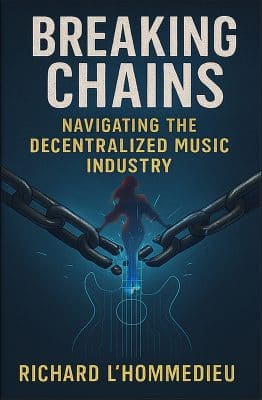
Breaking Chains is a groundbreaking guide for independent musicians ready to take control of their careers in the rapidly evolving world of decentralized music. From blockchain-powered royalties to NFTs, DAOs, and smart contracts, this book breaks down complex Web3 concepts into practical strategies that help artists earn more, connect directly with fans, and retain creative freedom. With real-world examples, platform recommendations, and step-by-step guidance, it empowers musicians to bypass traditional gatekeepers and build sustainable careers on their own terms.
More than just a tech manual, Breaking Chains explores the bigger picture—how decentralization can rebuild the music industry’s middle class, strengthen local economies, and transform fans into stakeholders in an artist’s journey. Whether you’re an emerging musician, a veteran indie artist, or a curious fan of the next music revolution, this book is your roadmap to the future of fair, transparent, and community-driven music.
Get your Limited Edition Signed and Numbered (Only 50 copies Available) Free Shipping Included
Discover more from Making A Scene!
Subscribe to get the latest posts sent to your email.


