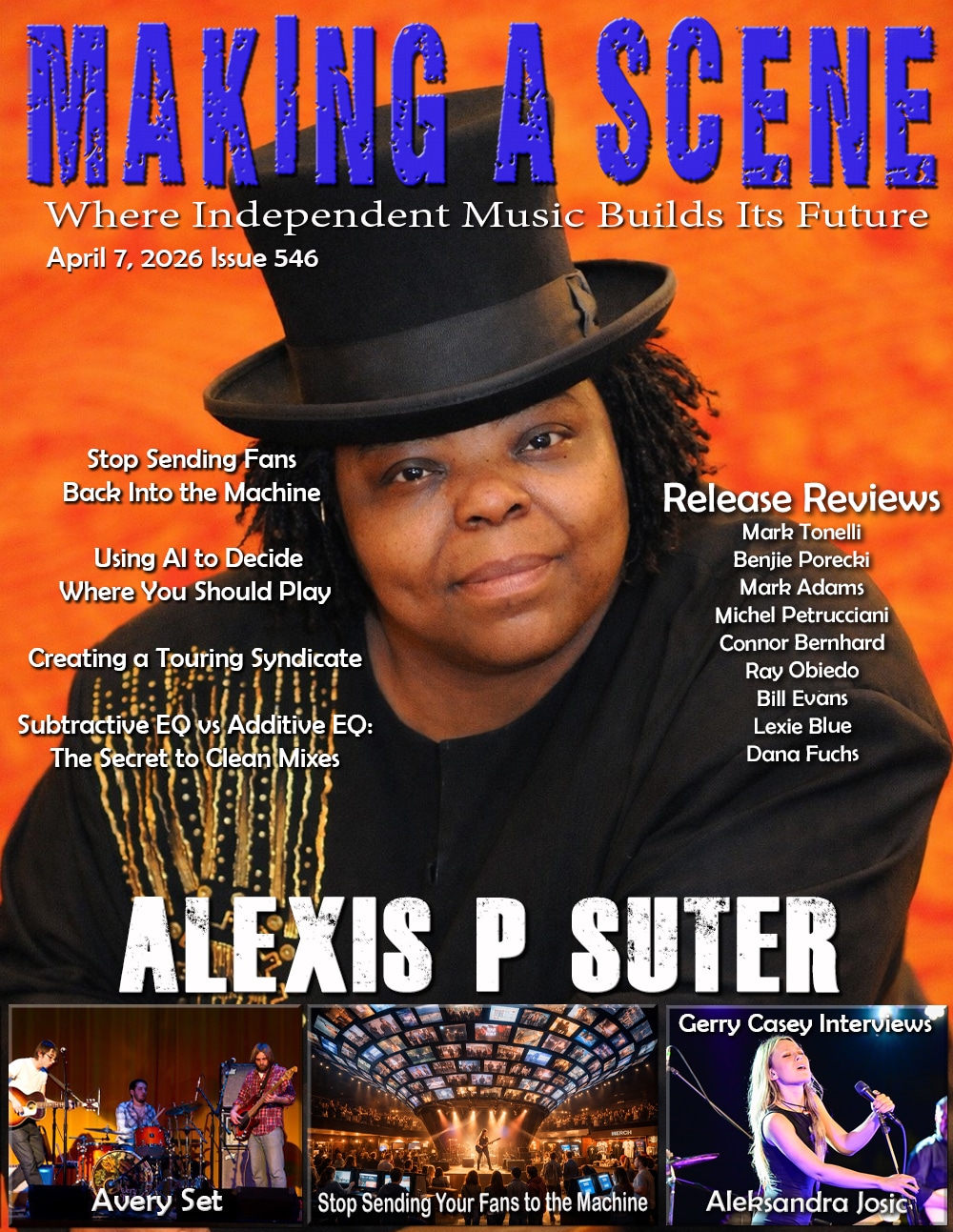
The Suno-Warner Deal: When Big Music Stops Fighting AI and Starts Designing It




Making a Scene Presents – The Suno-Warner Deal: When Big Music Stops Fighting AI and Starts Designing It
Listen to the Podcast Discussion
Something important just happened in the music business, and indie artists need to pay attention.
Warner Music Group and Suno announced a partnership built around licensed AI music. Under the deal, the companies will work on next-generation licensed models, Warner artists can opt in to AI experiences using their names, images, likenesses, voices, and compositions, and Suno will make major product changes in 2026, including phasing out its current models, requiring paid accounts for downloads, limiting downloads on paid tiers, and keeping unlimited downloads inside Suno Studio. As part of the same broader agreement, Suno also acquired Songkick from Warner.
That sounds like a product story. It sounds like a legal story. It sounds like one more AI headline in a year full of AI headlines. But for independent artists, it is really a power story. The Suno-Warner deal is one of the clearest signs yet that major music companies are moving from trying to fight generative AI from the outside to trying to shape it from the inside. Warner itself said the partnership is meant to forge a “blueprint for a next-generation licensed AI music platform.” Reuters also reported that Warner settled its infringement case with Suno so the company could move toward licensed models.
That shift matters more than most people realize. When big corporations cannot fully stop a technology, the next move is often to wrap it in contracts, gatekeeping, monetization, and approved access. That is how industries keep their leverage. They do not always win by banning the new thing. Sometimes they win by becoming the tollbooth for the new thing. In music, that pattern is familiar. The platforms change. The power instincts do not.
For years, the major labels talked about AI music like it was a threat to artists, a threat to copyright, and a threat to the value of music itself. Then the lawsuits started. Warner, Universal, and Sony all sued Suno and Udio in 2024. Suno and Udio answered with fair-use arguments. But by late 2025, the tone had changed. Warner settled with Udio. Warner settled with Suno. Universal settled with Udio. Reuters also reported that all three major labels licensed catalogs to Klay, an AI music streaming startup, while Sony had not settled its Suno litigation as of March 2026. That is not random. That is a pattern.
And the pattern is simple. Big Music has realized that AI is not going away. So now the fight is moving from “Can this exist?” to “Who gets to define the official version of it?”
The Deal Is Bigger Than a Feature Update
Suno framed the partnership as a way to make the platform bigger, richer, and more interactive. The company said it wants to preserve the “magic” of Suno, keep powerful music creation open to everyone, build a new generation of models using high-quality licensed music, and create new ways for fans to interact with artists who opt in. Warner framed the same deal as pro-artist, pro-revenue, and pro-control. Both companies are talking about the future like it is a win for creators and fans alike.
Some of that may be true. Licensed models could reduce legal chaos. Opt-in participation could give some artists more control than unlicensed scraping ever did. New revenue streams could be real for artists whose identities, voices, and catalogs become part of these experiences. That is the best-case version of the story. It is not fake. It is just incomplete.
The deeper issue is that this deal turns AI music into infrastructure that is being shaped by one of the largest music companies in the world. Once that happens, the conversation stops being only about what the tool can do and starts being about who gets access, under what terms, with what restrictions, and in whose economic interest. That is the part indie artists have to learn to read. Because if you only read the press release language, you will miss the machinery being built underneath it.
Warner’s own announcement makes that machinery visible. The company says Suno’s current models will be deprecated when new licensed models arrive in 2026. It says downloading audio will require a paid account. It says free-tier songs will become playable and shareable but not downloadable. It says paid users will face monthly download caps, with the option to buy more. That is not just a product evolution. That is a rules change. It is a shift from open experimentation toward controlled access.
And that should not be brushed aside as some boring business detail. In the platform era, the rule change is the power change. The interface may still look fun. The music may still feel instant. But the real story is who controls what you can do with the work you make. That is where the future gets decided.
Why Big Labels Want AI Inside the House
There is a simple reason large music companies are leaning into licensing deals now. AI music is too big to ignore, and too important to leave outside the corporate walls.
Suno said its community had grown to nearly 100 million music makers. Warner echoed that scale in its own announcement. Reuters reported that Suno had raised $250 million and was valued at $2.45 billion just before the Warner partnership became public. That is no longer a weird corner of the internet. That is a serious platform with serious momentum, serious data, and serious behavioral power.
When a platform reaches that scale, the biggest players in the industry stop asking whether it is niche. They start asking whether it might become a new gatekeeper if they do not get involved. That is especially true in music, where the history of the business is really the history of control over choke points. Radio was a choke point. Retail distribution was a choke point. Streaming playlists became a choke point. Fan discovery became a choke point. Now AI model access, artist likeness licensing, and creative permissions are starting to look like the next choke points.
That is why this deal feels so important. It is not just about protecting catalog value. It is about making sure the next music machine still runs through corporate pipes. Warner’s own CEO described the deal as a chance to “shape models” that expand revenue and deliver new fan experiences. That is a striking phrase. “Shape models” means more than joining the party. It means helping define the system.
For indie artists, that should be a flashing red light. The danger is not simply that labels want to make money from AI. Of course they do. The danger is that they want to normalize a version of AI music where corporate-approved data, corporate-approved artists, corporate-approved permissions, and corporate-approved monetization set the boundaries for what the tool becomes. That can be sold as ethics. It can be sold as safety. It can be sold as innovation. But it is also centralization.

What This Means for the Music Made on Suno
This is where things get real for actual creators.
Right now, Suno’s paid-subscription help page says songs made while subscribed are granted commercial use rights, including distribution, sync-style uses, and independent sales, while also warning that commercial-use rights do not guarantee copyright protection. Suno’s Terms of Service, updated March 26, 2026, still govern subscriptions and access, and the help documentation makes clear that the paid-versus-free distinction matters a lot for real-world use.
That means many indie musicians using Suno today as part of a paid workflow still have a usable path. They can sketch songs, export tracks, and fold those outputs into broader creative or commercial projects. But the Warner deal suggests that the future of Suno may not stay that flat or simple. Once a platform moves toward licensed models, artist-specific opt-in experiences, and tighter download controls, it becomes harder to assume every output will live under one clean creative logic forever.
That does not mean Suno users suddenly lose everything. It means the platform is moving toward a more layered world. Some outputs may come from general licensed models. Some may come from artist-based interactive experiences. Some may be easy to export and use. Others may carry more conditions, more branding, or more platform logic around them. The public announcements do not spell out every future rule yet, so that part is an inference. But it is a grounded one. When a tool starts mixing general AI creation with artist-licensed likeness systems and monetized interaction features, you are no longer looking at a single plain sandbox. You are looking at an ecosystem with classes of access.
And ecosystems with classes of access almost always privilege the biggest rights-holders first.
That matters because many indie artists are not using Suno the way critics imagine. They are not all pretending to be pop stars with fake vocals and fake hits. A lot of working musicians use Suno as a writing room sketchpad. They use it to hear a chord progression move. They use it to test arrangement ideas. They use it to make a rough backing track for rehearsal. They use it to explore a groove before they call the band. They use it to learn. They use it to mock up. They use it to get unstuck. That is a very different use case than replacing musicians. And it is one that the public conversation often ignores. This part is an interpretation of actual musician behavior, not something Suno or Warner formally defined.
For that kind of indie user, the deal could be double-edged. Better models could make Suno more useful as a creative mockup tool. But tighter rules, download caps, premium gating, and more branded creation lanes could also make the platform less free, less simple, and more expensive to rely on over time. That is the tension. The technology may get better while the freedom around it gets narrower.
The Opt-In Artist Future Sounds Friendly. It Is Also Strategic.
One of the most public-facing parts of the deal is the promise of artist opt-ins. Suno says users will be able to build around the sounds of participating Warner artists, while those artists get compensated. Warner says artists and songwriters will have full control over whether and how their names, images, likenesses, voices, and compositions are used in new AI-generated music. The Verge reported the same broad structure, while noting the companies have not explained every mechanism behind that control.
On the surface, that sounds like fairness. No scraping without permission. No blind appropriation. No pretending consent does not matter. That part is easy to support. But indie artists should ask a second question after fairness: who is this architecture really being built for?
The answer is not hard to guess. It is being built for catalog owners, famous names, branded experiences, and monetizable fan interactions. It is being built for a world where you can “play with” approved artist identities inside an official system. That is not necessarily evil. But it is a very different vision from open creator empowerment. It shifts AI from being a general-purpose tool toward becoming a licensed entertainment layer. It turns music creation into something that can be packaged around celebrity access.
And whenever celebrity access becomes a product category, indie creators should get wary. Because the platform starts optimizing around what drives subscriptions, premium behavior, and corporate partnerships, not around what helps a working songwriter in a spare room build a stronger chorus or rehearse for a weekend gig. The center of gravity moves. And when the center of gravity moves, the indie user often becomes background radiation inside a system built for somebody else’s business model.
Songkick May Be the Most Telling Part of the Whole Deal
The Songkick piece deserves more attention than it has gotten.
Warner said Suno acquired Songkick from Warner and will continue operating it as a fan destination. Warner also said combining Suno and Songkick creates new potential to deepen artist-fan connection through interactive music and live performance. That is not a side note. That is strategy.
Songkick matters because live music is where the business becomes real. Tickets are real. City-level demand is real. Fan intent is real. Tour notifications are real. The minute an AI music company gets closer to fan behavior around shows and live discovery, it stops being just a generation engine. It starts becoming part of the relationship infrastructure around music.
And that is where this gets especially interesting for the worldview. The real future of the music business is not in fake hype, playlist begging, or surrendering everything to a black-box platform. It is in owned relationships. It is in knowing who your fans are, where they live, what they buy, when they show up, and how you can serve them directly. If Suno starts linking AI creation, artist interaction, and live-fan infrastructure, then it is moving toward the exact territory indie artists should be trying to own for themselves.
That does not mean Suno becomes the enemy. It means artists should not be naive about what kind of machine is being assembled. This is not just “make a song from a prompt” anymore. It is a step toward a larger ecosystem where creation, identity, and fan activity may live closer together inside a platform shaped by major-label priorities. For a corporation, that is smart business. For an indie artist, that is a reminder to keep building a direct-to-fan system you actually control.
The Real Risk Is Not AI. It Is Dependency.
This is the lesson too many musicians learn too late.
The worst thing about the streaming era was not that streaming existed. It was that artists built careers on systems they did not own. The worst thing about social media was not that social media helped discovery. It was that artists gave away their audience relationships to platforms whose rules could change overnight. The problem was never simply the tool. The problem was dependency. That is the same risk showing up again here. This is an inference based on the history of platform economics, not a direct quote from the deal itself.
If you are an indie musician using Suno to learn, sketch, or mock up work, the smart move is to treat it like a tool in your shop, not the foundation of your house. Use it to get ideas moving. Use it to hear possibilities. Use it to create rough backing tracks if that helps your workflow. But do not leave your best work, your business logic, or your future rights assumptions sitting entirely inside a changing platform. Suno has already told users that downloads are tightening, the models are changing, and future artist-linked experiences are coming. Those are facts. The responsible response is to reduce dependency before dependency becomes expensive.
That means exporting what you can while your subscription status allows it. It means documenting when tracks were created and under what tier. It means rebuilding the best ideas in your DAW. It means replaying parts, rewriting melodies, replacing placeholders, and making the final work unmistakably yours. It means treating AI like rough lumber, not a finished house. It means putting the real value back into assets you can own: your masters, your publishing, your website, your email list, your SMS list, your merch business, your ticket buyers, and your fan data. This is strategic advice, not a factual claim requiring external support.
So What Is the Suno-Warner Deal Really?
It is a truce. It is a licensing framework. It is a product roadmap. It is a revenue strategy. It is a legal settlement. It is a signal to the rest of the industry. And for indie artists, it is a warning.
It is a warning that Big Music is no longer content to stand outside the AI revolution and complain about it. Big Music wants in. It wants licensed influence over the models. It wants control over artist opt-ins. It wants monetized fan experiences. It wants a say in the rules around downloads and access. It wants a seat at the table where the next creative infrastructure gets built. Reuters’ reporting on Warner’s Suno settlement, Warner’s Udio settlement, Universal’s Udio settlement, and the labels’ Klay deals all point in the same direction. This is not one-off behavior. It is a coordinated industrial turn toward licensed AI systems.
That could lead to a cleaner and more legitimate market than the chaotic training-data wars that came before it. But it could also lead to a future where the most powerful creative tools are once again organized around large rights-holders, approved lanes, subscription logic, and access you never fully own. That is the tension indie artists have to hold in both hands. AI might lower the cost of creation while raising the cost of independence if creators are not careful. That sentence is analysis, but it is supported by the shift in platform rules and licensing strategy already announced.
So the right response is not panic, and it is not blind optimism. It is clarity.
Use the tools. Learn the tools. Push the tools hard. But do not surrender your business to the tools. The Suno-Warner deal is not just about new music models. It is about who gets to design the future of music creation. If indie artists want a real music industry middle class, they cannot just be users in that future. They have to keep building ownership outside of it.
That is the real takeaway from this deal.
Not “AI is here.” We already knew that.
The real takeaway is that the corporations are here now too
 |  Spotify |  Deezer |  Breaker |
 Pocket Cast |  Radio Public |  Stitcher |  TuneIn |
 IHeart Radio |  Mixcloud |  PlayerFM |  Amazon |
 Jiosaavn |  Gaana |  Vurbl |  Audius |
 Reason.Fm | |||
Find our Podcasts on these outlets
Buy Us a Cup of Coffee!
Join the movement in supporting Making a Scene, the premier independent resource for both emerging musicians and the dedicated fans who champion them.
We showcase this vibrant community that celebrates the raw talent and creative spirit driving the music industry forward. From insightful articles and in-depth interviews to exclusive content and insider tips, Making a Scene empowers artists to thrive and fans to discover their next favorite sound.
Together, let’s amplify the voices of independent musicians and forge unforgettable connections through the power of music
Make a one-time donation
Make a monthly donation
Make a yearly donation
Buy us a cup of Coffee!
Or enter a custom amount
Your contribution is appreciated.
Your contribution is appreciated.
Your contribution is appreciated.
DonateDonate monthlyDonate yearlyYou can donate directly through Paypal!
Subscribe to Our Newsletter
Order the New Book From Making a Scene
Breaking Chains – Navigating the Decentralized Music Industry
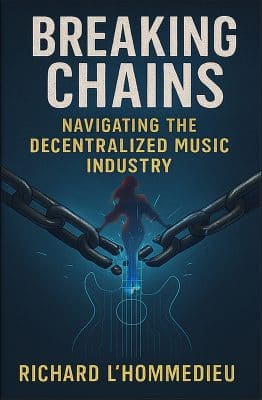
Breaking Chains is a groundbreaking guide for independent musicians ready to take control of their careers in the rapidly evolving world of decentralized music. From blockchain-powered royalties to NFTs, DAOs, and smart contracts, this book breaks down complex Web3 concepts into practical strategies that help artists earn more, connect directly with fans, and retain creative freedom. With real-world examples, platform recommendations, and step-by-step guidance, it empowers musicians to bypass traditional gatekeepers and build sustainable careers on their own terms.
More than just a tech manual, Breaking Chains explores the bigger picture—how decentralization can rebuild the music industry’s middle class, strengthen local economies, and transform fans into stakeholders in an artist’s journey. Whether you’re an emerging musician, a veteran indie artist, or a curious fan of the next music revolution, this book is your roadmap to the future of fair, transparent, and community-driven music.
Get your Limited Edition Signed and Numbered (Only 50 copies Available) Free Shipping Included
Discover more from Making A Scene!
Subscribe to get the latest posts sent to your email.


