The Real Reason Streaming Pays So Little, And Why It Was Designed That Way



Making a Scene Presents – The Real Reason Streaming Pays So Little, And Why It Was Designed That Way
Listen to the Podcast Discussion
Streaming did not become unfair by accident. The dominant payout model was built to make giant catalogs easy to license, cheap to sell, and sticky for listeners. That helped platforms grow and helped major rights holders protect old power in a new format. It did not build a healthy middle class for working artists. The next fight is not just about a better royalty formula. It is about ownership, fan data, and turning streaming back into what it should be for independents: discovery, not destiny.
The music business loves a clean rescue story. Piracy nearly burned the whole thing down. Streaming rode in like a hero. Subscriptions brought the money back. Everybody got saved. End of movie.
Except that is not how it feels from the van, the home studio, the merch table, or the monthly distro report.
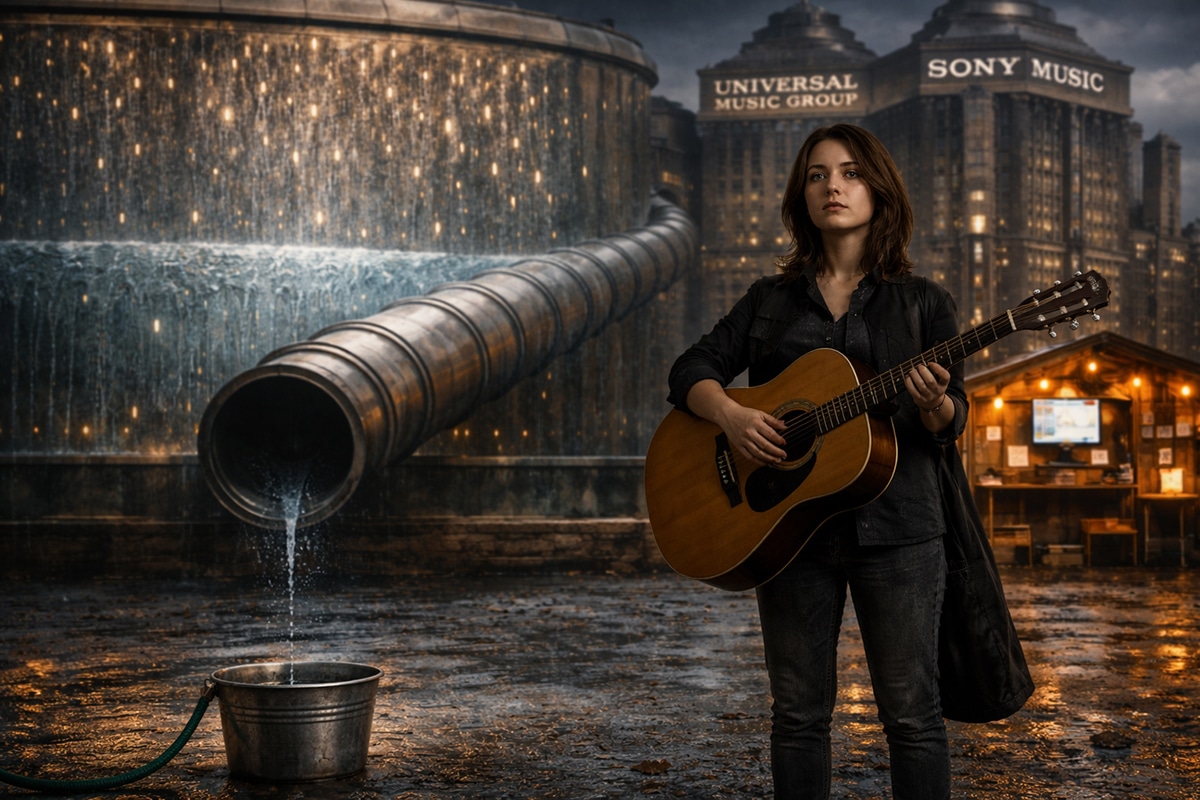
For a lot of independent artists, streaming feels like standing in the middle of a giant city, singing into a megaphone, and getting tipped in pocket lint. The audience is massive. The access is global. The numbers look big on the screen. But the money that reaches the artist often feels weirdly small, almost insultingly small. And because the platforms are wrapped in the language of “access,” “discovery,” and “democratization,” artists are often pushed to think the problem is them. Maybe they just need more streams. Maybe they need better playlisting. Maybe they need to crack the algorithm. Maybe they need to go viral.
That is the trap.
The real problem is not that most artists have failed to game streaming correctly. The real problem is that the system was never built to turn most artists into sustainable businesses in the first place. Even the UK Parliament’s inquiry into streaming said the current market needs a “complete reset,” arguing that while streaming helped save the recorded music business, it has not fairly rewarded performers and creators.
Streaming Didn’t “Go Wrong.” It Followed the Blueprint
When artists say streaming was “designed that way,” the safest version of that claim is not that somebody sat in a secret boardroom and said, “Let’s starve musicians.” There is no need to invent cartoon villainy when the structure itself tells the story.
Streaming was designed to do a few things very well. It was designed to make nearly all recorded music available in one place. It was designed to keep monthly prices low enough to attract mass audiences. It was designed to make listening so easy that people stayed subscribed. And it was designed to create stable licensing relationships with the biggest rightsholders, because no major platform could compete without a full catalog. The UK Competition and Markets Authority said that weak price competition upstream is an inherent feature of the “full catalogue” model, because services need to license all major sources of music to stay competitive, while consumers strongly prefer giant all-you-can-eat catalogs at low prices.
That matters because once you understand the product being sold, the payout outcomes stop looking random. The core product is not “build careers for artists.” The core product is “give listeners a huge, frictionless, habit-forming music utility.” The listener gets convenience. The platform gets engagement, subscriptions, advertising opportunities, and behavioral data. The biggest rightsholders get a system that keeps their catalogs active and valuable. The people who fall through the cracks are the creators who were told the machine was built for them too.
A Stream Is Not a Sale
One of the most damaging ideas in the modern music business is the fake simplicity of the “per-stream rate.” Artists hear people throw around averages and calculators and start thinking one stream equals one little payment. That is not how the dominant platforms work.
Spotify’s own royalty guide says it does not pay a fixed per-stream rate. It says, like every major streaming service, it pays based on streamshare. Roughly two-thirds of Spotify’s music revenue from subscriptions and advertising is allocated to recording and publishing royalties, and rightsholders are paid according to their share of total streams in a given month and territory. After that, those rightsholders pay artists and songwriters according to their own contracts and agreements.
That means a stream is not a sale. A sale is direct. A fan buys your album, and that money is tied to your work. Streaming is pooled. Your listener’s money is thrown into the bigger bucket first, then divided later according to platform-wide share. So the question is not “How much is one stream worth?” The real question is “How big is your piece of the total pie after everybody else has eaten?”
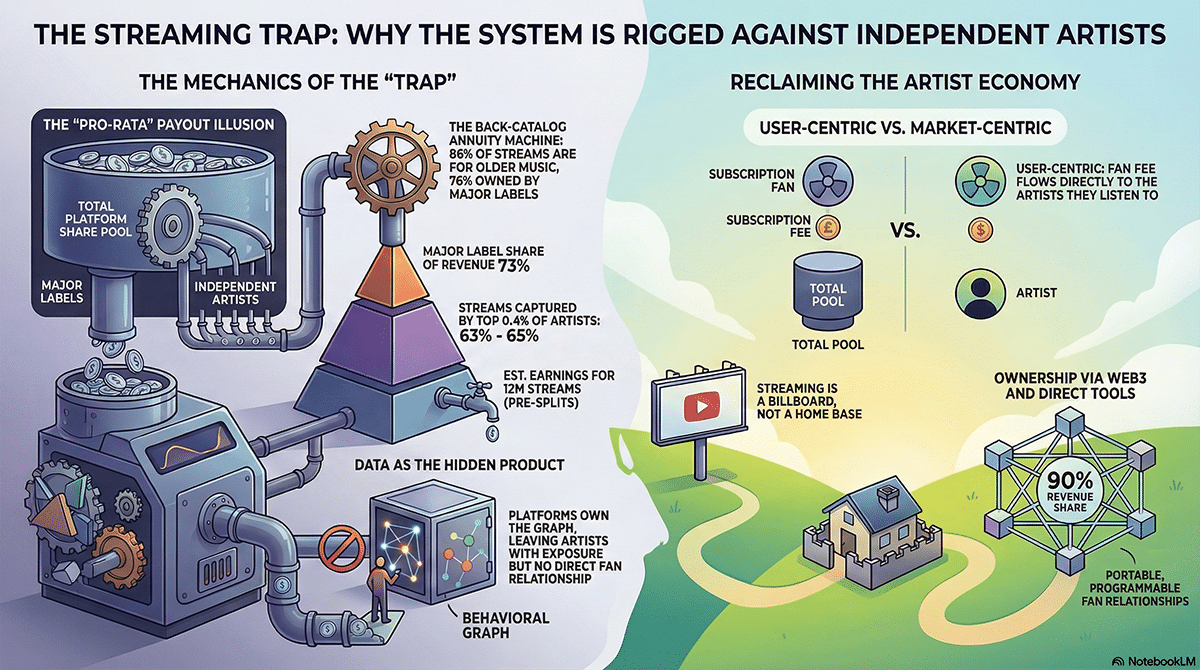
This is why the payout feels so disconnected from fan behavior. A fan can listen almost entirely to one independent artist all month, and that does not mean most of that subscription fee lands with that artist. Under the dominant pro-rata model, the fan’s payment helps fund the whole pool, and the biggest stream winners pull the biggest share from that pool. That is not some accidental leak in the plumbing. That is the plumbing.
The Pool Is the Problem
Once the money goes into a pro-rata pool, loyal support gets flattened. Your die-hard fan and a casual passive listener are both just feeding a bigger system of aggregate consumption. That is why streaming can feel emotionally close but financially distant. The fan thinks they are “supporting” the artist by listening. The artist sees thousands of streams and assumes there must be meaningful value attached. But the system is not tracking devotion in the way artists imagine. It is tracking share.
SoundCloud explained this problem more bluntly than most platforms ever do. In its help center, it says the old pooled model sends money from dedicated fans into a giant pool that pays artists based on total share, and that model “mostly benefits mega stars.” SoundCloud’s fan-powered system was built as a response to that. In other words, even a platform player in the market has openly acknowledged the basic flaw: pooled streaming turns concentrated fan love into diluted platform math.
That one mechanic helps explain why so many hardworking artists hit a wall. They are not only competing with today’s new releases. They are competing with the whole ocean of listening on the platform, including giant legacy catalogs, superstar releases, algorithmic favorites, passive listening habits, and everything else that keeps the pool tilted toward the top.
Spotify’s Business Is Not Your Career
Spotify is the clearest example because it talks more openly than most, but the same logic reaches across the wider ecosystem, including Apple Music, Amazon Music, YouTube Music, and Deezer. These are not artist development companies. They are platform companies.
That distinction matters. Artist development means building a durable career. It means helping an artist grow a direct audience, strengthen touring power, sell more merch, increase publishing income, improve margins, and build a long-term business. A platform company does something else. It tries to attract and keep users, maximize listening time, improve personalization, increase subscription retention, and in many cases sell more effective advertising. Spotify’s own recommendation explainer says its algorithms select and order content across Search, Home, and personalized playlists, and that those recommendations are shaped by listening, searching, skipping, saving, location, device, language, age, and who a user follows.
That is not artist development. That is user optimization.
Spotify’s advertising materials say the quiet part even louder. Its ad business promotes first-party demographic data, behavioral targeting, contextual targeting, and custom audiences. It tells advertisers that its “data-driven targeting tools” help them find customers, and that you can learn a lot about someone by what they listen to. That tells you something important about the real asset being built inside the platform. Music is not just content there. It is also a signal generator. Listener behavior becomes intelligence.
Data Is the Hidden Product
This is the part too many artists miss. Streaming platforms are not just delivering songs. They are collecting patterns.
Spotify’s privacy policy says its service includes personalization, tailored advertising controls, and the infrastructure required to provide its products. Its recommendation explainer says user actions such as searching, listening, skipping, and saving shape what Spotify calls a “taste profile.” It also says recommendations use information such as general location, device, language, age, and who a listener follows. Put simply, the platform is learning from every click, skip, save, play, and habit.
That is why these platforms are not really in the business of helping artists build careers. They are in the business of building listening environments that produce retention and insight. Music is the fuel. Data is one of the compounding assets. If the platform owns the behavior graph, the platform owns the map. The artist may get exposure, but the platform keeps the deeper audience intelligence.
And that is where the Making a Scene problem becomes obvious. If you do not own the fan data, then you do not own the relationship. If you do not own the relationship, then you are building your house on rented land. The stream may be yours in the cultural sense, but the customer trail belongs to the platform. That is why discovery without data ownership is not a business model. It is borrowed visibility.
Full-Catalog Streaming Changed the Power Map
The full-catalog model did more than change listening. It changed bargaining power.
Music streaming services must offer all music from all labels to remain competitive, while labels must license all content to all services to maximize revenue. That sounds balanced on the surface, but it is not equal leverage. Streaming services are in a weaker negotiating position than the majors, because a platform that loses a meaningful chunk of catalog risks deterring new users and causing current subscribers to leave. The majors know that.
Many agreements with majors include “must-carry” clauses requiring services to offer the major’s full catalog, while such clauses are not typical in indie deals. It said those clauses may make it harder for smaller record companies to gain prominence and scale. Again, nobody has to make up a conspiracy here. The documents already show a market shaped around the strategic importance of giant catalogs.
Once streaming became the main way people listen, ownership of a giant catalog became even more powerful. A label or rights holder with a mountain of familiar music did not just own songs. It owned bargaining chips. It owned retention value. It owned the kind of content platforms could not afford to lose.
Back Catalog Is the Money Machine
This may be the single most important fact in the whole streaming story.
In 2021, 86% of streams were for back-catalog music, which it defined as music first streamed in previous years. It also found that 76% of those back-catalog streams were of music owned by the majors. That catalog music can be highly profitable because it generally requires much less ongoing A&R and marketing spend than new music.
That means streaming is not just a marketplace for this Friday’s releases. It is a giant annuity machine for old ownership.
And once you see that, the whole landscape shifts. The platforms are not simply paying for fresh demand in real time. They are constantly re-monetizing decades of recordings. The owners of huge libraries entered the streaming era carrying an advantage that independents could never match at scale. Every time an old hit gets streamed again, the catalog owner earns with far less cost attached than a new artist trying to break a new song.
This is one reason the majors have been able to stay so dominant even while everyone talks about the “democratization” of release tools. Yes, more artists can upload. But uploading into a market where legacy ownership already controls most listening is not the same as entering a level playing field. It is walking into a casino where the house already owns the slot machines, the floor, and most of the chips.
Why the Majors Keep Winning
The majors’ combined share of streaming revenues was 73% in 2021, and their combined share of streams has remained over 70% since 2015. Research found the top 0.4% of artists account for 63% to 65% of streams. This is not a broad, healthy middle. It is a steep pyramid.
A UK Report stats that 12 million streams per year would earn an artist around £12,000 from UK streams, before you even get into how that money is split through distributors, labels, recoupment, managers, and everyone else with a hand in the chain. That number lands like a hammer because it shows how absurdly high the volume requirement is before streaming starts to look like something close to a working wage, and even then it is still not a full career by itself.
This is where the design question comes back. If the market rewards giant catalogs, pools all fan payments, and allocates revenue by share in a system already dominated by major ownership, then of course the biggest rights holders keep winning. The model protects scale. It protects incumbency. It protects deep libraries. It does not naturally protect small but meaningful artist-to-fan economies.
The UK Inquiry Called for a Reset
The UK Parliament’s inquiry into music streaming mattered because it refused to pretend the problem was just hurt feelings from artists who did not understand the modern market. The committee said structural advantages had allowed powerful companies to build “seemingly unassailable positions,” and it recommended broad reforms, including a right to equitable digital music remuneration, a right to recapture rights after a period of time, and contract adjustment where works become more successful than the original deal anticipated.
That is a huge deal because it reframed the issue. The problem is not only the platform payout formula. The problem is also what happens after the money leaves the platform and moves through the rights system. Spotify pays rightsholders, not most artists directly. Then the contracts take over. If your deal is bad, if your royalties are recoupable, if your accounting is weak, or if your splits are messy, the small platform payout becomes an even smaller personal payout.
The UK inquiry basically said what artists have been screaming for years: the recorded music business returned to growth, but the people making the music did not share proportionately in that recovery. That is not a vibe. That is a policy finding.
User-Centric Payouts Could Shift the Ground
The most common alternative to pro-rata is user-centric distribution. The simple idea is that each subscriber’s money should be divided only among the artists that subscriber actually listened to. The CNM study on UCPS describes the current system as market-centric or pro-rata, and the alternative as user-centric, where the subscription amount follows the user’s actual listening.
The emotional logic is obvious. If one of your fans spends the month listening mainly to you, why should that money mostly flow elsewhere? User-centric aims to line up payment with real fan behavior instead of platform-wide share.
But user-centric is not magic dust. The Pro Musik study found that the effect would be significant, not marginal, with almost one in five artist profiles potentially doubling income under UCPS and nearly one in three seeing gains of at least 40%. At the same time, more than a third could lose 40% or more, because no payment model creates money from nowhere. It reallocates money according to a different rule set.
That is the honest way to talk about reform. User-centric is not “everyone wins.” It is “loyalty matters more than raw scale, and the redistribution changes who benefits.” For many independents, especially artists with committed niche audiences, that could be a very meaningful shift. But it does not automatically solve low subscription prices, bad contracts, or platform dependency.
SoundCloud and Deezer Prove the Rules Can Change
This is why experiments matter. SoundCloud moved to fan-powered royalties in 2021 for artists who monetize directly on the platform. Its help center says that under the old pooled model, dedicated fans’ money went into a giant pool that mostly benefited mega stars, while the fan-powered model pays based on actual fan listening and benefits independent artists with loyal audiences. It also says distribution from SoundCloud out to external services like Spotify, Apple Music, and Amazon Music still follows those outside platforms’ own systems.
That last point is key. SoundCloud can change the rules in the world it controls, but once the music leaves for the wider streaming economy, the old system takes back over. That tells you both the promise and the limit of platform-level reform.
Deezer’s artist-centric model is another useful case. In January 2025, Deezer and SACEM said Deezer’s ACPS applies a cap on how much one user can affect the royalty pool, doubles the weight of songs from artists who hit at least 1,000 streams from 500 different subscribers, boosts songs that are actively searched or found in non-algorithmic playlists, and excludes noise from the royalty pool. Deezer framed this as a way to reward real artists with engaged fan bases while also pushing back on fraud and junk content.
By March 2026, Deezer said 85% of its partners were on the ACPS model. It also said around 60,000 AI-generated tracks were being delivered daily in January 2026, roughly 39% of all daily music delivered, and that up to 85% of streams on AI-generated music were detected as fraudulent, demonetized, and removed from the royalty pool. Whether you love Deezer’s exact model or not, the larger lesson is hard to ignore: payout systems are policy choices. They are not laws of physics. Platforms can rewrite them when they choose.
Web3 Streaming Changes More Than the Payment Formula
User-centric reform matters because it can make the current machine fairer. Web3 matters because it can help build a different machine.
Audius says it is decentralized and community-run, enabling artists to own their content, build direct relationships with their audience, and earn revenue in a transparent way. Its help materials say fans can buy tracks and albums with payments going directly and immediately to the artist, tips go 100% to the artist, and artists can sell music on their own terms while the network takes a 10% fee, leaving the remaining 90% available to withdraw instantly.
That is a very different idea from pro-rata streaming. It is not just a different method for slicing a subscription pie. It is a shift back toward direct artist-to-fan economics, but with programmable tools layered on top.
Audius has also pushed Artist Coins, describing them as blockchain-based tokens that unlock fan clubs or act as backstage passes. That matters because it points to something bigger than “better streaming.” It points to music tied to access, membership, community, and portable proof of support. Instead of asking a platform to maybe share audience intelligence back with you, Web3 systems can let the artist design access and value around a relationship they control more directly.
Now, let’s be real. Web3 is not a miracle. It does not remove the need for songs people care about. It does not remove the need for trust. It does not make audience-building automatic. But it does open a lane where ownership, access, and fan participation can be built into the system itself, instead of bolted on after a platform has already captured the customer. That is why Web3 deserves equal weight in this conversation. It is not only about better payout math. It is about changing who owns the rails.
Streaming Is Discovery, Not Home Base
For independent artists, this is the strategic shift that matters most.
Spotify, Apple Music, Amazon Music, YouTube Music, and Deezer are useful. They are very good at being searchable. They are very good at convenience. They are very good at letting a casual listener sample your work with almost no friction. They are very good at top-of-funnel discovery.
What they are not good at is giving you the full business relationship.
They do not hand you first-party fan data the way your own site, store, SMS flow, or email list can. They do not let your most loyal fan’s money track cleanly and directly to you under the dominant pro-rata system. And they are not waking up every morning asking how to make sure you build a stable artist middle class. They are trying to improve product performance, retention, recommendation quality, and monetization.
That is why the artist mistake is not “using streaming.” The artist mistake is treating streaming like home base. A stream should lead somewhere. It should lead to your site. It should lead to your email list. It should lead to your SMS sign-up. It should lead to your show ticket, merch bundle, fan club, vinyl preorder, special access drop, or membership layer. If it does not, then you are helping the platform learn your audience better than you know them yourself.
The Answer
The answer is not to pretend streaming is useless. It is to stop pretending streaming is the business.
Use the platforms for discovery. Use them to remove friction for the first listen. Use them to give strangers an easy doorway into your music. But the serious work starts after that first listen. That is where ownership matters. Own your masters where you can. Own your publishing where you can. Register everything correctly. Then build systems that move listeners into relationships you control.
That means your website matters. Your email list matters. Your SMS list matters. Your merch store matters. Your fan club matters. Your direct offers matter. Your data matters. And in the next stage of the music business, your ability to connect those owned assets with AI and Web3 tools will matter too.
AI becomes truly useful when you own the signal. If you control the fan relationship, AI can help you see which cities convert, which superfans buy twice, which merch bundles work, which messages get opens, and which offers move people from passive listener to active supporter. Web3 becomes powerful when it gives that same fan relationship portability, proof, access, and programmable value. Together, they help independents build something the pro-rata stream never will: a durable artist economy rooted in ownership instead of permission.
The Real Point Nobody Wants to Admit
The real reason streaming pays so little is not that the industry has not found the perfect formula yet. It is that the dominant formula was built to serve different priorities.
It was built to make giant catalogs easy to license. It was built to keep consumer pricing attractive. It was built to reward scale in a pooled system. It was built to turn behavior into product intelligence. It was built in a market where major rights holders entered with deep catalogs, strong bargaining power, and contracts that already leaned in their favor. Once you understand that, the tiny payouts to most artists stop looking mysterious. They look like the predictable outcome of a model aimed somewhere else.
That does not mean the future is hopeless. It means the strategy has to change. Reform the payout model where possible. Push user-centric ideas seriously. Watch platform experiments like SoundCloud and Deezer closely. Build in Web3 where it genuinely strengthens ownership and fan connection. But above all, stop letting a rented platform define the value of your career.
Streaming can introduce you. It can expose you. It can put your music in motion.
But it cannot be the place where you leave your future sitting on the table.
The next music industry middle class will not be built by begging the pro-rata pool to love independent artists more. It will be built by treating streaming as the billboard on the highway, then building the real business on land you own.
 |  Spotify |  Deezer |  Breaker |
 Pocket Cast |  Radio Public |  Stitcher |  TuneIn |
 IHeart Radio |  Mixcloud |  PlayerFM |  Amazon |
 Jiosaavn |  Gaana |  Vurbl |  Audius |
 Reason.Fm | |||
Find our Podcasts on these outlets
Buy Us a Cup of Coffee!
Join the movement in supporting Making a Scene, the premier independent resource for both emerging musicians and the dedicated fans who champion them.
We showcase this vibrant community that celebrates the raw talent and creative spirit driving the music industry forward. From insightful articles and in-depth interviews to exclusive content and insider tips, Making a Scene empowers artists to thrive and fans to discover their next favorite sound.
Together, let’s amplify the voices of independent musicians and forge unforgettable connections through the power of music
Make a one-time donation
Make a monthly donation
Make a yearly donation
Buy us a cup of Coffee!
Or enter a custom amount
Your contribution is appreciated.
Your contribution is appreciated.
Your contribution is appreciated.
DonateDonate monthlyDonate yearlyYou can donate directly through Paypal!
Subscribe to Our Newsletter
Order the New Book From Making a Scene
Breaking Chains – Navigating the Decentralized Music Industry
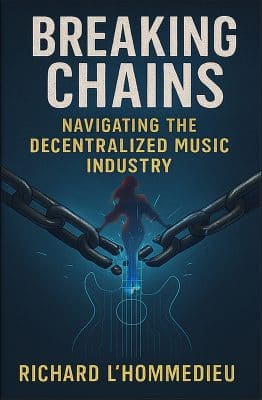
Breaking Chains is a groundbreaking guide for independent musicians ready to take control of their careers in the rapidly evolving world of decentralized music. From blockchain-powered royalties to NFTs, DAOs, and smart contracts, this book breaks down complex Web3 concepts into practical strategies that help artists earn more, connect directly with fans, and retain creative freedom. With real-world examples, platform recommendations, and step-by-step guidance, it empowers musicians to bypass traditional gatekeepers and build sustainable careers on their own terms.
More than just a tech manual, Breaking Chains explores the bigger picture—how decentralization can rebuild the music industry’s middle class, strengthen local economies, and transform fans into stakeholders in an artist’s journey. Whether you’re an emerging musician, a veteran indie artist, or a curious fan of the next music revolution, this book is your roadmap to the future of fair, transparent, and community-driven music.
Get your Limited Edition Signed and Numbered (Only 50 copies Available) Free Shipping Included
Discover more from Making A Scene!
Subscribe to get the latest posts sent to your email.


