The Decline of the Playlist Era in Music





Making a Scene Presents – The Playlist Era is Fading
Listen to the Podcast Discussion to gain more Insight how The Playlist Era is Fading
Picture the modern indie grind for a second. You drop a single, you refresh your stats, and you squint at that tiny spike hoping it turns into a staircase. Maybe you’re watching Spotify for Artists and tracking what happened after you pitched, posted, begged, and boosted. Spotify will happily show you audience behavior, segments, and trends, and it even offers promo tools through things like Campaign Kit.
But here’s the part nobody wants to say in polite industry company. Even when playlists “hit,” they rarely hand you the one thing a working artist actually needs: a direct connection to the people who hit play. That’s the quiet truth sitting under all the hype. You can get a lot of listens and still have no leverage, because the relationship lives inside someone else’s walls.
And that’s why the playlist era is fading as the center of gravity. Playlists still exist, and they still matter, but they’re becoming what radio always was: a powerful discovery surface that doesn’t belong to you. The next layer—the layer that turns discovery into income—is community. The artists who win the next chapter won’t be the ones who “get added.” They’ll be the ones who get joined.
The real problem with playlists is the wall
You can’t build a career on vibes alone. A “monthly listener” number looks great in a screenshot, but it doesn’t tell you how many tickets you can sell in Columbus. It doesn’t tell you how many people will buy a hoodie on Friday. It doesn’t tell you who will show up early for a VIP hang and leave with a signed poster. It doesn’t tell you who will volunteer to be street team because they actually feel like they’re part of something.
That’s not a moral complaint. That’s just math. Streams can be part of your story, but they’re not your customer list, and they’re definitely not your community. Spotify for Artists can show audience segmentation—useful, smart, and worth paying attention to—but it still doesn’t hand you names, emails, or direct permission to reach those listeners on your terms.
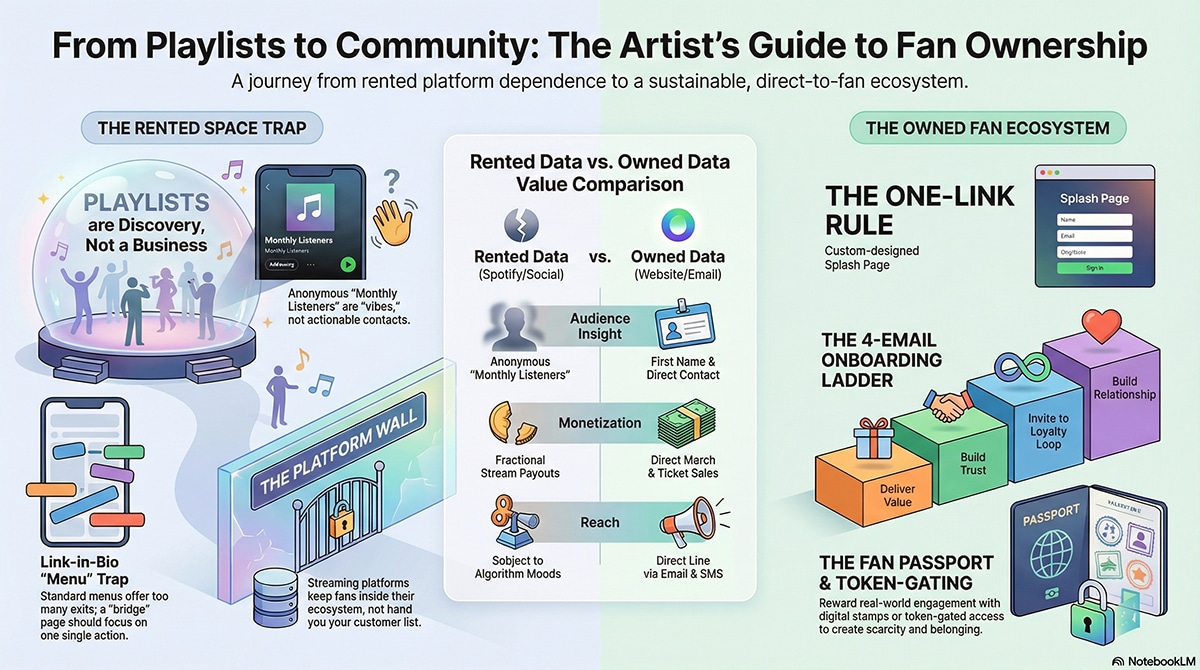
The wall is the point. Platforms are built to keep fans inside the platform. Your job is to build a system that gently moves the right fans out of that rented space and into your owned ecosystem, where you can actually build income without begging an algorithm to be in a good mood.
Spotify is building more playlists than ever, and that’s exactly why you can’t rely on them
Here’s a weird twist: the playlist economy isn’t fading because Spotify stopped caring about playlists. It’s fading because playlists are becoming more automated, more personalized, and more “productized” for the listener. Spotify keeps adding playlist-driven features that make the platform feel like a music concierge, which is great for fans but also means discovery is happening deeper inside Spotify’s world.
Spotify has features like DJ (including DJ requests), which curates listening sessions with AI-driven guidance. Spotify has daylist, a playlist that updates throughout the day based on a listener’s habits, and it keeps expanding that feature. Spotify has been rolling out AI Playlist and Prompted Playlists that let listeners generate playlists by typing what they want.
All of that screams one thing: playlists are becoming an internal operating system for discovery. That’s amazing for Spotify. It’s not a stable foundation for you. If discovery is happening inside their features, your career can’t depend on staying inside their features. Your career has to depend on what you can take with you: your list, your community, your direct line.
Rented space is still rented space, even when it feels like “home”
Indie artists have been trained to treat Spotify and social platforms like home base. You build followers. You build “engagement.” You build “monthly listeners.” You build the vibe. Then the platform changes the rules, the reach drops, and suddenly you’re paying to reach people who already said they wanted you.
This isn’t conspiracy talk. It’s the basic incentive structure. Platforms optimize for what benefits the platform. Your livelihood is not their primary KPI. Your job isn’t to hate platforms. Your job is to stop confusing distribution with ownership.
Spotify for Artists even positions its tools around helping you grow and promote right where streaming happens, including Campaign Kit. That can be useful as a channel, but it’s still happening inside Spotify. If you build your whole career inside rented space, you’re building an asset you don’t own, and you’re letting a platform be the middleman between you and your audience.
Making a Scene’s philosophy is simple: you build a music industry middle class when you own your masters, your publishing, your fan data, and your relationships. If you don’t own the relationship, you don’t own the leverage. If you don’t own the leverage, you don’t own the income.
Link trees don’t fix the problem, they spread it out
Now let’s talk about the most popular leak in indie marketing. The link-in-bio “menu.”
Linktree, is literally designed to do one thing well: let you share everything through one link. That’s the product. But if your goal is to convert an anonymous listener into a known fan, “share everything” is a trap. It splits attention. It adds choices. It creates exits. Fans click, glance, and bounce. They’re not failing you. You’re handing them a hallway with ten doors and asking them to care enough to choose the “right” one.
A menu is not a funnel. A menu is a scatter plot. If you want leverage, your bio link should not be a buffet. It should be a bridge. One job, one page, one action.
The one-link rule that changes everything
Here’s the rule that indie artists need to staple to their monitor. Your Spotify profile and your social profiles should have one link, and that one link should point to a single splash page with one purpose: collect fan data.
Not “send them everywhere.” Not “let them choose.” Not “here’s my world, good luck.” Just one clear next step that turns a listener into a contact.
That splash page collects first name, email, and city/state. You chose those fields for a reason, and it’s a smart reason. First name lets you talk like a human. Email gives you a direct line you control. City/state gives you touring leverage and real-world monetization power, because location is what turns “fan” into “ticket buyer.”
This is where your system starts to look like a business instead of a hope.
Your website isn’t a brochure, it’s the venue you own
A lot of artist websites are basically apology pages. They exist to point people back to Spotify, back to YouTube, back to social, back to the rented internet. That’s backwards.
Your website should be the hub. Your website should be the room. Your website should be where fans can listen, learn, buy, and join without being told to leave.
If you’re running WordPress, you’re already holding one of the best “ownership” tools on the internet because it’s built around you controlling your site and your data. If you want to sell merch directly from your hub, WooCommerce is the obvious backbone for that in the WordPress world.
Now here’s the key detail that ties directly to your point about rented space. If your website sends fans away to listen, you’re still losing them. You want an owned media player on your site so fans can press play without getting pulled back into someone else’s ecosystem.
You can embed a Bandcamp player and keep the listening experience connected to a direct-to-fan economy that’s built around artist support. You can also use WordPress-native music player plugins like AudioIgniter or Compact WP Audio Player so your music lives inside your house.
This isn’t aesthetics. This is retention. Every time you keep a fan in your ecosystem for one more minute, you increase the odds they’ll become the kind of supporter who actually funds your career.
Communities are replacing playlists as the layer that matters
Playlists introduce songs. Communities introduce artists.
A playlist can get you a stream. A community can get you a story. Stories are what turn into repeat support. Stories are what make fans feel like insiders. Stories are what make someone proud to wear your merch in public. Stories are what make someone show up early and bring a friend.
Fans are craving spaces that feel smaller, more real, and more human than the infinite scroll. That’s why private communities are exploding in music and creator culture. People want a room where they belong, not another feed where they disappear.
If you want to build that room in familiar Web2 land, Discord is a common choice because it’s designed around persistent communities, channels, and roles. Patreon is a common choice for paid membership and recurring support, and it’s explicitly positioned around community plus monetization. Circle is another option built around hosting a community under your brand rather than inside a public social feed. Memberful is often used when you want a membership layer that can connect to a bigger owned ecosystem.
None of these are “perfect.” They’re tools. The bigger point is this: communities become the next discovery layer because discovery is turning human again. Fans don’t just want to hear what you made. They want to be part of why you’re still making it.
Token-gated access is the new backstage pass, and it’s not just crypto hype
Token-gating is a simple idea with a powerful effect. If you own the key, you get access. The key can be a token, an NFT, or some form of verified membership. The tech is just the lock. The real value is what it creates: scarcity, belonging, and proof. Proof changes everything for indie artists, because proof lets you reward real supporters without playing guessing games. Proof lets you say, “If you’ve done the thing, you unlock the next thing.” That’s how you build a ladder, not a loop.
If you want to token-gate a Discord server, tools like Collab.Land are built to verify token ownership and manage token-gated roles. Guild is another platform built around access, rewards, quests, and activity tracking across social and onchain signals. Unlock Protocol is positioned around membership, access control, and monetization, and it even has a WordPress plugin approach documented in its guides. Tokenproof focuses heavily on token-gated events, experiences, and verification flows that can work both online and in real life. Lit Protocol and its developer docs go deeper into access control, decentralized signing, and encryption, which is useful if you’re building more custom gated experiences.
Here’s the practical indie takeaway. Token-gating isn’t about being “futuristic.” It’s about making your community portable and verifiable, so you can reward the people who keep you alive as an artist without begging a platform to cooperate.
The DIY fan passport you can build right now without waiting for the full system
You said the full Fan Passport system is still in progress, so let’s talk about the bridge solution that works today. A fan passport is not complicated in spirit. Fans collect stamps that represent real-world engagement, and those stamps unlock perks.
The stamps aren’t cute decorations. They’re a behavior-based record of support. They let you reward attendance, merch purchases, street team effort, referrals, and repeat engagement in a way that feels like a game but functions like a business.
If you want a wallet-based “stamp card” approach that doesn’t require fans to download a weird app, tools like Loopy Loyalty are built around digital stamp cards that can live in Apple Wallet and Google Wallet. PassKit at is another platform that focuses on creating and managing Apple Wallet and Google Wallet passes, including membership and loyalty-style passes.
This is where it gets fun at shows. You put a QR code at the merch table or at the exit. Fans scan, add the pass, and you stamp them when they do the thing. You’ve just turned a show into a ritual. Rituals build belonging, and belonging builds repeat support.
Now you’re not just “playing a gig.” You’re building a measurable community loop that ties directly to income.
The four-email ladder that turns a listener into a real supporter
A splash page is the door. Email is the hallway that brings people into the room.
The four-email sequence you described is a clean ladder: deliver value, welcome them in, start a conversation, then invite them into the passport loop. That’s not spam. That’s onboarding. It’s what every serious business does, and indie artists are businesses whether the industry likes that sentence or not.
The first email delivers the free gift and sets trust. The second email explains what kind of world they just joined and what you stand for, including the “we don’t feed the algorithm, we build the relationship” stance. The third email asks a question that creates interaction, because interaction is the first brick in a community wall. The fourth email invites them into the passport program, explains the stamp idea in simple terms, and makes the rewards feel tangible.
That sequence matters because it protects your fan from the chaos of the feed. It gives them a path. It turns random discovery into intentional belonging.
The free gift that actually works, including the ones artists forget about
Most artists default to the obvious freebie: a free download of a track. That can work, and it’s a clean, familiar value exchange. But if you want fans to feel like they’re getting something that means something, you can get more creative without getting complicated.
You can offer an unreleased demo version that shows how the song started, and that kind of behind-the-scenes access is exactly what fans join communities for. You can offer a simple “tour warmup” playlist or rehearsal recording that makes fans feel like insiders before you even announce dates. You can offer a discount code for merch and make it time-limited, which pushes real sales without feeling gross. You can offer a short video walkthrough of how you wrote the chorus, or a voice memo of the original hook, because fans love origin stories.
If you’re an artist with any kind of musician audience, you can offer a chord chart, lyric sheet, or a stripped acoustic version that fans can learn and share. If you’re production-minded, you can offer a tiny sample pack of your own sounds or drum hits, because that turns listeners into collaborators. If you’re building a street team, you can offer a “passport starter pack” that includes early access to the next stamp drop, because now the gift isn’t just content—it’s status.
Every one of those gifts ties to revenue because it moves the fan closer to a paid action: buying a ticket, buying merch, joining membership, or showing up enough times to be the kind of supporter who keeps you afloat.
Where Mas-Fan-Funnel fits into the Making a Scene mission
This is the part where your op-ed stops being theory and becomes infrastructure. The Mas-Fan-Funnel WordPress plugin exists to make the one-link rule practical, not aspirational.
Mas-Fan-Funnel is a free Making a Scene WordPress plugin intended to create a single-purpose splash page that captures first name, email, and city/state, then runs a four-email ladder that moves fans toward a passport-style engagement loop. It also reinforces the bigger mission: stop sending fans into rented hallways and start building your own rooms.
How to use Spotify and social the right way without losing the fan
This is where a lot of artists get stuck, so let’s say it bluntly. You do not need to “quit Spotify.” You need to stop treating Spotify like your business.
Spotify and social are top-of-funnel discovery. They are the street corner. They are where strangers can bump into you. You use them to start the relationship, not to house it.
Spotify for Artists talks about tools for promoting and amplifying right where streaming happens, and those tools can help you reach more listeners. But your bio link and your profile link should point to one splash page with one purpose: capture fan data. Once the fan is in your list, you can send them to your site, invite them into community, and onboard them into the passport loop.
And when you send them to your website, you don’t make them leave again to listen. You keep a player on your site, whether that’s a WordPress-native player or a Bandcamp embed that keeps the listening experience on your website and connected to direct support.
Your goal is simple: discovery happens out there, but the relationship happens in here.
Why communities win where playlists can’t
Playlists can’t create a sense of belonging. They can create a sense of placement, and that’s not the same thing.
A community gives a fan identity. It gives them a role. It gives them inside jokes, recurring rituals, and shared wins. It gives them a reason to care when you announce a tour, because your tour isn’t just “content.” It’s something their community is part of.
Token-gating strengthens that by giving you a way to prove membership and reward it. Tools like Collab.Land and Guild exist because communities want structure, not just chatter. Tools like Tokenproof exist because events and real-world access are still the deepest form of fandom.
This is where the “playlist era” fades into the background. Playlists can still introduce the song, but communities introduce the artist. Communities turn casual listeners into repeat supporters, and repeat supporters are what build a middle class.
The op-ed conclusion nobody in the old system wants you to believe
The industry taught artists to chase exposure like exposure is the paycheck. That story kept artists dependent, because dependence is profitable for gatekeepers.
The new story is simpler and more dangerous to the old model. You don’t need a platform to “let you in.” You need a system that converts attention into ownership, and ownership into income.
You do that with one link that captures first name, email, and city/state. You do that with a four-email ladder that builds trust and belonging. You do that with an owned website that has a player, a store, and a reason to stay. You do that with a community layer that fans join, not just follow. You do that with a passport loop—DIY today through wallet passes like Loopy Loyalty or PassKit, and more advanced tomorrow through token-gated systems like Unlock Protocol.
Playlists aren’t evil. They’re just not yours. The future belongs to artists who treat playlists like the flyer on the street pole, then invite fans into the house they own.
That’s the whole game. That’s how you build a music industry middle class.
 |  Spotify |  Deezer |  Breaker |
 Pocket Cast |  Radio Public |  Stitcher |  TuneIn |
 IHeart Radio |  Mixcloud |  PlayerFM |  Amazon |
 Jiosaavn |  Gaana |  Vurbl |  Audius |
 Reason.Fm | |||
Find our Podcasts on these outlets
Buy Us a Cup of Coffee!
Join the movement in supporting Making a Scene, the premier independent resource for both emerging musicians and the dedicated fans who champion them.
We showcase this vibrant community that celebrates the raw talent and creative spirit driving the music industry forward. From insightful articles and in-depth interviews to exclusive content and insider tips, Making a Scene empowers artists to thrive and fans to discover their next favorite sound.
Together, let’s amplify the voices of independent musicians and forge unforgettable connections through the power of music
Make a one-time donation
Make a monthly donation
Make a yearly donation
Buy us a cup of Coffee!
Or enter a custom amount
Your contribution is appreciated.
Your contribution is appreciated.
Your contribution is appreciated.
DonateDonate monthlyDonate yearlyYou can donate directly through Paypal!
Subscribe to Our Newsletter
Order the New Book From Making a Scene
Breaking Chains – Navigating the Decentralized Music Industry
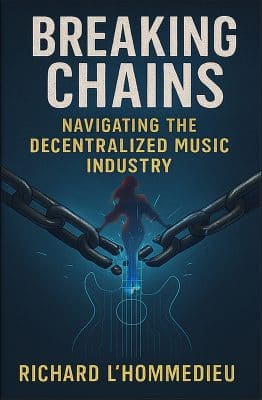
Breaking Chains is a groundbreaking guide for independent musicians ready to take control of their careers in the rapidly evolving world of decentralized music. From blockchain-powered royalties to NFTs, DAOs, and smart contracts, this book breaks down complex Web3 concepts into practical strategies that help artists earn more, connect directly with fans, and retain creative freedom. With real-world examples, platform recommendations, and step-by-step guidance, it empowers musicians to bypass traditional gatekeepers and build sustainable careers on their own terms.
More than just a tech manual, Breaking Chains explores the bigger picture—how decentralization can rebuild the music industry’s middle class, strengthen local economies, and transform fans into stakeholders in an artist’s journey. Whether you’re an emerging musician, a veteran indie artist, or a curious fan of the next music revolution, this book is your roadmap to the future of fair, transparent, and community-driven music.
Get your Limited Edition Signed and Numbered (Only 50 copies Available) Free Shipping Included
Discover more from Making A Scene!
Subscribe to get the latest posts sent to your email.


