
Rethinking Crowdfunding for the Indie Musician in a Decentralized Music Industry




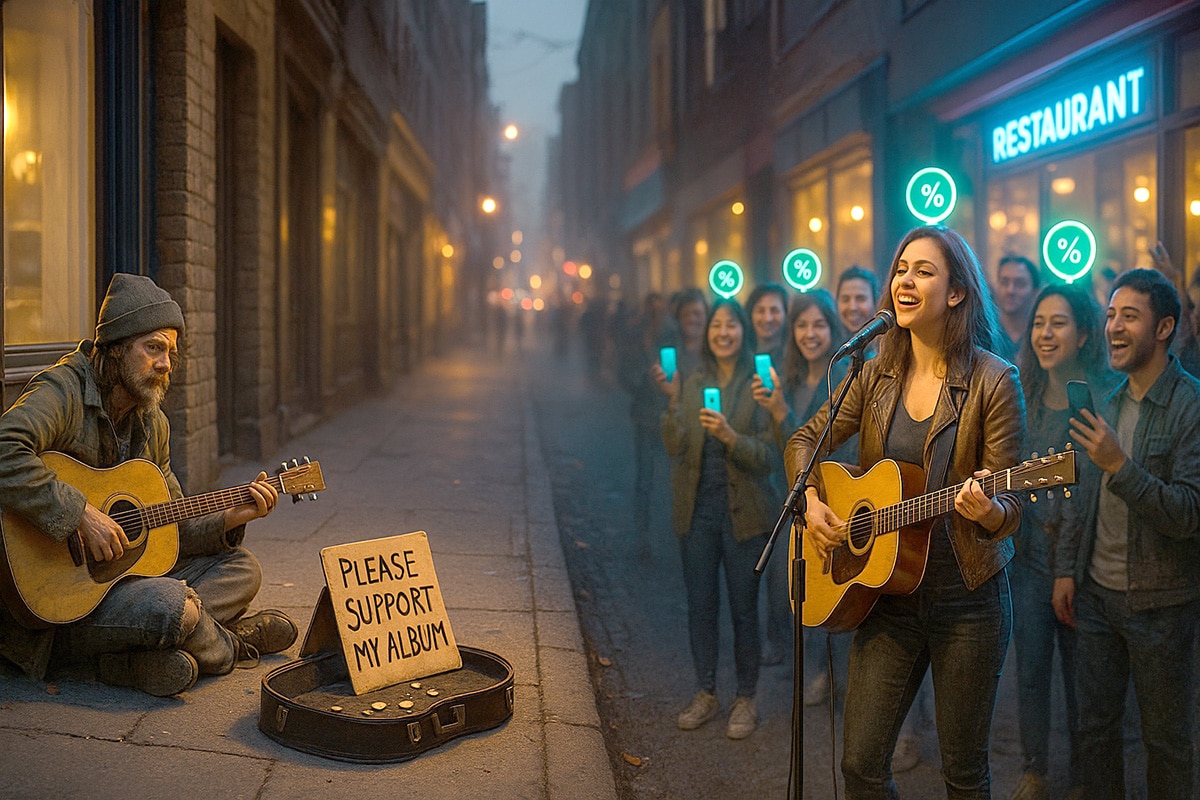
Making a Scene Presents Rethinking Crowdfunding for the Indie Musician in a Decentralized Music Industry
Listen to the podcast discussion to learn more about the Rethinking of Crowdfunding using Web3
Why rethink crowdfunding?
Let’s begin with a simple question: when you ask fans for money to make an album or go on tour, is that “donation” or “investment”? Traditional tools treat it like donation: you promise perks (a signed CD, a shout-out, backstage passes). But the fan gives you money up front, hoping you deliver. That’s okay, but it doesn’t change the relationship: you’re asking, “Will you support me?”
Web3 crowdfunding changes that. Instead of begging, you offer fans a stake in your project. They become partial owners (in a clearly defined way) of future revenue streams. They share upside with you. That is closer to how businesses raise investors. This flips the incentive: fans want your success, because they benefit when you succeed.
Before diving into Web3, let’s see how traditional systems compare.
Kickstarter, Patreon, and the “begging” model
Kickstarter is one of the most popular crowdfunding platforms. You create a project (an album, a tour), set a funding goal and deadline. You offer reward tiers (digital download, T-shirt, VIP dinner). If you hit your funding goal, the backers pay; if not, no one pays. Kickstarter takes ~5% of funds, plus payment processing fees. (It’s well known and relatively safe.)
Patreon is more of a subscription/donation model. Fans pledge monthly, and you give them perks (exclusive content, early access). It’s open-ended — no defined “project end” necessarily.
These are powerful platforms and have funded many music projects. But they have limitations:
-
You are asking for money upfront, with more promise than guarantee.
-
You don’t give fans equity, only perks or gratitude.
-
Fans often feel like donors, not stakeholders.
-
For big projects (tours, high production albums), you may need much more money—and your perks scale poorly.
-
There is no secondary market: a fan can’t “sell their stake” later.
In short: they’re fine for many projects, but you’re still in “ask mode.” Web3 aims to reframe this.
Web3 crowdfunding: fans as investors
Web3 crowdfunding means using blockchain, tokens, smart contracts, NFTs (non-fungible tokens) or fungible tokens to let fans buy shares or rights tied to a music project. These shares can generate returns (royalties, streaming income, resale value) if the project succeeds. Fans are more than supporters; they’re co-investors and co-owners (within defined limits).
Here are some of the benefits:
-
Alignment of interests: fans will promote, stream, share, because they benefit.
-
Secondary markets: tokens can be traded or resold, so early fans can exit (or others join).
-
Automated payout: smart contracts can distribute streaming revenues or royalties automatically when thresholds are met.
-
Transparency: blockchain provides auditability — fans can see how many tokens exist, how much revenue flows, where funds go.
-
New financing source: for bigger costs (studio, tour, merch, video), you can raise more by giving revenue share rather than just promises of perks.
But it also has risks and complexities: legal structuring, token design, smart contract bugs, tax issues, and regulatory risks. But for many indie artists, it’s now feasible to experiment.
Let’s look at real-world examples to see how artists are doing this.
Case studies: RAC, Royal.io, and others
RAC (Andre Anjos) and tokenized music
RAC, a Grammy-winning electronic artist, has been an early explorer of this space. He released his album Ego via blockchain in 2017, letting fans buy directly via smart contract. More recently, he created a social token called $RAC, minted on Ethereum, to reward longtime fans (people who bought merch, albums, etc.). Some fans got the token retroactively, and holding that token gives perks and community status. In one story, he linked the token to a physical cassette: holders had to “burn” the token to redeem the cassette.
RAC says the token helps with community, signaling, decentralization, and letting fans have a piece of the story—not just perks. The token wasn’t meant entirely as a financial instrument, but some fans treated it like one.
He also tokenized his album on Zora. He sold tokens with the ticker TAPE, tied to a physical limited edition cassette. Tokens were listed at $20 each but soared above $800 before settling around $200. This illustrates how scarcity + demand + market mechanisms can amplify value.
In other words: RAC was experimenting with treating fans as stakeholders, not just supporters.
Royal.io — fans owning streaming rights
One of the more public platforms to try this is Royal.io (often called Royal). Royal’s model: artists can offer Limited Digital Assets (LDAs), which are tokens (NFTs) that represent a fraction of streaming revenue (or coin flows) for songs. Buyers get rights to a share of streaming royalties and possibly extra perks (merch, backstage, bonus tracks).
For example, in 2022, Nas released two songs via Royal, letting fans buy portions of their streaming royalties. Diplo also dropped “Don’t Forget My Love” on Royal, with NFT tiers (Gold, Platinum, Diamond). Royal splits royalties from the recording side (master recording streaming) to token holders. However, some critics warn that this is only a small portion of total streaming income: mechanical, composition, performance rights are separate. Also, Royal later pivoted away from full marketplace functionality, though token trading and royalty distribution remain.
Royal raised $55 million in Series A funding to build this model. The idea was to let fans invest in artists’ success and share in royalties. Many see Royal as a bridge between music + finance + community. But it has drawn critics: some say inconsistencies in payouts, token liquidity, and legal clarity are issues.
So Royal is a live attempt (though evolving) at Web3 crowdfunding where fans truly become partial revenue-owners.
Comparing Kickstarter and Web3 crowdfunding
Let’s compare side by side—
1. Nature of contribution
-
Kickstarter / Patreon: fans give money as donation or support. They get perks.
-
Web3 token model: fans invest in revenue streams. They get ownership (or a slice of revenue) not just perks.
2. Secondary liquidity
-
Kickstarter / Patreon: no resale. Once a pledge, that’s it.
-
Web3: tokens can be traded on secondary markets (if built to allow that). Early supporters can exit, new ones can enter.
3. Alignment of incentives
-
Kickstarter: a fan wants the album, but not necessarily your success beyond that.
-
Web3: fan is rewarded if you succeed. They are motivated to promote, stream, help.
4. Transparency & automation
-
Kickstarter: you manually collect funds, you distribute rewards, you have to manage accounts.
-
Web3: smart contracts can collect funds, split them, distribute revenue automatically, with clear on-chain audit.
5. Legal / regulatory complexity
-
Kickstarter and Patreon are established, understood, regulated.
-
Web3 crowdfunding often straddles securities laws, copyright law, taxation. You must tread carefully.
6. Barrier to entry
-
Kickstarter / Patreon are user-friendly, known, trusted.
-
Web3 tools require building, tech stack, crypto wallets, smart contract design, tokenomics knowledge.
In short: Web3 crowdfunding offers more potential upside, but with more complexity and risk. A smart artist can combine both: use Kickstarter to validate demand, then launch a tokenized version for fans to invest and share revenue.
How an artist can set up tokenized crowdfunding: a step-by-step guide
Here’s a conversational roadmap you could follow. I’ll assume you have basic knowledge (you release music, you have an audience). I’ll also point to tools / protocols and resources you can explore.
Step 1: Clarify what you’re offering
Before building anything, decide:
-
What revenue stream you’ll share: streaming revenue, master rights, merchandise profits, tour profits, licensing, sync, etc.
-
What percentage or slice you’ll offer. You don’t want to give away your entire future.
-
What duration: perpetual (forever), fixed term (5 years), or until a cap is reached.
-
What token type: fungible (many tokens all equal) or non-fungible token (NFT) (distinct items, each token may differ).
-
What perks or extra rights you’ll attach (bonus tracks, backstage access, voting, merch, meetups).
You might also structure “tiers”: some fans buy a small share with perks, others buy large shares with extra access.
At this point, you may get legal advice to ensure what you’re offering doesn’t violate securities or copyright law in your jurisdiction. Contracts around rights and revenue sharing are essential.
Step 2: Choose / build the tech stack
You’ll need:
-
Blockchain / network
Choose where your tokens will live (Ethereum, Polygon, Solana, etc.). Many music startups use Ethereum or layer-2s (Polygon, Arbitrum) to reduce transaction costs. -
Smart contract(s)
A contract that:-
Issues tokens
-
Records ownership
-
Tracks revenue (or tracks entitlements)
-
Distributes revenue (royalty payments) to token holders
-
Allows resale (if you want a secondary market)
You can write your own (if you or a dev can) or use open frameworks and templates (for example, Water & Music has a music NFT contract builder (for non-commercial uses)).
-
-
Front-end / user interface
A website or portal where fans can connect wallets, buy tokens, view their holdings, claim revenue, etc. -
Payment onboarding
You may also want to let fans pay with credit cards or fiat. That requires integration (for example, using a fiat-to-crypto gateway) that automatically mints tokens upon purchase. -
Royalty accounting / oracle or off-chain data feed
You need a mechanism that collects streaming numbers or revenue data (from Spotify, Apple Music, etc.), translates that into how much is owed to token holders, then triggers payouts (on-chain or off-chain). Sometimes this mix is hybrid: off-chain calculation + on-chain payout. -
Secondary marketplace integration
If you want tokens to be resalable, integrate with NFT marketplaces (OpenSea for Ethereum NFTs, or other chains’ markets).
If you don’t want to build all this yourself, you can use platforms that already offer music tokenization or fractional ownership features (Royal.io was one, though it has evolved) or look for newer ones in 2025. Use their infrastructure rather than building from zero.
Step 3: Build your token economy and supply
Decide:
-
How many tokens you’ll mint (total supply).
-
How many you’ll sell initially vs reserve for future drops or team.
-
Price per token.
-
Vesting or lockups (maybe you or you and collaborators hold some tokens locked for a time).
-
How revenues will map to tokens: e.g. “each token = 0.0001% of streaming revenue for next 5 years.”
Design a tokenomics model: forecast your receipts, estimate what fans might get, leave buffer for overhead, gas, platform fees.
Also design governance: will token holders have votes (e.g. to release bonus content, remix rights, merch rights)? Or no governance, just passive revenue?
Step 4: Legal & rights mapping
This is critical. You must:
-
Define in a legal agreement what the token entitles the holder to (e.g. share of master streaming revenue from this song for 5 years). This is separate from the token itself.
-
Ensure you legally own the rights or have licenses to give those shares.
-
Ensure you are not misrepresenting it as a security (depending on local law). In many places, revenue-sharing arrangements are securities. You may need filings or exemptions (e.g. in U.S., Reg D, Reg A, or other exemptions).
-
Define how disputes, token transfers, and rights reversion (if someone sells) are handled.
-
Determine how revenue is collected from streaming services, how you calculate the share owed, how you convert it to crypto or fiat, taxes, withholding, etc.
In short: your smart contract + token logic must be backed by real legal contracts and clarity around who owns what.
Step 5: Launch / pre-marketing
Before launch:
-
Build a waitlist, community (Discord, Telegram, etc.). Educate fans on the idea: “You can own music with me.”
-
Release a “white paper” or “token offering document” explaining the project, risks, supply, rights, mechanics.
-
Show mockups of the platform where tokens are claimed, revenue is distributed.
-
Offer early “whitelisting” to top superfans or offline fans.
-
Prepare KYC/AML if required (some jurisdictions require identity verification for token sales).
Then do the initial sale (“drop”). Let fans buy tokens at launch price. Keep track of buyers, mint tokens, distribute.
Step 6: Operate and pay
Once your token sale is done:
-
Collect and centralize revenue (streams, sync, merch, licensing).
-
Process the revenue share: determine how much revenue accrues to the token pool.
-
Trigger payouts (monthly, quarterly, yearly) to token holders via smart contract or off-chain system.
-
Publish statements or dashboards so holders see how revenue was calculated. Transparency is essential to build trust.
-
Monitor token resale markets: people may buy tokens later; that’s okay — resale doesn’t necessarily generate more revenue to you (unless you set royalty or “creator fee” on secondary sales).
-
Engage token holders: let them vote, propose bonus content, remix projects, etc. The more active the community, the stronger your campaign.
Step 7: Lifecycle and exit strategy
You should plan how this project ends or evolves:
-
Does the token expire after X years and revert rights fully to you (artist)?
-
Do token holders always receive indefinitely?
-
What happens if you re-release/regroove/master a track—do tokens still count?
-
For next album or next tour, do you issue a new token series? How do earlier token holders benefit (if at all)?
-
How do you handle token “buyback” (artist buys back tokens to reduce supply) or token burns?
Having clarity from day one helps avoid tension and dispute later.
A sample story: how it might work for a small artist
Let’s imagine you are “IndieStar.” You plan to release a new album and do a small regional tour. You estimate your total cost is $50,000 (studio, mixing, video, merch, travel).
You decide to issue 1,000,000 tokens. You allocate 600,000 for sale, 200,000 reserved for team/ops (locked for 2 years), and 200,000 for future bonus drops. You set initial token price at $0.10 (so $60,000 possible). You decide to sell just 300,000 tokens initially, leaving room.
You promise: holders of these tokens will receive 10% of streaming master revenue on this album for 5 years. You also bundle perks: for token holders who hold >1,000 tokens, a bonus digital EP; for >5,000, free merch or meet-and-greet.
You run marketing: make a video explaining “owning this album’s streaming” with simple analogies (“like owning a tiny piece of the song”). You get your early fans, mail list, Discord to commit. You do a whitelist push.
At launch, 250,000 tokens sell. You mint and distribute. Now you begin collecting streaming income as the songs play. Suppose Year 1 of streaming for this album generates $20,000 in master revenue. 10% = $2,000 goes into the token pool. Each token’s share = $2,000 * (your tokens held / total tokens). A holder with 1,000 tokens gets (1,000 / 1,000,000) of $2,000 = $2. That’s small, but as streaming and sales grow, this could grow. Over 5 years, as hits accumulate, this could grow.
If a token trades on a marketplace (because you built that), someone who bought early at $0.10 may resell at $0.20 or more, depending on popularity. Secondary sales benefit early fans, not necessarily you (unless you built in a creator fee on secondary). Meanwhile, you gain immediate funds at launch and community-driven promotion.
You also keep track of token owners, deliver periodic statements, engage them in creative decisions (e.g. “which remix do we release next?”).
After 5 years (as promised), the 10% share reverts entirely to you (or you stop paying). Or you renew for another term. You could also buy back tokens to reduce supply.
That’s a rough story—but it shows how you shift from asking for money to offering investment.
Challenges, caveats, and risks (with real examples)
This space is exciting, but it’s not without pitfalls.
-
Legal / securities issues
Many governments view revenue-sharing tokens as securities, requiring registration or compliance. If you misstep, regulators may view you as issuing unregistered securities. Always consult legal counsel in your country. -
Token design mistakes / smart contract bugs
A bug can freeze payments, misallocate, or allow someone to exploit. Thorough auditing is essential. -
Revenue attribution / oracle risk
If your system relies on off-chain data (streaming reports, payouts), there’s a risk of manipulation or delay. Ensuring reliable data feed is critical. -
Liquidity and valuation risk
If tokens don’t get liquidity, buyers may be stuck. Early valuation might be low, making it unattractive. Some tokens may trade at odd prices or see little volume. -
Trust and transparency
If fans don’t believe your revenue reports or payouts are fair, trust breaks down. You must be very transparent with accounting and statements. -
Changing rights / master re-release
If you re-release or remaster music later, or license to third parties, how does that affect token holders? You must define these in your contracts. -
Regulation changes / tax complexity
Crypto, tokens, and revenue share are tax tricky. Users may owe tax on gains or royalties. Government regulation might change. -
Platform risk / pivoting
Royal.io, for example, pivoted their marketplace and shut parts of investing functionality. Center for a Digital Future That means if your platform partner changes, your model may break. -
Fan education / adoption hurdle
Many fans aren’t familiar with wallets, gas fees, blockchain. You must educate carefully.
Because of all that, Web3 crowdfunding should be done cautiously, as an experiment, not your entire career model—at least initially.
Practical tools and resources
Here are some platforms, tools, and references you should explore (and I’ll cite real ones).
-
Royal.io — the music rights NFT marketplace (though now in flux)
-
Zora — used by RAC to tokenize his album and create tokens like TAPE.
-
Water & Music contract builder — a modular framework / builder for music NFT contracts.
-
Music industry / blockchain blogs — for deeper reading, e.g. Lexology article on how smart contracts and music rights remixing is happening.
-
Debut Infotech blog — discusses blockchain’s role in music, direct payout, reducing middlemen.
Also research newer platforms in 2025: there are probably new startups offering fractional music rights or tokenized fan investment.
Tips for success (tone: from experience)
-
Start small and prove the model with one song or single before doing whole albums or tours.
-
Educate your fans early. Use your newsletter, Discord, or social media to explain “owning vs supporting.”
-
Use a phased drop: early access to superfans, then wider public sale.
-
Build governance and community features: let token holders vote or participate in remix decisions, merchandise selection, touring locations, etc.
-
Be totally transparent: publish your contracts, statements, revenue breakdowns.
-
Keep legal counsel and accountants involved from the start.
-
Monitor secondary marketplace behavior: if tokens are being traded wildly, adjust your next model.
-
Always design your tokenomics conservatively. Don’t overpromise.
-
Think about regressions: what if streaming income is lower than forecasted? Have fallback revenue (merch sales, licensing) you control.
Why Web3 crowdfunding may reshape the music industry
For decades, the music business has been built on a system that leaves most artists with little control over their own money. You can have millions of streams and still earn just a few hundred dollars, while the bulk of your revenue disappears into a maze of record labels, publishers, and digital distributors. Each middleman takes their cut long before the artist sees anything. It’s no wonder so many indie musicians feel like the deck is stacked against them. Web3, however, offers a new way to reorganize how those incentives work.
In the traditional model, an artist usually has two choices: sign with a label and give up a portion of their rights in exchange for financial backing, or go fully independent and try to self-fund through loans, savings, or donations. Neither is ideal. Web3 crowdfunding gives artists a third option — the ability to raise money directly from their fanbase without sacrificing ownership of their work. Instead of signing away a master or publishing deal, artists can issue tokens tied to future earnings or creative projects. It’s like giving fans a seat at the same table that used to belong only to record executives.
When fans buy these tokens, they aren’t just donating like they would on Kickstarter or Patreon. They’re becoming stakeholders in the artist’s journey. They have skin in the game, which changes how they act. A fan who owns a small share of a song or tour will naturally want to see it succeed. They’ll promote the release, share it on social media, and stream it more often because they feel personally connected to the outcome. This kind of engagement turns a passive audience into an active street team powered by genuine investment, not obligation.
Web3 also introduces something revolutionary for transparency. Every token transaction and revenue split can be written into a smart contract — a self-executing agreement on the blockchain that automatically pays each party when revenue comes in. There’s no middleman to delay payments, no mystery around where the money went, and no opaque accounting reports. Artists and fans alike can see exactly how profits are divided, creating a level of trust that’s been missing from the industry for decades.
As these technologies mature, we may start seeing fractional ownership of entire music catalogs, publishing rights, or even live performance royalties become the norm. Imagine a world where a fan could own a thousandth of a classic recording and receive micropayments every time it’s streamed or licensed. That kind of democratized ownership could completely transform how we value music, giving real financial weight to fandom and loyalty.
Ultimately, this shift could decentralize the power structures that have defined the music industry for over a century. Record labels and big publishers might not disappear entirely, but their role would evolve from gatekeepers to partners. Artists would gain more leverage, and fans would gain more agency. Together, they’d form smaller, self-sustaining ecosystems built around shared success rather than exploitation.
Pioneers like RAC have already started to prove that this model works, showing how tokens can fund albums and reward loyal supporters. Platforms like Royal.io have taken the next step, letting fans own a portion of streaming royalties from songs by artists like Nas and Diplo. The infrastructure isn’t perfect yet — many of these platforms are still figuring out legal and technical challenges — but the direction is clear. As the tools get easier to use and regulations catch up, more independent musicians will experiment with hybrid models that blend traditional crowdfunding with tokenized investment. And when that happens, the line between artist and investor will blur, creating a more collaborative and fairer music economy than ever before.
Final thoughts
Web3 crowdfunding gives you a chance to reimagine how fans and money work in music. Instead of viewing fans as donors, you treat them as partners. You share a slice of the future. That doesn’t mean it’s easy—there’s technical, legal, and educational work to do. But for indie artists willing to experiment, it offers a path to more sustainable, aligned, and scalable relationships.
If you are looking to learn more about web3 and the decentralized music industry check out the book “Breaking Chains Navigating the Decentralized Music Industry”
 |  Spotify |  Deezer |  Breaker |
 Pocket Cast |  Radio Public |  Stitcher |  TuneIn |
 IHeart Radio |  Mixcloud |  PlayerFM |  Amazon |
 Jiosaavn |  Gaana |  Vurbl |  Audius |
 Reason.Fm | |||
Find our Podcasts on these outlets
Buy Us a Cup of Coffee!
Join the movement in supporting Making a Scene, the premier independent resource for both emerging musicians and the dedicated fans who champion them.
We showcase this vibrant community that celebrates the raw talent and creative spirit driving the music industry forward. From insightful articles and in-depth interviews to exclusive content and insider tips, Making a Scene empowers artists to thrive and fans to discover their next favorite sound.
Together, let’s amplify the voices of independent musicians and forge unforgettable connections through the power of music
Make a one-time donation
Make a monthly donation
Make a yearly donation
Buy us a cup of Coffee!
Or enter a custom amount
Your contribution is appreciated.
Your contribution is appreciated.
Your contribution is appreciated.
DonateDonate monthlyDonate yearlyYou can donate directly through Paypal!
Subscribe to Our Newsletter
Order the New Book From Making a Scene
Breaking Chains – Navigating the Decentralized Music Industry
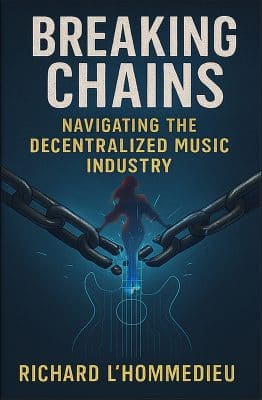
Breaking Chains is a groundbreaking guide for independent musicians ready to take control of their careers in the rapidly evolving world of decentralized music. From blockchain-powered royalties to NFTs, DAOs, and smart contracts, this book breaks down complex Web3 concepts into practical strategies that help artists earn more, connect directly with fans, and retain creative freedom. With real-world examples, platform recommendations, and step-by-step guidance, it empowers musicians to bypass traditional gatekeepers and build sustainable careers on their own terms.
More than just a tech manual, Breaking Chains explores the bigger picture—how decentralization can rebuild the music industry’s middle class, strengthen local economies, and transform fans into stakeholders in an artist’s journey. Whether you’re an emerging musician, a veteran indie artist, or a curious fan of the next music revolution, this book is your roadmap to the future of fair, transparent, and community-driven music.
Get your Limited Edition Signed and Numbered (Only 50 copies Available) Free Shipping Included
Discover more from Making A Scene!
Subscribe to get the latest posts sent to your email.


