

James McMurtry The Black Dog and the Wandering Boy




 James McMurtry
The Black Dog and the Wandering Boy
New West Records
A wordsmith of rare capacity with points of view as deep as an old buried well, James McMurtry delivers one exceptional song after another in his characteristically sardonic drawl on The Black Dog and the Wandering Boy. The album’s ten songs—McMurtry’s first new batch in four years—make their impressions by osmosis. I cannot imagine any roots music buff having any choice but to pay attention to, and by extension, enjoy the hell out of them. The cunning commentary McMurtry made his name on cuts to the heart of topical matters, even though some of the ideas originated from personal occurrences, memories, and viewpoints held from over the long haul.
McMurtry wanted to make an album that sounds spontaneous, as if the songs were writing themselves as they are being played, and as the listener hears them. He succeeded. The robust, utilitarian group of musicians responsible for bringing the songs to life includes, besides McMurtry on a variety of guitars, guitarist Tim Holt, bassist Cornbread (a.k.a. Michael Traylor), and drummer Daren Hess. A host of guests dropped by the sessions to add flourishes, most notably singer, and McMurtry’s frequent touring partner, BettySoo, and album co-producer with McMurtry, the legendary alt. pop rocker, Don Dixon.
The Black Dog and the Wandering Boy begins, and ends, with a pair of fitting covers. McMurtry utilizes fellow Texan Jon Dee Graham’s “Laredo (Small Dark Something)” to propel the album out of the gate like a bull with its horns down. A rocker like Graham and Alejandro Escovedo’s True Believers would play back in the middle 1980s, the song details a junkie’s lost weekend, McMurtry perhaps equating that to his perception of the current state of America. “South Texas Lawman” then settles into a loping Americana groove, McMurtry mocking the retired lawman from the protagonist’s own point of view just before he plans to end it all. As with many of these songs, the music and delivery belie the gravity and provocative nature of the matter.
Similarly, despite its grand presentation, “The Color of Night” depicts a derelict in a jail cell, Holt’s electric guitar solo in the song electrifying. An album highlight, “Annie,” featuring Sarah Jarosz in voice and on banjo, details McMurtry’s disgust with the aftermath and perhaps lead up to 9/11, and George Bush. “Sons of the Second Sons” may have roots in past injustices, but McMurtry still manages to point his barbed accusations at current leadership.
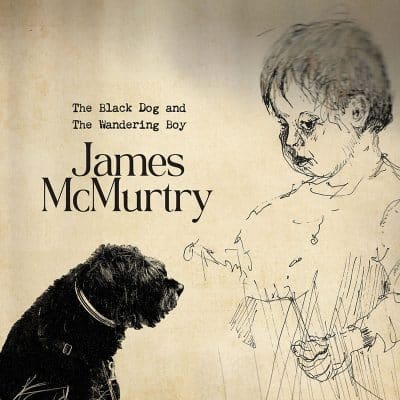
McMurtry found the pencil sketch that adorns the album’s cover among his father’s belongings. Larry McMurtry was a noted novelist and screenwriter, and a friend of fellow novelist and Merry Prankster, Ken Kesey. McMurtry thinks Kesey sketched it of him, as a child, and felt it apt to represent “The Black Dog and the Wandering Boy.” That title song, an irresistibly twisted blues, is an attempt by McMurtry to exemplify a strange, broken soul in the context of the hallucinations his dad experienced near the end of his life. Heady stuff.
“Sailing Away” stitches together instances in a traveling musician’s life as only McMurtry can, and by using Kris Kristoffersen’s “Broken Freedom Song” to conclude the album, McMurtry honors one of his main songwriting heroes while using his lyrics to remind us that freedom comes at a price, sometimes at someone else’s perverse bidding.
James McMurtry’s thought-provoking art always sounds wise, witty, relevant, and enjoyable at once. But with The Black Dog and the Wandering Boy, he steps it all up, and the results will undoubtedly be placed atop many year-end lists of Americana music.
Tom Clarke for MAS
The Black Dog and the Wandering Boy by James McMurtry

Subscribe to Our Newsletter
Discover more from Making A Scene!
Subscribe to get the latest posts sent to your email.


