How to Use Web3 and the Decentralized Music Industry to Build a Sync Licensing Business



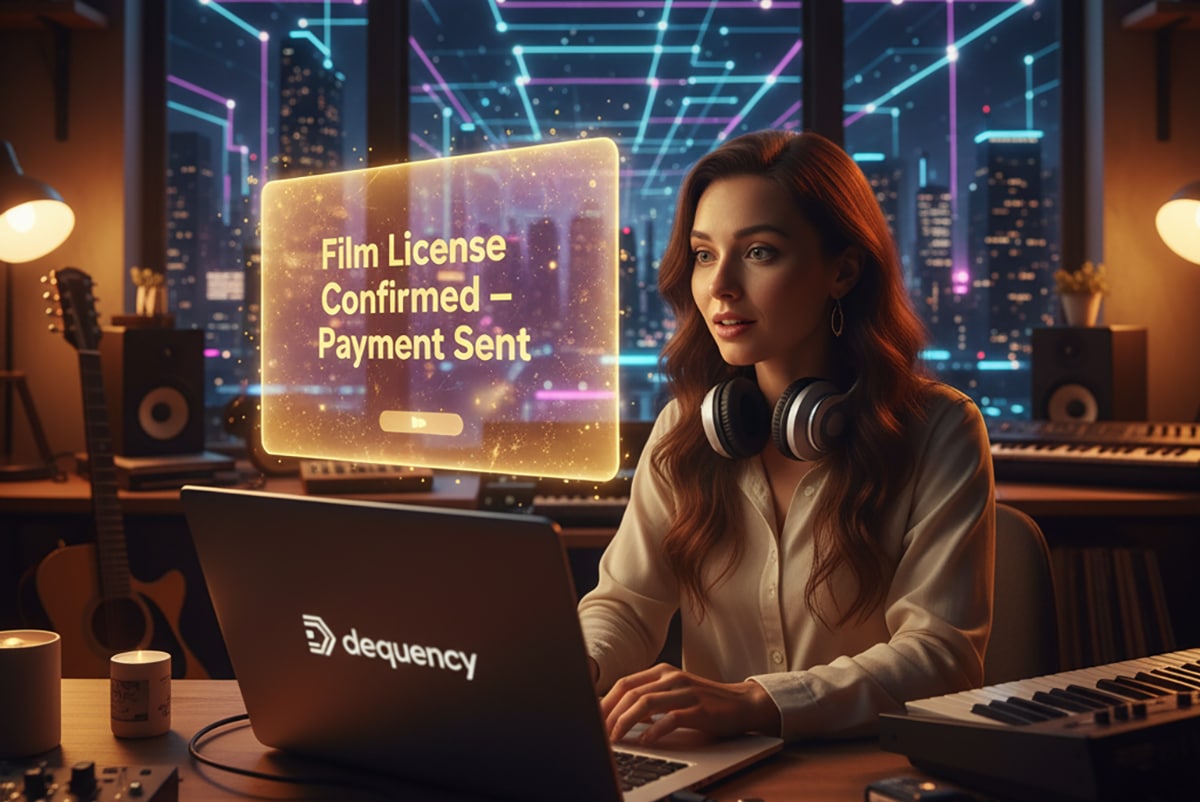
Making a Scene Presents – How to Use Web3 and the Decentralized Music Industry to Build a Sync Licensing Business
Listen to the Podcast Discussion to gain more insight into using web3 to license your music!
If you’ve been in music for a while, you already know the truth — streaming doesn’t pay the bills. The pennies per play model has pushed more and more indie musicians to look for other ways to earn. One of the most powerful options out there is sync licensing — getting your music placed in movies, TV shows, commercials, games, and digital content. But here’s where things get interesting: the rise of blockchain and Web3 technology now makes it possible for independent artists to build their own sync licensing businesses without the middlemen who have always taken the biggest cuts.
Let’s walk through what that actually looks like. We’ll start with what sync licensing really means, why the traditional system is so broken, and then dive into how Web3 and smart contracts can give you total control over your rights and royalties. By the end, you’ll understand exactly how to set up a decentralized sync licensing business that works for you, not for the labels.
What Sync Licensing Actually Is and Why It Matters
Sync licensing—short for “synchronization licensing”—is what happens when your music is matched to a visual element, like a film scene, a YouTube video, a game trailer, or an ad. Every time music is paired with moving images, there’s a legal process behind it: the creator of that video must pay to “synchronize” the music to their visual work.
For indie artists, sync licensing is one of the last corners of the music industry where you can still make real money. Instead of waiting for fractions of a cent per stream, a single sync placement can pay hundreds or even thousands of dollars upfront, plus backend royalties if the project airs on television or streams on major platforms. On top of that, it’s exposure. Getting your song placed in a popular show or ad can launch new fans, boost your streams, and open doors for other creative opportunities.
So, why isn’t everyone doing it already? Because the traditional system is built around middlemen, and that makes things messy.
Why the Old System Is Broken
In the traditional music industry, sync licensing usually goes through several layers of people and companies before an artist ever sees a dime. First, there’s the publisher or sync agent who controls your rights. Then come the music libraries, the music supervisors, the legal teams, and the performing rights organizations. Each one takes a cut.
Worse, the system is slow and opaque. When your track gets placed, it might take months or even a year before your payment clears. Metadata often gets lost or mismatched, and co-writers or producers might not be properly credited. The process is full of old-school contracts, complicated negotiations, and legal red tape that discourages small creators from even trying.
That’s why a decentralized approach changes everything. Web3 technology gives independent musicians the same tools once reserved for big labels and publishers. You can own your rights, track your royalties transparently, and license music directly to buyers through smart contracts that execute instantly.
What Web3, Blockchain, and Smart Contracts Bring to the Table
Before we build the new model, let’s get clear on what the tech actually does. A blockchain is basically a digital ledger that records transactions publicly and can’t be altered. When you combine that with smart contracts—which are bits of code that automatically carry out the terms of an agreement—you get a way to handle licensing, payments, and rights management without relying on third parties.
In plain English, smart contracts can do what lawyers and accountants used to handle manually. Imagine a scenario where someone wants to use your song in their video. They find it, click to license it, pay the agreed fee, and instantly, a smart contract kicks in. It sends the payment to everyone who owns a share of that song—maybe you, your co-writer, and your producer—without waiting weeks or months. No invoices. No paperwork. No disputes.
This is the power of decentralization. Everything happens transparently and automatically. You can even track usage, prove ownership, and enforce your rights worldwide. Artists stay in control, and fans or investors can even buy small shares of songs as tokenized assets. Platforms like Dequency and blockchain ecosystems like Algorand are already making this a reality.
Deep Dive: Using Dequency for Sync Licensing
Now let’s focus in on Dequency — one of the leading Web3 platforms for sync licensing — and how you can use it to set up your business. If you’re going to build a decentralised sync-licensing business, it’s worth understanding this platform inside out.
Dequency describes itself as a two-sided marketplace that connects music rights-holders and visual creators, using Web3 tools like smart contracts and crypto to speed up and simplify licensing. The idea is to eliminate many of the gatekeepers and friction points that traditional sync licensing suffers from.
Here’s how you might use Dequency, step by step:
First, you register as a music creator or rights-holder on the Dequency platform. Once you’re set up, you upload your songs — with metadata, rights splits, and terms of usage. On Dequency, the pitch is you list your track, set the terms for usage (media type, territory, duration), define your price, and make that track available for visual creators to discover. According to the platform’s description, you’re offering the rights directly to the licensee via the marketplace, rather than via a library or publisher who takes a large cut.
Next, you integrate a smart contract on the backend. Dequency runs on the Algorand blockchain (or at least uses it as one of its supports) so that when a visual creator chooses your track, pays your fee, the system executes the contract: payment flows automatically, the licence is recorded, and the metadata is timestamped on-chain. For example, the case of “Late Night People” by Goldfish ft. Soweto Kinch being licensed through Dequency’s SmartSync contract on Algorand was reported by Independent Music Insider.
When the licence goes through, you (the artist) see payment faster, you have full transparency on who licensed your track, and your rights-splits are honoured automatically. Also, the system is built to minimize fees and eliminate unnecessary middlemen. As Dequency’s marketing says: your music, your terms, no waiting.
One strong advantage for indie artists: the platform supports not just traditional media (film, TV, ad) but also digital, web3, and metaverse uses. Dequency clarifies that music for NFTs, metaverse environments, social-video, podcasts, and other emerging media can be licensed with the same infrastructure.
That said: Dequency is still early. Some caveats: because it’s Web3-centred, creators and licensees may need to deal with wallets, crypto payments, smart contract learning curves. Adoption among mainstream film/TV supervisors is still growing. The catalog size is large but the number of placements (especially in big budget syncs) is still less predictable than traditional libraries.
So if you’re working with an indie artist catalog (which you are), here’s how you can use Dequency effectively:
-
Prepare your catalogue (clear rights, good metadata, stems/files ready).
-
Upload to Dequency with full metadata and pricing.
-
Set clear terms for usage: non-exclusive or exclusive, territory, duration, price.
-
Make sure you set splits in the smart contract for co-writers, producers.
-
Promote your listing: tell your community, use social media, reach out to indie filmmakers, game developers, YouTube creators. Highlight: “instant blockchain-cleared licence, no middleman, payment to rights-holders automatically.”
-
Monitor transactions: Dequency will report on licences executed. Keep your artist updated.
-
If you choose, tokenize part of the rights (Dequency may support this in future or you can integrate with another tokenisation layer). You could drop NFTs or fractional rights tied to sync income, giving fans/investors stakes.
-
Expand track listings over time. Use the analytics to see what kinds of media are licensing your music. Adjust pricing/terms accordingly.
Using Dequency gives you a self-service infrastructure for sync licensing, but the real work remains marketing, catalogue quality, and relationship building. The tech gives you speed and transparency — you bring the music, the rights, the hustle.
Real-World Examples of Artists Using Web3 to License Their Music
It’s one thing to talk theory — it’s another to see creatives actually doing it. Here are some real artists and examples of how Web3 is being used for music licensing and monetisation:
Tatiana DeMaria is a British-Lebanese songwriter and producer who has embraced Web3. She sold what is described as the first guitar solo NFT and has worked on music for commercials and film/TV. Her willingness to mix music composition and licensing with Web3 tools shows how an indie artist can push boundaries.
LA EQUIS (formerly Xcelencia) is a Puerto Rican/US artist who has used Web3 tools to raise funds via NFTs and hybrid releases, while also placing music in sync contexts like video games and campaigns. This shows how licensing and Web3 can go hand-in-hand.
More broadly, platforms covering Web3 music rights note that music in the metaverse and sync spaces is evolving: for example the article on music in the metaverse outlines how an NFT for a track could be subject to a synchronization flat fee for video use plus user-generated content fees and resale royalties. Artists and labels are experimenting with licensing music for virtual worlds and blockchain-native content in addition to film/TV.
These examples show that Web3 licensing isn’t just a futuristic concept — it’s happening now. Whether it’s an artist issuing a token or simply using a blockchain-enabled sync platform, you can leverage these same tools in your business.
Building a Decentralized Sync Licensing Business Step by Step
Now that you understand the “why,” let’s get into the “how.” Setting up a Web3-powered sync licensing business isn’t as hard as it sounds. Think of it as building a digital label and publishing company that runs on code instead of lawyers.
The first step is organizing your catalog. You need to know exactly what you own. Go through every song and confirm who holds the master rights and the publishing rights. Make sure all co-writers, producers, or session players have clear agreements that spell out who gets what. Clean metadata is critical. If your ISRC codes or song titles are inconsistent, smart contracts won’t know who to pay.
Once your rights are sorted, you can register your works with your performing rights organization to ensure you’re eligible for royalties. Then decide how you want to structure your sync deals. For each song, you’ll need to define whether it’s available for film, TV, online videos, games, or ads. You’ll also want to decide on the price, duration, and whether it’s exclusive or non-exclusive.
After that, you’ll need to choose your tech setup. Some artists build their own marketplaces from scratch, while others use existing platforms. If you want full control, you can hire a developer to build a custom smart contract on a blockchain like Ethereum, Solana, or Algorand. But if you’d rather hit the ground running, platforms like Dequency already offer a decentralized sync marketplace where artists can list songs and handle licensing through blockchain automation.
Whichever route you take, your smart contract becomes the core of your business. It holds all the terms—price, usage rights, and royalty splits—and executes automatically when a buyer licenses your track. The system logs the transaction on-chain, distributes payment instantly, and stores proof of licence for both parties.
How Tokenization Adds Another Layer of Opportunity
This is where things get really interesting. Once your music rights are registered on the blockchain, you can “tokenize” them—turn them into digital tokens that represent ownership or revenue shares. These can be NFTs (unique tokens tied to specific songs) or fungible tokens (divisible tokens representing fractional shares).
For example, imagine you have a track called Sunset Drive that you want to license for film and TV. You could mint 1,000 tokens, each representing a tiny piece of the song’s future sync revenue. Fans, investors, or collaborators could buy these tokens. Whenever the song gets licensed, the smart contract automatically distributes their share of the payment.
This transforms fans into stakeholders. They have a reason to help promote your song, because every placement means they earn too. It’s a modern, decentralized version of patronage that aligns everyone’s incentives. If the song becomes popular, the tokens could even rise in value and be traded on secondary markets, adding liquidity and long-term income potential.
Companies like BlockchainX, Audius.co and Blockchain App Factory have already explored these kinds of tokenization systems. They provide technical blueprints that artists and labels can adapt for their own catalogs.
Setting Up Your Marketplace and Reaching License Buyers
With your smart contracts and tokenization structure in place, you need a way for people to actually discover and license your music. That’s where a marketplace comes in. Whether you build your own site or list on an existing decentralized platform, the goal is to make the process simple for music supervisors, filmmakers, and creators.
You’ll want to organize your songs with proper tags—genre, mood, tempo, instrumentation, and length—so potential buyers can search easily. Each track should include a short preview and clear licensing terms. Once someone selects a song, the payment process triggers the smart contract. The buyer immediately receives the audio files and proof of license, and you receive the payment automatically.
This is where Web3 really shines: there are no middlemen holding your money, no delayed reporting, and no confusion about who gets paid. The blockchain records every transaction, providing transparency for you and for your collaborators.
Once your marketplace is up, it’s time to market your catalog. You can reach out to indie film directors, YouTube creators, advertising agencies, and even small game developers who are always looking for affordable, easy-to-license music. Your pitch is simple: instant clearance, instant payment, and total transparency. That alone sets you apart from most traditional libraries.
Understanding How the Money Flows
Every sync placement generates revenue in multiple ways. There’s usually an upfront licensing fee, which is what most artists think of first. But you may also earn backend royalties through your performing rights organization when the licensed content airs publicly.
With a smart contract system, these payments are distributed automatically according to the rules you set. For example, maybe you keep seventy percent, your producer gets fifteen, and your co-writer gets fifteen. If you’ve issued tokens, your smart contract can even send a small percentage to token holders each time a sync fee is collected.
The beauty of this approach is that everyone gets paid instantly and fairly, without chasing down accounting departments or waiting for quarterly statements. You can also build dashboards that show how often your music is being licensed, where it’s being used, and what revenue it’s generating—all in real time.
Getting the Legal Side Right
Even though blockchain automates many things, you still have to get the legal basics right. A smart contract is only as strong as the data and agreements behind it. Before listing any music, make sure all co-owners have signed off on licensing terms. Confirm who owns the master recording and who owns the publishing. If you have existing label or publishing agreements, check for restrictions on licensing.
Your license terms should clearly spell out what the buyer is allowed to do—whether they can modify the track, which territories they can use it in, and how long the license lasts. You’ll also need to include details about payment, delivery, and what happens if either party breaches the agreement.
If you decide to issue tokens representing revenue shares, get legal advice. In some countries, those tokens might be considered securities, meaning you’ll need to follow specific rules around offering and selling them. It’s worth consulting a blockchain-savvy entertainment lawyer before launching your tokenized model.
It’s also smart to register your works with your PRO and mechanical rights societies, even if you’re using blockchain. Systems like ASCAP, BMI, or PRS still handle performance royalties in most countries, and those payments can be added into your smart contract system later. Accurate metadata—song titles, ISRCs, ISWCs—ties everything together.
Avoiding Common Pitfalls
Like any business, there are risks. One common mistake is licensing music without fully owning the rights. If you don’t have a clean chain of ownership, a film studio or ad agency won’t touch your song. Always clear this first.
Another pitfall comes from the tech side. Smart contracts are code, and bugs can lead to unexpected problems—like payments failing or funds being locked. Use well-tested templates or hire a reputable developer. Choose blockchains with low fees, like Algorand or Polygon, so transactions don’t become expensive.
There’s also the issue of market adoption. Even though Web3 is growing, many music supervisors still use traditional systems. That means you’ll need to spend time educating clients and showing them how easy and secure your model is. Offer both crypto and traditional payment options to make adoption smoother.
Finally, be cautious with tokenization. Selling shares of future income can attract speculation. Focus on genuine supporters and long-term partners, not short-term traders. Build a community that understands the creative side as much as the financial one.
A Glimpse Into the Future
The future of sync licensing is heading straight toward decentralization. Imagine a global, blockchain-based registry where every song is connected to its rights holders through smart contracts. A filmmaker could search for music, license it with one click, and trigger instant payment to every contributor around the world—all verified on-chain.
Artists could form decentralized cooperatives, or DAOs, that pool their catalogs and collectively handle sync licensing. Members could vote on placements, share revenue, and reinvest profits into new music production. Fans could buy tokens that give them partial ownership of songs they love, turning them into ambassadors who help promote those tracks for sync opportunities.
Artificial intelligence will also play a major role. AI-powered systems will analyze visuals, moods, and dialogue from film projects to automatically match them with songs in your catalog. Pair that with smart contracts, and sync licensing could become a fully automated global marketplace where music finds its perfect visual match in seconds.
Putting It All Together
Let’s imagine this in action. Say you’re representing an indie folk-rock artist with a strong catalog. You clean up their metadata, confirm ownership splits, and upload ten of their best sync-ready songs to a blockchain platform like Dequency. You create smart contracts that define the licensing terms, set up instant payment distribution, and optionally mint tokens for fans to invest in future sync income.
A filmmaker searching for the perfect acoustic track finds your song, clicks “license,” pays $500, and immediately gets the license certificate and download link. Within seconds, your artist and collaborators are paid according to the contract, and the blockchain logs everything transparently. Later, when the film airs on TV, performance royalties flow automatically through the same system.
Over time, as more filmmakers, advertisers, and content creators discover the simplicity of your model, your catalog becomes a hub for instant, transparent licensing. You’ve essentially built your own publishing company and sync library—one that runs on code instead of bureaucracy.
The Bottom Line
The music industry has always thrived on innovation. From vinyl to streaming, every technological leap has changed how artists connect with audiences and earn money. Web3 and smart contracts represent the next leap—one that finally puts control back into the hands of creators.
By building a decentralized sync licensing business, you’re not just finding new revenue streams. You’re rewriting the rules of ownership, transparency, and collaboration. You’re proving that artists don’t need to rely on gatekeepers to participate in the global media economy.
Start small. Audit your rights, clean your metadata, explore platforms like Dequency or Algorand, and experiment with smart contracts. The tools are already here, and they’re designed for independent artists who want to take control of their careers.
The old system runs on waiting and paperwork. The new one runs on instant payments and global access. Once you make that switch, you’ll never want to go back.
Sources for further exploration:
Dequency – https://dequency.com
Algorand Foundation – https://www.algorand.foundation
BlockchainX – https://www.blockchainx.tech/music-tokenization
Blockchain App Factory – https://www.blockchainappfactory.com/blog/ip-tokenization-platform-development-for-music/
 |  Spotify |  Deezer |  Breaker |
 Pocket Cast |  Radio Public |  Stitcher |  TuneIn |
 IHeart Radio |  Mixcloud |  PlayerFM |  Amazon |
 Jiosaavn |  Gaana |  Vurbl |  Audius |
 Reason.Fm | |||
Find our Podcasts on these outlets
Buy Us a Cup of Coffee!
Join the movement in supporting Making a Scene, the premier independent resource for both emerging musicians and the dedicated fans who champion them.
We showcase this vibrant community that celebrates the raw talent and creative spirit driving the music industry forward. From insightful articles and in-depth interviews to exclusive content and insider tips, Making a Scene empowers artists to thrive and fans to discover their next favorite sound.
Together, let’s amplify the voices of independent musicians and forge unforgettable connections through the power of music
Make a one-time donation
Make a monthly donation
Make a yearly donation
Buy us a cup of Coffee!
Or enter a custom amount
Your contribution is appreciated.
Your contribution is appreciated.
Your contribution is appreciated.
DonateDonate monthlyDonate yearlyYou can donate directly through Paypal!
Subscribe to Our Newsletter
Order the New Book From Making a Scene
Breaking Chains – Navigating the Decentralized Music Industry
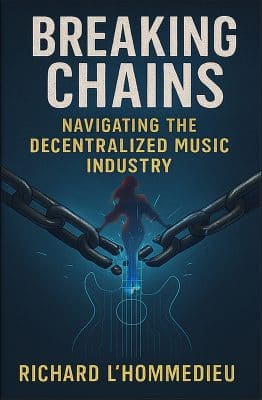
Breaking Chains is a groundbreaking guide for independent musicians ready to take control of their careers in the rapidly evolving world of decentralized music. From blockchain-powered royalties to NFTs, DAOs, and smart contracts, this book breaks down complex Web3 concepts into practical strategies that help artists earn more, connect directly with fans, and retain creative freedom. With real-world examples, platform recommendations, and step-by-step guidance, it empowers musicians to bypass traditional gatekeepers and build sustainable careers on their own terms.
More than just a tech manual, Breaking Chains explores the bigger picture—how decentralization can rebuild the music industry’s middle class, strengthen local economies, and transform fans into stakeholders in an artist’s journey. Whether you’re an emerging musician, a veteran indie artist, or a curious fan of the next music revolution, this book is your roadmap to the future of fair, transparent, and community-driven music.
Get your Limited Edition Signed and Numbered (Only 50 copies Available) Free Shipping Included
Discover more from Making A Scene!
Subscribe to get the latest posts sent to your email.


