

Harold Lopez-Nussa Nueva Timba




 Harold Lopez-Nussa
Nueva Timba
Blue Note
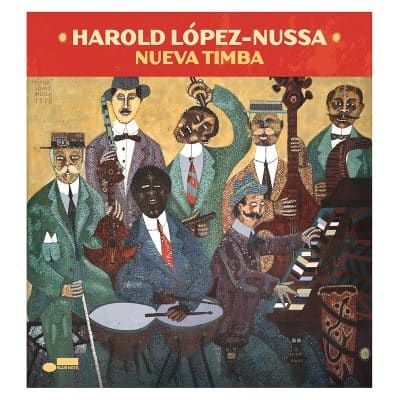
The Cuban-born pianist Harold Lopez-Nussa returns with Nueva Timba, his second Blue Note release, following 2023’s Timba a la Americana.. Lopez-Nussa has endured a tough road over the last few years, so it’s appropriate to consider this release a triumph, or at least a resolution. His mother passed away, and he had to relocate to an unfamiliar country, settling in Toulouse, France. Conditions in Cuba had become extremely grim following the pandemic, and Lopez-Nussa couldn’t accept the deal with Blue Note due to the embargo. Those factors led him to relocate to France, where he had some relatives. He and his children had to learn a new language, while he continued to grieve for his mother and his homeland. Acclimation was challenging. He seems to be in a good place now, yet this album recounts the painful life changes that he has undergone as well as the fulfilling life he now enjoys as an educator and parent of two school-age daughters.
New timba in English refers to a specific style of Cuban music and dance that emerged in the 1990s. It’s characterized by its intense, energetic, and slightly aggressive sound, often incorporating elements of salsa, funk, and hip-hop. Simply said, it is a modernization of Cuban music. Lopez-Nussa is one of the leading musicians of this style. He returns with his long-running quartet of brother Ruy Adrian Lopez-Nussa on drums, Luques Curtis on bass, and harmonica master Gregoire Maret. Joining for select tracks are Beatmaker Jose Angel Blanco “El Negro WADPRO,” accordionist Vincent Peirani, and vocalist Alexis Diza Pimienta. The leader plays piano, Rhodes, and synth. Lopez-Nussa composed three pieces with his brother contributing two and the other band members contributing one each. His uncle, Ernan Lopez-Nussa, also a pianist, composed one. The others are from Cuban writers. The recording is a live/studio hybrid, the live portion captured at the club Le Duc des Lombards, a jazz venue in Paris, and then reshaped in post-production.
After the brief 30-second “Open,” the band shrinks Benny More’s big band “Bonito y Sabroso” into a small combo arrangement replete with electronics and Blanco’s beat-making. Lopex-Nussa delivers an array of colors through heavy use of synths. Ernesto Lecuona’s “Gitanerias” means “Gypsy Ways,” a tune where, aptly, the pianist rollicks all over the keys, while giving us a glimpse of his classical background.. “A Lyle,” by Ruy Adrian, also features bright, energetic piano with complex rhythms navigated deftly by the bass-drum tandem. The drummer’s cymbal flourishes mark the rousing finale. Lopez-Nussa’s original, “Cerca y Lejos,” is filled with descending figures, and it’s where we hear the dulcet, alternating sad and joyous tones from harmonicist Maret for the first time. There are wordless vocals here as well in the outro.
“Nina Con Violin” is from Lopez-Nussa’s uncle and proves a feature for the stellar bass playing of Curtis. Vincent Peirani’s “Alma y Fuego” adds new textures through the composer’s accordion while Lopez-Nussa is effervescent on the acoustic piano. The combination of the accordion with electronics can be disorienting, but Ruy and Curtis somehow hold it together, bringing it to a simmer for Maret’s eloquent statement. The ensemble then comes together to take it out joyously. “Guajira,” penned by Ruy, is a jubilant vocal track, featuring Alexis Diaz Pimienta. “Why,” written and arranged by Maret, is a tender ballad, offering a major change in tempo from the other fare. Maret is arguably the most expressive harmonicist in jazz. This is just one more example, while Lopez-Nussa’s piano is equally gorgeous.
“Bajista Guerrero,” by Curtis has the bassist taking the intro and outro in this mid-tempo piece that once again has Maret and Lopez-Nussa painting beautiful colors over the insistent groove. The piece grows in intensity as it evolves in several sections over six and a half minutes. “Final/New Day” is a short snippet with a lively melody, but, like the opening, rather unnecessary.
Harold Lopez-Nussa introduces some new sounds on Nuevo Timba, and varies the tempo in several places. While there is plenty of Cuban dance music, there are also melodies that show an array of emotions, concurrent with the pianist’s life experience over the past few years.
- Jim Hynes
BUY NOW

Subscribe to Our Newsletter
Discover more from Making A Scene!
Subscribe to get the latest posts sent to your email.


