

Dida Pelled I Wish You Would




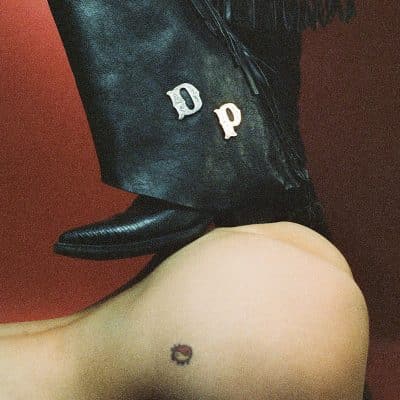 Dida Pelled
I Wish You Would
La Reserve Records
Dida Pelled is a notable jazz guitarist, singer, and songwriter based in Brooklyn. Born on May 27, 1988, the thirty-seven-year-old Pelled has gained recognition for her unique blend of jazz and blues, showcasing her musical versatility and creativity. Pelled is celebrated for her engaging performances. She graduated with honors from the Jazz Department at the New School, which laid the foundation for her diverse musical career. Pelled’s music is characterized by a playful personality and a dedication to making old songs feel contemporary.
This is her fifth album and follows 2010’s debut Plays and Sings; the self-released 2015 Modern Love Songs; 2016’s A Missing Shade of Blue; and 2022’s Love of the Tiger. The album, produced by Matt Pierson, was recorded at the Samurai Hotel on August 5–6, 2024. Vocalist/guitarist Pelled is joined by an all-star band including pianist Sullivan Fortner (Samara Joy), bassist Tony Scherr (Teddy Thompson), and drummer Kenny Wollesen (Natalie Merchant, The Holmes Brothers).
The album of covers opens with John Lee Hooker’s “Dimples,” first recorded by Hooker in 1956. Pelled sings, “I like the way you walk, I’m crazy about your walk, I like the way you walk, you my babe, I got my eyes on you…I like the way you kiss, I’m crazy ’bout your kiss, I like the way you kiss, you my babe, I got my eyes on you…you got dimples in your jaw, you got dimples in your jaw, you my babe, I got my eyes on you.”
“Hesitation Blues” is credited as traditional, as Pelled chimes, “Well a nickel’s a nickel, a dime is a dime, I need me a new honey, Lord, I know I won’t mind, tell me, how long, do I have to wait, can I get you now, or must I hesitate.”
Written by Clarence Williams and violinist Armand Piron, “Sister Kate” was first published in 1919 and recorded in 1922. Pelled chants, “I wish I could shimmy like my sister Kate, she shimmies like a jelly on a plate, my mama wanted to know last night, what makes the boys think Kate’s so nice, now all the boys in the neighborhood, they know that she can shimmy and it’s understood, I know that I’m late, but I’ll be up-to-date when I can shimmy like my sister Kate, I really mean it, when I can shimmy like my sister Kate.”
“Since I Fell for You” was written by Buddy Johnson in 1945 and first recorded by his sister Ella Johnson in 1946. It was further popularized when it was recorded by Lenny Welch in 1963. Pelled moans, “you made me leave my happy home, you took my love and now you’re gone, since I fell for you, I get the blues every single night, too bad, so sad, what can I do, I’m still in love with you,” with more great guitar from Pelled.
“Rosa Mae,” written by Mary Lou Williams, was first recorded by her and released on Folkways Records in 1974. Pelled wails, “you can tell by the way he smiles at me, nothin’ but blue skies do I see.”
Billy Boy Arnold’s “I Wish You Would” is a 1955 classic with a Bo Diddley–styled rhythm. When Arnold heard that Checker Records did not like him, he took the song to Vee-Jay Records. The song was recorded live three times by the Yardbirds: in 1963 with Eric Clapton, in 1965 with Jeff Beck, and in 1968 with Jimmy Page. Pelled belts, “Early in the morning, about the break of day, that’s when my baby went away, crying and pleading won’t do no good, come back baby, I wish you would.”
“Sittin’ on Top of the World” is a country blues written by Walter Vinson and Lonnie Chatmon of the Mississippi Sheiks. The song has been recorded in a variety of styles: as bluegrass by Bill Monroe, as Texas swing by Bob Wills and His Texas Playboys, and as a Chicago blues by Howlin’ Wolf on Chess Records in 1957. Pelled cries out, “One sunny day, she went away, gone and left me…now she’s gone, I don’t worry, I’m sittin’ on top of the world.”
“Blues in the Night” was written by Harold Arlen and Johnny Mercer for the movie of the same name. It was recorded by Artie Shaw and Benny Goodman in 1941; by Woody Herman, Dinah Shore, and Cab Calloway in 1942; and by Rosemary Clooney in 1952. Pelled howls, “My mama done ‘tol me, when I was a little boy, my mama done told me, son a woman will sweet talk, and give you the big eye, but when that sweet talk is done, a woman’s a two-faced, a woman’s something that would leave you, singing the blues in the night.”
“Trouble” was written by Gladys Shelly and recorded by Dakota Staton. It was learned from bassist Scherr, as he played on the 1955 Staton version. Scherr switched to guitar as Pelled croons, “trouble, I have seen the smile on your face and it’s too late, it’s too much for me.”
Pelled thoroughly imbibes these songs and makes them utterly her own, revealing a gift for captivating, playful, and understated, often sultry storytelling. She has clearly traced this repertoire back to its roots. Dida’s interpretations uncover new layers. These songs allow for intimacy, sly humor, vulnerability, and sensuality.
Richard Ludmerer

Subscribe to Our Newsletter
Discover more from Making A Scene!
Subscribe to get the latest posts sent to your email.


