Creating a Touring Syndicate for Increased Leverage



Making a Scene Presents – Creating a Touring Syndicate for Increased Leverage
Listen to the Podcast Discussion
For years, indie artists have been told the same tired story about touring in America. Build your streaming numbers. Pray for algorithm luck. Hope a promoter notices. Spend money on ads. Guess which city might work. Book the run. Drive the miles. Cross your fingers. Lose money in three towns, break even in two, and call the whole thing “building.” That story has made a lot of middlemen comfortable. It has not made a lot of artists stable.
The next version of touring is going to look different. It is going to be less like gambling and more like infrastructure. Less like each band wandering alone through the dark and more like a network of artists carrying a flashlight together. And the artists who get there first are going to stop acting like their fan data is just a mailing list and start treating it like a shared economic engine.
That is where the idea of a touring syndicate comes in.
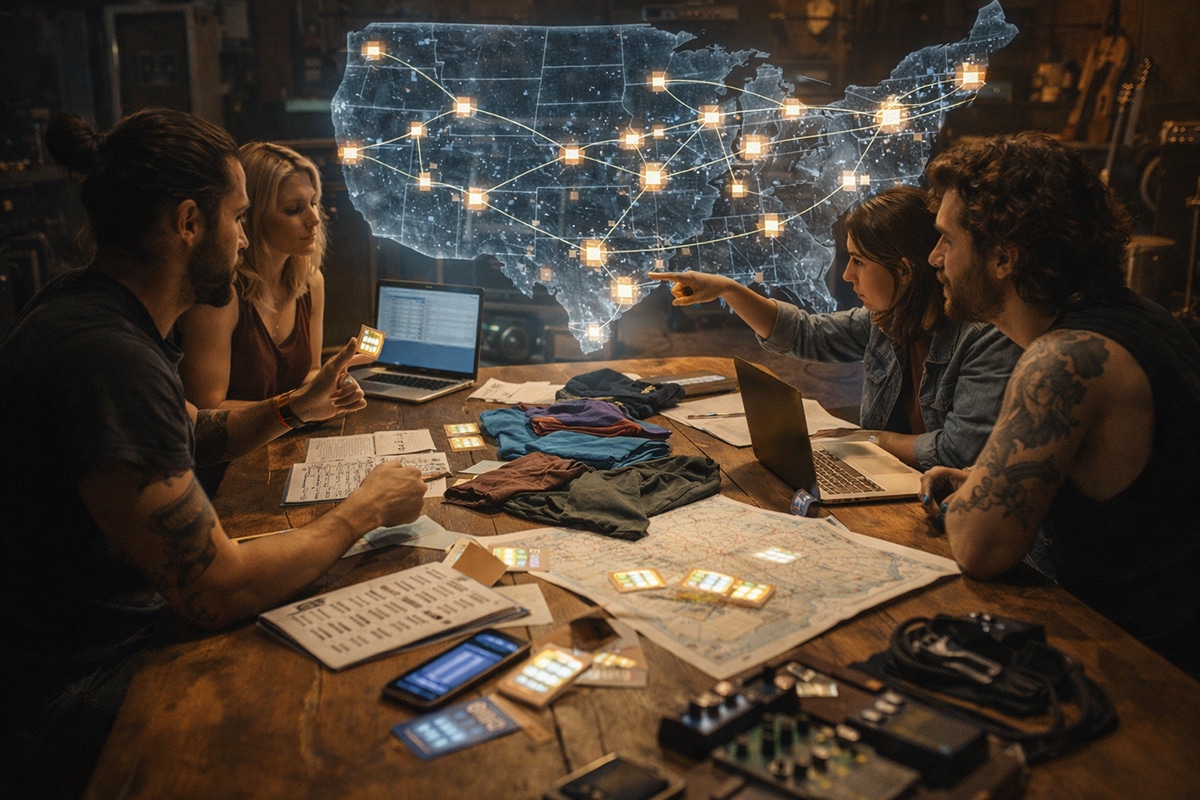
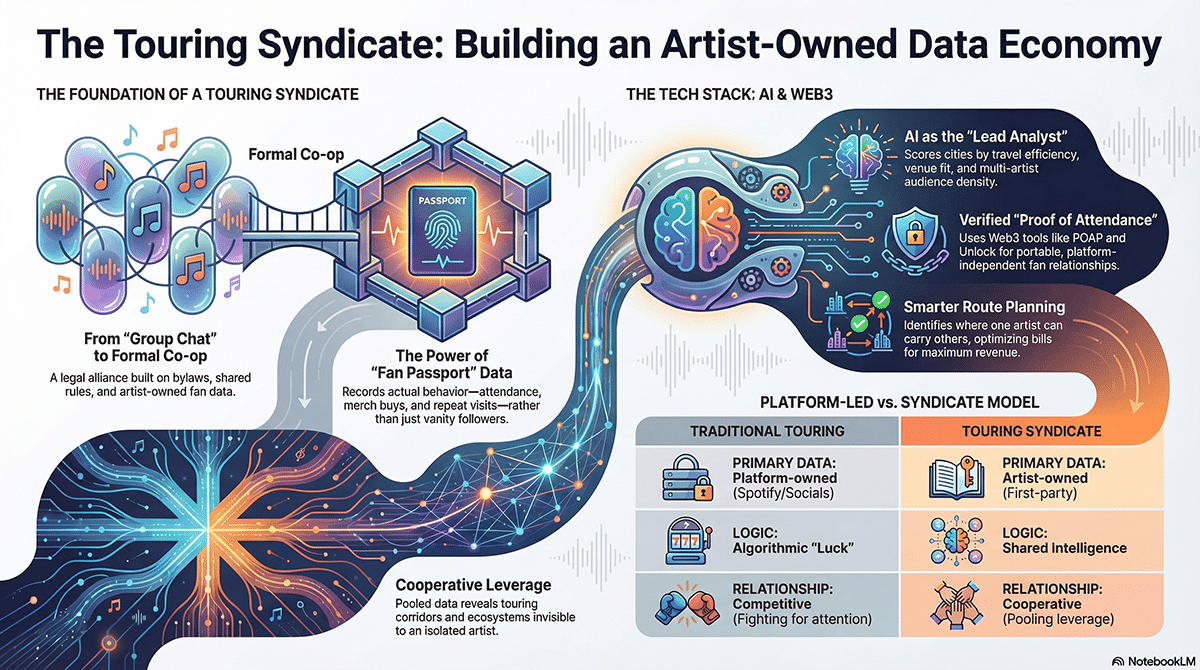
A touring syndicate, in the way indie artists should understand it, is not just a group chat between bands. It is not a casual promise to swap opening slots. It is not a loose collective with a cool logo and no system behind it. It is a formal co-op style alliance built around artist-owned fan passport data, shared rules, shared tools, and a shared goal: use pooled first-party fan intelligence to decide where to play, when to play, who should play together, which venues fit, how to promote each stop, and how to keep more of the money in artist hands.
That is a Making a Scene idea all day long. It is artist ownership, artist cooperation, artist leverage, and artist revenue. It says the real power is not sitting inside Spotify dashboards, social media analytics, or ticketing platforms you do not control. The real power is in owned relationships. It is in knowing which fans showed up in which city, which ones bought merch, which ones came back, which ones brought friends, which ones joined the email list, which ones opted into texts, which ones supported multiple artists in the same scene, and which small rooms are quietly overperforming for your lane.
Once that data is portable, verified, and permissioned, AI can do something very powerful with it. It can stop telling one artist what happened last month and start telling a coalition of artists what to do next quarter.
That is the shift. Streaming told artists to compete for attention. A touring syndicate tells them to cooperate around intelligence. One model creates platform dependency. The other creates an artist-owned economy.
What a Touring Syndicate Really Is
The word “syndicate” can sound shady if you let old gatekeeper language define it. In practice, what we are really talking about is a shared-services cooperative for touring. The U.S. Small Business Administration says a cooperative is a business or organization owned by and operated for the benefit of the people using its services, with members holding voting power over its direction. USDA cooperative materials make the point even clearer: shared-services cooperatives are built around joint ownership, joint operation, and benefits that flow back to member-owners, often based on use rather than pure capital stake.
That matters because indie artists do not need another fake community. They need a structure. A structure means bylaws. It means who gets access to what data. It means what a member contributes. It means what a member can withdraw. It means how votes work. It means how revenue is split when the syndicate books a package run, buys ads together, licenses shared software, or negotiates a venue block. It means the whole thing is not held together by vibes and goodwill.
The smartest version of this for U.S.-based indie artists is a formal alliance where each member artist or band stays fully independent but joins the syndicate under a binding operating agreement. The syndicate exists to do what isolated artists cannot do well alone. It pools permissioned fan passport data. It standardizes city and venue scoring. It negotiates shared vendor deals. It maintains the tech stack. It runs AI analysis. It produces recommended routes. It coordinates cross-promotion. And if it is structured well, it returns value back to members based on participation and usage, not just who had the biggest name on the poster. That logic is very much in line with how shared-services cooperatives are described in USDA resources.
In plain English, the touring syndicate is the band van turned into a data cooperative.
Why Fan Passport Data Changes the Game
Most artists still think about fan data in old music-business terms. They collect email addresses. Maybe they collect zip codes. Maybe they know where their Spotify listeners are clustered. That is useful, but it is not enough. A fan passport system is different because it does not just record interest. It records behavior across time.
A real fan passport can log attendance, repeat attendance, merch purchases, VIP participation, referral activity, newsletter signups, SMS opt-ins, community participation, and support across more than one artist. It turns “I have 3,000 followers in Chicago” into “I have 187 verified supporters in the wider Chicago market who have actually shown up, bought something, or taken an action in the last 18 months.” That is a radically different planning tool.
Now widen the lens. Imagine five independent artists in related lanes each have their own fan passport system. On their own, each artist sees scattered pockets. One has a strong turnout in Cleveland. Another has merch buyers in Columbus. Another has repeat show attendance in Pittsburgh. Another has a surprising cluster in Indianapolis. Another has a group of fans who engage hard in Louisville but do not stream much. Each artist alone sees a partial map. The syndicate sees the corridor.
That is the first breakthrough. Pooled passport data does not just make each artist smarter. It reveals touring ecosystems that no single artist can see. The route appears when the data stops living in silos.
The second breakthrough is that fan passport data is first-party data. It comes from a relationship the artist actually owns or governs. That matters because platform data can disappear, change format, get throttled, or stay trapped inside someone else’s interface. A passport system can be built so that the artist controls the inputs, the terms, the exports, and the downstream use. That means the touring syndicate is not begging a platform for access. It is building from owned ground.
The third breakthrough is verification. A Web3-enabled passport can make attendance and membership portable and tamper-resistant without making the whole experience feel like crypto cosplay. POAP, which stands for Proof of Attendance Protocol, is built around turning memorable moments into collectible proofs, and the POAP Home app now supports GPS-based minting for location-based claims. Unlock Protocol, meanwhile, is built for onchain memberships and subscriptions, including event ticketing, wallet-less onboarding, email-based airdrops, and credit card payments. That means artists can use Web3 for proof, portability, and permissions without forcing every fan to become a blockchain nerd.
That is the big misunderstanding with Web3 in music. The value is not “NFTs are cool.” The value is that fan relationships can become portable, programmable, and less dependent on a single platform’s database. For touring, that is huge.
What the AI Layer Actually Does
AI is not the syndicate. AI is the analyst.
That distinction matters because a lot of artists either fear AI for the wrong reasons or hype it for the wrong reasons. AI is not the replacement for relationships, local scenes, or human judgment. It is the thing that can process more touring signals, more consistently, than a burned-out manager staring at six spreadsheets on a Sunday night.
Once a syndicate has clean fan passport data, AI can do several jobs at once.
It can score cities by actual action, not vanity numbers. It can compare attendance stamps against merch conversion. It can separate one-time curiosity from repeat support. It can rank cities by travel efficiency, not just by raw fan count. It can find where two or three artists have overlapping audience density strong enough to support a shared bill. It can suggest whether the right move is a headline show, a co-bill, a house concert, a listening room, a club, or a membership event. It can flag markets where one artist is strong enough to carry two weaker partners and where the reverse is true next month. It can even surface when a city is not ready yet, which is just as valuable as hearing that it is.
That kind of analysis is where ordinary spreadsheets start to break. A dashboard can show you what happened. AI can help interpret what matters.
A practical stack for this exists right now. ChatGPT and Looker Studio, Google’s no-cost dashboard tool for turning connected data into reports. Supabase, combines Postgres, auth, APIs, realtime features, storage, and vector embeddings, which is useful if a syndicate wants a serious backend without building every layer from scratch. Mapbox, offers location intelligence and spatial analysis that can help turn fan data into geographic route logic. Airtable, can also serve as an easier shared operations layer if the syndicate is not ready for a full custom app yet.
In real life, that means the syndicate can maintain a shared data warehouse, feed it passport events, venue notes, merch totals, and city-level engagement, and then use AI to produce a weekly “tour opportunity report.” Not a vague recap. A ranked output. Cities. Radius. Support levels. Best days of week. Venue class. Estimated merch upside. Suggested co-bills. Travel efficiency. Confidence score.
That is what labels used to pretend only they could do.
The Web3 Layer Without the Nonsense
A lot of indie artists shut down when they hear “Web3” because the music business spent years hearing too much nonsense from people trying to sell ugly JPEGs and imaginary futures. Fair enough. But a touring syndicate does not need Web3 for speculation. It needs Web3 for proof, interoperability, and control.
Here is the clean version.
POAP can serve as a lightweight proof-of-attendance layer. A fan checks in at a show, claims a POAP, and now there is a verifiable record that the fan was there. That can be tied, off-chain or in an app layer, to city, venue, date, artist, and maybe even role. Was the fan just a guest? Did they also buy merch? Did they attend two artists in the syndicate over six months? That becomes meaningful.
Unlock Protocol can serve as the membership and access layer. Unlock describes itself as a protocol for onchain memberships and subscriptions, and its feature set includes recurring subscriptions, airdrops to email, wallet-less onboarding, and credit card payments through Stripe integration. For a touring syndicate, that means one fan membership layer can support presales, private show access, city-specific drops, volunteer/street-team credentials, or syndicate-wide supporter passes without forcing everyone through a wallet-first experience on day one.
Pinata, at , gives the syndicate a practical IPFS storage layer for decentralized files and content addressing. That can matter if the syndicate wants durable storage for ticket artifacts, collectible assets, membership metadata, or archives that are not trapped in one vendor’s server stack.
For wallets, MetaMask is still one of the most common self-custodial options, and WalletConnect exists to make secure connections between wallets and apps more interoperable across a large ecosystem. If a syndicate builds its own app, those tools help fans carry identity and access across experiences instead of starting from zero every time.
But here is the key point: the best Web3 touring systems will not feel like Web3 to the fan. They will feel like smart artist-owned membership. The weird technical stuff should stay under the hood. Fans should feel recognized, rewarded, and connected, not recruited into a software ideology.
How the Syndicate Would Work in Practice
Let’s make this concrete.
Picture four independent U.S. artists. None of them are famous. All of them are serious. Each has spent three years building direct fan relationships instead of chasing empty reach. Each uses a passport system on their website and at shows. Each collects first name, email, city or ZIP, consent status, and action history. Each tags attendance, merch purchases, and repeat behavior. None of them has enough clean data to map a profitable 12-city regional run with much confidence. Together, they do.
The syndicate agreement says each member contributes standardized data fields every month. Raw personal data stays protected and limited. The shared AI layer mostly works on aggregated, permissioned, or hashed data where possible. Each artist can still see their own full fan record. The syndicate sees what it needs to produce route intelligence. That is smarter and safer than dumping full customer files into one giant folder.
The AI model runs a city score for every U.S. metro area where enough signal exists. But the score is not just “how many fans live there.” It weights recent attendance, repeat attendance, merch conversion, multi-artist overlap, average distance fans travel, best-performing venue size, and promotional responsiveness. It also checks drive times between markets so the run makes human sense, not just spreadsheet sense.
Out comes a report. It says that the best six-city pilot for the fall is not the obvious glamour route. It is a Midwest corridor because three member artists have overlapping support there, gas spend is manageable, merch conversion is better than average, and venue size fit is tight enough to create room energy. It also says two cities that look good on streaming are weak on real behavior. So those get skipped. That alone saves money.
Then the syndicate does something old-school and radical at the same time. It acts on the data together.
One member with stronger turnout in one city headlines that date. Another takes the lead in another city. The co-op negotiates a modest ad buy for the whole run instead of each artist wasting money separately. The fan passport system lets supporters of one artist discover allied acts in the same syndicate. Unlock-based memberships can be used for early access, reserved bundles, or city-specific supporter perks. POAP-based attendance proofs let the syndicate see who actually came, who came back, and which multi-artist communities are forming. By the end of the run, the system is smarter than it was at the start.
That is how an artist-owned touring machine learns.
The Legal and Business Side Nobody Should Skip
This is the part where a lot of artists get sloppy because data feels exciting until a lawyer shows up. Do not build a touring syndicate on vibes. Build it on consent, governance, and restraint.
First, the co-op needs a real data-use agreement. Fans may have opted in to hear from Artist A. That does not automatically mean they consented to have their personally identifiable information shared with Artists B, C, and D. So the syndicate needs clear language about what data is collected, how it is used, whether it is shared in raw or aggregated form, and how a fan can revoke or limit consent. In the U.S., this matters more every year because states keep expanding privacy laws. NCSL’s 2025 privacy tracker shows just how fast privacy legislation continues to grow around commercial data collection.
Second, keep only what you need. The FTC’s guidance for businesses is refreshingly plain: take stock of what personal information you have, scale down and keep only what you need, lock it, properly dispose of what you do not need, and plan ahead for incidents. That is not just cybersecurity talk. It is operational wisdom. A touring syndicate does not need every piece of personal data just because it can collect it. It needs the minimum viable data to make better routing and relationship decisions.
Third, email and text compliance are not optional. If the syndicate or its member artists use email marketing, the FTC’s CAN-SPAM guidance requires a functioning opt-out process and says opt-out requests must be honored within 10 business days. For texts, FCC guidance and TCPA-related FCC actions make clear that consent matters and that consumers have the right to revoke consent in any reasonable manner. If your syndicate is using SMS to drive ticket sales or venue traffic, that is not a cute little admin detail. That is legal exposure if you screw it up.
Fourth, decide whether the syndicate is legally forming as a cooperative corporation, an LLC with cooperative-style bylaws, or a staged pilot moving toward a true cooperative structure. The SBA defines a cooperative as a member-owned, member-benefiting structure with voting power, and IRS materials show that corporations operating on a cooperative basis may fall under specific tax filing rules, including Form 1120-C. That does not mean every artist collective should immediately sprint into formal cooperative tax treatment. It means the co-op model is real, it has benefits, and it has legal consequences that deserve real counsel from a U.S. attorney and CPA.
Fifth, governance has to be written down before money shows up. Who votes on new members? Who approves software expenses? Who decides whether passport data can be used for sponsorship, licensing, or shared marketing campaigns? How are disputes handled if one artist contributes more data but another benefits more from a run? What happens if someone leaves? How is member use measured? USDA materials on shared-services cooperatives emphasize structure, governance, and management for a reason. These things get messy when they are left vague.
That is the grown-up version of artist ownership. Not just “we own it.” “We govern it.”
The Tools That Make This Buildable Right Now
The exciting part is that this is not a fantasy stack anymore.
For public-facing tour discovery and event distribution, Bandsintown for Artists is worth serious attention. Bandsintown says its consumer platform reaches over 95 million fans and 45,000 venues, and its artist tools highlight 80-plus ticketing integrations. That means the syndicate can use its own intelligence to pick markets, then still plug into a giant public discovery layer when it is time to announce.
For analysis and reporting, Looker Studio is a strong no-cost dashboard option, and Mapbox can add a real spatial layer to the data so city clusters and drive routes become visible. If the co-op wants a more operations-friendly layer before building custom software, Airtable can work as a shared workspace.
For the backend, Supabase gives you Postgres, auth, APIs, realtime features, storage, and vector tools in one platform. That is useful because a touring syndicate is basically a data company in a band hoodie. It needs a backend that can handle structured records, permissions, and AI-friendly search. If the co-op wants easier authentication across email, phone, passkeys, and even Web3, Clerk is worth a look. Clerk’s docs also show Web3 authentication options, which can be helpful if the passport system mixes standard logins with wallet-based identity.
For the fan passport itself, POAP and the POAP Home app can handle attendance proofs and memory objects. Unlock Protocol, and the events product can handle membership, access, ticketing, and onchain logic in a way that can still support credit cards and wallet-less onboarding. Pinata handles IPFS storage if the co-op wants decentralized asset persistence.
For AI analysis, ChatGPT at can help the co-op reason through city scoring, summarize reports, and generate planning recommendations. If the syndicate builds a custom interface.
None of these tools alone creates an artist-owned touring economy. Together, under co-op governance, they can.
Sample Prompts the Syndicate Could Use
Here is where the field-guide side of this feature starts doing some real work.
A syndicate analyst could feed an AI model a city-level table and ask: “Analyze this pooled fan passport dataset for 14 U.S. metro areas. Weight repeat attendance at 35 percent, merch conversion at 20 percent, multi-artist overlap at 20 percent, email engagement at 10 percent, SMS opt-in at 5 percent, average travel radius at 5 percent, and venue fit at 5 percent. Rank the top eight cities for a six-date regional run and explain why each city made the cut.”
Another prompt could be: “Using this pooled syndicate data, identify where two artists should co-headline, where one artist should headline with support, and where a house-concert or listening-room strategy beats a club date. Assume all shows must be drivable and no leg should exceed six hours between markets.”
A more advanced prompt could say: “Review these fan passport records and venue notes. Find cities where streaming numbers are misleading compared to real support. Separate vanity signals from revenue signals. Then recommend whether to skip, test, or prioritize each city.”
For promotion, the co-op could ask: “Write a city-specific pre-sale campaign for Milwaukee using this audience summary. Emphasize that three independent artists from the syndicate are playing one bill. Build messaging for email, SMS, and social, but keep the call to action focused on the artist-owned ticket and fan passport signup flow.”
For governance, the co-op could ask: “Draft a plain-language member policy for a touring syndicate cooperative covering permissioned fan data sharing, minimum necessary data use, opt-out rights, and the difference between aggregated analytics and raw personal data.”
And after a run, this one becomes gold: “Review this post-tour data set across six cities. Compare projected attendance to actual attendance, projected merch sales to actual merch sales, and identify where city score logic was strongest and weakest. Then recommend how to improve the scoring model before the next leg.”
That is the quiet revolution of AI in this context. It is not making the art. It is making the business sharper.
The New Artist-Owned Touring Economy
Now let’s push past the tactical and get visionary for a minute, because this is where the real future starts to show itself.
Once you have a functioning touring syndicate, you are no longer just booking shows. You are building shared market intelligence. And shared market intelligence, when owned by artists, becomes economic leverage.
It can change how bills are built. It can change how venues are chosen. It can change how ad spend gets deployed. It can change how sponsorship deals are negotiated. It can change which towns get cultivated over time instead of treated like one-night transactions. It can even change the balance of power between artists and local buyers, because the syndicate can walk in with evidence instead of hope.
A venue used to hear, “We think this city might work.” Now it hears, “Across five independent artists in our touring cooperative, this market has 624 verified supporters within driving range, 148 repeat attendees across allied shows, a 17 percent merch conversion rate above our national average, and strong response to Thursday night offers. We are not guessing.” That is a different conversation.
It can also change how fans behave. Once fans understand that their participation inside the passport system actually shapes who comes to town next, engagement becomes meaningful. A fan is not just a passive consumer. They become part of the touring map. Attend a show. Buy merch. Bring a friend. Hold a membership. Support two artists in the same alliance. Suddenly the fan is helping build the scene they want to live in.
That is where Web3 becomes more than proof-of-attendance tech. It becomes a way to make fan participation portable and visible across an artist-owned ecosystem. Not a fake investment product. A cultural ledger. A community memory. A routing signal. A permission layer. That is much more useful.
And once multiple syndicates exist, the idea gets even bigger. A regional co-op in the Southeast can share selected intelligence standards with one in the Midwest. A passport holder from one scene can earn trusted access in another. Artist-owned route intelligence can become interoperable. Cooperative touring exchanges can form. Shared merch manufacturing can follow. Shared ad buying can follow. Shared insurance pools, shared legal templates, shared data standards, even shared venue certification could follow.
That is how you build a middle class in music. Not with a miracle. With infrastructure.
The old industry was built around centralized catalogs, centralized data, centralized finance, and centralized gatekeeping. The new artist-owned economy will be built around decentralized proof, cooperative intelligence, local trust, and direct revenue.
That does not mean labels vanish tomorrow. It means they stop being the only people in the room with a map.
The Hard Truth and the Opportunity
There is one hard truth in all of this. Most indie artists are still too attached to working alone.
That is understandable. The business trained them to think every other band is competition. It trained them to hoard contacts, hide numbers, fake momentum, and chase individual escape velocity. But that model mostly enriches platforms and middlemen while artists stay fragmented.
A touring syndicate flips the script. It says that a band in Ohio, an artist in Georgia, a songwriter in Texas, and a duo in Colorado might all make more money by sharing clean intelligence than by pretending they are four separate empires. It says cooperation is not charity. It is leverage. It says owned data is not just a marketing asset. It is touring infrastructure. It says AI is not the boss. It is the engine. It says Web3 is not the gimmick. It is the portability layer. And it says the scene is not just culture. It is an economy.
That is the Making a Scene attitude right there. Stop waiting to be discovered by a system that makes money from your dependence. Build the system that makes money from your independence.
The artists who figure this out first are going to tour smarter, route tighter, convert better, and keep more of the revenue where it belongs. Not because they hacked some platform. Because they finally owned the map.
And once artists own the map, the road starts paying differently.
 |  Spotify |  Deezer |  Breaker |
 Pocket Cast |  Radio Public |  Stitcher |  TuneIn |
 IHeart Radio |  Mixcloud |  PlayerFM |  Amazon |
 Jiosaavn |  Gaana |  Vurbl |  Audius |
 Reason.Fm | |||
Find our Podcasts on these outlets
Buy Us a Cup of Coffee!
Join the movement in supporting Making a Scene, the premier independent resource for both emerging musicians and the dedicated fans who champion them.
We showcase this vibrant community that celebrates the raw talent and creative spirit driving the music industry forward. From insightful articles and in-depth interviews to exclusive content and insider tips, Making a Scene empowers artists to thrive and fans to discover their next favorite sound.
Together, let’s amplify the voices of independent musicians and forge unforgettable connections through the power of music
Make a one-time donation
Make a monthly donation
Make a yearly donation
Buy us a cup of Coffee!
Or enter a custom amount
Your contribution is appreciated.
Your contribution is appreciated.
Your contribution is appreciated.
DonateDonate monthlyDonate yearlyYou can donate directly through Paypal!
Subscribe to Our Newsletter
Order the New Book From Making a Scene
Breaking Chains – Navigating the Decentralized Music Industry
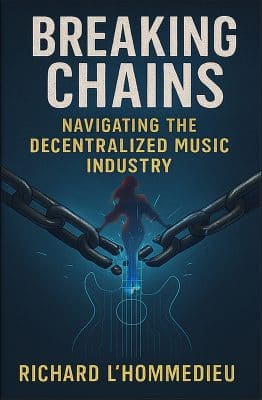
Breaking Chains is a groundbreaking guide for independent musicians ready to take control of their careers in the rapidly evolving world of decentralized music. From blockchain-powered royalties to NFTs, DAOs, and smart contracts, this book breaks down complex Web3 concepts into practical strategies that help artists earn more, connect directly with fans, and retain creative freedom. With real-world examples, platform recommendations, and step-by-step guidance, it empowers musicians to bypass traditional gatekeepers and build sustainable careers on their own terms.
More than just a tech manual, Breaking Chains explores the bigger picture—how decentralization can rebuild the music industry’s middle class, strengthen local economies, and transform fans into stakeholders in an artist’s journey. Whether you’re an emerging musician, a veteran indie artist, or a curious fan of the next music revolution, this book is your roadmap to the future of fair, transparent, and community-driven music.
Get your Limited Edition Signed and Numbered (Only 50 copies Available) Free Shipping Included
Discover more from Making A Scene!
Subscribe to get the latest posts sent to your email.


