

Chris O’Leary Blue Collar




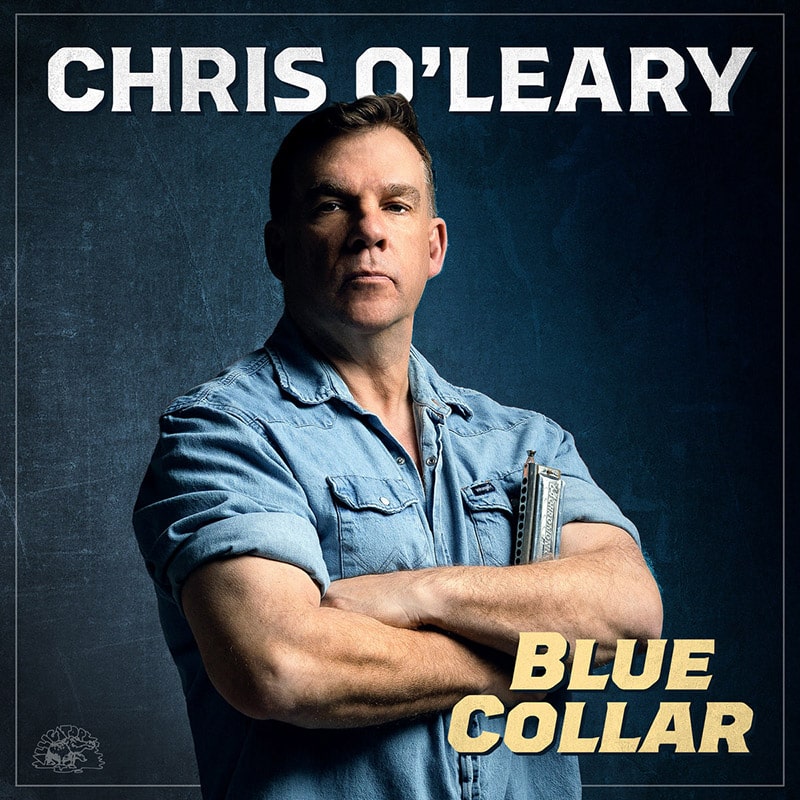
Chris O’Leary
Blue Collar
Alligator Records
Singer, songwriter, and harmonica ace Chris O’Leary delivers his blues with the might of hard-won integrity, but with a wink or two in his eye just the same on Blue Collar, his seventh album. The songs feature O’Leary’s winning mixture of Chicago blues and New Orleans-inspired roots and soul wrapped around engaging, real life songwriting. He opens the album with “Bad Decisions,” a rollicking account of late-night overkill that may very well be autobiographical, O’Leary on leave from the Marines, trying to dull the distress of Desert Storm. If that assumption is correct, it presents one shitstorm of real blues transformed into lighthearted entertainment. One way or the other, that frank, yet exhilarating opener, right away sets O’Leary apart.
O’Leary not only served his country overseas, but for a time was a federal police officer. He proves that a bluesman at heart can wear many different hats. O’Leary began his journey at eleven years of age when James Cotton’s raw power on Muddy Waters’ Hard Again album blew his doors off. Later, Levon Helm opened his eyes and ears wider when he offered O’Leary the opportunity to front his Barn Burners band, based for years in New Orleans. So, O’Leary’s emotive harp playing and robust, straight from the gut singing should come as no surprise. But he does still manage to startle, song by song here, with his talent, authenticity, and vision.
“Lady Luck” lands with a heavy, rumbling tone to match the woes O’Leary sings of. Producer Kid Andersen, ubiquitous in the business for good reason, found the ideal in-the-room punch and clarity for it, and all the songs at his Greaseland studio in San Jose. O’Leary’s band—guitarist Pat O’Shea, bassist Sheila Klinefelter, and drummer Chuck Cotton—provides ideal, locked-in thrust. But there are 14 guests on hand, and they all blend in seamlessly. Among them, guitar legends Lil’ Ed Williams and Bob Margolin, and Cajun accordionist Wayne Toups, make inspired impacts.
Lil’ Ed’s barrages of unmistakable, jittery slide fly appropriately high during “One More Cup of Coffee.” He generates heat that originated with Hound Dog Taylor while O’Leary fuels a narrative about being the road warrior that he, and so many other working musicians live as, for long stretches at a time.
The album shifts pace continually without ever losing its energy. The smoldering, broken relationship blues “Nothing but a Memory” features Muddy Waters alumnus Margolin slicing and sliding. his stupendous guitar playing next to O’Leary’s harp gusts and the band’s solid underpinnings recall the kind of blues Waters made. But O’Leary’s singing conveys a different tone, more in the vein of Kim Wilson or Sugar Ray Norcia, and dead-serious in nature.
“Justice Must Be Blind” jumps and features supreme ivory tickling by guest Bronson Hoover. Toups’ accordion on “Live Baby Gators” adds certified swampiness, and in “Daddy Was a Wolfman,” the funk extends beyond the swamp into the living room, O’Leary blowing feverish harp while singing lines about a father that has nothing but howling at the moon on his mind.
Fans of The Fabulous Thunderbirds, Roomful of Blues, and Little Charlie & the Nightcats will find Chris O’Leary’s Blue Collar irresistible. But these songs should be attractive to practically anyone. In a perfect world, the eleven of them would make blues music a household name.
Tom Clarke for MAS

Subscribe to Our Newsletter
Discover more from Making A Scene!
Subscribe to get the latest posts sent to your email.


