

Charlie Parr Rooming House




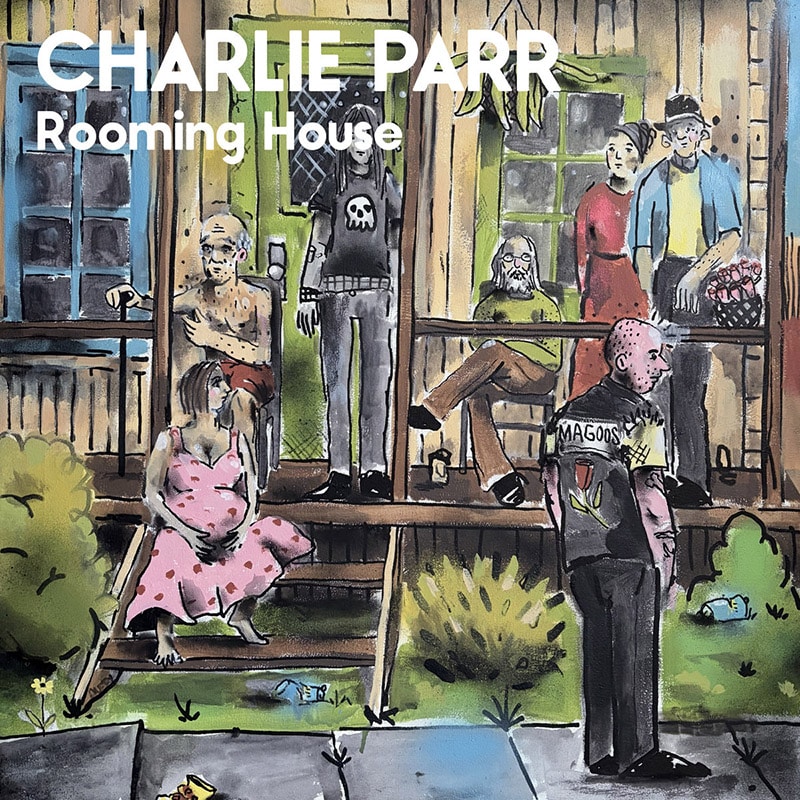
Charlie Parr
Rooming House
Smithsonian Folkways Recordings
Charlie Parr was born in Austin, Minnesota, in 1967. He started his music career in Duluth, Minnesota. His musical influences include Charley Patton, Bukka White, Reverend Gary Davis, Dave Van Ronk, Mississippi John Hurt, and his professed hero “Spider” John Koerner. He plays a National resonator guitar and a twelve-string Gretsch given to him by Koerner.
Parr released his debut album, Criminals & Sinners, on Shaky Ray Records in 2002. He has recorded for Level Two Music, Chaperone Records, Eclectone Records, Nero’s Neptune Records, House of Mercy Recordings, Tin Angel Records, Red House Records, and, in 2021 and 2024, Smithsonian Folkways. Rooming House, also on Smithsonian Folkways, is his twentieth recording. Parr is joined by celebrated drummer and fellow Minnesotan Dave King (the Bad Plus, Happy Apple).
Rooming House unfolds as a collection of interconnected vignettes centered on a shared home and the people who pass through it. Parr’s own experiences, and years spent living in Minneapolis rooming houses, became a catalyst for a larger meditation on economic insecurity in America and the difficult decisions countless people make simply to survive. Those memories inform the detailed settings throughout the album, from communal kitchens and drafty hallways to the makeshift families that formed under one roof. The characters face impossible choices shaped by poverty, illness, unstable housing, and disappearing social services, yet the album is equally concerned with the quiet compassion found in shared meals, borrowed flavors, and small acts of generosity that help people endure.
The album opens with “Duluth 1964,” as Parr plays a resonator guitar and sings, “when I was only twelve years old, she left on a January night and walked out into the cold.”
On the title track, “Rooming House,” troubadour Parr sings, “We met in the kitchen, there was old John in his underwear, nobody really seemed to care, we were all together then. Ron caught some fish and Ben cleaned and filleted them when Sara came downstairs with a pan, and we stood around the stove to see, the fish sizzle in the grease. Joining the smell of kerosene and old John went upstairs to pee, and told us ‘now, don’t you eat it all’. With leftover coleslaw from the diner out by the mall, it’s not far from the Union Yard. But it’s quite a ways on foot. Didn’t takeong for the fish to cook, Sara grabbed a fork and had a look. She said it was right out of the book, and we all got ready for a bite. But we all got sick that night. It gave John quite a fright to see the bathroom in the morning light, and us laying around the kitchen floor. I closed my bedroom door and held my guts they were so sore, with a pain different than before, and it wouldn’t let me sleep.”
On “Mother Sara,” we’re glad that Sara has taken on the role of house mother, as she tries to take care of everyone: “I’m not willing to take all the blame you should have been here anyway.”
“(What’s So Funny About) Universal Healthcare?” features Parr as he chimes, “Well, one thing has led to another, and I know I should get to a doctor. But I ain’t got a dime, staying outta time. There’s someone painful inside of me, don’t like the food I eat, won’t let me sleep. Not so bad I guess, I can still get out of bed. I guess you got to be feeling pretty hard for them not to ask you for your insurance card. You can’t pay the Doc, oh, you best stay home. You waste a trip downtown, if you ain’t got the dough. When I took a look at that WebMD, it says ‘I’d get your affairs in order if it were me’. Not that I wanted to hear, more fuel for my fear. Old John says, he’ll fix me up good, started mixin’ stuff with my food. I’m in the bathroom again. He says ‘that’s part of the plan’. If I had money, I’d go and see, just whatt the hell is wrong inside of me. I’d get some pills, I wouln’t worry about the bills. I got a buddy who went to the pen. Now they took out a tumor and they eased his pain, and he is feeling good, warm bed, he says and plenty of food…all I gotta do is get caught by the police for doin’ some crimes.” Parr might be on the Gretsch here, as the song reminds me of Spider John Koerner.
“Bank Robber” features Parr back on the resonator guitar, as he asks the old man to get out of his face and decides to try to get caught robbing a bank so he can get the healthcare he needs. He hands the teller a note that reads, “I’m sick and tired and only want some peace.”
On “Duluth 2026,” the cops drop all the charges against him and take him back to the rooming house. On the closer, “Lilliput Park,” featuring a cello, Parr croons, “we came into the park, when the evening stars shine…”
Rooming House is where the listener is introduced to the characters in this musical play while they’re going about a normal evening of preparing food. A terminal illness enters the story when our hero realizes that the pain he’s feeling is more than food poisoning. While the themes may be heavy, Rooming House ultimately finds hope in the humanity of its characters. Parr’s songwriting shines a light on people who often go unseen, revealing how empathy and mutual support can flourish even in the hardest conditions. The result is a deeply compassionate work that refuses to look away from the struggle while celebrating the resilience found in everyday lives and the communities built when there is nowhere else to turn.
Richard Ludmerer

Subscribe to Our Newsletter
Discover more from Making A Scene!
Subscribe to get the latest posts sent to your email.


