

Blue Moods Directions and Expressions




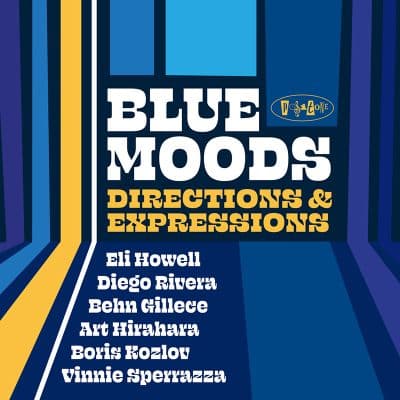 Blue Moods
Directions and Expressions
Posi-Tone
Unless you’ve been living under a rock in 2026, you know that this is the centennial year for John Coltrane and Miles Davis. There are multiple tributes for each, both on record and in past and future performances. Blue Moods is a collective comprised of select artists on the Posi-Tone label. On Directions and Expressions, they pay tribute to Miles Davis as a composer. Surely, jazz fans will recognize many of these compositions, while also realizing that many of the great pieces in Miles’ catalog were composed by Wayne Shorter and other members of his many bands. Miles gets plenty of accolades as an innovator and bandleader, but not nearly as many as a composer.
Rather than model the lineup in a classic quintet format, perhaps out of deference to Miles, Blue Moods presents a sextet sans trumpet. All of these players have recorded as a leader, many of them on the Posi-Tone label. They are trombonist Eli Howell, (Note Howell’s recent release, Steps Taken (D Clef); tenor saxophonist Diego Rivera, vibraphonist Behn Gillece, pianist Art Hirahara, bassist Boris Kozlov, and drummer Vinnie Sperrazza. These compositions are taken from the ‘50s (five) and mid-’60s (four), with one from 1983, mostly acoustic, though not in chronological order.
The session begins with “Boplicity,” written by Miles and Gil Evans for Birth of the Cool in 1957. This is a swinger with buoyant solos from Gillece, Rivera, and Hirahara, featuring crisp unison lines from the two horns. “Somethin’ Else,” of course, is the title track of Cannonball Adderley’s 1958 album, one of the few where Miles was a sideman. The music reads as a conversation between the horns on one side and the piano and vibraphone on the other. Hirahara launches a brimming solo, followed by Gillece, Rivera, and Howell, after which the convivial conversation resumes.
The next three pieces were all originally rendered by Miles’ Second Great Quintet – “Circle” from 1967’s Miles Smiles, “Stuff” from 1968’s Miles in the Sky, and “Agitation” from 1965’s. E.S.P They deliver a spacey aura to “Circle” with outstanding contributions from Gillece, Howell, and Rivera. When Miles recorded “Stuff,” he was becoming interested in electric music. Yet, this interpretation reads more like hard bop, replete with unison lines throughout the sextet, until settling into an expressive Rivera solo. Hirahara takes his nimble, gleaming turn before the sextet rejoins the theme, then passes the baton to Gillece, who takes it into new territory. The first two plus minutes feature Gellice and Hirahara in “Agitation’ before Rivera ( arguably his peak moments) and Hirahara unleash expansive, exploratory solos.
The rather obscure “Generique” was composed for a French film in 1958. Rivera launches a pensive, bluesy solo, likely transcribing Miles’ part, as the contributions from Hirahara nd the other sextet members give it a contemporary feel.” Lazy Susan/Half Nelson” appeared on Miles’ 1952 Blue Note album, Young Man with a Horn, square in the bebop period. Thus, the band members play at a joyous, rollicking tempo. “La Suite de Kilimajaro” is from the 1968 album Filles de Kilimajaro, running for twelve plus minutes, allowing each member to stretch out. This, too, was on the cusp of Miles’ electric period, conveyed here by the spaciousness that each soloist brings to the music. Yet, there are those threads of blues that run through Miles’ music, heard especially in Gillece’s solo. Sperrazza steps in and changes the whole mood to vibrant funk, upon which Rivera spins a spiraling sol, yielding to thunderous kit work by Sperrazza.
“Fran Dance” from Kind of Blue is likely the most well-known piece and, in some respects, the most daunting to play, given the hallowed reputations of Coltrane, Cannonball, Bill Evans/Wynton Kelly, Paul Chambers, and Jimmy Cobb. Nonetheless, the Blue Moods unit digs in, finding some vibrant elements in the piece that may have escaped us in the original. Hirahara especially shines. The surprise track of all in “U’n’l” from 1983’s Star People, far more danceable and poppy than any of the other tracks, a feature for both Howell and Rivera, while Sperrazza and Kozlov keep an R&B-like bottom.
Unfortunately, this recording isn’t as likely to gain as much attention as, say, Gregory Huchinson’s recently released Kind of Now, but it belongs in the same conversation.
– Jim Hynes

Subscribe to Our Newsletter
Discover more from Making A Scene!
Subscribe to get the latest posts sent to your email.


