
You Can Hold Music Again: How Smart Media Could Reconnect a Digital Generation With the Album




Making a Scene Presents – You Can Hold Music Again: How Smart Media Could Reconnect a Digital Generation With the Album
Listen to the Podcast Discussion
For most of recorded music history, loving music meant touching it. You walked into a record store, flipped through rows of albums, picked one up, studied the cover, carried it home, broke the seal and spent time with the object before the first song ever reached your ears. The music was obviously the reason for buying the album, but the ritual around it became part of the experience, and that physical connection helped turn songs into memories.
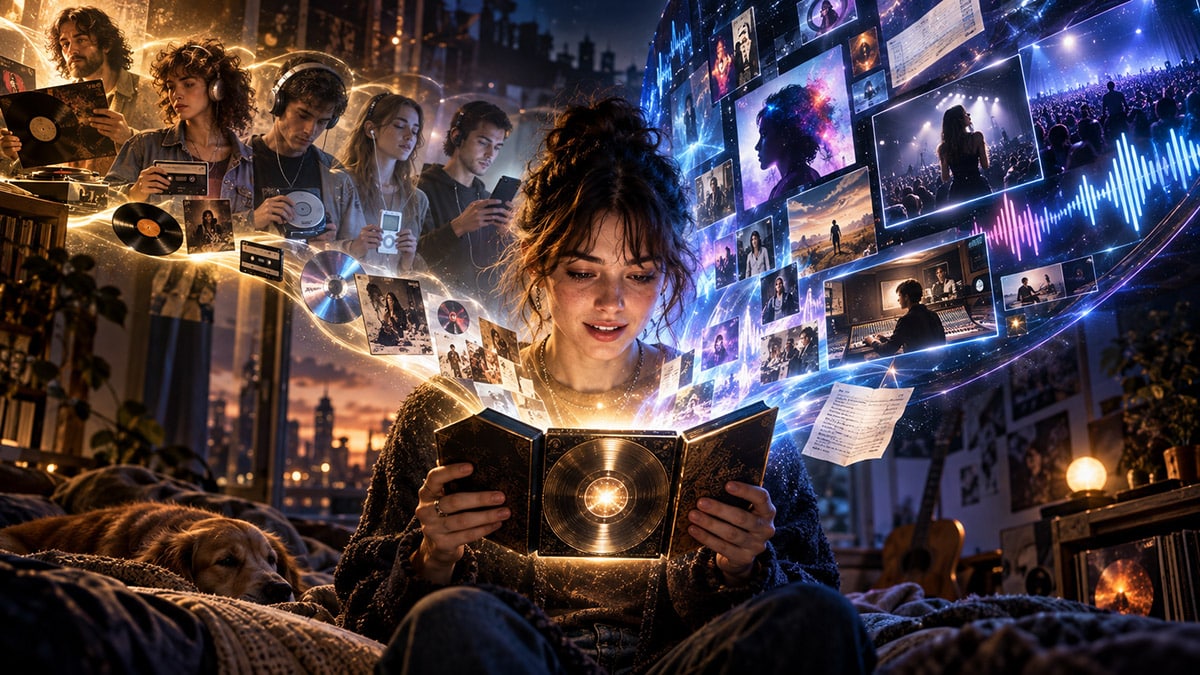
That relationship survived several major format changes because vinyl, cassettes and CDs all required the listener to physically interact with the music. Even as the technology improved, you still had something in your hand, something on a shelf and something you could loan to a friend who would promise to return it in perfect condition before handing it back three months later looking like it had been used as a drink coaster. The format changed, but the idea that recorded music existed as an object remained remarkably stable.
Then digital music began removing the object one layer at a time. Downloads separated the recording from the package, portable digital players separated the album from the shelf, streaming separated access from ownership, and algorithmic discovery eventually separated music discovery from even the deliberate act of searching for a song. What we gained in convenience was enormous, but we also quietly moved several generations of music consumers farther and farther away from having any tactile relationship with the music they loved.
If we think about this in terms of music-consumption generations rather than literal family generations, we are now several major eras removed from the period when physical ownership was the normal way people experienced recorded music. One generation grew up moving from CDs into downloads, another came of age with the iPod and portable digital libraries, another arrived when streaming subscriptions became normal, and today’s youngest listeners increasingly discover music through mobile feeds, recommendation systems and short-form video. Each generation inherited a little less physical interaction with music than the one before it, until millions of listeners reached adulthood without ever needing to hold an album at all.
That history matters because the next physical music format may succeed precisely because physical music is no longer required. A new generation does not need a record, cassette or CD to hear an album, which means the physical object is finally free to do something different. Instead of functioning primarily as a playback device, it can become a collectible, a memory, a piece of identity and a physical connection to an artist whose music otherwise exists almost entirely behind glass.
That is why the emerging Smart Media Album category deserves more attention than another technology press release normally receives. Smart Media combines a physical object with a connected digital experience, allowing the fan to hold something real while continuing to listen through the phone and digital systems they already understand. Rather than forcing a younger audience to choose between physical nostalgia and digital convenience, the format has the potential to bridge both worlds.
A Generation That Never Had to Touch Music
There is an important difference between an older fan returning to vinyl and a younger fan discovering physical music for the first time. Someone who grew up in the physical era may be reconnecting with a familiar ritual, while somebody raised entirely on streaming may be encountering that ritual as something new. What looks like nostalgia to one generation can feel like discovery to another, which helps explain why younger consumers can be fascinated by formats that disappeared from mainstream use before they were old enough to remember them.
This kind of nostalgia does not require a personal memory. Younger consumers can be drawn to old cameras, vintage clothes, cassette tapes, vinyl records and printed photographs because those objects represent a kind of experience that feels increasingly rare in a digital world. The attraction is often less about recreating a specific decade and more about finding something that feels tangible, intentional and permanent in a culture where so much media arrives, disappears and gets replaced before anyone has time to form an attachment to it.
Music fits naturally into that desire because music has always carried identity. A record collection once told visitors something about the person who owned it before a single song was played, while a stack of CDs in a bedroom or a cassette case in a car became part of the environment where musical taste developed. Streaming libraries can contain far more music than any physical collection ever could, but they do not occupy the same physical space in a person’s life.
That absence matters more than it may seem. A streaming library is incredibly useful, but it remains invisible until someone opens an app, and thousands of albums can exist inside the same rectangular screen without leaving any physical evidence behind. A record on a shelf keeps reminding the listener that it exists, while a connected collectible can become the modern version of that reminder without requiring the fan to abandon the digital listening habits they already enjoy.
Physical Music Is Returning for a Reason
The continued strength of physical music suggests that consumers are already rediscovering this value. Vinyl has remained a meaningful part of the music business for years, while CD sales have shown renewed strength even among younger buyers. The Recording Industry Association of America reported more than a billion dollars in U.S. vinyl wholesale revenue for 2025, demonstrating that physical formats still carry economic weight in a market overwhelmingly dominated by streaming.
Luminate’s more recent research makes the generational part of the story even more interesting. In its 2026 reporting, the company noted rising CD sales and highlighted that a significant portion of younger CD buyers do not actually own CD players. That makes very little sense if we assume the only reason to purchase a CD is to use it as a playback device, but it makes perfect sense if the CD is being purchased because the object itself represents a relationship with the artist.
That finding tells us something important about where physical music may be headed. The product no longer has to justify itself solely through audio delivery, because streaming already does that job more conveniently than almost any physical format could. The physical object can instead justify its existence through collectibility, artwork, memory and emotional connection, which creates room for a completely different kind of album product.
Smart Media arrives at exactly that moment. It offers a way to preserve the tactile side of music without asking a younger listener to purchase a separate stereo system or learn an older playback format simply to participate. The fan can hold the album, display it and connect with it physically while the actual audio and expanded content remain available through the digital tools that already fit naturally into everyday life.
Billboard Makes Smart Media More Than a Novelty
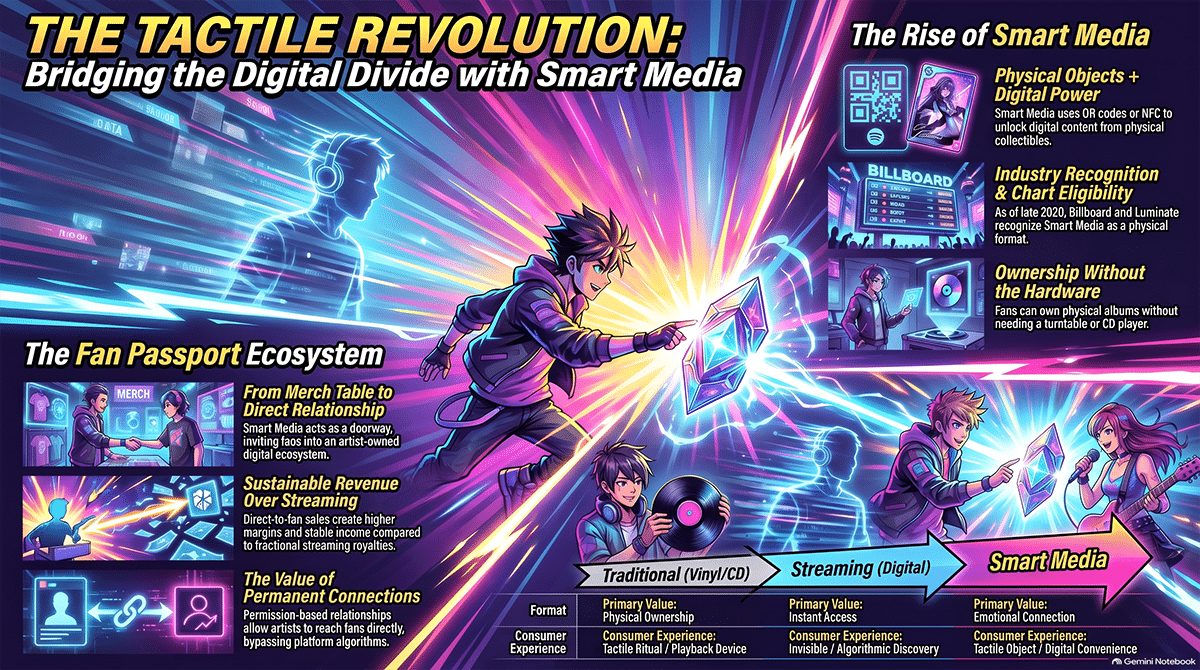
The Smart Media category became much more significant in September 2026 when Luminate announced that it would begin formally tracking Smart Media Albums as physical products in the United States and Canada. Beginning October 2, qualifying sales are scheduled to appear in Luminate’s CONNECT, API and Data Share systems, while eligible transactions can also contribute to Billboard chart calculations. Luminate’s announcement is available at https://luminatedata.com/blog/luminate-to-track-smart-media-album-sales-in-connect/, and the company described the change as the first addition of a new physical music format since the CD.
That recognition matters because it tells us the industry is no longer treating these products as promotional gadgets sitting somewhere between merchandise and novelty technology. Smart Media is being recognized as a genuine physical music category with rules, reporting and chart eligibility attached to it. The existence of those rules also means artists need to understand the format carefully rather than assuming every physical-digital product automatically qualifies in exactly the same way.
Billboard’s introductory approach places limits around Smart Media chart treatment, including requirements involving approved providers and the number of eligible product versions associated with a release. Those details can change over time, so an artist manufacturing specifically for a chart campaign should always verify the current Luminate and Billboard requirements before committing money. The larger point, however, is that the format has crossed an important threshold from interesting experiment into something the formal recorded-music measurement system now recognizes.
For independent artists, the Billboard connection is useful but should not become the main reason to care. A chart position can support press and marketing, but a sustainable music business needs more than one week of industry attention. The deeper opportunity is that Smart Media can give artists a premium physical product capable of generating direct revenue while also creating a stronger relationship with the fan who chooses to buy it.
The Physical Album Does Not Need to Carry the Music Anymore
Luminate defines Smart Media as a physical product that unlocks digital album content through technology such as QR codes, near-field communication or other activation systems. The associated experience can live inside an app or website, which means the physical object does not necessarily store the actual audio in the way a CD or vinyl record does. That shift may seem technical, but it completely changes what a physical album is capable of becoming.
A traditional physical format had to devote most of its function to carrying the recording itself. A connected product does not have that limitation, so the object can focus on being attractive, collectible and meaningful while the digital layer handles the music and additional media. The physical and digital pieces can each do what they are best at rather than forcing one format to perform every job.
This creates enormous creative room for artists. A connected edition can surround the finished album with photography, recording-session footage, expanded credits, commentary, live performances and other material that would be awkward or impossible to include inside a traditional physical format. The goal is not to dump every leftover file from the recording session into the product, but to create a carefully designed experience that allows the fan to go deeper into the album.
That deeper experience matters because streaming has already made basic access incredibly easy. Fans do not need another way to hear the same twelve songs they already have available through their subscription, so the physical product needs to offer something different. Smart Media gives the artist a chance to turn the album from a playback container into a doorway into the creative world around the recording.
KiTalbum Shows What the Idea Can Look Like
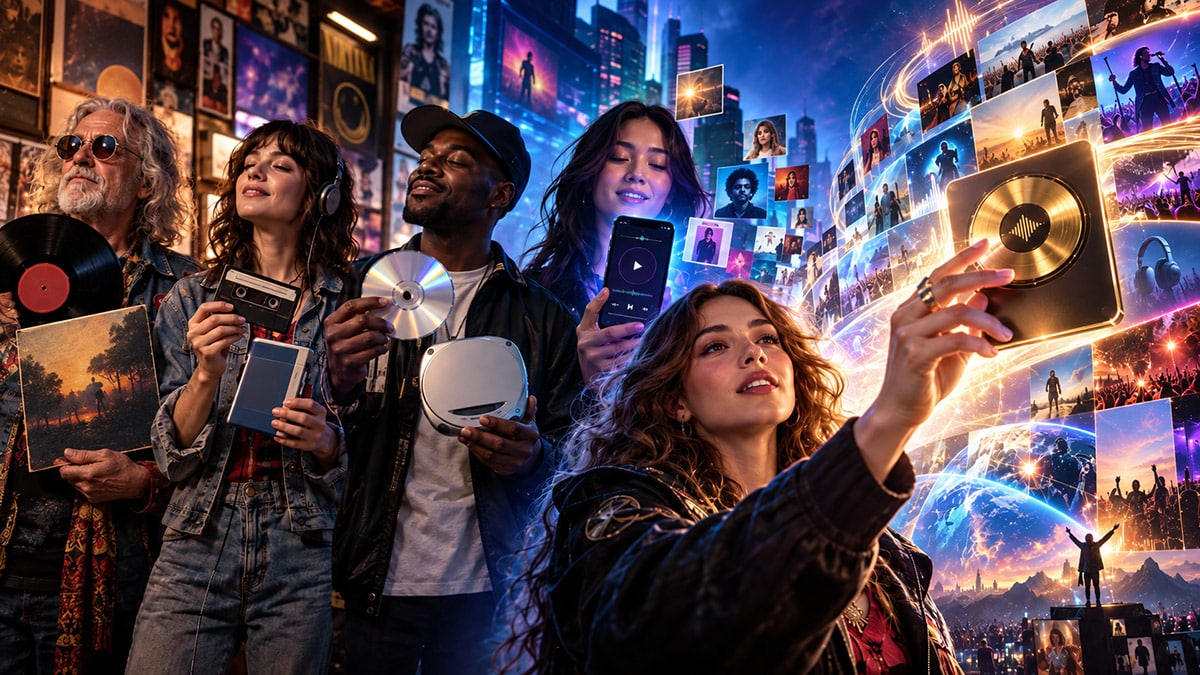
KiTbetter, available at https://www.kitbetter.com/en, provides one of the clearest current examples through its KiTalbum format. The product combines a physical package and small connected device with a digital environment that can support high-quality audio, video, images, credits and other album-related material. Depending on the release, the company promotes features that can include lossless audio and Dolby Atmos alongside visual and community-oriented content.
The significance of KiTalbum is not that every artist should immediately abandon vinyl, CDs and every other physical format. Different fan communities value different things, and an artist with an audience full of serious vinyl collectors would be foolish to ignore that simply because a newer format appeared. KiTalbum is useful because it demonstrates how physical and digital can work together without requiring either side to imitate the other.
The physical package provides something the fan can hold and keep, while the digital layer provides the flexibility and depth younger listeners already expect. That combination gives the artist more room to design a release around experience rather than storage capacity. It also creates a product that can make sense to someone who loves the idea of owning an album but has no desire to buy a turntable or CD player.
This could be particularly important for younger listeners who are already attracted to the visual and collectible side of fandom. K-pop has demonstrated how powerful physical packaging can become when photographs, cards, artwork and collector elements are treated as part of the product rather than as decoration around a disc. Smart Media can take that lesson and connect it to a broader digital experience, giving independent artists a way to rethink physical ownership without simply copying older formats.
The Ritual May Be the Real Product
One of the things digital music quietly removed was the ritual of opening an album. Streaming reduces the distance between discovery and playback to almost nothing, which is wonderfully convenient but leaves little room for anticipation. The listener taps a screen and the music begins, often while the same device is already competing for attention with messages, news alerts, social feeds and whatever else happens to appear five seconds later.
Physical products introduce a small amount of friction, and not all friction is bad. Opening a package, examining the artwork and discovering what is inside forces the listener to slow down long enough to recognize that this experience is different from simply tapping another thumbnail. That pause gives the album a sense of occasion that digital music often struggles to create.
We understand this instinct everywhere else in life. A wrapped birthday present is less efficient than handing someone the object directly, yet the ritual of opening it adds meaning because anticipation is part of the experience. Physical music can work the same way, and Smart Media has the potential to restore that ritual without sacrificing the convenience listeners have come to expect.
For younger fans, that may be one of the format’s greatest strengths. They do not need to abandon their phones to gain a tactile connection with music because the phone and the collectible can work together. The experience becomes physical where physicality adds emotion and digital where digital technology adds flexibility.
Music Became Invisible, and Fans May Want It Back in the Room
One of the unintended consequences of streaming is that music can become almost invisible even while people listen to more of it than ever. An album can arrive at midnight, appear briefly in a recommendation feed and disappear into a catalog containing tens of millions of other recordings before the listener has formed any visual relationship with it. The music remains available forever, but nothing in the listener’s physical environment marks the moment when that album became important.
Physical objects create those markers naturally. A record sitting on a shelf, a concert shirt hanging in a closet or a signed poster on a wall can remind someone of an artist without any algorithm needing to recommend them again. The object becomes part of the listener’s environment, and that physical presence can keep the relationship alive in a way digital availability alone does not always accomplish.
This may explain part of the renewed appeal of physical music among younger listeners. In a world where almost everything lives inside the same handful of screens, an object connected to music can feel unusually personal. The very thing older generations once considered ordinary may now feel special because it occupies real space.
Smart Media can build on that desire while acknowledging that digital listening is not going away. The physical object becomes the visible reminder, while the connected experience provides the music and expanded content. Together they create a relationship that neither side could provide as effectively alone.
The Indie Artist Opportunity Is Bigger Than Selling Another Album
For an independent artist, Smart Media creates an obvious direct-sales opportunity because the product can justify a higher-value purchase than another set of downloadable files. A fan who already streams the album may still be willing to purchase a collectible connected edition because the product offers something streaming does not. The sale can happen through the artist’s website, at a release event or directly at the merch table, where the emotional connection is often strongest.
The merch table may be especially important because the fan is standing in front of the artist shortly after experiencing the music live. That moment already carries emotional weight, and a physical object can turn the concert into something the fan takes home. A connected album can extend that experience by giving the buyer more to explore after the night is over.
This changes the role of the merch table from simple retail into something closer to the beginning of a relationship. The fan who buys a physical product has demonstrated a willingness to support the artist directly, which makes that person more valuable to the artist’s long-term business than a casual listener whose only interaction was one stream. The challenge is making sure that relationship does not disappear the moment the fan leaves the venue.
That is where the Making a Scene Fan Passport Artist Ecosystem fits naturally into the Smart Media model.
Fan Passport Gives the Physical Experience Somewhere to Go
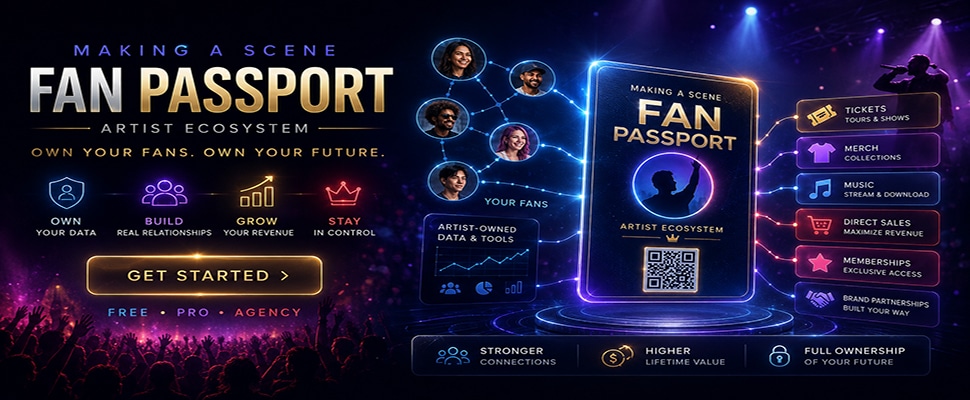
The Making a Scene Fan Passport Artist Ecosystem, available at https://www.masfanpassport.com, is built around the idea that artists should maintain direct, permission-based relationships with the people who choose to support them. Streaming platforms, social networks, ticketing systems and Smart Media providers can all be valuable tools, but none of them should have to become the permanent owner of the relationship between the artist and the fan.
Smart Media can therefore become one doorway into that artist-owned ecosystem rather than another isolated platform. The fan can purchase a connected physical album and enjoy the manufacturer’s digital experience while also being invited to follow the artist directly through Fan Passport. If the fan chooses to connect, the transaction becomes the beginning of a relationship instead of the end of one.
This distinction is important because selling an album and gaining a customer are not exactly the same thing. A sale creates immediate revenue, while a permission-based fan relationship creates the possibility of future revenue through additional releases, live shows, merchandise and other artist-controlled opportunities. The value grows when the artist can continue serving that fan without depending entirely on another company’s algorithm or advertising system.
The physical album becomes especially powerful in this context because the object remains visible after the purchase. It can remind the fan of the artist while Fan Passport provides the digital continuity that allows the artist to maintain the relationship. The tactile experience and the direct digital relationship reinforce each other instead of operating as separate parts of the business.
The Collectible Can Become a Memory Anchor
Physical music has always been unusually good at carrying memories. People remember where they bought a record, who they listened to it with and what was happening in their lives when it became important. The object absorbs part of that history, which is why an old album can sometimes bring back a moment before the needle ever reaches the groove.
A Smart Media collectible can create that same kind of memory for a generation whose listening history otherwise exists mostly inside software. The fan who buys a connected album after a show can associate the physical object with that night, while the digital material extends the experience after they get home. Years later, the object can still bring the memory back even if the technology around it has changed.
That emotional value should not be underestimated because fandom is not built entirely from transactions. People support artists because the music becomes connected to their lives, and physical objects can make that connection visible. A good collectible gives the fan something that represents the relationship rather than merely something that proves a purchase occurred.
For an independent artist, that emotional connection can become part of a healthier direct-to-fan business. The goal is not to manufacture artificial scarcity or pressure fans into buying multiple versions of the same thing. The goal is to create an object worth owning because it carries real meaning around the music.
The Relationship Can Continue Long After the Release Campaign Ends
One of the biggest weaknesses in the traditional release cycle is how quickly the relationship disappears after the campaign ends. Artists spend months promoting an album, gather attention around the release date and then often begin almost from scratch when the next project arrives. The platforms may remember who listened, but the artist does not always have a direct way to reconnect with the people who cared most.
Fan Passport can help change that by allowing the physical buyer to become part of a continuing artist-owned relationship. If the fan voluntarily follows the artist, future releases no longer have to begin with the artist hoping an algorithm happens to show the announcement to the same person again. The connection can survive beyond the specific campaign that created it.
That matters because the fan who bought the first Smart Media edition may also become a ticket buyer when the artist returns to town. They may purchase another physical release, join a membership or support a future crowdfunding campaign because the relationship has continued between albums. The original sale becomes part of a longer customer journey rather than an isolated event.
This is where the direct-to-fan model starts creating the kind of economic stability independent musicians need. The artist is no longer relying entirely on finding new listeners every time money needs to be made. Instead, a growing community of existing supporters can participate across multiple parts of the artist’s career.
Physical Music Can Connect Recorded Revenue With Live Revenue
The connection between physical products and live music is particularly important because most working independent artists do not survive on one revenue stream. Recorded music, shows and merchandise often support one another, yet the systems behind them are frequently disconnected. A fan who buys an album may exist in one database while the same person buys a ticket through another company and merchandise through a third.
An Artist Ecosystem can begin bringing those relationships together. A Smart Media purchase can establish that someone values physical products, while future show activity and other direct interactions can build a richer understanding of the relationship over time. The goal is not to spy on fans but to avoid treating each transaction as though it came from a completely new person.
This is how an album purchase can eventually support ticket revenue without becoming a gimmick. The artist can communicate with fans who have already chosen to stay connected and let them know when a show is happening nearby. The relationship becomes useful because the communication is relevant rather than because the artist suddenly gained another excuse to send marketing messages.
That is the larger promise of connecting Smart Media to Fan Passport. The physical album brings the fan into the ecosystem through something meaningful, while the ecosystem gives that relationship somewhere to grow.
The Artist Ecosystem Can Protect the Information Behind the Product
A richer physical-digital album also requires better information behind the scenes. Credits, release data, lyrics, photographs, video and other assets all need to be organized correctly if the product is going to represent the artist professionally. The more complex the experience becomes, the more important it is to know which information is authoritative.
This fits naturally with the Making a Scene Artist Ecosystem’s Source of Truth concept. Instead of rebuilding song titles, contributor information and release details every time another platform needs them, the artist can maintain one verified record and use that information across different parts of the business. Smart Media then becomes another destination for data that already belongs to the artist rather than another isolated system that has to be maintained separately.
KiTbetter already publishes developer documentation at https://developers.kitbetter.com/ describing a Partner API that allows approved partners to work with artist and release information. That does not mean a Fan Passport or Artist Ecosystem integration exists today, and it should not be presented as though one has already been built. It does show that the technical architecture can support outside systems, which creates a legitimate future opportunity for integration.
A system like the Artist Ecosystem could eventually help an artist prepare verified release information once and pass the appropriate data into a compatible Smart Media workflow. That would reduce repetitive data entry while giving the artist greater control over the information attached to the release. The physical product would then become another output of the artist’s Source of Truth rather than another place where the truth has to be recreated from memory.
Smart Media Can Reward Better Release Preparation
This new physical category also reinforces a larger lesson about how independent artists should prepare releases. The stereo master is important, but the modern album can carry far more commercial value than the final two-channel recording alone. Photography, video, alternate performances, detailed credits and properly organized release assets can all become part of what the artist sells when they are created intentionally.
Smart Media gives those assets a natural home because the connected edition can extend beyond the limitations of a traditional package. Studio footage can become part of the collector experience, while visual material and extended credits can help fans understand the people and process behind the music. The product becomes richer when those assets were planned as part of the release rather than discovered accidentally on someone’s hard drive six months later.
That approach can also strengthen other parts of the artist’s business because the same assets may support licensing, promotion and future direct-to-fan campaigns. A well-prepared release package gives the artist more options, which is exactly what an independent business needs. Smart Media does not create that value by itself, but it gives the artist another reason to organize the creative work properly from the beginning.
The Artist Ecosystem can support that process by keeping those assets connected to the authoritative release record. Instead of treating the Smart Media product as a one-time marketing experiment, the artist can make it part of a larger infrastructure that remains useful long after the initial manufacturing run is finished.
AI Can Help Manage the Business Without Replacing the Artist
The richer the release becomes, the more information the artist has to manage. Sales patterns, geographic activity, engagement data and creative assets can quickly become overwhelming for a small independent team, especially when the same people are also writing songs, rehearsing, touring and trying to remember whether the hotel actually includes breakfast.
Artificial intelligence can be useful here because this is the kind of administrative complexity machines handle well. An AI system working inside an artist-controlled environment could help organize assets, identify missing metadata and analyze which products are actually generating repeat customers. It could also help show where physical buyers are becoming ticket buyers or where certain editions perform better than others.
That kind of AI use supports the artist rather than replacing the artist. The machine handles the repetitive business work while the human being continues doing the creative work and building relationships with fans. The value comes from making the artist’s existing business smarter rather than creating another outside system that controls the data.
This is another reason the underlying architecture matters. AI becomes much more useful when it works with accurate information inside an artist-owned ecosystem, because the artist can use the intelligence without surrendering the foundation of the business.
Tactile Does Not Automatically Mean Permanent
The excitement around physical-digital albums should not make us ignore an important ownership question. Luminate’s Smart Media definition describes the associated digital album content as neither downloadable nor shareable, which means the physical object does not necessarily contain a permanent portable copy of the recording. The fan may own the collectible while parts of the digital experience remain dependent on an app, server or authentication system.
That is not automatically a reason to reject Smart Media. Connected technology depends on infrastructure everywhere, and fans already accept that reality in streaming, ticketing and countless other services. The responsible approach is simply to understand which parts of the product are permanent objects and which parts depend on an ongoing service.
Artists should preserve their masters, visual assets and important release information independently of any Smart Media provider. That way the creative work remains under the artist’s control even if the technology used to deliver one particular edition changes later. The outside platform can provide a valuable experience without becoming the only place where the artist’s important assets exist.
The same principle should apply to the fan relationship. The Smart Media provider can operate the connected product while Fan Passport gives fans a separate opportunity to establish a direct connection with the artist. That separation allows the artist to benefit from outside technology without making the entire business dependent on one company.
The Relationship Should Survive Changes in Technology
Music technology changes too quickly for artists to assume any one platform will remain the center of their business forever. Streaming services evolve, social networks rise and fall, ticketing companies change ownership, and new tools replace old ones with impressive regularity. An independent artist needs infrastructure that can survive those changes rather than requiring the audience to be rebuilt every time another platform becomes less useful.
This is one of the strongest arguments for Fan Passport as the continuity layer around Smart Media. The artist may use one connected-album provider today and another provider on a future release, but the direct relationship with the fan should be able to continue across both. The technology supporting the transaction can change while the relationship itself remains intact.
That kind of portability is one of the most useful ideas associated with Web3, even though it does not require cryptocurrency or speculative tokens. The important principle is that identity, permissions and legitimate customer relationships should not have to disappear simply because a vendor changes. The artist should be able to adopt better tools without abandoning the community built around the older ones.
Smart Media becomes stronger when it is treated as one part of that ecosystem. The artist can use the best available product without pretending the manufacturer needs to become the lifelong home for every fan interaction.
A New Generation Can Build Its Own Kind of Record Collection
It would be a mistake to assume younger consumers want to recreate the record collections their parents or grandparents had. Their physical collections may look completely different, with smaller objects, collector cards, connected devices and digital experiences replacing the giant shelves of vinyl and CDs that once defined a music fan’s room. The important part is not the format but the emotional role the objects play.
A Smart Media collection can provide that role by giving fans physical representations of the artists and albums that matter to them. The music may still play through a phone, but the collectible exists outside the phone and gives the fan something visible to keep. That can make the relationship with music feel more personal without demanding a return to older technology.
For a generation raised on digital abundance, physical scarcity can also create a sense of meaning when it is used responsibly. A thoughtfully designed limited edition can feel special because the fan knows it represents a particular release, tour or moment in the artist’s career. The value comes from the story attached to the object rather than from manufacturing artificial panic around a countdown timer.
Independent artists are particularly well positioned to create that kind of product because their relationship with fans can be more personal. A smaller artist can design editions around real stories, specific shows and meaningful moments rather than simply producing endless cosmetic variations of the same release. That intimacy can make the tactile experience feel more authentic.
The Product Needs to Be Worth Holding
If Smart Media is going to reconnect a digital generation with the physical side of music, the object itself needs to deserve the attention. Packaging, photography and design become part of the artistic experience rather than chores that happen after the audio master is complete. The physical product should feel connected to the identity of the album and artist, because the fan is buying something intended to remain visible long after the streaming campaign disappears from the front page.
This does not require a major-label production budget. Independent artists can create meaningful physical experiences through thoughtful design, smaller runs and personal touches that would be difficult at mass scale. The strength of the product comes from intention rather than extravagance.
The connected digital material should follow the same principle. More content is not automatically better, and a giant folder full of leftovers will not create a premium experience simply because the fan had to scan something to reach it. The physical and digital pieces should tell the same story and give the listener a deeper reason to care about the album.
When that happens, the physical release stops feeling like merchandise added after the fact. It becomes part of the creative work itself.
Chart Eligibility Is Useful, but the Business Has to Work Without It
Billboard eligibility will understandably attract artists because charts remain visible markers of success. A chart appearance can support press, marketing and credibility, and there is nothing wrong with using Smart Media as part of a serious chart campaign when the economics make sense. The problem begins when the desire to chart becomes the only reason the product exists.
An independent artist should still understand manufacturing cost, fulfillment expenses, expected demand and realistic profit before producing a physical edition. A product that fans genuinely want can create direct revenue and strengthen the fan relationship even if it never produces a headline about chart placement. That is a more durable business outcome than building inventory around a one-week marketing goal.
The strongest Smart Media strategy therefore begins with the fan rather than the chart. The artist creates something worth owning, prices it so the business can make sense and uses the product to deepen the relationship around the music. If the resulting sales also contribute to a Billboard position, that becomes an additional benefit rather than the entire reason for manufacturing the product.
That distinction matters because Making a Scene is not trying to build a music economy where every artist becomes a superstar. The goal is to help more working artists build sustainable income from real supporters, and that requires products that make financial sense long after the chart week ends.
The Tactile Experience Can Lead Into Community
The deepest opportunity behind Smart Media may not be the object itself but what the object represents. A fan who chooses to buy a physical edition is expressing a level of identification with the artist that goes beyond passive listening. They want something connected to the music that can remain part of their physical world.
Fan Passport gives that physical connection a way to become community. The fan can choose to continue the relationship through the artist’s own ecosystem, where future releases and live experiences can build naturally on the original purchase. The collectible becomes the memory of the moment while the direct digital relationship keeps the connection active.
This model respects the strengths of both physical and digital music. The physical object creates permanence and emotional value, while the digital system provides communication, flexibility and continuity. Neither side needs to replace the other because the strongest experience comes from letting each one perform a different job.
That combination may be particularly powerful for younger consumers because it does not ask them to reject the digital world they grew up in. It simply gives them something that world has largely stopped providing.
Several Generations Later, Touch Can Feel New Again
The most interesting irony in the Smart Media story is that physical interaction with music may now feel innovative precisely because we spent several generations removing it. Older listeners may look at a connected collectible and see a modern variation of something familiar, while younger listeners can experience the act of owning a music object as something genuinely different from their normal relationship with media.
This is why Smart Media should not be dismissed as nostalgia wearing a QR code. The technology has the potential to create a new kind of physical culture built specifically around digital-first listeners. It gives them the ability to collect without forcing them to change how they listen, while artists gain a new way to create direct value around recorded music.
For independent artists, the opportunity becomes especially strong when the physical product is connected to an artist-owned relationship. Smart Media can create immediate revenue and emotional connection, while Fan Passport and the Artist Ecosystem can help turn that moment into a continuing relationship that reaches into shows, merchandise, memberships and future releases.
That is the kind of connection the modern music business has been missing. We became very good at distributing music everywhere and much less successful at helping independent artists maintain durable relationships with the people who cared enough to support it.
The Album Can Become the Bridge
The old physical album existed because the music needed somewhere to live. The new physical album may become valuable for the opposite reason, because the music no longer needs the object and the object is therefore free to become something more emotional, visual and connected.
A Smart Media Album can give a digital-native fan something to hold while preserving the convenience of modern listening. It can restore part of the ritual around music, create a visible reminder of fandom and give independent artists a premium direct-to-fan product that feels different from another stream or download.
When that product connects to Fan Passport, the physical moment can become the beginning of a larger artist-owned relationship. The fan leaves with something tangible, while the artist gains an opportunity to build a community around the people who have already demonstrated that the music matters enough to support directly.
That relationship can then connect the recorded album to other parts of the artist’s business without reducing fandom to a series of sales pitches. Future shows, new releases, merchandise and memberships can grow naturally from a relationship that began because the fan wanted something real to hold.
This is where Smart Media becomes more than a new format. It becomes a bridge between the tactile music culture that disappeared over several generations and the connected digital culture that replaced it, allowing independent artists to take the strongest parts of both without pretending either one has to disappear.
For a generation that has spent its entire life carrying nearly every song ever recorded inside the same device used for email, maps, banking and social media, the ability to hold something connected to music may feel surprisingly powerful. The future of physical music may therefore depend less on convincing listeners to go backward and more on giving them a new tactile experience designed for the digital world they already inhabit.
 |  Spotify |  Deezer |  Breaker |
 Pocket Cast |  Radio Public |  Stitcher |  TuneIn |
 IHeart Radio |  Mixcloud |  PlayerFM |  Amazon |
 Jiosaavn |  Gaana |  Vurbl |  Audius |
 Reason.Fm | |||
Find our Podcasts on these outlets
Subscribe to Our Newsletter
Discover more from Making A Scene!
Subscribe to get the latest posts sent to your email.


