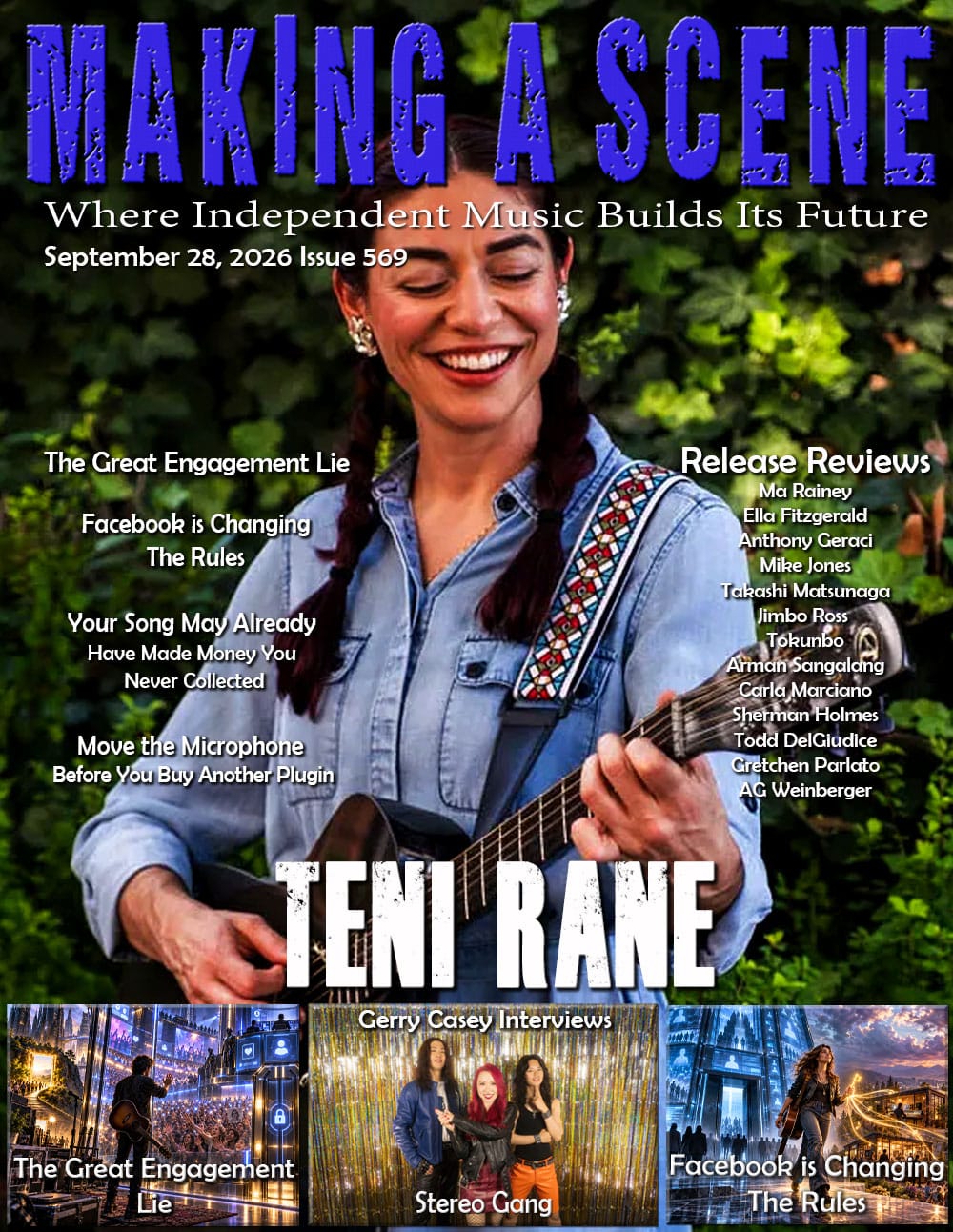

What the Hell Is an AI Agent and How can you Use it for your Music Business





Making a Scene Presents – What the Hell Is an AI Agent and How can you Use it for your Music Business
Listen to the Podcast Discussion and gain more insight into AI Agents
Let’s strip the mystery away right now. An AI Agent is not a robot. It’s not a sci-fi brain. It’s not some Silicon Valley thing meant for billion-dollar companies. An AI Agent is simply a digital helper that can think through tasks, make decisions, and take action for you, without you babysitting every step.
Think of it like this. A normal AI tool answers one question at a time. You ask, it responds, then it stops. An AI Agent keeps going. It remembers the goal, checks the rules, looks at the context, and works step by step until the job is done. It can plan, execute, check its own work, and adjust if something goes wrong.
For an indie musician, this changes everything. You are no longer doing things one task at a time. You are building systems. Systems that work while you write songs, rehearse, sleep, or tour. And here’s the part the music industry doesn’t talk about. Labels already use systems like this. They just don’t want you to know how accessible it’s become.
The Difference Between “Using AI” and “Owning an AI Agent”
Most artists today treat AI like a vending machine. You drop in a question, you get a snack-sized answer, and that’s the end of it. You ask for a caption. You ask for a press release. You ask for a playlist pitch. The output might be useful, but nothing really changes. You still have to decide what matters. You still have to organize everything. You still have to remember what you already did, what comes next, and what you forgot last time. AI helps, but only in short bursts.
That’s where most people get stuck. They think that’s all AI can do.
An AI Agent works in a completely different way. Instead of asking for one-off favors, you give the AI a job. You give it responsibility. You tell it who it is supposed to be and what success looks like. Once it understands its role, it stops acting like a vending machine and starts acting like a worker.
So instead of saying “write me a social post,” you say “you are my social media manager for this release.” That one shift changes everything. Now the AI isn’t just writing words. It’s thinking about timing, tone, audience, consistency, and momentum. It understands that this post connects to the last one and sets up the next one.
Instead of saying “help me market my song,” you say “build and run a 30-day campaign for this track using my voice, my genre, my audience, and my goals.” Now the AI is planning ahead. It’s mapping ideas. It’s checking what worked before. It’s adjusting instead of starting from scratch every time.
At that point, the AI isn’t just responding to you. It’s working for you.
This is where burnout starts to disappear for indie artists. You stop carrying every detail in your head. You stop reinventing the wheel for every release. You stop feeling like you’re failing just because you can’t keep up with nonstop promotion. You’re still in control. You still make the final calls. But you’re no longer doing everything manually, one task at a time. You’re running your music career like a real business, with systems that support you, not systems that turn you into a corporate clone.
That’s the real upgrade. Not more content. Not more hustle. Better structure that lets you stay human while still moving forward.
How AI Agents Actually Work Behind the Scenes
At its core, an AI Agent is built from a few simple ideas that work together like parts of a small team. When you understand these parts, the whole thing stops feeling technical and starts feeling practical.
The first part is the role. The role answers one basic question: what is this agent responsible for? You are not asking the AI to do everything. You are asking it to do one job well. That job could be acting like a manager who keeps releases on track, a producer who helps shape songs, a songwriter who helps develop ideas, a marketer who runs campaigns, a tour planner who looks at cities and timing, or a business advisor who helps you think long-term. The role gives the agent focus. Without a role, the AI drifts and gives you random, unfocused answers. With a role, it knows why it exists and what decisions it should care about.
The second part is the rules. This is where most artists accidentally give their power away if they skip it. Rules define how the agent behaves while doing its job. This includes your tone and language so it sounds like you, not like a corporate press release. It includes your ethics so it doesn’t push spammy tactics or things you don’t believe in. It includes budget limits so it doesn’t suggest ideas you can’t afford. It includes your genre, your audience, and the kind of career you actually want. This is where you lock in your artistic identity. The rules are what keep the agent aligned with you instead of slowly turning you into something generic.
The third part is memory, and this is where things really level up. Memory allows the agent to remember what you’ve already done and learned. It remembers past releases so it doesn’t repeat the same mistakes. It remembers lyrics and themes so it doesn’t suggest ideas that don’t fit your voice. It remembers fan feedback so it knows what people actually respond to. It remembers your long-term goals so it doesn’t optimize for short-term noise. This is how the AI stops giving you bland, surface-level advice and starts giving you guidance that actually feels personal and relevant.
The fourth part is tools, which are what let the agent take action instead of just talking. Tools can include writing systems, image generators, audio analysis software, scheduling platforms, analytics dashboards, and email or messaging systems. The agent doesn’t replace these tools. It coordinates them. It decides when to use them, why to use them, and how they fit into the bigger plan you’ve set.
When these four parts work together, the AI Agent stops feeling like a chatbot and starts feeling like a digital team member. It understands its job. It respects your boundaries. It remembers your history. It knows how to get things done. It’s not perfect. It’s not magic. But it is consistent, tireless, and available whenever you need it. And for an indie artist trying to do everything alone, that kind of support is not a luxury. It’s leverage.
Using AI Agents to Create Music Without Killing Your Soul
This is the moment where a lot of artists tense up. They hear the word “AI” and their brain jumps straight to replacement. Robots writing songs. Fake art. Soulless music. That fear makes sense, but it’s built on the wrong idea. An AI Agent is not here to replace your creativity. It’s here to get obstacles out of your way.
Think about how much creative energy gets wasted before you even write a good line. Second-guessing. Getting stuck on a verse. Losing momentum because you can’t find the right word or the right turn in the song. That’s friction. An AI Agent’s job is to smooth that out so your ideas can move faster.
Imagine a songwriting agent that actually knows you. It understands your genre, your tone, your emotional range, and the themes you keep coming back to. It knows what you’ve already released so it doesn’t push you toward something that feels fake or recycled. You can talk through ideas like you would with a bandmate. You can paste in half-finished verses without apologizing for them being messy. You can ask “what if this chorus turned darker” or “does this bridge earn the payoff.”
The agent doesn’t take over. It responds. It suggests. It explores options with you. It might offer rhyme paths you didn’t think of, point out emotional arcs you’re already hinting at, or suggest an alternate melody phrasing that fits your voice better. You are still the writer. You still choose what stays and what goes. The agent is just the writing partner who never gets tired, never gets impatient, and never tells you to hurry up.
You can do this right now using ChatGPT at https://chat.openai.com. The key is how you talk to it. Instead of treating it like a question box, you define a persistent role. You tell it who it is, what kind of artist you are, what you care about, and how you want help. Once you do that, you’ve created a songwriting agent. No coding. No special software. Just clear direction.
This same idea carries into visual creativity, where consistency is usually the hardest thing for indie artists to maintain. An AI Agent can act as the guardian of your visual world. Album art concepts, single covers, lyric videos, posters, and social visuals can all be guided by one steady creative brain. Instead of reinventing your look every time, the agent remembers your color palette, your mood, your themes, and your visual references.
Tools like Midjourney at https://www.midjourney.com and Leonardo AI at https://leonardo.ai stop being the thing that decides what your art looks like. They become brushes. The agent decides how and when to use them so everything feels connected instead of random.
You define the look. You define the feeling. You define the message. The agent enforces consistency so your audience starts to recognize you instantly. That’s the real power here. AI Agents don’t strip the soul out of music. They protect it by clearing space for you to focus on what actually matters.
Recording and Production Agents That Act Like a Second Set of Ears
Now let’s get real about the studio. Most indie artists today are recording alone. No producer on the couch. No engineer in the control room. No bandmate saying, “Hey, that vocal is a little sharp,” or “The low end is getting muddy.” That freedom is powerful, but it’s also risky. When there’s no feedback loop, small problems slip through. And small problems add up fast.
This is where a production AI Agent earns its keep.
A production agent doesn’t try to be creative for you. It doesn’t decide the vibe. It doesn’t tell you how emotional a vocal should feel. Its job is much more boring, and that’s exactly why it’s valuable. It acts like a second set of ears that never gets tired and never loses objectivity.
Think of it as quality control for your music.
Before a song ever leaves your studio, the agent helps you prep sessions so they’re organized and consistent. It checks basic arrangement balance so nothing is fighting for space. It looks for problem frequencies that cause harshness, mud, or fatigue. It flags issues like clipping, phase problems, or mixes that won’t translate well outside your room. These are the kinds of things that quietly kill great songs once they hit real speakers.
You’re not guessing anymore. You’re verifying.
You can do this by pairing an AI thinking agent with production tools that already exist. Platforms like iZotope using tools such as Ozone and Neutron at https://www.izotope.com are built to analyze mixes and masters from a technical standpoint. They look at loudness, balance, spectral content, and translation across systems. Sonible smart tools at https://www.sonible.com do something similar, learning from your audio and highlighting problem areas that your room or ears might miss.
The AI Agent sits above these tools and makes sense of the results. Instead of just seeing graphs and meters, the agent helps interpret what matters and what doesn’t. It tells you which issues are worth fixing and which ones are just noise. It keeps you from chasing perfection and helps you focus on fixes that actually improve the song.
And here’s the important part. The agent never touches your sound emotionally. It doesn’t tell you to flatten your dynamics or sterilize your mix. It checks the math, the physics, and the translation. It handles the technical red flags so you can stay focused on feel, performance, and intention.
This is the line between a home demo and a professional indie release. Not budget. Not gear. Not even experience. It’s having a reliable way to catch problems before the public does.
You still make every creative decision. You still decide what stays raw and what gets polished. The production AI Agent simply protects you from avoidable mistakes that have nothing to do with art and everything to do with execution.
That’s not cheating. That’s working smart.
Marketing is where most indie artists quietly burn out. Not because their music isn’t good, but because marketing never shuts up. There’s always another post to write, another platform to feed, another idea to come up with, another metric telling you that you should be doing more. It’s relentless, and it pulls attention away from the very thing you’re trying to protect: making music.
This is where AI Agents feel less like technology and more like relief.
A marketing AI Agent is not just a copywriter. It’s not just a scheduler. It’s not just an analytics tool. It’s a system that understands your goal and keeps working toward it without needing constant supervision. Once it knows what you’re trying to achieve, it stops asking you questions every five minutes and starts making informed decisions on your behalf.
You start by giving the agent a clear objective. Maybe you want to grow your email list so you’re not trapped by social algorithms. Maybe you want to sell tickets for a run of local shows. Maybe you want to push a new single without annoying your existing fans. Maybe you want to promote merch tied to a release. Or maybe you want to build awareness in one specific city before you tour there. The goal gives the agent direction.
Then you give it boundaries, and this is where artists stay in control. You define your tone so it sounds like you and not a brand intern. You set budget limits so it doesn’t suggest paid tactics you can’t afford. You define how often you want to post so you don’t feel like you’re spamming people. You tell it which platforms you actually enjoy and which ones you’d rather avoid. These boundaries keep the agent aligned with your values instead of chasing empty numbers.
Once that framework is in place, the agent goes to work. It plans campaigns instead of random posts. It adapts messaging so the same idea fits different platforms without feeling copy-pasted. It schedules content so you’re not scrambling day to day. It watches performance over time and adjusts instead of repeating the same mistakes. Most importantly, it does all of this without you hovering over it.
Tools like Buffer at https://buffer.com or Metricool at https://metricool.com become execution arms, not decision-makers. The agent decides what needs to happen and when. These platforms simply carry out the plan. That separation matters because it keeps strategy and execution from turning into chaos.
The result is subtle but powerful. Your marketing becomes consistent instead of frantic. Your messaging starts to feel intentional instead of reactive. You stop disappearing for weeks and then panicking when a release is around the corner. The machine keeps running even when you’re rehearsing, recording, driving to gigs, or taking a day off.
This is how a single indie artist competes with a label-sized team. Not by shouting louder. Not by posting more. But by building a system that works quietly in the background while you stay focused on the music.
You’re not selling your soul to automation. You’re reclaiming your time. And in a business designed to exhaust creators, that might be the most rebellious move of all.
Building Your First AI Agent Without Knowing Any Code
Here’s the truth that gets buried under hype and jargon. You do not need to be technical to build an AI Agent. You don’t need software engineers, custom apps, or a startup-sized budget. You don’t need to “learn AI.” What you actually need is clarity. Clarity about what you want help with and how you want that help to behave.
An AI Agent begins with instructions, not code.
Inside tools like ChatGPT at https://chat.openai.com, you create what’s called a persistent or long-term prompt. Don’t let that phrase scare you. All it means is that you write a clear set of instructions that stays in place while you work. This prompt defines who the agent is, what it’s responsible for, how it should sound, and what success looks like. You are essentially onboarding a digital assistant the same way you would onboard a human one.
You tell it its role. You tell it what decisions it is allowed to make and which ones belong to you. You explain your genre, your audience, your values, your goals, and your limits. The more context you give it up front, the less generic its output becomes. This is why two artists can use the same AI tool and get wildly different results. One gives shallow instructions. The other builds an agent.
At first, the agent won’t be perfect. That’s normal. Just like a real assistant, it learns through feedback. When it misses the mark, you correct it. When it gets something right, you reinforce it. When you change direction, you tell it why. Over time, this feedback becomes memory. The agent starts to understand patterns. It stops repeating mistakes. It adapts to how you actually work instead of forcing you into a template.
This is the step most people skip. They try AI once, get a mediocre result, and decide it’s overhyped. In reality, they never built an agent. They just asked a stranger for directions and walked away.
Once you’re comfortable with a thinking agent, you can take things further by letting it act. This is where automation platforms come in. Tools like Zapier at https://zapier.com or Make at https://www.make.com allow your AI Agent to trigger real-world actions without you touching anything. An idea becomes a scheduled post. A release note becomes an email. A folder fills itself with organized assets. Performance reports get generated and summarized automatically.
The agent doesn’t replace these platforms. It directs them. Zapier or Make are the hands. The AI Agent is the brain deciding when and why those hands move.
This is the moment where things quietly shift for indie artists. You stop reacting to your career and start designing it. You stop doing everything manually and start building systems that compound over time. You’re no longer competing on hustle. You’re competing on structure.
And that’s what makes this dangerous in the best possible way. Not loud. Not flashy. Just smart, steady leverage working in the background while you focus on the music.
The Real Power Shift No One Is Talking About
AI Agents don’t make you less human. They make you less exploited. That’s the part nobody puts in a headline.
For years, independent musicians were told that freedom meant doing everything themselves. Post more. Hustle harder. Learn every platform. Chase every trend. Stay visible at all costs. What that really meant was unpaid labor in service of systems you don’t control. Algorithms you can’t see. Gatekeepers who never explain the rules.
AI flips that equation.
When you use AI Agents the right way, you stop donating your time to machines that don’t care about your art. You stop guessing what works and start building systems that learn. You stop feeding algorithms and start feeding your own momentum. That’s not automation for the sake of speed. That’s automation for the sake of survival.
The biggest players in the music industry have always run on systems. Teams. Processes. Data. Feedback loops. That’s how they scale without burning out. The only real difference now is that those same capabilities are no longer locked behind corporate doors. Indie artists finally have access to the same leverage, without giving up ownership or control.
This is the quiet shift happening beneath the noise.
AI Agents let you spend more time on the parts of music that actually matter. Writing songs that say something. Recording performances that feel real. Connecting with fans in ways that don’t feel forced. Building a career that grows instead of resets every release. The busywork doesn’t disappear, but it stops owning you.
And let’s be clear about something uncomfortable. The question isn’t whether AI belongs in music. That argument is already over. AI is here. It’s being used by labels, platforms, and marketers whether artists like it or not.
The real question is who controls it.
You can use AI Agents to reinforce your independence, protect your creative energy, and build systems that work for you. Or you can ignore them and let someone else use those same tools to outpace you, out-market you, or eventually replace your role in the process.
That’s not fear. That’s reality.
The future of the music industry will belong to artists who understand leverage. Artists who build infrastructure instead of waiting for validation. Artists who use AI not to become louder, but to become more durable.
That choice is still yours.
Example Prompts you can use to start creating your own agents
Below are example prompts an indie artist can actually use to create real, working AI Agents for each part of their business plan. These are not magic spells. Think of them like onboarding documents. You paste these into ChatGPT at https://chat.openai.com and then keep refining them over time as the agent learns how you work.
I’m writing these in plain language on purpose. That’s the point. You don’t need to sound technical. You need to be clear.
Creation and Songwriting Agent Prompt
“You are my songwriting and creative development partner. I am an independent musician working in the [genre] space. My music focuses on [themes, emotions, stories]. Your job is to help me develop song ideas, lyrics, melodies, and arrangements without writing songs for me. Ask thoughtful questions when ideas are unclear. Help me explore rhyme options, emotional arcs, and alternate sections like bridges or pre-choruses. Always protect my voice and avoid generic clichés. If something feels off-brand, tell me why and suggest adjustments. Your goal is to help me finish better songs, not faster songs.”
This agent becomes your thinking partner. Over time, you paste in lyrics, demos, and notes so it learns your patterns and stops sounding generic.
Production and Recording Quality Control Agent Prompt
“You are my production and recording quality control advisor. I record and produce my own music in a home studio. Your job is to help me prepare sessions, think through arrangements, and check for technical issues before release. You do not make creative decisions. You help me identify potential problems like balance, frequency conflicts, arrangement clutter, and mix translation risks. When I describe a mix or paste in analysis results from tools, help me interpret what matters and what doesn’t. Your goal is to help my releases sound professional and intentional.”
This agent works alongside tools like iZotope or Sonible. It doesn’t replace your ears. It backs them up.
Visual Branding and Aesthetic Agent Prompt
“You are my visual brand guardian. My music has a consistent aesthetic that should carry across album art, singles, posters, lyric videos, and social visuals. My visual style can be described as [colors, moods, references]. Your job is to maintain consistency, suggest visual concepts that align with my music, and help guide image generation tools without letting them drift off-brand. When I share visuals or ideas, evaluate whether they fit my established look and explain why or why not. Your goal is instant recognition and long-term visual identity.”
This agent becomes the glue that holds your visual world together.
Marketing and Fan Engagement Agent Prompt
“You are my marketing and fan engagement manager. I am an independent artist focused on sustainable growth, not viral hype. My goals include [email growth, ticket sales, single promotion, merch]. My tone is [describe tone], and I do not want spammy or manipulative tactics. Your job is to plan campaigns, adapt messaging for different platforms, and help me stay consistent without burnout. Track what works over time and adjust strategy. Always respect my boundaries around budget, posting frequency, and platforms I prefer or avoid.”
This agent thinks in campaigns, not random posts.
Release Planning and Project Management Agent Prompt
“You are my release planning and project management assistant. Your job is to help me plan releases from start to finish, including timelines, asset preparation, promotion phases, and follow-up. Help me break large goals into manageable steps and identify risks before deadlines hit. Track what worked on past releases and help me improve each cycle. You do not rush decisions. You help me stay organized, realistic, and consistent.”
This agent replaces chaos with structure.
Touring and Local Market Strategy Agent Prompt
“You are my touring and local market strategy advisor. I want to grow sustainably in reveals markets rather than chase random shows. Help me think through where to play, how to promote locally, and how to align shows with releases and fan activity. When I share data, feedback, or ideas, help me spot patterns and opportunities. Your goal is smarter touring, not more touring.”
This agent helps you stop guessing and start planning.
Business and Long-Term Strategy Agent Prompt
“You are my independent music business advisor. Your role is to help me think long-term about sustainability, income streams, and growth. I value independence, ownership, and creative control. Help me evaluate ideas, avoid short-term traps, and build systems that compound over time. When I’m emotionally attached to an idea, help me slow down and think clearly. Your goal is durability, not hype.”
This agent becomes your calm voice when emotions and pressure spike.
How to Use These Prompts the Right Way
You don’t create all of these agents in one afternoon. You start with one. You use it. You correct it. You add context. Over time, it gets sharper. Smarter. More useful.
That’s how real AI Agents are built.
Not by being technical.
Not by chasing tools.
But by being intentional.
This is how indie artists stop feeling behind and start building leverage.
 |  Spotify |  Deezer |  Breaker |
 Pocket Cast |  Radio Public |  Stitcher |  TuneIn |
 IHeart Radio |  Mixcloud |  PlayerFM |  Amazon |
 Jiosaavn |  Gaana |  Vurbl |  Audius |
 Reason.Fm | |||
Find our Podcasts on these outlets
Subscribe to Our Newsletter
Discover more from Making A Scene!
Subscribe to get the latest posts sent to your email.


