
Why Streams Don’t Build Careers (And What Actually Does)





Making a Scene Presents – Why Streams Don’t Build Careers (And What Actually Does)
Listen to the Podcast Discussion to gain more insight into Why Streams Don’t Build Careeers!
For a long time, streaming has felt like the finish line.
You upload your music. You watch the numbers climb. You refresh your stats like they’re a scoreboard. You cross your fingers that the algorithm notices you, blesses you, and turns your song into a “moment.”
And then you wait.
You wait for the playlist add.
You wait for the follower spike.
You wait for the message that says, “We found you.”
You wait for something to finally click.
But when it doesn’t happen, the story quietly flips. Instead of questioning the system, artists are trained to question themselves.
Maybe you didn’t promote hard enough.
Maybe you didn’t post enough.
Maybe you didn’t run enough ads.
Maybe you didn’t “understand the algorithm.”
It’s a convenient narrative, because it keeps the pressure on you while the platform stays off the hook.
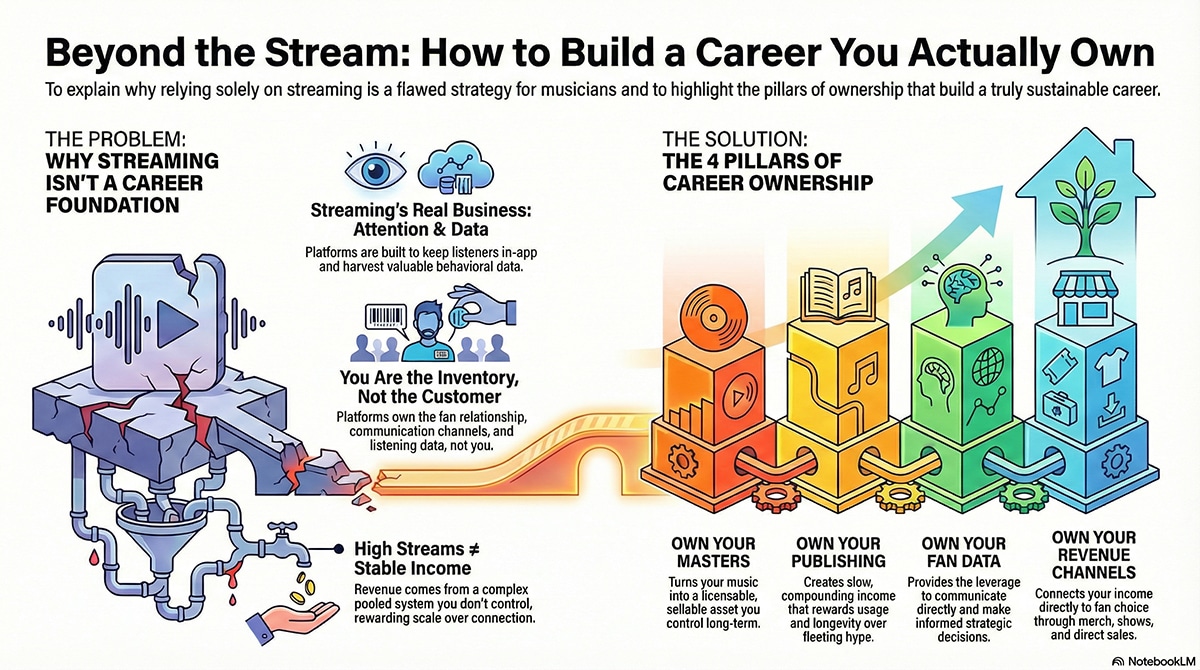
Here’s the uncomfortable truth most indie artists never hear clearly, and almost nobody in the industry says out loud: streaming was never designed to build careers for independent musicians. It was designed to scale listening, not livelihoods.
Streaming platforms are incredibly good at getting music in front of people. They’re incredible at turning your song into background sound for workouts, commutes, dishes, and late-night scrolling. They’re built to keep listeners inside the app as long as possible.
But here’s the part artists don’t think about enough: they’re also in the business of collecting data — and not just general data, but YOUR data on YOUR listeners.
They track what people play, what they skip, what they save, what time of day they listen, what else they listen to, where they are, what devices they use, and how their habits change over time. That behavioral data is valuable, because it helps platforms sell subscriptions, sell ads, refine recommendations, and strengthen their own market power.
And the key detail is this: that data doesn’t come back to you in a form you can actually use. You might get a pretty dashboard and a few high-level insights, but you don’t get the actual relationship. You don’t get the names, the contact info, or the direct line that turns listeners into supporters.
So yes, streaming is built to distribute music. But it’s also built to capture attention and harvest behavioral patterns. That is the business model. Your songs help power it, and your listeners help feed it.
Helping you build a stable, predictable, artist-owned career? That’s not the primary goal. It never was.
And that doesn’t mean streaming is useless. It means it’s incomplete.
Streaming can be discovery. It can be proof you exist. It can be a public portfolio that makes it easy for new people to hear you. It can even be one part of your income. But it’s not a complete foundation, because it doesn’t give you the three things a real career requires: control, access, and ownership.
So if you build your entire future on an incomplete system, you end up doing what millions of artists are doing right now: working harder every year for less control, less income, and less certainty.
More releases. More content. More “consistency.”
And still… the floor doesn’t get more stable.
This isn’t about hating streaming. It’s not about pretending it has no value. It’s about understanding what streaming can do, what it cannot do, and why an artist who wants longevity has to build a second layer underneath it.
Because a career that lasts longer than the next playlist cycle isn’t built on plays. It’s built on ownership. It’s built on direct relationships. It’s built on systems you control — not systems you rent.
So yeah, let’s slow-walk this.
Because this myth didn’t form overnight. It was sold over years, repeated by the entire music culture, and baked into how artists measure “success.”
And dismantling it properly matters.
The Promise Streaming Made (And Quietly Broke)
When streaming first took over, it genuinely felt like liberation.
No more gatekeepers deciding who was “marketable.”
No more begging labels for attention.
No more pressing CDs, stuffing envelopes, or hoping a distributor would even return your email.
You could upload your music from a bedroom, a basement, or a borrowed laptop, and instantly it was available everywhere. In theory, the world could hear you. That shift mattered. It broke a lot of old power structures, and for a moment, it felt like the playing field had finally leveled.
Streaming platforms presented themselves as neutral pipes in this new world. They weren’t labels. They weren’t managers. They didn’t “own” your music. They just hosted it and delivered it to listeners. Simple. Fair. Democratic.
At least, that was the story.
What never got said out loud is that distribution without ownership of the audience quietly flips the power dynamic in a different direction. You may own the recording, but you don’t own the relationship that actually creates value. Streaming platforms don’t really sell your music. They sell access to their users. Your songs live inside someone else’s ecosystem, governed by someone else’s rules, surfaced by someone else’s priorities. You are not the customer. You are the inventory.
The fan relationship belongs to the platform.
The listening data belongs to the platform.
The communication channel belongs to the platform.
The leverage belongs to the platform.
You are allowed to participate, but not to control.
So when your music is played, you don’t get paid because a fan chose to support you. You get paid after the fact, if enough listening happens, under terms you didn’t negotiate, using formulas you didn’t design, inside a system that can change tomorrow without asking your permission.
That distinction matters more than most artists realize.
Because a real career isn’t built on permission. It’s built on stability, predictability, and ownership. It’s built on knowing who supports you, being able to reach them, and deciding how your work creates value over time. Streaming doesn’t give you that foundation. It gives you access — temporarily.
And access without control isn’t a career foundation. It’s a rental agreement.
Why High Stream Counts Still Don’t Equal Income
This is usually the point where artists start getting defensive — and honestly, that reaction makes total sense.
Streams feel tangible. Numbers feel solid. They look like evidence. When you open your dashboard and see thousands, or even millions, of plays, it feels like momentum. It feels like something is finally working. It feels like you’re getting closer.
And culturally, we’ve been trained to read those numbers as success. Higher numbers mean you’re “winning.” Lower numbers mean you’re “failing.” So when someone questions the value of streams, it can feel personal, like they’re questioning your progress or your talent.
But here’s the part that’s hard to accept at first: momentum without ownership evaporates quickly.
Most streaming revenue lives inside a pooled system. Your song doesn’t earn money because a specific listener made a conscious choice to support you. It earns money because it captured tiny fractions of attention inside a massive, centralized machine. All the money goes into the pot first, and then it’s divided based on rules you don’t control.
Your payout depends on total platform activity, geographic territories, subscription tiers, advertising mixes, and licensing deals negotiated far above your pay grade — often between corporations that have nothing to do with your actual audience.
Even when a song performs “well,” you’re still competing inside a system designed for scale, not sustainability. The model rewards constant output, massive catalogs, major-label leverage, and behavior that plays nicely with algorithms. What it does not reward is depth of connection, loyalty, or long-term artist development.
That’s why the math feels so backwards.
You see artists with millions of streams who can’t cover rent, tour expenses, or healthcare. At the same time, you see artists with much smaller audiences who survive — sometimes comfortably — because their income isn’t tied to abstract attention metrics. It’s tied to direct support, ownership, and repeat relationships.
The difference isn’t popularity.
It isn’t talent.
It isn’t hustle.
It’s structure.
And once you see that clearly, the conversation stops being emotional and starts being strategic.
The Career Gap Streaming Can’t Fill
A real career needs things that don’t show up in a streaming dashboard.
It needs predictability. It needs income streams you can actually plan around instead of hoping this month’s numbers look like last month’s. It needs systems that work quietly in the background and don’t fall apart every time an algorithm gets tweaked, a playlist editor changes direction, or a platform decides to prioritize something new.
That’s the part streaming can’t solve.
Streaming offers exposure, and exposure can be useful. But exposure is not a business model. Exposure doesn’t pay rent. Exposure doesn’t cover tour costs. Exposure doesn’t give you leverage when it’s time to make decisions about your future.
The problem isn’t that streaming exists. The problem is what it doesn’t give you — consistently, reliably, or at scale.
Streaming doesn’t give you direct access to your fans. You can’t easily reach them on your own terms. You can’t pull up a list of the people who love your music most and speak to them directly when it matters. Communication always happens through someone else’s system, filtered by rules you didn’t set.
Streaming also doesn’t tell you who your listeners are in a way that’s actually usable. You might see cities, age ranges, or vague demographic trends, but you don’t know names, preferences, or intent. You don’t know who would show up if you announced a show tomorrow, or who would buy something if you offered it.
It doesn’t let you communicate freely with supporters. You can’t email them. You can’t text them. You can’t build a conversation that exists outside the platform’s walls. Every interaction is temporary and conditional.
It doesn’t let you negotiate terms individually. You can’t decide how your music is valued, how it’s packaged, or how it’s offered to different types of supporters. Everyone gets the same access, under the same rules, for the same tiny slice of revenue.
And most importantly, streaming doesn’t compound value over time. Yesterday’s streams don’t make tomorrow easier. You don’t build equity. You don’t build leverage. You don’t build a base that grows stronger just because you showed up consistently.
What streaming does give you is reach.
But it’s a very specific kind of reach. It’s shallow. It’s fleeting. And it’s replaceable. One swipe, one autoplay decision, one algorithmic shift, and attention moves on.
And reach without relationship is fragile.
Careers aren’t fragile. They’re built to last.
The Difference Between Fans and Listeners
This distinction matters more than almost anything else in modern music, even though it’s rarely talked about clearly. There is a huge difference between a listener and a fan.
A listener is passive. They press play because the platform suggested it, autoplayed it after another song, dropped it into a playlist, or slid it into the background of whatever they were already doing. They might enjoy what they hear, but the choice wasn’t intentional. The relationship is thin, momentary, and easy to replace.
A fan is active. They choose you. They recognize your name. They click on your song on purpose. They follow what you’re doing, show up when you release something, and care enough to give you their most valuable resources: time, attention, and money. Fans don’t just consume. They participate.
Streaming platforms blur this distinction because, inside a dashboard, both look exactly the same. A play is a play. A monthly listener is a monthly listener. The system treats them as equal units of value, even though they are not equal in any meaningful way.
Economically, they live in completely different worlds. A listener generates fractions of a cent, once, and often never again. There is no memory in the system. No accumulation. No compounding effect.
A fan generates lifetime value. They come back. They buy more than once. They tell other people. They support tours, merch, special releases, and long-term projects. Over time, that relationship deepens instead of disappearing.
And that’s the part most artists are never taught to optimize for. Careers aren’t built on momentary attention. They’re built on accumulated trust. Careers are built on lifetime value.
What Actually Builds Careers: Ownership
If streaming is the top of the funnel, then ownership is the foundation underneath everything else.
Funnels are about movement. Foundations are about stability. Confusing the two is where a lot of artists get stuck. They keep pouring more music, more content, and more energy into the top, hoping it will eventually create something solid below. But without ownership, there’s nothing for that momentum to land on.
Ownership isn’t a buzzword. It isn’t a motivational slogan or an abstract principle. It’s practical, boring, powerful infrastructure. It’s the unglamorous stuff that doesn’t trend on social media but quietly determines who survives and who burns out.
When you look at independent artists who’ve built sustainable careers — not viral moments, not one good year, but real longevity — the same pillars show up again and again.
First is ownership of masters. When you own your recordings, your music becomes an asset instead of disposable content. It can be licensed, bundled, re-released, sold directly, or used strategically over time. You’re not just chasing the next play. You’re building a catalog that works for you long after the release cycle ends.
Second is ownership of publishing. Publishing income is slow, unflashy, and often misunderstood, which is exactly why it’s so important. It rewards usage over hype and consistency over spikes. Artists who control their publishing aren’t relying on attention alone; they’re participating in a system designed to pay for the long term.
Third is ownership of fan data. This is where real leverage begins. Knowing who your supporters are, where they are, and how they engage with you turns guesswork into strategy. It allows you to communicate directly, make informed decisions, and build relationships that don’t disappear when a platform changes its rules.
Fourth is ownership of direct revenue channels. Shows, merch, direct sales, memberships, subscriptions — these are the places where money flows intentionally from fan to artist. There’s no translation layer. No algorithm deciding who sees what. No delay between support and impact.
Streaming doesn’t eliminate the need for any of these things. It just distracts from them. Because it’s easier to watch numbers go up than it is to build infrastructure. And infrastructure is what actually turns music into a career.
Master Ownership: The Asset You Can License, Sell, and Leverage
When you own your masters, your music stops behaving like a paycheck substitute and starts behaving like an asset.
A paycheck only exists in the moment. You work, you get paid, and then it’s over. If you stop working, the money stops. That’s how streaming conditions a lot of artists to think — release more, post more, stay visible, or income disappears.
An asset works differently.
Assets can be licensed.
Assets can be bundled.
Assets can be repurposed.
Assets can generate revenue without you constantly creating something new.
Streaming treats songs like disposable content. Once the release cycle fades, the value drops unless you keep feeding the machine. Ownership treats songs like property — something you control, protect, and deploy strategically over time.
That difference is everything.
When you own your masters, doors open that simply don’t exist otherwise. You can pursue sync licensing without layers of permission. You can sell music directly to fans instead of routing everything through a platform. You can create limited releases, deluxe editions, or fan-only bundles that reward your most committed supporters. You can build long-tail income streams that continue working long after the social buzz has moved on.
Just as important, master ownership gives you negotiating power. If a label, publisher, brand, or distributor shows up later, you’re not starting the conversation from a position of desperation. You have something of value to bring to the table, and you get to decide the terms under which it’s used.
Without master ownership, every other conversation is constrained.
Your options shrink. Your leverage disappears. Your future depends on agreements made early, often cheaply, and usually under pressure.
Owning your masters doesn’t guarantee success. But not owning them almost guarantees limits.
Publishing: The Revenue Stream Most Artists Leave on the Table
Publishing income is slow, unsexy, and incredibly important — which is exactly why so many artists overlook it.
Performance royalties, mechanicals, and publishing splits from sync placements don’t show up in your streaming dashboard. There’s no dopamine hit. No real-time graph. No instant feedback loop. And because it’s mostly invisible, artists tend to underestimate both its value and its role in building a real career.
But publishing rewards something very different than streaming does.
It rewards usage, not hype. It pays when your music is used — performed, broadcast, synced, reproduced — regardless of whether you’re trending this week or posting every day. It doesn’t care how good your engagement rate looks or how often you show up on camera. It just keeps working.
Publishing income compounds quietly over time. A song written years ago can still generate money today. A catalog grows stronger with age instead of being reset every release cycle. The work you do now doesn’t disappear when attention moves on.
That’s why publishing functions more like a pension than a paycheck.
Artists who treat publishing as paperwork — something to file, forget, or outsource without understanding — usually stay trapped in exposure mode. They’re always chasing the next release, the next spike, the next moment of relevance, because nothing underneath is building.
Artists who treat publishing as infrastructure think differently. They register songs properly. They understand splits. They protect their rights. They view songwriting not just as expression, but as long-term value creation.
And that shift builds stability.
It doesn’t look flashy from the outside. But it’s one of the quiet reasons some artists last while others burn out.
Fan Data: The Leverage Streaming Never Gives You
This is where the real shift happens.
Streaming platforms give you aggregated insights, not relationships. You might know that a certain city “performs well.” You might see spikes in a region or notice that one song connects more than another. But you don’t know who those people are. You don’t know how to reach them directly. You don’t know what they’ve supported before or what they’d be willing to support next.
You’re looking at patterns without people attached.
Fan data changes that completely.
When you start collecting and owning fan data, everything becomes more concrete. Email lists. SMS lists. CRM systems. Purchase histories. Location-based insights. Engagement patterns over time. These aren’t just marketing tools — they’re visibility tools. They let you see who’s actually with you.
This kind of data turns guessing into decision-making.
Instead of asking, “Will anyone come if I book a show here?” you can see who lives there. Instead of wondering whether merch will sell, you can see who has bought before. Instead of blasting announcements into the void, you can speak directly to the people who’ve already raised their hand.
And this is where AI starts to matter in a very real, practical way.
AI doesn’t replace the relationship. It helps you understand it. It can surface patterns you’d never notice on your own, identify your most engaged supporters, predict which fans are likely to buy tickets or merch, and help you communicate more clearly without drowning in spreadsheets.
For independent artists, AI becomes the missing operational layer. It does the kind of analysis labels used to handle, but without taking ownership away from you.
That’s when fan relationships stop being abstract and start becoming something you can actually build a career on.
How AI Turns Audiences Into Understandable Humans
AI isn’t here to replace artists. It’s here to replace chaos.
Independent artists aren’t overwhelmed because they lack talent or work ethic. They’re overwhelmed because they’re being asked to do everything without the infrastructure labels used to provide. Marketing, analytics, fan communication, planning, forecasting, follow-up — all of it lands on one person, usually with no training and no time.
AI fills that gap, not creatively, but operationally.
These tools help artists make sense of the mess. They can analyze fan behavior across platforms, identify high-value supporters, segment audiences based on real actions, predict purchasing patterns, and personalize communication without turning the artist into a full-time data analyst. Instead of staring at spreadsheets or guessing what might work, decisions become clearer and calmer.
The real power is that AI lets artists stop treating everyone the same.
You can see who actually shows up.
You can see who buys repeatedly.
You can see who shares your work and brings others with them.
You can see who’s drifting away — and why.
And once you can see that, you can respond intentionally instead of reactively. You can reward loyalty, re-engage quietly, or focus energy where it actually returns value.
That’s not marketing hype. That’s relationship management at scale.
And relationships are the only thing that outlast platforms, trends, and algorithms.
Direct Revenue: Where Careers Actually Get Paid
Every sustainable artist career eventually circles back to direct revenue. It always does, no matter how modern the tools or how digital the path looks on the surface.
Live shows. Merch. Direct music sales. Memberships. Fan subscriptions. Crowdfunding. Licensing. These aren’t old ideas — they’re durable ones. They’ve survived every format shift because they’re built on something streaming removes from the equation: choice.
Direct revenue works because it is voluntary. A fan decides, consciously, to support you. They buy a ticket because they want to be in the room. They grab merch because it means something to them. They purchase music directly because they value the work. They join a membership or subscription because they want to stay connected. That choice matters.
When money moves this way, it moves cleanly. It flows directly from fan to artist. There’s no translation layer deciding how much attention is “worth.” There’s no delay between support and impact. You feel it immediately, and so does your career. Feedback is fast, honest, and actionable.
Streaming hides this reality by abstracting payment away from choice. Fans don’t decide to pay you. They decide to pay the platform. After that, your value is calculated by formulas, averages, territories, and licensing agreements you’ll never see. Support becomes indirect, diluted, and disconnected from intention.
That separation changes how artists think about their work. It trains them to chase numbers instead of relationships, scale instead of sustainability, exposure instead of income.
Direct revenue restores agency.
It puts decisions back in your hands. It lets you design how your music is offered, how your fans are rewarded, and how your career grows over time. It reconnects value to trust, not algorithms.
And that reconnection is where real careers are built.
Why the Music Industry Middle Class Matters
Not every artist needs to be a superstar. In fact, most don’t want that at all. What most artists want is much simpler and much more reasonable: a stable, dignified career where music pays the bills, supports a life, and doesn’t require constant panic or burnout to maintain.
That layer is what’s missing in today’s industry.
The modern music economy is shaped like an hourglass. At the top are global stars with massive reach, teams, and leverage. At the bottom are hobbyists making music for passion, expression, or side income. And in between is a huge population of serious, skilled, working artists — the people touring regionally, releasing consistently, building real audiences — trying to survive on systems that were never designed for them.
They’re too big to be amateurs.
They’re not big enough to be protected.
And they’re expected to operate as if luck will eventually save them.
That gap is where careers stall.
The music industry middle class fills that space. It’s not built on virality or overnight success. It’s built on ownership — of masters, publishing, fan data, and revenue channels. It’s built on systems that work whether or not a song trends this week. It’s built on fans who choose to support, not algorithms that might surface you for a moment and move on.
Most importantly, it’s built on planning instead of hoping.
Hoping the playlist hits.
Hoping the algorithm notices.
Hoping the next release changes everything.
Planning looks different. Planning is quieter. It’s less glamorous. But it’s what turns music into a career instead of a gamble.
That difference — between hoping and planning — is the line between surviving and building something that lasts.
Where Web3 Fits (And Why It’s Misunderstood)
Web3 isn’t about hype coins, overnight riches, or speculative nonsense — even though that’s how it’s often portrayed. Strip all of that noise away and what remains is actually very simple: tools that let artists own their digital relationships without intermediaries.
At its core, Web3 is about removing unnecessary middle layers between artists and fans. Instead of every interaction being mediated by a platform that controls access, data, and monetization, blockchain-based tools let those relationships exist in a more direct, portable, and artist-controlled way.
These tools enable transparent ownership records, so it’s always clear who owns what and under what terms. They allow programmable access, meaning artists can decide how fans engage with music, content, and experiences without relying on rigid platform rules. They open the door to direct fan participation, where supporters aren’t just passive consumers but active members of an ecosystem. And they create portable identities that don’t vanish when a platform changes its policies, deprioritizes your content, or shuts down entirely.
In practical terms, this looks less futuristic than people expect.
Smart contracts replace trust with code. Instead of hoping payouts are accurate or agreements are honored, the rules are embedded directly into the system and execute automatically.
Token-gating replaces crude paywalls with access control, allowing artists to offer music, content, tickets, or experiences to specific supporters without giving up control to a third party.
On-chain records replace opaque accounting, creating transparency around ownership, participation, and revenue flows that artists can actually verify.
When used correctly, Web3 doesn’t add complexity to an artist’s life. It removes dependency.
It reduces reliance on platforms whose incentives don’t align with artist sustainability. It minimizes gatekeepers who control access to fans. It shifts power back toward the people creating the value in the first place.
And perhaps most importantly, it changes how fans engage.
Fans don’t just stream. They participate. They collect. They support intentionally. They invest attention and resources in ways that benefit both sides of the relationship, not just the platform sitting in the middle.
That’s not futuristic.
It’s not theoretical.
It’s functional infrastructure for artists who want ownership, longevity, and control in a digital world that’s long overdue for it.
Streaming’s Proper Role (And Why It Still Matters)
None of this means you should abandon streaming.
Streaming still matters. It’s how people discover music now. It’s how someone stumbles onto your song at midnight, saves it to a playlist, and starts paying attention. It’s top-of-funnel visibility. It’s a public portfolio that makes it easy for the world to hear what you do without friction.
That role is valuable.
But streaming is not a home.
A home is something you control. A home is where you decide who gets access, how communication happens, and what the rules are. Streaming platforms don’t offer that. They offer exposure inside boundaries you don’t set.
Careers aren’t built in places where you don’t control the doors.
Streaming should point away from itself. It should lead people somewhere you own — your website, your email list, your fan community, your shows, your direct offerings. It should be the beginning of a relationship, not the container that relationship lives in forever.
When you stop expecting streaming to do the job it was never designed to do, the frustration starts to lift. You stop measuring success by numbers that don’t pay you back. You stop blaming yourself for outcomes you can’t control. You start designing systems that actually support the kind of career you want.
Everything gets clearer when each tool is used for what it’s good at — and nothing more.
The Mindset Shift That Changes Everything
The hardest part of all this isn’t the technology. It’s identity.
For years, artists have been taught — directly and indirectly — that success looks like numbers on a screen controlled by someone else. Plays. Followers. Monthly listeners. Charts. Those metrics became stand-ins for worth, progress, and legitimacy. And when the numbers didn’t move, it felt personal, like failure instead of a system doing exactly what it was designed to do.
That belief runs deep. It shapes how artists talk about themselves, how they plan releases, and how they define whether a year was “good” or “bad.”
The real shift happens when that belief breaks.
A music career is not a popularity contest. It’s an asset-based business built on trust.
Assets are things you own and control. Trust is built slowly, through consistency and honesty. Neither of those depends on being chosen by an algorithm.
Streams don’t build careers because they were never meant to. They were built to measure attention, not to support livelihoods. Careers are built by artists who own what they create, understand who supports them, and design systems that continue working even when attention fades or trends change.
When you stop chasing algorithms and start building infrastructure, everything begins to feel different.
The pressure changes, because your future isn’t tied to one release or one spike.
The timeline changes, because growth becomes cumulative instead of reset every cycle.
The power changes, because decisions move back into your hands.
And for the first time, the future stops feeling like a lottery you keep buying tickets for — and starts feeling like something you can actually build, piece by piece, on your own terms.
 |  Spotify |  Deezer |  Breaker |
 Pocket Cast |  Radio Public |  Stitcher |  TuneIn |
 IHeart Radio |  Mixcloud |  PlayerFM |  Amazon |
 Jiosaavn |  Gaana |  Vurbl |  Audius |
 Reason.Fm | |||
Find our Podcasts on these outlets
Buy Us a Cup of Coffee!
Join the movement in supporting Making a Scene, the premier independent resource for both emerging musicians and the dedicated fans who champion them.
We showcase this vibrant community that celebrates the raw talent and creative spirit driving the music industry forward. From insightful articles and in-depth interviews to exclusive content and insider tips, Making a Scene empowers artists to thrive and fans to discover their next favorite sound.
Together, let’s amplify the voices of independent musicians and forge unforgettable connections through the power of music
Make a one-time donation
Make a monthly donation
Make a yearly donation
Buy us a cup of Coffee!
Or enter a custom amount
Your contribution is appreciated.
Your contribution is appreciated.
Your contribution is appreciated.
DonateDonate monthlyDonate yearlyYou can donate directly through Paypal!
Subscribe to Our Newsletter
Order the New Book From Making a Scene
Breaking Chains – Navigating the Decentralized Music Industry
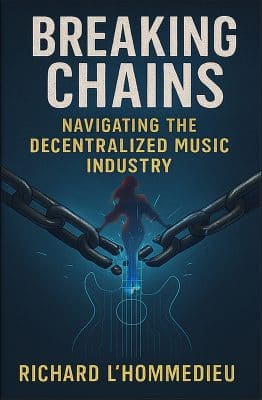
Breaking Chains is a groundbreaking guide for independent musicians ready to take control of their careers in the rapidly evolving world of decentralized music. From blockchain-powered royalties to NFTs, DAOs, and smart contracts, this book breaks down complex Web3 concepts into practical strategies that help artists earn more, connect directly with fans, and retain creative freedom. With real-world examples, platform recommendations, and step-by-step guidance, it empowers musicians to bypass traditional gatekeepers and build sustainable careers on their own terms.
More than just a tech manual, Breaking Chains explores the bigger picture—how decentralization can rebuild the music industry’s middle class, strengthen local economies, and transform fans into stakeholders in an artist’s journey. Whether you’re an emerging musician, a veteran indie artist, or a curious fan of the next music revolution, this book is your roadmap to the future of fair, transparent, and community-driven music.
Get your Limited Edition Signed and Numbered (Only 50 copies Available) Free Shipping Included
Discover more from Making A Scene!
Subscribe to get the latest posts sent to your email.


