Tonalic by Celemony: Intelligent Loops That Actually Listen to Your Music



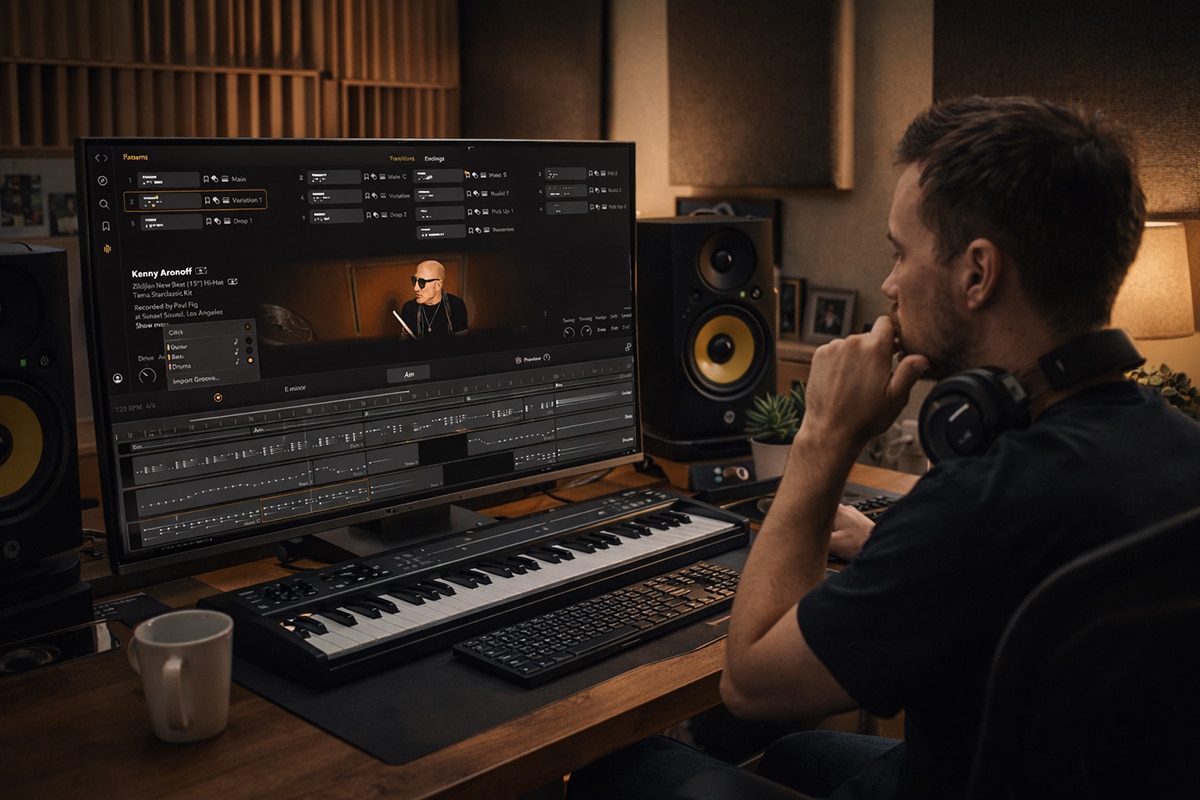
Making a Scene Presents – Tonalic by Celemony: Intelligent Loops That Actually Listen to Your Music
Listen to the Podcast Discussion to Gain More Insight into Tonalic by Celemony
There are two kinds of tools in modern music production. The first kind makes noise faster. The second kind understands music.
Most loop tools fall into the first category. They give you sound, but not context. You drag something in, hope it fits, and then either force your song to work around the loop or spend time chopping it up so it doesn’t feel like a copy-and-paste job. That process can kill momentum fast, especially if you are an independent artist juggling songwriting, production, recording, and release schedules on your own.
Tonalic sits firmly in the second category. It is not a loop library in the traditional sense. It is an AI-assisted musical construction tool that understands harmony, chord movement, variation, and intention. It doesn’t just drop audio into your session. It reacts to what you are doing musically and adapts in real time.
Developed by Celemony, the same company behind Melodyne, Tonalic shares a core philosophy with that legendary pitch tool. Music is not random audio. It has structure, relationships, and meaning. When software respects that, it becomes a collaborator instead of a shortcut.
For independent artists and producers trying to move faster without sounding generic, that distinction matters.
Why Tonalic Exists in the First Place
To understand Tonalic, you have to understand the problem it was built to solve. Traditional loop libraries are static. They are recorded once, in one key, at one tempo, with one harmonic idea baked in. Even MIDI packs, while more flexible, are still pre-written phrases that do not respond to the emotional direction of your song. They give you starting points, but they don’t follow you as your song evolves.
That creates friction. You start writing, hit a wall, dig through folders, audition loops, tweak them, and suddenly your creative flow is gone. What should have taken minutes turns into an hour of technical cleanup. Tonalic flips that model. Instead of giving you finished musical statements, it gives you musical building blocks that are designed to adapt. Chord changes are not a problem to work around. They are the input that drives Tonalic’s behavior.
This is why Tonalic feels less like a loop browser and more like a smart musical assistant that understands where your song wants to go.
The Celemony DNA: Musical Intelligence Over Automation
Celemony has always approached music software differently. Melodyne didn’t succeed because it made pitch correction easy. It succeeded because it treated pitch, timing, and expression as musical elements instead of mistakes to be erased. Tonalic follows that same thinking. Under the hood, it analyzes harmonic context, scale relationships, and musical structure. What comes out is not randomness and not rigid repetition. It is variation that stays inside the musical language of your song.
This is an important distinction for indie artists. AI tools that simply generate content can feel disposable. Tools that understand music help you create work that still feels authored and intentional. Tonalic does not write songs for you. It gives you intelligent material that responds to your decisions.
What Tonalic Actually Is (And What It Is Not)
Tonalic is an AI-powered loop and motif generator built around harmonic awareness. Instead of dropping in fixed audio phrases, it creates musical parts that follow your chord changes, adapt over time, and introduce subtle variations so a track never feels static or mechanical. The music evolves with the song, which keeps arrangements feeling intentional rather than repetitive.
Just as important is what Tonalic is not. It is not a beat generator that spits out finished tracks. It is not a replacement for songwriting. It is not locked to a single genre or electronic-only workflow. And it is definitely not a static sample pack that forces you to bend your ideas around pre-made material.
The most accurate way to think about Tonalic is as a musical sketch engine. It helps you explore ideas quickly, layer harmonic and rhythmic texture under a song, and build arrangements that feel alive instead of looped. You can start with something minimal and let the music grow naturally, responding to the emotional direction of the song rather than dictating it.
Tonalic is also far broader than many artists initially expect. In addition to guitars and rhythmic patterns, it can be used to add orchestral textures, horn sections, drums, and a wide range of other instrumental accompaniments. Because these parts are harmonically aware, they sit naturally within the arrangement instead of feeling pasted on. This makes Tonalic just as useful for cinematic or acoustic music as it is for modern hybrid productions.
For producers, this means access to intelligent musical material that can live underneath vocals, guitars, or synth leads without fighting for attention. The parts adapt to the song, leaving space where it matters and adding movement where it helps. For songwriters, Tonalic removes the friction of starting from silence. Instead of staring at an empty session, you have responsive musical elements that help ideas take shape quickly while still leaving the creative decisions firmly in your hands.
Intelligent Loops Versus Static Loops: Why This Matters
Static loops repeat. Intelligent loops respond. That difference becomes impossible to ignore the moment you start changing chords. With a traditional loop, the music is frozen in place. If your chord progression shifts, the loop either clashes harmonically or quietly forces you to change your song to accommodate it. Instead of supporting your idea, the loop becomes something you have to work around.
Tonalic does the opposite. It listens to your harmonic movement and reshapes itself to stay musically coherent. When your chords change, the musical material adapts. The result feels intentional, like a musician following along rather than a prerecorded phrase being dragged across a timeline.
This is not about adding complexity for its own sake or showing off technical tricks. It is about maintaining creative momentum. When your tools adapt to your ideas, you stay focused on musical decisions instead of technical problem-solving. You are choosing emotional direction, arrangement flow, and song structure rather than fixing clashes, re-editing loops, or second-guessing harmonic choices.
For independent artists working alone, that distinction is critical. Every interruption breaks focus, and every break in focus increases the chances that a song gets abandoned. Tools that respond intelligently help ideas move forward. And in practice, that can be the difference between finishing songs consistently and leaving half-formed ideas sitting on a hard drive.
Using Tonalic Inside Fender Studio Pro 8
This is where Tonalic becomes especially interesting. As of now, Fender Studio Pro 8 is the only DAW that has Tonalic integrated directly via ARA (Audio Random Access). That may sound like a technical detail, but in daily use it fundamentally changes how the tool feels and how quickly you can work.
To understand why this matters, it helps to know what ARA actually is. Traditional plugins operate in isolation. They only “see” audio that passes through them in real time, and anything beyond that usually requires exporting, bouncing, or manual setup. ARA, which stands for Audio Random Access, removes that barrier. It allows a plugin to access audio and musical data from the DAW directly, instantly, and non-destructively.
In practical terms, ARA means Tonalic is not a detached plugin window where you drag files in and hope everything lines up. It lives inside the DAW timeline and understands the full musical context of your session from the start. Tempo, song structure, and most importantly chord information are immediately available without any extra steps. There is no preparation phase where you stop creating just to configure the tool.
Inside Fender Studio Pro 8, this goes even further because Tonalic works directly with the DAW’s chord track. Your chord progression is not just a visual guide on the screen. It is active musical data that Tonalic reads and responds to. When you change chords, adjust voicings, or experiment with progression ideas, Tonalic updates in real time to stay harmonically correct and musically coherent.
The result is that Tonalic feels less like an add-on and more like an extension of the DAW itself. Instead of switching mental modes between “writing music” and “operating software,” everything happens in one continuous flow. You make musical decisions, and the tool responds immediately.
That is why this integration matters far more than it looks on paper. ARA turns Tonalic from a powerful idea into a seamless part of the creative process. For independent artists and producers, that means less friction, fewer interruptions, and more momentum from the first idea to a finished song.
Real-World Fender Studio Pro 8 Workflow Example
Imagine starting a song with nothing more than a simple vocal idea and an acoustic guitar. You record a scratch vocal, lay down a basic chord progression, and listen back. The idea is there, but the track feels thin. This is the exact moment where a lot of artists stall. The song needs shape and movement, but building out an arrangement can suddenly feel like a much bigger job than expected.
This is where Tonalic changes the experience completely when it is integrated via ARA inside Fender Studio Pro. Instead of exporting MIDI, dragging in loops, or guessing what might fit, you can insert Tonalic directly on a track and begin generating harmonic textures that automatically follow your chord progression.
What makes this especially powerful is that Tonalic works directly with the Fender Studio Pro chord track. Your chord changes are not just visual guides. They are active musical instructions. As you edit chords, change voicings, or adjust the progression on the chord track, Tonalic responds instantly. The generated performances reshape themselves in real time to stay harmonically correct and musically natural.
There is no exporting, no bouncing, and no re-syncing. You are not breaking your creative flow to manage files or troubleshoot alignment. Everything happens inside the session, exactly where you are already making decisions.
You can audition variations quickly, hear how different harmonic movements affect the emotion of the song, and make confident choices without overthinking. When something works, you commit it and move forward. When it doesn’t, you move on just as fast.
This is friction removal in a very real, very practical sense. Instead of wrestling with tools, you stay focused on shaping the song. The technology disappears into the workflow, and what remains is momentum. For independent artists trying to finish more music without sacrificing intention, that difference is huge.
The Hidden Value for Fender Studio Pro Users
There is another layer here that many artists completely overlook, and it is one of the most practical advantages in this entire ecosystem. If you are a Fender Studio Pro user, you already have access to Melodyne. That alone is a powerful tool, but the real leverage comes next. When you register Melodyne, you also receive Tonalic Essential as a free download.
That means a significant number of independent artists already own a working entry point into Tonalic’s intelligent, adaptive music system without ever realizing it. No extra purchase. No new subscription required just to explore the concept. It is already sitting there, waiting to be used.
From a Making a Scene perspective, this is exactly the kind of overlooked advantage that separates artists who struggle from artists who build sustainable workflows. Independence is not only about discovering new tools. It is about fully understanding and strategically using the tools you already have access to. When artists miss these connections, they often end up paying for outside production help, session musicians, or additional plugins to solve problems that are already covered in their existing setup.
Used intentionally, this Melodyne-to-Tonalic pathway can replace hours of trial-and-error arrangement work, reduce reliance on expensive studio sessions, and dramatically speed up production without lowering quality. Faster production means more finished songs. More finished songs mean more releases, more opportunities for licensing, more consistent fan engagement, and ultimately more direct revenue flowing back to the artist.
This is how leverage works in a modern independent music career. Not through buying more gear, but through understanding how the pieces you already own can work together to remove friction, protect creative intent, and keep momentum moving forward.
Tonalic Essential Versus the Full Version
Tonalic Essential gives you direct access to the core idea behind Tonalic: musical material that is intelligent, adaptive, and aware of your harmonic structure. Instead of fixed loops that repeat endlessly, Tonalic Essential introduces you to performances that follow your chord changes and evolve with your song. For many artists, this is more than enough to understand how Tonalic fits into a modern songwriting or production workflow and why adaptive music tools feel fundamentally different from traditional loop libraries.
That said, it’s important to understand the limitations of the Essential version so expectations are clear. Tonalic Essential includes access to a single musician, focused on guitar. While that musician is expressive and musically responsive, it represents just one slice of what the broader Tonalic ecosystem offers. Essential is best viewed as an introduction to the concept rather than a complete production toolkit.
The full Tonalic platform expands significantly beyond this starting point and is offered as a subscription with two tiers: Arranger and Studio. The Arranger tier is priced at $14.90 per month, with an annual option at $149. The Studio tier is $24.90 per month, with an annual option at $249. For new users, the first month of the Studio tier is offered at just $1, which makes it easy to explore the full feature set without a large upfront commitment.
At the Arranger level, Tonalic opens up access to real performances by more than 30 world-class musicians playing a wide range of instruments across many genres and styles. These are not synthetic approximations or generic MIDI phrases. They are recorded performances designed to adapt musically to your song. The library continues to grow as new musicians and styles are added over time, and all material is fully royalty-free for commercial release. That matters for independent artists who want to release music, license tracks, or monetize their catalog without worrying about hidden usage restrictions.
The Studio tier adds a deeper level of musical control and refinement. You gain the ability to shape tone and character using Drive, Effects, and Ambience tools that are specifically designed to sit naturally in a mix. These are not flashy add-ons. They are practical tools meant to help Tonalic performances blend seamlessly with vocals, guitars, drums, and other core elements of a track.
For drums, the Studio version allows you to adjust the kit and cymbals independently. This means you can carve out space in the mix without flattening the performance or losing the human feel of the player. Each element can find its place sonically while still sounding like a cohesive performance rather than a collection of isolated hits.
One of the most powerful additions in the Studio tier is Refine, a feature clearly inspired by the musical philosophy behind Melodyne. Refine lets you shape individual notes and chords while preserving the intent of the original performance. You can adjust notes, amplitude, timing, or voice-leading, and Tonalic responds musically, reshaping the surrounding harmony so the result stays natural and cohesive. It feels less like editing audio and more like guiding a musician through subtle changes.
The key takeaway is not which version you use, but what this approach represents. Once you experience adaptive, harmonically aware musical material, static loop libraries start to feel dated very quickly. The workflow shift is profound. Instead of forcing your song to conform to pre-made loops, the musical material follows your ideas. That change alone can remove enormous friction from songwriting and production, especially for independent artists working without a full production team.
Tonalic does not replace creativity. It removes resistance. And for artists focused on finishing songs, releasing consistently, and staying in control of their music, that difference matters.
Genre Neutral by Design
One of Tonalic’s strengths is that it does not push you into a specific genre. It works just as well for indie rock, folk, pop, ambient, cinematic, or hybrid electronic music. Because it reacts to harmony rather than style presets, the results are shaped by your musical decisions. That makes it especially useful for artists who blend live instruments with modern production techniques.
You are not choosing a sound pack. You are shaping a musical response.
Tonalic as a Producer’s Tool
For producers, Tonalic really shines as a way to add depth without cluttering a mix. Pads, rhythmic motifs, harmonic movement, and subtle variations can all be layered underneath the primary elements of a track while staying out of the way. Instead of piling on parts that fight for attention, Tonalic provides musical support that feels intentional and controlled.
Because Tonalic adapts to harmonic changes, you can automate chord progressions and arrangement shifts without worrying about musical collisions. As the song moves, the supporting material reshapes itself to stay harmonically correct and musically appropriate. This keeps your mix cleaner, reduces the need for constant corrective EQ or editing, and allows your arrangement to evolve naturally instead of feeling pieced together.
This approach is especially valuable when working with vocals. Vocals demand space and clarity, but they also benefit from harmonic movement underneath. Tonalic makes it possible for that support to move with the song without ever competing for focus. The result is an arrangement that feels alive and dynamic while still giving the vocal exactly what it needs to stay front and center.
For producers trying to balance musical richness with clarity, this kind of adaptive support is a powerful advantage. It lets you build fuller arrangements while maintaining control, intention, and a mix that serves the song rather than overwhelming it.
Tonalic as a Songwriter’s Tool
For songwriters, Tonalic removes one of the biggest creative barriers: the intimidation of the blank session. Instead of staring at an empty timeline, you can begin exploring harmonic directions almost immediately. Tonalic lets you test emotional shifts, experiment with movement, and build momentum early in the writing process, when ideas are still fragile and easy to lose.
This is not about letting AI write your music for you. It is about having a musical partner that responds instantly, so your attention stays on lyrics, melody, and feeling rather than technical setup. The tool reacts to your choices, giving you something musical to push against while you refine the core of the song.
When Tonalic is coupled with the chord track in Fender Studio Pro, it becomes an especially powerful sketch tool. With a simple click, you can try out different chord progressions, change voicings, or explore alternate arrangements, and immediately hear how those decisions reshape the music around your vocal or melody. There is no need to rebuild parts or reprogram anything. The harmonic foundation updates instantly.
This makes early songwriting feel lighter and more playful. You can audition ideas quickly, follow your instincts, and move forward without committing too early. For independent artists writing and producing their own material, that ability to explore freely without breaking flow is often the difference between capturing a great idea and letting it slip away.
Final Thoughts: Removing Friction Without Losing Yourself
Tonalic is not flashy. It does not promise instant hits, viral formulas, or one-click success. Instead, it focuses on something far more valuable for independent artists: respecting musical intent while helping you move faster without sounding generic. It works quietly in the background, adapting to your decisions instead of forcing you to adapt to it.
When Tonalic is paired with Melodyne and integrated directly into Fender Studio Pro 8 via ARA, it becomes part of a cohesive ecosystem built around musical intelligence. Each tool understands music as structure and intention, not just audio data. Together, they create a workflow where pitch, harmony, timing, and arrangement all speak the same language. Nothing feels bolted on. Nothing pulls you out of the creative moment.
For artists and producers who care about flow, intention, and long-term sustainability, Tonalic is not just another plugin or loop source. It represents a better way to work. One where ideas move forward quickly, arrangements develop naturally, and creative momentum is protected instead of constantly interrupted.
And if you already own Melodyne, you may already be closer to this workflow than you realize. Many artists underestimate how powerful their existing toolset can be when the pieces are connected intentionally. Tonalic turns that overlooked access into real creative leverage.
This aligns directly with the Making a Scene philosophy. Building a sustainable music career is about ownership, control, and smart use of tools, not chasing trends or outsourcing your creative core. Tonalic fits that philosophy because it replaces friction, not creativity. It helps artists finish more songs, release more consistently, and avoid outsourcing basic production and arrangement tasks that quietly drain budgets over time.
Finished songs lead to releases. Releases open the door to shows, licensing opportunities, merchandise, and direct fan support. None of that happens without momentum. Tools that speed up creation without sacrificing authorship are not shortcuts. They are revenue enablers. And for independent artists building a real career instead of chasing permission, that distinction matters.
 |  Spotify |  Deezer |  Breaker |
 Pocket Cast |  Radio Public |  Stitcher |  TuneIn |
 IHeart Radio |  Mixcloud |  PlayerFM |  Amazon |
 Jiosaavn |  Gaana |  Vurbl |  Audius |
 Reason.Fm | |||
Find our Podcasts on these outlets
Buy Us a Cup of Coffee!
Join the movement in supporting Making a Scene, the premier independent resource for both emerging musicians and the dedicated fans who champion them.
We showcase this vibrant community that celebrates the raw talent and creative spirit driving the music industry forward. From insightful articles and in-depth interviews to exclusive content and insider tips, Making a Scene empowers artists to thrive and fans to discover their next favorite sound.
Together, let’s amplify the voices of independent musicians and forge unforgettable connections through the power of music
Make a one-time donation
Make a monthly donation
Make a yearly donation
Buy us a cup of Coffee!
Or enter a custom amount
Your contribution is appreciated.
Your contribution is appreciated.
Your contribution is appreciated.
DonateDonate monthlyDonate yearlyYou can donate directly through Paypal!
Subscribe to Our Newsletter
Order the New Book From Making a Scene
Breaking Chains – Navigating the Decentralized Music Industry

Breaking Chains is a groundbreaking guide for independent musicians ready to take control of their careers in the rapidly evolving world of decentralized music. From blockchain-powered royalties to NFTs, DAOs, and smart contracts, this book breaks down complex Web3 concepts into practical strategies that help artists earn more, connect directly with fans, and retain creative freedom. With real-world examples, platform recommendations, and step-by-step guidance, it empowers musicians to bypass traditional gatekeepers and build sustainable careers on their own terms.
More than just a tech manual, Breaking Chains explores the bigger picture—how decentralization can rebuild the music industry’s middle class, strengthen local economies, and transform fans into stakeholders in an artist’s journey. Whether you’re an emerging musician, a veteran indie artist, or a curious fan of the next music revolution, this book is your roadmap to the future of fair, transparent, and community-driven music.
Get your Limited Edition Signed and Numbered (Only 50 copies Available) Free Shipping Included
Discover more from Making A Scene!
Subscribe to get the latest posts sent to your email.


